Kalish vs. Kalshi: The Fight Over Who Really Wins in Prediction Markets

Tuesday, 19/05/2026 | 17:01 GMT by Tanya Chepkova
  • DraftKings co-founder Matt Kalish accused Kalshi of routing retail order flow toward professional market makers through an exchange structure that favors institutional liquidity providers.
  • The dispute has intensified broader questions around slippage, market-maker concentration, and whether prediction markets function more like financial exchanges or sportsbooks.
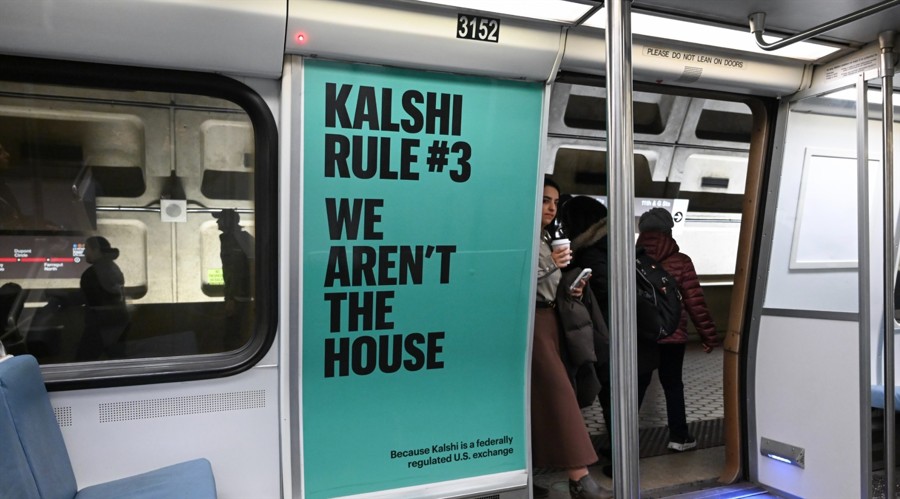
Kalshi's ad campaign. Source: X

A viral critique from DraftKings co-founder Matt Kalish has exposed a structural fault line in the prediction market industry that participants had mostly chosen to ignore: who, exactly, is making money, and at whose expense.

Kalish's public broadside targets Kalshi, the leading CFTC-regulated prediction market in the United States. His core accusation is that despite Kalshi's positioning as a financial exchange, the platform functionally operates as a sportsbook that routes retail order flow to institutional market makers.

Matt Kalish, co-founder of DraftKings. Source: LinkedIn

"You're not trading against me," Kalish wrote on X, pointing to a trade where his odds were significantly diluted by slippage. "We're all trading against Susquehanna and professional Wall Street market makers."

The Exchange Paradox: Liquidity vs. Fairness

The conflict points to a structural tension at the center of the prediction market model. Traditional sportsbooks act as the house, managing risk by limiting winners.

Prediction markets like Kalshi use an order-book model that attracts quantitative trading firms to provide liquidity but also creates what amounts to a shark tank for retail participants.

New research from Citizens JMP Securities gives weight to Kalish's skepticism. Traders with over $500,000 in volume are consistently profitable, with a median ROI of +2.6%. The median return for retail prediction market users is -8%, which is worse than the -5% typical of traditional sportsbooks. Small accounts under $100 are losing 26.8%.

Kalish argues this structure lets Wall Street extract profit from retail losses, effectively making Kalshi a sportsbook that is "2-3 years behind" in consumer product development.

A War for Legitimacy

Kalshi has worked hard to put distance between itself and the gambling label, positioning its event contracts as CFTC-regulated derivatives. To reinforce that framing, the company recently announced a $2 million investment in the National Council on Problem Gambling.

The industry is nonetheless converging. While Kalshi moves toward Wall Street, the major gambling operators are moving into its territory. DraftKings and FanDuel have both launched prediction products — DraftKings Predictions and FanDuel Predicts — using CFTC-linked structures to sidestep state-level betting bans.

Squeezed from both sides, firms like Sporttrade are making more drastic moves: the company recently announced it would exit sports betting entirely and pivot to a regulated exchange model.

Data Transparency under Scrutiny

The most serious technical allegation concerns how Kalshi handles user data. Kalish accused the platform of sharing user IDs with market makers through its API, which would allow professionals to profile order flow and selectively choose when — or whether — to provide liquidity to specific traders.

That may not be enough going forward. For the B2B brokerage community, the episode signals something broader: the prediction market sector has outgrown its niche status, but its infrastructure is under real pressure.

As the industry pushes toward a $22 billion valuation, questions are growing over whether these platforms operate as neutral marketplaces or disproportionately benefit professional liquidity providers.

A viral critique from DraftKings co-founder Matt Kalish has exposed a structural fault line in the prediction market industry that participants had mostly chosen to ignore: who, exactly, is making money, and at whose expense.

Kalish's public broadside targets Kalshi, the leading CFTC-regulated prediction market in the United States. His core accusation is that despite Kalshi's positioning as a financial exchange, the platform functionally operates as a sportsbook that routes retail order flow to institutional market makers.

Matt Kalish, co-founder of DraftKings. Source: LinkedIn

"You're not trading against me," Kalish wrote on X, pointing to a trade where his odds were significantly diluted by slippage. "We're all trading against Susquehanna and professional Wall Street market makers."

The Exchange Paradox: Liquidity vs. Fairness

The conflict points to a structural tension at the center of the prediction market model. Traditional sportsbooks act as the house, managing risk by limiting winners.

Prediction markets like Kalshi use an order-book model that attracts quantitative trading firms to provide liquidity but also creates what amounts to a shark tank for retail participants.

New research from Citizens JMP Securities gives weight to Kalish's skepticism. Traders with over $500,000 in volume are consistently profitable, with a median ROI of +2.6%. The median return for retail prediction market users is -8%, which is worse than the -5% typical of traditional sportsbooks. Small accounts under $100 are losing 26.8%.

Kalish argues this structure lets Wall Street extract profit from retail losses, effectively making Kalshi a sportsbook that is "2-3 years behind" in consumer product development.

A War for Legitimacy

Kalshi has worked hard to put distance between itself and the gambling label, positioning its event contracts as CFTC-regulated derivatives. To reinforce that framing, the company recently announced a $2 million investment in the National Council on Problem Gambling.

The industry is nonetheless converging. While Kalshi moves toward Wall Street, the major gambling operators are moving into its territory. DraftKings and FanDuel have both launched prediction products — DraftKings Predictions and FanDuel Predicts — using CFTC-linked structures to sidestep state-level betting bans.

Squeezed from both sides, firms like Sporttrade are making more drastic moves: the company recently announced it would exit sports betting entirely and pivot to a regulated exchange model.

Data Transparency under Scrutiny

The most serious technical allegation concerns how Kalshi handles user data. Kalish accused the platform of sharing user IDs with market makers through its API, which would allow professionals to profile order flow and selectively choose when — or whether — to provide liquidity to specific traders.

That may not be enough going forward. For the B2B brokerage community, the episode signals something broader: the prediction market sector has outgrown its niche status, but its infrastructure is under real pressure.

As the industry pushes toward a $22 billion valuation, questions are growing over whether these platforms operate as neutral marketplaces or disproportionately benefit professional liquidity providers.

About the Author: Tanya Chepkova
Tanya Chepkova
  • 208 Articles
About the Author: Tanya Chepkova
Tanya Chepkova is a News Editor at Finance Magnates with more than 16 years of experience in financial journalism, covering forex, crypto, and digital asset markets. Her work spans daily industry reporting and data-driven, long-form explainers focused on market structure, trading models, and regulatory shifts. Before joining Finance Magnates, she led the editorial team of a cryptocurrency-focused media outlet for six years. Her reporting combines analytical depth with clear storytelling, with particular attention to how structural changes in trading, stablecoin infrastructure, and emerging products such as prediction markets reshape the broader financial ecosystem. She covers global developments and provides additional insight into CIS markets. Areas of Coverage: Crypto and digital asset markets Prediction markets Stablecoins and cross-border payments Industry analysis and long-form explainers
  • 208 Articles

More from the Author

Trending

!"#$%&'()*+,-./0123456789:;<=>?@ABCDEFGHIJKLMNOPQRSTUVWXYZ[\]^_`abcdefghijklmnopqrstuvwxyz{|} !"#$%&'()*+,-./0123456789:;<=>?@ABCDEFGHIJKLMNOPQRSTUVWXYZ[\]^_`abcdefghijklmnopqrstuvwxyz{|}