Paul Golden thinks the UK’s latest plan to make ISAs more “British” misses the point
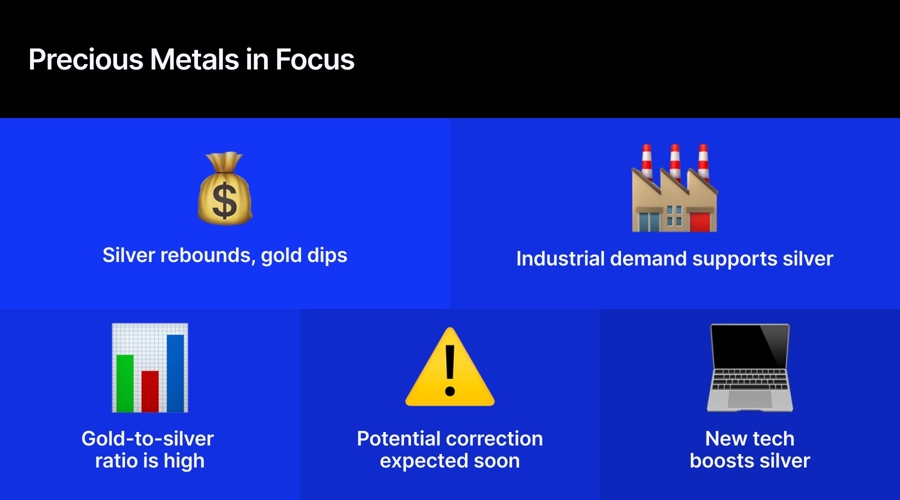
Silver rebounds as gold dips, offering hedging benefits and industrial demand support.
US margin debt hits $1 trillion, raising risk of amplified market downturns if prices fall.
ISA
plan gets frosty reception
A
couple of weeks ago, we explored the merits of a temporary or permanent
reduction in the stamp duty (tax) paid on transactions in shares of newly
listed UK companies, as a means of stimulating investment and trading in these
entities.
This
is just the latest in a long line of proposals designed to revolutionise retail
investment in the UK, where the government is keen to encourage risk-averse
retail investors to put more money into stocks and shares rather than cash ISAs
- individual savings accounts that pay a set amount of interest - in order to
stimulate its capital markets.
The
latest wheeze for boosting equity markets is intriguing mainly because it has
strong parallels with a plan that was announced by the previous administration
and swiftly dropped by the new government.
It
has been widely reported that the chief financial minister wants to introduce a
minimum UK shareholding in ISAs.
The
obvious problem is how to define a ‘UK shareholding’. A casual observer might assume
that the FTSE 100 is a list of the largest British companies, but they are of
course just a group of multinationals that are listed in London.
Even
for those multinationals that are based in the UK (Shell, for example), much of
their investment is going into overseas markets rather than domestic projects.
As one advisor points out, limiting exposure to only businesses that have zero
presence outside the UK is not a recipe for strong returns.
It
is possible that the UK government sees this as a tool – albeit a rather blunt
one – for increasing the pool of domestic investment capital and boosting the
status of London as an IPO location at a time when the battle for listing
business has never been more ferocious.
However,
the presence of so many multinational firms at the top end of the index is a
reminder of the international profile of the UK’s capital markets, with an
estimated three-quarters of index members’ earnings generated outside the UK.
Folk in the UK put £103bln into ISAs last year, £69.5bln of that (approx 2/3rds) went into cash ISAs...essentially, guaranteeing a near-zero, if not negative, real return on those funds over the next year...so much more financial education needed across the board...
Gold
may have hogged the headlines of late but there is a case to be made for
focusing on another precious metal.
As
I write this column, gold is trading at $3880 compared to an all-time high of
$4381 in late October with a stronger dollar prompting many investors to sell.
However, silver has rebounded following its own sharp selloff from record
levels, which could be an indication that it is managing to consolidate at
lower levels.
Otavio Costa, Macro Strategist at Crescat Capital, Source: LinkedIn
Establishing
fair value is not a straightforward exercise. For example, while the cost of
mining an ounce of gold is approximately 65 times that of the equivalent amount
of silver, the current gold-to-silver ratio stands above 80:1.
Its
conductive qualities makes it a core component of AI hardware ranging from
semiconductor chips to sensors, improving efficiency and heat management across
data centres and advanced computing infrastructure.
According
to Otavio Costa, Macro Strategist at Crescat Capital, the gold-to-silver ratio
has remained more than 2.6 standard deviations above its long-term mean for
over five years for the first time since records began in the late 1600s.
He
suggests a sharp correction in this ratio is highly likely, although any
analysis of the data has to take the impact of the end of the gold standard in
the 1970s into account.
Perhaps
we shouldn’t be surprised in an era when established asset correlations are
disintegrating and new connections are emerging on the back of seismic shifts
in supply chains, trade relationships and technology.
Soaring deficits highlight unchecked spending. Geopolitical tensions brew, pushing gold, silver, and platinum as hedges. Balanced budgets? Unlikely without real policy shifts. ⚠️ pic.twitter.com/8Pnywm1ZH9
US
margin debt (money borrowed by investors from brokers to buy stocks) continues
to hit record highs. As of the end of September, this debt had crashed through
the $1 trillion mark.
Philip Petursson, Chief Investment Strategist at IG Wealth Management, Source: LinkedIn
Such
a high level of indebtedness is often viewed as a risk indicator because it can
create a feedback loop. If the market declines, investors may be forced to sell
their securities to repay their loans, which can accelerate the downturn.
Analysts describe this as a ‘yellow flag’ rather than an immediate crisis, but it
will hit home if prices start falling and investors have to sell to pay back
what they have borrowed from their brokers.
It
is estimated that the current level of margin debt is equivalent to
approximately 2% of the overall value of the S&P 500, which might sound
like a modest proportion until you consider that this moves it into a similar
range to what we saw in during the dotcom boom as well as in 2007.
Risk
is part of every trader’s life. But when so much trading is being done with
other people’s money there is always a heightened possibility that small
downturns can be amplified by panic selling.
Perspective
is also important though. Strong market cap growth means that in real terms, leverage
growth is rising in line with asset valuations.
Philip
Petursson, Chief Investment Strategist at IG Wealth Management notes that margin
debt has grown by near 40% year-on-year versus the S&P 500 at 18% and
observes that if margin grows at the pace of the market, investors are merely
holding to a fixed weight. In this instance, margin is increasing faster than
the market.
One
commentator suggested that while the stock market was on fire, the leverage
behind it was equally flammable. Deutsche Bank analysts made a similar
observation in July, warning that we were getting closer to the point where
market euphoria becomes too hot to handle.
Given
everything discussed above, traders will be keeping a close eye on Fed policy
and liquidity conditions.
ISA
plan gets frosty reception
A
couple of weeks ago, we explored the merits of a temporary or permanent
reduction in the stamp duty (tax) paid on transactions in shares of newly
listed UK companies, as a means of stimulating investment and trading in these
entities.
This
is just the latest in a long line of proposals designed to revolutionise retail
investment in the UK, where the government is keen to encourage risk-averse
retail investors to put more money into stocks and shares rather than cash ISAs
- individual savings accounts that pay a set amount of interest - in order to
stimulate its capital markets.
The
latest wheeze for boosting equity markets is intriguing mainly because it has
strong parallels with a plan that was announced by the previous administration
and swiftly dropped by the new government.
It
has been widely reported that the chief financial minister wants to introduce a
minimum UK shareholding in ISAs.
The
obvious problem is how to define a ‘UK shareholding’. A casual observer might assume
that the FTSE 100 is a list of the largest British companies, but they are of
course just a group of multinationals that are listed in London.
Even
for those multinationals that are based in the UK (Shell, for example), much of
their investment is going into overseas markets rather than domestic projects.
As one advisor points out, limiting exposure to only businesses that have zero
presence outside the UK is not a recipe for strong returns.
It
is possible that the UK government sees this as a tool – albeit a rather blunt
one – for increasing the pool of domestic investment capital and boosting the
status of London as an IPO location at a time when the battle for listing
business has never been more ferocious.
However,
the presence of so many multinational firms at the top end of the index is a
reminder of the international profile of the UK’s capital markets, with an
estimated three-quarters of index members’ earnings generated outside the UK.
Folk in the UK put £103bln into ISAs last year, £69.5bln of that (approx 2/3rds) went into cash ISAs...essentially, guaranteeing a near-zero, if not negative, real return on those funds over the next year...so much more financial education needed across the board...
Gold
may have hogged the headlines of late but there is a case to be made for
focusing on another precious metal.
As
I write this column, gold is trading at $3880 compared to an all-time high of
$4381 in late October with a stronger dollar prompting many investors to sell.
However, silver has rebounded following its own sharp selloff from record
levels, which could be an indication that it is managing to consolidate at
lower levels.
Otavio Costa, Macro Strategist at Crescat Capital, Source: LinkedIn
Establishing
fair value is not a straightforward exercise. For example, while the cost of
mining an ounce of gold is approximately 65 times that of the equivalent amount
of silver, the current gold-to-silver ratio stands above 80:1.
Its
conductive qualities makes it a core component of AI hardware ranging from
semiconductor chips to sensors, improving efficiency and heat management across
data centres and advanced computing infrastructure.
According
to Otavio Costa, Macro Strategist at Crescat Capital, the gold-to-silver ratio
has remained more than 2.6 standard deviations above its long-term mean for
over five years for the first time since records began in the late 1600s.
He
suggests a sharp correction in this ratio is highly likely, although any
analysis of the data has to take the impact of the end of the gold standard in
the 1970s into account.
Perhaps
we shouldn’t be surprised in an era when established asset correlations are
disintegrating and new connections are emerging on the back of seismic shifts
in supply chains, trade relationships and technology.
Soaring deficits highlight unchecked spending. Geopolitical tensions brew, pushing gold, silver, and platinum as hedges. Balanced budgets? Unlikely without real policy shifts. ⚠️ pic.twitter.com/8Pnywm1ZH9
US
margin debt (money borrowed by investors from brokers to buy stocks) continues
to hit record highs. As of the end of September, this debt had crashed through
the $1 trillion mark.
Philip Petursson, Chief Investment Strategist at IG Wealth Management, Source: LinkedIn
Such
a high level of indebtedness is often viewed as a risk indicator because it can
create a feedback loop. If the market declines, investors may be forced to sell
their securities to repay their loans, which can accelerate the downturn.
Analysts describe this as a ‘yellow flag’ rather than an immediate crisis, but it
will hit home if prices start falling and investors have to sell to pay back
what they have borrowed from their brokers.
It
is estimated that the current level of margin debt is equivalent to
approximately 2% of the overall value of the S&P 500, which might sound
like a modest proportion until you consider that this moves it into a similar
range to what we saw in during the dotcom boom as well as in 2007.
Risk
is part of every trader’s life. But when so much trading is being done with
other people’s money there is always a heightened possibility that small
downturns can be amplified by panic selling.
Perspective
is also important though. Strong market cap growth means that in real terms, leverage
growth is rising in line with asset valuations.
Philip
Petursson, Chief Investment Strategist at IG Wealth Management notes that margin
debt has grown by near 40% year-on-year versus the S&P 500 at 18% and
observes that if margin grows at the pace of the market, investors are merely
holding to a fixed weight. In this instance, margin is increasing faster than
the market.
One
commentator suggested that while the stock market was on fire, the leverage
behind it was equally flammable. Deutsche Bank analysts made a similar
observation in July, warning that we were getting closer to the point where
market euphoria becomes too hot to handle.
Given
everything discussed above, traders will be keeping a close eye on Fed policy
and liquidity conditions.
Paul Golden is an experienced freelance financial journalist with a strong institutional background. Over the past two decades, he has written for globally recognised financial publications, covering topics such as market structure, regulation, trading behaviour, and economic policy.
cTrader Lets Brokers Pre-Install Their Own Tools for All Clients
Featured Videos
XTB Adds Overnight US Stock Trading; Nasdaq Ventures Invests in One Trading
XTB Adds Overnight US Stock Trading; Nasdaq Ventures Invests in One Trading
XTB Adds Overnight US Stock Trading; Nasdaq Ventures Invests in One Trading
XTB Adds Overnight US Stock Trading; Nasdaq Ventures Invests in One Trading
Today’s financial news recap covers XTB expands overnight US stock trading, Fortrade reports higher revenue, Nasdaq backs One Trading, and Vest Labs raises 13 million dollars.
Finance Magnates Daily Recap brings you the latest news from forex and CFD brokers, fintech, payments, cryptocurrency, digital assets, trading platforms, financial regulation and global markets.
Get the key company news, executive moves, deals, regulatory updates and market developments of the day, in just a few minutes. New episodes published every weekday.
Read more: https://www.financemagnates.com
#FinanceMagnates #ForexNews #FintechNews
Today’s financial news recap covers XTB expands overnight US stock trading, Fortrade reports higher revenue, Nasdaq backs One Trading, and Vest Labs raises 13 million dollars.
Finance Magnates Daily Recap brings you the latest news from forex and CFD brokers, fintech, payments, cryptocurrency, digital assets, trading platforms, financial regulation and global markets.
Get the key company news, executive moves, deals, regulatory updates and market developments of the day, in just a few minutes. New episodes published every weekday.
Read more: https://www.financemagnates.com
#FinanceMagnates #ForexNews #FintechNews
Today’s financial news recap covers XTB expands overnight US stock trading, Fortrade reports higher revenue, Nasdaq backs One Trading, and Vest Labs raises 13 million dollars.
Finance Magnates Daily Recap brings you the latest news from forex and CFD brokers, fintech, payments, cryptocurrency, digital assets, trading platforms, financial regulation and global markets.
Get the key company news, executive moves, deals, regulatory updates and market developments of the day, in just a few minutes. New episodes published every weekday.
Read more: https://www.financemagnates.com
#FinanceMagnates #ForexNews #FintechNews
Today’s financial news recap covers XTB expands overnight US stock trading, Fortrade reports higher revenue, Nasdaq backs One Trading, and Vest Labs raises 13 million dollars.
Finance Magnates Daily Recap brings you the latest news from forex and CFD brokers, fintech, payments, cryptocurrency, digital assets, trading platforms, financial regulation and global markets.
Get the key company news, executive moves, deals, regulatory updates and market developments of the day, in just a few minutes. New episodes published every weekday.
Read more: https://www.financemagnates.com
#FinanceMagnates #ForexNews #FintechNews
CMC Founder Downplays Volatility Hit; Devexperts Names CEO
CMC Founder Downplays Volatility Hit; Devexperts Names CEO
CMC Founder Downplays Volatility Hit; Devexperts Names CEO
CMC Founder Downplays Volatility Hit; Devexperts Names CEO
CMC Founder Downplays Volatility Hit; Devexperts Names CEO
CMC Founder Downplays Volatility Hit; Devexperts Names CEO
Today’s financial news recap covers low volatility pressures brokers, Devexperts names a new CEO, Saxo cuts onboarding time, and OKX reaches a 25 billion dollar valuation.
Finance Magnates Daily Recap brings you the latest news from forex and CFD brokers, fintech, payments, cryptocurrency, digital assets, trading platforms, financial regulation and global markets.
Get the key company news, executive moves, deals, regulatory updates and market developments of the day, in just a few minutes. New episodes published every weekday.
Read more: https://www.financemagnates.com
#FinanceMagnates #ForexNews #FintechNews
Today’s financial news recap covers low volatility pressures brokers, Devexperts names a new CEO, Saxo cuts onboarding time, and OKX reaches a 25 billion dollar valuation.
Finance Magnates Daily Recap brings you the latest news from forex and CFD brokers, fintech, payments, cryptocurrency, digital assets, trading platforms, financial regulation and global markets.
Get the key company news, executive moves, deals, regulatory updates and market developments of the day, in just a few minutes. New episodes published every weekday.
Read more: https://www.financemagnates.com
#FinanceMagnates #ForexNews #FintechNews
Today’s financial news recap covers low volatility pressures brokers, Devexperts names a new CEO, Saxo cuts onboarding time, and OKX reaches a 25 billion dollar valuation.
Finance Magnates Daily Recap brings you the latest news from forex and CFD brokers, fintech, payments, cryptocurrency, digital assets, trading platforms, financial regulation and global markets.
Get the key company news, executive moves, deals, regulatory updates and market developments of the day, in just a few minutes. New episodes published every weekday.
Read more: https://www.financemagnates.com
#FinanceMagnates #ForexNews #FintechNews
Today’s financial news recap covers low volatility pressures brokers, Devexperts names a new CEO, Saxo cuts onboarding time, and OKX reaches a 25 billion dollar valuation.
Finance Magnates Daily Recap brings you the latest news from forex and CFD brokers, fintech, payments, cryptocurrency, digital assets, trading platforms, financial regulation and global markets.
Get the key company news, executive moves, deals, regulatory updates and market developments of the day, in just a few minutes. New episodes published every weekday.
Read more: https://www.financemagnates.com
#FinanceMagnates #ForexNews #FintechNews
Today’s financial news recap covers low volatility pressures brokers, Devexperts names a new CEO, Saxo cuts onboarding time, and OKX reaches a 25 billion dollar valuation.
Finance Magnates Daily Recap brings you the latest news from forex and CFD brokers, fintech, payments, cryptocurrency, digital assets, trading platforms, financial regulation and global markets.
Get the key company news, executive moves, deals, regulatory updates and market developments of the day, in just a few minutes. New episodes published every weekday.
Read more: https://www.financemagnates.com
#FinanceMagnates #ForexNews #FintechNews
Today’s financial news recap covers low volatility pressures brokers, Devexperts names a new CEO, Saxo cuts onboarding time, and OKX reaches a 25 billion dollar valuation.
Finance Magnates Daily Recap brings you the latest news from forex and CFD brokers, fintech, payments, cryptocurrency, digital assets, trading platforms, financial regulation and global markets.
Get the key company news, executive moves, deals, regulatory updates and market developments of the day, in just a few minutes. New episodes published every weekday.
Read more: https://www.financemagnates.com
#FinanceMagnates #ForexNews #FintechNews
Today’s financial news recap covers Trade Nation buys FXCM's UK client book, Trading 212 reports higher revenue, the CFTC's move to allow perpetual index futures.
Finance Magnates Daily Recap brings you the latest news from forex and CFD brokers, fintech, payments, cryptocurrency, digital assets, trading platforms, financial regulation and global markets.
Get the key company news, executive moves, deals, regulatory updates and market developments of the day, in just a few minutes. New episodes published every weekday.
Read more: https://www.financemagnates.com
#FinanceMagnates #ForexNews #FintechNews
Today’s financial news recap covers Trade Nation buys FXCM's UK client book, Trading 212 reports higher revenue, the CFTC's move to allow perpetual index futures.
Finance Magnates Daily Recap brings you the latest news from forex and CFD brokers, fintech, payments, cryptocurrency, digital assets, trading platforms, financial regulation and global markets.
Get the key company news, executive moves, deals, regulatory updates and market developments of the day, in just a few minutes. New episodes published every weekday.
Read more: https://www.financemagnates.com
#FinanceMagnates #ForexNews #FintechNews
Today’s financial news recap covers Trade Nation buys FXCM's UK client book, Trading 212 reports higher revenue, the CFTC's move to allow perpetual index futures.
Finance Magnates Daily Recap brings you the latest news from forex and CFD brokers, fintech, payments, cryptocurrency, digital assets, trading platforms, financial regulation and global markets.
Get the key company news, executive moves, deals, regulatory updates and market developments of the day, in just a few minutes. New episodes published every weekday.
Read more: https://www.financemagnates.com
#FinanceMagnates #ForexNews #FintechNews
Today’s financial news recap covers Trade Nation buys FXCM's UK client book, Trading 212 reports higher revenue, the CFTC's move to allow perpetual index futures.
Finance Magnates Daily Recap brings you the latest news from forex and CFD brokers, fintech, payments, cryptocurrency, digital assets, trading platforms, financial regulation and global markets.
Get the key company news, executive moves, deals, regulatory updates and market developments of the day, in just a few minutes. New episodes published every weekday.
Read more: https://www.financemagnates.com
#FinanceMagnates #ForexNews #FintechNews
Today’s financial news recap covers Trade Nation buys FXCM's UK client book, Trading 212 reports higher revenue, the CFTC's move to allow perpetual index futures.
Finance Magnates Daily Recap brings you the latest news from forex and CFD brokers, fintech, payments, cryptocurrency, digital assets, trading platforms, financial regulation and global markets.
Get the key company news, executive moves, deals, regulatory updates and market developments of the day, in just a few minutes. New episodes published every weekday.
Read more: https://www.financemagnates.com
#FinanceMagnates #ForexNews #FintechNews
Today’s financial news recap covers Trade Nation buys FXCM's UK client book, Trading 212 reports higher revenue, the CFTC's move to allow perpetual index futures.
Finance Magnates Daily Recap brings you the latest news from forex and CFD brokers, fintech, payments, cryptocurrency, digital assets, trading platforms, financial regulation and global markets.
Get the key company news, executive moves, deals, regulatory updates and market developments of the day, in just a few minutes. New episodes published every weekday.
Read more: https://www.financemagnates.com
#FinanceMagnates #ForexNews #FintechNews
Your career isn’t a linear path.
Your career isn’t a linear path.
Your career isn’t a linear path.
Your career isn’t a linear path.
Your career isn’t a linear path.
Your career isn’t a linear path.
Roles change. Career goals change. Sometimes you want a completely new challenge.
But the skills and knowledge you build along the way can stay with you and give you something to build on.
For Jeff Patterson, that continued growth is key to long-term career development.
You bring the skills. FM Academy helps you build the knowledge.
#FMAcademy #FinanceMagnates #FinanceCareers #ProfessionalDevelopment #Fintech
Roles change. Career goals change. Sometimes you want a completely new challenge.
But the skills and knowledge you build along the way can stay with you and give you something to build on.
For Jeff Patterson, that continued growth is key to long-term career development.
You bring the skills. FM Academy helps you build the knowledge.
#FMAcademy #FinanceMagnates #FinanceCareers #ProfessionalDevelopment #Fintech
Roles change. Career goals change. Sometimes you want a completely new challenge.
But the skills and knowledge you build along the way can stay with you and give you something to build on.
For Jeff Patterson, that continued growth is key to long-term career development.
You bring the skills. FM Academy helps you build the knowledge.
#FMAcademy #FinanceMagnates #FinanceCareers #ProfessionalDevelopment #Fintech
Roles change. Career goals change. Sometimes you want a completely new challenge.
But the skills and knowledge you build along the way can stay with you and give you something to build on.
For Jeff Patterson, that continued growth is key to long-term career development.
You bring the skills. FM Academy helps you build the knowledge.
#FMAcademy #FinanceMagnates #FinanceCareers #ProfessionalDevelopment #Fintech
Roles change. Career goals change. Sometimes you want a completely new challenge.
But the skills and knowledge you build along the way can stay with you and give you something to build on.
For Jeff Patterson, that continued growth is key to long-term career development.
You bring the skills. FM Academy helps you build the knowledge.
#FMAcademy #FinanceMagnates #FinanceCareers #ProfessionalDevelopment #Fintech
Roles change. Career goals change. Sometimes you want a completely new challenge.
But the skills and knowledge you build along the way can stay with you and give you something to build on.
For Jeff Patterson, that continued growth is key to long-term career development.
You bring the skills. FM Academy helps you build the knowledge.
#FMAcademy #FinanceMagnates #FinanceCareers #ProfessionalDevelopment #Fintech
IG Group Tech Chiefs Exit; Pepperstone Revenue Grows
IG Group Tech Chiefs Exit; Pepperstone Revenue Grows
IG Group Tech Chiefs Exit; Pepperstone Revenue Grows
IG Group Tech Chiefs Exit; Pepperstone Revenue Grows
IG Group Tech Chiefs Exit; Pepperstone Revenue Grows
IG Group Tech Chiefs Exit; Pepperstone Revenue Grows
Today’s financial news recap covers IG Group loses two technology chiefs, Pepperstone reports double-digit growth, and eToro backs a euro stablecoin.
Finance Magnates Daily Recap brings you the latest news from forex and CFD brokers, fintech, payments, cryptocurrency, digital assets, trading platforms, financial regulation and global markets.
Get the key company news, executive moves, deals, regulatory updates and market developments of the day, in just a few minutes. New episodes published every weekday.
Read more: https://www.financemagnates.com
#FinanceMagnates #ForexNews #FintechNews
Today’s financial news recap covers IG Group loses two technology chiefs, Pepperstone reports double-digit growth, and eToro backs a euro stablecoin.
Finance Magnates Daily Recap brings you the latest news from forex and CFD brokers, fintech, payments, cryptocurrency, digital assets, trading platforms, financial regulation and global markets.
Get the key company news, executive moves, deals, regulatory updates and market developments of the day, in just a few minutes. New episodes published every weekday.
Read more: https://www.financemagnates.com
#FinanceMagnates #ForexNews #FintechNews
Today’s financial news recap covers IG Group loses two technology chiefs, Pepperstone reports double-digit growth, and eToro backs a euro stablecoin.
Finance Magnates Daily Recap brings you the latest news from forex and CFD brokers, fintech, payments, cryptocurrency, digital assets, trading platforms, financial regulation and global markets.
Get the key company news, executive moves, deals, regulatory updates and market developments of the day, in just a few minutes. New episodes published every weekday.
Read more: https://www.financemagnates.com
#FinanceMagnates #ForexNews #FintechNews
Today’s financial news recap covers IG Group loses two technology chiefs, Pepperstone reports double-digit growth, and eToro backs a euro stablecoin.
Finance Magnates Daily Recap brings you the latest news from forex and CFD brokers, fintech, payments, cryptocurrency, digital assets, trading platforms, financial regulation and global markets.
Get the key company news, executive moves, deals, regulatory updates and market developments of the day, in just a few minutes. New episodes published every weekday.
Read more: https://www.financemagnates.com
#FinanceMagnates #ForexNews #FintechNews
Today’s financial news recap covers IG Group loses two technology chiefs, Pepperstone reports double-digit growth, and eToro backs a euro stablecoin.
Finance Magnates Daily Recap brings you the latest news from forex and CFD brokers, fintech, payments, cryptocurrency, digital assets, trading platforms, financial regulation and global markets.
Get the key company news, executive moves, deals, regulatory updates and market developments of the day, in just a few minutes. New episodes published every weekday.
Read more: https://www.financemagnates.com
#FinanceMagnates #ForexNews #FintechNews
Today’s financial news recap covers IG Group loses two technology chiefs, Pepperstone reports double-digit growth, and eToro backs a euro stablecoin.
Finance Magnates Daily Recap brings you the latest news from forex and CFD brokers, fintech, payments, cryptocurrency, digital assets, trading platforms, financial regulation and global markets.
Get the key company news, executive moves, deals, regulatory updates and market developments of the day, in just a few minutes. New episodes published every weekday.
Read more: https://www.financemagnates.com
#FinanceMagnates #ForexNews #FintechNews