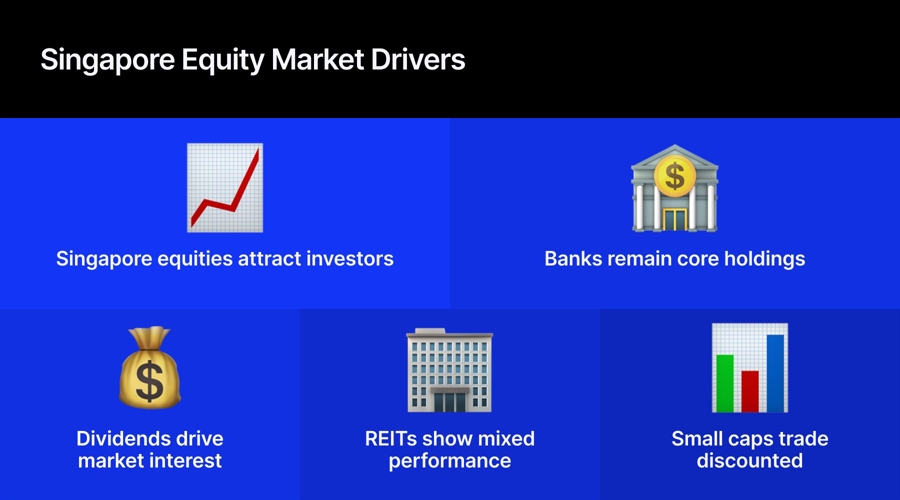
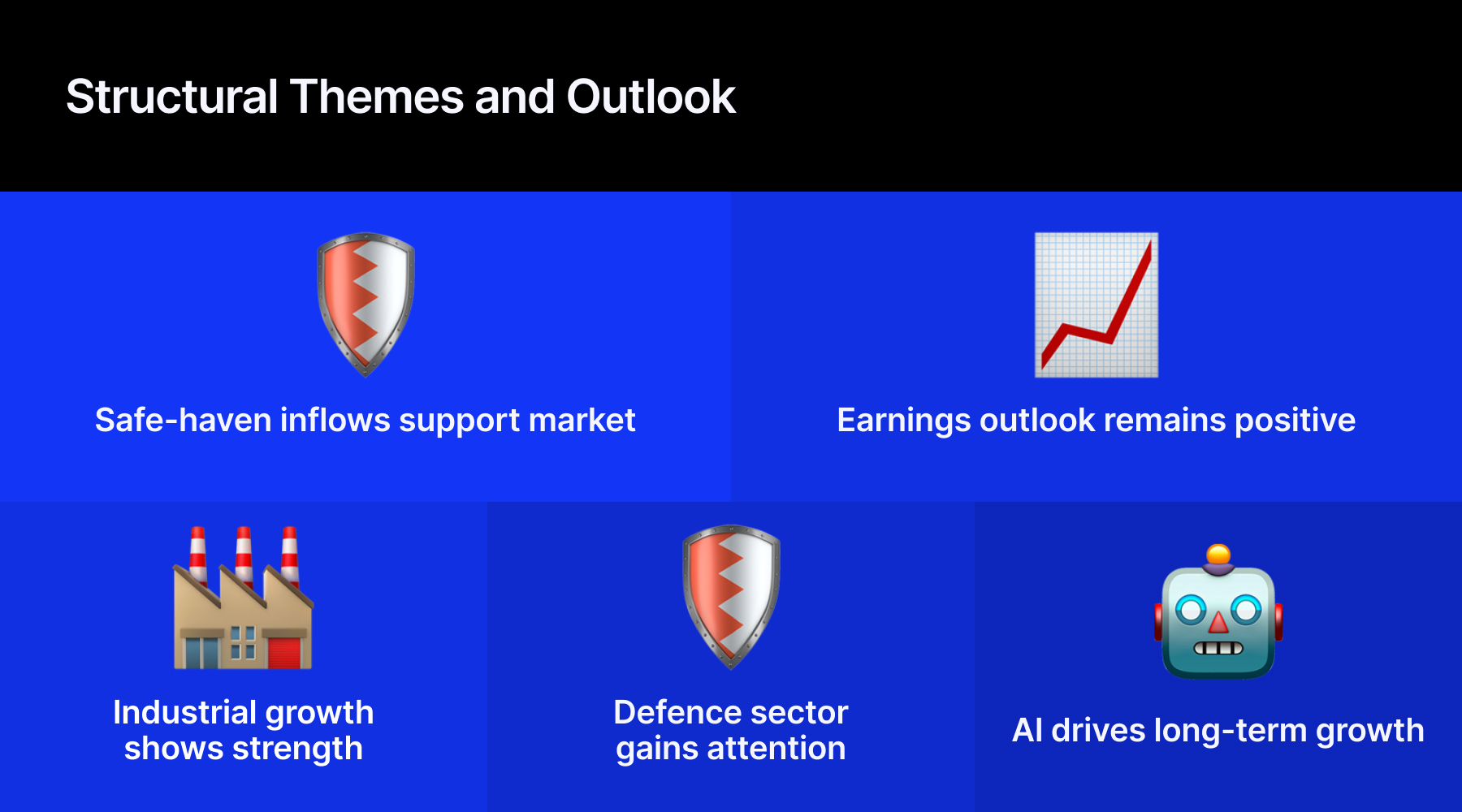
The market supported by safe-haven flows, strong banks, and broadening sector opportunities.
Small and mid cap stocks trade at discounts, offering selective alpha opportunities for investors.
Market participants share their views on where
investors can find value in Singapore’s equity market. HSBC’s Q1 2026
investment outlook report notes that Singapore continues to provide compelling
dividend yields.
The bank has an overweight view on Singapore
stocks for their elevated dividends and defensive character, which it feels can
help dampen portfolio volatility.
Singapore Valuations Driven by Structural Growth
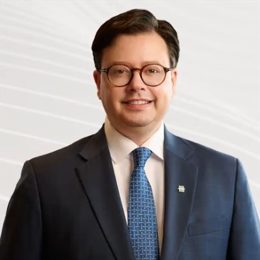
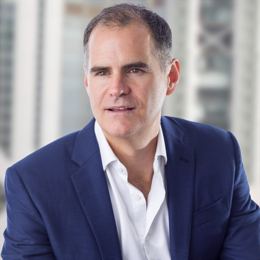
Gidon Kessel, Group Head, Deposits and Wealth Management, UOB
This perspective is shared by Gidon Kessel,
group head deposits and wealth management at UOB, who adds that domestic
companies have displayed improving earnings momentum in a market with
high-yielding stocks across different market capitalisations,
including small- and mid-caps.
Investors are responding to companies that are
deliberately building capabilities, strengthening capital management
discipline, improving disclosure and engaging more actively with the investor
community to explain how shareholder value is created and sustained.
“That said, valuation confidence tends to be
stronger where company strategies are aligned with longer-term economic growth
drivers, such as infrastructure renewal, energy transition, supply chain
realignment and regional demand growth, rather than relying on cyclical or
thematic sector momentum alone,” notes Geoff Howie, SGX market strategist.
He expects stronger valuation confidence where
companies invest in understanding their value drivers, articulate them clearly
and communicate consistently across cycles. This includes clarity around
capital allocation, operating metrics and risk management,
rather than reliance on sector tailwinds or broad macro narratives.
Investor Communication, Governance and Market Depth
Communications matter because even
well-defined strategies are discounted if investors cannot understand them.
Communities matter as peer learning, governance standards and market engagement
help lift overall confidence and comparability.
That is the view of Robin Harris, Ocorian's
regional head of APAC, who says investors are increasingly focused on companies
that use the current spotlight to commit to disciplined disclosure, consistent
metrics and proactive investor engagement, supported by research coverage, institutional
participation and a disclosure-based regulatory regime.
Robin Harris, Regional Head, APAC, Ocorian
“Together, these factors can deepen liquidity,
strengthen price discovery and build a more compelling and resilient market for
investors over the long term,” he adds.
Banks and REITs Dominate Singapore’s Income Profile
The Singapore market is concentrated in banks
and REITs, which gives it a more income-driven profile. At the same time, it
offers stability and steady earnings, which continues to appeal to
institutional investors.
On the macro side, geopolitical uncertainty
and inflation risks are also influencing rate expectations, which in turn would
affect how different sectors are going to be valued, explains Lydia Chin,
senior manager fund solutions at Vistra in Singapore.
Lydia Chin, Senior Manager, Fund Solutions, Vistra (Singapore)
“Banks and REITs remain key holdings for
income-focused investors,” she says. “Banks continue to look resilient with
strong earnings and dividends. REITs are more mixed, still under pressure from
higher interest rates and refinancing costs, where we are seeing more selective
repositioning rather than broad de-risking, particularly into higher quality, well-leased assets.”
Earnings Outlook and Valuation Backdrop
Policy reforms have gone some way to closing
the liquidity discount that Singapore equities have carried for years. The
earnings backdrop is solid — with banks in particular delivering — while the
broader Straits Times Index, or STI (a market capitalisation-weighted index
that tracks the performance of the top 30 companies listed on SGX), is on track
for high single-digit earnings growth in 2026.
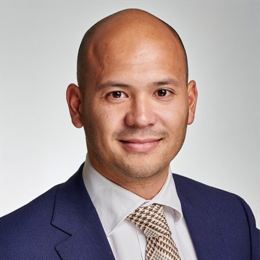
Patrick Na, Head of Financial Services, Southeast Asia, TMF Group
He also acknowledges that a lot of the
re-rating has already happened and, with the STI trading well above its
historical average P/E, the market needs earnings to do the heavy lifting from
here.
Where Investors are Finding Opportunities
According to Na, the most interesting
opportunities are in small- and mid-caps, which trade at a meaningful discount
to regional peers.
“Telecoms — particularly Singtel — are
interesting for a slightly different reason; there is asset monetisation
potential there that I don't think the market has fully credited yet.”
Jupiter Asset Management owns five stocks in
Singapore, all with strong governance and balance sheets, observes investment
manager of Asian equities Sam Konrad.
“We see DBS as not just the best bank in
Singapore but one of the best banks in the world,” he says. “ST Engineering is
a very high-quality defence company in a sector with strong structural
tailwinds, while Singtel gives us exposure to the telco markets of India, Australia, Thailand,
Indonesia and the Philippines, as well as growth from data centres.”
CapitaLand Integrated Commercial Trust owns
some of the highest-profile office and retail assets in Singapore. The firm
also owns Genting Singapore,
an integrated resort with one of the two casino licences in the country, which
it views as a way to play increased tourism and leisure spending in the region.
Broad-based Sector Strength in 2026
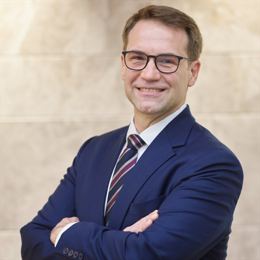
Adeline Gao, Research Analyst, FSM Global
Almost all of Singapore’s equity sectors are
“firing on all cylinders” for investors in 2026, reckons Robert St Clair, head
of investment strategy at Fullerton.
“Equity market alpha has broadened and
deepened, with significant contributions from industrials (benefiting from
robust external demand and productivity gains), financials (gaining from strong
loan growth and non-interest income) and communications and utilities, where
cost controls have been important,” he says.
Defence is another sector that could still see
good opportunities for growth due to current geopolitical uncertainties, adds
Carmen Lee, head of equity research at OCBC.
“With Singapore’s smart nation focus, we
expect AI-related investments to be a strong long-term mega trend that will
benefit companies that are either offering AI-related services or using AI to
grow their businesses or reduce costs,” she says. “Core defensive industries in
telecommunications
and renewable energy are likely to remain preferred holdings.”
Adeline Gao, research analyst at FSM Global,
observes that the banking sector is expected to see net interest margin
stabilisation this year, while wealth management remains a key growth driver
supported by safe-haven inflows amid global uncertainty.
“Beyond financials, Singapore’s semiconductor
supply chain players are positioned to benefit from the ongoing global ‘giga
cycle’, supporting both revenue growth and order visibility,” she says. “In
addition, industrial names with exposure to defence and strong order backlogs
are expected to deliver sustained earnings growth, supported by rising global
defence spending and increased procurement activity.”
Market participants share their views on where
investors can find value in Singapore’s equity market. HSBC’s Q1 2026
investment outlook report notes that Singapore continues to provide compelling
dividend yields.
The bank has an overweight view on Singapore
stocks for their elevated dividends and defensive character, which it feels can
help dampen portfolio volatility.
Singapore Valuations Driven by Structural Growth
Gidon Kessel, Group Head, Deposits and Wealth Management, UOB
This perspective is shared by Gidon Kessel,
group head deposits and wealth management at UOB, who adds that domestic
companies have displayed improving earnings momentum in a market with
high-yielding stocks across different market capitalisations,
including small- and mid-caps.
Investors are responding to companies that are
deliberately building capabilities, strengthening capital management
discipline, improving disclosure and engaging more actively with the investor
community to explain how shareholder value is created and sustained.
“That said, valuation confidence tends to be
stronger where company strategies are aligned with longer-term economic growth
drivers, such as infrastructure renewal, energy transition, supply chain
realignment and regional demand growth, rather than relying on cyclical or
thematic sector momentum alone,” notes Geoff Howie, SGX market strategist.
He expects stronger valuation confidence where
companies invest in understanding their value drivers, articulate them clearly
and communicate consistently across cycles. This includes clarity around
capital allocation, operating metrics and risk management,
rather than reliance on sector tailwinds or broad macro narratives.
Investor Communication, Governance and Market Depth
Communications matter because even
well-defined strategies are discounted if investors cannot understand them.
Communities matter as peer learning, governance standards and market engagement
help lift overall confidence and comparability.
That is the view of Robin Harris, Ocorian's
regional head of APAC, who says investors are increasingly focused on companies
that use the current spotlight to commit to disciplined disclosure, consistent
metrics and proactive investor engagement, supported by research coverage, institutional
participation and a disclosure-based regulatory regime.
Robin Harris, Regional Head, APAC, Ocorian
“Together, these factors can deepen liquidity,
strengthen price discovery and build a more compelling and resilient market for
investors over the long term,” he adds.
Banks and REITs Dominate Singapore’s Income Profile
The Singapore market is concentrated in banks
and REITs, which gives it a more income-driven profile. At the same time, it
offers stability and steady earnings, which continues to appeal to
institutional investors.
On the macro side, geopolitical uncertainty
and inflation risks are also influencing rate expectations, which in turn would
affect how different sectors are going to be valued, explains Lydia Chin,
senior manager fund solutions at Vistra in Singapore.
Lydia Chin, Senior Manager, Fund Solutions, Vistra (Singapore)
“Banks and REITs remain key holdings for
income-focused investors,” she says. “Banks continue to look resilient with
strong earnings and dividends. REITs are more mixed, still under pressure from
higher interest rates and refinancing costs, where we are seeing more selective
repositioning rather than broad de-risking, particularly into higher quality, well-leased assets.”
Earnings Outlook and Valuation Backdrop
Policy reforms have gone some way to closing
the liquidity discount that Singapore equities have carried for years. The
earnings backdrop is solid — with banks in particular delivering — while the
broader Straits Times Index, or STI (a market capitalisation-weighted index
that tracks the performance of the top 30 companies listed on SGX), is on track
for high single-digit earnings growth in 2026.
Patrick Na, Head of Financial Services, Southeast Asia, TMF Group
He also acknowledges that a lot of the
re-rating has already happened and, with the STI trading well above its
historical average P/E, the market needs earnings to do the heavy lifting from
here.
Where Investors are Finding Opportunities
According to Na, the most interesting
opportunities are in small- and mid-caps, which trade at a meaningful discount
to regional peers.
“Telecoms — particularly Singtel — are
interesting for a slightly different reason; there is asset monetisation
potential there that I don't think the market has fully credited yet.”
Jupiter Asset Management owns five stocks in
Singapore, all with strong governance and balance sheets, observes investment
manager of Asian equities Sam Konrad.
“We see DBS as not just the best bank in
Singapore but one of the best banks in the world,” he says. “ST Engineering is
a very high-quality defence company in a sector with strong structural
tailwinds, while Singtel gives us exposure to the telco markets of India, Australia, Thailand,
Indonesia and the Philippines, as well as growth from data centres.”
CapitaLand Integrated Commercial Trust owns
some of the highest-profile office and retail assets in Singapore. The firm
also owns Genting Singapore,
an integrated resort with one of the two casino licences in the country, which
it views as a way to play increased tourism and leisure spending in the region.
Broad-based Sector Strength in 2026
Adeline Gao, Research Analyst, FSM Global
Almost all of Singapore’s equity sectors are
“firing on all cylinders” for investors in 2026, reckons Robert St Clair, head
of investment strategy at Fullerton.
“Equity market alpha has broadened and
deepened, with significant contributions from industrials (benefiting from
robust external demand and productivity gains), financials (gaining from strong
loan growth and non-interest income) and communications and utilities, where
cost controls have been important,” he says.
Defence is another sector that could still see
good opportunities for growth due to current geopolitical uncertainties, adds
Carmen Lee, head of equity research at OCBC.
“With Singapore’s smart nation focus, we
expect AI-related investments to be a strong long-term mega trend that will
benefit companies that are either offering AI-related services or using AI to
grow their businesses or reduce costs,” she says. “Core defensive industries in
telecommunications
and renewable energy are likely to remain preferred holdings.”
Adeline Gao, research analyst at FSM Global,
observes that the banking sector is expected to see net interest margin
stabilisation this year, while wealth management remains a key growth driver
supported by safe-haven inflows amid global uncertainty.
“Beyond financials, Singapore’s semiconductor
supply chain players are positioned to benefit from the ongoing global ‘giga
cycle’, supporting both revenue growth and order visibility,” she says. “In
addition, industrial names with exposure to defence and strong order backlogs
are expected to deliver sustained earnings growth, supported by rising global
defence spending and increased procurement activity.”
Paul Golden is an experienced freelance financial journalist with a strong institutional background. Over the past two decades, he has written for globally recognised financial publications, covering topics such as market structure, regulation, trading behaviour, and economic policy.
Capitolis Raises $220 Million to Support $200 Million eSecLending Deal
Featured Videos
Plus500 Plans US Super-App; Investec to Offer IG Platform
Plus500 Plans US Super-App; Investec to Offer IG Platform
Plus500 Plans US Super-App; Investec to Offer IG Platform
Plus500 Plans US Super-App; Investec to Offer IG Platform
Today’s financial news recap covers Plus500 plans a US trading super-app, Investec partners with IG, Trade Republic reports a sevenfold profit jump, and BingX adds thousands of US stocks.
Finance Magnates Daily Recap brings you the latest news from forex and CFD brokers, fintech, payments, cryptocurrency, digital assets, trading platforms, financial regulation and global markets.
Get the key company news, executive moves, deals, regulatory updates and market developments of the day, in just a few minutes. New episodes published every weekday.
Read more: https://www.financemagnates.com
#FinanceMagnates #ForexNews #FintechNews
Today’s financial news recap covers Plus500 plans a US trading super-app, Investec partners with IG, Trade Republic reports a sevenfold profit jump, and BingX adds thousands of US stocks.
Finance Magnates Daily Recap brings you the latest news from forex and CFD brokers, fintech, payments, cryptocurrency, digital assets, trading platforms, financial regulation and global markets.
Get the key company news, executive moves, deals, regulatory updates and market developments of the day, in just a few minutes. New episodes published every weekday.
Read more: https://www.financemagnates.com
#FinanceMagnates #ForexNews #FintechNews
Today’s financial news recap covers Plus500 plans a US trading super-app, Investec partners with IG, Trade Republic reports a sevenfold profit jump, and BingX adds thousands of US stocks.
Finance Magnates Daily Recap brings you the latest news from forex and CFD brokers, fintech, payments, cryptocurrency, digital assets, trading platforms, financial regulation and global markets.
Get the key company news, executive moves, deals, regulatory updates and market developments of the day, in just a few minutes. New episodes published every weekday.
Read more: https://www.financemagnates.com
#FinanceMagnates #ForexNews #FintechNews
Today’s financial news recap covers Plus500 plans a US trading super-app, Investec partners with IG, Trade Republic reports a sevenfold profit jump, and BingX adds thousands of US stocks.
Finance Magnates Daily Recap brings you the latest news from forex and CFD brokers, fintech, payments, cryptocurrency, digital assets, trading platforms, financial regulation and global markets.
Get the key company news, executive moves, deals, regulatory updates and market developments of the day, in just a few minutes. New episodes published every weekday.
Read more: https://www.financemagnates.com
#FinanceMagnates #ForexNews #FintechNews
FXCM UK Holds $110m in Client Money; IG CEO Questions Prediction Market Volumes
FXCM UK Holds $110m in Client Money; IG CEO Questions Prediction Market Volumes
FXCM UK Holds $110m in Client Money; IG CEO Questions Prediction Market Volumes
FXCM UK Holds $110m in Client Money; IG CEO Questions Prediction Market Volumes
FXCM UK Holds $110m in Client Money; IG CEO Questions Prediction Market Volumes
FXCM UK Holds $110m in Client Money; IG CEO Questions Prediction Market Volumes
Today’s financial news recap covers FXCM's UK arm holds $110 million in client money ahead of its sale to Trade Nation, Citadel Securities' UK profit falls 38 per cent, and Kraken secures its final Dubai crypto licence.
Finance Magnates Daily Recap brings you the latest news from forex and CFD brokers, fintech, payments, cryptocurrency, digital assets, trading platforms, financial regulation and global markets.
Get the key company news, executive moves, deals, regulatory updates and market developments of the day, in just a few minutes. New episodes published every weekday.
Read more: https://www.financemagnates.com
#FinanceMagnates #ForexNews #FintechNews
Today’s financial news recap covers FXCM's UK arm holds $110 million in client money ahead of its sale to Trade Nation, Citadel Securities' UK profit falls 38 per cent, and Kraken secures its final Dubai crypto licence.
Finance Magnates Daily Recap brings you the latest news from forex and CFD brokers, fintech, payments, cryptocurrency, digital assets, trading platforms, financial regulation and global markets.
Get the key company news, executive moves, deals, regulatory updates and market developments of the day, in just a few minutes. New episodes published every weekday.
Read more: https://www.financemagnates.com
#FinanceMagnates #ForexNews #FintechNews
Today’s financial news recap covers FXCM's UK arm holds $110 million in client money ahead of its sale to Trade Nation, Citadel Securities' UK profit falls 38 per cent, and Kraken secures its final Dubai crypto licence.
Finance Magnates Daily Recap brings you the latest news from forex and CFD brokers, fintech, payments, cryptocurrency, digital assets, trading platforms, financial regulation and global markets.
Get the key company news, executive moves, deals, regulatory updates and market developments of the day, in just a few minutes. New episodes published every weekday.
Read more: https://www.financemagnates.com
#FinanceMagnates #ForexNews #FintechNews
Today’s financial news recap covers FXCM's UK arm holds $110 million in client money ahead of its sale to Trade Nation, Citadel Securities' UK profit falls 38 per cent, and Kraken secures its final Dubai crypto licence.
Finance Magnates Daily Recap brings you the latest news from forex and CFD brokers, fintech, payments, cryptocurrency, digital assets, trading platforms, financial regulation and global markets.
Get the key company news, executive moves, deals, regulatory updates and market developments of the day, in just a few minutes. New episodes published every weekday.
Read more: https://www.financemagnates.com
#FinanceMagnates #ForexNews #FintechNews
Today’s financial news recap covers FXCM's UK arm holds $110 million in client money ahead of its sale to Trade Nation, Citadel Securities' UK profit falls 38 per cent, and Kraken secures its final Dubai crypto licence.
Finance Magnates Daily Recap brings you the latest news from forex and CFD brokers, fintech, payments, cryptocurrency, digital assets, trading platforms, financial regulation and global markets.
Get the key company news, executive moves, deals, regulatory updates and market developments of the day, in just a few minutes. New episodes published every weekday.
Read more: https://www.financemagnates.com
#FinanceMagnates #ForexNews #FintechNews
Today’s financial news recap covers FXCM's UK arm holds $110 million in client money ahead of its sale to Trade Nation, Citadel Securities' UK profit falls 38 per cent, and Kraken secures its final Dubai crypto licence.
Finance Magnates Daily Recap brings you the latest news from forex and CFD brokers, fintech, payments, cryptocurrency, digital assets, trading platforms, financial regulation and global markets.
Get the key company news, executive moves, deals, regulatory updates and market developments of the day, in just a few minutes. New episodes published every weekday.
Read more: https://www.financemagnates.com
#FinanceMagnates #ForexNews #FintechNews
AvaTrade to Acquire Most of FXCM; NAGA Raises $8M
AvaTrade to Acquire Most of FXCM; NAGA Raises $8M
AvaTrade to Acquire Most of FXCM; NAGA Raises $8M
AvaTrade to Acquire Most of FXCM; NAGA Raises $8M
AvaTrade to Acquire Most of FXCM; NAGA Raises $8M
AvaTrade to Acquire Most of FXCM; NAGA Raises $8M
Today’s financial news recap covers AvaTrade agrees to acquire most of FXCM, NAGA secures eight million dollars in new financing, and Wise seeks a tax settlement in the UK.
Finance Magnates Daily Recap brings you the latest news from forex and CFD brokers, fintech, payments, cryptocurrency, digital assets, trading platforms, financial regulation and global markets.
Get the key company news, executive moves, deals, regulatory updates and market developments of the day, in just a few minutes. New episodes published every weekday.
Read more: https://www.financemagnates.com
#FinanceMagnates #ForexNews #FintechNews
Today’s financial news recap covers AvaTrade agrees to acquire most of FXCM, NAGA secures eight million dollars in new financing, and Wise seeks a tax settlement in the UK.
Finance Magnates Daily Recap brings you the latest news from forex and CFD brokers, fintech, payments, cryptocurrency, digital assets, trading platforms, financial regulation and global markets.
Get the key company news, executive moves, deals, regulatory updates and market developments of the day, in just a few minutes. New episodes published every weekday.
Read more: https://www.financemagnates.com
#FinanceMagnates #ForexNews #FintechNews
Today’s financial news recap covers AvaTrade agrees to acquire most of FXCM, NAGA secures eight million dollars in new financing, and Wise seeks a tax settlement in the UK.
Finance Magnates Daily Recap brings you the latest news from forex and CFD brokers, fintech, payments, cryptocurrency, digital assets, trading platforms, financial regulation and global markets.
Get the key company news, executive moves, deals, regulatory updates and market developments of the day, in just a few minutes. New episodes published every weekday.
Read more: https://www.financemagnates.com
#FinanceMagnates #ForexNews #FintechNews
Today’s financial news recap covers AvaTrade agrees to acquire most of FXCM, NAGA secures eight million dollars in new financing, and Wise seeks a tax settlement in the UK.
Finance Magnates Daily Recap brings you the latest news from forex and CFD brokers, fintech, payments, cryptocurrency, digital assets, trading platforms, financial regulation and global markets.
Get the key company news, executive moves, deals, regulatory updates and market developments of the day, in just a few minutes. New episodes published every weekday.
Read more: https://www.financemagnates.com
#FinanceMagnates #ForexNews #FintechNews
Today’s financial news recap covers AvaTrade agrees to acquire most of FXCM, NAGA secures eight million dollars in new financing, and Wise seeks a tax settlement in the UK.
Finance Magnates Daily Recap brings you the latest news from forex and CFD brokers, fintech, payments, cryptocurrency, digital assets, trading platforms, financial regulation and global markets.
Get the key company news, executive moves, deals, regulatory updates and market developments of the day, in just a few minutes. New episodes published every weekday.
Read more: https://www.financemagnates.com
#FinanceMagnates #ForexNews #FintechNews
Today’s financial news recap covers AvaTrade agrees to acquire most of FXCM, NAGA secures eight million dollars in new financing, and Wise seeks a tax settlement in the UK.
Finance Magnates Daily Recap brings you the latest news from forex and CFD brokers, fintech, payments, cryptocurrency, digital assets, trading platforms, financial regulation and global markets.
Get the key company news, executive moves, deals, regulatory updates and market developments of the day, in just a few minutes. New episodes published every weekday.
Read more: https://www.financemagnates.com
#FinanceMagnates #ForexNews #FintechNews
XTB Adds Overnight US Stock Trading; Nasdaq Ventures Invests in One Trading
XTB Adds Overnight US Stock Trading; Nasdaq Ventures Invests in One Trading
XTB Adds Overnight US Stock Trading; Nasdaq Ventures Invests in One Trading
XTB Adds Overnight US Stock Trading; Nasdaq Ventures Invests in One Trading
XTB Adds Overnight US Stock Trading; Nasdaq Ventures Invests in One Trading
XTB Adds Overnight US Stock Trading; Nasdaq Ventures Invests in One Trading
Today’s financial news recap covers XTB expands overnight US stock trading, Fortrade reports higher revenue, Nasdaq backs One Trading, and Vest Labs raises 13 million dollars.
Finance Magnates Daily Recap brings you the latest news from forex and CFD brokers, fintech, payments, cryptocurrency, digital assets, trading platforms, financial regulation and global markets.
Get the key company news, executive moves, deals, regulatory updates and market developments of the day, in just a few minutes. New episodes published every weekday.
Read more: https://www.financemagnates.com
#FinanceMagnates #ForexNews #FintechNews
Today’s financial news recap covers XTB expands overnight US stock trading, Fortrade reports higher revenue, Nasdaq backs One Trading, and Vest Labs raises 13 million dollars.
Finance Magnates Daily Recap brings you the latest news from forex and CFD brokers, fintech, payments, cryptocurrency, digital assets, trading platforms, financial regulation and global markets.
Get the key company news, executive moves, deals, regulatory updates and market developments of the day, in just a few minutes. New episodes published every weekday.
Read more: https://www.financemagnates.com
#FinanceMagnates #ForexNews #FintechNews
Today’s financial news recap covers XTB expands overnight US stock trading, Fortrade reports higher revenue, Nasdaq backs One Trading, and Vest Labs raises 13 million dollars.
Finance Magnates Daily Recap brings you the latest news from forex and CFD brokers, fintech, payments, cryptocurrency, digital assets, trading platforms, financial regulation and global markets.
Get the key company news, executive moves, deals, regulatory updates and market developments of the day, in just a few minutes. New episodes published every weekday.
Read more: https://www.financemagnates.com
#FinanceMagnates #ForexNews #FintechNews
Today’s financial news recap covers XTB expands overnight US stock trading, Fortrade reports higher revenue, Nasdaq backs One Trading, and Vest Labs raises 13 million dollars.
Finance Magnates Daily Recap brings you the latest news from forex and CFD brokers, fintech, payments, cryptocurrency, digital assets, trading platforms, financial regulation and global markets.
Get the key company news, executive moves, deals, regulatory updates and market developments of the day, in just a few minutes. New episodes published every weekday.
Read more: https://www.financemagnates.com
#FinanceMagnates #ForexNews #FintechNews
Today’s financial news recap covers XTB expands overnight US stock trading, Fortrade reports higher revenue, Nasdaq backs One Trading, and Vest Labs raises 13 million dollars.
Finance Magnates Daily Recap brings you the latest news from forex and CFD brokers, fintech, payments, cryptocurrency, digital assets, trading platforms, financial regulation and global markets.
Get the key company news, executive moves, deals, regulatory updates and market developments of the day, in just a few minutes. New episodes published every weekday.
Read more: https://www.financemagnates.com
#FinanceMagnates #ForexNews #FintechNews
Today’s financial news recap covers XTB expands overnight US stock trading, Fortrade reports higher revenue, Nasdaq backs One Trading, and Vest Labs raises 13 million dollars.
Finance Magnates Daily Recap brings you the latest news from forex and CFD brokers, fintech, payments, cryptocurrency, digital assets, trading platforms, financial regulation and global markets.
Get the key company news, executive moves, deals, regulatory updates and market developments of the day, in just a few minutes. New episodes published every weekday.
Read more: https://www.financemagnates.com
#FinanceMagnates #ForexNews #FintechNews
CMC Founder Downplays Volatility Hit; Devexperts Names CEO
CMC Founder Downplays Volatility Hit; Devexperts Names CEO
CMC Founder Downplays Volatility Hit; Devexperts Names CEO
CMC Founder Downplays Volatility Hit; Devexperts Names CEO
CMC Founder Downplays Volatility Hit; Devexperts Names CEO
CMC Founder Downplays Volatility Hit; Devexperts Names CEO
Today’s financial news recap covers low volatility pressures brokers, Devexperts names a new CEO, Saxo cuts onboarding time, and OKX reaches a 25 billion dollar valuation.
Finance Magnates Daily Recap brings you the latest news from forex and CFD brokers, fintech, payments, cryptocurrency, digital assets, trading platforms, financial regulation and global markets.
Get the key company news, executive moves, deals, regulatory updates and market developments of the day, in just a few minutes. New episodes published every weekday.
Read more: https://www.financemagnates.com
#FinanceMagnates #ForexNews #FintechNews
Today’s financial news recap covers low volatility pressures brokers, Devexperts names a new CEO, Saxo cuts onboarding time, and OKX reaches a 25 billion dollar valuation.
Finance Magnates Daily Recap brings you the latest news from forex and CFD brokers, fintech, payments, cryptocurrency, digital assets, trading platforms, financial regulation and global markets.
Get the key company news, executive moves, deals, regulatory updates and market developments of the day, in just a few minutes. New episodes published every weekday.
Read more: https://www.financemagnates.com
#FinanceMagnates #ForexNews #FintechNews
Today’s financial news recap covers low volatility pressures brokers, Devexperts names a new CEO, Saxo cuts onboarding time, and OKX reaches a 25 billion dollar valuation.
Finance Magnates Daily Recap brings you the latest news from forex and CFD brokers, fintech, payments, cryptocurrency, digital assets, trading platforms, financial regulation and global markets.
Get the key company news, executive moves, deals, regulatory updates and market developments of the day, in just a few minutes. New episodes published every weekday.
Read more: https://www.financemagnates.com
#FinanceMagnates #ForexNews #FintechNews
Today’s financial news recap covers low volatility pressures brokers, Devexperts names a new CEO, Saxo cuts onboarding time, and OKX reaches a 25 billion dollar valuation.
Finance Magnates Daily Recap brings you the latest news from forex and CFD brokers, fintech, payments, cryptocurrency, digital assets, trading platforms, financial regulation and global markets.
Get the key company news, executive moves, deals, regulatory updates and market developments of the day, in just a few minutes. New episodes published every weekday.
Read more: https://www.financemagnates.com
#FinanceMagnates #ForexNews #FintechNews
Today’s financial news recap covers low volatility pressures brokers, Devexperts names a new CEO, Saxo cuts onboarding time, and OKX reaches a 25 billion dollar valuation.
Finance Magnates Daily Recap brings you the latest news from forex and CFD brokers, fintech, payments, cryptocurrency, digital assets, trading platforms, financial regulation and global markets.
Get the key company news, executive moves, deals, regulatory updates and market developments of the day, in just a few minutes. New episodes published every weekday.
Read more: https://www.financemagnates.com
#FinanceMagnates #ForexNews #FintechNews
Today’s financial news recap covers low volatility pressures brokers, Devexperts names a new CEO, Saxo cuts onboarding time, and OKX reaches a 25 billion dollar valuation.
Finance Magnates Daily Recap brings you the latest news from forex and CFD brokers, fintech, payments, cryptocurrency, digital assets, trading platforms, financial regulation and global markets.
Get the key company news, executive moves, deals, regulatory updates and market developments of the day, in just a few minutes. New episodes published every weekday.
Read more: https://www.financemagnates.com
#FinanceMagnates #ForexNews #FintechNews