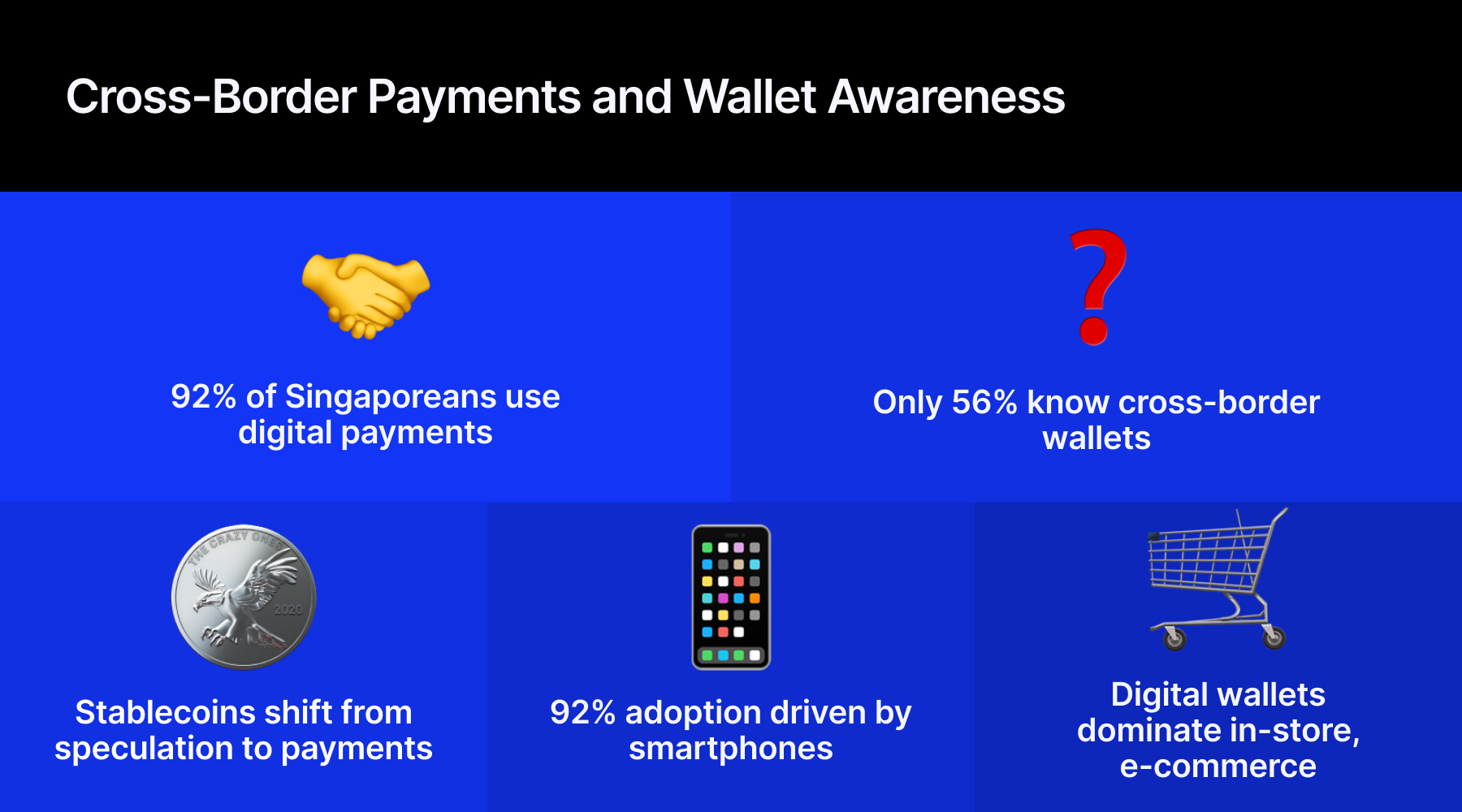
PwC and SFA say stablecoins are increasingly positioned as settlement tools, not speculative instruments.
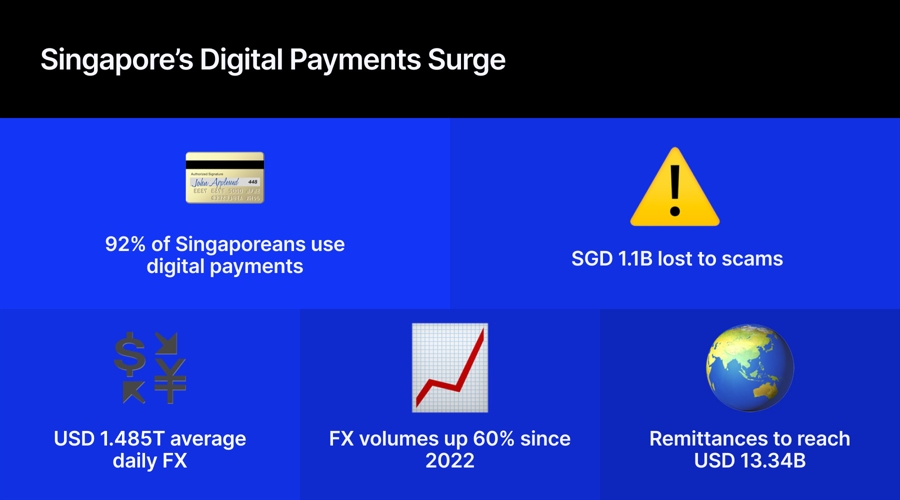
The country recorded SGD 1.1B in scam losses in 2024, prompting “stricter controls”.
Source: PwC Singapore and the Singapore FinTech Association
Singapore is strengthening its position as a global payments
hub as digital wallets, real-time payment systems and regulated stablecoins
move closer to mainstream use, according to a new report by PwC Singapore and
the Singapore FinTech Association.
The report, Payments’ State of Play 2026, outlines how
Singapore’s payments
ecosystem has evolved from building domestic infrastructure to supporting
cross-border scale. Regulatory clarity and coordination between the public and
private sectors are identified as key factors in this shift.
Domestic Digital Payments Near Saturation
The
report shows that Singapore’s domestic payments market is already highly
digitised. About 92% of Singaporeans used a digital payment method in the year
through November 2025. Adoption has been supported by high smartphone
penetration and the rollout of national payment systems such as FAST and
PayNow.
Wong Wanyi, FinTech Leader at PwC Singapore, Source: LinkedIn
Retail point-of-sale transactions are now largely cashless.
Digital wallets continue to gain share in both e-commerce and in-store
payments. Millennials and Generation Z account for the majority of wallet
usage. PayNow and GrabPay are among the most commonly used options for younger
consumers.
With domestic adoption close to saturation, the report
suggests future growth will come from areas beyond cash replacement. These
include cross-border payments, embedded finance and new payment instruments.
“Over the past decade, Singapore has transformed its
payments ecosystem,” said Wong Wanyi, FinTech Leader at PwC Singapore. She
pointed to innovation and a strong regulatory framework as drivers of this
development.
Cross-Border Payments Take Priority
Cross-border connectivity is identified as a central focus
of the next phase of payments development. Singapore has already linked PayNow
with Thailand’s PromptPay and Malaysia’s DuitNow. These links allow low-cost,
real-time transfers using mobile numbers.
Singapore
is also participating in Project Nexus. The initiative aims to connect fast
payment systems across Southeast Asia and India. According to the report, these
linkages are intended to reduce friction in regional payments and support local
currency settlement.
As cross-border
infrastructure expands, Singapore’s remittance market is expected to grow.
The report projects that total remittance volumes will increase from USD 8.05
billion in 2022 to USD 13.34 billion by 2032. Growth is linked to mobile-based
payment channels and Singapore’s role as a regional business, tourism and
education centre.
The report also identifies gaps. Consumer awareness remains
lower than merchant readiness. As of mid-2025, only 56% of consumers were
familiar with cross-border digital wallet capabilities.
Stablecoins Move Toward Payments Use
Holly Fang, President of the Singapore FinTech Association, Source: LinkedIn
Stablecoins are a central theme of the report. Under the
Monetary Authority of Singapore’s framework, stablecoins are increasingly
positioned as payment and settlement tools rather than speculative instruments.
“In Singapore, MAS’s regulatory framework
for stablecoins remains a global benchmark,” the report states. It highlights
requirements covering reserve backing, redemption rights and transparency.
The report points to recent initiatives that link
stablecoins to consumer payments. These include GrabPay’s integration with OKX
Pay and StraitsX. The setup allows users to pay with USDC or USDT at
participating merchants. Transactions are settled in Singapore dollars,
reducing volatility exposure for merchants.
Institutional developments are also noted. These include
Paxos’ banking partnership with DBS for stablecoin reserve custody and cash
management. The report also references merchant pilots involving licensed
payment providers accepting stablecoin payments.
Together, these cases reflect what the report describes as a
“layered utility approach.” Under this model, stablecoins are
tested across retail payments, treasury functions and tokenised financial
products at the same time.
The report identifies fraud and scams as a growing challenge
alongside digital adoption. Scam-related losses in Singapore reached SGD 1.1
billion in 2024. Cryptocurrency-related scams accounted for a notable share of
these losses.
Singapore is one of the best places in the world for stablecoins.
Singapore Gulf Bank just launched a new upgrade. It lets large clients manage fiat and stablecoins in one safe, regulated system. They can issue, convert, store and trade them quickly on chains. This is a regional… pic.twitter.com/ggoDFrww7v
Authorities and financial institutions
have responded with tighter controls. Measures include stronger authentication,
real-time transaction monitoring and public education campaigns. The report
frames fraud prevention as a shared responsibility among regulators, payment
firms and consumers.
Holly Fang, President of the Singapore FinTech Association,
said cooperation across the ecosystem will remain important. “Safeguarding
trust requires a shared responsibility framework,” she said, referring to the
need for coordinated action against fraud and scams.
According to the report, the next phase of Singapore’s
payments development will be shaped by AI-driven fraud detection, programmable
money, embedded finance and wider use of real-time cross-border payment
systems.
By combining regulatory oversight with continued system
development, Singapore aims to strengthen
its role as a payments and settlement hub. The report also positions
interoperability and consumer protection as ongoing priorities as regional
payment links expand.
Singapore is strengthening its position as a global payments
hub as digital wallets, real-time payment systems and regulated stablecoins
move closer to mainstream use, according to a new report by PwC Singapore and
the Singapore FinTech Association.
The report, Payments’ State of Play 2026, outlines how
Singapore’s payments
ecosystem has evolved from building domestic infrastructure to supporting
cross-border scale. Regulatory clarity and coordination between the public and
private sectors are identified as key factors in this shift.
Domestic Digital Payments Near Saturation
The
report shows that Singapore’s domestic payments market is already highly
digitised. About 92% of Singaporeans used a digital payment method in the year
through November 2025. Adoption has been supported by high smartphone
penetration and the rollout of national payment systems such as FAST and
PayNow.
Wong Wanyi, FinTech Leader at PwC Singapore, Source: LinkedIn
Retail point-of-sale transactions are now largely cashless.
Digital wallets continue to gain share in both e-commerce and in-store
payments. Millennials and Generation Z account for the majority of wallet
usage. PayNow and GrabPay are among the most commonly used options for younger
consumers.
With domestic adoption close to saturation, the report
suggests future growth will come from areas beyond cash replacement. These
include cross-border payments, embedded finance and new payment instruments.
“Over the past decade, Singapore has transformed its
payments ecosystem,” said Wong Wanyi, FinTech Leader at PwC Singapore. She
pointed to innovation and a strong regulatory framework as drivers of this
development.
Cross-Border Payments Take Priority
Cross-border connectivity is identified as a central focus
of the next phase of payments development. Singapore has already linked PayNow
with Thailand’s PromptPay and Malaysia’s DuitNow. These links allow low-cost,
real-time transfers using mobile numbers.
Singapore
is also participating in Project Nexus. The initiative aims to connect fast
payment systems across Southeast Asia and India. According to the report, these
linkages are intended to reduce friction in regional payments and support local
currency settlement.
As cross-border
infrastructure expands, Singapore’s remittance market is expected to grow.
The report projects that total remittance volumes will increase from USD 8.05
billion in 2022 to USD 13.34 billion by 2032. Growth is linked to mobile-based
payment channels and Singapore’s role as a regional business, tourism and
education centre.
The report also identifies gaps. Consumer awareness remains
lower than merchant readiness. As of mid-2025, only 56% of consumers were
familiar with cross-border digital wallet capabilities.
Stablecoins Move Toward Payments Use
Holly Fang, President of the Singapore FinTech Association, Source: LinkedIn
Stablecoins are a central theme of the report. Under the
Monetary Authority of Singapore’s framework, stablecoins are increasingly
positioned as payment and settlement tools rather than speculative instruments.
“In Singapore, MAS’s regulatory framework
for stablecoins remains a global benchmark,” the report states. It highlights
requirements covering reserve backing, redemption rights and transparency.
The report points to recent initiatives that link
stablecoins to consumer payments. These include GrabPay’s integration with OKX
Pay and StraitsX. The setup allows users to pay with USDC or USDT at
participating merchants. Transactions are settled in Singapore dollars,
reducing volatility exposure for merchants.
Institutional developments are also noted. These include
Paxos’ banking partnership with DBS for stablecoin reserve custody and cash
management. The report also references merchant pilots involving licensed
payment providers accepting stablecoin payments.
Together, these cases reflect what the report describes as a
“layered utility approach.” Under this model, stablecoins are
tested across retail payments, treasury functions and tokenised financial
products at the same time.
The report identifies fraud and scams as a growing challenge
alongside digital adoption. Scam-related losses in Singapore reached SGD 1.1
billion in 2024. Cryptocurrency-related scams accounted for a notable share of
these losses.
Singapore is one of the best places in the world for stablecoins.
Singapore Gulf Bank just launched a new upgrade. It lets large clients manage fiat and stablecoins in one safe, regulated system. They can issue, convert, store and trade them quickly on chains. This is a regional… pic.twitter.com/ggoDFrww7v
Authorities and financial institutions
have responded with tighter controls. Measures include stronger authentication,
real-time transaction monitoring and public education campaigns. The report
frames fraud prevention as a shared responsibility among regulators, payment
firms and consumers.
Holly Fang, President of the Singapore FinTech Association,
said cooperation across the ecosystem will remain important. “Safeguarding
trust requires a shared responsibility framework,” she said, referring to the
need for coordinated action against fraud and scams.
According to the report, the next phase of Singapore’s
payments development will be shaped by AI-driven fraud detection, programmable
money, embedded finance and wider use of real-time cross-border payment
systems.
By combining regulatory oversight with continued system
development, Singapore aims to strengthen
its role as a payments and settlement hub. The report also positions
interoperability and consumer protection as ongoing priorities as regional
payment links expand.
Tareq is a financial writer with 15 years of experience covering global markets. His work spans technical analysis, forex broker reviews, and market sentiment, with a focus on topics relevant to retail traders. He joined Finance Magnates in 2023.
At Finance Magnates, he serves as News Editor, covering retail forex and CFD brokers, cryptocurrency exchanges, fintech firms, and regulatory developments shaping the trading industry. He holds an Honours degree in Information Technology from Anfell College, London.
Education:
Honours degree Information Technology, Anfell College, London
Cards Face Up: Curaçao Leak Lifts the Lid on Who Owns Offshore Casino Brands
Featured Videos
AvaTrade to Acquire Most of FXCM; NAGA Raises $8M
AvaTrade to Acquire Most of FXCM; NAGA Raises $8M
AvaTrade to Acquire Most of FXCM; NAGA Raises $8M
AvaTrade to Acquire Most of FXCM; NAGA Raises $8M
Today’s financial news recap covers AvaTrade agrees to acquire most of FXCM, NAGA secures eight million dollars in new financing, and Wise seeks a tax settlement in the UK.
Finance Magnates Daily Recap brings you the latest news from forex and CFD brokers, fintech, payments, cryptocurrency, digital assets, trading platforms, financial regulation and global markets.
Get the key company news, executive moves, deals, regulatory updates and market developments of the day, in just a few minutes. New episodes published every weekday.
Read more: https://www.financemagnates.com
#FinanceMagnates #ForexNews #FintechNews
Today’s financial news recap covers AvaTrade agrees to acquire most of FXCM, NAGA secures eight million dollars in new financing, and Wise seeks a tax settlement in the UK.
Finance Magnates Daily Recap brings you the latest news from forex and CFD brokers, fintech, payments, cryptocurrency, digital assets, trading platforms, financial regulation and global markets.
Get the key company news, executive moves, deals, regulatory updates and market developments of the day, in just a few minutes. New episodes published every weekday.
Read more: https://www.financemagnates.com
#FinanceMagnates #ForexNews #FintechNews
Today’s financial news recap covers AvaTrade agrees to acquire most of FXCM, NAGA secures eight million dollars in new financing, and Wise seeks a tax settlement in the UK.
Finance Magnates Daily Recap brings you the latest news from forex and CFD brokers, fintech, payments, cryptocurrency, digital assets, trading platforms, financial regulation and global markets.
Get the key company news, executive moves, deals, regulatory updates and market developments of the day, in just a few minutes. New episodes published every weekday.
Read more: https://www.financemagnates.com
#FinanceMagnates #ForexNews #FintechNews
Today’s financial news recap covers AvaTrade agrees to acquire most of FXCM, NAGA secures eight million dollars in new financing, and Wise seeks a tax settlement in the UK.
Finance Magnates Daily Recap brings you the latest news from forex and CFD brokers, fintech, payments, cryptocurrency, digital assets, trading platforms, financial regulation and global markets.
Get the key company news, executive moves, deals, regulatory updates and market developments of the day, in just a few minutes. New episodes published every weekday.
Read more: https://www.financemagnates.com
#FinanceMagnates #ForexNews #FintechNews
XTB Adds Overnight US Stock Trading; Nasdaq Ventures Invests in One Trading
XTB Adds Overnight US Stock Trading; Nasdaq Ventures Invests in One Trading
XTB Adds Overnight US Stock Trading; Nasdaq Ventures Invests in One Trading
XTB Adds Overnight US Stock Trading; Nasdaq Ventures Invests in One Trading
XTB Adds Overnight US Stock Trading; Nasdaq Ventures Invests in One Trading
XTB Adds Overnight US Stock Trading; Nasdaq Ventures Invests in One Trading
Today’s financial news recap covers XTB expands overnight US stock trading, Fortrade reports higher revenue, Nasdaq backs One Trading, and Vest Labs raises 13 million dollars.
Finance Magnates Daily Recap brings you the latest news from forex and CFD brokers, fintech, payments, cryptocurrency, digital assets, trading platforms, financial regulation and global markets.
Get the key company news, executive moves, deals, regulatory updates and market developments of the day, in just a few minutes. New episodes published every weekday.
Read more: https://www.financemagnates.com
#FinanceMagnates #ForexNews #FintechNews
Today’s financial news recap covers XTB expands overnight US stock trading, Fortrade reports higher revenue, Nasdaq backs One Trading, and Vest Labs raises 13 million dollars.
Finance Magnates Daily Recap brings you the latest news from forex and CFD brokers, fintech, payments, cryptocurrency, digital assets, trading platforms, financial regulation and global markets.
Get the key company news, executive moves, deals, regulatory updates and market developments of the day, in just a few minutes. New episodes published every weekday.
Read more: https://www.financemagnates.com
#FinanceMagnates #ForexNews #FintechNews
Today’s financial news recap covers XTB expands overnight US stock trading, Fortrade reports higher revenue, Nasdaq backs One Trading, and Vest Labs raises 13 million dollars.
Finance Magnates Daily Recap brings you the latest news from forex and CFD brokers, fintech, payments, cryptocurrency, digital assets, trading platforms, financial regulation and global markets.
Get the key company news, executive moves, deals, regulatory updates and market developments of the day, in just a few minutes. New episodes published every weekday.
Read more: https://www.financemagnates.com
#FinanceMagnates #ForexNews #FintechNews
Today’s financial news recap covers XTB expands overnight US stock trading, Fortrade reports higher revenue, Nasdaq backs One Trading, and Vest Labs raises 13 million dollars.
Finance Magnates Daily Recap brings you the latest news from forex and CFD brokers, fintech, payments, cryptocurrency, digital assets, trading platforms, financial regulation and global markets.
Get the key company news, executive moves, deals, regulatory updates and market developments of the day, in just a few minutes. New episodes published every weekday.
Read more: https://www.financemagnates.com
#FinanceMagnates #ForexNews #FintechNews
Today’s financial news recap covers XTB expands overnight US stock trading, Fortrade reports higher revenue, Nasdaq backs One Trading, and Vest Labs raises 13 million dollars.
Finance Magnates Daily Recap brings you the latest news from forex and CFD brokers, fintech, payments, cryptocurrency, digital assets, trading platforms, financial regulation and global markets.
Get the key company news, executive moves, deals, regulatory updates and market developments of the day, in just a few minutes. New episodes published every weekday.
Read more: https://www.financemagnates.com
#FinanceMagnates #ForexNews #FintechNews
Today’s financial news recap covers XTB expands overnight US stock trading, Fortrade reports higher revenue, Nasdaq backs One Trading, and Vest Labs raises 13 million dollars.
Finance Magnates Daily Recap brings you the latest news from forex and CFD brokers, fintech, payments, cryptocurrency, digital assets, trading platforms, financial regulation and global markets.
Get the key company news, executive moves, deals, regulatory updates and market developments of the day, in just a few minutes. New episodes published every weekday.
Read more: https://www.financemagnates.com
#FinanceMagnates #ForexNews #FintechNews
CMC Founder Downplays Volatility Hit; Devexperts Names CEO
CMC Founder Downplays Volatility Hit; Devexperts Names CEO
CMC Founder Downplays Volatility Hit; Devexperts Names CEO
CMC Founder Downplays Volatility Hit; Devexperts Names CEO
CMC Founder Downplays Volatility Hit; Devexperts Names CEO
CMC Founder Downplays Volatility Hit; Devexperts Names CEO
Today’s financial news recap covers low volatility pressures brokers, Devexperts names a new CEO, Saxo cuts onboarding time, and OKX reaches a 25 billion dollar valuation.
Finance Magnates Daily Recap brings you the latest news from forex and CFD brokers, fintech, payments, cryptocurrency, digital assets, trading platforms, financial regulation and global markets.
Get the key company news, executive moves, deals, regulatory updates and market developments of the day, in just a few minutes. New episodes published every weekday.
Read more: https://www.financemagnates.com
#FinanceMagnates #ForexNews #FintechNews
Today’s financial news recap covers low volatility pressures brokers, Devexperts names a new CEO, Saxo cuts onboarding time, and OKX reaches a 25 billion dollar valuation.
Finance Magnates Daily Recap brings you the latest news from forex and CFD brokers, fintech, payments, cryptocurrency, digital assets, trading platforms, financial regulation and global markets.
Get the key company news, executive moves, deals, regulatory updates and market developments of the day, in just a few minutes. New episodes published every weekday.
Read more: https://www.financemagnates.com
#FinanceMagnates #ForexNews #FintechNews
Today’s financial news recap covers low volatility pressures brokers, Devexperts names a new CEO, Saxo cuts onboarding time, and OKX reaches a 25 billion dollar valuation.
Finance Magnates Daily Recap brings you the latest news from forex and CFD brokers, fintech, payments, cryptocurrency, digital assets, trading platforms, financial regulation and global markets.
Get the key company news, executive moves, deals, regulatory updates and market developments of the day, in just a few minutes. New episodes published every weekday.
Read more: https://www.financemagnates.com
#FinanceMagnates #ForexNews #FintechNews
Today’s financial news recap covers low volatility pressures brokers, Devexperts names a new CEO, Saxo cuts onboarding time, and OKX reaches a 25 billion dollar valuation.
Finance Magnates Daily Recap brings you the latest news from forex and CFD brokers, fintech, payments, cryptocurrency, digital assets, trading platforms, financial regulation and global markets.
Get the key company news, executive moves, deals, regulatory updates and market developments of the day, in just a few minutes. New episodes published every weekday.
Read more: https://www.financemagnates.com
#FinanceMagnates #ForexNews #FintechNews
Today’s financial news recap covers low volatility pressures brokers, Devexperts names a new CEO, Saxo cuts onboarding time, and OKX reaches a 25 billion dollar valuation.
Finance Magnates Daily Recap brings you the latest news from forex and CFD brokers, fintech, payments, cryptocurrency, digital assets, trading platforms, financial regulation and global markets.
Get the key company news, executive moves, deals, regulatory updates and market developments of the day, in just a few minutes. New episodes published every weekday.
Read more: https://www.financemagnates.com
#FinanceMagnates #ForexNews #FintechNews
Today’s financial news recap covers low volatility pressures brokers, Devexperts names a new CEO, Saxo cuts onboarding time, and OKX reaches a 25 billion dollar valuation.
Finance Magnates Daily Recap brings you the latest news from forex and CFD brokers, fintech, payments, cryptocurrency, digital assets, trading platforms, financial regulation and global markets.
Get the key company news, executive moves, deals, regulatory updates and market developments of the day, in just a few minutes. New episodes published every weekday.
Read more: https://www.financemagnates.com
#FinanceMagnates #ForexNews #FintechNews
Today’s financial news recap covers Trade Nation buys FXCM's UK client book, Trading 212 reports higher revenue, the CFTC's move to allow perpetual index futures.
Finance Magnates Daily Recap brings you the latest news from forex and CFD brokers, fintech, payments, cryptocurrency, digital assets, trading platforms, financial regulation and global markets.
Get the key company news, executive moves, deals, regulatory updates and market developments of the day, in just a few minutes. New episodes published every weekday.
Read more: https://www.financemagnates.com
#FinanceMagnates #ForexNews #FintechNews
Today’s financial news recap covers Trade Nation buys FXCM's UK client book, Trading 212 reports higher revenue, the CFTC's move to allow perpetual index futures.
Finance Magnates Daily Recap brings you the latest news from forex and CFD brokers, fintech, payments, cryptocurrency, digital assets, trading platforms, financial regulation and global markets.
Get the key company news, executive moves, deals, regulatory updates and market developments of the day, in just a few minutes. New episodes published every weekday.
Read more: https://www.financemagnates.com
#FinanceMagnates #ForexNews #FintechNews
Today’s financial news recap covers Trade Nation buys FXCM's UK client book, Trading 212 reports higher revenue, the CFTC's move to allow perpetual index futures.
Finance Magnates Daily Recap brings you the latest news from forex and CFD brokers, fintech, payments, cryptocurrency, digital assets, trading platforms, financial regulation and global markets.
Get the key company news, executive moves, deals, regulatory updates and market developments of the day, in just a few minutes. New episodes published every weekday.
Read more: https://www.financemagnates.com
#FinanceMagnates #ForexNews #FintechNews
Today’s financial news recap covers Trade Nation buys FXCM's UK client book, Trading 212 reports higher revenue, the CFTC's move to allow perpetual index futures.
Finance Magnates Daily Recap brings you the latest news from forex and CFD brokers, fintech, payments, cryptocurrency, digital assets, trading platforms, financial regulation and global markets.
Get the key company news, executive moves, deals, regulatory updates and market developments of the day, in just a few minutes. New episodes published every weekday.
Read more: https://www.financemagnates.com
#FinanceMagnates #ForexNews #FintechNews
Today’s financial news recap covers Trade Nation buys FXCM's UK client book, Trading 212 reports higher revenue, the CFTC's move to allow perpetual index futures.
Finance Magnates Daily Recap brings you the latest news from forex and CFD brokers, fintech, payments, cryptocurrency, digital assets, trading platforms, financial regulation and global markets.
Get the key company news, executive moves, deals, regulatory updates and market developments of the day, in just a few minutes. New episodes published every weekday.
Read more: https://www.financemagnates.com
#FinanceMagnates #ForexNews #FintechNews
Today’s financial news recap covers Trade Nation buys FXCM's UK client book, Trading 212 reports higher revenue, the CFTC's move to allow perpetual index futures.
Finance Magnates Daily Recap brings you the latest news from forex and CFD brokers, fintech, payments, cryptocurrency, digital assets, trading platforms, financial regulation and global markets.
Get the key company news, executive moves, deals, regulatory updates and market developments of the day, in just a few minutes. New episodes published every weekday.
Read more: https://www.financemagnates.com
#FinanceMagnates #ForexNews #FintechNews
Your career isn’t a linear path.
Your career isn’t a linear path.
Your career isn’t a linear path.
Your career isn’t a linear path.
Your career isn’t a linear path.
Your career isn’t a linear path.
Roles change. Career goals change. Sometimes you want a completely new challenge.
But the skills and knowledge you build along the way can stay with you and give you something to build on.
For Jeff Patterson, that continued growth is key to long-term career development.
You bring the skills. FM Academy helps you build the knowledge.
#FMAcademy #FinanceMagnates #FinanceCareers #ProfessionalDevelopment #Fintech
Roles change. Career goals change. Sometimes you want a completely new challenge.
But the skills and knowledge you build along the way can stay with you and give you something to build on.
For Jeff Patterson, that continued growth is key to long-term career development.
You bring the skills. FM Academy helps you build the knowledge.
#FMAcademy #FinanceMagnates #FinanceCareers #ProfessionalDevelopment #Fintech
Roles change. Career goals change. Sometimes you want a completely new challenge.
But the skills and knowledge you build along the way can stay with you and give you something to build on.
For Jeff Patterson, that continued growth is key to long-term career development.
You bring the skills. FM Academy helps you build the knowledge.
#FMAcademy #FinanceMagnates #FinanceCareers #ProfessionalDevelopment #Fintech
Roles change. Career goals change. Sometimes you want a completely new challenge.
But the skills and knowledge you build along the way can stay with you and give you something to build on.
For Jeff Patterson, that continued growth is key to long-term career development.
You bring the skills. FM Academy helps you build the knowledge.
#FMAcademy #FinanceMagnates #FinanceCareers #ProfessionalDevelopment #Fintech
Roles change. Career goals change. Sometimes you want a completely new challenge.
But the skills and knowledge you build along the way can stay with you and give you something to build on.
For Jeff Patterson, that continued growth is key to long-term career development.
You bring the skills. FM Academy helps you build the knowledge.
#FMAcademy #FinanceMagnates #FinanceCareers #ProfessionalDevelopment #Fintech
Roles change. Career goals change. Sometimes you want a completely new challenge.
But the skills and knowledge you build along the way can stay with you and give you something to build on.
For Jeff Patterson, that continued growth is key to long-term career development.
You bring the skills. FM Academy helps you build the knowledge.
#FMAcademy #FinanceMagnates #FinanceCareers #ProfessionalDevelopment #Fintech