Bitcoin price
(BTC) staged a notable recovery today, Wednesday, 3 September 2025, climbing
above $111,000 after breaking through a two-week downtrend that had pressured
the cryptocurrency since mid-August.
Bitcoin Price Today Is
Back Above Important Level
The world's
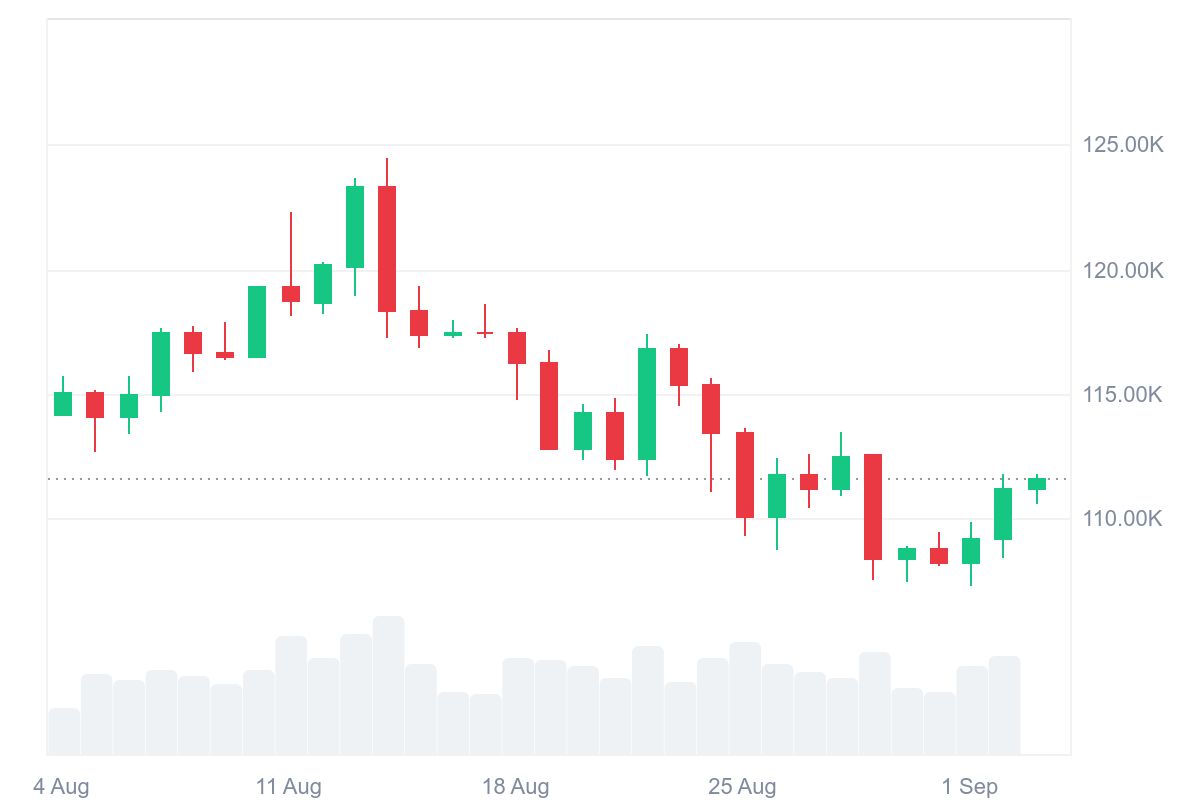
largest digital asset traded around $111,533 on Wednesday afternoon, marking a
more than 4% gain across three trading sessions. The price had briefly touched
$107,000 on Monday, its lowest level since early July, before beginning its
current upward trajectory.
The
recovery brings Bitcoin back into a critical support zone between
$110,000-$111,000, an area defined by previous highs from May and June that I
have been watching closely in my previous technical analyses.
Bitcoin price today. Source: CoinMarketCap.com
Technical
indicators suggest the recent decline may be losing steam. Bitcoin managed
to close above a key downward trend line Tuesday for the first time since
August 13, a development that many traders view as confirmation of a potential
trend reversal.
The
cryptocurrency's relative strength index has also shown bullish divergence
patterns, another signal that often precedes price recoveries in technical
analysis.
Why Is Bitcoin Price Going
Up? Whale Activity and Institutional Interest
"The
whale rotation from Bitcoin (BTC) to Ethereum (ETH) that took BTC below
$110,000 has taken a pause and most likely is almost complete now," Howard
said. "What I expect we see is a gradual grind higher with institutional
flows coming back into BTC."
The
institutional narrative remains particularly compelling as Bitcoin
exchange-traded funds continue attracting capital despite recent price
volatility. Market participants are closely watching for signs of renewed
institutional buying, which helped drive Bitcoin to record highs above $124,000
last month.
Trading
data reveals significant liquidation clusters building above current price
levels, with approximately $90 million in short positions vulnerable to
liquidation around $112,200. This suggests substantial upward pressure could
emerge if Bitcoin continues its current trajectory.
Bitcoin September Patterns
and Market Outlook
Historically,
September has proven challenging for bitcoin, with the month typically showing
weaker performance compared to other periods. However, this year's backdrop
includes several factors that could disrupt typical seasonal patterns.
"September
is historically a poor performing month from a price perspective," Howard
acknowledged. "However, I believe it could surprise by month-end given
institutional interest and the consistent volumes we are seeing from OTC buyers
this week."
Jamie Elkaleh, Chief Marketing Officer at Bitget Wallet
Jamie Elkaleh, Chief Marketing Officer at Bitget Wallet, notes that while September has historically been weak for Bitcoin, this year's decline maintains that seasonal pattern. However, the current environment presents more complexity than in previous years.
Federal
Reserve policy expectations add another layer of complexity to the current
market environment. With rate cuts now considered highly probable, some
analysts expect increased liquidity flows into risk assets, including
cryptocurrencies.
The broader
cryptocurrency market has shown signs of rotation, with bitcoin dominance
falling from 61% to 57% over the past month. Ethereum and Solana have
significantly outperformed bitcoin during this period, gaining 21% and 27.5%
respectively over the 30-day timeframe.
Stablecoin Infrastructure
as Growth Driver
Looking
beyond immediate price movements, industry participants see stablecoins as a
potential catalyst for broader cryptocurrency adoption. Howard forecasts that
stablecoins will attract the majority of new capital entering the
cryptocurrency ecosystem over the next 18 months.
"Stablecoins
will attract capital as an alternative to FX and cross-currency payment
services," he said. "With growth in trade financing particularly
around MENA, South America & APAC, Stablecoins will act as a gateway to
some of the majors."
This
infrastructure development could provide fundamental support for Bitcoin
and other major cryptocurrencies as traditional businesses become more
comfortable with digital asset operations.
The current
price action occurs against a backdrop of continued regulatory clarity in the
United States and growing corporate adoption of cryptocurrency treasuries.
While volatility remains elevated, many market participants view recent price
levels as attractive entry points for longer-term positions.
For now,
traders are watching key resistance levels around $112,000-$114,000, where
significant liquidation activity could either accelerate gains or provide
selling pressure depending on market momentum.
Bitcoin price
(BTC) staged a notable recovery today, Wednesday, 3 September 2025, climbing
above $111,000 after breaking through a two-week downtrend that had pressured
the cryptocurrency since mid-August.
Bitcoin Price Today Is
Back Above Important Level
The world's
largest digital asset traded around $111,533 on Wednesday afternoon, marking a
more than 4% gain across three trading sessions. The price had briefly touched
$107,000 on Monday, its lowest level since early July, before beginning its
current upward trajectory.
The
recovery brings Bitcoin back into a critical support zone between
$110,000-$111,000, an area defined by previous highs from May and June that I
have been watching closely in my previous technical analyses.
Bitcoin price today. Source: CoinMarketCap.com
Technical
indicators suggest the recent decline may be losing steam. Bitcoin managed
to close above a key downward trend line Tuesday for the first time since
August 13, a development that many traders view as confirmation of a potential
trend reversal.
The
cryptocurrency's relative strength index has also shown bullish divergence
patterns, another signal that often precedes price recoveries in technical
analysis.
Why Is Bitcoin Price Going
Up? Whale Activity and Institutional Interest
"The
whale rotation from Bitcoin (BTC) to Ethereum (ETH) that took BTC below
$110,000 has taken a pause and most likely is almost complete now," Howard
said. "What I expect we see is a gradual grind higher with institutional
flows coming back into BTC."
The
institutional narrative remains particularly compelling as Bitcoin
exchange-traded funds continue attracting capital despite recent price
volatility. Market participants are closely watching for signs of renewed
institutional buying, which helped drive Bitcoin to record highs above $124,000
last month.
Trading
data reveals significant liquidation clusters building above current price
levels, with approximately $90 million in short positions vulnerable to
liquidation around $112,200. This suggests substantial upward pressure could
emerge if Bitcoin continues its current trajectory.
Bitcoin September Patterns
and Market Outlook
Historically,
September has proven challenging for bitcoin, with the month typically showing
weaker performance compared to other periods. However, this year's backdrop
includes several factors that could disrupt typical seasonal patterns.
"September
is historically a poor performing month from a price perspective," Howard
acknowledged. "However, I believe it could surprise by month-end given
institutional interest and the consistent volumes we are seeing from OTC buyers
this week."
Jamie Elkaleh, Chief Marketing Officer at Bitget Wallet
Jamie Elkaleh, Chief Marketing Officer at Bitget Wallet, notes that while September has historically been weak for Bitcoin, this year's decline maintains that seasonal pattern. However, the current environment presents more complexity than in previous years.
Federal
Reserve policy expectations add another layer of complexity to the current
market environment. With rate cuts now considered highly probable, some
analysts expect increased liquidity flows into risk assets, including
cryptocurrencies.
The broader
cryptocurrency market has shown signs of rotation, with bitcoin dominance
falling from 61% to 57% over the past month. Ethereum and Solana have
significantly outperformed bitcoin during this period, gaining 21% and 27.5%
respectively over the 30-day timeframe.
Stablecoin Infrastructure
as Growth Driver
Looking
beyond immediate price movements, industry participants see stablecoins as a
potential catalyst for broader cryptocurrency adoption. Howard forecasts that
stablecoins will attract the majority of new capital entering the
cryptocurrency ecosystem over the next 18 months.
"Stablecoins
will attract capital as an alternative to FX and cross-currency payment
services," he said. "With growth in trade financing particularly
around MENA, South America & APAC, Stablecoins will act as a gateway to
some of the majors."
This
infrastructure development could provide fundamental support for Bitcoin
and other major cryptocurrencies as traditional businesses become more
comfortable with digital asset operations.
The current
price action occurs against a backdrop of continued regulatory clarity in the
United States and growing corporate adoption of cryptocurrency treasuries.
While volatility remains elevated, many market participants view recent price
levels as attractive entry points for longer-term positions.
For now,
traders are watching key resistance levels around $112,000-$114,000, where
significant liquidation activity could either accelerate gains or provide
selling pressure depending on market momentum.
Damian Chmiel is a Senior Analyst & Editor at Finance Magnates with more than 15 years of experience in the CFD and online trading industry. Active as both a trader and journalist since 2010, he focuses on broker coverage, fintech innovation, and regulatory developments across Europe, the Middle East, and Asia.
His work includes interviews with C-level leaders at major brokerages and fintech platforms, as well as co-authoring Finance Magnates’ quarterly industry benchmarking reports. Damian’s reporting is data-driven, market-aware, and grounded in direct industry engagement. His analysis and commentary have also been cited by external media outlets, including Investing.com, Binance, The Asset, Stockhead, and Dispatch.
Education:
MA in Finance and Accounting, Cracow University of Economics
Why Is Dogecoin Going Up Today? DOGE Price Prediction Shows 25% Upside Potential
Featured Videos
AvaTrade to Acquire Most of FXCM; NAGA Raises $8M
AvaTrade to Acquire Most of FXCM; NAGA Raises $8M
AvaTrade to Acquire Most of FXCM; NAGA Raises $8M
AvaTrade to Acquire Most of FXCM; NAGA Raises $8M
Today’s financial news recap covers AvaTrade agrees to acquire most of FXCM, NAGA secures eight million dollars in new financing, and Wise seeks a tax settlement in the UK.
Finance Magnates Daily Recap brings you the latest news from forex and CFD brokers, fintech, payments, cryptocurrency, digital assets, trading platforms, financial regulation and global markets.
Get the key company news, executive moves, deals, regulatory updates and market developments of the day, in just a few minutes. New episodes published every weekday.
Read more: https://www.financemagnates.com
#FinanceMagnates #ForexNews #FintechNews
Today’s financial news recap covers AvaTrade agrees to acquire most of FXCM, NAGA secures eight million dollars in new financing, and Wise seeks a tax settlement in the UK.
Finance Magnates Daily Recap brings you the latest news from forex and CFD brokers, fintech, payments, cryptocurrency, digital assets, trading platforms, financial regulation and global markets.
Get the key company news, executive moves, deals, regulatory updates and market developments of the day, in just a few minutes. New episodes published every weekday.
Read more: https://www.financemagnates.com
#FinanceMagnates #ForexNews #FintechNews
Today’s financial news recap covers AvaTrade agrees to acquire most of FXCM, NAGA secures eight million dollars in new financing, and Wise seeks a tax settlement in the UK.
Finance Magnates Daily Recap brings you the latest news from forex and CFD brokers, fintech, payments, cryptocurrency, digital assets, trading platforms, financial regulation and global markets.
Get the key company news, executive moves, deals, regulatory updates and market developments of the day, in just a few minutes. New episodes published every weekday.
Read more: https://www.financemagnates.com
#FinanceMagnates #ForexNews #FintechNews
Today’s financial news recap covers AvaTrade agrees to acquire most of FXCM, NAGA secures eight million dollars in new financing, and Wise seeks a tax settlement in the UK.
Finance Magnates Daily Recap brings you the latest news from forex and CFD brokers, fintech, payments, cryptocurrency, digital assets, trading platforms, financial regulation and global markets.
Get the key company news, executive moves, deals, regulatory updates and market developments of the day, in just a few minutes. New episodes published every weekday.
Read more: https://www.financemagnates.com
#FinanceMagnates #ForexNews #FintechNews
XTB Adds Overnight US Stock Trading; Nasdaq Ventures Invests in One Trading
XTB Adds Overnight US Stock Trading; Nasdaq Ventures Invests in One Trading
XTB Adds Overnight US Stock Trading; Nasdaq Ventures Invests in One Trading
XTB Adds Overnight US Stock Trading; Nasdaq Ventures Invests in One Trading
XTB Adds Overnight US Stock Trading; Nasdaq Ventures Invests in One Trading
XTB Adds Overnight US Stock Trading; Nasdaq Ventures Invests in One Trading
Today’s financial news recap covers XTB expands overnight US stock trading, Fortrade reports higher revenue, Nasdaq backs One Trading, and Vest Labs raises 13 million dollars.
Finance Magnates Daily Recap brings you the latest news from forex and CFD brokers, fintech, payments, cryptocurrency, digital assets, trading platforms, financial regulation and global markets.
Get the key company news, executive moves, deals, regulatory updates and market developments of the day, in just a few minutes. New episodes published every weekday.
Read more: https://www.financemagnates.com
#FinanceMagnates #ForexNews #FintechNews
Today’s financial news recap covers XTB expands overnight US stock trading, Fortrade reports higher revenue, Nasdaq backs One Trading, and Vest Labs raises 13 million dollars.
Finance Magnates Daily Recap brings you the latest news from forex and CFD brokers, fintech, payments, cryptocurrency, digital assets, trading platforms, financial regulation and global markets.
Get the key company news, executive moves, deals, regulatory updates and market developments of the day, in just a few minutes. New episodes published every weekday.
Read more: https://www.financemagnates.com
#FinanceMagnates #ForexNews #FintechNews
Today’s financial news recap covers XTB expands overnight US stock trading, Fortrade reports higher revenue, Nasdaq backs One Trading, and Vest Labs raises 13 million dollars.
Finance Magnates Daily Recap brings you the latest news from forex and CFD brokers, fintech, payments, cryptocurrency, digital assets, trading platforms, financial regulation and global markets.
Get the key company news, executive moves, deals, regulatory updates and market developments of the day, in just a few minutes. New episodes published every weekday.
Read more: https://www.financemagnates.com
#FinanceMagnates #ForexNews #FintechNews
Today’s financial news recap covers XTB expands overnight US stock trading, Fortrade reports higher revenue, Nasdaq backs One Trading, and Vest Labs raises 13 million dollars.
Finance Magnates Daily Recap brings you the latest news from forex and CFD brokers, fintech, payments, cryptocurrency, digital assets, trading platforms, financial regulation and global markets.
Get the key company news, executive moves, deals, regulatory updates and market developments of the day, in just a few minutes. New episodes published every weekday.
Read more: https://www.financemagnates.com
#FinanceMagnates #ForexNews #FintechNews
Today’s financial news recap covers XTB expands overnight US stock trading, Fortrade reports higher revenue, Nasdaq backs One Trading, and Vest Labs raises 13 million dollars.
Finance Magnates Daily Recap brings you the latest news from forex and CFD brokers, fintech, payments, cryptocurrency, digital assets, trading platforms, financial regulation and global markets.
Get the key company news, executive moves, deals, regulatory updates and market developments of the day, in just a few minutes. New episodes published every weekday.
Read more: https://www.financemagnates.com
#FinanceMagnates #ForexNews #FintechNews
Today’s financial news recap covers XTB expands overnight US stock trading, Fortrade reports higher revenue, Nasdaq backs One Trading, and Vest Labs raises 13 million dollars.
Finance Magnates Daily Recap brings you the latest news from forex and CFD brokers, fintech, payments, cryptocurrency, digital assets, trading platforms, financial regulation and global markets.
Get the key company news, executive moves, deals, regulatory updates and market developments of the day, in just a few minutes. New episodes published every weekday.
Read more: https://www.financemagnates.com
#FinanceMagnates #ForexNews #FintechNews
CMC Founder Downplays Volatility Hit; Devexperts Names CEO
CMC Founder Downplays Volatility Hit; Devexperts Names CEO
CMC Founder Downplays Volatility Hit; Devexperts Names CEO
CMC Founder Downplays Volatility Hit; Devexperts Names CEO
CMC Founder Downplays Volatility Hit; Devexperts Names CEO
CMC Founder Downplays Volatility Hit; Devexperts Names CEO
Today’s financial news recap covers low volatility pressures brokers, Devexperts names a new CEO, Saxo cuts onboarding time, and OKX reaches a 25 billion dollar valuation.
Finance Magnates Daily Recap brings you the latest news from forex and CFD brokers, fintech, payments, cryptocurrency, digital assets, trading platforms, financial regulation and global markets.
Get the key company news, executive moves, deals, regulatory updates and market developments of the day, in just a few minutes. New episodes published every weekday.
Read more: https://www.financemagnates.com
#FinanceMagnates #ForexNews #FintechNews
Today’s financial news recap covers low volatility pressures brokers, Devexperts names a new CEO, Saxo cuts onboarding time, and OKX reaches a 25 billion dollar valuation.
Finance Magnates Daily Recap brings you the latest news from forex and CFD brokers, fintech, payments, cryptocurrency, digital assets, trading platforms, financial regulation and global markets.
Get the key company news, executive moves, deals, regulatory updates and market developments of the day, in just a few minutes. New episodes published every weekday.
Read more: https://www.financemagnates.com
#FinanceMagnates #ForexNews #FintechNews
Today’s financial news recap covers low volatility pressures brokers, Devexperts names a new CEO, Saxo cuts onboarding time, and OKX reaches a 25 billion dollar valuation.
Finance Magnates Daily Recap brings you the latest news from forex and CFD brokers, fintech, payments, cryptocurrency, digital assets, trading platforms, financial regulation and global markets.
Get the key company news, executive moves, deals, regulatory updates and market developments of the day, in just a few minutes. New episodes published every weekday.
Read more: https://www.financemagnates.com
#FinanceMagnates #ForexNews #FintechNews
Today’s financial news recap covers low volatility pressures brokers, Devexperts names a new CEO, Saxo cuts onboarding time, and OKX reaches a 25 billion dollar valuation.
Finance Magnates Daily Recap brings you the latest news from forex and CFD brokers, fintech, payments, cryptocurrency, digital assets, trading platforms, financial regulation and global markets.
Get the key company news, executive moves, deals, regulatory updates and market developments of the day, in just a few minutes. New episodes published every weekday.
Read more: https://www.financemagnates.com
#FinanceMagnates #ForexNews #FintechNews
Today’s financial news recap covers low volatility pressures brokers, Devexperts names a new CEO, Saxo cuts onboarding time, and OKX reaches a 25 billion dollar valuation.
Finance Magnates Daily Recap brings you the latest news from forex and CFD brokers, fintech, payments, cryptocurrency, digital assets, trading platforms, financial regulation and global markets.
Get the key company news, executive moves, deals, regulatory updates and market developments of the day, in just a few minutes. New episodes published every weekday.
Read more: https://www.financemagnates.com
#FinanceMagnates #ForexNews #FintechNews
Today’s financial news recap covers low volatility pressures brokers, Devexperts names a new CEO, Saxo cuts onboarding time, and OKX reaches a 25 billion dollar valuation.
Finance Magnates Daily Recap brings you the latest news from forex and CFD brokers, fintech, payments, cryptocurrency, digital assets, trading platforms, financial regulation and global markets.
Get the key company news, executive moves, deals, regulatory updates and market developments of the day, in just a few minutes. New episodes published every weekday.
Read more: https://www.financemagnates.com
#FinanceMagnates #ForexNews #FintechNews
Today’s financial news recap covers Trade Nation buys FXCM's UK client book, Trading 212 reports higher revenue, the CFTC's move to allow perpetual index futures.
Finance Magnates Daily Recap brings you the latest news from forex and CFD brokers, fintech, payments, cryptocurrency, digital assets, trading platforms, financial regulation and global markets.
Get the key company news, executive moves, deals, regulatory updates and market developments of the day, in just a few minutes. New episodes published every weekday.
Read more: https://www.financemagnates.com
#FinanceMagnates #ForexNews #FintechNews
Today’s financial news recap covers Trade Nation buys FXCM's UK client book, Trading 212 reports higher revenue, the CFTC's move to allow perpetual index futures.
Finance Magnates Daily Recap brings you the latest news from forex and CFD brokers, fintech, payments, cryptocurrency, digital assets, trading platforms, financial regulation and global markets.
Get the key company news, executive moves, deals, regulatory updates and market developments of the day, in just a few minutes. New episodes published every weekday.
Read more: https://www.financemagnates.com
#FinanceMagnates #ForexNews #FintechNews
Today’s financial news recap covers Trade Nation buys FXCM's UK client book, Trading 212 reports higher revenue, the CFTC's move to allow perpetual index futures.
Finance Magnates Daily Recap brings you the latest news from forex and CFD brokers, fintech, payments, cryptocurrency, digital assets, trading platforms, financial regulation and global markets.
Get the key company news, executive moves, deals, regulatory updates and market developments of the day, in just a few minutes. New episodes published every weekday.
Read more: https://www.financemagnates.com
#FinanceMagnates #ForexNews #FintechNews
Today’s financial news recap covers Trade Nation buys FXCM's UK client book, Trading 212 reports higher revenue, the CFTC's move to allow perpetual index futures.
Finance Magnates Daily Recap brings you the latest news from forex and CFD brokers, fintech, payments, cryptocurrency, digital assets, trading platforms, financial regulation and global markets.
Get the key company news, executive moves, deals, regulatory updates and market developments of the day, in just a few minutes. New episodes published every weekday.
Read more: https://www.financemagnates.com
#FinanceMagnates #ForexNews #FintechNews
Today’s financial news recap covers Trade Nation buys FXCM's UK client book, Trading 212 reports higher revenue, the CFTC's move to allow perpetual index futures.
Finance Magnates Daily Recap brings you the latest news from forex and CFD brokers, fintech, payments, cryptocurrency, digital assets, trading platforms, financial regulation and global markets.
Get the key company news, executive moves, deals, regulatory updates and market developments of the day, in just a few minutes. New episodes published every weekday.
Read more: https://www.financemagnates.com
#FinanceMagnates #ForexNews #FintechNews
Today’s financial news recap covers Trade Nation buys FXCM's UK client book, Trading 212 reports higher revenue, the CFTC's move to allow perpetual index futures.
Finance Magnates Daily Recap brings you the latest news from forex and CFD brokers, fintech, payments, cryptocurrency, digital assets, trading platforms, financial regulation and global markets.
Get the key company news, executive moves, deals, regulatory updates and market developments of the day, in just a few minutes. New episodes published every weekday.
Read more: https://www.financemagnates.com
#FinanceMagnates #ForexNews #FintechNews
Your career isn’t a linear path.
Your career isn’t a linear path.
Your career isn’t a linear path.
Your career isn’t a linear path.
Your career isn’t a linear path.
Your career isn’t a linear path.
Roles change. Career goals change. Sometimes you want a completely new challenge.
But the skills and knowledge you build along the way can stay with you and give you something to build on.
For Jeff Patterson, that continued growth is key to long-term career development.
You bring the skills. FM Academy helps you build the knowledge.
#FMAcademy #FinanceMagnates #FinanceCareers #ProfessionalDevelopment #Fintech
Roles change. Career goals change. Sometimes you want a completely new challenge.
But the skills and knowledge you build along the way can stay with you and give you something to build on.
For Jeff Patterson, that continued growth is key to long-term career development.
You bring the skills. FM Academy helps you build the knowledge.
#FMAcademy #FinanceMagnates #FinanceCareers #ProfessionalDevelopment #Fintech
Roles change. Career goals change. Sometimes you want a completely new challenge.
But the skills and knowledge you build along the way can stay with you and give you something to build on.
For Jeff Patterson, that continued growth is key to long-term career development.
You bring the skills. FM Academy helps you build the knowledge.
#FMAcademy #FinanceMagnates #FinanceCareers #ProfessionalDevelopment #Fintech
Roles change. Career goals change. Sometimes you want a completely new challenge.
But the skills and knowledge you build along the way can stay with you and give you something to build on.
For Jeff Patterson, that continued growth is key to long-term career development.
You bring the skills. FM Academy helps you build the knowledge.
#FMAcademy #FinanceMagnates #FinanceCareers #ProfessionalDevelopment #Fintech
Roles change. Career goals change. Sometimes you want a completely new challenge.
But the skills and knowledge you build along the way can stay with you and give you something to build on.
For Jeff Patterson, that continued growth is key to long-term career development.
You bring the skills. FM Academy helps you build the knowledge.
#FMAcademy #FinanceMagnates #FinanceCareers #ProfessionalDevelopment #Fintech
Roles change. Career goals change. Sometimes you want a completely new challenge.
But the skills and knowledge you build along the way can stay with you and give you something to build on.
For Jeff Patterson, that continued growth is key to long-term career development.
You bring the skills. FM Academy helps you build the knowledge.
#FMAcademy #FinanceMagnates #FinanceCareers #ProfessionalDevelopment #Fintech