Strategists tie part of this week's Nasdaq selloff to investors raising money for the record listing.
Retail buyers are crowding in even as experts warn the valuation is stretched.
SpaceX
prices its initial public offering (IPO) after Thursday's close and starts
trading Friday on Nasdaq, and the size of the deal is already moving everything
around it.
The company
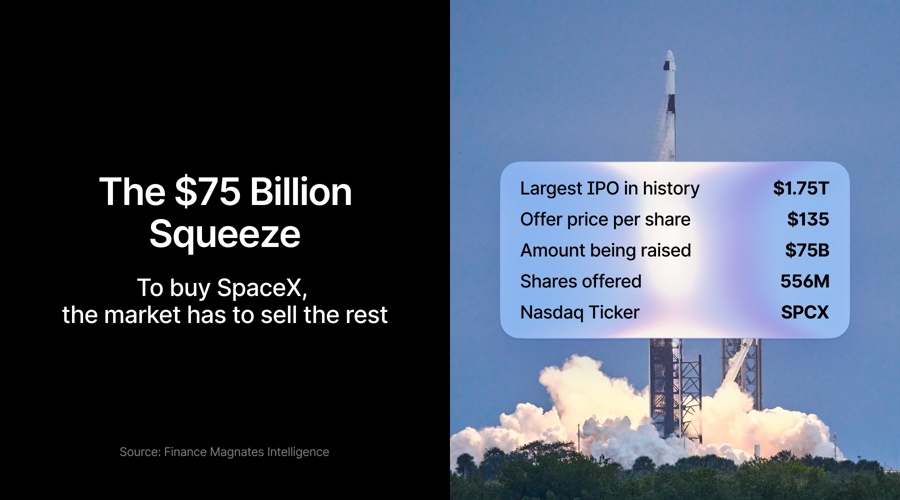
is selling 555.6 million shares at a fixed $135, raising about $75 billion at a
valuation near $1.8 trillion. That would be the largest listing on record, and
to buy it, someone has to sell something else.
The $50 Billion Rotation
Out of Everything Else
The math is
blunt. A $75 billion offering has to be funded with $75 billion in cash, and
most of that cash currently sits inside other stocks.
Eric Chia, Financial Markets Analyst at Exness
The pull is
already visible. Eric Chia, Financial Markets Analyst at Exness, framed the debut as an event built for
movement and told clients to brace for the swings once it lists. "The
question is not whether SpaceX will move violently. It will," he said.
Other
analysts estimate investors could sell around $50 billion of other holdings to
fund SPCX, with the heaviest pressure coming from the 30% retail carve-out and
from passive funds.
Kathleen Brooks, Research Director at XTB, Source: YouTube
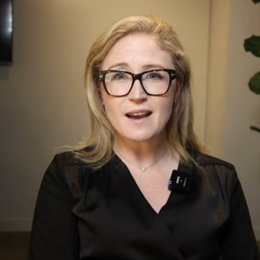
Kathleen
Brooks, research director at XTB, put the rotation plainly, saying
"investors may need to sell other tech names to make room for
SpaceX." She tied that to this week's swings, with the VIX fear gauge up
about 24% in five sessions.
Why This Listing Hits
Harder Than Aramco
Mega-IPOs
always bring volatility. What sets this one apart is scale, since the deal
would more than double Saudi Aramco's 2019 record and value SpaceX at a level few public companies have ever
touched.
Index
mechanics add to the pressure. Nasdaq's new fast-entry rule could fold SpaceX
into the Nasdaq 100 within 15 trading days, forcing the funds that track the
benchmark to buy it and trim existing members to make room.
The deal
also lands in a crowded pipeline. OpenAI filed confidentially for a listing
this week and Anthropic did the same last week, and Bloomberg calculates the
three could add about $3.6 trillion of market value to US exchanges.
For all the
selling, the book is crowded. Orders ran more than four times the shares on
offer, according to people familiar with the deal, before banks closed institutional demand on
Wednesday.
Goldman
Sachs, Morgan Stanley, Bank of America, Citigroup and JPMorgan are leading the
offering, with 18 other banks involved. Musk reserved 30% of the stock for
retail, triple the usual slice.
The loudest
enthusiasm is retail. Bloomberg reported buyers borrowing money to get in,
including a public relations manager, Anna Watts, who saved $6,500, tried to
borrow more, and said "The more, the better."
Brokers, Exchanges and
Prop Firms Race to Sell the Deal
The
scramble to put SpaceX in front of small investors has split into three very different trades, and the route a buyer takes
decides what they actually own.
The first
is a real allocation at the $135 price, offered in the US through Robinhood,
Fidelity, Charles Schwab, SoFi and E*Trade, and to UK residents through
Interactive Brokers.
Not
everyone is chasing it. SpaceX posted 2025 revenue of $18.67 billion and a net
loss of $4.94 billion, a top line close to what Dollar Tree or AutoZone bring
in, while its xAI arm burns through about $1 billion a month.
At about
$1.8 trillion, the stock is priced near 56 times forward revenue, with much of
the case resting on forecasts that run years out. Goldman's prospectus models
$474 billion of revenue by 2030, most of it from an AI business that barely
exists yet.
Van Ha Trinh, a Financial Markets Analyst at Exness
Van Ha
Trinh, a Financial Markets Analyst at Exness, made the same point reading the
filing, arguing the company is "priced as though it has already won a war
it has not yet entered."
XTB's own
client research found muted interest across 14 European and Asian branches,
with enquiries in the low hundreds and some Slovak clients asking only when
they could short the stock.
Brooks said
"our clients are showing some healthy skepticism of Elon Musk's
ambitions."
Morningstar analyst Nicolas Owens
Morningstar's
Nicolas Owens, who rates the company overvalued, wrote that "investors
will have opportunities to buy the stock at more attractive levels..."
once it trades.
The
tokenized route carries its own caveats, and earlier SpaceX tokens already drew scrutiny from European
regulators. The
prospectus also leaves Musk with about 85.1% of the vote through super-voting
shares, so public holders get little say.
Whether the
crowding-out reverses will not be clear until SPCX prints. For now, the largest
IPO ever is making the rest of the market clear space for it.
SpaceX
prices its initial public offering (IPO) after Thursday's close and starts
trading Friday on Nasdaq, and the size of the deal is already moving everything
around it.
The company
is selling 555.6 million shares at a fixed $135, raising about $75 billion at a
valuation near $1.8 trillion. That would be the largest listing on record, and
to buy it, someone has to sell something else.
The $50 Billion Rotation
Out of Everything Else
The math is
blunt. A $75 billion offering has to be funded with $75 billion in cash, and
most of that cash currently sits inside other stocks.
Eric Chia, Financial Markets Analyst at Exness
The pull is
already visible. Eric Chia, Financial Markets Analyst at Exness, framed the debut as an event built for
movement and told clients to brace for the swings once it lists. "The
question is not whether SpaceX will move violently. It will," he said.
Other
analysts estimate investors could sell around $50 billion of other holdings to
fund SPCX, with the heaviest pressure coming from the 30% retail carve-out and
from passive funds.
Kathleen Brooks, Research Director at XTB, Source: YouTube
Kathleen
Brooks, research director at XTB, put the rotation plainly, saying
"investors may need to sell other tech names to make room for
SpaceX." She tied that to this week's swings, with the VIX fear gauge up
about 24% in five sessions.
Why This Listing Hits
Harder Than Aramco
Mega-IPOs
always bring volatility. What sets this one apart is scale, since the deal
would more than double Saudi Aramco's 2019 record and value SpaceX at a level few public companies have ever
touched.
Index
mechanics add to the pressure. Nasdaq's new fast-entry rule could fold SpaceX
into the Nasdaq 100 within 15 trading days, forcing the funds that track the
benchmark to buy it and trim existing members to make room.
The deal
also lands in a crowded pipeline. OpenAI filed confidentially for a listing
this week and Anthropic did the same last week, and Bloomberg calculates the
three could add about $3.6 trillion of market value to US exchanges.
For all the
selling, the book is crowded. Orders ran more than four times the shares on
offer, according to people familiar with the deal, before banks closed institutional demand on
Wednesday.
Goldman
Sachs, Morgan Stanley, Bank of America, Citigroup and JPMorgan are leading the
offering, with 18 other banks involved. Musk reserved 30% of the stock for
retail, triple the usual slice.
The loudest
enthusiasm is retail. Bloomberg reported buyers borrowing money to get in,
including a public relations manager, Anna Watts, who saved $6,500, tried to
borrow more, and said "The more, the better."
Brokers, Exchanges and
Prop Firms Race to Sell the Deal
The
scramble to put SpaceX in front of small investors has split into three very different trades, and the route a buyer takes
decides what they actually own.
The first
is a real allocation at the $135 price, offered in the US through Robinhood,
Fidelity, Charles Schwab, SoFi and E*Trade, and to UK residents through
Interactive Brokers.
Not
everyone is chasing it. SpaceX posted 2025 revenue of $18.67 billion and a net
loss of $4.94 billion, a top line close to what Dollar Tree or AutoZone bring
in, while its xAI arm burns through about $1 billion a month.
At about
$1.8 trillion, the stock is priced near 56 times forward revenue, with much of
the case resting on forecasts that run years out. Goldman's prospectus models
$474 billion of revenue by 2030, most of it from an AI business that barely
exists yet.
Van Ha Trinh, a Financial Markets Analyst at Exness
Van Ha
Trinh, a Financial Markets Analyst at Exness, made the same point reading the
filing, arguing the company is "priced as though it has already won a war
it has not yet entered."
XTB's own
client research found muted interest across 14 European and Asian branches,
with enquiries in the low hundreds and some Slovak clients asking only when
they could short the stock.
Brooks said
"our clients are showing some healthy skepticism of Elon Musk's
ambitions."
Morningstar analyst Nicolas Owens
Morningstar's
Nicolas Owens, who rates the company overvalued, wrote that "investors
will have opportunities to buy the stock at more attractive levels..."
once it trades.
The
tokenized route carries its own caveats, and earlier SpaceX tokens already drew scrutiny from European
regulators. The
prospectus also leaves Musk with about 85.1% of the vote through super-voting
shares, so public holders get little say.
Whether the
crowding-out reverses will not be clear until SPCX prints. For now, the largest
IPO ever is making the rest of the market clear space for it.
Damian Chmiel is a Senior Analyst & Editor at Finance Magnates with more than 15 years of experience in the CFD and online trading industry. Active as both a trader and journalist since 2010, he focuses on broker coverage, fintech innovation, and regulatory developments across Europe, the Middle East, and Asia.
His work includes interviews with C-level leaders at major brokerages and fintech platforms, as well as co-authoring Finance Magnates’ quarterly industry benchmarking reports. Damian’s reporting is data-driven, market-aware, and grounded in direct industry engagement. His analysis and commentary have also been cited by external media outlets, including Investing.com, Binance, The Asset, Stockhead, and Dispatch.
Education:
MA in Finance and Accounting, Cracow University of Economics
Why Is Bitcoin Up Today? BTC Price Hits Highest Level Since January Above $87,000
Featured Videos
FxPro Sells EU Clients to Capital.com; NAGA H1 Profit Revised
FxPro Sells EU Clients to Capital.com; NAGA H1 Profit Revised
FxPro Sells EU Clients to Capital.com; NAGA H1 Profit Revised
FxPro Sells EU Clients to Capital.com; NAGA H1 Profit Revised
Today’s financial news recap covers FxPro agrees to sell its European client book to Capital.com, NAGA raises its first-half profit estimate, Trade Republic prepares a fee-free pension account, and Interactive Brokers introduces Ether staking.
Finance Magnates Daily Recap brings you the latest news from forex and CFD brokers, fintech, payments, cryptocurrency, digital assets, trading platforms, financial regulation and global markets.
Get the key company news, executive moves, deals, regulatory updates and market developments of the day, in just a few minutes. New episodes published every weekday.
Read more: https://www.financemagnates.com
#FinanceMagnates #ForexNews #FintechNews
Today’s financial news recap covers FxPro agrees to sell its European client book to Capital.com, NAGA raises its first-half profit estimate, Trade Republic prepares a fee-free pension account, and Interactive Brokers introduces Ether staking.
Finance Magnates Daily Recap brings you the latest news from forex and CFD brokers, fintech, payments, cryptocurrency, digital assets, trading platforms, financial regulation and global markets.
Get the key company news, executive moves, deals, regulatory updates and market developments of the day, in just a few minutes. New episodes published every weekday.
Read more: https://www.financemagnates.com
#FinanceMagnates #ForexNews #FintechNews
Today’s financial news recap covers FxPro agrees to sell its European client book to Capital.com, NAGA raises its first-half profit estimate, Trade Republic prepares a fee-free pension account, and Interactive Brokers introduces Ether staking.
Finance Magnates Daily Recap brings you the latest news from forex and CFD brokers, fintech, payments, cryptocurrency, digital assets, trading platforms, financial regulation and global markets.
Get the key company news, executive moves, deals, regulatory updates and market developments of the day, in just a few minutes. New episodes published every weekday.
Read more: https://www.financemagnates.com
#FinanceMagnates #ForexNews #FintechNews
Today’s financial news recap covers FxPro agrees to sell its European client book to Capital.com, NAGA raises its first-half profit estimate, Trade Republic prepares a fee-free pension account, and Interactive Brokers introduces Ether staking.
Finance Magnates Daily Recap brings you the latest news from forex and CFD brokers, fintech, payments, cryptocurrency, digital assets, trading platforms, financial regulation and global markets.
Get the key company news, executive moves, deals, regulatory updates and market developments of the day, in just a few minutes. New episodes published every weekday.
Read more: https://www.financemagnates.com
#FinanceMagnates #ForexNews #FintechNews
Plus500 Plans US Super-App; Investec to Offer IG Platform
Plus500 Plans US Super-App; Investec to Offer IG Platform
Plus500 Plans US Super-App; Investec to Offer IG Platform
Plus500 Plans US Super-App; Investec to Offer IG Platform
Plus500 Plans US Super-App; Investec to Offer IG Platform
Plus500 Plans US Super-App; Investec to Offer IG Platform
Today’s financial news recap covers Plus500 plans a US trading super-app, Investec partners with IG, Trade Republic reports a sevenfold profit jump, and BingX adds thousands of US stocks.
Finance Magnates Daily Recap brings you the latest news from forex and CFD brokers, fintech, payments, cryptocurrency, digital assets, trading platforms, financial regulation and global markets.
Get the key company news, executive moves, deals, regulatory updates and market developments of the day, in just a few minutes. New episodes published every weekday.
Read more: https://www.financemagnates.com
#FinanceMagnates #ForexNews #FintechNews
Today’s financial news recap covers Plus500 plans a US trading super-app, Investec partners with IG, Trade Republic reports a sevenfold profit jump, and BingX adds thousands of US stocks.
Finance Magnates Daily Recap brings you the latest news from forex and CFD brokers, fintech, payments, cryptocurrency, digital assets, trading platforms, financial regulation and global markets.
Get the key company news, executive moves, deals, regulatory updates and market developments of the day, in just a few minutes. New episodes published every weekday.
Read more: https://www.financemagnates.com
#FinanceMagnates #ForexNews #FintechNews
Today’s financial news recap covers Plus500 plans a US trading super-app, Investec partners with IG, Trade Republic reports a sevenfold profit jump, and BingX adds thousands of US stocks.
Finance Magnates Daily Recap brings you the latest news from forex and CFD brokers, fintech, payments, cryptocurrency, digital assets, trading platforms, financial regulation and global markets.
Get the key company news, executive moves, deals, regulatory updates and market developments of the day, in just a few minutes. New episodes published every weekday.
Read more: https://www.financemagnates.com
#FinanceMagnates #ForexNews #FintechNews
Today’s financial news recap covers Plus500 plans a US trading super-app, Investec partners with IG, Trade Republic reports a sevenfold profit jump, and BingX adds thousands of US stocks.
Finance Magnates Daily Recap brings you the latest news from forex and CFD brokers, fintech, payments, cryptocurrency, digital assets, trading platforms, financial regulation and global markets.
Get the key company news, executive moves, deals, regulatory updates and market developments of the day, in just a few minutes. New episodes published every weekday.
Read more: https://www.financemagnates.com
#FinanceMagnates #ForexNews #FintechNews
Today’s financial news recap covers Plus500 plans a US trading super-app, Investec partners with IG, Trade Republic reports a sevenfold profit jump, and BingX adds thousands of US stocks.
Finance Magnates Daily Recap brings you the latest news from forex and CFD brokers, fintech, payments, cryptocurrency, digital assets, trading platforms, financial regulation and global markets.
Get the key company news, executive moves, deals, regulatory updates and market developments of the day, in just a few minutes. New episodes published every weekday.
Read more: https://www.financemagnates.com
#FinanceMagnates #ForexNews #FintechNews
Today’s financial news recap covers Plus500 plans a US trading super-app, Investec partners with IG, Trade Republic reports a sevenfold profit jump, and BingX adds thousands of US stocks.
Finance Magnates Daily Recap brings you the latest news from forex and CFD brokers, fintech, payments, cryptocurrency, digital assets, trading platforms, financial regulation and global markets.
Get the key company news, executive moves, deals, regulatory updates and market developments of the day, in just a few minutes. New episodes published every weekday.
Read more: https://www.financemagnates.com
#FinanceMagnates #ForexNews #FintechNews
FXCM UK Holds $110m in Client Money; IG CEO Questions Prediction Market Volumes
FXCM UK Holds $110m in Client Money; IG CEO Questions Prediction Market Volumes
FXCM UK Holds $110m in Client Money; IG CEO Questions Prediction Market Volumes
FXCM UK Holds $110m in Client Money; IG CEO Questions Prediction Market Volumes
FXCM UK Holds $110m in Client Money; IG CEO Questions Prediction Market Volumes
FXCM UK Holds $110m in Client Money; IG CEO Questions Prediction Market Volumes
Today’s financial news recap covers FXCM's UK arm holds $110 million in client money ahead of its sale to Trade Nation, Citadel Securities' UK profit falls 38 per cent, and Kraken secures its final Dubai crypto licence.
Finance Magnates Daily Recap brings you the latest news from forex and CFD brokers, fintech, payments, cryptocurrency, digital assets, trading platforms, financial regulation and global markets.
Get the key company news, executive moves, deals, regulatory updates and market developments of the day, in just a few minutes. New episodes published every weekday.
Read more: https://www.financemagnates.com
#FinanceMagnates #ForexNews #FintechNews
Today’s financial news recap covers FXCM's UK arm holds $110 million in client money ahead of its sale to Trade Nation, Citadel Securities' UK profit falls 38 per cent, and Kraken secures its final Dubai crypto licence.
Finance Magnates Daily Recap brings you the latest news from forex and CFD brokers, fintech, payments, cryptocurrency, digital assets, trading platforms, financial regulation and global markets.
Get the key company news, executive moves, deals, regulatory updates and market developments of the day, in just a few minutes. New episodes published every weekday.
Read more: https://www.financemagnates.com
#FinanceMagnates #ForexNews #FintechNews
Today’s financial news recap covers FXCM's UK arm holds $110 million in client money ahead of its sale to Trade Nation, Citadel Securities' UK profit falls 38 per cent, and Kraken secures its final Dubai crypto licence.
Finance Magnates Daily Recap brings you the latest news from forex and CFD brokers, fintech, payments, cryptocurrency, digital assets, trading platforms, financial regulation and global markets.
Get the key company news, executive moves, deals, regulatory updates and market developments of the day, in just a few minutes. New episodes published every weekday.
Read more: https://www.financemagnates.com
#FinanceMagnates #ForexNews #FintechNews
Today’s financial news recap covers FXCM's UK arm holds $110 million in client money ahead of its sale to Trade Nation, Citadel Securities' UK profit falls 38 per cent, and Kraken secures its final Dubai crypto licence.
Finance Magnates Daily Recap brings you the latest news from forex and CFD brokers, fintech, payments, cryptocurrency, digital assets, trading platforms, financial regulation and global markets.
Get the key company news, executive moves, deals, regulatory updates and market developments of the day, in just a few minutes. New episodes published every weekday.
Read more: https://www.financemagnates.com
#FinanceMagnates #ForexNews #FintechNews
Today’s financial news recap covers FXCM's UK arm holds $110 million in client money ahead of its sale to Trade Nation, Citadel Securities' UK profit falls 38 per cent, and Kraken secures its final Dubai crypto licence.
Finance Magnates Daily Recap brings you the latest news from forex and CFD brokers, fintech, payments, cryptocurrency, digital assets, trading platforms, financial regulation and global markets.
Get the key company news, executive moves, deals, regulatory updates and market developments of the day, in just a few minutes. New episodes published every weekday.
Read more: https://www.financemagnates.com
#FinanceMagnates #ForexNews #FintechNews
Today’s financial news recap covers FXCM's UK arm holds $110 million in client money ahead of its sale to Trade Nation, Citadel Securities' UK profit falls 38 per cent, and Kraken secures its final Dubai crypto licence.
Finance Magnates Daily Recap brings you the latest news from forex and CFD brokers, fintech, payments, cryptocurrency, digital assets, trading platforms, financial regulation and global markets.
Get the key company news, executive moves, deals, regulatory updates and market developments of the day, in just a few minutes. New episodes published every weekday.
Read more: https://www.financemagnates.com
#FinanceMagnates #ForexNews #FintechNews
AvaTrade to Acquire Most of FXCM; NAGA Raises $8M
AvaTrade to Acquire Most of FXCM; NAGA Raises $8M
AvaTrade to Acquire Most of FXCM; NAGA Raises $8M
AvaTrade to Acquire Most of FXCM; NAGA Raises $8M
AvaTrade to Acquire Most of FXCM; NAGA Raises $8M
AvaTrade to Acquire Most of FXCM; NAGA Raises $8M
Today’s financial news recap covers AvaTrade agrees to acquire most of FXCM, NAGA secures eight million dollars in new financing, and Wise seeks a tax settlement in the UK.
Finance Magnates Daily Recap brings you the latest news from forex and CFD brokers, fintech, payments, cryptocurrency, digital assets, trading platforms, financial regulation and global markets.
Get the key company news, executive moves, deals, regulatory updates and market developments of the day, in just a few minutes. New episodes published every weekday.
Read more: https://www.financemagnates.com
#FinanceMagnates #ForexNews #FintechNews
Today’s financial news recap covers AvaTrade agrees to acquire most of FXCM, NAGA secures eight million dollars in new financing, and Wise seeks a tax settlement in the UK.
Finance Magnates Daily Recap brings you the latest news from forex and CFD brokers, fintech, payments, cryptocurrency, digital assets, trading platforms, financial regulation and global markets.
Get the key company news, executive moves, deals, regulatory updates and market developments of the day, in just a few minutes. New episodes published every weekday.
Read more: https://www.financemagnates.com
#FinanceMagnates #ForexNews #FintechNews
Today’s financial news recap covers AvaTrade agrees to acquire most of FXCM, NAGA secures eight million dollars in new financing, and Wise seeks a tax settlement in the UK.
Finance Magnates Daily Recap brings you the latest news from forex and CFD brokers, fintech, payments, cryptocurrency, digital assets, trading platforms, financial regulation and global markets.
Get the key company news, executive moves, deals, regulatory updates and market developments of the day, in just a few minutes. New episodes published every weekday.
Read more: https://www.financemagnates.com
#FinanceMagnates #ForexNews #FintechNews
Today’s financial news recap covers AvaTrade agrees to acquire most of FXCM, NAGA secures eight million dollars in new financing, and Wise seeks a tax settlement in the UK.
Finance Magnates Daily Recap brings you the latest news from forex and CFD brokers, fintech, payments, cryptocurrency, digital assets, trading platforms, financial regulation and global markets.
Get the key company news, executive moves, deals, regulatory updates and market developments of the day, in just a few minutes. New episodes published every weekday.
Read more: https://www.financemagnates.com
#FinanceMagnates #ForexNews #FintechNews
Today’s financial news recap covers AvaTrade agrees to acquire most of FXCM, NAGA secures eight million dollars in new financing, and Wise seeks a tax settlement in the UK.
Finance Magnates Daily Recap brings you the latest news from forex and CFD brokers, fintech, payments, cryptocurrency, digital assets, trading platforms, financial regulation and global markets.
Get the key company news, executive moves, deals, regulatory updates and market developments of the day, in just a few minutes. New episodes published every weekday.
Read more: https://www.financemagnates.com
#FinanceMagnates #ForexNews #FintechNews
Today’s financial news recap covers AvaTrade agrees to acquire most of FXCM, NAGA secures eight million dollars in new financing, and Wise seeks a tax settlement in the UK.
Finance Magnates Daily Recap brings you the latest news from forex and CFD brokers, fintech, payments, cryptocurrency, digital assets, trading platforms, financial regulation and global markets.
Get the key company news, executive moves, deals, regulatory updates and market developments of the day, in just a few minutes. New episodes published every weekday.
Read more: https://www.financemagnates.com
#FinanceMagnates #ForexNews #FintechNews
XTB Adds Overnight US Stock Trading; Nasdaq Ventures Invests in One Trading
XTB Adds Overnight US Stock Trading; Nasdaq Ventures Invests in One Trading
XTB Adds Overnight US Stock Trading; Nasdaq Ventures Invests in One Trading
XTB Adds Overnight US Stock Trading; Nasdaq Ventures Invests in One Trading
XTB Adds Overnight US Stock Trading; Nasdaq Ventures Invests in One Trading
XTB Adds Overnight US Stock Trading; Nasdaq Ventures Invests in One Trading
Today’s financial news recap covers XTB expands overnight US stock trading, Fortrade reports higher revenue, Nasdaq backs One Trading, and Vest Labs raises 13 million dollars.
Finance Magnates Daily Recap brings you the latest news from forex and CFD brokers, fintech, payments, cryptocurrency, digital assets, trading platforms, financial regulation and global markets.
Get the key company news, executive moves, deals, regulatory updates and market developments of the day, in just a few minutes. New episodes published every weekday.
Read more: https://www.financemagnates.com
#FinanceMagnates #ForexNews #FintechNews
Today’s financial news recap covers XTB expands overnight US stock trading, Fortrade reports higher revenue, Nasdaq backs One Trading, and Vest Labs raises 13 million dollars.
Finance Magnates Daily Recap brings you the latest news from forex and CFD brokers, fintech, payments, cryptocurrency, digital assets, trading platforms, financial regulation and global markets.
Get the key company news, executive moves, deals, regulatory updates and market developments of the day, in just a few minutes. New episodes published every weekday.
Read more: https://www.financemagnates.com
#FinanceMagnates #ForexNews #FintechNews
Today’s financial news recap covers XTB expands overnight US stock trading, Fortrade reports higher revenue, Nasdaq backs One Trading, and Vest Labs raises 13 million dollars.
Finance Magnates Daily Recap brings you the latest news from forex and CFD brokers, fintech, payments, cryptocurrency, digital assets, trading platforms, financial regulation and global markets.
Get the key company news, executive moves, deals, regulatory updates and market developments of the day, in just a few minutes. New episodes published every weekday.
Read more: https://www.financemagnates.com
#FinanceMagnates #ForexNews #FintechNews
Today’s financial news recap covers XTB expands overnight US stock trading, Fortrade reports higher revenue, Nasdaq backs One Trading, and Vest Labs raises 13 million dollars.
Finance Magnates Daily Recap brings you the latest news from forex and CFD brokers, fintech, payments, cryptocurrency, digital assets, trading platforms, financial regulation and global markets.
Get the key company news, executive moves, deals, regulatory updates and market developments of the day, in just a few minutes. New episodes published every weekday.
Read more: https://www.financemagnates.com
#FinanceMagnates #ForexNews #FintechNews
Today’s financial news recap covers XTB expands overnight US stock trading, Fortrade reports higher revenue, Nasdaq backs One Trading, and Vest Labs raises 13 million dollars.
Finance Magnates Daily Recap brings you the latest news from forex and CFD brokers, fintech, payments, cryptocurrency, digital assets, trading platforms, financial regulation and global markets.
Get the key company news, executive moves, deals, regulatory updates and market developments of the day, in just a few minutes. New episodes published every weekday.
Read more: https://www.financemagnates.com
#FinanceMagnates #ForexNews #FintechNews
Today’s financial news recap covers XTB expands overnight US stock trading, Fortrade reports higher revenue, Nasdaq backs One Trading, and Vest Labs raises 13 million dollars.
Finance Magnates Daily Recap brings you the latest news from forex and CFD brokers, fintech, payments, cryptocurrency, digital assets, trading platforms, financial regulation and global markets.
Get the key company news, executive moves, deals, regulatory updates and market developments of the day, in just a few minutes. New episodes published every weekday.
Read more: https://www.financemagnates.com
#FinanceMagnates #ForexNews #FintechNews