Screen time is a huge problem, especially for children.
The pandemic sent the time spent in front of screens skyrocketing.
However, there are some things you can do.
Get off the phone. Now. (Photo: Bloomberg)
The pull of the internet is undeniable. It’s a source of news,
entertainment and more, it’s a way of keeping in touch, conducting business and
educating ourselves. But for many of us, and our families, screen time is out
of control.
COVID-19, an uninvited catalyst, significantly altered our digital
habits. According to the report, American adults saw a staggering 60% increase
in screen time, averaging over 13 hours a day. Children weren't spared either,
with their screen engagement soaring by two hours, a trend that persists. As
you’ll see later, that’s way too much. We were desperate to entertain ourselves
and we picked up bad, bad habits.
The American Screen Scene
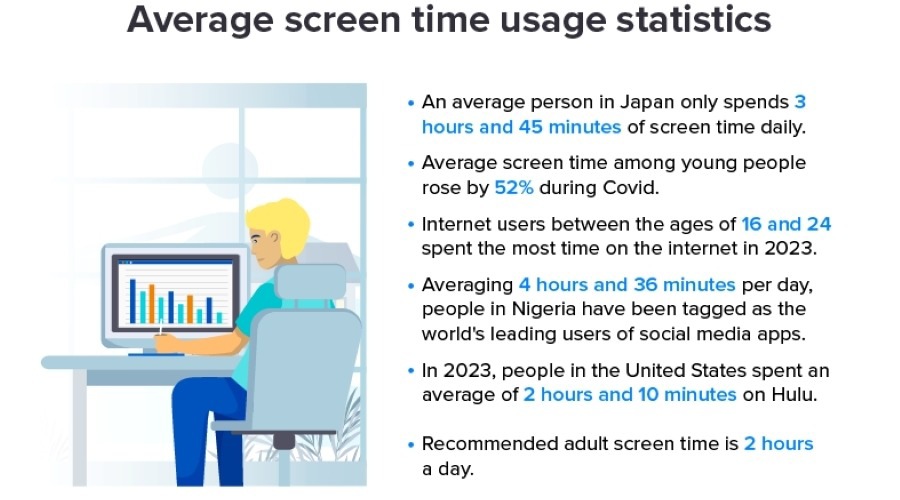
Too much time in front of a screen is proven to rot your brain (it's not) - via Allconnect.com
While the ideal screen limit is pegged at two hours, the average
American adult spends a whopping seven hours online daily. Yes, we know, we're not American, but they have stats for everything. When compared
globally, Americans are middling digital consumers, far outpaced by South
Africans, but ahead of the more restrained Japanese. Age-wise, the digital
divide is clear: Younger individuals are more screen-entrenched, while older
adults, less engaged with digital realms, show more restraint. Yet, even the
lowest usage brackets far exceed recommended limits. Seven hours a day. That
number is astronomic. If that doesn’t make you blink, then proceed straight to
the section titled “Ways to Control Your Screen Time”. And, if blinking hurts,
get some eye drops.
Post-pandemic, children's screen time remains elevated, raising serious
concerns. The CDC
reports staggering figures: Six to nine hours of daily screen engagement,
depending on age. This is a far cry from the recommended
one hour for children and two for adults, with children under two getting no
screen time, and it signals a need for an urgent recalibration of our digital
diets.
The Dark Side of Digital Dependency
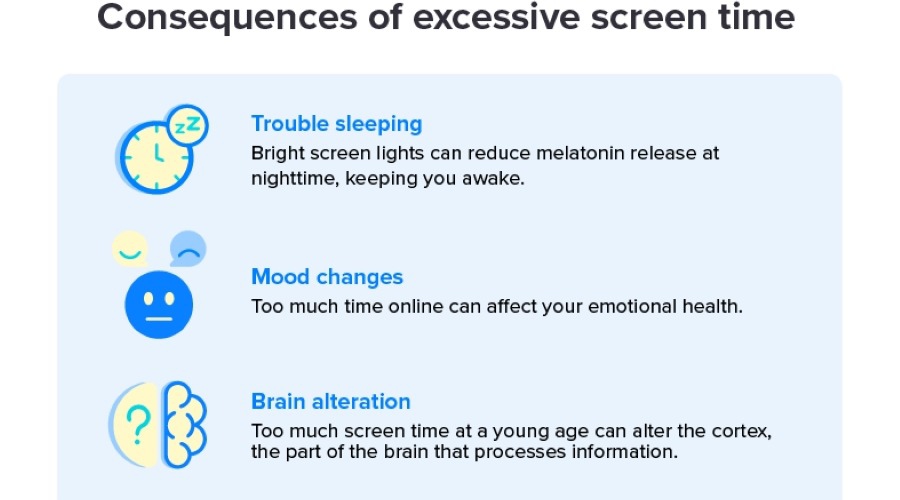
Too much Facebook makes Bob a grumpy boy (via. Allconnect.com).
Excessive screen time isn't just a number; it's a harbinger of health
issues. Trouble sleeping, mood fluctuations, and even brain alterations in
young users are just some of the serious consequences, as
highlighted by the National Institute of Drug Abuse. For children, the
stakes are higher with potential developmental impacts affecting emotional and
social skills.
Ways to Control Your Screen Time
Spending too much time looking at screens can negatively impact your mental health in a number of ways. See some advice for controlling your screen time, below! pic.twitter.com/TDX3F6fLjX
As with every addiction, acknowledging it is the first step.
Now, we can’t hand out a chip for weeks, months and years of screen
sobriety, but here’s what you can suggest you do:
1. Engage in Digital Self-Awareness
Begin by measuring your digital footprint. Most devices offer in-built
tools to monitor screen time, providing a reality check and a starting point
for change. The results can be shocking.
2. Tech to the Rescue
However, while it can cause serious problems, technology also offers
solutions. Countless apps and Apple's Screen Time feature can help manage and
limit digital exposure, some of them can be found here.
Many devices for kids can be turned off at specific times, or after a certain length
of time.
3. Screen Time: A Conscious Choice
Resist the urge to default to screens during downtime. Boredom or
stress shouldn't automatically translate to screen engagement. Explore other
avenues like reading or engaging in hobbies. Get an e-reader, you can carry it
anywhere. Listen to a podcast, or music, you can do this alone or as a family.
4. Mealtime: A Digital Detox
Instituting a no-device policy during meals can carve out significant
screen-free time, encouraging family interaction and mindful eating.
5. Designated Device Downtime
Setting aside specific screen-free windows, especially before bed and
after waking, can foster healthier habits and improve sleep quality.
6. Embracing Analog Alternatives
Instead of instinctively reaching for a device, consider activities
like exercising, socializing, or indulging in a hobby.
Screen Time - A Final Word
Screen time and our heavy use of mobile devices is the bane of
communication and the modern family. Exaggeration? Not really. If you spend
seven hours online daily, then that’s a problem. OK, much of it is down to
work, no doubt, however why on earth are you doing it at home?
All work and no play makes you a very, very dull boy or girl. So, when you’re
up from the desk, turn off the screen, talk to your family, play with your
kids, read a book, cook, play a board game, do anything, anything* other than
look at a screen.
*As long as it’s legal.
For more stories of tech, AI, and other finance-adjacent topics, visit our Trending section.
The pull of the internet is undeniable. It’s a source of news,
entertainment and more, it’s a way of keeping in touch, conducting business and
educating ourselves. But for many of us, and our families, screen time is out
of control.
COVID-19, an uninvited catalyst, significantly altered our digital
habits. According to the report, American adults saw a staggering 60% increase
in screen time, averaging over 13 hours a day. Children weren't spared either,
with their screen engagement soaring by two hours, a trend that persists. As
you’ll see later, that’s way too much. We were desperate to entertain ourselves
and we picked up bad, bad habits.
The American Screen Scene
Too much time in front of a screen is proven to rot your brain (it's not) - via Allconnect.com
While the ideal screen limit is pegged at two hours, the average
American adult spends a whopping seven hours online daily. Yes, we know, we're not American, but they have stats for everything. When compared
globally, Americans are middling digital consumers, far outpaced by South
Africans, but ahead of the more restrained Japanese. Age-wise, the digital
divide is clear: Younger individuals are more screen-entrenched, while older
adults, less engaged with digital realms, show more restraint. Yet, even the
lowest usage brackets far exceed recommended limits. Seven hours a day. That
number is astronomic. If that doesn’t make you blink, then proceed straight to
the section titled “Ways to Control Your Screen Time”. And, if blinking hurts,
get some eye drops.
Post-pandemic, children's screen time remains elevated, raising serious
concerns. The CDC
reports staggering figures: Six to nine hours of daily screen engagement,
depending on age. This is a far cry from the recommended
one hour for children and two for adults, with children under two getting no
screen time, and it signals a need for an urgent recalibration of our digital
diets.
The Dark Side of Digital Dependency
Too much Facebook makes Bob a grumpy boy (via. Allconnect.com).
Excessive screen time isn't just a number; it's a harbinger of health
issues. Trouble sleeping, mood fluctuations, and even brain alterations in
young users are just some of the serious consequences, as
highlighted by the National Institute of Drug Abuse. For children, the
stakes are higher with potential developmental impacts affecting emotional and
social skills.
Ways to Control Your Screen Time
Spending too much time looking at screens can negatively impact your mental health in a number of ways. See some advice for controlling your screen time, below! pic.twitter.com/TDX3F6fLjX
As with every addiction, acknowledging it is the first step.
Now, we can’t hand out a chip for weeks, months and years of screen
sobriety, but here’s what you can suggest you do:
1. Engage in Digital Self-Awareness
Begin by measuring your digital footprint. Most devices offer in-built
tools to monitor screen time, providing a reality check and a starting point
for change. The results can be shocking.
2. Tech to the Rescue
However, while it can cause serious problems, technology also offers
solutions. Countless apps and Apple's Screen Time feature can help manage and
limit digital exposure, some of them can be found here.
Many devices for kids can be turned off at specific times, or after a certain length
of time.
3. Screen Time: A Conscious Choice
Resist the urge to default to screens during downtime. Boredom or
stress shouldn't automatically translate to screen engagement. Explore other
avenues like reading or engaging in hobbies. Get an e-reader, you can carry it
anywhere. Listen to a podcast, or music, you can do this alone or as a family.
4. Mealtime: A Digital Detox
Instituting a no-device policy during meals can carve out significant
screen-free time, encouraging family interaction and mindful eating.
5. Designated Device Downtime
Setting aside specific screen-free windows, especially before bed and
after waking, can foster healthier habits and improve sleep quality.
6. Embracing Analog Alternatives
Instead of instinctively reaching for a device, consider activities
like exercising, socializing, or indulging in a hobby.
Screen Time - A Final Word
Screen time and our heavy use of mobile devices is the bane of
communication and the modern family. Exaggeration? Not really. If you spend
seven hours online daily, then that’s a problem. OK, much of it is down to
work, no doubt, however why on earth are you doing it at home?
All work and no play makes you a very, very dull boy or girl. So, when you’re
up from the desk, turn off the screen, talk to your family, play with your
kids, read a book, cook, play a board game, do anything, anything* other than
look at a screen.
*As long as it’s legal.
For more stories of tech, AI, and other finance-adjacent topics, visit our Trending section.
Louis Parks has lived and worked in and around the Middle East for much of his professional career. He writes about the meeting of the tech and finance worlds.
Today’s financial news recap covers Trade Nation buys FXCM's UK client book, Trading 212 reports higher revenue, the CFTC's move to allow perpetual index futures.
Finance Magnates Daily Recap brings you the latest news from forex and CFD brokers, fintech, payments, cryptocurrency, digital assets, trading platforms, financial regulation and global markets.
Get the key company news, executive moves, deals, regulatory updates and market developments of the day, in just a few minutes. New episodes published every weekday.
Read more: https://www.financemagnates.com
#FinanceMagnates #ForexNews #FintechNews
Today’s financial news recap covers Trade Nation buys FXCM's UK client book, Trading 212 reports higher revenue, the CFTC's move to allow perpetual index futures.
Finance Magnates Daily Recap brings you the latest news from forex and CFD brokers, fintech, payments, cryptocurrency, digital assets, trading platforms, financial regulation and global markets.
Get the key company news, executive moves, deals, regulatory updates and market developments of the day, in just a few minutes. New episodes published every weekday.
Read more: https://www.financemagnates.com
#FinanceMagnates #ForexNews #FintechNews
Today’s financial news recap covers Trade Nation buys FXCM's UK client book, Trading 212 reports higher revenue, the CFTC's move to allow perpetual index futures.
Finance Magnates Daily Recap brings you the latest news from forex and CFD brokers, fintech, payments, cryptocurrency, digital assets, trading platforms, financial regulation and global markets.
Get the key company news, executive moves, deals, regulatory updates and market developments of the day, in just a few minutes. New episodes published every weekday.
Read more: https://www.financemagnates.com
#FinanceMagnates #ForexNews #FintechNews
Today’s financial news recap covers Trade Nation buys FXCM's UK client book, Trading 212 reports higher revenue, the CFTC's move to allow perpetual index futures.
Finance Magnates Daily Recap brings you the latest news from forex and CFD brokers, fintech, payments, cryptocurrency, digital assets, trading platforms, financial regulation and global markets.
Get the key company news, executive moves, deals, regulatory updates and market developments of the day, in just a few minutes. New episodes published every weekday.
Read more: https://www.financemagnates.com
#FinanceMagnates #ForexNews #FintechNews
Roles change. Career goals change. Sometimes you want a completely new challenge.
But the skills and knowledge you build along the way can stay with you and give you something to build on.
For Jeff Patterson, that continued growth is key to long-term career development.
You bring the skills. FM Academy helps you build the knowledge.
#FMAcademy #FinanceMagnates #FinanceCareers #ProfessionalDevelopment #Fintech
Roles change. Career goals change. Sometimes you want a completely new challenge.
But the skills and knowledge you build along the way can stay with you and give you something to build on.
For Jeff Patterson, that continued growth is key to long-term career development.
You bring the skills. FM Academy helps you build the knowledge.
#FMAcademy #FinanceMagnates #FinanceCareers #ProfessionalDevelopment #Fintech
Roles change. Career goals change. Sometimes you want a completely new challenge.
But the skills and knowledge you build along the way can stay with you and give you something to build on.
For Jeff Patterson, that continued growth is key to long-term career development.
You bring the skills. FM Academy helps you build the knowledge.
#FMAcademy #FinanceMagnates #FinanceCareers #ProfessionalDevelopment #Fintech
Roles change. Career goals change. Sometimes you want a completely new challenge.
But the skills and knowledge you build along the way can stay with you and give you something to build on.
For Jeff Patterson, that continued growth is key to long-term career development.
You bring the skills. FM Academy helps you build the knowledge.
#FMAcademy #FinanceMagnates #FinanceCareers #ProfessionalDevelopment #Fintech
Roles change. Career goals change. Sometimes you want a completely new challenge.
But the skills and knowledge you build along the way can stay with you and give you something to build on.
For Jeff Patterson, that continued growth is key to long-term career development.
You bring the skills. FM Academy helps you build the knowledge.
#FMAcademy #FinanceMagnates #FinanceCareers #ProfessionalDevelopment #Fintech
Roles change. Career goals change. Sometimes you want a completely new challenge.
But the skills and knowledge you build along the way can stay with you and give you something to build on.
For Jeff Patterson, that continued growth is key to long-term career development.
You bring the skills. FM Academy helps you build the knowledge.
#FMAcademy #FinanceMagnates #FinanceCareers #ProfessionalDevelopment #Fintech
IG Group Tech Chiefs Exit; Pepperstone Revenue Grows
IG Group Tech Chiefs Exit; Pepperstone Revenue Grows
IG Group Tech Chiefs Exit; Pepperstone Revenue Grows
IG Group Tech Chiefs Exit; Pepperstone Revenue Grows
IG Group Tech Chiefs Exit; Pepperstone Revenue Grows
IG Group Tech Chiefs Exit; Pepperstone Revenue Grows
Today’s financial news recap covers IG Group loses two technology chiefs, Pepperstone reports double-digit growth, and eToro backs a euro stablecoin.
Finance Magnates Daily Recap brings you the latest news from forex and CFD brokers, fintech, payments, cryptocurrency, digital assets, trading platforms, financial regulation and global markets.
Get the key company news, executive moves, deals, regulatory updates and market developments of the day, in just a few minutes. New episodes published every weekday.
Read more: https://www.financemagnates.com
#FinanceMagnates #ForexNews #FintechNews
Today’s financial news recap covers IG Group loses two technology chiefs, Pepperstone reports double-digit growth, and eToro backs a euro stablecoin.
Finance Magnates Daily Recap brings you the latest news from forex and CFD brokers, fintech, payments, cryptocurrency, digital assets, trading platforms, financial regulation and global markets.
Get the key company news, executive moves, deals, regulatory updates and market developments of the day, in just a few minutes. New episodes published every weekday.
Read more: https://www.financemagnates.com
#FinanceMagnates #ForexNews #FintechNews
Today’s financial news recap covers IG Group loses two technology chiefs, Pepperstone reports double-digit growth, and eToro backs a euro stablecoin.
Finance Magnates Daily Recap brings you the latest news from forex and CFD brokers, fintech, payments, cryptocurrency, digital assets, trading platforms, financial regulation and global markets.
Get the key company news, executive moves, deals, regulatory updates and market developments of the day, in just a few minutes. New episodes published every weekday.
Read more: https://www.financemagnates.com
#FinanceMagnates #ForexNews #FintechNews
Today’s financial news recap covers IG Group loses two technology chiefs, Pepperstone reports double-digit growth, and eToro backs a euro stablecoin.
Finance Magnates Daily Recap brings you the latest news from forex and CFD brokers, fintech, payments, cryptocurrency, digital assets, trading platforms, financial regulation and global markets.
Get the key company news, executive moves, deals, regulatory updates and market developments of the day, in just a few minutes. New episodes published every weekday.
Read more: https://www.financemagnates.com
#FinanceMagnates #ForexNews #FintechNews
Today’s financial news recap covers IG Group loses two technology chiefs, Pepperstone reports double-digit growth, and eToro backs a euro stablecoin.
Finance Magnates Daily Recap brings you the latest news from forex and CFD brokers, fintech, payments, cryptocurrency, digital assets, trading platforms, financial regulation and global markets.
Get the key company news, executive moves, deals, regulatory updates and market developments of the day, in just a few minutes. New episodes published every weekday.
Read more: https://www.financemagnates.com
#FinanceMagnates #ForexNews #FintechNews
Today’s financial news recap covers IG Group loses two technology chiefs, Pepperstone reports double-digit growth, and eToro backs a euro stablecoin.
Finance Magnates Daily Recap brings you the latest news from forex and CFD brokers, fintech, payments, cryptocurrency, digital assets, trading platforms, financial regulation and global markets.
Get the key company news, executive moves, deals, regulatory updates and market developments of the day, in just a few minutes. New episodes published every weekday.
Read more: https://www.financemagnates.com
#FinanceMagnates #ForexNews #FintechNews
Today’s financial news recap covers IG Group expects lower Q3 revenue, MetaQuotes adds Benzinga news, Match-Trader launches an MCP, and brokers weigh build versus buy.
Finance Magnates Daily Recap brings you the latest news from forex and CFD brokers, fintech, payments, cryptocurrency, digital assets, trading platforms, financial regulation and global markets.
Get the key company news, executive moves, deals, regulatory updates and market developments of the day, in just a few minutes. New episodes published every weekday.
Read more: https://www.financemagnates.com
#FinanceMagnates #ForexNews #FintechNews
Today’s financial news recap covers IG Group expects lower Q3 revenue, MetaQuotes adds Benzinga news, Match-Trader launches an MCP, and brokers weigh build versus buy.
Finance Magnates Daily Recap brings you the latest news from forex and CFD brokers, fintech, payments, cryptocurrency, digital assets, trading platforms, financial regulation and global markets.
Get the key company news, executive moves, deals, regulatory updates and market developments of the day, in just a few minutes. New episodes published every weekday.
Read more: https://www.financemagnates.com
#FinanceMagnates #ForexNews #FintechNews
Today’s financial news recap covers IG Group expects lower Q3 revenue, MetaQuotes adds Benzinga news, Match-Trader launches an MCP, and brokers weigh build versus buy.
Finance Magnates Daily Recap brings you the latest news from forex and CFD brokers, fintech, payments, cryptocurrency, digital assets, trading platforms, financial regulation and global markets.
Get the key company news, executive moves, deals, regulatory updates and market developments of the day, in just a few minutes. New episodes published every weekday.
Read more: https://www.financemagnates.com
#FinanceMagnates #ForexNews #FintechNews
Today’s financial news recap covers IG Group expects lower Q3 revenue, MetaQuotes adds Benzinga news, Match-Trader launches an MCP, and brokers weigh build versus buy.
Finance Magnates Daily Recap brings you the latest news from forex and CFD brokers, fintech, payments, cryptocurrency, digital assets, trading platforms, financial regulation and global markets.
Get the key company news, executive moves, deals, regulatory updates and market developments of the day, in just a few minutes. New episodes published every weekday.
Read more: https://www.financemagnates.com
#FinanceMagnates #ForexNews #FintechNews
Today’s financial news recap covers IG Group expects lower Q3 revenue, MetaQuotes adds Benzinga news, Match-Trader launches an MCP, and brokers weigh build versus buy.
Finance Magnates Daily Recap brings you the latest news from forex and CFD brokers, fintech, payments, cryptocurrency, digital assets, trading platforms, financial regulation and global markets.
Get the key company news, executive moves, deals, regulatory updates and market developments of the day, in just a few minutes. New episodes published every weekday.
Read more: https://www.financemagnates.com
#FinanceMagnates #ForexNews #FintechNews
Today’s financial news recap covers IG Group expects lower Q3 revenue, MetaQuotes adds Benzinga news, Match-Trader launches an MCP, and brokers weigh build versus buy.
Finance Magnates Daily Recap brings you the latest news from forex and CFD brokers, fintech, payments, cryptocurrency, digital assets, trading platforms, financial regulation and global markets.
Get the key company news, executive moves, deals, regulatory updates and market developments of the day, in just a few minutes. New episodes published every weekday.
Read more: https://www.financemagnates.com
#FinanceMagnates #ForexNews #FintechNews
Binance Faces EU Scrutiny; CFI Adds Seven-Day Gold Trading
Binance Faces EU Scrutiny; CFI Adds Seven-Day Gold Trading
Binance Faces EU Scrutiny; CFI Adds Seven-Day Gold Trading
Binance Faces EU Scrutiny; CFI Adds Seven-Day Gold Trading
Binance Faces EU Scrutiny; CFI Adds Seven-Day Gold Trading
Binance Faces EU Scrutiny; CFI Adds Seven-Day Gold Trading
Today’s financial news recap covers EU regulators question Binance's use of reverse solicitation, CFI launches seven-day gold trading, the FCA opens a crypto authorisation window, and Polymarket adds trading safeguards.
Finance Magnates Daily Recap brings you the latest news from forex and CFD brokers, fintech, payments, cryptocurrency, digital assets, trading platforms, financial regulation and global markets.
Get the key company news, executive moves, deals, regulatory updates and market developments of the day, in just a few minutes. New episodes published every weekday.
Read more: https://www.financemagnates.com
#FinanceMagnates #ForexNews #FintechNews
Today’s financial news recap covers EU regulators question Binance's use of reverse solicitation, CFI launches seven-day gold trading, the FCA opens a crypto authorisation window, and Polymarket adds trading safeguards.
Finance Magnates Daily Recap brings you the latest news from forex and CFD brokers, fintech, payments, cryptocurrency, digital assets, trading platforms, financial regulation and global markets.
Get the key company news, executive moves, deals, regulatory updates and market developments of the day, in just a few minutes. New episodes published every weekday.
Read more: https://www.financemagnates.com
#FinanceMagnates #ForexNews #FintechNews
Today’s financial news recap covers EU regulators question Binance's use of reverse solicitation, CFI launches seven-day gold trading, the FCA opens a crypto authorisation window, and Polymarket adds trading safeguards.
Finance Magnates Daily Recap brings you the latest news from forex and CFD brokers, fintech, payments, cryptocurrency, digital assets, trading platforms, financial regulation and global markets.
Get the key company news, executive moves, deals, regulatory updates and market developments of the day, in just a few minutes. New episodes published every weekday.
Read more: https://www.financemagnates.com
#FinanceMagnates #ForexNews #FintechNews
Today’s financial news recap covers EU regulators question Binance's use of reverse solicitation, CFI launches seven-day gold trading, the FCA opens a crypto authorisation window, and Polymarket adds trading safeguards.
Finance Magnates Daily Recap brings you the latest news from forex and CFD brokers, fintech, payments, cryptocurrency, digital assets, trading platforms, financial regulation and global markets.
Get the key company news, executive moves, deals, regulatory updates and market developments of the day, in just a few minutes. New episodes published every weekday.
Read more: https://www.financemagnates.com
#FinanceMagnates #ForexNews #FintechNews
Today’s financial news recap covers EU regulators question Binance's use of reverse solicitation, CFI launches seven-day gold trading, the FCA opens a crypto authorisation window, and Polymarket adds trading safeguards.
Finance Magnates Daily Recap brings you the latest news from forex and CFD brokers, fintech, payments, cryptocurrency, digital assets, trading platforms, financial regulation and global markets.
Get the key company news, executive moves, deals, regulatory updates and market developments of the day, in just a few minutes. New episodes published every weekday.
Read more: https://www.financemagnates.com
#FinanceMagnates #ForexNews #FintechNews
Today’s financial news recap covers EU regulators question Binance's use of reverse solicitation, CFI launches seven-day gold trading, the FCA opens a crypto authorisation window, and Polymarket adds trading safeguards.
Finance Magnates Daily Recap brings you the latest news from forex and CFD brokers, fintech, payments, cryptocurrency, digital assets, trading platforms, financial regulation and global markets.
Get the key company news, executive moves, deals, regulatory updates and market developments of the day, in just a few minutes. New episodes published every weekday.
Read more: https://www.financemagnates.com
#FinanceMagnates #ForexNews #FintechNews