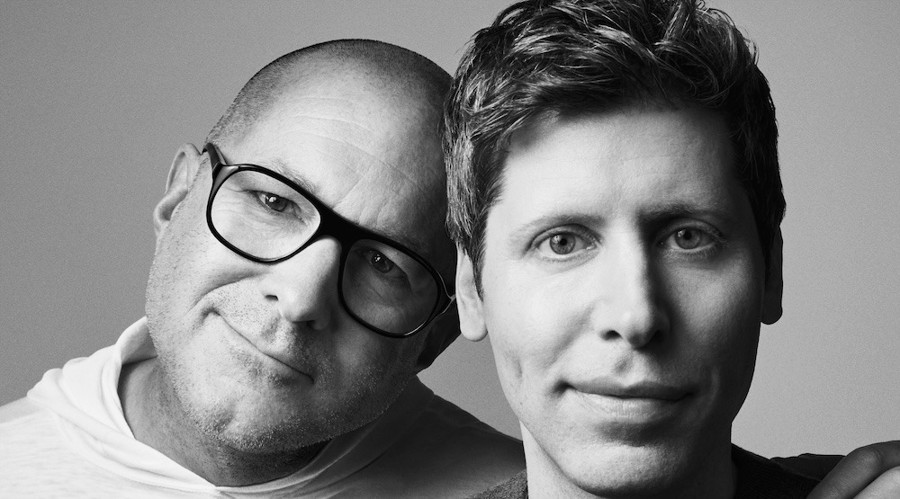
While Apple reportedly scrambles to license Google Gemini for Siri, OpenAI
quietly acquires Jony Ive’s hardware startup io and poaches top-tier Apple
talent to build the real next-gen device wave.
Setting the Scene: The Talent Exodus
In the pantheon of Silicon Valley scuffles, the latest act is hardly
subtle. This summer, OpenAI snapped up the hardware startup
Startup
A company operating within its first stage of investing is known as a startup. While startups may give the impression that the company must be new, that is not always the case.Many companies can have this designation after nearly three years of existence. Typically, a company exits the startup status after a period between 3 to 5 years or after successful funding rounds where capital is acquired. Startups tend to derive out of the belief that there is a demand for a service or product which is c
Read this Term “io,” founded by
ex-Apple design titan Jony Ive, in a deal reportedly worth around in
the region of $6.5 billion. That would be bold enough on its own, but
herein lies the rub: OpenAI did not stop at the deal. It also embarked on a
sweeping raid of Apple’s hardware and engineering teams. Bloomberg
indicates that the past month alone has seen more than 40 new employees for
its devices group, many of them from Apple.
OpenAI is now the Apple of AI and there’s no going back.
When people say “AI,” they don’t mean Anthropic, Gemini, or Grok, they mean ChatGPT.
Just like when people say “tablet,” they mean iPad.
When they say “smartphone,” they mean iPhone.
OpenAI didn’t just build a model, they… pic.twitter.com/C7UQ9rH4c8
— VraserX e/acc (@VraserX) November 12, 2025
That kind of talent transfer isn’t the usual skirmish of mid-level
defections, it involves high-profile names from Apple’s hardware division,
including former industrial-design head Evans Hankey and hardware engineering
exec Tang Tan.
In short: OpenAI isn’t just beefing up, it seems to be building a
full-blown consumer-hardware capability, and it’s taking Apple’s best minds to
do it.
Why Apple Might Be Shaking
This is not just about brains leaving the building. This is about what
it says. The poaching comes at a time when Apple appears to be stumbling in the
AI race.
For example: According to Bloomberg, Apple’s upcoming iOS 27 update is
described as “Snow
Leopard-style”, focusing on polish, performance and AI rather than major
feature leaps. Snow Leopard was a 2009 Mac OS update that offered significant performance
enhancements rather than new features and that focused on improving stability
and speed.
Even more telling: Apple is reportedly in talks to license
Google’s Gemini model to power a revamped version of Siri, to the tune of $1
billion per year.
That means the company known for bespoke hardware and end-to-end
integration may soon lean heavily on external AI models. Meanwhile, its own
talent is trickling out the door. That’s not exactly confidence-inspiring.
What OpenAI Is Building
Historically, OpenAI has been all software: GPT-4, ChatGPT, large
language models. But the acquisition
Acquisition
Acquisition means acquiring or taking possession or the securing of property, services, or abilities. To put it simply, it is the act or process of acquiring or gaining. You can acquire a work of art, you can acquire an ability such as speaking another language, you can acquire a business or shares in a company and you can acquire an accountant's service. For example, you can acquire a new car. In a broad sense, Acquisition can mean the act of taking ownership or possession of something. There
Read this Term of Ive’s “io” and the mass hiring of
hardware talent change the game. The hires go far beyond mid-level engineers.
OpenAI has picked up senior leaders, directors, and seasoned specialists drawn
from almost every major hardware team at Apple.
OpenAI’s new hardware division built around Jony Ive’s secretive startup has ramped up hiring of Apple engineers. The group has brought on about 40 new people in the last month or so, with many of them coming from Apple’s hardware group. Details here: https://t.co/f2YNQG845y
— Mark Gurman (@markgurman) November 23, 2025
In other words: OpenAI may be gearing up to deliver a full-blown
AI-device lineup, think hardware optimized for generative AI, designed by the
very folks who helped define Apple’s aesthetic and manufacturing playbook.
Apple’s AI Strategy: Catching Up or Falling Behind?
Apple’s position right now looks like this:
- It has long promoted its internal “Apple Intelligence” initiative, but
certain AI improvements (especially
to Siri) have been delayed into 2026.
- To compensate, Apple is negotiating to license Google’s Gemini model
(with 1.2 trillion parameters) to power Siri.
- But talent is moving out. Engineers who might have worked on
Apple-designed AI hardware are now lining up with OpenAI.
I have been thinking a lot about Apple’s original playbook of vertical integration — and how it shaped the entire modern tech era.
Today, another company is quietly tracing that same path.
OpenAI. pic.twitter.com/k9MennpPaf
— Lo Toney (@lo_toney) November 13, 2025
So when Apple touts “vertical integration”, the reality looks messier.
Outsourcing AI model design to Google, while losing hardware talent to OpenAI,
doesn’t exactly reinforce the image of being in command.
Why This Talent War Matters
In the near term, this might seem like a boardroom skirmish. But the
implications are broader:
- Hardware matters again. AI is not just about code; it’s about the
silicon, the device, the design. Having a few top engineers doesn’t guarantee
success, but what OpenAI is doing suggests it believes hardware is the next
frontier.
- Ecosystem power shifts. Apple built a powerful lock-in ecosystem. But
if it can't execute hardware + AI, competitors (and newcomers) can disrupt.
- Talent is the raw material. Hiring ex-Apple engineers gives OpenAI not
just skills but institutional culture, know-how, supply-chain networks,
manufacturing insight, all critical in hardware.
Final Take
OpenAI is quietly positioning itself as more than “just” the maker of
ChatGPT. By acquiring Jony Ive’s startup and poaching Apple’s brain trust, it
may be plotting the next generation of devices where AI is baked in, not bolted
on. Meanwhile, Apple, once the standard-bearer for device innovation, is forced
into a reactive mode: licensing AI models from rivals, scrambling to hold onto
talent, and shipping software updates that focus on performance rather than
feature bombs.
Watch this space.
For more stories of tech around the edges of finance, visit our Trending section.
While Apple reportedly scrambles to license Google Gemini for Siri, OpenAI
quietly acquires Jony Ive’s hardware startup io and poaches top-tier Apple
talent to build the real next-gen device wave.
Setting the Scene: The Talent Exodus
In the pantheon of Silicon Valley scuffles, the latest act is hardly
subtle. This summer, OpenAI snapped up the hardware startup
Startup
A company operating within its first stage of investing is known as a startup. While startups may give the impression that the company must be new, that is not always the case.Many companies can have this designation after nearly three years of existence. Typically, a company exits the startup status after a period between 3 to 5 years or after successful funding rounds where capital is acquired. Startups tend to derive out of the belief that there is a demand for a service or product which is c
Read this Term “io,” founded by
ex-Apple design titan Jony Ive, in a deal reportedly worth around in
the region of $6.5 billion. That would be bold enough on its own, but
herein lies the rub: OpenAI did not stop at the deal. It also embarked on a
sweeping raid of Apple’s hardware and engineering teams. Bloomberg
indicates that the past month alone has seen more than 40 new employees for
its devices group, many of them from Apple.
OpenAI is now the Apple of AI and there’s no going back.
When people say “AI,” they don’t mean Anthropic, Gemini, or Grok, they mean ChatGPT.
Just like when people say “tablet,” they mean iPad.
When they say “smartphone,” they mean iPhone.
OpenAI didn’t just build a model, they… pic.twitter.com/C7UQ9rH4c8
— VraserX e/acc (@VraserX) November 12, 2025
That kind of talent transfer isn’t the usual skirmish of mid-level
defections, it involves high-profile names from Apple’s hardware division,
including former industrial-design head Evans Hankey and hardware engineering
exec Tang Tan.
In short: OpenAI isn’t just beefing up, it seems to be building a
full-blown consumer-hardware capability, and it’s taking Apple’s best minds to
do it.
Why Apple Might Be Shaking
This is not just about brains leaving the building. This is about what
it says. The poaching comes at a time when Apple appears to be stumbling in the
AI race.
For example: According to Bloomberg, Apple’s upcoming iOS 27 update is
described as “Snow
Leopard-style”, focusing on polish, performance and AI rather than major
feature leaps. Snow Leopard was a 2009 Mac OS update that offered significant performance
enhancements rather than new features and that focused on improving stability
and speed.
Even more telling: Apple is reportedly in talks to license
Google’s Gemini model to power a revamped version of Siri, to the tune of $1
billion per year.
That means the company known for bespoke hardware and end-to-end
integration may soon lean heavily on external AI models. Meanwhile, its own
talent is trickling out the door. That’s not exactly confidence-inspiring.
What OpenAI Is Building
Historically, OpenAI has been all software: GPT-4, ChatGPT, large
language models. But the acquisition
Acquisition
Acquisition means acquiring or taking possession or the securing of property, services, or abilities. To put it simply, it is the act or process of acquiring or gaining. You can acquire a work of art, you can acquire an ability such as speaking another language, you can acquire a business or shares in a company and you can acquire an accountant's service. For example, you can acquire a new car. In a broad sense, Acquisition can mean the act of taking ownership or possession of something. There
Read this Term of Ive’s “io” and the mass hiring of
hardware talent change the game. The hires go far beyond mid-level engineers.
OpenAI has picked up senior leaders, directors, and seasoned specialists drawn
from almost every major hardware team at Apple.
OpenAI’s new hardware division built around Jony Ive’s secretive startup has ramped up hiring of Apple engineers. The group has brought on about 40 new people in the last month or so, with many of them coming from Apple’s hardware group. Details here: https://t.co/f2YNQG845y
— Mark Gurman (@markgurman) November 23, 2025
In other words: OpenAI may be gearing up to deliver a full-blown
AI-device lineup, think hardware optimized for generative AI, designed by the
very folks who helped define Apple’s aesthetic and manufacturing playbook.
Apple’s AI Strategy: Catching Up or Falling Behind?
Apple’s position right now looks like this:
- It has long promoted its internal “Apple Intelligence” initiative, but
certain AI improvements (especially
to Siri) have been delayed into 2026.
- To compensate, Apple is negotiating to license Google’s Gemini model
(with 1.2 trillion parameters) to power Siri.
- But talent is moving out. Engineers who might have worked on
Apple-designed AI hardware are now lining up with OpenAI.
I have been thinking a lot about Apple’s original playbook of vertical integration — and how it shaped the entire modern tech era.
Today, another company is quietly tracing that same path.
OpenAI. pic.twitter.com/k9MennpPaf
— Lo Toney (@lo_toney) November 13, 2025
So when Apple touts “vertical integration”, the reality looks messier.
Outsourcing AI model design to Google, while losing hardware talent to OpenAI,
doesn’t exactly reinforce the image of being in command.
Why This Talent War Matters
In the near term, this might seem like a boardroom skirmish. But the
implications are broader:
- Hardware matters again. AI is not just about code; it’s about the
silicon, the device, the design. Having a few top engineers doesn’t guarantee
success, but what OpenAI is doing suggests it believes hardware is the next
frontier.
- Ecosystem power shifts. Apple built a powerful lock-in ecosystem. But
if it can't execute hardware + AI, competitors (and newcomers) can disrupt.
- Talent is the raw material. Hiring ex-Apple engineers gives OpenAI not
just skills but institutional culture, know-how, supply-chain networks,
manufacturing insight, all critical in hardware.
Final Take
OpenAI is quietly positioning itself as more than “just” the maker of
ChatGPT. By acquiring Jony Ive’s startup and poaching Apple’s brain trust, it
may be plotting the next generation of devices where AI is baked in, not bolted
on. Meanwhile, Apple, once the standard-bearer for device innovation, is forced
into a reactive mode: licensing AI models from rivals, scrambling to hold onto
talent, and shipping software updates that focus on performance rather than
feature bombs.
Watch this space.
For more stories of tech around the edges of finance, visit our Trending section.