Singapore Tests Cross-Bank AI to Flag Scam Accounts in Near Real Time

Friday, 11/09/2026 | 15:30 GMT by Tanya Chepkova
  • MAS expects findings from the cross-bank fraud-detection test by the end of 2026, but has not named the participating banks.
  • The test targets a gap in bank-level fraud controls: scam proceeds often move across several institutions before losses can be stopped.
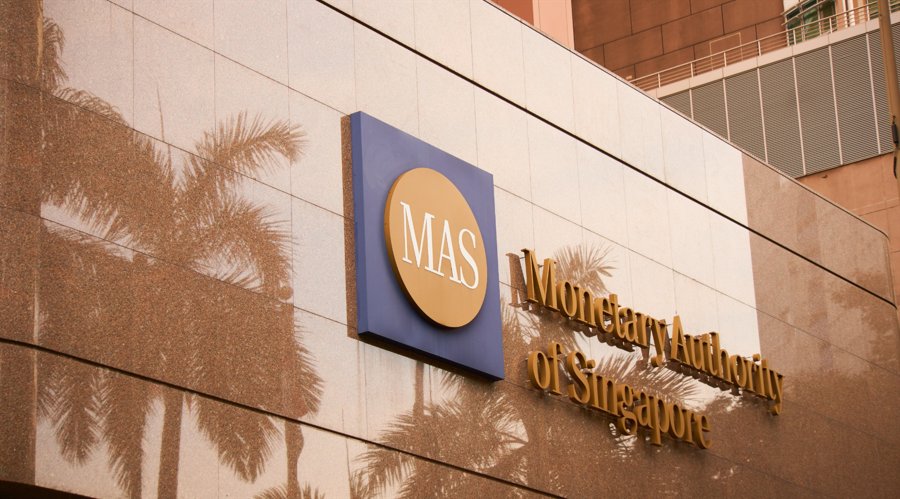
MAS logo
Source: Shutterstock

Singapore is moving fraud detection beyond the data held by individual banks, testing whether financial institutions, law enforcement and the regulator can identify suspicious payment chains through a shared testing setup.

London's trading industry is coming home!

The Monetary Authority of Singapore (MAS) is working with the banking industry and a law enforcement agency to test artificial intelligence models using cross-bank and public-private data, Managing Director Chia Der Jiun said in a speech at the Global FinTech Fest.

From Bank-Level Monitoring to System-Level Detection

The experiment addresses a limitation of institution-level fraud controls: scam proceeds may move through accounts at several banks, leaving each institution with only part of the transaction chain.

Combining information across participating organisations could help identify suspicious relationships earlier. MAS said the objective is to detect potential fraud sooner, intervene faster and reduce losses.

It has not disclosed which banks are participating, the datasets being tested or the criteria that will determine whether the models proceed to deployment.

MAS is also running PathFin.ai, a specific programme that matches financial institutions with validated AI solutions. Chia said the platform now has more than 300 participants and a growing number of successful matches.

It is designed partly to reduce the cost and technical work required for smaller institutions to find and implement AI tools.

Regulators Target Different Parts of the Scam Chain

Other financial regulators are also applying AI and advanced analytics to fraud, although at different points in the process.

The Hong Kong Monetary Authority has directed banks to consider AI and network analytics when monitoring authorised payment scams, including detecting complex networks of suspicious and mule accounts.

It has also tested analysis of information from multiple banks in collaboration with the banking sector and law enforcement.

The UK Financial Conduct Authority uses machine learning and web scraping to find potentially fraudulent websites. Australia’s ASIC focuses on disrupting the online infrastructure used to attract victims, coordinating the removal of 11,964 phishing and investment scam websites in 2025, a 90% annual increase.

FINRA applies machine learning at another layer, analysing hundreds of billions of US market events for potential fraud and manipulation rather than retail payment scams.

MAS expects findings from the test by the end of 2026. The result will show if banks, police and the regulator can use shared data quickly enough to interrupt scam flows before the money is dispersed.

Singapore is moving fraud detection beyond the data held by individual banks, testing whether financial institutions, law enforcement and the regulator can identify suspicious payment chains through a shared testing setup.

London's trading industry is coming home!

The Monetary Authority of Singapore (MAS) is working with the banking industry and a law enforcement agency to test artificial intelligence models using cross-bank and public-private data, Managing Director Chia Der Jiun said in a speech at the Global FinTech Fest.

From Bank-Level Monitoring to System-Level Detection

The experiment addresses a limitation of institution-level fraud controls: scam proceeds may move through accounts at several banks, leaving each institution with only part of the transaction chain.

Combining information across participating organisations could help identify suspicious relationships earlier. MAS said the objective is to detect potential fraud sooner, intervene faster and reduce losses.

It has not disclosed which banks are participating, the datasets being tested or the criteria that will determine whether the models proceed to deployment.

MAS is also running PathFin.ai, a specific programme that matches financial institutions with validated AI solutions. Chia said the platform now has more than 300 participants and a growing number of successful matches.

It is designed partly to reduce the cost and technical work required for smaller institutions to find and implement AI tools.

Regulators Target Different Parts of the Scam Chain

Other financial regulators are also applying AI and advanced analytics to fraud, although at different points in the process.

The Hong Kong Monetary Authority has directed banks to consider AI and network analytics when monitoring authorised payment scams, including detecting complex networks of suspicious and mule accounts.

It has also tested analysis of information from multiple banks in collaboration with the banking sector and law enforcement.

The UK Financial Conduct Authority uses machine learning and web scraping to find potentially fraudulent websites. Australia’s ASIC focuses on disrupting the online infrastructure used to attract victims, coordinating the removal of 11,964 phishing and investment scam websites in 2025, a 90% annual increase.

FINRA applies machine learning at another layer, analysing hundreds of billions of US market events for potential fraud and manipulation rather than retail payment scams.

MAS expects findings from the test by the end of 2026. The result will show if banks, police and the regulator can use shared data quickly enough to interrupt scam flows before the money is dispersed.

About the Author: Tanya Chepkova
Tanya Chepkova
  • 453 Articles
  • 3 Followers
About the Author: Tanya Chepkova
Tanya Chepkova is a News Editor at Finance Magnates with more than 16 years of experience in financial journalism, covering forex, crypto, and digital asset markets. Her work spans daily industry reporting and data-driven, long-form explainers focused on market structure, trading models, and regulatory shifts. Before joining Finance Magnates, she led the editorial team of a cryptocurrency-focused media outlet for six years. Her reporting combines analytical depth with clear storytelling, with particular attention to how structural changes in trading, stablecoin infrastructure, and emerging products such as prediction markets reshape the broader financial ecosystem. She covers global developments and provides additional insight into CIS markets. Areas of Coverage: Crypto and digital asset markets Prediction markets Stablecoins and cross-border payments Industry analysis and long-form explainers
  • 453 Articles
  • 3 Followers

More from the Author

Retail FX

!"#$%&'()*+,-./0123456789:;<=>?@ABCDEFGHIJKLMNOPQRSTUVWXYZ[\]^_`abcdefghijklmnopqrstuvwxyz{|} !"#$%&'()*+,-./0123456789:;<=>?@ABCDEFGHIJKLMNOPQRSTUVWXYZ[\]^_`abcdefghijklmnopqrstuvwxyz{|}