How Much of Its Trading Stack Should a Retail Broker Own?

Friday, 02/10/2026 | 05:58 GMT by Paul Golden
  • Paul Golden explores why buying a trading platform can speed up a broker’s launch while leaving it exposed to vendor fees, limits on control and the cost of switching.
  • Brokers are buying core trading systems and building the tools that set them apart, from client apps to risk controls and execution rules.
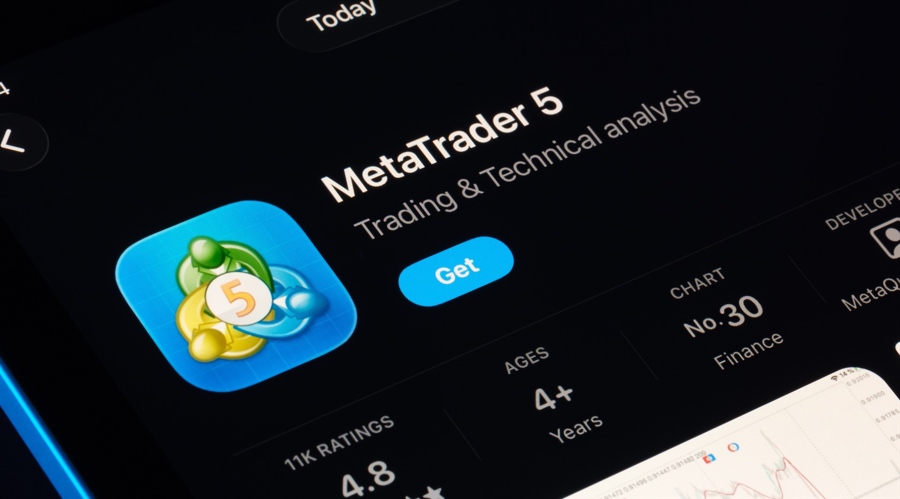
MetaTrader 5 listing in iOS 26 (Shutterstock)

For retail brokers, the build-versus-buy decision is rarely just about the trading interface. It is more of a decision about how much of the technology stack they want to own, control and maintain. But brokers must consider the economics and demand, too.

London's trading industry is coming home!

Time vs Control

Current industry discussion identifies speed to market, cost, differentiation, scalability, vendor dependence and long-term flexibility as central considerations. An approach that appears streamlined initially may rapidly become a limitation as a brokerage expands, particularly when vendors increase prices, constrain integration capabilities or impose restrictions on the broker’s commercial plans.

Buying an established platform can substantially reduce development time because the broker isn’t starting from zero with authentication, order management, charting, mobile apps, risk management or reporting.

Industry estimates vary considerably, but vendors commonly position bought or turnkey systems as taking months rather than the year or more often associated with proprietary development.

Read more: MetaTrader Fee Bill Arrives with a 25% Increase

The calculation is therefore not simply the cost of developers versus a platform licence. It is the revenue forgone while building, plus development costs, ongoing maintenance and operational risk, versus licence and transaction costs, integration and vendor dependence.

The extent to which the platform is a source of competitive differentiation is perhaps the most strategic question. A broker might differentiate through factors such as user experience, proprietary trading tools, social or copy trading, or personalised analytics.

If a broker believes those capabilities are central to its proposition, owning at least part of the technology becomes more attractive.

Conversely, if the requirement is to give customers a reliable, multi-asset trading terminal with good charts and order execution, buying becomes more compelling because the broker isn’t necessarily gaining a competitive advantage by rebuilding the underlying infrastructure.

How Much Control a Broker Needs Goes Beyond Branding?

The question of how much control a broker needs goes beyond branding. A bought platform can give the broker control over account types, leverage, spreads, permissions, trading rules and client segmentation.

But the broker is unlikely to have the final word on the development roadmap, release schedule, underlying architecture, pricing or discontinued features. It therefore has to consider what would happen if its strategy required the vendor to change something the vendor didn’t want to change. Vendor roadmap control and exit costs are important parts of the decision.

The structure of the technology stack is particularly important for retail brokers, since buying one component can create integration problems elsewhere.

A cheap platform that requires six bespoke integrations may be less attractive than a more expensive system that already connects the major components. Brokerage technology analysis highlights integration between CRM, payments, risk, reporting and execution as a major consideration.

Retail trading platforms are not ordinary SaaS applications. Brokers have to think about order records, audit trails, client communications, transaction reporting, best execution requirements, market abuse controls, cybersecurity, data retention, resilience and disaster recovery, access controls and reconciliation.

You may also like: Zero Commission Was a Trap. SaaS Is the Way Out.

Buying can transfer some of the technology burden to a specialist, but it doesn’t transfer the broker’s regulatory accountability, which makes vendor due diligence extremely important.

Vendor concentration and lock-in are becoming bigger issues as platforms become more full stack. Brokers need to know whether they can export their data, migrate clients or change liquidity providers. They also need to be aware of who owns the custom code, how open the APIs are and whether they have the option of adding another OMS.

And what happens if the vendor is acquired or wants to increase its fees? What happens to historical trading data when the agreement is terminated?

In other words, buying reduces internal technology risk but creates supplier risk. This represents a trade-off rather than an elimination of risk.

The Decision Is Simpler for Small Brokers, but a Headache for Bigger Ones

A small broker may be perfectly happy with an off-the-shelf platform, whereas a rapidly growing broker will start asking different questions about its ability to handle a significant increase in client volumes or its performance during periods of extreme volatility. The latter will also want to know how many simultaneous users the platform can support, how quickly orders are processed and whether it can operate in multiple jurisdictions, support additional asset classes and cope with large volumes of market data.

Performance under stress, rather than performance during normal conditions, can become a critical differentiator.

For many brokers, the decision isn’t actually whether to build or buy. It is to buy the commodity infrastructure and build the differentiated layer.

That approach allows the broker to concentrate engineering expenditure where it potentially creates customer or commercial differentiation while avoiding the enormous task of rebuilding mature trading infrastructure. Current brokerage technology analysis increasingly frames the decision at the individual component or layer level, rather than treating the trading platform as one indivisible product.

Looking specifically at retail FX, CFD or crypto brokers, the situation is quite different from a generic software build-versus-buy decision. The market has developed a fairly clear pattern: brokers tend to buy mature infrastructure and build or customise the parts that affect customer acquisition, trading economics or differentiation.

For example, PrimeXM positions its trading and aggregation engine solution as an aggregation, order management and risk layer that can connect multiple liquidity sources and support A-book, B-book and customised execution models.

Brokeree similarly sells a multi-platform liquidity bridge covering MT4/MT5, cTrader and DXtrade, with configurable routing and execution. Brokers can aggregate several LPs, configure routing and decide whether flow is sent externally, internalised or handled through hybrid execution.

A more ambitious broker may want to own the customer-facing layer while buying the underlying trading infrastructure. Match-Trader explicitly supports this model: its backend can be used independently, so a broker can create its own front end or connect via TradingView.

So the key question is: do brokers want risk management to be a commodity service or part of their proprietary trading economics? For a broker that internalises substantial client flow, the answer will be very different from that of a pure agency/STP broker.

Historically, brokers differentiated primarily through pricing, liquidity and distribution while buying much of the technology. Increasingly, technology itself can become part of the proposition, but brokers don’t necessarily need to build the whole stack.

For retail brokers, the build-versus-buy decision is rarely just about the trading interface. It is more of a decision about how much of the technology stack they want to own, control and maintain. But brokers must consider the economics and demand, too.

London's trading industry is coming home!

Time vs Control

Current industry discussion identifies speed to market, cost, differentiation, scalability, vendor dependence and long-term flexibility as central considerations. An approach that appears streamlined initially may rapidly become a limitation as a brokerage expands, particularly when vendors increase prices, constrain integration capabilities or impose restrictions on the broker’s commercial plans.

Buying an established platform can substantially reduce development time because the broker isn’t starting from zero with authentication, order management, charting, mobile apps, risk management or reporting.

Industry estimates vary considerably, but vendors commonly position bought or turnkey systems as taking months rather than the year or more often associated with proprietary development.

Read more: MetaTrader Fee Bill Arrives with a 25% Increase

The calculation is therefore not simply the cost of developers versus a platform licence. It is the revenue forgone while building, plus development costs, ongoing maintenance and operational risk, versus licence and transaction costs, integration and vendor dependence.

The extent to which the platform is a source of competitive differentiation is perhaps the most strategic question. A broker might differentiate through factors such as user experience, proprietary trading tools, social or copy trading, or personalised analytics.

If a broker believes those capabilities are central to its proposition, owning at least part of the technology becomes more attractive.

Conversely, if the requirement is to give customers a reliable, multi-asset trading terminal with good charts and order execution, buying becomes more compelling because the broker isn’t necessarily gaining a competitive advantage by rebuilding the underlying infrastructure.

How Much Control a Broker Needs Goes Beyond Branding?

The question of how much control a broker needs goes beyond branding. A bought platform can give the broker control over account types, leverage, spreads, permissions, trading rules and client segmentation.

But the broker is unlikely to have the final word on the development roadmap, release schedule, underlying architecture, pricing or discontinued features. It therefore has to consider what would happen if its strategy required the vendor to change something the vendor didn’t want to change. Vendor roadmap control and exit costs are important parts of the decision.

The structure of the technology stack is particularly important for retail brokers, since buying one component can create integration problems elsewhere.

A cheap platform that requires six bespoke integrations may be less attractive than a more expensive system that already connects the major components. Brokerage technology analysis highlights integration between CRM, payments, risk, reporting and execution as a major consideration.

Retail trading platforms are not ordinary SaaS applications. Brokers have to think about order records, audit trails, client communications, transaction reporting, best execution requirements, market abuse controls, cybersecurity, data retention, resilience and disaster recovery, access controls and reconciliation.

You may also like: Zero Commission Was a Trap. SaaS Is the Way Out.

Buying can transfer some of the technology burden to a specialist, but it doesn’t transfer the broker’s regulatory accountability, which makes vendor due diligence extremely important.

Vendor concentration and lock-in are becoming bigger issues as platforms become more full stack. Brokers need to know whether they can export their data, migrate clients or change liquidity providers. They also need to be aware of who owns the custom code, how open the APIs are and whether they have the option of adding another OMS.

And what happens if the vendor is acquired or wants to increase its fees? What happens to historical trading data when the agreement is terminated?

In other words, buying reduces internal technology risk but creates supplier risk. This represents a trade-off rather than an elimination of risk.

The Decision Is Simpler for Small Brokers, but a Headache for Bigger Ones

A small broker may be perfectly happy with an off-the-shelf platform, whereas a rapidly growing broker will start asking different questions about its ability to handle a significant increase in client volumes or its performance during periods of extreme volatility. The latter will also want to know how many simultaneous users the platform can support, how quickly orders are processed and whether it can operate in multiple jurisdictions, support additional asset classes and cope with large volumes of market data.

Performance under stress, rather than performance during normal conditions, can become a critical differentiator.

For many brokers, the decision isn’t actually whether to build or buy. It is to buy the commodity infrastructure and build the differentiated layer.

That approach allows the broker to concentrate engineering expenditure where it potentially creates customer or commercial differentiation while avoiding the enormous task of rebuilding mature trading infrastructure. Current brokerage technology analysis increasingly frames the decision at the individual component or layer level, rather than treating the trading platform as one indivisible product.

Looking specifically at retail FX, CFD or crypto brokers, the situation is quite different from a generic software build-versus-buy decision. The market has developed a fairly clear pattern: brokers tend to buy mature infrastructure and build or customise the parts that affect customer acquisition, trading economics or differentiation.

For example, PrimeXM positions its trading and aggregation engine solution as an aggregation, order management and risk layer that can connect multiple liquidity sources and support A-book, B-book and customised execution models.

Brokeree similarly sells a multi-platform liquidity bridge covering MT4/MT5, cTrader and DXtrade, with configurable routing and execution. Brokers can aggregate several LPs, configure routing and decide whether flow is sent externally, internalised or handled through hybrid execution.

A more ambitious broker may want to own the customer-facing layer while buying the underlying trading infrastructure. Match-Trader explicitly supports this model: its backend can be used independently, so a broker can create its own front end or connect via TradingView.

So the key question is: do brokers want risk management to be a commodity service or part of their proprietary trading economics? For a broker that internalises substantial client flow, the answer will be very different from that of a pure agency/STP broker.

Historically, brokers differentiated primarily through pricing, liquidity and distribution while buying much of the technology. Increasingly, technology itself can become part of the proposition, but brokers don’t necessarily need to build the whole stack.

About the Author: Paul Golden
Paul Golden
  • 149 Articles
  • 13 Followers
About the Author: Paul Golden
Paul Golden is an experienced freelance financial journalist with a strong institutional background. Over the past two decades, he has written for globally recognised financial publications, covering topics such as market structure, regulation, trading behaviour, and economic policy.
  • 149 Articles
  • 13 Followers

More from the Author

Retail FX

!"#$%&'()*+,-./0123456789:;<=>?@ABCDEFGHIJKLMNOPQRSTUVWXYZ[\]^_`abcdefghijklmnopqrstuvwxyz{|} !"#$%&'()*+,-./0123456789:;<=>?@ABCDEFGHIJKLMNOPQRSTUVWXYZ[\]^_`abcdefghijklmnopqrstuvwxyz{|}