Prediction Markets Are Beginning to Mirror the Retail Economics Long Seen in CFDs

Tuesday, 28/07/2026 | 18:50 GMT by Tanya Chepkova
  • Kalshi combos carried an average implied probability of 9%, while fewer than 3% of World Cup final combinations settled “Yes”, Bloomberg found.
  • Prediction markets match customers with market makers rather than warehouse risk like CFD providers, but both show a pricing advantage for professional participants.
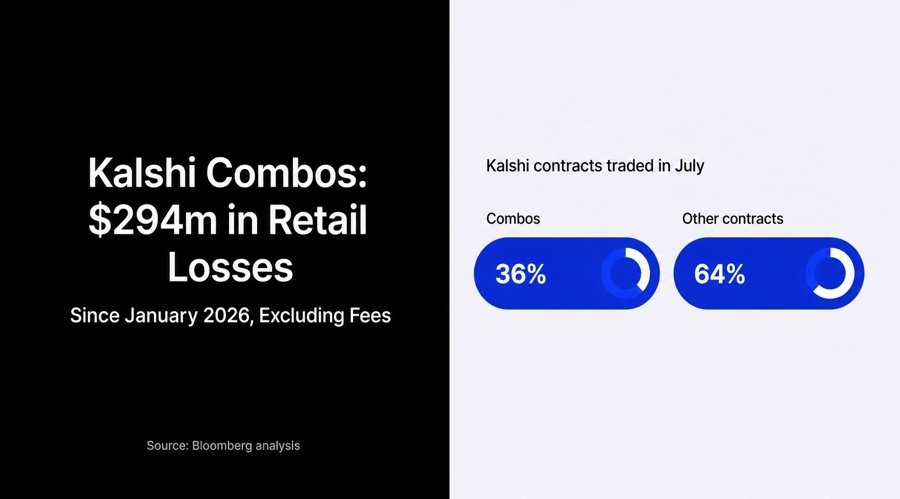
Kalshi combos: 36% of July contracts and $294m in 2026 retail losses. Source: Bloomberg.

Prediction-market combos and CFDs are structurally different, but their retail dynamics are beginning to look similar: professional firms price complex risk, while individual traders are drawn to products offering large potential payouts.

On Kalshi, multi-leg combo markets accounted for 36% of contracts traded so far in July. Retail customers have generated net losses of $294 million on the products since the start of 2026, excluding fees, according to a Bloomberg analysis.

Why Combo Contracts Are Harder to Price

Combos bundle several outcomes into one contract, with every leg required to succeed for the contract to settle “Yes”. Probabilities compound, while correlations between outcomes can make fair value difficult to calculate.

Bloomberg found that Kalshi combos carried an average implied probability of 9%, compared with 43% for other contracts.

The source of complexity differs from CFDs. A CFD provider acts as the customer’s counterparty and may internalise or hedge the resulting exposure, while leverage magnifies market movements. A prediction exchange matches participants, with market makers pricing combinations and correlations.

In both cases, professional firms typically have greater modelling, technology and risk-management capacity than retail customers.

Neither structure means that every retail participant will lose. However, high-payout formats can attract less experienced users while rewarding accurate pricing and disciplined risk management.

Of more than 30,000 same-game combinations traded during the World Cup final, fewer than 3% settled “Yes”. Bloomberg separately calculated net customer losses of more than $5 million on those contracts.

Regulators Have Seen the Pattern in CFDs

Previous Finance Magnates reporting found a similar concentration of returns across prediction markets.

An analysis of about 1.7 million Polymarket addresses showed that roughly 70% had recorded realised losses, while fewer than 0.04% captured more than 70% of realised profits. Separate data showed a positive median return only among traders with more than $500,000 in activity.

Regulators documented persistently high retail loss rates in CFDs before restricting their distribution.

ESMA found that 74% to 89% of retail CFD accounts typically lost money. Its measures included leverage limits, margin close-out rules, negative-balance protection and standardised loss warnings.

The FCA, which found that about 80% of CFD customers lost money, made comparable UK restrictions permanent in 2019. Neither regulator was commenting on prediction markets.

The comparison remains limited by an important structural difference. Prediction exchanges generally do not warehouse customer risk like sportsbooks.

Kalshi earns fees while market makers compete to quote against customer requests, so trading losses may accrue to counterparties rather than the venue itself.

As combos account for a larger share of activity, their retail dynamics are beginning to resemble those seen in complex financial products: difficult pricing, unequal analytical resources and returns concentrated among a small group of participants.

Prediction-market combos and CFDs are structurally different, but their retail dynamics are beginning to look similar: professional firms price complex risk, while individual traders are drawn to products offering large potential payouts.

On Kalshi, multi-leg combo markets accounted for 36% of contracts traded so far in July. Retail customers have generated net losses of $294 million on the products since the start of 2026, excluding fees, according to a Bloomberg analysis.

Why Combo Contracts Are Harder to Price

Combos bundle several outcomes into one contract, with every leg required to succeed for the contract to settle “Yes”. Probabilities compound, while correlations between outcomes can make fair value difficult to calculate.

Bloomberg found that Kalshi combos carried an average implied probability of 9%, compared with 43% for other contracts.

The source of complexity differs from CFDs. A CFD provider acts as the customer’s counterparty and may internalise or hedge the resulting exposure, while leverage magnifies market movements. A prediction exchange matches participants, with market makers pricing combinations and correlations.

In both cases, professional firms typically have greater modelling, technology and risk-management capacity than retail customers.

Neither structure means that every retail participant will lose. However, high-payout formats can attract less experienced users while rewarding accurate pricing and disciplined risk management.

Of more than 30,000 same-game combinations traded during the World Cup final, fewer than 3% settled “Yes”. Bloomberg separately calculated net customer losses of more than $5 million on those contracts.

Regulators Have Seen the Pattern in CFDs

Previous Finance Magnates reporting found a similar concentration of returns across prediction markets.

An analysis of about 1.7 million Polymarket addresses showed that roughly 70% had recorded realised losses, while fewer than 0.04% captured more than 70% of realised profits. Separate data showed a positive median return only among traders with more than $500,000 in activity.

Regulators documented persistently high retail loss rates in CFDs before restricting their distribution.

ESMA found that 74% to 89% of retail CFD accounts typically lost money. Its measures included leverage limits, margin close-out rules, negative-balance protection and standardised loss warnings.

The FCA, which found that about 80% of CFD customers lost money, made comparable UK restrictions permanent in 2019. Neither regulator was commenting on prediction markets.

The comparison remains limited by an important structural difference. Prediction exchanges generally do not warehouse customer risk like sportsbooks.

Kalshi earns fees while market makers compete to quote against customer requests, so trading losses may accrue to counterparties rather than the venue itself.

As combos account for a larger share of activity, their retail dynamics are beginning to resemble those seen in complex financial products: difficult pricing, unequal analytical resources and returns concentrated among a small group of participants.

About the Author: Tanya Chepkova
Tanya Chepkova
  • 320 Articles
  • 2 Followers
About the Author: Tanya Chepkova
Tanya Chepkova is a News Editor at Finance Magnates with more than 16 years of experience in financial journalism, covering forex, crypto, and digital asset markets. Her work spans daily industry reporting and data-driven, long-form explainers focused on market structure, trading models, and regulatory shifts. Before joining Finance Magnates, she led the editorial team of a cryptocurrency-focused media outlet for six years. Her reporting combines analytical depth with clear storytelling, with particular attention to how structural changes in trading, stablecoin infrastructure, and emerging products such as prediction markets reshape the broader financial ecosystem. She covers global developments and provides additional insight into CIS markets. Areas of Coverage: Crypto and digital asset markets Prediction markets Stablecoins and cross-border payments Industry analysis and long-form explainers
  • 320 Articles
  • 2 Followers

More from the Author

Retail FX

!"#$%&'()*+,-./0123456789:;<=>?@ABCDEFGHIJKLMNOPQRSTUVWXYZ[\]^_`abcdefghijklmnopqrstuvwxyz{|} !"#$%&'()*+,-./0123456789:;<=>?@ABCDEFGHIJKLMNOPQRSTUVWXYZ[\]^_`abcdefghijklmnopqrstuvwxyz{|}