$220 Million across 31,000 Markets: Polymarket Turns Stock Moves into Yes-or-No Trades

Monday, 28/09/2026 | 21:02 GMT by Tanya Chepkova
  • Nvidia, Alphabet, Apple and Tesla drew the most activity, with payouts determined by each market’s price threshold, deadline and settlement source.
  • Single-stock event contracts offer binary price exposure without shareholder rights and may fall within the SEC’s security-based swap framework.
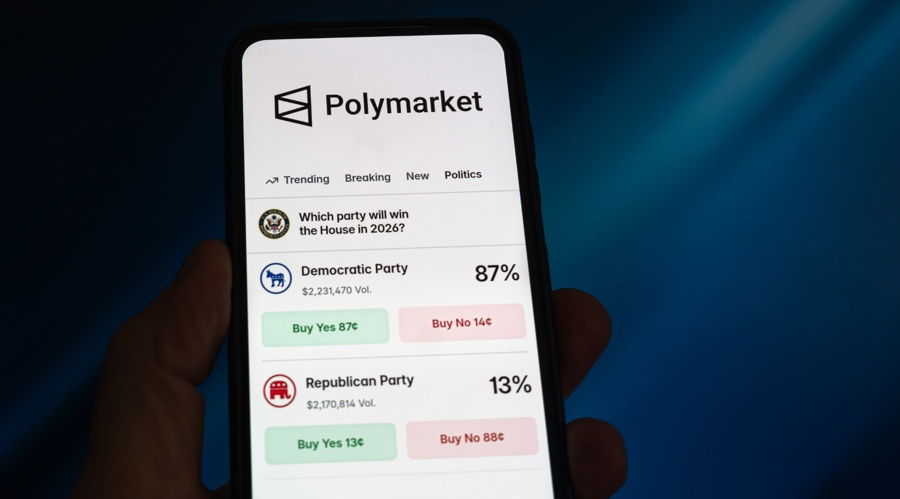
A screenshot of Polymarket (shutterstock)

Polymarket International generated more than $220 million in trading volume across approximately 31,000 equity-linked markets between October 2025 and early September 2026.

London's trading industry is coming home!

Nearly 60% of that volume came from contracts tied to individual share-price moves, led by Nvidia, Alphabet, Apple and Tesla. That structure places the products close to the US regulatory category for single-stock derivatives.

The figures come from an analysis that blockchain research firm Allium prepared for Reuters. The remaining volume was linked to exchange-traded funds or stock indexes. The four companies did not respond to Reuters’ requests for comment.

How the Stock Contracts Work

The contracts reduce a market view to a defined outcome. A trader might buy a position on whether Apple shares will reach a specified price by a particular date, instead of buying the stock or constructing a conventional options strategy.

The winning side pays according to the market’s terms and the losing side pays zero, although traders can close their positions before resolution.

Allium identified one wallet that generated $175,000 in volume through roughly 1,300 Apple-related trades. According to the analysis, the positions were structured to produce a small profit regardless of whether the “yes” or “no” side paid out, although it did not provide enough detail to explain how the strategy was constructed.

Settlement Rules Shape the Trade

The contract does not provide ownership of the underlying stock. Its holder receives no dividends, voting rights or residual claim on the company’s assets.

The result instead depends on the market’s wording, including the price threshold, deadline and source used to determine settlement. Two contracts expressing broadly similar views of a company may therefore produce different outcomes if they use different observation times, reference prices or resolution rules.

Single-Stock Contracts Approach SEC Territory

The regulatory question becomes more significant when a contract references an individual listed company. Under US law, products tied to single stocks are generally treated as security-based swaps, a class of derivatives overseen by the Securities and Exchange Commission and largely restricted to professional market participants, legal experts told Reuters.

Polymarket International operates offshore and says it makes extensive efforts to prevent US users from accessing the platform. Its separate CFTC-regulated US exchange does not offer markets on individual stocks.

The SEC and Commodity Futures Trading Commission jointly sought public feedback on that boundary in June. Their interpretation could determine how equity-linked event contracts may be offered in the US and which regulatory framework applies.

Polymarket International generated more than $220 million in trading volume across approximately 31,000 equity-linked markets between October 2025 and early September 2026.

London's trading industry is coming home!

Nearly 60% of that volume came from contracts tied to individual share-price moves, led by Nvidia, Alphabet, Apple and Tesla. That structure places the products close to the US regulatory category for single-stock derivatives.

The figures come from an analysis that blockchain research firm Allium prepared for Reuters. The remaining volume was linked to exchange-traded funds or stock indexes. The four companies did not respond to Reuters’ requests for comment.

How the Stock Contracts Work

The contracts reduce a market view to a defined outcome. A trader might buy a position on whether Apple shares will reach a specified price by a particular date, instead of buying the stock or constructing a conventional options strategy.

The winning side pays according to the market’s terms and the losing side pays zero, although traders can close their positions before resolution.

Allium identified one wallet that generated $175,000 in volume through roughly 1,300 Apple-related trades. According to the analysis, the positions were structured to produce a small profit regardless of whether the “yes” or “no” side paid out, although it did not provide enough detail to explain how the strategy was constructed.

Settlement Rules Shape the Trade

The contract does not provide ownership of the underlying stock. Its holder receives no dividends, voting rights or residual claim on the company’s assets.

The result instead depends on the market’s wording, including the price threshold, deadline and source used to determine settlement. Two contracts expressing broadly similar views of a company may therefore produce different outcomes if they use different observation times, reference prices or resolution rules.

Single-Stock Contracts Approach SEC Territory

The regulatory question becomes more significant when a contract references an individual listed company. Under US law, products tied to single stocks are generally treated as security-based swaps, a class of derivatives overseen by the Securities and Exchange Commission and largely restricted to professional market participants, legal experts told Reuters.

Polymarket International operates offshore and says it makes extensive efforts to prevent US users from accessing the platform. Its separate CFTC-regulated US exchange does not offer markets on individual stocks.

The SEC and Commodity Futures Trading Commission jointly sought public feedback on that boundary in June. Their interpretation could determine how equity-linked event contracts may be offered in the US and which regulatory framework applies.

About the Author: Tanya Chepkova
Tanya Chepkova
  • 502 Articles
  • 3 Followers
About the Author: Tanya Chepkova
Tanya Chepkova is a News Editor at Finance Magnates with more than 16 years of experience in financial journalism, covering forex, crypto, and digital asset markets. Her work spans daily industry reporting and data-driven, long-form explainers focused on market structure, trading models, and regulatory shifts. Before joining Finance Magnates, she led the editorial team of a cryptocurrency-focused media outlet for six years. Her reporting combines analytical depth with clear storytelling, with particular attention to how structural changes in trading, stablecoin infrastructure, and emerging products such as prediction markets reshape the broader financial ecosystem. She covers global developments and provides additional insight into CIS markets. Areas of Coverage: Crypto and digital asset markets Prediction markets Stablecoins and cross-border payments Industry analysis and long-form explainers
  • 502 Articles
  • 3 Followers

More from the Author

FinTech

!"#$%&'()*+,-./0123456789:;<=>?@ABCDEFGHIJKLMNOPQRSTUVWXYZ[\]^_`abcdefghijklmnopqrstuvwxyz{|} !"#$%&'()*+,-./0123456789:;<=>?@ABCDEFGHIJKLMNOPQRSTUVWXYZ[\]^_`abcdefghijklmnopqrstuvwxyz{|}