Huang sold a significant amount of stock, capitalizing on NVIDIA's soaring market value.
The sale is part of a broader trend among chip industry executives.
This likely reflects confidence in market highs and personal financial planning.
NVIDIA CEO Jensen Huang has recently
made headlines by selling a substantial portion of his company stock, amounting
to $229 million. This move comes on the heels of NVIDIA’s stock rally, driven
by robust demand for its AI and data center chips and reflects broader trends in the
sector.
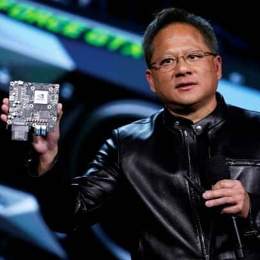
Jensen Huang and his famed leather jacket (Reuters).
The semiconductor sector has been on
a tear recently, with
stocks like NVIDIA leading the charge due to their critical role in
powering next-generation technologies. As the demand for AI capabilities, data
centers, and high-performance computing continues to skyrocket, companies in
this space have seen their valuations soar. NVIDIA, in particular, has become a
cornerstone of the AI revolution, with its GPUs serving as the backbone for
countless AI applications.
Joining the Ranks of Chip Industry
Sellers
Huang isn't alone in this sell-off
spree. Other top executives in the chip industry, such as Micron’s Sanjay
Mehrotra and Qualcomm’s Cristiano Amon, have also capitalized on their
companies' stock surges by selling off their holdings. This pattern among
industry leaders signals a shared strategy: taking advantage of peak market
valuations to secure personal financial gains.
It takes a while, but you can just skip to the end.
These sales are not random acts, but
are well-timed moves aligned with market conditions. Mehrotra, for instance,
sold shares amidst Micron’s rise, driven by memory chip demand and data storage
needs. Similarly, Qualcomm’s Amon executed sales following the company's
advances in 5G technology and mobile processor dominance. These actions reflect
a calculated approach to personal wealth management against the backdrop of
their companies' successes.
For investors, these high-profile
stock sales might raise eyebrows. Does the sell-off indicate that these
executives anticipate a potential plateau or decline in stock value? Or is it
simply a prudent financial decision to diversify their assets after a period of
unprecedented growth?
The truth likely lies somewhere in
between. While the sales do not necessarily predict a downturn, they highlight
the fact that executives are constantly considering their stock management.
It’s about balancing personal financial security with corporate stewardship.
Executives selling shares is a common practice, often planned months in
advance, and typically doesn’t reflect a lack of confidence in the company’s
future. However, it's worth noting that such moves can create a perception
issue. Investors might worry about the timing and rationale behind these sales.
The Bigger Picture
This trend of stock sales among chip
executives underscores a broader theme in the tech industry: the maturation and
stabilization of the market. As companies like NVIDIA, Micron, and Qualcomm
continue to innovate and expand, their leaders are increasingly looking to
secure personal financial gains. This move can be seen as a testament to the
companies’ success and the executives' confidence in their long-term prospects.
Moreover, these sales reflect a
broader industry trend where leaders take advantage of high valuations to
diversify their financial portfolios. This strategy not only safeguards their
personal wealth, but also shows a level of financial acumen in leveraging
market conditions.
Jensen Huang’s stock sale is a
strategic move, mirroring actions taken by his peers in the semiconductor
industry. As the semiconductor market continues to evolve, such moves will
likely remain a common narrative, reflecting both the health of the industry
and the savvy financial planning of its leaders.
NVIDIA CEO Jensen Huang has recently
made headlines by selling a substantial portion of his company stock, amounting
to $229 million. This move comes on the heels of NVIDIA’s stock rally, driven
by robust demand for its AI and data center chips and reflects broader trends in the
sector.
Jensen Huang and his famed leather jacket (Reuters).
The semiconductor sector has been on
a tear recently, with
stocks like NVIDIA leading the charge due to their critical role in
powering next-generation technologies. As the demand for AI capabilities, data
centers, and high-performance computing continues to skyrocket, companies in
this space have seen their valuations soar. NVIDIA, in particular, has become a
cornerstone of the AI revolution, with its GPUs serving as the backbone for
countless AI applications.
Joining the Ranks of Chip Industry
Sellers
Huang isn't alone in this sell-off
spree. Other top executives in the chip industry, such as Micron’s Sanjay
Mehrotra and Qualcomm’s Cristiano Amon, have also capitalized on their
companies' stock surges by selling off their holdings. This pattern among
industry leaders signals a shared strategy: taking advantage of peak market
valuations to secure personal financial gains.
It takes a while, but you can just skip to the end.
These sales are not random acts, but
are well-timed moves aligned with market conditions. Mehrotra, for instance,
sold shares amidst Micron’s rise, driven by memory chip demand and data storage
needs. Similarly, Qualcomm’s Amon executed sales following the company's
advances in 5G technology and mobile processor dominance. These actions reflect
a calculated approach to personal wealth management against the backdrop of
their companies' successes.
For investors, these high-profile
stock sales might raise eyebrows. Does the sell-off indicate that these
executives anticipate a potential plateau or decline in stock value? Or is it
simply a prudent financial decision to diversify their assets after a period of
unprecedented growth?
The truth likely lies somewhere in
between. While the sales do not necessarily predict a downturn, they highlight
the fact that executives are constantly considering their stock management.
It’s about balancing personal financial security with corporate stewardship.
Executives selling shares is a common practice, often planned months in
advance, and typically doesn’t reflect a lack of confidence in the company’s
future. However, it's worth noting that such moves can create a perception
issue. Investors might worry about the timing and rationale behind these sales.
The Bigger Picture
This trend of stock sales among chip
executives underscores a broader theme in the tech industry: the maturation and
stabilization of the market. As companies like NVIDIA, Micron, and Qualcomm
continue to innovate and expand, their leaders are increasingly looking to
secure personal financial gains. This move can be seen as a testament to the
companies’ success and the executives' confidence in their long-term prospects.
Moreover, these sales reflect a
broader industry trend where leaders take advantage of high valuations to
diversify their financial portfolios. This strategy not only safeguards their
personal wealth, but also shows a level of financial acumen in leveraging
market conditions.
Jensen Huang’s stock sale is a
strategic move, mirroring actions taken by his peers in the semiconductor
industry. As the semiconductor market continues to evolve, such moves will
likely remain a common narrative, reflecting both the health of the industry
and the savvy financial planning of its leaders.
Louis Parks has lived and worked in and around the Middle East for much of his professional career. He writes about the meeting of the tech and finance worlds.
Will Bitcoin Price Fall Below $50K? BTC Drops to 4-Month Low Near $61,300 in a 13% Three-Day Slide
Featured Videos
FM Daily Brief – 9 June 2026
Today’s Tuesday, the 9th of June 2026, and these are our main stories: eToro’s customer assets climbed back above $20 billion, Prop trading model in prediction markets, and Leverate launched a new AI assistant for brokers and traders.
War Stories: Lessons from 20 Years in Markets (the pain, the pitfalls and the profits)
The trades that taught me the most aren't the ones that worked. They're the ones that didn't — or the ones I almost caught and didn't have the nerve to ride. In this session, I'll tell you about the Brexit miss, the SNB shocker that nearly handed me a 5400% return, the BoJ surprise that punched me in the gut, and a few wins along the way. Each story carries a lesson, but the lessons aren't the point. Everyone who trades long enough collects a portfolio of moments like these; what separates the people who stay in the game is what they do with them.
The Engine and the Fuel: How AI & Data Drives African Future
If AI is the engine, data is the fuel. Without quality, accessible data, AI cannot work well; and without the right mindset, data remains just numbers instead of insight. In this session, leading experts will explore how AI and data are democratizing opportunities for businesses and personal growth. Discover practical ways to make AI accessible today, anticipate its transformative impact on African markets, and learn actionable steps to prepare for what's next. Let's talk about:
-How AI and data drive business efficiency and innovation in trading and fintech
-AI tools to elevate trading or business strategies
-How to access and maximise the power of data and AI
-Emerging AI and data trends in Africa and their economic ripple effects
If AI is the engine, data is the fuel. Without quality, accessible data, AI cannot work well; and without the right mindset, data remains just numbers instead of insight. In this session, leading experts will explore how AI and data are democratizing opportunities for businesses and personal growth. Discover practical ways to make AI accessible today, anticipate its transformative impact on African markets, and learn actionable steps to prepare for what's next. Let's talk about:
-How AI and data drive business efficiency and innovation in trading and fintech
-AI tools to elevate trading or business strategies
-How to access and maximise the power of data and AI
-Emerging AI and data trends in Africa and their economic ripple effects
If AI is the engine, data is the fuel. Without quality, accessible data, AI cannot work well; and without the right mindset, data remains just numbers instead of insight. In this session, leading experts will explore how AI and data are democratizing opportunities for businesses and personal growth. Discover practical ways to make AI accessible today, anticipate its transformative impact on African markets, and learn actionable steps to prepare for what's next. Let's talk about:
-How AI and data drive business efficiency and innovation in trading and fintech
-AI tools to elevate trading or business strategies
-How to access and maximise the power of data and AI
-Emerging AI and data trends in Africa and their economic ripple effects
If AI is the engine, data is the fuel. Without quality, accessible data, AI cannot work well; and without the right mindset, data remains just numbers instead of insight. In this session, leading experts will explore how AI and data are democratizing opportunities for businesses and personal growth. Discover practical ways to make AI accessible today, anticipate its transformative impact on African markets, and learn actionable steps to prepare for what's next. Let's talk about:
-How AI and data drive business efficiency and innovation in trading and fintech
-AI tools to elevate trading or business strategies
-How to access and maximise the power of data and AI
-Emerging AI and data trends in Africa and their economic ripple effects
If AI is the engine, data is the fuel. Without quality, accessible data, AI cannot work well; and without the right mindset, data remains just numbers instead of insight. In this session, leading experts will explore how AI and data are democratizing opportunities for businesses and personal growth. Discover practical ways to make AI accessible today, anticipate its transformative impact on African markets, and learn actionable steps to prepare for what's next. Let's talk about:
-How AI and data drive business efficiency and innovation in trading and fintech
-AI tools to elevate trading or business strategies
-How to access and maximise the power of data and AI
-Emerging AI and data trends in Africa and their economic ripple effects
If AI is the engine, data is the fuel. Without quality, accessible data, AI cannot work well; and without the right mindset, data remains just numbers instead of insight. In this session, leading experts will explore how AI and data are democratizing opportunities for businesses and personal growth. Discover practical ways to make AI accessible today, anticipate its transformative impact on African markets, and learn actionable steps to prepare for what's next. Let's talk about:
-How AI and data drive business efficiency and innovation in trading and fintech
-AI tools to elevate trading or business strategies
-How to access and maximise the power of data and AI
-Emerging AI and data trends in Africa and their economic ripple effects
Inside My Best Trade with Jimmy Moyaha
Most market post-mortems describe what happened to prices. Few describe what happened in the trading room while the position was open: the entry conviction, the moments that tested it, and the exit decision that closed the book.
This session brings one seasoned trader to the stage for an unfiltered account of the position that still defines how they think about markets.
Attendees will walk away with:
-A first-hand account of how a conviction trade is built, from thesis and entry through position management and exit
-Understanding of what turns a market observation into a live position, and what holds it when conditions shift
-Insight into how timing, execution quality, and market structure shaped the final result
-Perspective on what the trade revealed about edge, risk tolerance, and when to hold through a position moving against you
-Clarity on what separates a well-built trade from a well-timed one
Most market post-mortems describe what happened to prices. Few describe what happened in the trading room while the position was open: the entry conviction, the moments that tested it, and the exit decision that closed the book.
This session brings one seasoned trader to the stage for an unfiltered account of the position that still defines how they think about markets.
Attendees will walk away with:
-A first-hand account of how a conviction trade is built, from thesis and entry through position management and exit
-Understanding of what turns a market observation into a live position, and what holds it when conditions shift
-Insight into how timing, execution quality, and market structure shaped the final result
-Perspective on what the trade revealed about edge, risk tolerance, and when to hold through a position moving against you
-Clarity on what separates a well-built trade from a well-timed one
Most market post-mortems describe what happened to prices. Few describe what happened in the trading room while the position was open: the entry conviction, the moments that tested it, and the exit decision that closed the book.
This session brings one seasoned trader to the stage for an unfiltered account of the position that still defines how they think about markets.
Attendees will walk away with:
-A first-hand account of how a conviction trade is built, from thesis and entry through position management and exit
-Understanding of what turns a market observation into a live position, and what holds it when conditions shift
-Insight into how timing, execution quality, and market structure shaped the final result
-Perspective on what the trade revealed about edge, risk tolerance, and when to hold through a position moving against you
-Clarity on what separates a well-built trade from a well-timed one
Most market post-mortems describe what happened to prices. Few describe what happened in the trading room while the position was open: the entry conviction, the moments that tested it, and the exit decision that closed the book.
This session brings one seasoned trader to the stage for an unfiltered account of the position that still defines how they think about markets.
Attendees will walk away with:
-A first-hand account of how a conviction trade is built, from thesis and entry through position management and exit
-Understanding of what turns a market observation into a live position, and what holds it when conditions shift
-Insight into how timing, execution quality, and market structure shaped the final result
-Perspective on what the trade revealed about edge, risk tolerance, and when to hold through a position moving against you
-Clarity on what separates a well-built trade from a well-timed one
Most market post-mortems describe what happened to prices. Few describe what happened in the trading room while the position was open: the entry conviction, the moments that tested it, and the exit decision that closed the book.
This session brings one seasoned trader to the stage for an unfiltered account of the position that still defines how they think about markets.
Attendees will walk away with:
-A first-hand account of how a conviction trade is built, from thesis and entry through position management and exit
-Understanding of what turns a market observation into a live position, and what holds it when conditions shift
-Insight into how timing, execution quality, and market structure shaped the final result
-Perspective on what the trade revealed about edge, risk tolerance, and when to hold through a position moving against you
-Clarity on what separates a well-built trade from a well-timed one
Most market post-mortems describe what happened to prices. Few describe what happened in the trading room while the position was open: the entry conviction, the moments that tested it, and the exit decision that closed the book.
This session brings one seasoned trader to the stage for an unfiltered account of the position that still defines how they think about markets.
Attendees will walk away with:
-A first-hand account of how a conviction trade is built, from thesis and entry through position management and exit
-Understanding of what turns a market observation into a live position, and what holds it when conditions shift
-Insight into how timing, execution quality, and market structure shaped the final result
-Perspective on what the trade revealed about edge, risk tolerance, and when to hold through a position moving against you
-Clarity on what separates a well-built trade from a well-timed one
Agentic Inequality: Democratizing Financial Access Through AI & Blockchain
As crypto and CFD trading continue to expand across Africa, access to advanced tools and market insights remains uneven. This session explores how AI and blockchain can bridge that gap by empowering informal traders and underserved communities to participate more effectively in digital financial markets. The discussion will focus on practical applications of technology to improve accessibility, education, and investment outcomes in both formal and informal sectors.
In this discussion, we will explore:
-The role of AI in democratizing access to trading tools, insights, and strategy development
-How crypto and blockchain can enable broader participation beyond traditional financial systems
-Addressing access barriers: infrastructure, education, and affordability in underserved communities
-Opportunities for brokers and platforms to tap into the informal trading economy
As crypto and CFD trading continue to expand across Africa, access to advanced tools and market insights remains uneven. This session explores how AI and blockchain can bridge that gap by empowering informal traders and underserved communities to participate more effectively in digital financial markets. The discussion will focus on practical applications of technology to improve accessibility, education, and investment outcomes in both formal and informal sectors.
In this discussion, we will explore:
-The role of AI in democratizing access to trading tools, insights, and strategy development
-How crypto and blockchain can enable broader participation beyond traditional financial systems
-Addressing access barriers: infrastructure, education, and affordability in underserved communities
-Opportunities for brokers and platforms to tap into the informal trading economy
As crypto and CFD trading continue to expand across Africa, access to advanced tools and market insights remains uneven. This session explores how AI and blockchain can bridge that gap by empowering informal traders and underserved communities to participate more effectively in digital financial markets. The discussion will focus on practical applications of technology to improve accessibility, education, and investment outcomes in both formal and informal sectors.
In this discussion, we will explore:
-The role of AI in democratizing access to trading tools, insights, and strategy development
-How crypto and blockchain can enable broader participation beyond traditional financial systems
-Addressing access barriers: infrastructure, education, and affordability in underserved communities
-Opportunities for brokers and platforms to tap into the informal trading economy
As crypto and CFD trading continue to expand across Africa, access to advanced tools and market insights remains uneven. This session explores how AI and blockchain can bridge that gap by empowering informal traders and underserved communities to participate more effectively in digital financial markets. The discussion will focus on practical applications of technology to improve accessibility, education, and investment outcomes in both formal and informal sectors.
In this discussion, we will explore:
-The role of AI in democratizing access to trading tools, insights, and strategy development
-How crypto and blockchain can enable broader participation beyond traditional financial systems
-Addressing access barriers: infrastructure, education, and affordability in underserved communities
-Opportunities for brokers and platforms to tap into the informal trading economy
As crypto and CFD trading continue to expand across Africa, access to advanced tools and market insights remains uneven. This session explores how AI and blockchain can bridge that gap by empowering informal traders and underserved communities to participate more effectively in digital financial markets. The discussion will focus on practical applications of technology to improve accessibility, education, and investment outcomes in both formal and informal sectors.
In this discussion, we will explore:
-The role of AI in democratizing access to trading tools, insights, and strategy development
-How crypto and blockchain can enable broader participation beyond traditional financial systems
-Addressing access barriers: infrastructure, education, and affordability in underserved communities
-Opportunities for brokers and platforms to tap into the informal trading economy
As crypto and CFD trading continue to expand across Africa, access to advanced tools and market insights remains uneven. This session explores how AI and blockchain can bridge that gap by empowering informal traders and underserved communities to participate more effectively in digital financial markets. The discussion will focus on practical applications of technology to improve accessibility, education, and investment outcomes in both formal and informal sectors.
In this discussion, we will explore:
-The role of AI in democratizing access to trading tools, insights, and strategy development
-How crypto and blockchain can enable broader participation beyond traditional financial systems
-Addressing access barriers: infrastructure, education, and affordability in underserved communities
-Opportunities for brokers and platforms to tap into the informal trading economy