Gold is trading at $4,493 per ounce on March 30, 2026, consolidating in a narrow range between $4,360 support and $4,550 resistance.
Technical analysis shows the market is range-bound, with the 50 EMA near $4,800-$4,850 acting as the first major upside hurdle.
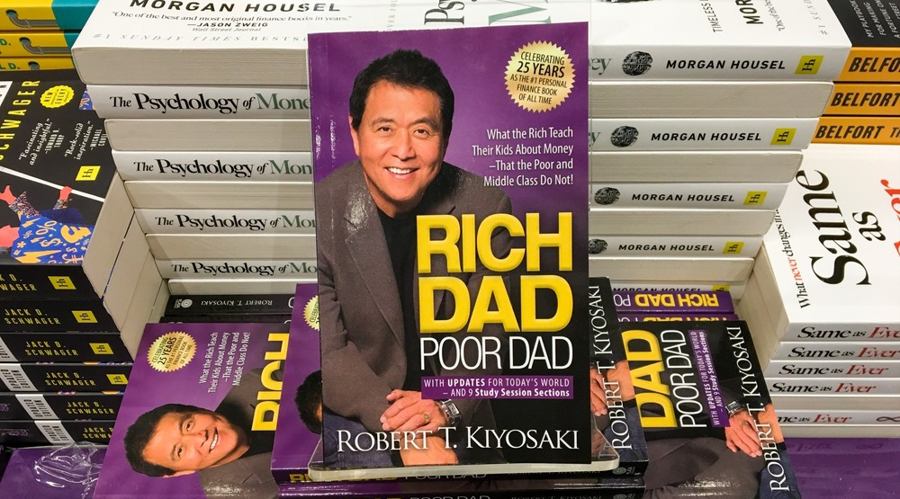
Robert Kiyosaki predicts gold will hit $35,000 per ounce one year after what he calls "the biggest bubble bust in history."
Robert Kiyosaki's "Rich Dad Poor Dad"
Gold is
trading at $4,493 per ounce as of March 30, 2026, up $115 from the previous
session but still roughly 20% below the all-time high of $5,595 set on January
29. The question of how high can gold go has rarely been more divisive.
The yellow
metal has shed more than $1,100 in two months, endured its worst weekly decline
since March 2020, and yet every major Wall Street commodity desk has maintained
or raised its year-end target.
At the same
time, Robert Kiyosaki, the author of "Rich Dad Poor Dad" with 2.4
million X followers, has issued his most extreme gold price prediction yet:
$35,000 per ounce. The gap between that number and the institutional consensus
tells you everything about the current market psychology.
Follow
me on X for real-time market analysis: @ChmielDk
Why Gold Dropped 20% From
Its January Peak?
The
correction from $5,595 to below $4,100 at the worst point last Monday was
driven by three converging forces, none of which changed the long-term
structural picture for gold but all of which hit the market simultaneously.
Second, the
US dollar. The Dollar Index climbed above 100.2, its highest since May 2025, as
the Iran conflict paradoxically strengthened the greenback through safe-haven
flows. A stronger dollar makes gold more expensive for buyers in non-dollar
currencies, reducing global demand.
Ben
McMillan, Chief Investment Officer at IDX Advisors, described the longer-term
backdrop on Yahoo Finance in January: "80 percent of all US dollars in
existence have been printed since Covid. This is a structural tailwind behind
gold, it's a fundamental repricing." That structural thesis has not
changed, but the short-term monetary mechanics have swung against bullion.
Third, the
oil-inflation feedback loop. The partial closure of the Strait of Hormuz pushed
Brent crude toward $84 per barrel. Normally, geopolitical conflict supports
gold. This time, the oil spike reignited inflation fears, which in turn forced
the Fed to stay hawkish, which pressured gold through the monetary channel.
As I noted
in my analysis of why gold was crashing last week, gold is being sold
during an active conflict precisely because that conflict is making the Fed's
job harder.
Kiyosaki's $35,000 Gold
Price Prediction: Context and Credibility
As the Finance Magnates coverage from March
17 established,
Kiyosaki's forecast differs from institutional gold price predictions in one
critical way: it requires a systemic financial collapse as the catalyst. His
$35,000 target represents a roughly 680% increase from current prices, which
would imply either a complete collapse in the US dollar or a hyperinflationary
event.
For
context, Kiyosaki's Bitcoin prediction of $1 million by
2035 follows the
same logic, as does his $200 silver call. These are not traditional market
forecasts. They are conditional predictions that depend on a specific
macroeconomic scenario unfolding. Investors should evaluate them accordingly.
How High Can Gold Go? XAU/USDT
Technical Analysis
Based on my
over 15 years of experience as an analyst and trader, the technical picture on
gold has not changed materially despite the dramatic correction. Price action
is consolidating in a narrow channel between clearly defined support and
resistance.
The $4,360
support level has been actively tested since the pin bar reversal from last
Monday, when price briefly dropped to $4,100 intraday before recovering
sharply. That pin bar, with its long lower wick rejecting the 200-day moving
average near $4,200, was the kind of session-specific signal that only shows up
when you are watching the chart in real time.
Sellers
exhausted themselves at exactly the right level. On the upside, local
resistance sits at approximately $4,550, defined by the historical highs from
late December 2025.
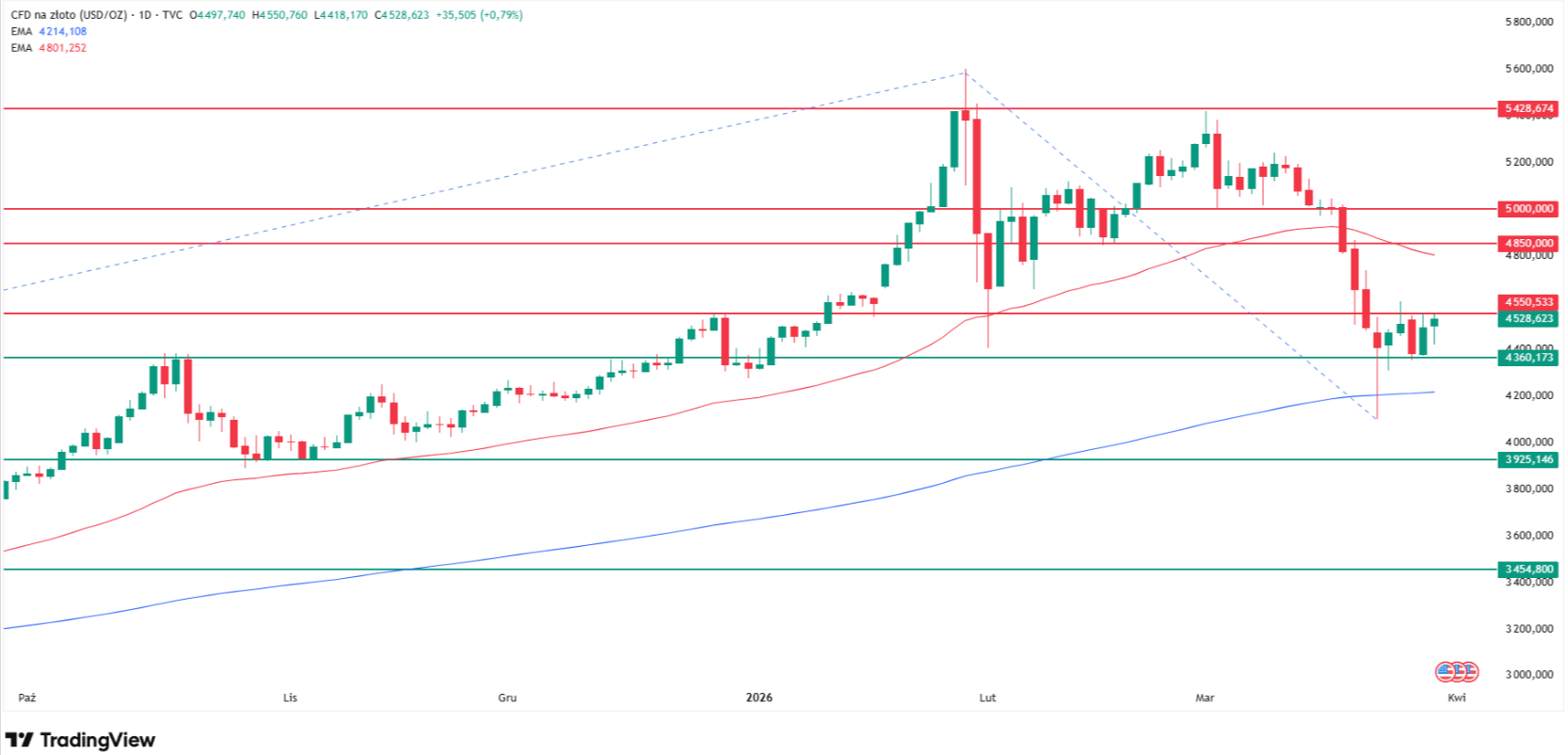
How high can gold go? Source: Tradingview.com
My chart
shows the following key levels:
Level
Type
Notes
$3,500
Support
H1 2025
highs, ultimate structural floor
$4,000
Support
November 2025 lows
$4,360
Support
Active,
tested since March 24 pin bar
$4,550
Resistance
Local,
late December 2025 historical highs
$4,800-$4,850
Resistance
50 EMA convergence zone
$5,000
Resistance
Psychological level
$5,430
Resistance
January
28 session highs, major structural cap
The January
28 session high at $5,430 remains the most important resistance level on the
chart. Gold briefly traded at $5,600 the following day but failed to hold that
price, which means $5,430 is the confirmed structural ceiling until a sustained
close above it says otherwise. As established in my comprehensive gold price prediction
analysis from
February, the $4,550-$5,420 range defines the noise. What matters is which
boundary breaks first.
My
directional bias is neutral at this price. The range between $4,360 and $4,550
is too narrow for a definitive call. A break above $4,550 opens the path toward
the 50 EMA at $4,800 and then the psychological $5,000 level. A break below
$4,360, and particularly below $4,000, would signal that the 20% correction has
further to run.
As I
detailed in my analysis of gold's pin bar reversal from March 25, the structural
supports that drove gold from $2,600 to $5,600 remain intact. The buyers who
stepped in at $4,100-$4,200 last Monday confirmed that.
This week
brings two catalysts that could break the range: Fed Chair Powell speaks
Monday, and US Nonfarm Payrolls are released Friday, April 3. A dovish surprise
from Powell or a weak jobs print below 50,000 could trigger a move toward
$4,800. A hawkish tone or strong employment data may push gold back toward
$4,000.
Gold Price Predictions
2026: From $4,450 to $10,000
The range
of institutional forecasts for how high gold can go in 2026 remains remarkably
wide.
Natasha
Kaneva, Head of Global Commodities Strategy at J.P. Morgan, stated: "We
expect gold demand to push prices toward $5,000 per ounce by year-end
2026." The bank's updated target of $6,300, published February 3, rests on
projected central bank purchases of 800 tonnes in 2026.
As the JPMorgan and Deutsche Bank gold
forecast analysis
from February detailed, Deutsche Bank's Michael Hsueh maintained his $6,000
target through the crash, calling the selloff "a tactical move"
rather than a structural shift.
Bart Melek,
Managing Director and Head of Commodity Strategy at TD Securities, put it
plainly after the correction: "Fundamentally, me and the team still like
gold here." His base case targets a $5,000 quarterly average with a
technical ceiling around $5,455.
On the bear
side, Nigel Green, CEO of the deVere Group, warned of material downside risks
in February: "Gold remains one of the few unleveraged sovereign assets.
For governments under political or financial strain, the temptation to
liquidate reserves is real." HSBC and Standard Chartered have year-end
targets at $4,450 and $4,488, respectively, both of which the market has
already traded through during the recent lows.
The Goldman Sachs gold price prediction
analysis published
in January placed the bank's year-end target at $5,400, citing private-sector
diversification and central bank buying momentum. Goldman's Senior Commodities
Analyst Lina Thomas noted "significant upside risk to the forecast."
Source
Target
Notes
JPMorgan
$6,300
Feb 2026,
based on 800 tonnes central bank buying
Wells Fargo
$6,100-$6,300
Feb 2026, structural bull case
UBS
$6,200
Mid-2026 target, $7,200 upside scenario
BNP Paribas
$6,000
Year-end
2026, peak above $6,250 possible
Goldman Sachs
$5,400
Jan 2026, "significant upside risk"
ANZ Bank
$5,800
Feb 2026,
mid-range institutional bull case
TD Securities
$5,000-$5,455
Base to technical ceiling
Reuters poll median (30 analysts)
$4,746
Highest annual consensus since 2012
HSBC
$4,450
Bear
case, published pre-crash
Saxo Bank
$10,000
Extreme
scenario, "Q-Day" digital asset collapse
Robert Kiyosaki
$35,000
Conditional
on systemic financial collapse
The Wall
Street consensus clusters between $5,400 and $6,300 for year-end 2026, as the Fibonacci extension analysis
targeting $7,300
from February established. The 20% correction has not changed any of the major
banks' year-end targets. If anything, it has made those forecasts easier to
maintain.
FAQ, Gold Price Analysis
How high can gold go in
2026?
Institutional
forecasts for 2026 range from $4,450 (HSBC) to $6,300 (JPMorgan). The Reuters
poll median of 30 analysts sits at $4,746, the highest annual consensus on
record. Extreme scenarios include Saxo Bank's $10,000 and Kiyosaki's $35,000,
though both require specific tail-risk events to materialize. Gold is trading
at $4,493 as of March 30, 2026.
Why is Robert Kiyosaki
predicting $35,000 gold?
Kiyosaki's
March 16 prediction of $35,000 gold is conditional on what he calls "the
biggest bubble bust in history." He frames gold, silver, Bitcoin, and
Ethereum as beneficiaries of a systemic financial collapse. His target
represents a 680% increase from current prices and requires either dollar
collapse or hyperinflation, placing it far outside the Wall Street consensus of
$5,400-$6,300.
What is the gold price
today?
Gold is
trading at $4,493 per ounce as of March 30, 2026. This represents a roughly 20%
decline from the all-time high of $5,595 set on January 29, 2026, but remains
approximately 45% above March 2025 levels when gold was near $3,100.
Will gold reach $5,000
again in 2026?
Most
institutional analysts expect gold to reclaim $5,000. JPMorgan's Natasha Kaneva
projects prices pushing toward $5,000 by year-end. Key catalysts include
potential Fed rate cuts, continued central bank buying projected at 585 tonnes
per quarter, and ETF inflows estimated at 250 tonnes for the year. However, a
hawkish Fed and stronger dollar remain headwinds.
Is gold a good investment
after a 20% correction?
The 20%
pullback from $5,595 to below $4,100 is the largest correction in the current
bull cycle. Historically, corrections of this magnitude within secular bull
markets have preceded new highs. Every major Wall Street bank has maintained
its year-end target through the selloff. However, short-term risks remain,
including the Fed's hawkish stance, rising Treasury yields, and Middle
East-driven oil inflation.
Gold is
trading at $4,493 per ounce as of March 30, 2026, up $115 from the previous
session but still roughly 20% below the all-time high of $5,595 set on January
29. The question of how high can gold go has rarely been more divisive.
The yellow
metal has shed more than $1,100 in two months, endured its worst weekly decline
since March 2020, and yet every major Wall Street commodity desk has maintained
or raised its year-end target.
At the same
time, Robert Kiyosaki, the author of "Rich Dad Poor Dad" with 2.4
million X followers, has issued his most extreme gold price prediction yet:
$35,000 per ounce. The gap between that number and the institutional consensus
tells you everything about the current market psychology.
Follow
me on X for real-time market analysis: @ChmielDk
Why Gold Dropped 20% From
Its January Peak?
The
correction from $5,595 to below $4,100 at the worst point last Monday was
driven by three converging forces, none of which changed the long-term
structural picture for gold but all of which hit the market simultaneously.
Second, the
US dollar. The Dollar Index climbed above 100.2, its highest since May 2025, as
the Iran conflict paradoxically strengthened the greenback through safe-haven
flows. A stronger dollar makes gold more expensive for buyers in non-dollar
currencies, reducing global demand.
Ben
McMillan, Chief Investment Officer at IDX Advisors, described the longer-term
backdrop on Yahoo Finance in January: "80 percent of all US dollars in
existence have been printed since Covid. This is a structural tailwind behind
gold, it's a fundamental repricing." That structural thesis has not
changed, but the short-term monetary mechanics have swung against bullion.
Third, the
oil-inflation feedback loop. The partial closure of the Strait of Hormuz pushed
Brent crude toward $84 per barrel. Normally, geopolitical conflict supports
gold. This time, the oil spike reignited inflation fears, which in turn forced
the Fed to stay hawkish, which pressured gold through the monetary channel.
As I noted
in my analysis of why gold was crashing last week, gold is being sold
during an active conflict precisely because that conflict is making the Fed's
job harder.
Kiyosaki's $35,000 Gold
Price Prediction: Context and Credibility
As the Finance Magnates coverage from March
17 established,
Kiyosaki's forecast differs from institutional gold price predictions in one
critical way: it requires a systemic financial collapse as the catalyst. His
$35,000 target represents a roughly 680% increase from current prices, which
would imply either a complete collapse in the US dollar or a hyperinflationary
event.
For
context, Kiyosaki's Bitcoin prediction of $1 million by
2035 follows the
same logic, as does his $200 silver call. These are not traditional market
forecasts. They are conditional predictions that depend on a specific
macroeconomic scenario unfolding. Investors should evaluate them accordingly.
How High Can Gold Go? XAU/USDT
Technical Analysis
Based on my
over 15 years of experience as an analyst and trader, the technical picture on
gold has not changed materially despite the dramatic correction. Price action
is consolidating in a narrow channel between clearly defined support and
resistance.
The $4,360
support level has been actively tested since the pin bar reversal from last
Monday, when price briefly dropped to $4,100 intraday before recovering
sharply. That pin bar, with its long lower wick rejecting the 200-day moving
average near $4,200, was the kind of session-specific signal that only shows up
when you are watching the chart in real time.
Sellers
exhausted themselves at exactly the right level. On the upside, local
resistance sits at approximately $4,550, defined by the historical highs from
late December 2025.
How high can gold go? Source: Tradingview.com
My chart
shows the following key levels:
Level
Type
Notes
$3,500
Support
H1 2025
highs, ultimate structural floor
$4,000
Support
November 2025 lows
$4,360
Support
Active,
tested since March 24 pin bar
$4,550
Resistance
Local,
late December 2025 historical highs
$4,800-$4,850
Resistance
50 EMA convergence zone
$5,000
Resistance
Psychological level
$5,430
Resistance
January
28 session highs, major structural cap
The January
28 session high at $5,430 remains the most important resistance level on the
chart. Gold briefly traded at $5,600 the following day but failed to hold that
price, which means $5,430 is the confirmed structural ceiling until a sustained
close above it says otherwise. As established in my comprehensive gold price prediction
analysis from
February, the $4,550-$5,420 range defines the noise. What matters is which
boundary breaks first.
My
directional bias is neutral at this price. The range between $4,360 and $4,550
is too narrow for a definitive call. A break above $4,550 opens the path toward
the 50 EMA at $4,800 and then the psychological $5,000 level. A break below
$4,360, and particularly below $4,000, would signal that the 20% correction has
further to run.
As I
detailed in my analysis of gold's pin bar reversal from March 25, the structural
supports that drove gold from $2,600 to $5,600 remain intact. The buyers who
stepped in at $4,100-$4,200 last Monday confirmed that.
This week
brings two catalysts that could break the range: Fed Chair Powell speaks
Monday, and US Nonfarm Payrolls are released Friday, April 3. A dovish surprise
from Powell or a weak jobs print below 50,000 could trigger a move toward
$4,800. A hawkish tone or strong employment data may push gold back toward
$4,000.
Gold Price Predictions
2026: From $4,450 to $10,000
The range
of institutional forecasts for how high gold can go in 2026 remains remarkably
wide.
Natasha
Kaneva, Head of Global Commodities Strategy at J.P. Morgan, stated: "We
expect gold demand to push prices toward $5,000 per ounce by year-end
2026." The bank's updated target of $6,300, published February 3, rests on
projected central bank purchases of 800 tonnes in 2026.
As the JPMorgan and Deutsche Bank gold
forecast analysis
from February detailed, Deutsche Bank's Michael Hsueh maintained his $6,000
target through the crash, calling the selloff "a tactical move"
rather than a structural shift.
Bart Melek,
Managing Director and Head of Commodity Strategy at TD Securities, put it
plainly after the correction: "Fundamentally, me and the team still like
gold here." His base case targets a $5,000 quarterly average with a
technical ceiling around $5,455.
On the bear
side, Nigel Green, CEO of the deVere Group, warned of material downside risks
in February: "Gold remains one of the few unleveraged sovereign assets.
For governments under political or financial strain, the temptation to
liquidate reserves is real." HSBC and Standard Chartered have year-end
targets at $4,450 and $4,488, respectively, both of which the market has
already traded through during the recent lows.
The Goldman Sachs gold price prediction
analysis published
in January placed the bank's year-end target at $5,400, citing private-sector
diversification and central bank buying momentum. Goldman's Senior Commodities
Analyst Lina Thomas noted "significant upside risk to the forecast."
Source
Target
Notes
JPMorgan
$6,300
Feb 2026,
based on 800 tonnes central bank buying
Wells Fargo
$6,100-$6,300
Feb 2026, structural bull case
UBS
$6,200
Mid-2026 target, $7,200 upside scenario
BNP Paribas
$6,000
Year-end
2026, peak above $6,250 possible
Goldman Sachs
$5,400
Jan 2026, "significant upside risk"
ANZ Bank
$5,800
Feb 2026,
mid-range institutional bull case
TD Securities
$5,000-$5,455
Base to technical ceiling
Reuters poll median (30 analysts)
$4,746
Highest annual consensus since 2012
HSBC
$4,450
Bear
case, published pre-crash
Saxo Bank
$10,000
Extreme
scenario, "Q-Day" digital asset collapse
Robert Kiyosaki
$35,000
Conditional
on systemic financial collapse
The Wall
Street consensus clusters between $5,400 and $6,300 for year-end 2026, as the Fibonacci extension analysis
targeting $7,300
from February established. The 20% correction has not changed any of the major
banks' year-end targets. If anything, it has made those forecasts easier to
maintain.
FAQ, Gold Price Analysis
How high can gold go in
2026?
Institutional
forecasts for 2026 range from $4,450 (HSBC) to $6,300 (JPMorgan). The Reuters
poll median of 30 analysts sits at $4,746, the highest annual consensus on
record. Extreme scenarios include Saxo Bank's $10,000 and Kiyosaki's $35,000,
though both require specific tail-risk events to materialize. Gold is trading
at $4,493 as of March 30, 2026.
Why is Robert Kiyosaki
predicting $35,000 gold?
Kiyosaki's
March 16 prediction of $35,000 gold is conditional on what he calls "the
biggest bubble bust in history." He frames gold, silver, Bitcoin, and
Ethereum as beneficiaries of a systemic financial collapse. His target
represents a 680% increase from current prices and requires either dollar
collapse or hyperinflation, placing it far outside the Wall Street consensus of
$5,400-$6,300.
What is the gold price
today?
Gold is
trading at $4,493 per ounce as of March 30, 2026. This represents a roughly 20%
decline from the all-time high of $5,595 set on January 29, 2026, but remains
approximately 45% above March 2025 levels when gold was near $3,100.
Will gold reach $5,000
again in 2026?
Most
institutional analysts expect gold to reclaim $5,000. JPMorgan's Natasha Kaneva
projects prices pushing toward $5,000 by year-end. Key catalysts include
potential Fed rate cuts, continued central bank buying projected at 585 tonnes
per quarter, and ETF inflows estimated at 250 tonnes for the year. However, a
hawkish Fed and stronger dollar remain headwinds.
Is gold a good investment
after a 20% correction?
The 20%
pullback from $5,595 to below $4,100 is the largest correction in the current
bull cycle. Historically, corrections of this magnitude within secular bull
markets have preceded new highs. Every major Wall Street bank has maintained
its year-end target through the selloff. However, short-term risks remain,
including the Fed's hawkish stance, rising Treasury yields, and Middle
East-driven oil inflation.
Damian Chmiel is a Senior Analyst & Editor at Finance Magnates with more than 15 years of experience in the CFD and online trading industry. Active as both a trader and journalist since 2010, he focuses on broker coverage, fintech innovation, and regulatory developments across Europe, the Middle East, and Asia.
His work includes interviews with C-level leaders at major brokerages and fintech platforms, as well as co-authoring Finance Magnates’ quarterly industry benchmarking reports. Damian’s reporting is data-driven, market-aware, and grounded in direct industry engagement. His analysis and commentary have also been cited by external media outlets, including Investing.com, Binance, The Asset, Stockhead, and Dispatch.
Education:
MA in Finance and Accounting, Cracow University of Economics
This New Bitcoin Price Prediction Shows BTC May Drop 25% After $60K Break
Featured Videos
FM Daily Brief – 10 July 2026
Today is Friday, the 10th of July 2026, and here are our main stories: US brokers posted record trading volumes in June, Tradeify's co-founders detail the firm's rapid growth, and the Genius Act's stablecoin deadline is ten days out.
Today is Thursday, the 9th of July 2026 and here’s our main stories: Capital dot com's trading volumes slipped, while average trade size jumped. Trive loses its Australian license. And European lawmakers eye new rules for DeFi and staking.
Match2Pay on Crypto Payments, Stablecoins & Faster Broker Integrations
Are crypto payments really risky for brokers, or is the industry working with outdated assumptions?
In this exclusive Finance Magnates interview from iFX Expo International 2026, Adonis Adoni, News Editor at Finance Magnates, speaks with Andrey Kalashnikov, Head of Match2Pay, about how brokers can improve payment efficiency, reduce costs, and simplify crypto payment infrastructure.
The conversation explores why many firms are paying more than necessary by using multiple crypto providers, how one-click wallet integrations are improving the client deposit experience, and why stablecoins are changing the way finance teams view crypto payments.
In this interview you'll learn:
- Why relying only on card payments could be limiting your business
- The hidden costs of using multiple crypto payment providers
- How one-click crypto payments improve conversion and user experience
- How Match2Pay enables integrations in as little as 24–48 hours
- Why stablecoins eliminate most volatility concerns for finance teams
- How blockchain analytics and AML screening help reduce payment risk
- What brokers should consider when choosing a crypto payment infrastructure
Key Quote:
"It's a mistake to completely rely on traditional payments and not look for alternative methods to optimize your payments." — Andrey Kalashnikov
If you're a broker, payment provider, fintech executive, or compliance professional, this interview offers practical insights into the future of crypto payments.
#FinanceMagnates #Match2Pay #CryptoPayments #Fintech #Forex #CFD #Brokerage #Stablecoins #Blockchain #Payments #iFXExpo #DigitalAssets
Are crypto payments really risky for brokers, or is the industry working with outdated assumptions?
In this exclusive Finance Magnates interview from iFX Expo International 2026, Adonis Adoni, News Editor at Finance Magnates, speaks with Andrey Kalashnikov, Head of Match2Pay, about how brokers can improve payment efficiency, reduce costs, and simplify crypto payment infrastructure.
The conversation explores why many firms are paying more than necessary by using multiple crypto providers, how one-click wallet integrations are improving the client deposit experience, and why stablecoins are changing the way finance teams view crypto payments.
In this interview you'll learn:
- Why relying only on card payments could be limiting your business
- The hidden costs of using multiple crypto payment providers
- How one-click crypto payments improve conversion and user experience
- How Match2Pay enables integrations in as little as 24–48 hours
- Why stablecoins eliminate most volatility concerns for finance teams
- How blockchain analytics and AML screening help reduce payment risk
- What brokers should consider when choosing a crypto payment infrastructure
Key Quote:
"It's a mistake to completely rely on traditional payments and not look for alternative methods to optimize your payments." — Andrey Kalashnikov
If you're a broker, payment provider, fintech executive, or compliance professional, this interview offers practical insights into the future of crypto payments.
#FinanceMagnates #Match2Pay #CryptoPayments #Fintech #Forex #CFD #Brokerage #Stablecoins #Blockchain #Payments #iFXExpo #DigitalAssets
Are crypto payments really risky for brokers, or is the industry working with outdated assumptions?
In this exclusive Finance Magnates interview from iFX Expo International 2026, Adonis Adoni, News Editor at Finance Magnates, speaks with Andrey Kalashnikov, Head of Match2Pay, about how brokers can improve payment efficiency, reduce costs, and simplify crypto payment infrastructure.
The conversation explores why many firms are paying more than necessary by using multiple crypto providers, how one-click wallet integrations are improving the client deposit experience, and why stablecoins are changing the way finance teams view crypto payments.
In this interview you'll learn:
- Why relying only on card payments could be limiting your business
- The hidden costs of using multiple crypto payment providers
- How one-click crypto payments improve conversion and user experience
- How Match2Pay enables integrations in as little as 24–48 hours
- Why stablecoins eliminate most volatility concerns for finance teams
- How blockchain analytics and AML screening help reduce payment risk
- What brokers should consider when choosing a crypto payment infrastructure
Key Quote:
"It's a mistake to completely rely on traditional payments and not look for alternative methods to optimize your payments." — Andrey Kalashnikov
If you're a broker, payment provider, fintech executive, or compliance professional, this interview offers practical insights into the future of crypto payments.
#FinanceMagnates #Match2Pay #CryptoPayments #Fintech #Forex #CFD #Brokerage #Stablecoins #Blockchain #Payments #iFXExpo #DigitalAssets
Are crypto payments really risky for brokers, or is the industry working with outdated assumptions?
In this exclusive Finance Magnates interview from iFX Expo International 2026, Adonis Adoni, News Editor at Finance Magnates, speaks with Andrey Kalashnikov, Head of Match2Pay, about how brokers can improve payment efficiency, reduce costs, and simplify crypto payment infrastructure.
The conversation explores why many firms are paying more than necessary by using multiple crypto providers, how one-click wallet integrations are improving the client deposit experience, and why stablecoins are changing the way finance teams view crypto payments.
In this interview you'll learn:
- Why relying only on card payments could be limiting your business
- The hidden costs of using multiple crypto payment providers
- How one-click crypto payments improve conversion and user experience
- How Match2Pay enables integrations in as little as 24–48 hours
- Why stablecoins eliminate most volatility concerns for finance teams
- How blockchain analytics and AML screening help reduce payment risk
- What brokers should consider when choosing a crypto payment infrastructure
Key Quote:
"It's a mistake to completely rely on traditional payments and not look for alternative methods to optimize your payments." — Andrey Kalashnikov
If you're a broker, payment provider, fintech executive, or compliance professional, this interview offers practical insights into the future of crypto payments.
#FinanceMagnates #Match2Pay #CryptoPayments #Fintech #Forex #CFD #Brokerage #Stablecoins #Blockchain #Payments #iFXExpo #DigitalAssets
Are crypto payments really risky for brokers, or is the industry working with outdated assumptions?
In this exclusive Finance Magnates interview from iFX Expo International 2026, Adonis Adoni, News Editor at Finance Magnates, speaks with Andrey Kalashnikov, Head of Match2Pay, about how brokers can improve payment efficiency, reduce costs, and simplify crypto payment infrastructure.
The conversation explores why many firms are paying more than necessary by using multiple crypto providers, how one-click wallet integrations are improving the client deposit experience, and why stablecoins are changing the way finance teams view crypto payments.
In this interview you'll learn:
- Why relying only on card payments could be limiting your business
- The hidden costs of using multiple crypto payment providers
- How one-click crypto payments improve conversion and user experience
- How Match2Pay enables integrations in as little as 24–48 hours
- Why stablecoins eliminate most volatility concerns for finance teams
- How blockchain analytics and AML screening help reduce payment risk
- What brokers should consider when choosing a crypto payment infrastructure
Key Quote:
"It's a mistake to completely rely on traditional payments and not look for alternative methods to optimize your payments." — Andrey Kalashnikov
If you're a broker, payment provider, fintech executive, or compliance professional, this interview offers practical insights into the future of crypto payments.
#FinanceMagnates #Match2Pay #CryptoPayments #Fintech #Forex #CFD #Brokerage #Stablecoins #Blockchain #Payments #iFXExpo #DigitalAssets
Are crypto payments really risky for brokers, or is the industry working with outdated assumptions?
In this exclusive Finance Magnates interview from iFX Expo International 2026, Adonis Adoni, News Editor at Finance Magnates, speaks with Andrey Kalashnikov, Head of Match2Pay, about how brokers can improve payment efficiency, reduce costs, and simplify crypto payment infrastructure.
The conversation explores why many firms are paying more than necessary by using multiple crypto providers, how one-click wallet integrations are improving the client deposit experience, and why stablecoins are changing the way finance teams view crypto payments.
In this interview you'll learn:
- Why relying only on card payments could be limiting your business
- The hidden costs of using multiple crypto payment providers
- How one-click crypto payments improve conversion and user experience
- How Match2Pay enables integrations in as little as 24–48 hours
- Why stablecoins eliminate most volatility concerns for finance teams
- How blockchain analytics and AML screening help reduce payment risk
- What brokers should consider when choosing a crypto payment infrastructure
Key Quote:
"It's a mistake to completely rely on traditional payments and not look for alternative methods to optimize your payments." — Andrey Kalashnikov
If you're a broker, payment provider, fintech executive, or compliance professional, this interview offers practical insights into the future of crypto payments.
#FinanceMagnates #Match2Pay #CryptoPayments #Fintech #Forex #CFD #Brokerage #Stablecoins #Blockchain #Payments #iFXExpo #DigitalAssets
FM Daily Brief – 8 July 2026
Today is Wednesday, the 8th of July 2026, and here's our main stories: IG Group proposes a Jersey holding company as first-half revenue jumps eighteen percent. Coinbase wins UK approval for stocks and derivatives. And Plus500 taps a UAE finfluencer.
Stress-tested Liquidity, Gold Volatility & Dubai Growth | Andreas Kapsos, CEO of Match-Prime
How do liquidity providers perform when markets are under extreme pressure?
In this exclusive interview from iFX EXPO International 2026, Finance Magnates Editor-in-Chief Yam Yehoshua speaks with Andreas Kapsos, CEO of Match-Prime Liquidity, about the recent stress-tested Liquidity conducted by the company, the impact of January's historic gold market volatility, and why Dubai remains a key growth hub for the industry.
In this interview, you'll learn:
- How Match-Prime stress-tested its liquidity during major market events
- What brokers should look for in a liquidity provider during volatile markets
- Lessons from the industry's gold trading surge
- Why collaboration between liquidity providers became critical
- The challenges faced by new market entrants
- How Match-Prime's Dubai office supports growth across the Middle East and Asia
- Why face-to-face relationships still matter in institutional trading
If you're a broker, liquidity provider, fintech executive, or active in the online trading industry, this interview offers valuable insights into today's market infrastructure and risk management.
#MatchPrime #Liquidity #Forex #CFD #GoldTrading #LiquidityProvider #PrimeBrokerage #RiskManagement #Dubai #TradingInfrastructure #BrokerTechnology #iFXEXPO #FinanceMagnates #Fintech #CapitalMarkets
How do liquidity providers perform when markets are under extreme pressure?
In this exclusive interview from iFX EXPO International 2026, Finance Magnates Editor-in-Chief Yam Yehoshua speaks with Andreas Kapsos, CEO of Match-Prime Liquidity, about the recent stress-tested Liquidity conducted by the company, the impact of January's historic gold market volatility, and why Dubai remains a key growth hub for the industry.
In this interview, you'll learn:
- How Match-Prime stress-tested its liquidity during major market events
- What brokers should look for in a liquidity provider during volatile markets
- Lessons from the industry's gold trading surge
- Why collaboration between liquidity providers became critical
- The challenges faced by new market entrants
- How Match-Prime's Dubai office supports growth across the Middle East and Asia
- Why face-to-face relationships still matter in institutional trading
If you're a broker, liquidity provider, fintech executive, or active in the online trading industry, this interview offers valuable insights into today's market infrastructure and risk management.
#MatchPrime #Liquidity #Forex #CFD #GoldTrading #LiquidityProvider #PrimeBrokerage #RiskManagement #Dubai #TradingInfrastructure #BrokerTechnology #iFXEXPO #FinanceMagnates #Fintech #CapitalMarkets
How do liquidity providers perform when markets are under extreme pressure?
In this exclusive interview from iFX EXPO International 2026, Finance Magnates Editor-in-Chief Yam Yehoshua speaks with Andreas Kapsos, CEO of Match-Prime Liquidity, about the recent stress-tested Liquidity conducted by the company, the impact of January's historic gold market volatility, and why Dubai remains a key growth hub for the industry.
In this interview, you'll learn:
- How Match-Prime stress-tested its liquidity during major market events
- What brokers should look for in a liquidity provider during volatile markets
- Lessons from the industry's gold trading surge
- Why collaboration between liquidity providers became critical
- The challenges faced by new market entrants
- How Match-Prime's Dubai office supports growth across the Middle East and Asia
- Why face-to-face relationships still matter in institutional trading
If you're a broker, liquidity provider, fintech executive, or active in the online trading industry, this interview offers valuable insights into today's market infrastructure and risk management.
#MatchPrime #Liquidity #Forex #CFD #GoldTrading #LiquidityProvider #PrimeBrokerage #RiskManagement #Dubai #TradingInfrastructure #BrokerTechnology #iFXEXPO #FinanceMagnates #Fintech #CapitalMarkets
How do liquidity providers perform when markets are under extreme pressure?
In this exclusive interview from iFX EXPO International 2026, Finance Magnates Editor-in-Chief Yam Yehoshua speaks with Andreas Kapsos, CEO of Match-Prime Liquidity, about the recent stress-tested Liquidity conducted by the company, the impact of January's historic gold market volatility, and why Dubai remains a key growth hub for the industry.
In this interview, you'll learn:
- How Match-Prime stress-tested its liquidity during major market events
- What brokers should look for in a liquidity provider during volatile markets
- Lessons from the industry's gold trading surge
- Why collaboration between liquidity providers became critical
- The challenges faced by new market entrants
- How Match-Prime's Dubai office supports growth across the Middle East and Asia
- Why face-to-face relationships still matter in institutional trading
If you're a broker, liquidity provider, fintech executive, or active in the online trading industry, this interview offers valuable insights into today's market infrastructure and risk management.
#MatchPrime #Liquidity #Forex #CFD #GoldTrading #LiquidityProvider #PrimeBrokerage #RiskManagement #Dubai #TradingInfrastructure #BrokerTechnology #iFXEXPO #FinanceMagnates #Fintech #CapitalMarkets
How do liquidity providers perform when markets are under extreme pressure?
In this exclusive interview from iFX EXPO International 2026, Finance Magnates Editor-in-Chief Yam Yehoshua speaks with Andreas Kapsos, CEO of Match-Prime Liquidity, about the recent stress-tested Liquidity conducted by the company, the impact of January's historic gold market volatility, and why Dubai remains a key growth hub for the industry.
In this interview, you'll learn:
- How Match-Prime stress-tested its liquidity during major market events
- What brokers should look for in a liquidity provider during volatile markets
- Lessons from the industry's gold trading surge
- Why collaboration between liquidity providers became critical
- The challenges faced by new market entrants
- How Match-Prime's Dubai office supports growth across the Middle East and Asia
- Why face-to-face relationships still matter in institutional trading
If you're a broker, liquidity provider, fintech executive, or active in the online trading industry, this interview offers valuable insights into today's market infrastructure and risk management.
#MatchPrime #Liquidity #Forex #CFD #GoldTrading #LiquidityProvider #PrimeBrokerage #RiskManagement #Dubai #TradingInfrastructure #BrokerTechnology #iFXEXPO #FinanceMagnates #Fintech #CapitalMarkets
How do liquidity providers perform when markets are under extreme pressure?
In this exclusive interview from iFX EXPO International 2026, Finance Magnates Editor-in-Chief Yam Yehoshua speaks with Andreas Kapsos, CEO of Match-Prime Liquidity, about the recent stress-tested Liquidity conducted by the company, the impact of January's historic gold market volatility, and why Dubai remains a key growth hub for the industry.
In this interview, you'll learn:
- How Match-Prime stress-tested its liquidity during major market events
- What brokers should look for in a liquidity provider during volatile markets
- Lessons from the industry's gold trading surge
- Why collaboration between liquidity providers became critical
- The challenges faced by new market entrants
- How Match-Prime's Dubai office supports growth across the Middle East and Asia
- Why face-to-face relationships still matter in institutional trading
If you're a broker, liquidity provider, fintech executive, or active in the online trading industry, this interview offers valuable insights into today's market infrastructure and risk management.
#MatchPrime #Liquidity #Forex #CFD #GoldTrading #LiquidityProvider #PrimeBrokerage #RiskManagement #Dubai #TradingInfrastructure #BrokerTechnology #iFXEXPO #FinanceMagnates #Fintech #CapitalMarkets