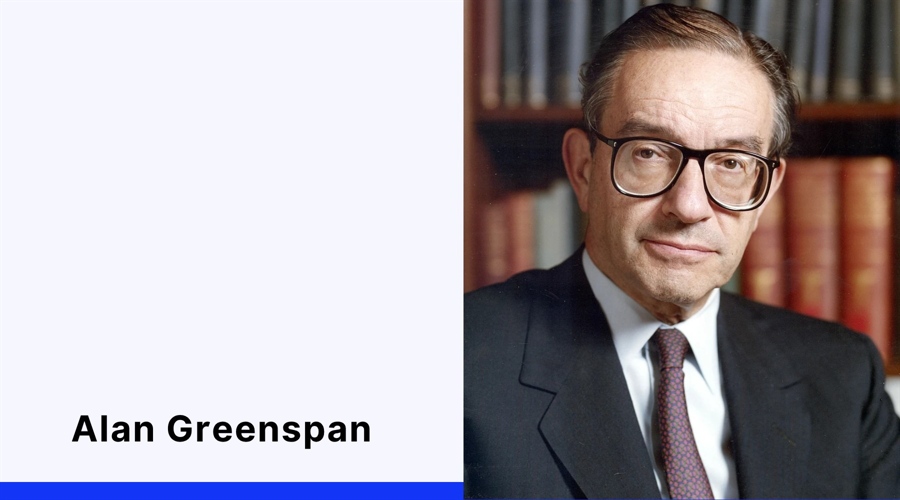
Former Fed Chair Alan Greenspan, Whose Signals Rocked Global FX Markets, Dies at 100

Monday, 22/06/2026 | 19:29 GMT by Jared Kirui
  • During his tenure, the U.S. economy reportedly experienced strong growth, low inflation, and rising asset prices.
  • The Federal Reserve credited him with strengthening policy credibility and maintaining price stability.
Alan Greenspan

A defining figure in U.S. economic policy has passed, closing a chapter that shaped global markets for nearly two decades. Alan Greenspan, who led the Federal Reserve through boom years and financial upheaval, died Monday at the age of 100.

According to CNBC, Greenspan’s wife, NBC News correspondent Andrea Mitchell, confirmed his death, stating he died at home from complications of Parkinson’s disease. His passing marks the end of a career that influenced monetary policy across multiple political eras and economic cycles.

A Long Tenure at the Fed

Greenspan served as the 13th chair of the Federal Reserve from 1987 to 2006. He held the role under four U.S. presidents, making him one of the longest-serving central bank leaders in modern history.

According to the New York Times, traders often said that when Greenspan spoke, the forex market would either freeze in anticipation or move sharply within seconds. That reputation reflected his status as Federal Reserve chair whose speeches and testimonies regularly reached traders worldwide in real time, prompting them to scrutinize every word and change in tone for signals on future policy shifts.

Contemporary coverage of his 1996 irrational exuberance remarks documented how a brief passage buried deep in a broader speech unsettled markets from Tokyo to London to New York, underscoring how even a short comment on asset prices could trigger immediate moves in stocks and, by extension, related currency trades.

Keep reading: “When AI Is a Black Box, Traders Either Distrust It Completely or Trust It Far Too Much”: Insights from FM Singapore Summit 2026

During his tenure, the U.S. economy experienced a prolonged expansion from 1991 to 2001. The period saw strong growth, low inflation, and rising financial markets. The Federal Reserve noted that under his leadership, policymakers maintained price stability and strengthened public confidence in the institution.

The central bank said Greenspan brought rigorous analytical discipline to monetary policy and helped build credibility that continues to support its operations today.

Policy Influence and Criticism

Greenspan helped shape what many consider modern American capitalism. His approach to monetary policy and financial markets influenced central banking practices globally.

However, his record drew criticism after the global financial crisis of 2007–2008. Critics argued that his support for financial deregulation contributed to systemic risks that later destabilized markets. His tenure remains closely tied to debates about the balance between market freedom and regulatory oversight.

Despite this, Greenspan acknowledged policy shortcomings later in his career, reinforcing his reputation as a policymaker willing to reflect on past decisions.

A defining figure in U.S. economic policy has passed, closing a chapter that shaped global markets for nearly two decades. Alan Greenspan, who led the Federal Reserve through boom years and financial upheaval, died Monday at the age of 100.

According to CNBC, Greenspan’s wife, NBC News correspondent Andrea Mitchell, confirmed his death, stating he died at home from complications of Parkinson’s disease. His passing marks the end of a career that influenced monetary policy across multiple political eras and economic cycles.

A Long Tenure at the Fed

Greenspan served as the 13th chair of the Federal Reserve from 1987 to 2006. He held the role under four U.S. presidents, making him one of the longest-serving central bank leaders in modern history.

According to the New York Times, traders often said that when Greenspan spoke, the forex market would either freeze in anticipation or move sharply within seconds. That reputation reflected his status as Federal Reserve chair whose speeches and testimonies regularly reached traders worldwide in real time, prompting them to scrutinize every word and change in tone for signals on future policy shifts.

Contemporary coverage of his 1996 irrational exuberance remarks documented how a brief passage buried deep in a broader speech unsettled markets from Tokyo to London to New York, underscoring how even a short comment on asset prices could trigger immediate moves in stocks and, by extension, related currency trades.

Keep reading: “When AI Is a Black Box, Traders Either Distrust It Completely or Trust It Far Too Much”: Insights from FM Singapore Summit 2026

During his tenure, the U.S. economy experienced a prolonged expansion from 1991 to 2001. The period saw strong growth, low inflation, and rising financial markets. The Federal Reserve noted that under his leadership, policymakers maintained price stability and strengthened public confidence in the institution.

The central bank said Greenspan brought rigorous analytical discipline to monetary policy and helped build credibility that continues to support its operations today.

Policy Influence and Criticism

Greenspan helped shape what many consider modern American capitalism. His approach to monetary policy and financial markets influenced central banking practices globally.

However, his record drew criticism after the global financial crisis of 2007–2008. Critics argued that his support for financial deregulation contributed to systemic risks that later destabilized markets. His tenure remains closely tied to debates about the balance between market freedom and regulatory oversight.

Despite this, Greenspan acknowledged policy shortcomings later in his career, reinforcing his reputation as a policymaker willing to reflect on past decisions.

About the Author: Jared Kirui
Jared Kirui
  • 2856 Articles
  • 54 Followers
About the Author: Jared Kirui
Jared Kirui is an Editor at Finance Magnates with more than five years of experience in financial journalism. He covers online trading, fintech, payments, and crypto industries with a focus on companies, regulation and compliance, executive moves, trading technology, and market analysis. His work has been featured in other media outlets, including Benzinga, ZyCrypto, The Distributed, and The Daily Hodl. Education: Bachelor of Commerce degree (Finance option), University of Nairobi
  • 2856 Articles
  • 54 Followers

More from the Author

Trending

!"#$%&'()*+,-./0123456789:;<=>?@ABCDEFGHIJKLMNOPQRSTUVWXYZ[\]^_`abcdefghijklmnopqrstuvwxyz{|} !"#$%&'()*+,-./0123456789:;<=>?@ABCDEFGHIJKLMNOPQRSTUVWXYZ[\]^_`abcdefghijklmnopqrstuvwxyz{|}