As core broker offerings converge, loyalty programs are becoming a key differentiator in competitive markets.
The strongest programs reward progress, onboarding milestones, first deposit, first trade, and ongoing activity.
Watch the full video below.
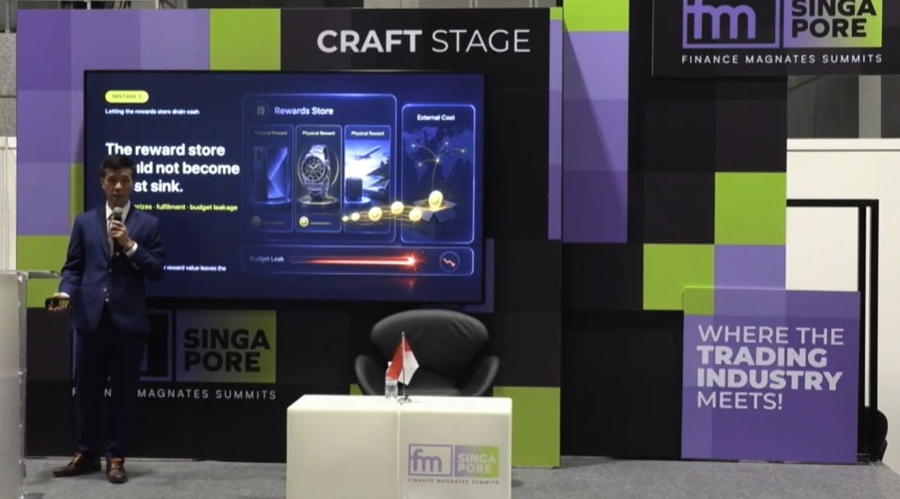
Desmond Leong’s presentation at the FM Singapore Summit 2026
argued that broker loyalty programs should be treated less as a giveaway scheme
and more as a structured retention engine that shapes client behavior across
the full lifecycle, from onboarding to re-engagement.
The core message was simple: acquisition costs are rising,
and brokers that still frame loyalty as “trade more, earn more” are leaving
retention, lifetime value, and platform activity on the table.
Brokers Turn to Loyalty as Acquisition Costs Climb
Speaking at the Craft Stage during the FM Singapore Summit
2026, Returning.AI CEO Desmond Leong argued that many brokers are approaching
the opportunity the wrong way, treating loyalty as a transactional rewards
scheme instead of a broader retention system built to influence behaviour,
deepen engagement, and ultimately improve lifetime value.
Leong, whose company develops gamified engagement and
loyalty tools for brokers, framed the issue bluntly: the real value of loyalty
programs lies not in handing out points after trades, but in creating a
retention layer that nudges users through the entire customer journey.
In his telling, the strongest programs reward progress, not
just volume, meaning brokers should think beyond lots traded and incentivise
milestones such as KYC completion, first deposit, first trade, daily activity,
and redeposits.
From Spins to Streaks: Gamification for Predictable Activity
That logic extends even further into social engagement,
where some brokers are rewarding clients for liking, commenting on, or
reposting company content, turning passive account holders into visible
contributors to the brand’s online credibility.
One of the clearest themes in the session was that
gamification works best when it is tied to repeat behaviour rather than one-off
excitement. Leong pointed to the now-common “spin the wheel” mechanic but
argued that its real power lies in streaks, multipliers, and routines that pull
traders back into the client portal day after day.
Returning.AI CEO Desmond Leong
He described examples in which brokers tied spins to daily
logins or activity across multiple asset classes, creating habits that
persisted even through holiday periods and quieter trading windows.
Controlling Reward Costs Without Killing Motivation
The business logic, he suggested, is less about the
short-lived dopamine hit and more about predictability: once traders have built
a streak, brokers are in a stronger position to present campaigns, prompts, and
redeposit offers while the client is already engaged inside the platform.
Cost control formed the second major pillar of his argument.
Loyalty programs can quickly become expensive if they simply award more points
to bigger traders without any cap or structure, especially when heavy-volume
clients are able to redeem top-tier rewards almost immediately.
Leong’s proposed fix was to introduce what he called a
premium currency, a separate reward layer unlocked after a trader reaches a
daily threshold. Rather than presenting this as a hard cap, the broker reframes
the experience around unlocking access to benefits that “money can’t buy,”
preserving motivation while keeping the underlying economics manageable.
Turning Reward Stores Into Trading Engines
That same commercial discipline, he argued, should also
shape the reward store itself. Aspirational prizes such as iPhones, AirPods,
gold bars, or even cars may help attract attention, but they can also alarm
finance teams worried about cash leakage and redemption costs.
The smarter approach, Leong said, is to redirect value back
into the trading ecosystem through non-withdrawable trading credit. By offering
clients a slightly higher notional value if they choose credit instead of
physical delivery, brokers can make the reward feel more attractive while
reducing the true cost of fulfilment.
The principle, as he described it, is to maximise perceived
value while minimising actual cost. Perhaps the most interesting insight from
the session came from his discussion of introducing shared loyalty logic across
retail traders and introducing brokers. Many firms still separate the two,
building one rewards system for clients and another for partners.
What began as a loyalty design choice, in other words, ended
up influencing wallet behaviour and internal fund flows in ways the brokers had
not initially planned for.
Leong’s final warning was against treating loyalty as a
static add-on. In his view, the most effective programs function as a live
operating tool for sales and marketing teams, not merely a passive rewards
ledger.
A broker that sees a client’s activity slowing, for example,
can use boosters, streak-saving interventions, or targeted incentives to
intervene before churn takes hold. Sales teams, meanwhile, can use spins,
points, or limited-time loyalty perks as low-cost closing tools when trying to
convert prospects in a market where product differences are often marginal. In
Asia especially, he noted, relationship-building still matters, and loyalty
mechanics can give brokers a more systematic way to create goodwill at scale.
From Cosmetic Feature to Retention Infrastructure
Taken together, the presentation was less a celebration of
rewards than a critique of shallow incentive design. Leong’s five mistakes all pointed back to the same broader
lesson: loyalty programs only work when they are built as part of a broker’s
retention, marketing, and revenue strategy rather than bolted on as cosmetic
differentiation.
At a time when brokers are under pressure to justify
acquisition spend and extend client lifetime value, that distinction is
becoming harder to ignore.
Desmond Leong’s presentation at the FM Singapore Summit 2026
argued that broker loyalty programs should be treated less as a giveaway scheme
and more as a structured retention engine that shapes client behavior across
the full lifecycle, from onboarding to re-engagement.
The core message was simple: acquisition costs are rising,
and brokers that still frame loyalty as “trade more, earn more” are leaving
retention, lifetime value, and platform activity on the table.
Brokers Turn to Loyalty as Acquisition Costs Climb
Speaking at the Craft Stage during the FM Singapore Summit
2026, Returning.AI CEO Desmond Leong argued that many brokers are approaching
the opportunity the wrong way, treating loyalty as a transactional rewards
scheme instead of a broader retention system built to influence behaviour,
deepen engagement, and ultimately improve lifetime value.
Leong, whose company develops gamified engagement and
loyalty tools for brokers, framed the issue bluntly: the real value of loyalty
programs lies not in handing out points after trades, but in creating a
retention layer that nudges users through the entire customer journey.
In his telling, the strongest programs reward progress, not
just volume, meaning brokers should think beyond lots traded and incentivise
milestones such as KYC completion, first deposit, first trade, daily activity,
and redeposits.
From Spins to Streaks: Gamification for Predictable Activity
That logic extends even further into social engagement,
where some brokers are rewarding clients for liking, commenting on, or
reposting company content, turning passive account holders into visible
contributors to the brand’s online credibility.
One of the clearest themes in the session was that
gamification works best when it is tied to repeat behaviour rather than one-off
excitement. Leong pointed to the now-common “spin the wheel” mechanic but
argued that its real power lies in streaks, multipliers, and routines that pull
traders back into the client portal day after day.
Returning.AI CEO Desmond Leong
He described examples in which brokers tied spins to daily
logins or activity across multiple asset classes, creating habits that
persisted even through holiday periods and quieter trading windows.
Controlling Reward Costs Without Killing Motivation
The business logic, he suggested, is less about the
short-lived dopamine hit and more about predictability: once traders have built
a streak, brokers are in a stronger position to present campaigns, prompts, and
redeposit offers while the client is already engaged inside the platform.
Cost control formed the second major pillar of his argument.
Loyalty programs can quickly become expensive if they simply award more points
to bigger traders without any cap or structure, especially when heavy-volume
clients are able to redeem top-tier rewards almost immediately.
Leong’s proposed fix was to introduce what he called a
premium currency, a separate reward layer unlocked after a trader reaches a
daily threshold. Rather than presenting this as a hard cap, the broker reframes
the experience around unlocking access to benefits that “money can’t buy,”
preserving motivation while keeping the underlying economics manageable.
Turning Reward Stores Into Trading Engines
That same commercial discipline, he argued, should also
shape the reward store itself. Aspirational prizes such as iPhones, AirPods,
gold bars, or even cars may help attract attention, but they can also alarm
finance teams worried about cash leakage and redemption costs.
The smarter approach, Leong said, is to redirect value back
into the trading ecosystem through non-withdrawable trading credit. By offering
clients a slightly higher notional value if they choose credit instead of
physical delivery, brokers can make the reward feel more attractive while
reducing the true cost of fulfilment.
The principle, as he described it, is to maximise perceived
value while minimising actual cost. Perhaps the most interesting insight from
the session came from his discussion of introducing shared loyalty logic across
retail traders and introducing brokers. Many firms still separate the two,
building one rewards system for clients and another for partners.
What began as a loyalty design choice, in other words, ended
up influencing wallet behaviour and internal fund flows in ways the brokers had
not initially planned for.
Leong’s final warning was against treating loyalty as a
static add-on. In his view, the most effective programs function as a live
operating tool for sales and marketing teams, not merely a passive rewards
ledger.
A broker that sees a client’s activity slowing, for example,
can use boosters, streak-saving interventions, or targeted incentives to
intervene before churn takes hold. Sales teams, meanwhile, can use spins,
points, or limited-time loyalty perks as low-cost closing tools when trying to
convert prospects in a market where product differences are often marginal. In
Asia especially, he noted, relationship-building still matters, and loyalty
mechanics can give brokers a more systematic way to create goodwill at scale.
From Cosmetic Feature to Retention Infrastructure
Taken together, the presentation was less a celebration of
rewards than a critique of shallow incentive design. Leong’s five mistakes all pointed back to the same broader
lesson: loyalty programs only work when they are built as part of a broker’s
retention, marketing, and revenue strategy rather than bolted on as cosmetic
differentiation.
At a time when brokers are under pressure to justify
acquisition spend and extend client lifetime value, that distinction is
becoming harder to ignore.
Jared Kirui is an Editor at Finance Magnates with more than five years of experience in financial journalism. He covers online trading, fintech, payments, and crypto industries with a focus on companies, regulation and compliance, executive moves, trading technology, and market analysis.
His work has been featured in other media outlets, including Benzinga, ZyCrypto, The Distributed, and The Daily Hodl.
Education:
Bachelor of Commerce degree (Finance option), University of Nairobi
Lord Peter Cruddas Announced as Headline Speaker at FM Summit London 2026
Featured Videos
FxPro Sells EU Clients to Capital.com; NAGA H1 Profit Revised
FxPro Sells EU Clients to Capital.com; NAGA H1 Profit Revised
FxPro Sells EU Clients to Capital.com; NAGA H1 Profit Revised
FxPro Sells EU Clients to Capital.com; NAGA H1 Profit Revised
Today’s financial news recap covers FxPro agrees to sell its European client book to Capital.com, NAGA raises its first-half profit estimate, Trade Republic prepares a fee-free pension account, and Interactive Brokers introduces Ether staking.
Finance Magnates Daily Recap brings you the latest news from forex and CFD brokers, fintech, payments, cryptocurrency, digital assets, trading platforms, financial regulation and global markets.
Get the key company news, executive moves, deals, regulatory updates and market developments of the day, in just a few minutes. New episodes published every weekday.
Read more: https://www.financemagnates.com
#FinanceMagnates #ForexNews #FintechNews
Today’s financial news recap covers FxPro agrees to sell its European client book to Capital.com, NAGA raises its first-half profit estimate, Trade Republic prepares a fee-free pension account, and Interactive Brokers introduces Ether staking.
Finance Magnates Daily Recap brings you the latest news from forex and CFD brokers, fintech, payments, cryptocurrency, digital assets, trading platforms, financial regulation and global markets.
Get the key company news, executive moves, deals, regulatory updates and market developments of the day, in just a few minutes. New episodes published every weekday.
Read more: https://www.financemagnates.com
#FinanceMagnates #ForexNews #FintechNews
Today’s financial news recap covers FxPro agrees to sell its European client book to Capital.com, NAGA raises its first-half profit estimate, Trade Republic prepares a fee-free pension account, and Interactive Brokers introduces Ether staking.
Finance Magnates Daily Recap brings you the latest news from forex and CFD brokers, fintech, payments, cryptocurrency, digital assets, trading platforms, financial regulation and global markets.
Get the key company news, executive moves, deals, regulatory updates and market developments of the day, in just a few minutes. New episodes published every weekday.
Read more: https://www.financemagnates.com
#FinanceMagnates #ForexNews #FintechNews
Today’s financial news recap covers FxPro agrees to sell its European client book to Capital.com, NAGA raises its first-half profit estimate, Trade Republic prepares a fee-free pension account, and Interactive Brokers introduces Ether staking.
Finance Magnates Daily Recap brings you the latest news from forex and CFD brokers, fintech, payments, cryptocurrency, digital assets, trading platforms, financial regulation and global markets.
Get the key company news, executive moves, deals, regulatory updates and market developments of the day, in just a few minutes. New episodes published every weekday.
Read more: https://www.financemagnates.com
#FinanceMagnates #ForexNews #FintechNews
Plus500 Plans US Super-App; Investec to Offer IG Platform
Plus500 Plans US Super-App; Investec to Offer IG Platform
Plus500 Plans US Super-App; Investec to Offer IG Platform
Plus500 Plans US Super-App; Investec to Offer IG Platform
Plus500 Plans US Super-App; Investec to Offer IG Platform
Plus500 Plans US Super-App; Investec to Offer IG Platform
Today’s financial news recap covers Plus500 plans a US trading super-app, Investec partners with IG, Trade Republic reports a sevenfold profit jump, and BingX adds thousands of US stocks.
Finance Magnates Daily Recap brings you the latest news from forex and CFD brokers, fintech, payments, cryptocurrency, digital assets, trading platforms, financial regulation and global markets.
Get the key company news, executive moves, deals, regulatory updates and market developments of the day, in just a few minutes. New episodes published every weekday.
Read more: https://www.financemagnates.com
#FinanceMagnates #ForexNews #FintechNews
Today’s financial news recap covers Plus500 plans a US trading super-app, Investec partners with IG, Trade Republic reports a sevenfold profit jump, and BingX adds thousands of US stocks.
Finance Magnates Daily Recap brings you the latest news from forex and CFD brokers, fintech, payments, cryptocurrency, digital assets, trading platforms, financial regulation and global markets.
Get the key company news, executive moves, deals, regulatory updates and market developments of the day, in just a few minutes. New episodes published every weekday.
Read more: https://www.financemagnates.com
#FinanceMagnates #ForexNews #FintechNews
Today’s financial news recap covers Plus500 plans a US trading super-app, Investec partners with IG, Trade Republic reports a sevenfold profit jump, and BingX adds thousands of US stocks.
Finance Magnates Daily Recap brings you the latest news from forex and CFD brokers, fintech, payments, cryptocurrency, digital assets, trading platforms, financial regulation and global markets.
Get the key company news, executive moves, deals, regulatory updates and market developments of the day, in just a few minutes. New episodes published every weekday.
Read more: https://www.financemagnates.com
#FinanceMagnates #ForexNews #FintechNews
Today’s financial news recap covers Plus500 plans a US trading super-app, Investec partners with IG, Trade Republic reports a sevenfold profit jump, and BingX adds thousands of US stocks.
Finance Magnates Daily Recap brings you the latest news from forex and CFD brokers, fintech, payments, cryptocurrency, digital assets, trading platforms, financial regulation and global markets.
Get the key company news, executive moves, deals, regulatory updates and market developments of the day, in just a few minutes. New episodes published every weekday.
Read more: https://www.financemagnates.com
#FinanceMagnates #ForexNews #FintechNews
Today’s financial news recap covers Plus500 plans a US trading super-app, Investec partners with IG, Trade Republic reports a sevenfold profit jump, and BingX adds thousands of US stocks.
Finance Magnates Daily Recap brings you the latest news from forex and CFD brokers, fintech, payments, cryptocurrency, digital assets, trading platforms, financial regulation and global markets.
Get the key company news, executive moves, deals, regulatory updates and market developments of the day, in just a few minutes. New episodes published every weekday.
Read more: https://www.financemagnates.com
#FinanceMagnates #ForexNews #FintechNews
Today’s financial news recap covers Plus500 plans a US trading super-app, Investec partners with IG, Trade Republic reports a sevenfold profit jump, and BingX adds thousands of US stocks.
Finance Magnates Daily Recap brings you the latest news from forex and CFD brokers, fintech, payments, cryptocurrency, digital assets, trading platforms, financial regulation and global markets.
Get the key company news, executive moves, deals, regulatory updates and market developments of the day, in just a few minutes. New episodes published every weekday.
Read more: https://www.financemagnates.com
#FinanceMagnates #ForexNews #FintechNews
FXCM UK Holds $110m in Client Money; IG CEO Questions Prediction Market Volumes
FXCM UK Holds $110m in Client Money; IG CEO Questions Prediction Market Volumes
FXCM UK Holds $110m in Client Money; IG CEO Questions Prediction Market Volumes
FXCM UK Holds $110m in Client Money; IG CEO Questions Prediction Market Volumes
FXCM UK Holds $110m in Client Money; IG CEO Questions Prediction Market Volumes
FXCM UK Holds $110m in Client Money; IG CEO Questions Prediction Market Volumes
Today’s financial news recap covers FXCM's UK arm holds $110 million in client money ahead of its sale to Trade Nation, Citadel Securities' UK profit falls 38 per cent, and Kraken secures its final Dubai crypto licence.
Finance Magnates Daily Recap brings you the latest news from forex and CFD brokers, fintech, payments, cryptocurrency, digital assets, trading platforms, financial regulation and global markets.
Get the key company news, executive moves, deals, regulatory updates and market developments of the day, in just a few minutes. New episodes published every weekday.
Read more: https://www.financemagnates.com
#FinanceMagnates #ForexNews #FintechNews
Today’s financial news recap covers FXCM's UK arm holds $110 million in client money ahead of its sale to Trade Nation, Citadel Securities' UK profit falls 38 per cent, and Kraken secures its final Dubai crypto licence.
Finance Magnates Daily Recap brings you the latest news from forex and CFD brokers, fintech, payments, cryptocurrency, digital assets, trading platforms, financial regulation and global markets.
Get the key company news, executive moves, deals, regulatory updates and market developments of the day, in just a few minutes. New episodes published every weekday.
Read more: https://www.financemagnates.com
#FinanceMagnates #ForexNews #FintechNews
Today’s financial news recap covers FXCM's UK arm holds $110 million in client money ahead of its sale to Trade Nation, Citadel Securities' UK profit falls 38 per cent, and Kraken secures its final Dubai crypto licence.
Finance Magnates Daily Recap brings you the latest news from forex and CFD brokers, fintech, payments, cryptocurrency, digital assets, trading platforms, financial regulation and global markets.
Get the key company news, executive moves, deals, regulatory updates and market developments of the day, in just a few minutes. New episodes published every weekday.
Read more: https://www.financemagnates.com
#FinanceMagnates #ForexNews #FintechNews
Today’s financial news recap covers FXCM's UK arm holds $110 million in client money ahead of its sale to Trade Nation, Citadel Securities' UK profit falls 38 per cent, and Kraken secures its final Dubai crypto licence.
Finance Magnates Daily Recap brings you the latest news from forex and CFD brokers, fintech, payments, cryptocurrency, digital assets, trading platforms, financial regulation and global markets.
Get the key company news, executive moves, deals, regulatory updates and market developments of the day, in just a few minutes. New episodes published every weekday.
Read more: https://www.financemagnates.com
#FinanceMagnates #ForexNews #FintechNews
Today’s financial news recap covers FXCM's UK arm holds $110 million in client money ahead of its sale to Trade Nation, Citadel Securities' UK profit falls 38 per cent, and Kraken secures its final Dubai crypto licence.
Finance Magnates Daily Recap brings you the latest news from forex and CFD brokers, fintech, payments, cryptocurrency, digital assets, trading platforms, financial regulation and global markets.
Get the key company news, executive moves, deals, regulatory updates and market developments of the day, in just a few minutes. New episodes published every weekday.
Read more: https://www.financemagnates.com
#FinanceMagnates #ForexNews #FintechNews
Today’s financial news recap covers FXCM's UK arm holds $110 million in client money ahead of its sale to Trade Nation, Citadel Securities' UK profit falls 38 per cent, and Kraken secures its final Dubai crypto licence.
Finance Magnates Daily Recap brings you the latest news from forex and CFD brokers, fintech, payments, cryptocurrency, digital assets, trading platforms, financial regulation and global markets.
Get the key company news, executive moves, deals, regulatory updates and market developments of the day, in just a few minutes. New episodes published every weekday.
Read more: https://www.financemagnates.com
#FinanceMagnates #ForexNews #FintechNews
AvaTrade to Acquire Most of FXCM; NAGA Raises $8M
AvaTrade to Acquire Most of FXCM; NAGA Raises $8M
AvaTrade to Acquire Most of FXCM; NAGA Raises $8M
AvaTrade to Acquire Most of FXCM; NAGA Raises $8M
AvaTrade to Acquire Most of FXCM; NAGA Raises $8M
AvaTrade to Acquire Most of FXCM; NAGA Raises $8M
Today’s financial news recap covers AvaTrade agrees to acquire most of FXCM, NAGA secures eight million dollars in new financing, and Wise seeks a tax settlement in the UK.
Finance Magnates Daily Recap brings you the latest news from forex and CFD brokers, fintech, payments, cryptocurrency, digital assets, trading platforms, financial regulation and global markets.
Get the key company news, executive moves, deals, regulatory updates and market developments of the day, in just a few minutes. New episodes published every weekday.
Read more: https://www.financemagnates.com
#FinanceMagnates #ForexNews #FintechNews
Today’s financial news recap covers AvaTrade agrees to acquire most of FXCM, NAGA secures eight million dollars in new financing, and Wise seeks a tax settlement in the UK.
Finance Magnates Daily Recap brings you the latest news from forex and CFD brokers, fintech, payments, cryptocurrency, digital assets, trading platforms, financial regulation and global markets.
Get the key company news, executive moves, deals, regulatory updates and market developments of the day, in just a few minutes. New episodes published every weekday.
Read more: https://www.financemagnates.com
#FinanceMagnates #ForexNews #FintechNews
Today’s financial news recap covers AvaTrade agrees to acquire most of FXCM, NAGA secures eight million dollars in new financing, and Wise seeks a tax settlement in the UK.
Finance Magnates Daily Recap brings you the latest news from forex and CFD brokers, fintech, payments, cryptocurrency, digital assets, trading platforms, financial regulation and global markets.
Get the key company news, executive moves, deals, regulatory updates and market developments of the day, in just a few minutes. New episodes published every weekday.
Read more: https://www.financemagnates.com
#FinanceMagnates #ForexNews #FintechNews
Today’s financial news recap covers AvaTrade agrees to acquire most of FXCM, NAGA secures eight million dollars in new financing, and Wise seeks a tax settlement in the UK.
Finance Magnates Daily Recap brings you the latest news from forex and CFD brokers, fintech, payments, cryptocurrency, digital assets, trading platforms, financial regulation and global markets.
Get the key company news, executive moves, deals, regulatory updates and market developments of the day, in just a few minutes. New episodes published every weekday.
Read more: https://www.financemagnates.com
#FinanceMagnates #ForexNews #FintechNews
Today’s financial news recap covers AvaTrade agrees to acquire most of FXCM, NAGA secures eight million dollars in new financing, and Wise seeks a tax settlement in the UK.
Finance Magnates Daily Recap brings you the latest news from forex and CFD brokers, fintech, payments, cryptocurrency, digital assets, trading platforms, financial regulation and global markets.
Get the key company news, executive moves, deals, regulatory updates and market developments of the day, in just a few minutes. New episodes published every weekday.
Read more: https://www.financemagnates.com
#FinanceMagnates #ForexNews #FintechNews
Today’s financial news recap covers AvaTrade agrees to acquire most of FXCM, NAGA secures eight million dollars in new financing, and Wise seeks a tax settlement in the UK.
Finance Magnates Daily Recap brings you the latest news from forex and CFD brokers, fintech, payments, cryptocurrency, digital assets, trading platforms, financial regulation and global markets.
Get the key company news, executive moves, deals, regulatory updates and market developments of the day, in just a few minutes. New episodes published every weekday.
Read more: https://www.financemagnates.com
#FinanceMagnates #ForexNews #FintechNews
XTB Adds Overnight US Stock Trading; Nasdaq Ventures Invests in One Trading
XTB Adds Overnight US Stock Trading; Nasdaq Ventures Invests in One Trading
XTB Adds Overnight US Stock Trading; Nasdaq Ventures Invests in One Trading
XTB Adds Overnight US Stock Trading; Nasdaq Ventures Invests in One Trading
XTB Adds Overnight US Stock Trading; Nasdaq Ventures Invests in One Trading
XTB Adds Overnight US Stock Trading; Nasdaq Ventures Invests in One Trading
Today’s financial news recap covers XTB expands overnight US stock trading, Fortrade reports higher revenue, Nasdaq backs One Trading, and Vest Labs raises 13 million dollars.
Finance Magnates Daily Recap brings you the latest news from forex and CFD brokers, fintech, payments, cryptocurrency, digital assets, trading platforms, financial regulation and global markets.
Get the key company news, executive moves, deals, regulatory updates and market developments of the day, in just a few minutes. New episodes published every weekday.
Read more: https://www.financemagnates.com
#FinanceMagnates #ForexNews #FintechNews
Today’s financial news recap covers XTB expands overnight US stock trading, Fortrade reports higher revenue, Nasdaq backs One Trading, and Vest Labs raises 13 million dollars.
Finance Magnates Daily Recap brings you the latest news from forex and CFD brokers, fintech, payments, cryptocurrency, digital assets, trading platforms, financial regulation and global markets.
Get the key company news, executive moves, deals, regulatory updates and market developments of the day, in just a few minutes. New episodes published every weekday.
Read more: https://www.financemagnates.com
#FinanceMagnates #ForexNews #FintechNews
Today’s financial news recap covers XTB expands overnight US stock trading, Fortrade reports higher revenue, Nasdaq backs One Trading, and Vest Labs raises 13 million dollars.
Finance Magnates Daily Recap brings you the latest news from forex and CFD brokers, fintech, payments, cryptocurrency, digital assets, trading platforms, financial regulation and global markets.
Get the key company news, executive moves, deals, regulatory updates and market developments of the day, in just a few minutes. New episodes published every weekday.
Read more: https://www.financemagnates.com
#FinanceMagnates #ForexNews #FintechNews
Today’s financial news recap covers XTB expands overnight US stock trading, Fortrade reports higher revenue, Nasdaq backs One Trading, and Vest Labs raises 13 million dollars.
Finance Magnates Daily Recap brings you the latest news from forex and CFD brokers, fintech, payments, cryptocurrency, digital assets, trading platforms, financial regulation and global markets.
Get the key company news, executive moves, deals, regulatory updates and market developments of the day, in just a few minutes. New episodes published every weekday.
Read more: https://www.financemagnates.com
#FinanceMagnates #ForexNews #FintechNews
Today’s financial news recap covers XTB expands overnight US stock trading, Fortrade reports higher revenue, Nasdaq backs One Trading, and Vest Labs raises 13 million dollars.
Finance Magnates Daily Recap brings you the latest news from forex and CFD brokers, fintech, payments, cryptocurrency, digital assets, trading platforms, financial regulation and global markets.
Get the key company news, executive moves, deals, regulatory updates and market developments of the day, in just a few minutes. New episodes published every weekday.
Read more: https://www.financemagnates.com
#FinanceMagnates #ForexNews #FintechNews
Today’s financial news recap covers XTB expands overnight US stock trading, Fortrade reports higher revenue, Nasdaq backs One Trading, and Vest Labs raises 13 million dollars.
Finance Magnates Daily Recap brings you the latest news from forex and CFD brokers, fintech, payments, cryptocurrency, digital assets, trading platforms, financial regulation and global markets.
Get the key company news, executive moves, deals, regulatory updates and market developments of the day, in just a few minutes. New episodes published every weekday.
Read more: https://www.financemagnates.com
#FinanceMagnates #ForexNews #FintechNews