Elon Musk’s plans for a finance app are well documented and pre-date his Twitter acquisition.
Acquiring a Rhode Island Currency Transmitter License and other licenses positions X for crypto.
Elon Musk's moves towards crypto
Over the past few years, Elon Musk has appeared to influence the crypto markets almost by accident, and without becoming an advocate for crypto. When he tweeted about Dogecoin, the cost of the coin rose, and when he posted (accidentally or knowingly, we can’t be sure) images from NFT collections, prices temporarily shot up on those collections.
And, of course, Tesla, for a very short time, accepted bitcoin payments, while also holding BTC on its balance sheet. In fact, it still holds BTC, but less than before, and bitcoin payments have yet to be reinstated.
All of which brings us to X, formerly known as Twitter, and now under Musk’s stewardship as owner and chief pot-stirrer. The changes have flown in thick and fast since Musk took over, and a key pivot that appears to be in process is a turn towards X as not just a social media app, but also as a payments platform. And if X is to be used for payments, then how exactly does crypto fit into the equation?
Rhode Island Currency Transmitter License Acquired
The latest round of speculation among crypto observers came at the end of August when it became known that X had acquired a Rhode Island Currency Transmitter License. This is a requirement under Rhode Island law for businesses that want to transmit money for customers, and it also extends to cryptocurrency, being required (according to official documents) for “maintaining control of virtual currency or transactions in virtual currency on behalf of others.”
What’s more, this is the eighth state for which X has acquired this type of license, but the Rhode Island license seems like a strategic acquisition, as it’s one of 23 that make up a Multi-state Licensing Agreement for Financial Services Companies, thereby covering X not only in Rhode Island, but across 22 states at the same time.
Acquiring these licenses certainly moves X towards a capacity for crypto integration, but they are not exclusively for crypto use and are used also by businesses dealing in traditional payments. We might ask then, whether there are any other indications that Musk intends to take X in a crypto-integrated direction.
This echoes Twitter’s agreement with the trading platform eToro, initiated in April this year, whereby searching for a stock or crypto ticker on Twitter/X brings up price charts and the option to click straight through to eToro. It’s not primarily crypto-oriented, but crypto becomes part of the package when finance-related changes are implemented.
We might ask, then, whether there are any other indications that Musk intends to take X in a crypto direction.
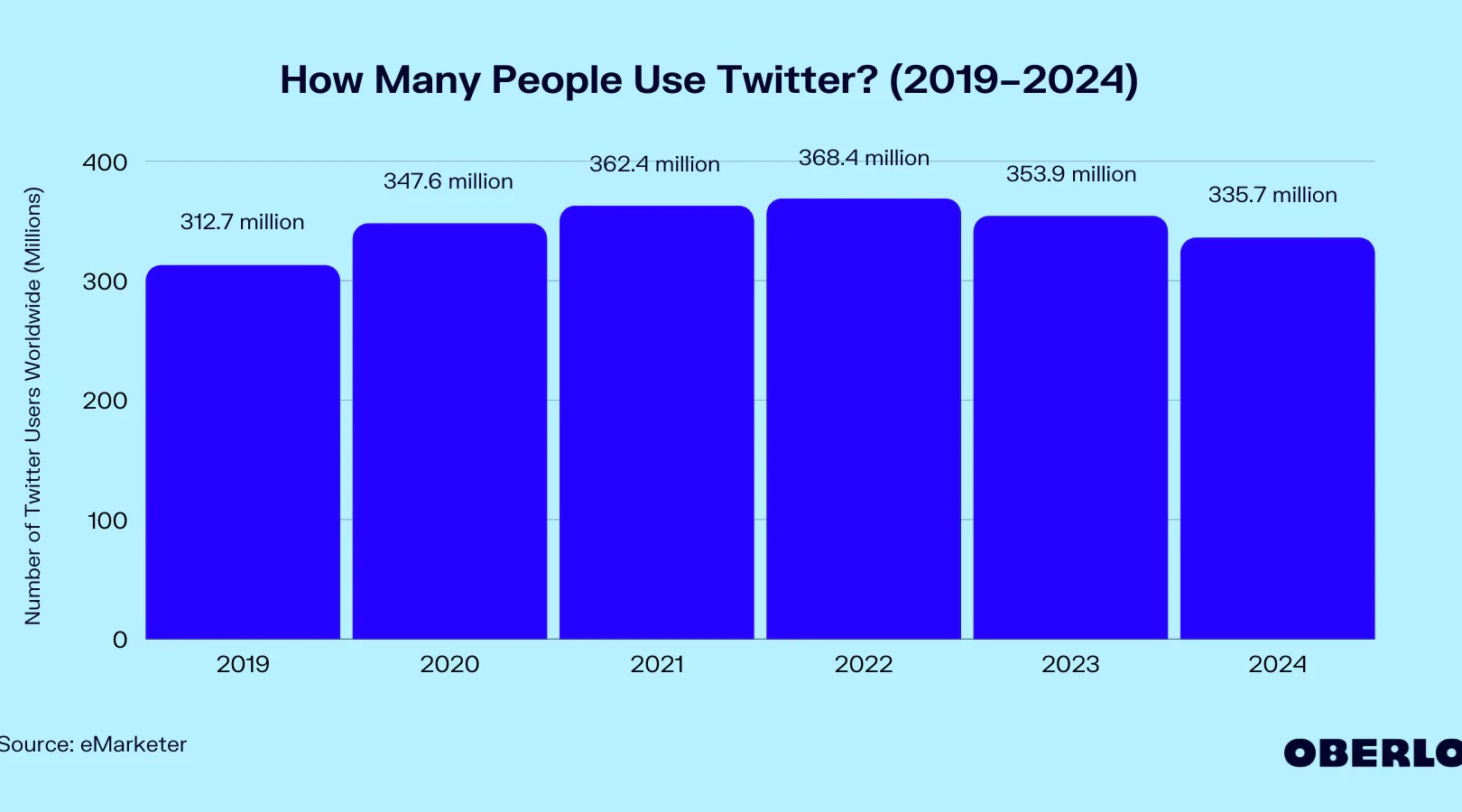
X/Twitter user numbers projected to 2024
Twitter Crypto Links Predate Musk
As mentioned, Musk’s tweets have covered Doge and NFTs, and Tesla temporarily accepted BTC payments. Also, there was also a brief stint earlier this year when theTwitter logo was temporarily changed to a Doge logo. All of this caused plenty of amused chatter but, aside from the Tesla BTC payments, it isn’t substantial.
Looking back at Twitter when the original Co-Founder Jack Dorsey was in charge, we can find that an interest in blockchain integration has been present for some time. In 2021, Dorsey enabled a BTC tipping service, and in 2022, that was extended to include Ether. That same year saw the inclusion of a facility for users to link their accounts with NFTs in their possession, along with a partnership with the payments platform Stripe to pilot enabling USDC stablecoin payments.
Experiments with the Everything App
After Musk took over, he stated the direction in which he wanted to take Twitter, drawing unambiguous comparisons with Chinese app WeChat: “If you’re in China, you kind of live on WeChat. It does everything, sort of like Twitter, plus PayPal, plus a whole bunch of things, and all rolled into one, with a great interface.”
And, he also said: "Where you sort of have a high trust situation, then payments, whether it's crypto or fiat, can make a lot of sense.”
This brings us to Musk’s rebranding of Twitter as X, which relates back to his 1999 plans for an online bank called X.com, which he said at the time (according to Musk's biographer, Walter Isaacson, and confirmed by Musk) was to incorporate all financial needs, with instant transactions.
In explaining this, Isaacson cited a revealing quote from Musk, from that period: “If you fix all the reasons why a consumer would take money out of the system, then [X.com] will be the place where all the money is, and that would make it a multi trillion-dollar company.”
X.com went on, after a merger with Peter Thiel’s Confinity, to become PayPal, a name that Musk wasn’t in favor of. In fact, he stated that: “If you want to take over the world’s financial system, then X is the better name.”
That’s a line which should be at the forefront of our thoughts when considering why Musk took Twitter and changed its name to that two decades old favorite of his: X. Although if anyone is still in any doubt about his intentions, here are Musk’s words to Isaacson, from just before the Twitter takeover: “I am very excited about finally implementing X.com as it should have been done, using Twitter as an accelerant!”
In addition, Musk has talked about using X to “conduct your entire financial world” (keep in mind that the entire financial world now includes crypto), and famously tweeted about his vision for “the everything app.”
Buying Twitter is an accelerant to creating X, the everything app
It’s clear that payment platform functions are integral to Musk’s plans to turn X, formerly Twitter, into that all-inclusive everything app. And, as crypto marches on and gains acceptance, while Musk is evidently tuned into the crypto space and its memes, it’s increasingly apparent that crypto is likely to feature in those plans for the app. This likelihood is backed up by X’s newly acquired currency transmitter licenses and carries on from earlier implementations made by the previous ownership.
It’s also worth taking note of another line from Musk, broadcasted to the world through X: "the most entertaining outcome is the most likely."
Keeping that message in mind, we should ask, what now is the most entertaining outcome for X? Is it to stay close to the orthodoxies of traditional finance, or to integrate crypto, and all its disruptive potential?
Over the past few years, Elon Musk has appeared to influence the crypto markets almost by accident, and without becoming an advocate for crypto. When he tweeted about Dogecoin, the cost of the coin rose, and when he posted (accidentally or knowingly, we can’t be sure) images from NFT collections, prices temporarily shot up on those collections.
And, of course, Tesla, for a very short time, accepted bitcoin payments, while also holding BTC on its balance sheet. In fact, it still holds BTC, but less than before, and bitcoin payments have yet to be reinstated.
All of which brings us to X, formerly known as Twitter, and now under Musk’s stewardship as owner and chief pot-stirrer. The changes have flown in thick and fast since Musk took over, and a key pivot that appears to be in process is a turn towards X as not just a social media app, but also as a payments platform. And if X is to be used for payments, then how exactly does crypto fit into the equation?
Rhode Island Currency Transmitter License Acquired
The latest round of speculation among crypto observers came at the end of August when it became known that X had acquired a Rhode Island Currency Transmitter License. This is a requirement under Rhode Island law for businesses that want to transmit money for customers, and it also extends to cryptocurrency, being required (according to official documents) for “maintaining control of virtual currency or transactions in virtual currency on behalf of others.”
What’s more, this is the eighth state for which X has acquired this type of license, but the Rhode Island license seems like a strategic acquisition, as it’s one of 23 that make up a Multi-state Licensing Agreement for Financial Services Companies, thereby covering X not only in Rhode Island, but across 22 states at the same time.
Acquiring these licenses certainly moves X towards a capacity for crypto integration, but they are not exclusively for crypto use and are used also by businesses dealing in traditional payments. We might ask then, whether there are any other indications that Musk intends to take X in a crypto-integrated direction.
This echoes Twitter’s agreement with the trading platform eToro, initiated in April this year, whereby searching for a stock or crypto ticker on Twitter/X brings up price charts and the option to click straight through to eToro. It’s not primarily crypto-oriented, but crypto becomes part of the package when finance-related changes are implemented.
We might ask, then, whether there are any other indications that Musk intends to take X in a crypto direction.
X/Twitter user numbers projected to 2024
Twitter Crypto Links Predate Musk
As mentioned, Musk’s tweets have covered Doge and NFTs, and Tesla temporarily accepted BTC payments. Also, there was also a brief stint earlier this year when theTwitter logo was temporarily changed to a Doge logo. All of this caused plenty of amused chatter but, aside from the Tesla BTC payments, it isn’t substantial.
Looking back at Twitter when the original Co-Founder Jack Dorsey was in charge, we can find that an interest in blockchain integration has been present for some time. In 2021, Dorsey enabled a BTC tipping service, and in 2022, that was extended to include Ether. That same year saw the inclusion of a facility for users to link their accounts with NFTs in their possession, along with a partnership with the payments platform Stripe to pilot enabling USDC stablecoin payments.
Experiments with the Everything App
After Musk took over, he stated the direction in which he wanted to take Twitter, drawing unambiguous comparisons with Chinese app WeChat: “If you’re in China, you kind of live on WeChat. It does everything, sort of like Twitter, plus PayPal, plus a whole bunch of things, and all rolled into one, with a great interface.”
And, he also said: "Where you sort of have a high trust situation, then payments, whether it's crypto or fiat, can make a lot of sense.”
This brings us to Musk’s rebranding of Twitter as X, which relates back to his 1999 plans for an online bank called X.com, which he said at the time (according to Musk's biographer, Walter Isaacson, and confirmed by Musk) was to incorporate all financial needs, with instant transactions.
In explaining this, Isaacson cited a revealing quote from Musk, from that period: “If you fix all the reasons why a consumer would take money out of the system, then [X.com] will be the place where all the money is, and that would make it a multi trillion-dollar company.”
X.com went on, after a merger with Peter Thiel’s Confinity, to become PayPal, a name that Musk wasn’t in favor of. In fact, he stated that: “If you want to take over the world’s financial system, then X is the better name.”
That’s a line which should be at the forefront of our thoughts when considering why Musk took Twitter and changed its name to that two decades old favorite of his: X. Although if anyone is still in any doubt about his intentions, here are Musk’s words to Isaacson, from just before the Twitter takeover: “I am very excited about finally implementing X.com as it should have been done, using Twitter as an accelerant!”
In addition, Musk has talked about using X to “conduct your entire financial world” (keep in mind that the entire financial world now includes crypto), and famously tweeted about his vision for “the everything app.”
Buying Twitter is an accelerant to creating X, the everything app
It’s clear that payment platform functions are integral to Musk’s plans to turn X, formerly Twitter, into that all-inclusive everything app. And, as crypto marches on and gains acceptance, while Musk is evidently tuned into the crypto space and its memes, it’s increasingly apparent that crypto is likely to feature in those plans for the app. This likelihood is backed up by X’s newly acquired currency transmitter licenses and carries on from earlier implementations made by the previous ownership.
It’s also worth taking note of another line from Musk, broadcasted to the world through X: "the most entertaining outcome is the most likely."
Keeping that message in mind, we should ask, what now is the most entertaining outcome for X? Is it to stay close to the orthodoxies of traditional finance, or to integrate crypto, and all its disruptive potential?
Sam White is a writer and journalist from the UK who covers cryptocurrencies and web3, with a particular interest in NFTs and the crossover between art and finance. His work, on a wide variety of topics, has appeared on platforms including The Spectator, Vice and Hacker Noon.
Inside the Prediction Markets: $1.6B Institutional Inflow Meets a Federal Crackdown
Featured Videos
FP Markets Winner Spotlight 🏆 | Global Broker of the Year 2025 #Trading #Broker #Innovation #Shorts
FP Markets Winner Spotlight 🏆 | Global Broker of the Year 2025 #Trading #Broker #Innovation #Shorts
FP Markets Winner Spotlight 🏆 | Global Broker of the Year 2025 #Trading #Broker #Innovation #Shorts
FP Markets Winner Spotlight 🏆 | Global Broker of the Year 2025 #Trading #Broker #Innovation #Shorts
FP Markets takes the spotlight as Global Broker of the Year 2025 at the Finance Magnates Awards.
Martin Stoilov, Head of Client Experience, shares that trust, innovation, and people played a key role in the company’s success, supported by a strong foundation of integrity and client-centricity.
Following this milestone, FP Markets continues to focus on growth, technology investment, and its core values of transparency and excellence.
👉 Be part of FM Awards 2026: https://awards.financemagnates.com/#nominate
FP Markets takes the spotlight as Global Broker of the Year 2025 at the Finance Magnates Awards.
Martin Stoilov, Head of Client Experience, shares that trust, innovation, and people played a key role in the company’s success, supported by a strong foundation of integrity and client-centricity.
Following this milestone, FP Markets continues to focus on growth, technology investment, and its core values of transparency and excellence.
👉 Be part of FM Awards 2026: https://awards.financemagnates.com/#nominate
FP Markets takes the spotlight as Global Broker of the Year 2025 at the Finance Magnates Awards.
Martin Stoilov, Head of Client Experience, shares that trust, innovation, and people played a key role in the company’s success, supported by a strong foundation of integrity and client-centricity.
Following this milestone, FP Markets continues to focus on growth, technology investment, and its core values of transparency and excellence.
👉 Be part of FM Awards 2026: https://awards.financemagnates.com/#nominate
FP Markets takes the spotlight as Global Broker of the Year 2025 at the Finance Magnates Awards.
Martin Stoilov, Head of Client Experience, shares that trust, innovation, and people played a key role in the company’s success, supported by a strong foundation of integrity and client-centricity.
Following this milestone, FP Markets continues to focus on growth, technology investment, and its core values of transparency and excellence.
👉 Be part of FM Awards 2026: https://awards.financemagnates.com/#nominate
In this video, we review @HolaPrimeMarketsOfficial, a multi-asset forex and CFDs broker offering different account types, trading platforms, and flexible trading conditions.
We cover the broker’s overall offering, including account options, trading environment, platforms like MT4 and MT5, and additional services such as managed accounts and fast withdrawals.
Watch the full video to see if Hola Prime Markets fits your trading needs.
📣 Stay up to date with the latest in finance and trading. Follow Finance Magnates for industry news, insights, and global event coverage.
Connect with us:
🔗 LinkedIn: /financemagnates
👍 Facebook: /financemagnates
📸 Instagram: https://www.instagram.com/financemagnates
🐦 X: https://x.com/financemagnates
🎥 TikTok: https://www.tiktok.com/tag/financemagnates
▶️ YouTube: /@financemagnates_official
#HolaPrime #ForexBroker #CFDTrading #FinanceMagnates #Trading #Forex #BrokerReview
In this video, we review @HolaPrimeMarketsOfficial, a multi-asset forex and CFDs broker offering different account types, trading platforms, and flexible trading conditions.
We cover the broker’s overall offering, including account options, trading environment, platforms like MT4 and MT5, and additional services such as managed accounts and fast withdrawals.
Watch the full video to see if Hola Prime Markets fits your trading needs.
📣 Stay up to date with the latest in finance and trading. Follow Finance Magnates for industry news, insights, and global event coverage.
Connect with us:
🔗 LinkedIn: /financemagnates
👍 Facebook: /financemagnates
📸 Instagram: https://www.instagram.com/financemagnates
🐦 X: https://x.com/financemagnates
🎥 TikTok: https://www.tiktok.com/tag/financemagnates
▶️ YouTube: /@financemagnates_official
#HolaPrime #ForexBroker #CFDTrading #FinanceMagnates #Trading #Forex #BrokerReview
In this video, we review @HolaPrimeMarketsOfficial, a multi-asset forex and CFDs broker offering different account types, trading platforms, and flexible trading conditions.
We cover the broker’s overall offering, including account options, trading environment, platforms like MT4 and MT5, and additional services such as managed accounts and fast withdrawals.
Watch the full video to see if Hola Prime Markets fits your trading needs.
📣 Stay up to date with the latest in finance and trading. Follow Finance Magnates for industry news, insights, and global event coverage.
Connect with us:
🔗 LinkedIn: /financemagnates
👍 Facebook: /financemagnates
📸 Instagram: https://www.instagram.com/financemagnates
🐦 X: https://x.com/financemagnates
🎥 TikTok: https://www.tiktok.com/tag/financemagnates
▶️ YouTube: /@financemagnates_official
#HolaPrime #ForexBroker #CFDTrading #FinanceMagnates #Trading #Forex #BrokerReview
In this video, we review @HolaPrimeMarketsOfficial, a multi-asset forex and CFDs broker offering different account types, trading platforms, and flexible trading conditions.
We cover the broker’s overall offering, including account options, trading environment, platforms like MT4 and MT5, and additional services such as managed accounts and fast withdrawals.
Watch the full video to see if Hola Prime Markets fits your trading needs.
📣 Stay up to date with the latest in finance and trading. Follow Finance Magnates for industry news, insights, and global event coverage.
Connect with us:
🔗 LinkedIn: /financemagnates
👍 Facebook: /financemagnates
📸 Instagram: https://www.instagram.com/financemagnates
🐦 X: https://x.com/financemagnates
🎥 TikTok: https://www.tiktok.com/tag/financemagnates
▶️ YouTube: /@financemagnates_official
#HolaPrime #ForexBroker #CFDTrading #FinanceMagnates #Trading #Forex #BrokerReview
In this video, we review @HolaPrimeMarketsOfficial, a multi-asset forex and CFDs broker offering different account types, trading platforms, and flexible trading conditions.
We cover the broker’s overall offering, including account options, trading environment, platforms like MT4 and MT5, and additional services such as managed accounts and fast withdrawals.
Watch the full video to see if Hola Prime Markets fits your trading needs.
📣 Stay up to date with the latest in finance and trading. Follow Finance Magnates for industry news, insights, and global event coverage.
Connect with us:
🔗 LinkedIn: /financemagnates
👍 Facebook: /financemagnates
📸 Instagram: https://www.instagram.com/financemagnates
🐦 X: https://x.com/financemagnates
🎥 TikTok: https://www.tiktok.com/tag/financemagnates
▶️ YouTube: /@financemagnates_official
#HolaPrime #ForexBroker #CFDTrading #FinanceMagnates #Trading #Forex #BrokerReview
In this video, we review @HolaPrimeMarketsOfficial, a multi-asset forex and CFDs broker offering different account types, trading platforms, and flexible trading conditions.
We cover the broker’s overall offering, including account options, trading environment, platforms like MT4 and MT5, and additional services such as managed accounts and fast withdrawals.
Watch the full video to see if Hola Prime Markets fits your trading needs.
📣 Stay up to date with the latest in finance and trading. Follow Finance Magnates for industry news, insights, and global event coverage.
Connect with us:
🔗 LinkedIn: /financemagnates
👍 Facebook: /financemagnates
📸 Instagram: https://www.instagram.com/financemagnates
🐦 X: https://x.com/financemagnates
🎥 TikTok: https://www.tiktok.com/tag/financemagnates
▶️ YouTube: /@financemagnates_official
#HolaPrime #ForexBroker #CFDTrading #FinanceMagnates #Trading #Forex #BrokerReview
Hola Prime Review: What You Need to Know | Full Breakdown by Finance Magnates
Hola Prime Review: What You Need to Know | Full Breakdown by Finance Magnates
Hola Prime Review: What You Need to Know | Full Breakdown by Finance Magnates
Hola Prime Review: What You Need to Know | Full Breakdown by Finance Magnates
Hola Prime Review: What You Need to Know | Full Breakdown by Finance Magnates
Hola Prime Review: What You Need to Know | Full Breakdown by Finance Magnates
In this video, we review @HolaPrime_Global, a proprietary trading firm offering evaluation programs and performance-based payouts in simulated market environments.
We cover how the challenge model works, including account types, profit splits (up to 95%), trading rules, and what it takes to reach a funded account. You’ll also learn about available platforms like MT4, MT5, cTrader, and more, along with insights into payouts, support, and trading conditions.
Watch the full video to see if Hola Prime fits your trading style.
📣 Stay up to date with the latest in finance and trading. Follow Finance Magnates for industry news, insights, and global event coverage.
Connect with us:
🔗 LinkedIn: /financemagnates
👍 Facebook: /financemagnates
📸 Instagram: https://www.instagram.com/financemagnates
🐦 X: https://x.com/financemagnates
🎥 TikTok: https://www.tiktok.com/tag/financemagnates
▶️ YouTube: /@financemagnates_official
#HolaPrime #PropFirm #Trading #FinanceMagnates #Forex #FuturesTrading #TradingReview #PropFirmReview
In this video, we review @HolaPrime_Global, a proprietary trading firm offering evaluation programs and performance-based payouts in simulated market environments.
We cover how the challenge model works, including account types, profit splits (up to 95%), trading rules, and what it takes to reach a funded account. You’ll also learn about available platforms like MT4, MT5, cTrader, and more, along with insights into payouts, support, and trading conditions.
Watch the full video to see if Hola Prime fits your trading style.
📣 Stay up to date with the latest in finance and trading. Follow Finance Magnates for industry news, insights, and global event coverage.
Connect with us:
🔗 LinkedIn: /financemagnates
👍 Facebook: /financemagnates
📸 Instagram: https://www.instagram.com/financemagnates
🐦 X: https://x.com/financemagnates
🎥 TikTok: https://www.tiktok.com/tag/financemagnates
▶️ YouTube: /@financemagnates_official
#HolaPrime #PropFirm #Trading #FinanceMagnates #Forex #FuturesTrading #TradingReview #PropFirmReview
In this video, we review @HolaPrime_Global, a proprietary trading firm offering evaluation programs and performance-based payouts in simulated market environments.
We cover how the challenge model works, including account types, profit splits (up to 95%), trading rules, and what it takes to reach a funded account. You’ll also learn about available platforms like MT4, MT5, cTrader, and more, along with insights into payouts, support, and trading conditions.
Watch the full video to see if Hola Prime fits your trading style.
📣 Stay up to date with the latest in finance and trading. Follow Finance Magnates for industry news, insights, and global event coverage.
Connect with us:
🔗 LinkedIn: /financemagnates
👍 Facebook: /financemagnates
📸 Instagram: https://www.instagram.com/financemagnates
🐦 X: https://x.com/financemagnates
🎥 TikTok: https://www.tiktok.com/tag/financemagnates
▶️ YouTube: /@financemagnates_official
#HolaPrime #PropFirm #Trading #FinanceMagnates #Forex #FuturesTrading #TradingReview #PropFirmReview
In this video, we review @HolaPrime_Global, a proprietary trading firm offering evaluation programs and performance-based payouts in simulated market environments.
We cover how the challenge model works, including account types, profit splits (up to 95%), trading rules, and what it takes to reach a funded account. You’ll also learn about available platforms like MT4, MT5, cTrader, and more, along with insights into payouts, support, and trading conditions.
Watch the full video to see if Hola Prime fits your trading style.
📣 Stay up to date with the latest in finance and trading. Follow Finance Magnates for industry news, insights, and global event coverage.
Connect with us:
🔗 LinkedIn: /financemagnates
👍 Facebook: /financemagnates
📸 Instagram: https://www.instagram.com/financemagnates
🐦 X: https://x.com/financemagnates
🎥 TikTok: https://www.tiktok.com/tag/financemagnates
▶️ YouTube: /@financemagnates_official
#HolaPrime #PropFirm #Trading #FinanceMagnates #Forex #FuturesTrading #TradingReview #PropFirmReview
In this video, we review @HolaPrime_Global, a proprietary trading firm offering evaluation programs and performance-based payouts in simulated market environments.
We cover how the challenge model works, including account types, profit splits (up to 95%), trading rules, and what it takes to reach a funded account. You’ll also learn about available platforms like MT4, MT5, cTrader, and more, along with insights into payouts, support, and trading conditions.
Watch the full video to see if Hola Prime fits your trading style.
📣 Stay up to date with the latest in finance and trading. Follow Finance Magnates for industry news, insights, and global event coverage.
Connect with us:
🔗 LinkedIn: /financemagnates
👍 Facebook: /financemagnates
📸 Instagram: https://www.instagram.com/financemagnates
🐦 X: https://x.com/financemagnates
🎥 TikTok: https://www.tiktok.com/tag/financemagnates
▶️ YouTube: /@financemagnates_official
#HolaPrime #PropFirm #Trading #FinanceMagnates #Forex #FuturesTrading #TradingReview #PropFirmReview
In this video, we review @HolaPrime_Global, a proprietary trading firm offering evaluation programs and performance-based payouts in simulated market environments.
We cover how the challenge model works, including account types, profit splits (up to 95%), trading rules, and what it takes to reach a funded account. You’ll also learn about available platforms like MT4, MT5, cTrader, and more, along with insights into payouts, support, and trading conditions.
Watch the full video to see if Hola Prime fits your trading style.
📣 Stay up to date with the latest in finance and trading. Follow Finance Magnates for industry news, insights, and global event coverage.
Connect with us:
🔗 LinkedIn: /financemagnates
👍 Facebook: /financemagnates
📸 Instagram: https://www.instagram.com/financemagnates
🐦 X: https://x.com/financemagnates
🎥 TikTok: https://www.tiktok.com/tag/financemagnates
▶️ YouTube: /@financemagnates_official
#HolaPrime #PropFirm #Trading #FinanceMagnates #Forex #FuturesTrading #TradingReview #PropFirmReview
Axi Winner Spotlight 🏆 | Global Most Innovative Broker 2025 #Innovation #Trading #Fintech #Broker
Axi Winner Spotlight 🏆 | Global Most Innovative Broker 2025 #Innovation #Trading #Fintech #Broker
Axi Winner Spotlight 🏆 | Global Most Innovative Broker 2025 #Innovation #Trading #Fintech #Broker
Axi Winner Spotlight 🏆 | Global Most Innovative Broker 2025 #Innovation #Trading #Fintech #Broker
Axi Winner Spotlight 🏆 | Global Most Innovative Broker 2025 #Innovation #Trading #Fintech #Broker
Axi Winner Spotlight 🏆 | Global Most Innovative Broker 2025 #Innovation #Trading #Fintech #Broker
Axi takes the spotlight at the Finance Magnates Awards, winning Global Most Innovative Broker 2025.
Olivia Xenofontos and Ivanna Openko share how the team will feel: proud, motivated, and ready to keep delivering.
They also describe the night as well-organized, focused, and enjoyable for all.
👉 Be part of FM Awards 2026.
Axi takes the spotlight at the Finance Magnates Awards, winning Global Most Innovative Broker 2025.
Olivia Xenofontos and Ivanna Openko share how the team will feel: proud, motivated, and ready to keep delivering.
They also describe the night as well-organized, focused, and enjoyable for all.
👉 Be part of FM Awards 2026.
Axi takes the spotlight at the Finance Magnates Awards, winning Global Most Innovative Broker 2025.
Olivia Xenofontos and Ivanna Openko share how the team will feel: proud, motivated, and ready to keep delivering.
They also describe the night as well-organized, focused, and enjoyable for all.
👉 Be part of FM Awards 2026.
Axi takes the spotlight at the Finance Magnates Awards, winning Global Most Innovative Broker 2025.
Olivia Xenofontos and Ivanna Openko share how the team will feel: proud, motivated, and ready to keep delivering.
They also describe the night as well-organized, focused, and enjoyable for all.
👉 Be part of FM Awards 2026.
Axi takes the spotlight at the Finance Magnates Awards, winning Global Most Innovative Broker 2025.
Olivia Xenofontos and Ivanna Openko share how the team will feel: proud, motivated, and ready to keep delivering.
They also describe the night as well-organized, focused, and enjoyable for all.
👉 Be part of FM Awards 2026.
Axi takes the spotlight at the Finance Magnates Awards, winning Global Most Innovative Broker 2025.
Olivia Xenofontos and Ivanna Openko share how the team will feel: proud, motivated, and ready to keep delivering.
They also describe the night as well-organized, focused, and enjoyable for all.
👉 Be part of FM Awards 2026.
Recognition that matters.
Built on transparency.
Driven by the industry.
The Finance Magnates Awards 2026.
Nominations are now open.
🔗 https://awards.financemagnates.com/?utm_source=SM&utm_medium=social&utm_campaign=recognition-matters
Recognition that matters.
Built on transparency.
Driven by the industry.
The Finance Magnates Awards 2026.
Nominations are now open.
🔗 https://awards.financemagnates.com/?utm_source=SM&utm_medium=social&utm_campaign=recognition-matters
Recognition that matters.
Built on transparency.
Driven by the industry.
The Finance Magnates Awards 2026.
Nominations are now open.
🔗 https://awards.financemagnates.com/?utm_source=SM&utm_medium=social&utm_campaign=recognition-matters
Recognition that matters.
Built on transparency.
Driven by the industry.
The Finance Magnates Awards 2026.
Nominations are now open.
🔗 https://awards.financemagnates.com/?utm_source=SM&utm_medium=social&utm_campaign=recognition-matters
Recognition that matters.
Built on transparency.
Driven by the industry.
The Finance Magnates Awards 2026.
Nominations are now open.
🔗 https://awards.financemagnates.com/?utm_source=SM&utm_medium=social&utm_campaign=recognition-matters
Recognition that matters.
Built on transparency.
Driven by the industry.
The Finance Magnates Awards 2026.
Nominations are now open.
🔗 https://awards.financemagnates.com/?utm_source=SM&utm_medium=social&utm_campaign=recognition-matters