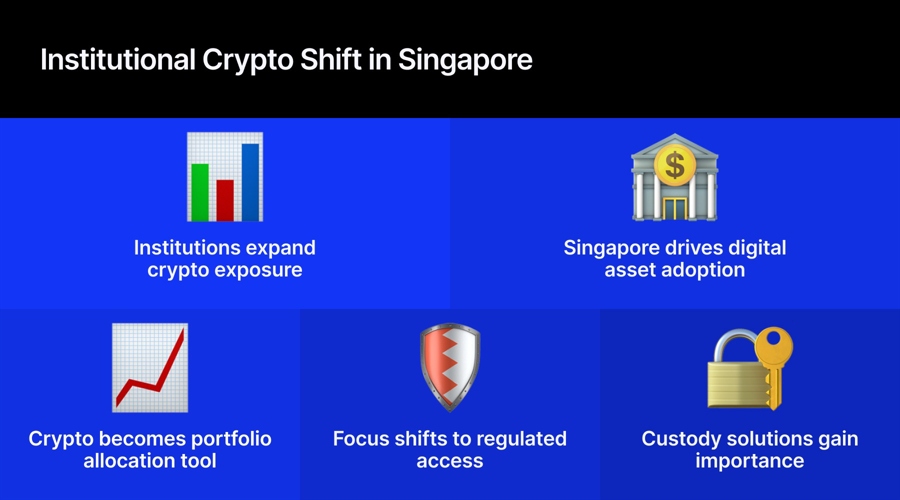
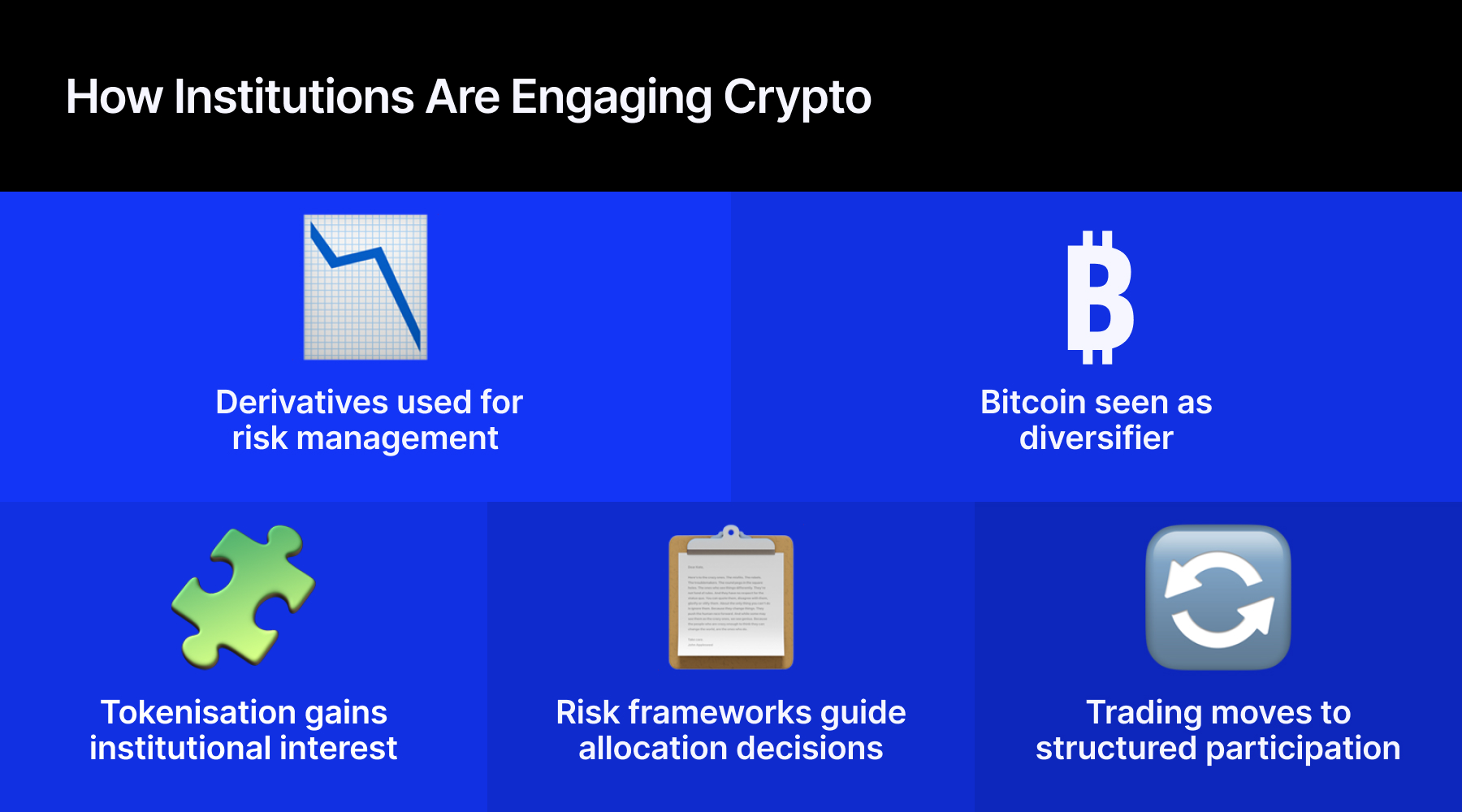
Banks, funds, and family offices in Singapore integrate crypto portfolios with emphasis on compliance and infrastructure.
Crypto in Singapore shifts from hedge narrative to structured portfolio asset with growing institutional confidence.
Institutional investors are keen to build on Singapore’s
digital asset ecosystem by optimising their exposure to crypto alongside more
conventional portfolio allocations.
Institutional engagement with digital assets in Singapore is
being driven not only by trading opportunities but also by the need to build
knowledge around market access, custody, settlement and the underlying
technology.
Banks, asset
managers and family offices are treating digital assets as a permanent
fixture within modern portfolios, prioritising regulated compliance, secure
custody and institutional-grade infrastructure over short-term retail trading
dynamics.
Crypto as a Portfolio Diversifier
Despite ongoing volatility, cryptocurrency,
particularly Bitcoin, continues to be viewed as a meaningful portfolio
diversifier by institutional investors in Singapore, observes Nicholas Strain,
director of institutional sales at LMAX Digital.
“As the asset class has become more mainstream, institutions
are evolving from simple buy-and-hold exposure toward more sophisticated,
risk-adjusted strategies, including the use of derivatives and options to
manage downside while retaining upside potential,” he says.
From Allocation Decisions to Execution Strategy
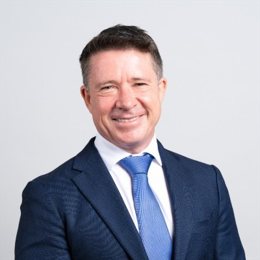
Nicholas Strain, Director of Institutional Sales at LMAX Digital
Conversations with institutional investors have moved from
asking whether to allocate to figuring out how much, through what vehicles and
how operational risk should be managed, says Julien Le Noble, chief executive
officer GTN Asia.
“Financial
institutions are no longer waiting on the sidelines and have begun
allocating,” he adds. “They understand that building exposure now, within a
regulated framework, could position them ahead of their competitors in other
markets, so they are moving forward.”
Tokenisation and Long-Term Growth Narrative
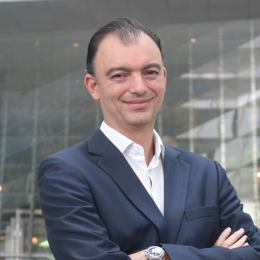
Julien Le Noble, CEO of GTN Asia
As the global push towards tokenised instruments and
on-chain finance proliferates, Mark Garabedian, director of digital assets and
tokenization at Wellington Management Singapore, refers to crypto as the most
direct investment opportunity to participate in growth.
“Crypto assets encompass a broad range of sectors and
instruments that have defining characteristics, with some offering
diversification benefits,” he adds.
“The asset class is still in its infancy in
terms of adoption and thus its diversification and volatility characteristics
are expected to change over time as the volume of investment flows
grow.”
Market Stress, Correlations and Maturing Behaviour
In the short term, there may be some correlations due to
macro stress events, but crypto’s fundamental drivers remain distinct from
traditional asset classes.
As Le Noble observes, drawdowns can be seen as entry points rather than reasons
to exit — which is a sign of maturity for the asset class.
Portfolio Construction and Institutional Frameworks
Osh Ong, Chief Operating Officer of OKX SG
Institutions are increasingly approaching digital assets
through a portfolio allocation lens, asking how they sit alongside equities,
commodities and alternatives within a broader framework, agrees Osh Ong, OKX SG
chief operating officer.
“The engagement is structured and deliberate, with custody
arrangements, liquidity profiles and regulatory clarity all firmly on the
checklist before any meaningful allocation is made,” he says, adding that volatility hasn't
diminished crypto's relevance but rather pushed investors toward a more nuanced
understanding of how these assets actually behave.
“In some market environments, crypto trades as a high-beta
proxy for global liquidity; in others, it starts to look more like a hedge
sitting alongside other alternative assets,” adds Ong. “That dual behaviour is
increasingly something institutions are
factoring into how they size and manage their exposure, rather than treating it
as a reason to stay on the sidelines.”
Institutional Conviction in Blockchain Infrastructure
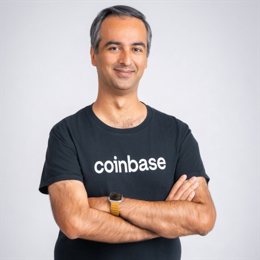
Hassan Ahmed, country director Singapore at Coinbase,
reckons the vast majority of institutions now view blockchain as a
long-term value driver and a structural upgrade to the financial markets.
Hassan Ahmed, Country Director for Singapore at Coinbase
“Local banks and fund managers are announcing tokenisation
initiatives that show this technology is ready for deployment,” he says. “Our
regulatory framework prioritises trust over speed, which is a critical factor
for local investors, who now rank security as their primary concern.”
The old thesis of putting 1–2% into crypto as an
uncorrelated hedge has largely run its course. Crypto increasingly moves with
risk assets during market stress and institutions have noticed. But rather than
stepping back, they have changed how they engage.
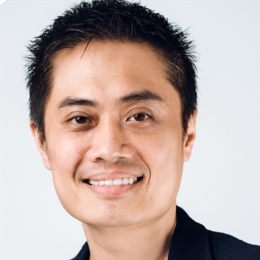
Tianwei Liu, CEO and Co-founder of StraitsX
That is the view of Tianwei Liu, CEO and co-founder of
StraitsX, who says the clearest signal of this trend is the rise of Bitcoin
treasuries.
“At the same time, stablecoins have opened a separate lane
for institutions seeking the infrastructure without the price exposure,” he
continues. “Settlement, treasury operations and cross-border payments are
already running on these rails, making the landscape far less binary. The
question is no longer whether to participate, but how.”
“We are seeing a shift toward more structured
participation,” he suggests. “Crypto is increasingly considered alongside other
traditional asset classes such as equities, FX and commodities,
particularly from a portfolio construction perspective. That is relevant in
Singapore, where many institutions are already active across FX and derivatives
markets and are extending those frameworks into digital assets.”
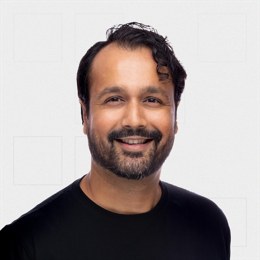
Samar Sen, Head of International Markets at Talos
At the same time, interest is starting to broaden out.
Beyond cryptocurrencies, there is more focus on tokenised assets and
collateral, especially where they can be incorporated into existing trading,
financing and risk workflows.
Regulatory Clarity and Market Integration in Singapore
“Singapore’s regulatory stance has underpinned this,” adds
Sen. “The approach has been to integrate digital assets into the existing
financial system, rather than treat them separately. That has given
institutions enough clarity to move from early-stage exploration into live
trading and allocation.”
From Low Correlation to Behaviour-Based Allocation
In the early days of crypto, the diversification argument
was often framed around low correlation. Now institutions are looking more
closely at how crypto behaves in practice, which includes how easy it is to
enter and exit positions, how it reacts during periods of stress and how it
moves alongside other risk assets.
Beyond crypto, tokenised assets
— whether novel forms of previously illiquid assets or traditional assets like
equities and bonds represented on blockchain rails — are expanding how
institutional investors express trading and investment views.
Institutional investors are keen to build on Singapore’s
digital asset ecosystem by optimising their exposure to crypto alongside more
conventional portfolio allocations.
Institutional engagement with digital assets in Singapore is
being driven not only by trading opportunities but also by the need to build
knowledge around market access, custody, settlement and the underlying
technology.
Banks, asset
managers and family offices are treating digital assets as a permanent
fixture within modern portfolios, prioritising regulated compliance, secure
custody and institutional-grade infrastructure over short-term retail trading
dynamics.
Crypto as a Portfolio Diversifier
Despite ongoing volatility, cryptocurrency,
particularly Bitcoin, continues to be viewed as a meaningful portfolio
diversifier by institutional investors in Singapore, observes Nicholas Strain,
director of institutional sales at LMAX Digital.
“As the asset class has become more mainstream, institutions
are evolving from simple buy-and-hold exposure toward more sophisticated,
risk-adjusted strategies, including the use of derivatives and options to
manage downside while retaining upside potential,” he says.
From Allocation Decisions to Execution Strategy
Nicholas Strain, Director of Institutional Sales at LMAX Digital
Conversations with institutional investors have moved from
asking whether to allocate to figuring out how much, through what vehicles and
how operational risk should be managed, says Julien Le Noble, chief executive
officer GTN Asia.
“Financial
institutions are no longer waiting on the sidelines and have begun
allocating,” he adds. “They understand that building exposure now, within a
regulated framework, could position them ahead of their competitors in other
markets, so they are moving forward.”
Tokenisation and Long-Term Growth Narrative
Julien Le Noble, CEO of GTN Asia
As the global push towards tokenised instruments and
on-chain finance proliferates, Mark Garabedian, director of digital assets and
tokenization at Wellington Management Singapore, refers to crypto as the most
direct investment opportunity to participate in growth.
“Crypto assets encompass a broad range of sectors and
instruments that have defining characteristics, with some offering
diversification benefits,” he adds.
“The asset class is still in its infancy in
terms of adoption and thus its diversification and volatility characteristics
are expected to change over time as the volume of investment flows
grow.”
Market Stress, Correlations and Maturing Behaviour
In the short term, there may be some correlations due to
macro stress events, but crypto’s fundamental drivers remain distinct from
traditional asset classes.
As Le Noble observes, drawdowns can be seen as entry points rather than reasons
to exit — which is a sign of maturity for the asset class.
Portfolio Construction and Institutional Frameworks
Osh Ong, Chief Operating Officer of OKX SG
Institutions are increasingly approaching digital assets
through a portfolio allocation lens, asking how they sit alongside equities,
commodities and alternatives within a broader framework, agrees Osh Ong, OKX SG
chief operating officer.
“The engagement is structured and deliberate, with custody
arrangements, liquidity profiles and regulatory clarity all firmly on the
checklist before any meaningful allocation is made,” he says, adding that volatility hasn't
diminished crypto's relevance but rather pushed investors toward a more nuanced
understanding of how these assets actually behave.
“In some market environments, crypto trades as a high-beta
proxy for global liquidity; in others, it starts to look more like a hedge
sitting alongside other alternative assets,” adds Ong. “That dual behaviour is
increasingly something institutions are
factoring into how they size and manage their exposure, rather than treating it
as a reason to stay on the sidelines.”
Institutional Conviction in Blockchain Infrastructure
Hassan Ahmed, country director Singapore at Coinbase,
reckons the vast majority of institutions now view blockchain as a
long-term value driver and a structural upgrade to the financial markets.
Hassan Ahmed, Country Director for Singapore at Coinbase
“Local banks and fund managers are announcing tokenisation
initiatives that show this technology is ready for deployment,” he says. “Our
regulatory framework prioritises trust over speed, which is a critical factor
for local investors, who now rank security as their primary concern.”
The old thesis of putting 1–2% into crypto as an
uncorrelated hedge has largely run its course. Crypto increasingly moves with
risk assets during market stress and institutions have noticed. But rather than
stepping back, they have changed how they engage.
Tianwei Liu, CEO and Co-founder of StraitsX
That is the view of Tianwei Liu, CEO and co-founder of
StraitsX, who says the clearest signal of this trend is the rise of Bitcoin
treasuries.
“At the same time, stablecoins have opened a separate lane
for institutions seeking the infrastructure without the price exposure,” he
continues. “Settlement, treasury operations and cross-border payments are
already running on these rails, making the landscape far less binary. The
question is no longer whether to participate, but how.”
“We are seeing a shift toward more structured
participation,” he suggests. “Crypto is increasingly considered alongside other
traditional asset classes such as equities, FX and commodities,
particularly from a portfolio construction perspective. That is relevant in
Singapore, where many institutions are already active across FX and derivatives
markets and are extending those frameworks into digital assets.”
Samar Sen, Head of International Markets at Talos
At the same time, interest is starting to broaden out.
Beyond cryptocurrencies, there is more focus on tokenised assets and
collateral, especially where they can be incorporated into existing trading,
financing and risk workflows.
Regulatory Clarity and Market Integration in Singapore
“Singapore’s regulatory stance has underpinned this,” adds
Sen. “The approach has been to integrate digital assets into the existing
financial system, rather than treat them separately. That has given
institutions enough clarity to move from early-stage exploration into live
trading and allocation.”
From Low Correlation to Behaviour-Based Allocation
In the early days of crypto, the diversification argument
was often framed around low correlation. Now institutions are looking more
closely at how crypto behaves in practice, which includes how easy it is to
enter and exit positions, how it reacts during periods of stress and how it
moves alongside other risk assets.
Beyond crypto, tokenised assets
— whether novel forms of previously illiquid assets or traditional assets like
equities and bonds represented on blockchain rails — are expanding how
institutional investors express trading and investment views.
Paul Golden is an experienced freelance financial journalist with a strong institutional background. Over the past two decades, he has written for globally recognised financial publications, covering topics such as market structure, regulation, trading behaviour, and economic policy.
Capitolis Raises $220 Million to Support $200 Million eSecLending Deal
Featured Videos
AvaTrade to Acquire Most of FXCM; NAGA Raises $8M
AvaTrade to Acquire Most of FXCM; NAGA Raises $8M
AvaTrade to Acquire Most of FXCM; NAGA Raises $8M
AvaTrade to Acquire Most of FXCM; NAGA Raises $8M
Today’s financial news recap covers AvaTrade agrees to acquire most of FXCM, NAGA secures eight million dollars in new financing, and Wise seeks a tax settlement in the UK.
Finance Magnates Daily Recap brings you the latest news from forex and CFD brokers, fintech, payments, cryptocurrency, digital assets, trading platforms, financial regulation and global markets.
Get the key company news, executive moves, deals, regulatory updates and market developments of the day, in just a few minutes. New episodes published every weekday.
Read more: https://www.financemagnates.com
#FinanceMagnates #ForexNews #FintechNews
Today’s financial news recap covers AvaTrade agrees to acquire most of FXCM, NAGA secures eight million dollars in new financing, and Wise seeks a tax settlement in the UK.
Finance Magnates Daily Recap brings you the latest news from forex and CFD brokers, fintech, payments, cryptocurrency, digital assets, trading platforms, financial regulation and global markets.
Get the key company news, executive moves, deals, regulatory updates and market developments of the day, in just a few minutes. New episodes published every weekday.
Read more: https://www.financemagnates.com
#FinanceMagnates #ForexNews #FintechNews
Today’s financial news recap covers AvaTrade agrees to acquire most of FXCM, NAGA secures eight million dollars in new financing, and Wise seeks a tax settlement in the UK.
Finance Magnates Daily Recap brings you the latest news from forex and CFD brokers, fintech, payments, cryptocurrency, digital assets, trading platforms, financial regulation and global markets.
Get the key company news, executive moves, deals, regulatory updates and market developments of the day, in just a few minutes. New episodes published every weekday.
Read more: https://www.financemagnates.com
#FinanceMagnates #ForexNews #FintechNews
Today’s financial news recap covers AvaTrade agrees to acquire most of FXCM, NAGA secures eight million dollars in new financing, and Wise seeks a tax settlement in the UK.
Finance Magnates Daily Recap brings you the latest news from forex and CFD brokers, fintech, payments, cryptocurrency, digital assets, trading platforms, financial regulation and global markets.
Get the key company news, executive moves, deals, regulatory updates and market developments of the day, in just a few minutes. New episodes published every weekday.
Read more: https://www.financemagnates.com
#FinanceMagnates #ForexNews #FintechNews
XTB Adds Overnight US Stock Trading; Nasdaq Ventures Invests in One Trading
XTB Adds Overnight US Stock Trading; Nasdaq Ventures Invests in One Trading
XTB Adds Overnight US Stock Trading; Nasdaq Ventures Invests in One Trading
XTB Adds Overnight US Stock Trading; Nasdaq Ventures Invests in One Trading
XTB Adds Overnight US Stock Trading; Nasdaq Ventures Invests in One Trading
XTB Adds Overnight US Stock Trading; Nasdaq Ventures Invests in One Trading
Today’s financial news recap covers XTB expands overnight US stock trading, Fortrade reports higher revenue, Nasdaq backs One Trading, and Vest Labs raises 13 million dollars.
Finance Magnates Daily Recap brings you the latest news from forex and CFD brokers, fintech, payments, cryptocurrency, digital assets, trading platforms, financial regulation and global markets.
Get the key company news, executive moves, deals, regulatory updates and market developments of the day, in just a few minutes. New episodes published every weekday.
Read more: https://www.financemagnates.com
#FinanceMagnates #ForexNews #FintechNews
Today’s financial news recap covers XTB expands overnight US stock trading, Fortrade reports higher revenue, Nasdaq backs One Trading, and Vest Labs raises 13 million dollars.
Finance Magnates Daily Recap brings you the latest news from forex and CFD brokers, fintech, payments, cryptocurrency, digital assets, trading platforms, financial regulation and global markets.
Get the key company news, executive moves, deals, regulatory updates and market developments of the day, in just a few minutes. New episodes published every weekday.
Read more: https://www.financemagnates.com
#FinanceMagnates #ForexNews #FintechNews
Today’s financial news recap covers XTB expands overnight US stock trading, Fortrade reports higher revenue, Nasdaq backs One Trading, and Vest Labs raises 13 million dollars.
Finance Magnates Daily Recap brings you the latest news from forex and CFD brokers, fintech, payments, cryptocurrency, digital assets, trading platforms, financial regulation and global markets.
Get the key company news, executive moves, deals, regulatory updates and market developments of the day, in just a few minutes. New episodes published every weekday.
Read more: https://www.financemagnates.com
#FinanceMagnates #ForexNews #FintechNews
Today’s financial news recap covers XTB expands overnight US stock trading, Fortrade reports higher revenue, Nasdaq backs One Trading, and Vest Labs raises 13 million dollars.
Finance Magnates Daily Recap brings you the latest news from forex and CFD brokers, fintech, payments, cryptocurrency, digital assets, trading platforms, financial regulation and global markets.
Get the key company news, executive moves, deals, regulatory updates and market developments of the day, in just a few minutes. New episodes published every weekday.
Read more: https://www.financemagnates.com
#FinanceMagnates #ForexNews #FintechNews
Today’s financial news recap covers XTB expands overnight US stock trading, Fortrade reports higher revenue, Nasdaq backs One Trading, and Vest Labs raises 13 million dollars.
Finance Magnates Daily Recap brings you the latest news from forex and CFD brokers, fintech, payments, cryptocurrency, digital assets, trading platforms, financial regulation and global markets.
Get the key company news, executive moves, deals, regulatory updates and market developments of the day, in just a few minutes. New episodes published every weekday.
Read more: https://www.financemagnates.com
#FinanceMagnates #ForexNews #FintechNews
Today’s financial news recap covers XTB expands overnight US stock trading, Fortrade reports higher revenue, Nasdaq backs One Trading, and Vest Labs raises 13 million dollars.
Finance Magnates Daily Recap brings you the latest news from forex and CFD brokers, fintech, payments, cryptocurrency, digital assets, trading platforms, financial regulation and global markets.
Get the key company news, executive moves, deals, regulatory updates and market developments of the day, in just a few minutes. New episodes published every weekday.
Read more: https://www.financemagnates.com
#FinanceMagnates #ForexNews #FintechNews
CMC Founder Downplays Volatility Hit; Devexperts Names CEO
CMC Founder Downplays Volatility Hit; Devexperts Names CEO
CMC Founder Downplays Volatility Hit; Devexperts Names CEO
CMC Founder Downplays Volatility Hit; Devexperts Names CEO
CMC Founder Downplays Volatility Hit; Devexperts Names CEO
CMC Founder Downplays Volatility Hit; Devexperts Names CEO
Today’s financial news recap covers low volatility pressures brokers, Devexperts names a new CEO, Saxo cuts onboarding time, and OKX reaches a 25 billion dollar valuation.
Finance Magnates Daily Recap brings you the latest news from forex and CFD brokers, fintech, payments, cryptocurrency, digital assets, trading platforms, financial regulation and global markets.
Get the key company news, executive moves, deals, regulatory updates and market developments of the day, in just a few minutes. New episodes published every weekday.
Read more: https://www.financemagnates.com
#FinanceMagnates #ForexNews #FintechNews
Today’s financial news recap covers low volatility pressures brokers, Devexperts names a new CEO, Saxo cuts onboarding time, and OKX reaches a 25 billion dollar valuation.
Finance Magnates Daily Recap brings you the latest news from forex and CFD brokers, fintech, payments, cryptocurrency, digital assets, trading platforms, financial regulation and global markets.
Get the key company news, executive moves, deals, regulatory updates and market developments of the day, in just a few minutes. New episodes published every weekday.
Read more: https://www.financemagnates.com
#FinanceMagnates #ForexNews #FintechNews
Today’s financial news recap covers low volatility pressures brokers, Devexperts names a new CEO, Saxo cuts onboarding time, and OKX reaches a 25 billion dollar valuation.
Finance Magnates Daily Recap brings you the latest news from forex and CFD brokers, fintech, payments, cryptocurrency, digital assets, trading platforms, financial regulation and global markets.
Get the key company news, executive moves, deals, regulatory updates and market developments of the day, in just a few minutes. New episodes published every weekday.
Read more: https://www.financemagnates.com
#FinanceMagnates #ForexNews #FintechNews
Today’s financial news recap covers low volatility pressures brokers, Devexperts names a new CEO, Saxo cuts onboarding time, and OKX reaches a 25 billion dollar valuation.
Finance Magnates Daily Recap brings you the latest news from forex and CFD brokers, fintech, payments, cryptocurrency, digital assets, trading platforms, financial regulation and global markets.
Get the key company news, executive moves, deals, regulatory updates and market developments of the day, in just a few minutes. New episodes published every weekday.
Read more: https://www.financemagnates.com
#FinanceMagnates #ForexNews #FintechNews
Today’s financial news recap covers low volatility pressures brokers, Devexperts names a new CEO, Saxo cuts onboarding time, and OKX reaches a 25 billion dollar valuation.
Finance Magnates Daily Recap brings you the latest news from forex and CFD brokers, fintech, payments, cryptocurrency, digital assets, trading platforms, financial regulation and global markets.
Get the key company news, executive moves, deals, regulatory updates and market developments of the day, in just a few minutes. New episodes published every weekday.
Read more: https://www.financemagnates.com
#FinanceMagnates #ForexNews #FintechNews
Today’s financial news recap covers low volatility pressures brokers, Devexperts names a new CEO, Saxo cuts onboarding time, and OKX reaches a 25 billion dollar valuation.
Finance Magnates Daily Recap brings you the latest news from forex and CFD brokers, fintech, payments, cryptocurrency, digital assets, trading platforms, financial regulation and global markets.
Get the key company news, executive moves, deals, regulatory updates and market developments of the day, in just a few minutes. New episodes published every weekday.
Read more: https://www.financemagnates.com
#FinanceMagnates #ForexNews #FintechNews
Today’s financial news recap covers Trade Nation buys FXCM's UK client book, Trading 212 reports higher revenue, the CFTC's move to allow perpetual index futures.
Finance Magnates Daily Recap brings you the latest news from forex and CFD brokers, fintech, payments, cryptocurrency, digital assets, trading platforms, financial regulation and global markets.
Get the key company news, executive moves, deals, regulatory updates and market developments of the day, in just a few minutes. New episodes published every weekday.
Read more: https://www.financemagnates.com
#FinanceMagnates #ForexNews #FintechNews
Today’s financial news recap covers Trade Nation buys FXCM's UK client book, Trading 212 reports higher revenue, the CFTC's move to allow perpetual index futures.
Finance Magnates Daily Recap brings you the latest news from forex and CFD brokers, fintech, payments, cryptocurrency, digital assets, trading platforms, financial regulation and global markets.
Get the key company news, executive moves, deals, regulatory updates and market developments of the day, in just a few minutes. New episodes published every weekday.
Read more: https://www.financemagnates.com
#FinanceMagnates #ForexNews #FintechNews
Today’s financial news recap covers Trade Nation buys FXCM's UK client book, Trading 212 reports higher revenue, the CFTC's move to allow perpetual index futures.
Finance Magnates Daily Recap brings you the latest news from forex and CFD brokers, fintech, payments, cryptocurrency, digital assets, trading platforms, financial regulation and global markets.
Get the key company news, executive moves, deals, regulatory updates and market developments of the day, in just a few minutes. New episodes published every weekday.
Read more: https://www.financemagnates.com
#FinanceMagnates #ForexNews #FintechNews
Today’s financial news recap covers Trade Nation buys FXCM's UK client book, Trading 212 reports higher revenue, the CFTC's move to allow perpetual index futures.
Finance Magnates Daily Recap brings you the latest news from forex and CFD brokers, fintech, payments, cryptocurrency, digital assets, trading platforms, financial regulation and global markets.
Get the key company news, executive moves, deals, regulatory updates and market developments of the day, in just a few minutes. New episodes published every weekday.
Read more: https://www.financemagnates.com
#FinanceMagnates #ForexNews #FintechNews
Today’s financial news recap covers Trade Nation buys FXCM's UK client book, Trading 212 reports higher revenue, the CFTC's move to allow perpetual index futures.
Finance Magnates Daily Recap brings you the latest news from forex and CFD brokers, fintech, payments, cryptocurrency, digital assets, trading platforms, financial regulation and global markets.
Get the key company news, executive moves, deals, regulatory updates and market developments of the day, in just a few minutes. New episodes published every weekday.
Read more: https://www.financemagnates.com
#FinanceMagnates #ForexNews #FintechNews
Today’s financial news recap covers Trade Nation buys FXCM's UK client book, Trading 212 reports higher revenue, the CFTC's move to allow perpetual index futures.
Finance Magnates Daily Recap brings you the latest news from forex and CFD brokers, fintech, payments, cryptocurrency, digital assets, trading platforms, financial regulation and global markets.
Get the key company news, executive moves, deals, regulatory updates and market developments of the day, in just a few minutes. New episodes published every weekday.
Read more: https://www.financemagnates.com
#FinanceMagnates #ForexNews #FintechNews
Your career isn’t a linear path.
Your career isn’t a linear path.
Your career isn’t a linear path.
Your career isn’t a linear path.
Your career isn’t a linear path.
Your career isn’t a linear path.
Roles change. Career goals change. Sometimes you want a completely new challenge.
But the skills and knowledge you build along the way can stay with you and give you something to build on.
For Jeff Patterson, that continued growth is key to long-term career development.
You bring the skills. FM Academy helps you build the knowledge.
#FMAcademy #FinanceMagnates #FinanceCareers #ProfessionalDevelopment #Fintech
Roles change. Career goals change. Sometimes you want a completely new challenge.
But the skills and knowledge you build along the way can stay with you and give you something to build on.
For Jeff Patterson, that continued growth is key to long-term career development.
You bring the skills. FM Academy helps you build the knowledge.
#FMAcademy #FinanceMagnates #FinanceCareers #ProfessionalDevelopment #Fintech
Roles change. Career goals change. Sometimes you want a completely new challenge.
But the skills and knowledge you build along the way can stay with you and give you something to build on.
For Jeff Patterson, that continued growth is key to long-term career development.
You bring the skills. FM Academy helps you build the knowledge.
#FMAcademy #FinanceMagnates #FinanceCareers #ProfessionalDevelopment #Fintech
Roles change. Career goals change. Sometimes you want a completely new challenge.
But the skills and knowledge you build along the way can stay with you and give you something to build on.
For Jeff Patterson, that continued growth is key to long-term career development.
You bring the skills. FM Academy helps you build the knowledge.
#FMAcademy #FinanceMagnates #FinanceCareers #ProfessionalDevelopment #Fintech
Roles change. Career goals change. Sometimes you want a completely new challenge.
But the skills and knowledge you build along the way can stay with you and give you something to build on.
For Jeff Patterson, that continued growth is key to long-term career development.
You bring the skills. FM Academy helps you build the knowledge.
#FMAcademy #FinanceMagnates #FinanceCareers #ProfessionalDevelopment #Fintech
Roles change. Career goals change. Sometimes you want a completely new challenge.
But the skills and knowledge you build along the way can stay with you and give you something to build on.
For Jeff Patterson, that continued growth is key to long-term career development.
You bring the skills. FM Academy helps you build the knowledge.
#FMAcademy #FinanceMagnates #FinanceCareers #ProfessionalDevelopment #Fintech