
With European lenders based out of the UK, the decision looks to be a challenging one as many contemplate setting up shop elsewhere in continental Europe. The main destinations that have vaulted to the top of a short list include Dublin, Frankfurt, and more recently dark horse candidate Amsterdam, each presenting their own unique advantages and disadvantages.

Dublin (Bloomberg)
Late 2016 was characterized mostly by chatter surrounding Dublin, given its proximity to the UK and feasibility in transitioning to the city. While Dublin ranks with the best in terms of qualified individuals who can staff trading desks, the city is one of Europe’s smaller capitals - this, along with Ireland’s small population, could portend issues because banks would quickly look to secure all available talent. Thus, Ireland’s main issue appears to be the quantity of traders rather than their quality.
One of the saddest days in the last 200 years of British political history; one of the greatest acts of self-harm. Heartbreaking. pic.twitter.com/GxUk1qnvUm
Presently, the banks with the largest staff poised for potential relocation include JPMorgan, UBS, HSBC, Morgan Stanley, Goldman Sachs, and Barclays. Even a modest move of this proportion of the workforce would quickly sap Dublin of any available traders.
Approximately 35,000 individuals work in the financial space in Ireland – this compares to 60,000 in Frankfurt alone, 180,000 in Paris, and 360,000 in London. It is unclear in this respect if Dublin is even capable of supporting such a large move in operations, though banks are also available for these demographics, which may make any moves feasible based on a first-come-first serve basis.
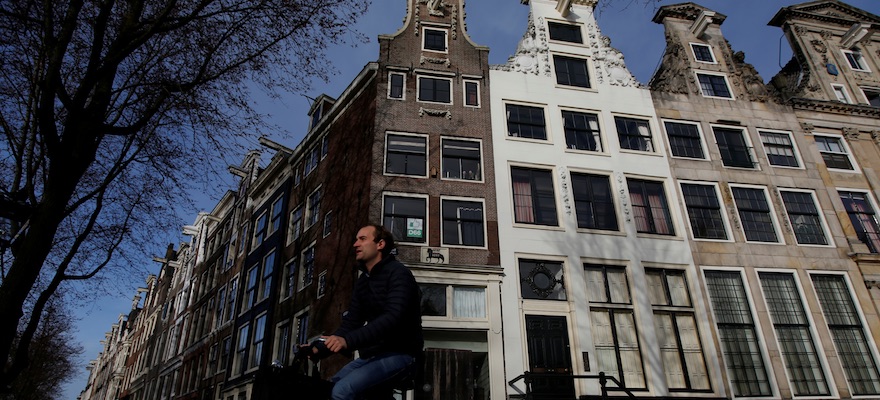
Amsterdam (Reuters)
Amsterdam talk heating up?
Amsterdam has recently emerged as another top contender for the future capital of banking in Europe. Despite the city’s size, Amsterdam presents several advantages to banks, including an established nexus for international commerce, interconnectivity with the rest of Europe, and a diverse pool of English speakers.
Additionally, Amsterdam also boasts strong digital connectivity and an existing financial sector, which is more conducive to startups and fintech firms. Perhaps the clearest advantage, when compared to Dublin, is the city’s location, nestled in the heart of Europe. The Netherlands has had its own banking crisis, not unlike the UK, with repeated layoffs since the global financial crisis in 2008. The country’s domestic policy on capping bonuses at 20 percent of annual salaries could also prove problematic and an entangling factor for lenders.
A case for Frankfurt
While both Dublin and Amsterdam are likely to see some portion of banking talent relocate after Brexit, another plausible option is Frankfurt, which has both the infrastructure and talent to satisfy many demands for incoming banks. Given the scale of a potential exodus out of the UK, it could also be unlikely that all banks gravitate to one city given the aforementioned issues and lack of an existent one-size-fits-all situation.
While Frankfurt possesses a talented pool of workers in its own right, the city also benefits from its geographical position and existing economic strength. While Dublin seems to have a lack of trading talent, Frankfurt could have a dearth of actual office space or housing.

Frankfurt (Bloomberg)
However, in this realm, Frankfurt appears to have the edge at least in one respect - price. According to a recent Bloomberg report, Frankfurt is presently the cheapest financial center in Europe to work and live in – the combined annual cost of renting an apartment and the per-employee office space expenses combined to €30,000, which is less than half of Paris. By comparison, Amsterdam and London both come in over to €40,000.
Banks could start making their decisions and start leaning towards specific options in H1 2017 as the Brexit wheels look to finally start turning. Up to now, talk of relocation in Europe has been mostly conjecture or planning, though the actual parting with the UK will clearly force many lenders’ hands as Article 50 is enforced.
With European lenders based out of the UK, the decision looks to be a challenging one as many contemplate setting up shop elsewhere in continental Europe. The main destinations that have vaulted to the top of a short list include Dublin, Frankfurt, and more recently dark horse candidate Amsterdam, each presenting their own unique advantages and disadvantages.
Dublin (Bloomberg)
Late 2016 was characterized mostly by chatter surrounding Dublin, given its proximity to the UK and feasibility in transitioning to the city. While Dublin ranks with the best in terms of qualified individuals who can staff trading desks, the city is one of Europe’s smaller capitals - this, along with Ireland’s small population, could portend issues because banks would quickly look to secure all available talent. Thus, Ireland’s main issue appears to be the quantity of traders rather than their quality.
One of the saddest days in the last 200 years of British political history; one of the greatest acts of self-harm. Heartbreaking. pic.twitter.com/GxUk1qnvUm
Presently, the banks with the largest staff poised for potential relocation include JPMorgan, UBS, HSBC, Morgan Stanley, Goldman Sachs, and Barclays. Even a modest move of this proportion of the workforce would quickly sap Dublin of any available traders.
Approximately 35,000 individuals work in the financial space in Ireland – this compares to 60,000 in Frankfurt alone, 180,000 in Paris, and 360,000 in London. It is unclear in this respect if Dublin is even capable of supporting such a large move in operations, though banks are also available for these demographics, which may make any moves feasible based on a first-come-first serve basis.
Amsterdam (Reuters)
Amsterdam talk heating up?
Amsterdam has recently emerged as another top contender for the future capital of banking in Europe. Despite the city’s size, Amsterdam presents several advantages to banks, including an established nexus for international commerce, interconnectivity with the rest of Europe, and a diverse pool of English speakers.
Additionally, Amsterdam also boasts strong digital connectivity and an existing financial sector, which is more conducive to startups and fintech firms. Perhaps the clearest advantage, when compared to Dublin, is the city’s location, nestled in the heart of Europe. The Netherlands has had its own banking crisis, not unlike the UK, with repeated layoffs since the global financial crisis in 2008. The country’s domestic policy on capping bonuses at 20 percent of annual salaries could also prove problematic and an entangling factor for lenders.
A case for Frankfurt
While both Dublin and Amsterdam are likely to see some portion of banking talent relocate after Brexit, another plausible option is Frankfurt, which has both the infrastructure and talent to satisfy many demands for incoming banks. Given the scale of a potential exodus out of the UK, it could also be unlikely that all banks gravitate to one city given the aforementioned issues and lack of an existent one-size-fits-all situation.
While Frankfurt possesses a talented pool of workers in its own right, the city also benefits from its geographical position and existing economic strength. While Dublin seems to have a lack of trading talent, Frankfurt could have a dearth of actual office space or housing.
Frankfurt (Bloomberg)
However, in this realm, Frankfurt appears to have the edge at least in one respect - price. According to a recent Bloomberg report, Frankfurt is presently the cheapest financial center in Europe to work and live in – the combined annual cost of renting an apartment and the per-employee office space expenses combined to €30,000, which is less than half of Paris. By comparison, Amsterdam and London both come in over to €40,000.
Banks could start making their decisions and start leaning towards specific options in H1 2017 as the Brexit wheels look to finally start turning. Up to now, talk of relocation in Europe has been mostly conjecture or planning, though the actual parting with the UK will clearly force many lenders’ hands as Article 50 is enforced.
iForex posts its first annual results as a listed broker. Also ahead: CFI Financial secures a Brazil license, and prediction markets have a big week, with new ETF launches and fresh Polymarket loss data. It's Thursday, the thirtieth of April 2026. You're listening to the Finance Magnates Daily Brief.
FM Daily Brief - 29 April 2026
XTB and Robinhood both post first-quarter earnings. But the numbers point in very different directions. Also ahead: Capital.com pushes into three new markets and signals a move into payments.
It's Wednesday, the 29th of April 2026. You're listening to the Finance Magnates Daily Brief.
XTB and Robinhood both post first-quarter earnings. But the numbers point in very different directions. Also ahead: Capital.com pushes into three new markets and signals a move into payments.
It's Wednesday, the 29th of April 2026. You're listening to the Finance Magnates Daily Brief.
XTB and Robinhood both post first-quarter earnings. But the numbers point in very different directions. Also ahead: Capital.com pushes into three new markets and signals a move into payments.
It's Wednesday, the 29th of April 2026. You're listening to the Finance Magnates Daily Brief.
XTB and Robinhood both post first-quarter earnings. But the numbers point in very different directions. Also ahead: Capital.com pushes into three new markets and signals a move into payments.
It's Wednesday, the 29th of April 2026. You're listening to the Finance Magnates Daily Brief.
XTB and Robinhood both post first-quarter earnings. But the numbers point in very different directions. Also ahead: Capital.com pushes into three new markets and signals a move into payments.
It's Wednesday, the 29th of April 2026. You're listening to the Finance Magnates Daily Brief.
XTB and Robinhood both post first-quarter earnings. But the numbers point in very different directions. Also ahead: Capital.com pushes into three new markets and signals a move into payments.
It's Wednesday, the 29th of April 2026. You're listening to the Finance Magnates Daily Brief.
FM Daily Brief - 28 April 2026
Startrader posts three-point-one trillion dollars in first-quarter volume — up three hundred and forty percent from a year ago. Also ahead: Fintokei claims sub-second trader payouts, and eToro opens its premium subscription tier to all investors.
FM Daily Brief - 27 April 2026
Finance Magnates spoke with IG Group's MENA CEO. Also ahead: EC Markets posts a record five-point-one-three trillion dollar first quarter. Plus Hola Prime brings in Deloitte to audit prop firm payouts.