How to Spot a Dividend Cut Before It Happens

Friday, 05/06/2026 | 08:14 GMT by Paul Golden
  • Europe's dividend market is under pressure as major companies cut payouts. What warning signs should income investors watch for? Paul Golden dives in.
  • He also explores why Bitcoin remains under-owned despite strong returns, and the investor habits that can quietly damage long-term performance.
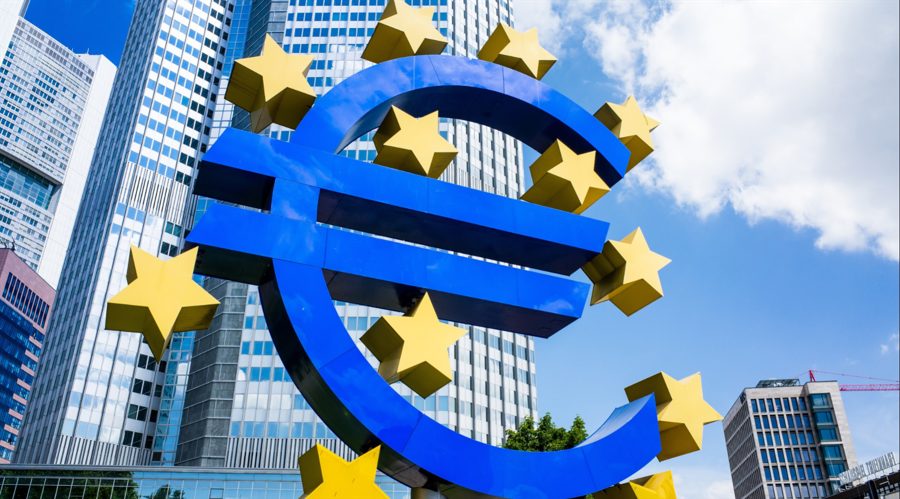
A sign of the euro
A sign of the euro

Investors Face European Dividend Dilemma

Capital Group’s latest dividend report notes that Europe lagged behind other regions in terms of dividend payments in Q1, with core growth of just 3.4%, boosted by favourable exchange rates amid notable cuts from Norwegian energy producers and French luxury goods group Kering.

While it is true that much of Europe sees relatively few payouts in Q1 compared to other quarters, Fernando Luque, a senior financial analyst at Morningstar, warns that some of Europe’s biggest income stocks are cutting dividends as weaker earnings, rising debt and heavy investment needs weigh on balance sheets.

Fernando Luque, a senior financial analyst at Morningstar

For example, automotive giant Stellantis will not pay an ordinary dividend this year after reporting heavy losses and substantial impairments linked to its electric vehicle strategy. Volkswagen and Mercedes-Benz have cut their dividend payments, and Volvo has also reduced its total shareholder distribution.

In other industries, Belgian telecom operator Proximus announced a 50% cut to its annual dividend, Spain’s Acciona Energías Renovables announced that it would reduce its dividend by a whopping 93%, and Spanish telecom group Telefónica announced that it would halve its dividend for the 2026 financial year.

Dan Lefkovitz, strategist at Morningstar Indexes, refers to three dividend-cut predictors that investors should pay attention to.

Dan Lefkovitz, strategist at Morningstar

“The payout ratio measures the percentage of a company’s earnings that it pays out in dividends,” he explains. “For many equity-income investors, there is a happy medium where the company is generously returning cash to shareholders while maintaining a cushion. Indeed, we have found that in recent years, companies with high payout ratios were the most likely to cut their dividends.”

The second dividend-cut predictor is the economic moat. Companies with wide moats have tended to cut dividends less frequently, while companies with no moat have cut dividends most frequently.

The third dividend-cut predictor is the ‘distance to default’. “It gauges the risk that the value of a company’s assets will slip below the sum of its liabilities,” says Lefkovitz, adding that chasing high yields at the expense of overall returns can be risky. “Long-term success in equity investing often comes from owning companies that can sustain and increase their income streams over time.”

Busting the Bitcoin Myths

Despite being the best-performing asset of the past decade, Bitcoin remains structurally underallocated in multi-asset portfolios.

Emotions may play a role in shaping investor decision-making. The result is persistent underexposure to an asset characterised by convex returns and low correlation with traditional assets.

Across cycles, the same behavioural pattern repeats:

• Risk is overstated
• Portfolio contribution is understated
• Timing is prioritised over exposure

That is the view of Dovile Silenskyte, Director of Digital Assets Research at WisdomTree, who says that while drawdowns can be severe, rolling four-year returns have historically been positive across all observed periods since the end of 2013.

The median four-year annualised rolling return has been 64%, while the worst observed four-year annualised rolling return has been 7%.

She suggests that investor behaviour is consistent in that investors anchor to drawdowns, exit during periods of stress and miss recovery phases. She adds that treating volatility as synonymous with risk leads to structurally suboptimal allocation decisions.

Dovile Silenskyte, Director of Digital Assets Research at WisdomTree

“Exposure drives outcomes, timing refines them,” says Silenskyte. “Investors often focus on entry points while underestimating the importance of maintaining exposure. Bitcoin’s returns are highly concentrated — missing just 30 of the best trading days reduces cumulative returns from more than 9,000% to 26%.”

Options for mitigating this negative impact include maintaining a consistent market-cap-neutral allocation of approximately 1–2%, periodic rebalancing and optional dollar-cost averaging to reduce entry dispersion.

Read more: Singapore Institutions Deepen Crypto Exposure as the Question Shifts from If to How

On the question of volatility, she observes that volatility in isolation is not a decision variable and that portfolio construction depends on interaction effects. Historically, Bitcoin has exhibited high standalone volatility, low correlation with traditional assets and strong positive skew.

“This combination is powerful and has historically contributed to diversification benefits, although it also introduces additional sources of risk, including elevated volatility and uncertainty,” adds Silenskyte.

Be Wary of Falling into Bad Habits

Investment managers frequently warn of the negative impact of investor behaviour on returns, whether that takes the form of recency bias or chasing losses.

When attempting to crystallise the behaviours that lead to suboptimal investing, reference is sometimes made to one or more of the seven deadly sins (greed, envy, lust, gluttony, pride, wrath and sloth).

Peter Smith, Senior Investment Director at Aviva Investors

To combat the first of these, investors should start investing early, suggests Peter Smith, Senior Investment Director at Aviva Investors. He adds that wrath can translate into waiting for the next crash before investing, making impulsive investments due to anger, blaming others for one’s own investing mistakes, doubling down on a loss and emotionally selling during downturns.

“Investors who show pride may ignore professional advice, refuse to admit their mistakes, be overconfident, brag about winners and believe they can beat the market,” he says. “The moral of this story is that investors should take advice from professionals.”

Greed often manifests itself in investing in high-risk assets, chasing unrealistic returns, borrowing to make more money or putting all your eggs in one basket, while envy can turn into ‘fear of missing out’ investing, chasing performance or focusing on what is working now and forgetting the long-term plan.

“Gluttony can mean wanting the next big thing, buying the news, suffering from information overload, excessive trading and even over-diversification,” explains Smith. “But information overload can lead to bad decisions. For example, an investor who sold at the peak of the tariff concerns in March 2025 would have missed the rally that followed.”

As for lust, examples of this behaviour include falling for speculative assets, day trading for the thrill of it, chasing new trends, switching between investments repeatedly and attempting to get rich quickly.

Investors Face European Dividend Dilemma

Capital Group’s latest dividend report notes that Europe lagged behind other regions in terms of dividend payments in Q1, with core growth of just 3.4%, boosted by favourable exchange rates amid notable cuts from Norwegian energy producers and French luxury goods group Kering.

While it is true that much of Europe sees relatively few payouts in Q1 compared to other quarters, Fernando Luque, a senior financial analyst at Morningstar, warns that some of Europe’s biggest income stocks are cutting dividends as weaker earnings, rising debt and heavy investment needs weigh on balance sheets.

Fernando Luque, a senior financial analyst at Morningstar

For example, automotive giant Stellantis will not pay an ordinary dividend this year after reporting heavy losses and substantial impairments linked to its electric vehicle strategy. Volkswagen and Mercedes-Benz have cut their dividend payments, and Volvo has also reduced its total shareholder distribution.

In other industries, Belgian telecom operator Proximus announced a 50% cut to its annual dividend, Spain’s Acciona Energías Renovables announced that it would reduce its dividend by a whopping 93%, and Spanish telecom group Telefónica announced that it would halve its dividend for the 2026 financial year.

Dan Lefkovitz, strategist at Morningstar Indexes, refers to three dividend-cut predictors that investors should pay attention to.

Dan Lefkovitz, strategist at Morningstar

“The payout ratio measures the percentage of a company’s earnings that it pays out in dividends,” he explains. “For many equity-income investors, there is a happy medium where the company is generously returning cash to shareholders while maintaining a cushion. Indeed, we have found that in recent years, companies with high payout ratios were the most likely to cut their dividends.”

The second dividend-cut predictor is the economic moat. Companies with wide moats have tended to cut dividends less frequently, while companies with no moat have cut dividends most frequently.

The third dividend-cut predictor is the ‘distance to default’. “It gauges the risk that the value of a company’s assets will slip below the sum of its liabilities,” says Lefkovitz, adding that chasing high yields at the expense of overall returns can be risky. “Long-term success in equity investing often comes from owning companies that can sustain and increase their income streams over time.”

Busting the Bitcoin Myths

Despite being the best-performing asset of the past decade, Bitcoin remains structurally underallocated in multi-asset portfolios.

Emotions may play a role in shaping investor decision-making. The result is persistent underexposure to an asset characterised by convex returns and low correlation with traditional assets.

Across cycles, the same behavioural pattern repeats:

• Risk is overstated
• Portfolio contribution is understated
• Timing is prioritised over exposure

That is the view of Dovile Silenskyte, Director of Digital Assets Research at WisdomTree, who says that while drawdowns can be severe, rolling four-year returns have historically been positive across all observed periods since the end of 2013.

The median four-year annualised rolling return has been 64%, while the worst observed four-year annualised rolling return has been 7%.

She suggests that investor behaviour is consistent in that investors anchor to drawdowns, exit during periods of stress and miss recovery phases. She adds that treating volatility as synonymous with risk leads to structurally suboptimal allocation decisions.

Dovile Silenskyte, Director of Digital Assets Research at WisdomTree

“Exposure drives outcomes, timing refines them,” says Silenskyte. “Investors often focus on entry points while underestimating the importance of maintaining exposure. Bitcoin’s returns are highly concentrated — missing just 30 of the best trading days reduces cumulative returns from more than 9,000% to 26%.”

Options for mitigating this negative impact include maintaining a consistent market-cap-neutral allocation of approximately 1–2%, periodic rebalancing and optional dollar-cost averaging to reduce entry dispersion.

Read more: Singapore Institutions Deepen Crypto Exposure as the Question Shifts from If to How

On the question of volatility, she observes that volatility in isolation is not a decision variable and that portfolio construction depends on interaction effects. Historically, Bitcoin has exhibited high standalone volatility, low correlation with traditional assets and strong positive skew.

“This combination is powerful and has historically contributed to diversification benefits, although it also introduces additional sources of risk, including elevated volatility and uncertainty,” adds Silenskyte.

Be Wary of Falling into Bad Habits

Investment managers frequently warn of the negative impact of investor behaviour on returns, whether that takes the form of recency bias or chasing losses.

When attempting to crystallise the behaviours that lead to suboptimal investing, reference is sometimes made to one or more of the seven deadly sins (greed, envy, lust, gluttony, pride, wrath and sloth).

Peter Smith, Senior Investment Director at Aviva Investors

To combat the first of these, investors should start investing early, suggests Peter Smith, Senior Investment Director at Aviva Investors. He adds that wrath can translate into waiting for the next crash before investing, making impulsive investments due to anger, blaming others for one’s own investing mistakes, doubling down on a loss and emotionally selling during downturns.

“Investors who show pride may ignore professional advice, refuse to admit their mistakes, be overconfident, brag about winners and believe they can beat the market,” he says. “The moral of this story is that investors should take advice from professionals.”

Greed often manifests itself in investing in high-risk assets, chasing unrealistic returns, borrowing to make more money or putting all your eggs in one basket, while envy can turn into ‘fear of missing out’ investing, chasing performance or focusing on what is working now and forgetting the long-term plan.

“Gluttony can mean wanting the next big thing, buying the news, suffering from information overload, excessive trading and even over-diversification,” explains Smith. “But information overload can lead to bad decisions. For example, an investor who sold at the peak of the tariff concerns in March 2025 would have missed the rally that followed.”

As for lust, examples of this behaviour include falling for speculative assets, day trading for the thrill of it, chasing new trends, switching between investments repeatedly and attempting to get rich quickly.

About the Author: Paul Golden
Paul Golden
  • 127 Articles
  • 12 Followers
About the Author: Paul Golden
Paul Golden is an experienced freelance financial journalist with a strong institutional background. Over the past two decades, he has written for globally recognised financial publications, covering topics such as market structure, regulation, trading behaviour, and economic policy.
  • 127 Articles
  • 12 Followers

More from the Author

Retail FX

!"#$%&'()*+,-./0123456789:;<=>?@ABCDEFGHIJKLMNOPQRSTUVWXYZ[\]^_`abcdefghijklmnopqrstuvwxyz{|} !"#$%&'()*+,-./0123456789:;<=>?@ABCDEFGHIJKLMNOPQRSTUVWXYZ[\]^_`abcdefghijklmnopqrstuvwxyz{|}