Risk controls, operational resilience, and governance now matter more to institutions than blockchain technology itself. Paul Golden argues.
Institutions want digital assets to fit existing operating models rather than create entirely new workflows.
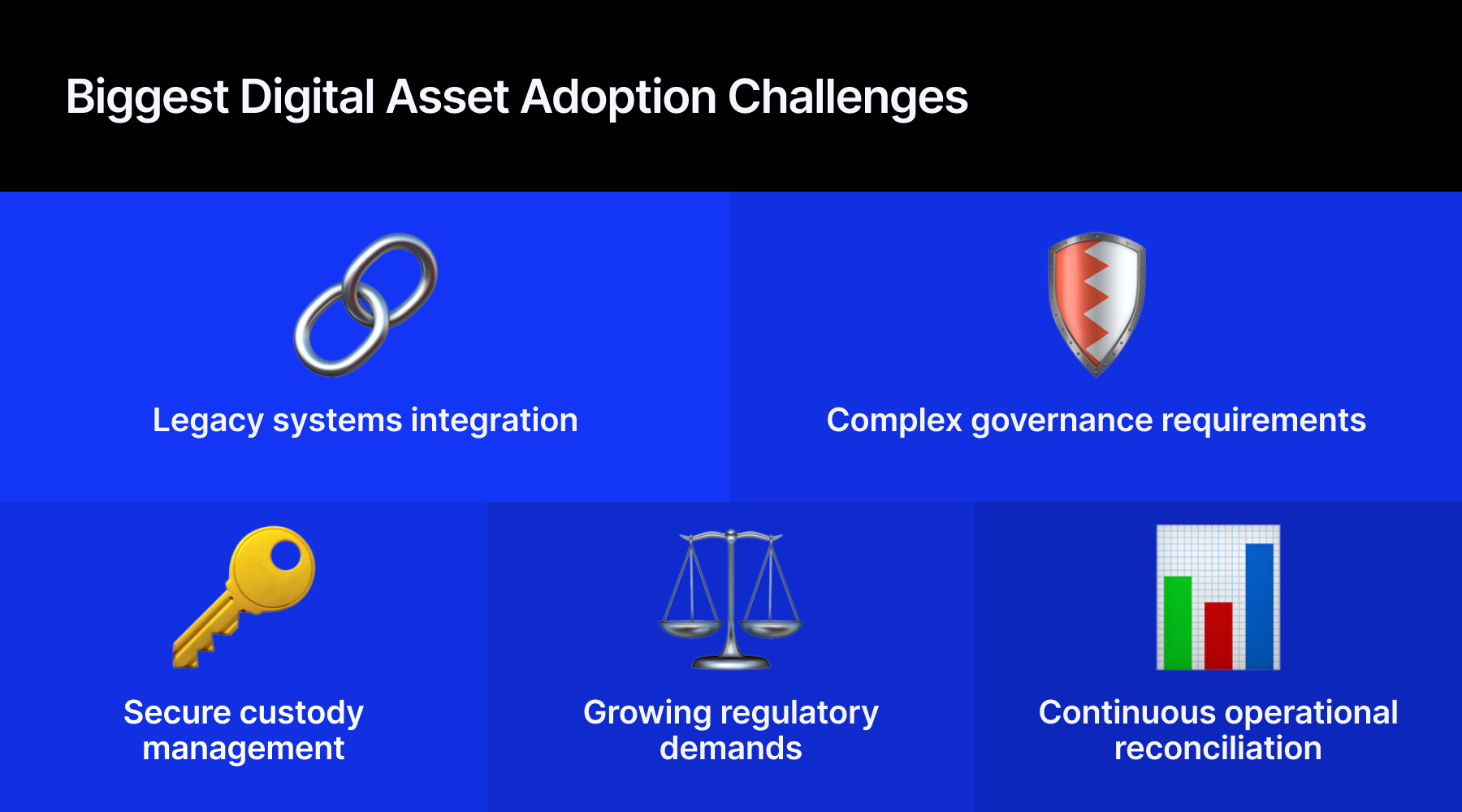
While institutions are making progress on integrating
digital asset custody and settlement into existing frameworks, infrastructural
friction continues to present challenges.
The transaction itself is
rarely the problem - the issue is whether the institution can connect that
transaction into the systems that already govern the business, determine where
the official record sits, define who can approve each action, manage exceptions
when something fails and maintain consistency across front office, operations, compliance and
technology.
Adam Popat, Chief Executive Officer, SettleMint
That is the view of Adam Popat, CEO of SettleMint, who
observes that investor eligibility, jurisdictional restrictions, transfer
limits, holding periods and approval rights cannot remain in legal documents or
manual procedures that teams interpret outside the platform.
“Ownership has to be equally clear,” he says. “The business
owns the commercial case, compliance owns the policy, operations owns the
process, technology owns the environment, and security owns the control
standard.”
“Once that operating model is defined and the workflow is integrated
into the institution’s existing infrastructure, the move from pilot to
production becomes a delivery question rather than a governance problem.”
“Many firms discover that operational workflows, data
management, treasury processes and security require significantly more effort
than the initial technology integration, making digital asset adoption as much
an operating model transformation as a technology project,” she says.
Chris Cheverall, head of UK at CMC Markets, agrees that
digital asset infrastructure cannot sit in isolation, noting that if client
wallets and payment mechanisms are going to operate across
both DeFi and traditional finance, they need to integrate properly with
existing treasury, risk, settlement and reporting systems.
Aklah Sakallah, Senior Director of Finance Operations, eToro, Source: LinkedIn
“We typically require multiple execution and liquidity
venues to either satisfy best execution or provide execution resiliency and
redundancy so that clients experience 100% uptime,” he says. “Blockchain can
support transparent, near real-time settlement and secure post-trade asset
control, while existing crypto native
exchanges already bring together meaningful pools of liquidity.”
Why Off-Venue Settlement Matters
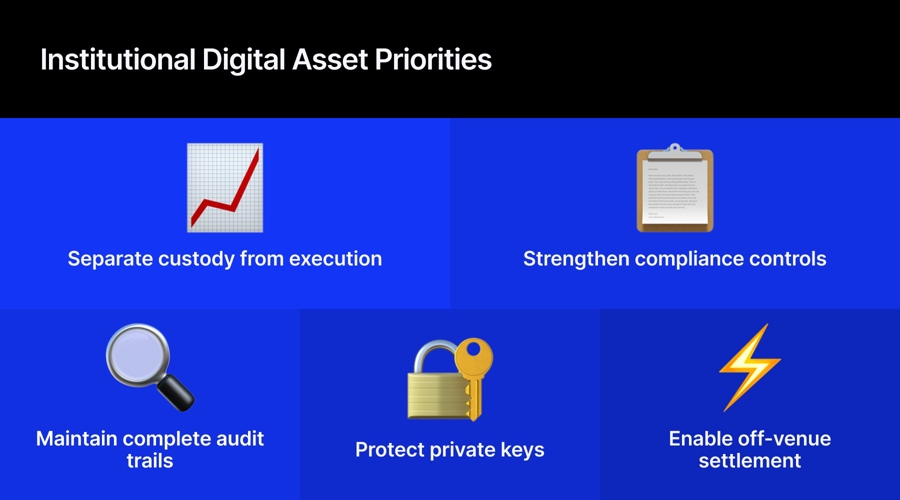
Off-venue settlement is essential to bringing institutional
discipline to digital asset markets by allowing firms to access liquidity while
keeping assets with a trusted custodian, reducing counterparty exposure and
avoiding the need to pre-fund multiple trading venues, explains Aklah Sakallah,
eToro’s senior director of finance operations.
Chris Cheverall, Head of UK, CMC Markets
Much of the friction institutions experience when
introducing digital asset workflows into their existing systems comes down to
crypto infrastructure smashing together elements that TradFi spent decades
prising apart, suggests Rostro managing director of digital assets, Mark Foulger.
“Execution, custody and credit all sitting with the same
venue - risk teams who lived through 2008 just don't want to touch that,” he
says. “Then there is the boring stuff underneath: reconciling balances across
10 different exchange logins and wallets because there's no shared settlement
layer, capital getting stuck in silos with no netting, banks still nervous
about the whole sector.”
Markets stay stable because a venue collapsing isn't
supposed to take your assets down with it, and that only holds if custody sits
somewhere separate from execution, adds Foulger.
Mark Foulger, Managing Director, Digital Assets, Rostro
“Crypto skipped that step for years, and every big
institutional blowup you can name comes back to exchange risk and asset custody
being the same thing,” he says. “Off-venue settlement fixes that because assets
sit with an independent custodian and only credit and entitlements move between
venues. It is probably the thing institutions obsess over most these days, more
than spreads or venue selection.”
“The institutions moving fastest treat digital assets not as
a new silo but as a new settlement layer for existing asset classes and choose
regulated infrastructure that speaks the language their risk and operations
teams already understand,” suggests Simon Barnby, CMO at Archax, who agrees
that the segregation of execution, custody and credit is the market structure
lesson of every major failure, from Lehman to FTX.
“Off-venue settlement restores that discipline,” he adds.
“For most institutions, it isn’t a nice-to-have but the precondition their risk
committees set before any capital is deployed.”
Governance and Controls Remain Central
Institutions
expect digital asset infrastructure to incorporate the same governance,
compliance and security controls that exist in traditional financial markets.
At a minimum, this includes robust AML and sanctions screening, travel rule
compliance and real-time transaction monitoring capable of identifying
suspicious on-chain activity, wallet exposures and potential financial crime
risks.
“Equally important are strong cyber and operational
resilience controls - including secure custody and key management, multi-factor
authentication, segregation of duties and incident response procedures,” says
Wilson, who suggests the industry often spends too much time debating the
technology and not enough time focusing on risk management and controls.
On oversight, these clients look for full audit trails,
real-time reporting and API access into their own compliance and risk systems,
says Barnby. “Independent attestations such as SOC 2 Type 2 and ISO 27001 have
become table stakes alongside regulatory authorisation,” he adds.
The specific governance and control features clients expect
to see built into the infrastructure depend on the user profile.
“The permission model therefore has to define who can create
an asset, approve an issuance, change a compliance rule, initiate a transfer,
complete a corporate action or intervene when something fails,” explains Popat.
“The same accountability has to carry through to the audit record.”
A single infrastructure layer gives institutions one
framework for connectivity, custody, permissions, compliance and reporting
across multiple digital asset activities, concludes Sakallah. “This prevents
every new service from introducing another vendor, data silo and set of
operational controls.”
While institutions are making progress on integrating
digital asset custody and settlement into existing frameworks, infrastructural
friction continues to present challenges.
The transaction itself is
rarely the problem - the issue is whether the institution can connect that
transaction into the systems that already govern the business, determine where
the official record sits, define who can approve each action, manage exceptions
when something fails and maintain consistency across front office, operations, compliance and
technology.
Adam Popat, Chief Executive Officer, SettleMint
That is the view of Adam Popat, CEO of SettleMint, who
observes that investor eligibility, jurisdictional restrictions, transfer
limits, holding periods and approval rights cannot remain in legal documents or
manual procedures that teams interpret outside the platform.
“Ownership has to be equally clear,” he says. “The business
owns the commercial case, compliance owns the policy, operations owns the
process, technology owns the environment, and security owns the control
standard.”
“Once that operating model is defined and the workflow is integrated
into the institution’s existing infrastructure, the move from pilot to
production becomes a delivery question rather than a governance problem.”
“Many firms discover that operational workflows, data
management, treasury processes and security require significantly more effort
than the initial technology integration, making digital asset adoption as much
an operating model transformation as a technology project,” she says.
Chris Cheverall, head of UK at CMC Markets, agrees that
digital asset infrastructure cannot sit in isolation, noting that if client
wallets and payment mechanisms are going to operate across
both DeFi and traditional finance, they need to integrate properly with
existing treasury, risk, settlement and reporting systems.
Aklah Sakallah, Senior Director of Finance Operations, eToro, Source: LinkedIn
“We typically require multiple execution and liquidity
venues to either satisfy best execution or provide execution resiliency and
redundancy so that clients experience 100% uptime,” he says. “Blockchain can
support transparent, near real-time settlement and secure post-trade asset
control, while existing crypto native
exchanges already bring together meaningful pools of liquidity.”
Why Off-Venue Settlement Matters
Off-venue settlement is essential to bringing institutional
discipline to digital asset markets by allowing firms to access liquidity while
keeping assets with a trusted custodian, reducing counterparty exposure and
avoiding the need to pre-fund multiple trading venues, explains Aklah Sakallah,
eToro’s senior director of finance operations.
Chris Cheverall, Head of UK, CMC Markets
Much of the friction institutions experience when
introducing digital asset workflows into their existing systems comes down to
crypto infrastructure smashing together elements that TradFi spent decades
prising apart, suggests Rostro managing director of digital assets, Mark Foulger.
“Execution, custody and credit all sitting with the same
venue - risk teams who lived through 2008 just don't want to touch that,” he
says. “Then there is the boring stuff underneath: reconciling balances across
10 different exchange logins and wallets because there's no shared settlement
layer, capital getting stuck in silos with no netting, banks still nervous
about the whole sector.”
Markets stay stable because a venue collapsing isn't
supposed to take your assets down with it, and that only holds if custody sits
somewhere separate from execution, adds Foulger.
Mark Foulger, Managing Director, Digital Assets, Rostro
“Crypto skipped that step for years, and every big
institutional blowup you can name comes back to exchange risk and asset custody
being the same thing,” he says. “Off-venue settlement fixes that because assets
sit with an independent custodian and only credit and entitlements move between
venues. It is probably the thing institutions obsess over most these days, more
than spreads or venue selection.”
“The institutions moving fastest treat digital assets not as
a new silo but as a new settlement layer for existing asset classes and choose
regulated infrastructure that speaks the language their risk and operations
teams already understand,” suggests Simon Barnby, CMO at Archax, who agrees
that the segregation of execution, custody and credit is the market structure
lesson of every major failure, from Lehman to FTX.
“Off-venue settlement restores that discipline,” he adds.
“For most institutions, it isn’t a nice-to-have but the precondition their risk
committees set before any capital is deployed.”
Governance and Controls Remain Central
Institutions
expect digital asset infrastructure to incorporate the same governance,
compliance and security controls that exist in traditional financial markets.
At a minimum, this includes robust AML and sanctions screening, travel rule
compliance and real-time transaction monitoring capable of identifying
suspicious on-chain activity, wallet exposures and potential financial crime
risks.
“Equally important are strong cyber and operational
resilience controls - including secure custody and key management, multi-factor
authentication, segregation of duties and incident response procedures,” says
Wilson, who suggests the industry often spends too much time debating the
technology and not enough time focusing on risk management and controls.
On oversight, these clients look for full audit trails,
real-time reporting and API access into their own compliance and risk systems,
says Barnby. “Independent attestations such as SOC 2 Type 2 and ISO 27001 have
become table stakes alongside regulatory authorisation,” he adds.
The specific governance and control features clients expect
to see built into the infrastructure depend on the user profile.
“The permission model therefore has to define who can create
an asset, approve an issuance, change a compliance rule, initiate a transfer,
complete a corporate action or intervene when something fails,” explains Popat.
“The same accountability has to carry through to the audit record.”
A single infrastructure layer gives institutions one
framework for connectivity, custody, permissions, compliance and reporting
across multiple digital asset activities, concludes Sakallah. “This prevents
every new service from introducing another vendor, data silo and set of
operational controls.”
Paul Golden is an experienced freelance financial journalist with a strong institutional background. Over the past two decades, he has written for globally recognised financial publications, covering topics such as market structure, regulation, trading behaviour, and economic policy.
Capital.com UAE Clients Trade $1T in H1; Saxo Signs Nine Athletes
Capital.com UAE Clients Trade $1T in H1; Saxo Signs Nine Athletes
Capital.com UAE Clients Trade $1T in H1; Saxo Signs Nine Athletes
Capital.com UAE Clients Trade $1T in H1; Saxo Signs Nine Athletes
Today’s financial news recap covers Capital.com’s trading data, Saxo Bank’s athlete campaign, Revolut’s Gibraltar crypto licence, and eToro’s new desktop terminal.
Finance Magnates Daily Recap brings you the latest news from forex and CFD brokers, fintech, payments, cryptocurrency, digital assets, trading platforms, financial regulation and global markets.
Get the key company news, executive moves, deals, regulatory updates and market developments of the day, in just a few minutes. New episodes published every weekday.
Read more: https://www.financemagnates.com
#FinanceMagnates #ForexNews #FintechNews
Today’s financial news recap covers Capital.com’s trading data, Saxo Bank’s athlete campaign, Revolut’s Gibraltar crypto licence, and eToro’s new desktop terminal.
Finance Magnates Daily Recap brings you the latest news from forex and CFD brokers, fintech, payments, cryptocurrency, digital assets, trading platforms, financial regulation and global markets.
Get the key company news, executive moves, deals, regulatory updates and market developments of the day, in just a few minutes. New episodes published every weekday.
Read more: https://www.financemagnates.com
#FinanceMagnates #ForexNews #FintechNews
Today’s financial news recap covers Capital.com’s trading data, Saxo Bank’s athlete campaign, Revolut’s Gibraltar crypto licence, and eToro’s new desktop terminal.
Finance Magnates Daily Recap brings you the latest news from forex and CFD brokers, fintech, payments, cryptocurrency, digital assets, trading platforms, financial regulation and global markets.
Get the key company news, executive moves, deals, regulatory updates and market developments of the day, in just a few minutes. New episodes published every weekday.
Read more: https://www.financemagnates.com
#FinanceMagnates #ForexNews #FintechNews
Today’s financial news recap covers Capital.com’s trading data, Saxo Bank’s athlete campaign, Revolut’s Gibraltar crypto licence, and eToro’s new desktop terminal.
Finance Magnates Daily Recap brings you the latest news from forex and CFD brokers, fintech, payments, cryptocurrency, digital assets, trading platforms, financial regulation and global markets.
Get the key company news, executive moves, deals, regulatory updates and market developments of the day, in just a few minutes. New episodes published every weekday.
Read more: https://www.financemagnates.com
#FinanceMagnates #ForexNews #FintechNews
CXM Group to Buy TD Markets; Interactive Brokers Raises Dividend
CXM Group to Buy TD Markets; Interactive Brokers Raises Dividend
CXM Group to Buy TD Markets; Interactive Brokers Raises Dividend
CXM Group to Buy TD Markets; Interactive Brokers Raises Dividend
CXM Group to Buy TD Markets; Interactive Brokers Raises Dividend
CXM Group to Buy TD Markets; Interactive Brokers Raises Dividend
Today’s financial news recap covers CXM Group agrees to acquire TD Markets, Interactive Brokers raises its dividend, Your Bourse and 4XPORTAL formalise a technology partnership, and IC completes its rebranding from IC Markets.
Finance Magnates Daily Recap brings you the latest news from forex and CFD brokers, fintech, payments, cryptocurrency, digital assets, trading platforms, financial regulation and global markets.
Get the key company news, executive moves, deals, regulatory updates and market developments of the day, in just a few minutes. New episodes published every weekday.
Read more: https://www.financemagnates.com
#FinanceMagnates #ForexNews #FintechNews
Today’s financial news recap covers CXM Group agrees to acquire TD Markets, Interactive Brokers raises its dividend, Your Bourse and 4XPORTAL formalise a technology partnership, and IC completes its rebranding from IC Markets.
Finance Magnates Daily Recap brings you the latest news from forex and CFD brokers, fintech, payments, cryptocurrency, digital assets, trading platforms, financial regulation and global markets.
Get the key company news, executive moves, deals, regulatory updates and market developments of the day, in just a few minutes. New episodes published every weekday.
Read more: https://www.financemagnates.com
#FinanceMagnates #ForexNews #FintechNews
Today’s financial news recap covers CXM Group agrees to acquire TD Markets, Interactive Brokers raises its dividend, Your Bourse and 4XPORTAL formalise a technology partnership, and IC completes its rebranding from IC Markets.
Finance Magnates Daily Recap brings you the latest news from forex and CFD brokers, fintech, payments, cryptocurrency, digital assets, trading platforms, financial regulation and global markets.
Get the key company news, executive moves, deals, regulatory updates and market developments of the day, in just a few minutes. New episodes published every weekday.
Read more: https://www.financemagnates.com
#FinanceMagnates #ForexNews #FintechNews
Today’s financial news recap covers CXM Group agrees to acquire TD Markets, Interactive Brokers raises its dividend, Your Bourse and 4XPORTAL formalise a technology partnership, and IC completes its rebranding from IC Markets.
Finance Magnates Daily Recap brings you the latest news from forex and CFD brokers, fintech, payments, cryptocurrency, digital assets, trading platforms, financial regulation and global markets.
Get the key company news, executive moves, deals, regulatory updates and market developments of the day, in just a few minutes. New episodes published every weekday.
Read more: https://www.financemagnates.com
#FinanceMagnates #ForexNews #FintechNews
Today’s financial news recap covers CXM Group agrees to acquire TD Markets, Interactive Brokers raises its dividend, Your Bourse and 4XPORTAL formalise a technology partnership, and IC completes its rebranding from IC Markets.
Finance Magnates Daily Recap brings you the latest news from forex and CFD brokers, fintech, payments, cryptocurrency, digital assets, trading platforms, financial regulation and global markets.
Get the key company news, executive moves, deals, regulatory updates and market developments of the day, in just a few minutes. New episodes published every weekday.
Read more: https://www.financemagnates.com
#FinanceMagnates #ForexNews #FintechNews
Today’s financial news recap covers CXM Group agrees to acquire TD Markets, Interactive Brokers raises its dividend, Your Bourse and 4XPORTAL formalise a technology partnership, and IC completes its rebranding from IC Markets.
Finance Magnates Daily Recap brings you the latest news from forex and CFD brokers, fintech, payments, cryptocurrency, digital assets, trading platforms, financial regulation and global markets.
Get the key company news, executive moves, deals, regulatory updates and market developments of the day, in just a few minutes. New episodes published every weekday.
Read more: https://www.financemagnates.com
#FinanceMagnates #ForexNews #FintechNews
Trade Nation Enters Poland; FCA Finds Gaps at Seven Brokers
Trade Nation Enters Poland; FCA Finds Gaps at Seven Brokers
Trade Nation Enters Poland; FCA Finds Gaps at Seven Brokers
Trade Nation Enters Poland; FCA Finds Gaps at Seven Brokers
Trade Nation Enters Poland; FCA Finds Gaps at Seven Brokers
Trade Nation Enters Poland; FCA Finds Gaps at Seven Brokers
Today’s financial news recap covers Trade Nation expands into Poland, the FCA finds surveillance gaps at seven UK retail brokers, perpetual futures on US stocks could launch within weeks, and Australia's crypto platforms face a new regulatory deadline.
Finance Magnates Daily Recap brings you the latest news from forex and CFD brokers, fintech, payments, cryptocurrency, digital assets, trading platforms, financial regulation and global markets.
Get the key company news, executive moves, deals, regulatory updates and market developments of the day, in just a few minutes. New episodes published every weekday.
Read more: https://www.financemagnates.com
#FinanceMagnates #ForexNews #FintechNews
Today’s financial news recap covers Trade Nation expands into Poland, the FCA finds surveillance gaps at seven UK retail brokers, perpetual futures on US stocks could launch within weeks, and Australia's crypto platforms face a new regulatory deadline.
Finance Magnates Daily Recap brings you the latest news from forex and CFD brokers, fintech, payments, cryptocurrency, digital assets, trading platforms, financial regulation and global markets.
Get the key company news, executive moves, deals, regulatory updates and market developments of the day, in just a few minutes. New episodes published every weekday.
Read more: https://www.financemagnates.com
#FinanceMagnates #ForexNews #FintechNews
Today’s financial news recap covers Trade Nation expands into Poland, the FCA finds surveillance gaps at seven UK retail brokers, perpetual futures on US stocks could launch within weeks, and Australia's crypto platforms face a new regulatory deadline.
Finance Magnates Daily Recap brings you the latest news from forex and CFD brokers, fintech, payments, cryptocurrency, digital assets, trading platforms, financial regulation and global markets.
Get the key company news, executive moves, deals, regulatory updates and market developments of the day, in just a few minutes. New episodes published every weekday.
Read more: https://www.financemagnates.com
#FinanceMagnates #ForexNews #FintechNews
Today’s financial news recap covers Trade Nation expands into Poland, the FCA finds surveillance gaps at seven UK retail brokers, perpetual futures on US stocks could launch within weeks, and Australia's crypto platforms face a new regulatory deadline.
Finance Magnates Daily Recap brings you the latest news from forex and CFD brokers, fintech, payments, cryptocurrency, digital assets, trading platforms, financial regulation and global markets.
Get the key company news, executive moves, deals, regulatory updates and market developments of the day, in just a few minutes. New episodes published every weekday.
Read more: https://www.financemagnates.com
#FinanceMagnates #ForexNews #FintechNews
Today’s financial news recap covers Trade Nation expands into Poland, the FCA finds surveillance gaps at seven UK retail brokers, perpetual futures on US stocks could launch within weeks, and Australia's crypto platforms face a new regulatory deadline.
Finance Magnates Daily Recap brings you the latest news from forex and CFD brokers, fintech, payments, cryptocurrency, digital assets, trading platforms, financial regulation and global markets.
Get the key company news, executive moves, deals, regulatory updates and market developments of the day, in just a few minutes. New episodes published every weekday.
Read more: https://www.financemagnates.com
#FinanceMagnates #ForexNews #FintechNews
Today’s financial news recap covers Trade Nation expands into Poland, the FCA finds surveillance gaps at seven UK retail brokers, perpetual futures on US stocks could launch within weeks, and Australia's crypto platforms face a new regulatory deadline.
Finance Magnates Daily Recap brings you the latest news from forex and CFD brokers, fintech, payments, cryptocurrency, digital assets, trading platforms, financial regulation and global markets.
Get the key company news, executive moves, deals, regulatory updates and market developments of the day, in just a few minutes. New episodes published every weekday.
Read more: https://www.financemagnates.com
#FinanceMagnates #ForexNews #FintechNews
FxPro Sells EU Clients to Capital.com; NAGA H1 Profit Revised
FxPro Sells EU Clients to Capital.com; NAGA H1 Profit Revised
FxPro Sells EU Clients to Capital.com; NAGA H1 Profit Revised
FxPro Sells EU Clients to Capital.com; NAGA H1 Profit Revised
FxPro Sells EU Clients to Capital.com; NAGA H1 Profit Revised
FxPro Sells EU Clients to Capital.com; NAGA H1 Profit Revised
Today’s financial news recap covers FxPro agrees to sell its European client book to Capital.com, NAGA raises its first-half profit estimate, Trade Republic prepares a fee-free pension account, and Interactive Brokers introduces Ether staking.
Finance Magnates Daily Recap brings you the latest news from forex and CFD brokers, fintech, payments, cryptocurrency, digital assets, trading platforms, financial regulation and global markets.
Get the key company news, executive moves, deals, regulatory updates and market developments of the day, in just a few minutes. New episodes published every weekday.
Read more: https://www.financemagnates.com
#FinanceMagnates #ForexNews #FintechNews
Today’s financial news recap covers FxPro agrees to sell its European client book to Capital.com, NAGA raises its first-half profit estimate, Trade Republic prepares a fee-free pension account, and Interactive Brokers introduces Ether staking.
Finance Magnates Daily Recap brings you the latest news from forex and CFD brokers, fintech, payments, cryptocurrency, digital assets, trading platforms, financial regulation and global markets.
Get the key company news, executive moves, deals, regulatory updates and market developments of the day, in just a few minutes. New episodes published every weekday.
Read more: https://www.financemagnates.com
#FinanceMagnates #ForexNews #FintechNews
Today’s financial news recap covers FxPro agrees to sell its European client book to Capital.com, NAGA raises its first-half profit estimate, Trade Republic prepares a fee-free pension account, and Interactive Brokers introduces Ether staking.
Finance Magnates Daily Recap brings you the latest news from forex and CFD brokers, fintech, payments, cryptocurrency, digital assets, trading platforms, financial regulation and global markets.
Get the key company news, executive moves, deals, regulatory updates and market developments of the day, in just a few minutes. New episodes published every weekday.
Read more: https://www.financemagnates.com
#FinanceMagnates #ForexNews #FintechNews
Today’s financial news recap covers FxPro agrees to sell its European client book to Capital.com, NAGA raises its first-half profit estimate, Trade Republic prepares a fee-free pension account, and Interactive Brokers introduces Ether staking.
Finance Magnates Daily Recap brings you the latest news from forex and CFD brokers, fintech, payments, cryptocurrency, digital assets, trading platforms, financial regulation and global markets.
Get the key company news, executive moves, deals, regulatory updates and market developments of the day, in just a few minutes. New episodes published every weekday.
Read more: https://www.financemagnates.com
#FinanceMagnates #ForexNews #FintechNews
Today’s financial news recap covers FxPro agrees to sell its European client book to Capital.com, NAGA raises its first-half profit estimate, Trade Republic prepares a fee-free pension account, and Interactive Brokers introduces Ether staking.
Finance Magnates Daily Recap brings you the latest news from forex and CFD brokers, fintech, payments, cryptocurrency, digital assets, trading platforms, financial regulation and global markets.
Get the key company news, executive moves, deals, regulatory updates and market developments of the day, in just a few minutes. New episodes published every weekday.
Read more: https://www.financemagnates.com
#FinanceMagnates #ForexNews #FintechNews
Today’s financial news recap covers FxPro agrees to sell its European client book to Capital.com, NAGA raises its first-half profit estimate, Trade Republic prepares a fee-free pension account, and Interactive Brokers introduces Ether staking.
Finance Magnates Daily Recap brings you the latest news from forex and CFD brokers, fintech, payments, cryptocurrency, digital assets, trading platforms, financial regulation and global markets.
Get the key company news, executive moves, deals, regulatory updates and market developments of the day, in just a few minutes. New episodes published every weekday.
Read more: https://www.financemagnates.com
#FinanceMagnates #ForexNews #FintechNews
Plus500 Plans US Super-App; Investec to Offer IG Platform
Plus500 Plans US Super-App; Investec to Offer IG Platform
Plus500 Plans US Super-App; Investec to Offer IG Platform
Plus500 Plans US Super-App; Investec to Offer IG Platform
Plus500 Plans US Super-App; Investec to Offer IG Platform
Plus500 Plans US Super-App; Investec to Offer IG Platform
Today’s financial news recap covers Plus500 plans a US trading super-app, Investec partners with IG, Trade Republic reports a sevenfold profit jump, and BingX adds thousands of US stocks.
Finance Magnates Daily Recap brings you the latest news from forex and CFD brokers, fintech, payments, cryptocurrency, digital assets, trading platforms, financial regulation and global markets.
Get the key company news, executive moves, deals, regulatory updates and market developments of the day, in just a few minutes. New episodes published every weekday.
Read more: https://www.financemagnates.com
#FinanceMagnates #ForexNews #FintechNews
Today’s financial news recap covers Plus500 plans a US trading super-app, Investec partners with IG, Trade Republic reports a sevenfold profit jump, and BingX adds thousands of US stocks.
Finance Magnates Daily Recap brings you the latest news from forex and CFD brokers, fintech, payments, cryptocurrency, digital assets, trading platforms, financial regulation and global markets.
Get the key company news, executive moves, deals, regulatory updates and market developments of the day, in just a few minutes. New episodes published every weekday.
Read more: https://www.financemagnates.com
#FinanceMagnates #ForexNews #FintechNews
Today’s financial news recap covers Plus500 plans a US trading super-app, Investec partners with IG, Trade Republic reports a sevenfold profit jump, and BingX adds thousands of US stocks.
Finance Magnates Daily Recap brings you the latest news from forex and CFD brokers, fintech, payments, cryptocurrency, digital assets, trading platforms, financial regulation and global markets.
Get the key company news, executive moves, deals, regulatory updates and market developments of the day, in just a few minutes. New episodes published every weekday.
Read more: https://www.financemagnates.com
#FinanceMagnates #ForexNews #FintechNews
Today’s financial news recap covers Plus500 plans a US trading super-app, Investec partners with IG, Trade Republic reports a sevenfold profit jump, and BingX adds thousands of US stocks.
Finance Magnates Daily Recap brings you the latest news from forex and CFD brokers, fintech, payments, cryptocurrency, digital assets, trading platforms, financial regulation and global markets.
Get the key company news, executive moves, deals, regulatory updates and market developments of the day, in just a few minutes. New episodes published every weekday.
Read more: https://www.financemagnates.com
#FinanceMagnates #ForexNews #FintechNews
Today’s financial news recap covers Plus500 plans a US trading super-app, Investec partners with IG, Trade Republic reports a sevenfold profit jump, and BingX adds thousands of US stocks.
Finance Magnates Daily Recap brings you the latest news from forex and CFD brokers, fintech, payments, cryptocurrency, digital assets, trading platforms, financial regulation and global markets.
Get the key company news, executive moves, deals, regulatory updates and market developments of the day, in just a few minutes. New episodes published every weekday.
Read more: https://www.financemagnates.com
#FinanceMagnates #ForexNews #FintechNews
Today’s financial news recap covers Plus500 plans a US trading super-app, Investec partners with IG, Trade Republic reports a sevenfold profit jump, and BingX adds thousands of US stocks.
Finance Magnates Daily Recap brings you the latest news from forex and CFD brokers, fintech, payments, cryptocurrency, digital assets, trading platforms, financial regulation and global markets.
Get the key company news, executive moves, deals, regulatory updates and market developments of the day, in just a few minutes. New episodes published every weekday.
Read more: https://www.financemagnates.com
#FinanceMagnates #ForexNews #FintechNews