Gold and silver have pulled back after a strong start to the year, but changing demand, central bank buying and macro trends could still shape their next move. Paul Golden dives in.
He also explores why faith-based investing has yet to match its growth potential, and what investors should look for when comparing religious funds, from screening methods to fees and sector exposure.
Gold and silver bullion (Shutterstock)
Is Gold Regaining Its Lustre?
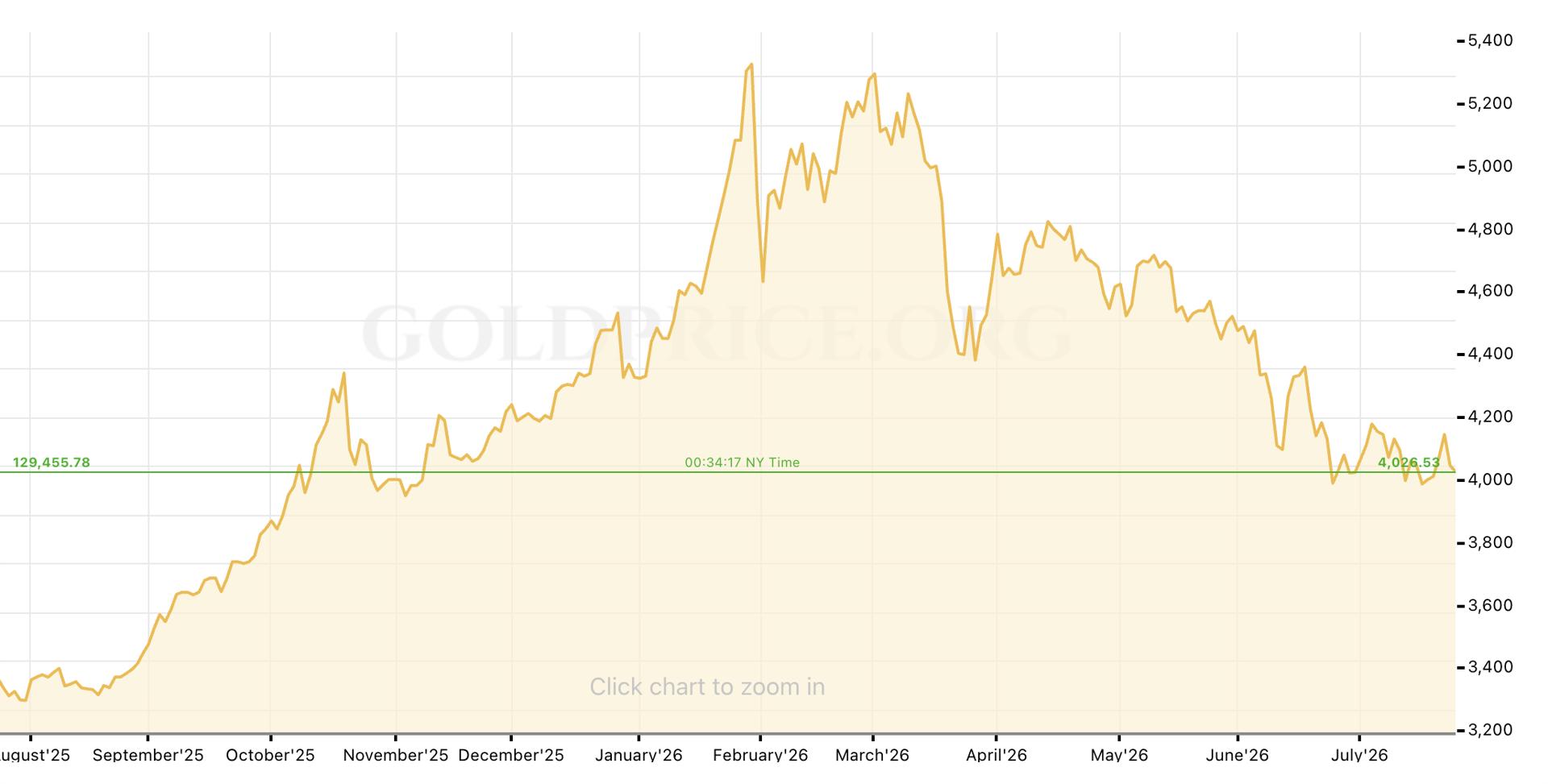
Gold has had quite a ride this year, from the heady days of January, when it soared above $5,500/oz, to the lows of late June, when it dipped below $4,000.
The last time it experienced a comparable boom-and-bust over such a short period was in 1979–80, when prices surged from around $220 in early 1979 to $850 by January 1980. Within months, they had fallen by more than half as inflation expectations eased and the US Federal Reserve aggressively raised interest rates.
The World Gold Council notes that the first half of 2026 showed that gold remains sensitive to heightened geopolitical concerns and abrupt shifts in investor sentiment. One former investment specialist notes that it has been trading more like a risk asset, moving in line with real rates rather than serving as a safe haven amid geopolitical uncertainty.
Gold price movement in the last 1 year (Goldprice.org)
This year’s price movements also showcase the growing relevance of Asian markets in gold price discovery. A significant development has been the aggressive purchasing by China's central bank, which has sharply increased its gold purchases this year.
The People's Bank of China acquired 15 tonnes of gold in June alone (its largest monthly purchase in two and a half years), and its record reserves now equate to almost 10% of its total foreign exchange reserves.
JP Morgan Wealth Management’s global investment strategy group’s outlook for the price of gold is for the asset to end the year between $4,350 and $4,650 (compared with the current level of $4,055).
According to the World Gold Council, a worsening economy or renewed geopolitical shock, a shift towards lower interest rate expectations, or a wave of dip buying could reignite gold’s momentum and lift it back towards $4,500 or above. If the signals are strong, it could push even higher.
However, it also acknowledges that an environment of resilient growth, rising yields, and calmer markets could see gold slip further, although a fall of more than 10% from current levels could be tempered by investors looking for bargains.
As with its fellow precious metal, silver has seen prices peak at the start of the year, only to fall back.
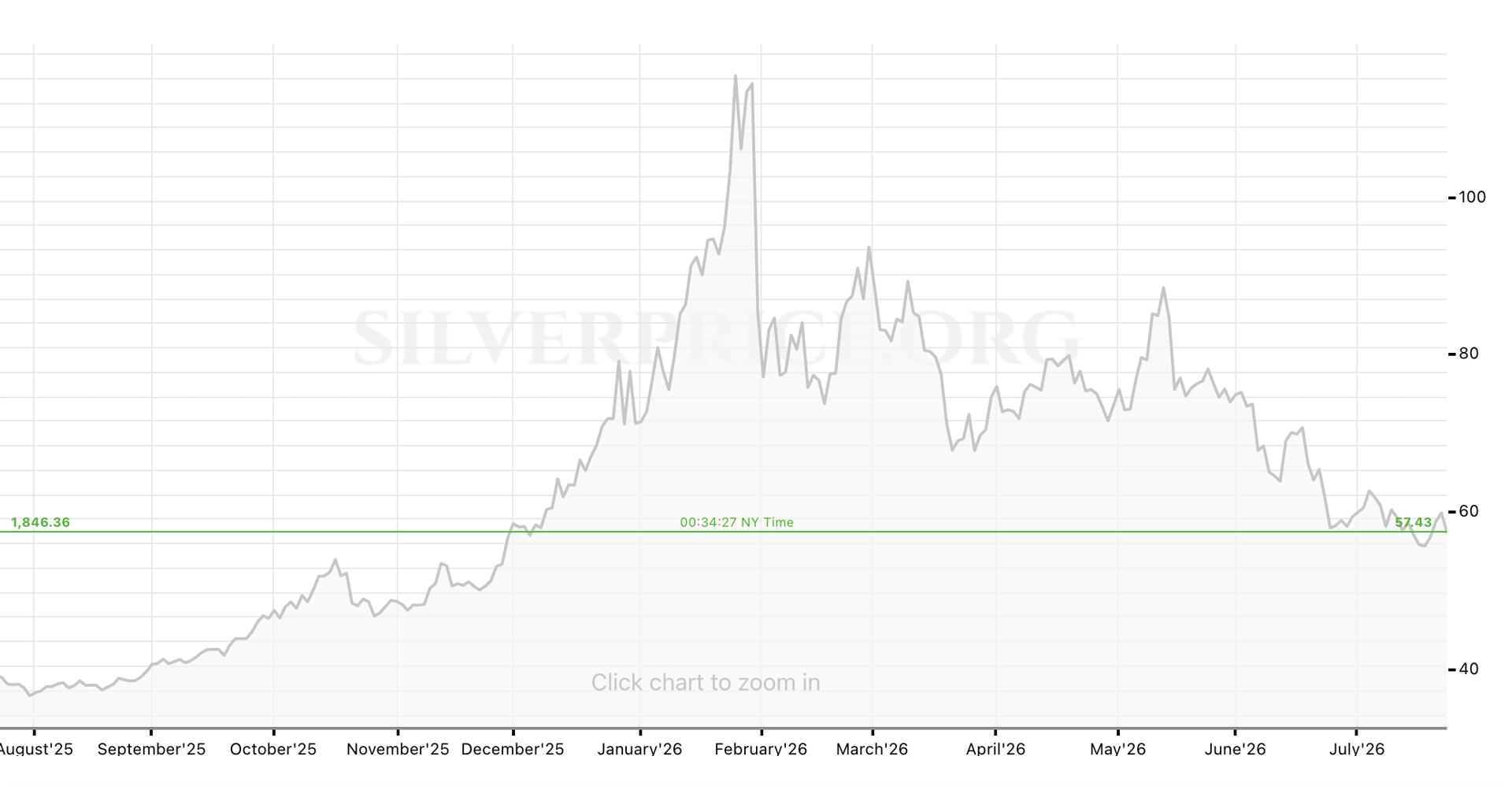
Having reached the giddy heights of $120/oz in the early weeks of 2026, it is now trading at around half that level, albeit still around 70% above its price at this time last year.
Most analysts believed the prices reached in January were unsustainable and noted that industrial users of the metal have been forced to increase their commitment to recycling and minimise its use where possible.
One of the key sectors driving demand for silver is solar panel production, which accounts for as much as one-fifth of total demand. Most conventional solar panels use crystalline silicon photovoltaic cells, and silver is used to make the conductive paste that forms the fine metal contacts on the front and rear of each cell.
Silver price movement in the last 1 year (Goldprice.org)
Manufacturers have taken steps to reduce the amount of metal used in each individual cell by printing finer silver lines, improving manufacturing techniques, and developing new cell designs.
However, this ‘thrifting’ has failed to keep pace with increased production volumes.
WisdomTree expects a broadly supportive macro environment to assist precious metals this year, with silver benefiting from the same forces that support gold, albeit with greater volatility.
Nitesh Shah, Head of Commodities and Macroeconomic Research at WisdomTree Europe (Photo: LinkedIn)
“On the physical side, the absence of further tariff announcements should allow some of the inventory trapped in the US to gradually move elsewhere, easing the tightness seen earlier in the year,” says Nitesh Shah, Head of Commodities and Macroeconomic Research at WisdomTree Europe.
“While silver remains in a supply deficit, the scale of that deficit appears to be narrowing, and we do not anticipate excessive tightening from current levels.”
On the supply side, higher capital expenditure should eventually translate into more material coming out of the ground.
On this basis, WisdomTree expects some growth in silver supply, which should help narrow the supply deficit and limit the upside in prices.
“Taken together, we expect silver prices to rise towards US$70 [by Q2 2027], mainly driven by our expectation of higher gold prices,” says Shah. “However, some increase in production, alongside more moderate industrial demand growth, is likely to cap the upside.”
Investing as a Religious Experience
With more than four billion people adhering to Christianity and Islam, faith-based investing offers considerable growth potential. But so far, that potential remains largely unrealised.
There are several reasons why faith-based funds have yet to rack up the numbers to match their total addressable market. They tend to be more expensive, offer limited passive options, have underperformed non-religious funds, and are hindered by limited consensus on exclusions and execution.
Michael Born, Analyst at Morningstar (Photo: LinkedIn
There are also differences between the religions. Shariah funds have done better over the last few years because their avoidance of financials means they are overweight in technology, while Christian funds have missed out on some of the top performers in healthcare.
Morningstar analyst Michael Born explains that, for investors, the central takeaway is that faith-based investing is not a single, standardised category, and a manager or index label should not be taken as a proxy for a specific set of beliefs.
He recommends examining the screening methodology and thresholds, and understanding the resulting sector and regional tilts, since these are the primary drivers of differences in returns.
“Fees should be scrutinised relative to conventional alternatives (particularly for passive products), and investors should weigh the still-limited track records and sample sizes of many strategies before drawing firm conclusions on performance or resilience,” says Born.
“In a market this heterogeneous, the burden falls on the investor to verify that a strategy genuinely reflects their own beliefs, rather than assuming that a shared label guarantees alignment,” he adds.
While there is probably enough diversification in this space to build a suitable retirement portfolio, the universe leans heavily towards equity strategies. This diversification largely consists of broad-based generalist strategies, that is, global equities, as opposed to more specific geographic and specialised allocations. Meanwhile, the range of alternative products is basically non-existent.
Is Gold Regaining Its Lustre?
Gold has had quite a ride this year, from the heady days of January, when it soared above $5,500/oz, to the lows of late June, when it dipped below $4,000.
The last time it experienced a comparable boom-and-bust over such a short period was in 1979–80, when prices surged from around $220 in early 1979 to $850 by January 1980. Within months, they had fallen by more than half as inflation expectations eased and the US Federal Reserve aggressively raised interest rates.
The World Gold Council notes that the first half of 2026 showed that gold remains sensitive to heightened geopolitical concerns and abrupt shifts in investor sentiment. One former investment specialist notes that it has been trading more like a risk asset, moving in line with real rates rather than serving as a safe haven amid geopolitical uncertainty.
Gold price movement in the last 1 year (Goldprice.org)
This year’s price movements also showcase the growing relevance of Asian markets in gold price discovery. A significant development has been the aggressive purchasing by China's central bank, which has sharply increased its gold purchases this year.
The People's Bank of China acquired 15 tonnes of gold in June alone (its largest monthly purchase in two and a half years), and its record reserves now equate to almost 10% of its total foreign exchange reserves.
JP Morgan Wealth Management’s global investment strategy group’s outlook for the price of gold is for the asset to end the year between $4,350 and $4,650 (compared with the current level of $4,055).
According to the World Gold Council, a worsening economy or renewed geopolitical shock, a shift towards lower interest rate expectations, or a wave of dip buying could reignite gold’s momentum and lift it back towards $4,500 or above. If the signals are strong, it could push even higher.
However, it also acknowledges that an environment of resilient growth, rising yields, and calmer markets could see gold slip further, although a fall of more than 10% from current levels could be tempered by investors looking for bargains.
As with its fellow precious metal, silver has seen prices peak at the start of the year, only to fall back.
Having reached the giddy heights of $120/oz in the early weeks of 2026, it is now trading at around half that level, albeit still around 70% above its price at this time last year.
Most analysts believed the prices reached in January were unsustainable and noted that industrial users of the metal have been forced to increase their commitment to recycling and minimise its use where possible.
One of the key sectors driving demand for silver is solar panel production, which accounts for as much as one-fifth of total demand. Most conventional solar panels use crystalline silicon photovoltaic cells, and silver is used to make the conductive paste that forms the fine metal contacts on the front and rear of each cell.
Silver price movement in the last 1 year (Goldprice.org)
Manufacturers have taken steps to reduce the amount of metal used in each individual cell by printing finer silver lines, improving manufacturing techniques, and developing new cell designs.
However, this ‘thrifting’ has failed to keep pace with increased production volumes.
WisdomTree expects a broadly supportive macro environment to assist precious metals this year, with silver benefiting from the same forces that support gold, albeit with greater volatility.
Nitesh Shah, Head of Commodities and Macroeconomic Research at WisdomTree Europe (Photo: LinkedIn)
“On the physical side, the absence of further tariff announcements should allow some of the inventory trapped in the US to gradually move elsewhere, easing the tightness seen earlier in the year,” says Nitesh Shah, Head of Commodities and Macroeconomic Research at WisdomTree Europe.
“While silver remains in a supply deficit, the scale of that deficit appears to be narrowing, and we do not anticipate excessive tightening from current levels.”
On the supply side, higher capital expenditure should eventually translate into more material coming out of the ground.
On this basis, WisdomTree expects some growth in silver supply, which should help narrow the supply deficit and limit the upside in prices.
“Taken together, we expect silver prices to rise towards US$70 [by Q2 2027], mainly driven by our expectation of higher gold prices,” says Shah. “However, some increase in production, alongside more moderate industrial demand growth, is likely to cap the upside.”
Investing as a Religious Experience
With more than four billion people adhering to Christianity and Islam, faith-based investing offers considerable growth potential. But so far, that potential remains largely unrealised.
There are several reasons why faith-based funds have yet to rack up the numbers to match their total addressable market. They tend to be more expensive, offer limited passive options, have underperformed non-religious funds, and are hindered by limited consensus on exclusions and execution.
Michael Born, Analyst at Morningstar (Photo: LinkedIn
There are also differences between the religions. Shariah funds have done better over the last few years because their avoidance of financials means they are overweight in technology, while Christian funds have missed out on some of the top performers in healthcare.
Morningstar analyst Michael Born explains that, for investors, the central takeaway is that faith-based investing is not a single, standardised category, and a manager or index label should not be taken as a proxy for a specific set of beliefs.
He recommends examining the screening methodology and thresholds, and understanding the resulting sector and regional tilts, since these are the primary drivers of differences in returns.
“Fees should be scrutinised relative to conventional alternatives (particularly for passive products), and investors should weigh the still-limited track records and sample sizes of many strategies before drawing firm conclusions on performance or resilience,” says Born.
“In a market this heterogeneous, the burden falls on the investor to verify that a strategy genuinely reflects their own beliefs, rather than assuming that a shared label guarantees alignment,” he adds.
While there is probably enough diversification in this space to build a suitable retirement portfolio, the universe leans heavily towards equity strategies. This diversification largely consists of broad-based generalist strategies, that is, global equities, as opposed to more specific geographic and specialised allocations. Meanwhile, the range of alternative products is basically non-existent.
Paul Golden is an experienced freelance financial journalist with a strong institutional background. Over the past two decades, he has written for globally recognised financial publications, covering topics such as market structure, regulation, trading behaviour, and economic policy.
SEC Enforcement Falls to 308 Cases in Fiscal 2026, Brattle Estimates
Featured Videos
How Much Are CFD Industry Executives Making; Plus500 Buys Brazilian Broker
How Much Are CFD Industry Executives Making; Plus500 Buys Brazilian Broker
How Much Are CFD Industry Executives Making; Plus500 Buys Brazilian Broker
How Much Are CFD Industry Executives Making; Plus500 Buys Brazilian Broker
Today’s financial news recap covers FinTop Consulting shared its 2026 salary surveys for Dubai, London and Cyprus with Finance Magnates, Plus500 buys a Brazilian broker, and Google opens the door to CFD ads in Denmark and Chile.
Finance Magnates Daily Recap brings you the latest news from forex and CFD brokers, fintech, payments, cryptocurrency, digital assets, trading platforms, financial regulation and global markets.
Get the key company news, executive moves, deals, regulatory updates and market developments of the day, in just a few minutes. New episodes published every weekday.
Read more: https://www.financemagnates.com
#FinanceMagnates #ForexNews #FintechNews
Today’s financial news recap covers FinTop Consulting shared its 2026 salary surveys for Dubai, London and Cyprus with Finance Magnates, Plus500 buys a Brazilian broker, and Google opens the door to CFD ads in Denmark and Chile.
Finance Magnates Daily Recap brings you the latest news from forex and CFD brokers, fintech, payments, cryptocurrency, digital assets, trading platforms, financial regulation and global markets.
Get the key company news, executive moves, deals, regulatory updates and market developments of the day, in just a few minutes. New episodes published every weekday.
Read more: https://www.financemagnates.com
#FinanceMagnates #ForexNews #FintechNews
Today’s financial news recap covers FinTop Consulting shared its 2026 salary surveys for Dubai, London and Cyprus with Finance Magnates, Plus500 buys a Brazilian broker, and Google opens the door to CFD ads in Denmark and Chile.
Finance Magnates Daily Recap brings you the latest news from forex and CFD brokers, fintech, payments, cryptocurrency, digital assets, trading platforms, financial regulation and global markets.
Get the key company news, executive moves, deals, regulatory updates and market developments of the day, in just a few minutes. New episodes published every weekday.
Read more: https://www.financemagnates.com
#FinanceMagnates #ForexNews #FintechNews
Today’s financial news recap covers FinTop Consulting shared its 2026 salary surveys for Dubai, London and Cyprus with Finance Magnates, Plus500 buys a Brazilian broker, and Google opens the door to CFD ads in Denmark and Chile.
Finance Magnates Daily Recap brings you the latest news from forex and CFD brokers, fintech, payments, cryptocurrency, digital assets, trading platforms, financial regulation and global markets.
Get the key company news, executive moves, deals, regulatory updates and market developments of the day, in just a few minutes. New episodes published every weekday.
Read more: https://www.financemagnates.com
#FinanceMagnates #ForexNews #FintechNews
Capital.com UAE Clients Trade $1T in H1; Saxo Signs Nine Athletes
Capital.com UAE Clients Trade $1T in H1; Saxo Signs Nine Athletes
Capital.com UAE Clients Trade $1T in H1; Saxo Signs Nine Athletes
Capital.com UAE Clients Trade $1T in H1; Saxo Signs Nine Athletes
Capital.com UAE Clients Trade $1T in H1; Saxo Signs Nine Athletes
Capital.com UAE Clients Trade $1T in H1; Saxo Signs Nine Athletes
Today’s financial news recap covers Capital.com’s trading data, Saxo Bank’s athlete campaign, Revolut’s Gibraltar crypto licence, and eToro’s new desktop terminal.
Finance Magnates Daily Recap brings you the latest news from forex and CFD brokers, fintech, payments, cryptocurrency, digital assets, trading platforms, financial regulation and global markets.
Get the key company news, executive moves, deals, regulatory updates and market developments of the day, in just a few minutes. New episodes published every weekday.
Read more: https://www.financemagnates.com
#FinanceMagnates #ForexNews #FintechNews
Today’s financial news recap covers Capital.com’s trading data, Saxo Bank’s athlete campaign, Revolut’s Gibraltar crypto licence, and eToro’s new desktop terminal.
Finance Magnates Daily Recap brings you the latest news from forex and CFD brokers, fintech, payments, cryptocurrency, digital assets, trading platforms, financial regulation and global markets.
Get the key company news, executive moves, deals, regulatory updates and market developments of the day, in just a few minutes. New episodes published every weekday.
Read more: https://www.financemagnates.com
#FinanceMagnates #ForexNews #FintechNews
Today’s financial news recap covers Capital.com’s trading data, Saxo Bank’s athlete campaign, Revolut’s Gibraltar crypto licence, and eToro’s new desktop terminal.
Finance Magnates Daily Recap brings you the latest news from forex and CFD brokers, fintech, payments, cryptocurrency, digital assets, trading platforms, financial regulation and global markets.
Get the key company news, executive moves, deals, regulatory updates and market developments of the day, in just a few minutes. New episodes published every weekday.
Read more: https://www.financemagnates.com
#FinanceMagnates #ForexNews #FintechNews
Today’s financial news recap covers Capital.com’s trading data, Saxo Bank’s athlete campaign, Revolut’s Gibraltar crypto licence, and eToro’s new desktop terminal.
Finance Magnates Daily Recap brings you the latest news from forex and CFD brokers, fintech, payments, cryptocurrency, digital assets, trading platforms, financial regulation and global markets.
Get the key company news, executive moves, deals, regulatory updates and market developments of the day, in just a few minutes. New episodes published every weekday.
Read more: https://www.financemagnates.com
#FinanceMagnates #ForexNews #FintechNews
Today’s financial news recap covers Capital.com’s trading data, Saxo Bank’s athlete campaign, Revolut’s Gibraltar crypto licence, and eToro’s new desktop terminal.
Finance Magnates Daily Recap brings you the latest news from forex and CFD brokers, fintech, payments, cryptocurrency, digital assets, trading platforms, financial regulation and global markets.
Get the key company news, executive moves, deals, regulatory updates and market developments of the day, in just a few minutes. New episodes published every weekday.
Read more: https://www.financemagnates.com
#FinanceMagnates #ForexNews #FintechNews
Today’s financial news recap covers Capital.com’s trading data, Saxo Bank’s athlete campaign, Revolut’s Gibraltar crypto licence, and eToro’s new desktop terminal.
Finance Magnates Daily Recap brings you the latest news from forex and CFD brokers, fintech, payments, cryptocurrency, digital assets, trading platforms, financial regulation and global markets.
Get the key company news, executive moves, deals, regulatory updates and market developments of the day, in just a few minutes. New episodes published every weekday.
Read more: https://www.financemagnates.com
#FinanceMagnates #ForexNews #FintechNews
CXM Group to Buy TD Markets; Interactive Brokers Raises Dividend
CXM Group to Buy TD Markets; Interactive Brokers Raises Dividend
CXM Group to Buy TD Markets; Interactive Brokers Raises Dividend
CXM Group to Buy TD Markets; Interactive Brokers Raises Dividend
CXM Group to Buy TD Markets; Interactive Brokers Raises Dividend
CXM Group to Buy TD Markets; Interactive Brokers Raises Dividend
Today’s financial news recap covers CXM Group agrees to acquire TD Markets, Interactive Brokers raises its dividend, Your Bourse and 4XPORTAL formalise a technology partnership, and IC completes its rebranding from IC Markets.
Finance Magnates Daily Recap brings you the latest news from forex and CFD brokers, fintech, payments, cryptocurrency, digital assets, trading platforms, financial regulation and global markets.
Get the key company news, executive moves, deals, regulatory updates and market developments of the day, in just a few minutes. New episodes published every weekday.
Read more: https://www.financemagnates.com
#FinanceMagnates #ForexNews #FintechNews
Today’s financial news recap covers CXM Group agrees to acquire TD Markets, Interactive Brokers raises its dividend, Your Bourse and 4XPORTAL formalise a technology partnership, and IC completes its rebranding from IC Markets.
Finance Magnates Daily Recap brings you the latest news from forex and CFD brokers, fintech, payments, cryptocurrency, digital assets, trading platforms, financial regulation and global markets.
Get the key company news, executive moves, deals, regulatory updates and market developments of the day, in just a few minutes. New episodes published every weekday.
Read more: https://www.financemagnates.com
#FinanceMagnates #ForexNews #FintechNews
Today’s financial news recap covers CXM Group agrees to acquire TD Markets, Interactive Brokers raises its dividend, Your Bourse and 4XPORTAL formalise a technology partnership, and IC completes its rebranding from IC Markets.
Finance Magnates Daily Recap brings you the latest news from forex and CFD brokers, fintech, payments, cryptocurrency, digital assets, trading platforms, financial regulation and global markets.
Get the key company news, executive moves, deals, regulatory updates and market developments of the day, in just a few minutes. New episodes published every weekday.
Read more: https://www.financemagnates.com
#FinanceMagnates #ForexNews #FintechNews
Today’s financial news recap covers CXM Group agrees to acquire TD Markets, Interactive Brokers raises its dividend, Your Bourse and 4XPORTAL formalise a technology partnership, and IC completes its rebranding from IC Markets.
Finance Magnates Daily Recap brings you the latest news from forex and CFD brokers, fintech, payments, cryptocurrency, digital assets, trading platforms, financial regulation and global markets.
Get the key company news, executive moves, deals, regulatory updates and market developments of the day, in just a few minutes. New episodes published every weekday.
Read more: https://www.financemagnates.com
#FinanceMagnates #ForexNews #FintechNews
Today’s financial news recap covers CXM Group agrees to acquire TD Markets, Interactive Brokers raises its dividend, Your Bourse and 4XPORTAL formalise a technology partnership, and IC completes its rebranding from IC Markets.
Finance Magnates Daily Recap brings you the latest news from forex and CFD brokers, fintech, payments, cryptocurrency, digital assets, trading platforms, financial regulation and global markets.
Get the key company news, executive moves, deals, regulatory updates and market developments of the day, in just a few minutes. New episodes published every weekday.
Read more: https://www.financemagnates.com
#FinanceMagnates #ForexNews #FintechNews
Today’s financial news recap covers CXM Group agrees to acquire TD Markets, Interactive Brokers raises its dividend, Your Bourse and 4XPORTAL formalise a technology partnership, and IC completes its rebranding from IC Markets.
Finance Magnates Daily Recap brings you the latest news from forex and CFD brokers, fintech, payments, cryptocurrency, digital assets, trading platforms, financial regulation and global markets.
Get the key company news, executive moves, deals, regulatory updates and market developments of the day, in just a few minutes. New episodes published every weekday.
Read more: https://www.financemagnates.com
#FinanceMagnates #ForexNews #FintechNews
Trade Nation Enters Poland; FCA Finds Gaps at Seven Brokers
Trade Nation Enters Poland; FCA Finds Gaps at Seven Brokers
Trade Nation Enters Poland; FCA Finds Gaps at Seven Brokers
Trade Nation Enters Poland; FCA Finds Gaps at Seven Brokers
Trade Nation Enters Poland; FCA Finds Gaps at Seven Brokers
Trade Nation Enters Poland; FCA Finds Gaps at Seven Brokers
Today’s financial news recap covers Trade Nation expands into Poland, the FCA finds surveillance gaps at seven UK retail brokers, perpetual futures on US stocks could launch within weeks, and Australia's crypto platforms face a new regulatory deadline.
Finance Magnates Daily Recap brings you the latest news from forex and CFD brokers, fintech, payments, cryptocurrency, digital assets, trading platforms, financial regulation and global markets.
Get the key company news, executive moves, deals, regulatory updates and market developments of the day, in just a few minutes. New episodes published every weekday.
Read more: https://www.financemagnates.com
#FinanceMagnates #ForexNews #FintechNews
Today’s financial news recap covers Trade Nation expands into Poland, the FCA finds surveillance gaps at seven UK retail brokers, perpetual futures on US stocks could launch within weeks, and Australia's crypto platforms face a new regulatory deadline.
Finance Magnates Daily Recap brings you the latest news from forex and CFD brokers, fintech, payments, cryptocurrency, digital assets, trading platforms, financial regulation and global markets.
Get the key company news, executive moves, deals, regulatory updates and market developments of the day, in just a few minutes. New episodes published every weekday.
Read more: https://www.financemagnates.com
#FinanceMagnates #ForexNews #FintechNews
Today’s financial news recap covers Trade Nation expands into Poland, the FCA finds surveillance gaps at seven UK retail brokers, perpetual futures on US stocks could launch within weeks, and Australia's crypto platforms face a new regulatory deadline.
Finance Magnates Daily Recap brings you the latest news from forex and CFD brokers, fintech, payments, cryptocurrency, digital assets, trading platforms, financial regulation and global markets.
Get the key company news, executive moves, deals, regulatory updates and market developments of the day, in just a few minutes. New episodes published every weekday.
Read more: https://www.financemagnates.com
#FinanceMagnates #ForexNews #FintechNews
Today’s financial news recap covers Trade Nation expands into Poland, the FCA finds surveillance gaps at seven UK retail brokers, perpetual futures on US stocks could launch within weeks, and Australia's crypto platforms face a new regulatory deadline.
Finance Magnates Daily Recap brings you the latest news from forex and CFD brokers, fintech, payments, cryptocurrency, digital assets, trading platforms, financial regulation and global markets.
Get the key company news, executive moves, deals, regulatory updates and market developments of the day, in just a few minutes. New episodes published every weekday.
Read more: https://www.financemagnates.com
#FinanceMagnates #ForexNews #FintechNews
Today’s financial news recap covers Trade Nation expands into Poland, the FCA finds surveillance gaps at seven UK retail brokers, perpetual futures on US stocks could launch within weeks, and Australia's crypto platforms face a new regulatory deadline.
Finance Magnates Daily Recap brings you the latest news from forex and CFD brokers, fintech, payments, cryptocurrency, digital assets, trading platforms, financial regulation and global markets.
Get the key company news, executive moves, deals, regulatory updates and market developments of the day, in just a few minutes. New episodes published every weekday.
Read more: https://www.financemagnates.com
#FinanceMagnates #ForexNews #FintechNews
Today’s financial news recap covers Trade Nation expands into Poland, the FCA finds surveillance gaps at seven UK retail brokers, perpetual futures on US stocks could launch within weeks, and Australia's crypto platforms face a new regulatory deadline.
Finance Magnates Daily Recap brings you the latest news from forex and CFD brokers, fintech, payments, cryptocurrency, digital assets, trading platforms, financial regulation and global markets.
Get the key company news, executive moves, deals, regulatory updates and market developments of the day, in just a few minutes. New episodes published every weekday.
Read more: https://www.financemagnates.com
#FinanceMagnates #ForexNews #FintechNews
FxPro Sells EU Clients to Capital.com; NAGA H1 Profit Revised
FxPro Sells EU Clients to Capital.com; NAGA H1 Profit Revised
FxPro Sells EU Clients to Capital.com; NAGA H1 Profit Revised
FxPro Sells EU Clients to Capital.com; NAGA H1 Profit Revised
FxPro Sells EU Clients to Capital.com; NAGA H1 Profit Revised
FxPro Sells EU Clients to Capital.com; NAGA H1 Profit Revised
Today’s financial news recap covers FxPro agrees to sell its European client book to Capital.com, NAGA raises its first-half profit estimate, Trade Republic prepares a fee-free pension account, and Interactive Brokers introduces Ether staking.
Finance Magnates Daily Recap brings you the latest news from forex and CFD brokers, fintech, payments, cryptocurrency, digital assets, trading platforms, financial regulation and global markets.
Get the key company news, executive moves, deals, regulatory updates and market developments of the day, in just a few minutes. New episodes published every weekday.
Read more: https://www.financemagnates.com
#FinanceMagnates #ForexNews #FintechNews
Today’s financial news recap covers FxPro agrees to sell its European client book to Capital.com, NAGA raises its first-half profit estimate, Trade Republic prepares a fee-free pension account, and Interactive Brokers introduces Ether staking.
Finance Magnates Daily Recap brings you the latest news from forex and CFD brokers, fintech, payments, cryptocurrency, digital assets, trading platforms, financial regulation and global markets.
Get the key company news, executive moves, deals, regulatory updates and market developments of the day, in just a few minutes. New episodes published every weekday.
Read more: https://www.financemagnates.com
#FinanceMagnates #ForexNews #FintechNews
Today’s financial news recap covers FxPro agrees to sell its European client book to Capital.com, NAGA raises its first-half profit estimate, Trade Republic prepares a fee-free pension account, and Interactive Brokers introduces Ether staking.
Finance Magnates Daily Recap brings you the latest news from forex and CFD brokers, fintech, payments, cryptocurrency, digital assets, trading platforms, financial regulation and global markets.
Get the key company news, executive moves, deals, regulatory updates and market developments of the day, in just a few minutes. New episodes published every weekday.
Read more: https://www.financemagnates.com
#FinanceMagnates #ForexNews #FintechNews
Today’s financial news recap covers FxPro agrees to sell its European client book to Capital.com, NAGA raises its first-half profit estimate, Trade Republic prepares a fee-free pension account, and Interactive Brokers introduces Ether staking.
Finance Magnates Daily Recap brings you the latest news from forex and CFD brokers, fintech, payments, cryptocurrency, digital assets, trading platforms, financial regulation and global markets.
Get the key company news, executive moves, deals, regulatory updates and market developments of the day, in just a few minutes. New episodes published every weekday.
Read more: https://www.financemagnates.com
#FinanceMagnates #ForexNews #FintechNews
Today’s financial news recap covers FxPro agrees to sell its European client book to Capital.com, NAGA raises its first-half profit estimate, Trade Republic prepares a fee-free pension account, and Interactive Brokers introduces Ether staking.
Finance Magnates Daily Recap brings you the latest news from forex and CFD brokers, fintech, payments, cryptocurrency, digital assets, trading platforms, financial regulation and global markets.
Get the key company news, executive moves, deals, regulatory updates and market developments of the day, in just a few minutes. New episodes published every weekday.
Read more: https://www.financemagnates.com
#FinanceMagnates #ForexNews #FintechNews
Today’s financial news recap covers FxPro agrees to sell its European client book to Capital.com, NAGA raises its first-half profit estimate, Trade Republic prepares a fee-free pension account, and Interactive Brokers introduces Ether staking.
Finance Magnates Daily Recap brings you the latest news from forex and CFD brokers, fintech, payments, cryptocurrency, digital assets, trading platforms, financial regulation and global markets.
Get the key company news, executive moves, deals, regulatory updates and market developments of the day, in just a few minutes. New episodes published every weekday.
Read more: https://www.financemagnates.com
#FinanceMagnates #ForexNews #FintechNews