Everything Is Working Against Bitcoin Right Now

Wednesday, 15/07/2026 | 14:00 GMT by Paul Golden
  • This week, Paul Golden looks at what is happening with Bitcoin and whether the cryptocurrency is falling out of favour with tech-focused investors.
  • He also asks whether ESG funds are actually leading to improved company behaviour and explores the latest prediction market controversy.
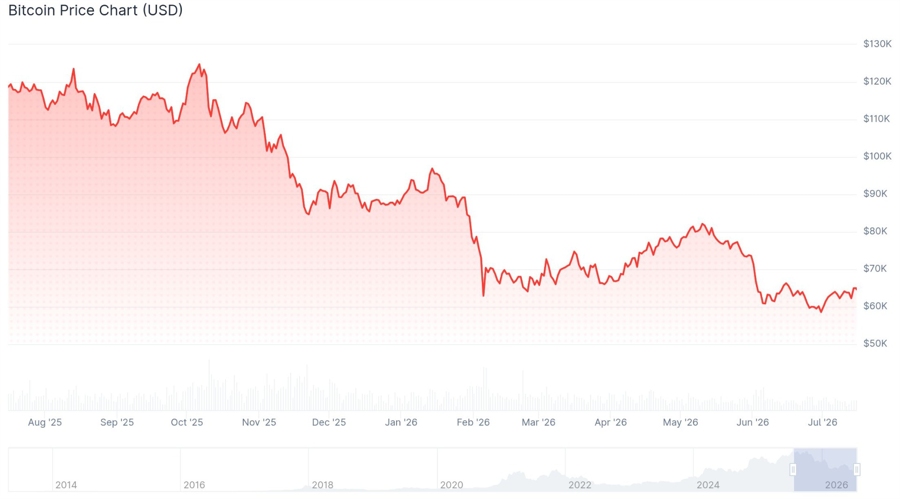
Movement of Bitcoin's USD value in the last 1 year (Source: Coingecko)

Bitcoin Is Begging for a Bounce

This is turning into a better week for the world’s most popular cryptocurrency after Monday’s sharp sell-off. But Bitcoin continues to struggle to generate meaningful momentum.

As David Morrison, Senior Market Analyst at Trade Nation, observes, risk appetite has been undermined by the ongoing conflict between the US and Iran, while rising oil prices and inflation concerns have strengthened expectations for tighter monetary policy.

David Morrison, Senior Market Analyst at Trade Nation

Higher interest rates generally reduce the appeal of non-yielding assets such as cryptocurrencies, contributing to continued selling pressure across the sector. The combination of geopolitical uncertainty, rising inflation concerns and persistent ETF outflows continues to weigh heavily on sentiment.

Bitcoin is heading towards a double-digit quarterly loss, marking a second consecutive quarter of decline, notes ActivTrades Senior Analyst Saverio Berlinzani, who adds that, from a technical standpoint, it could drop to the previous significant low of $49,443 seen in August 2024.

Saverio Berlinzani, ActivTrades' Senior Analyst

When Bitcoin falls, major altcoins such as Ethereum, Solana and XRP typically suffer steeper percentage losses, increasing the total volume of coins trading at a loss.

Bitcoin’s status as a global benchmark asset has a profound impact on the financial ecosystem, explains Berlinzani. Negative sentiment drives capital flight from institutional instruments, thereby hindering mass adoption in the short term.

Unlike equities, Bitcoin is heavily influenced by rising interest rates and the Fed's aggressive moves to combat inflation. Furthermore, persistent outflows from US spot ETFs are creating technical selling pressure, temporarily decoupling the cryptocurrency trend from that of Wall Street stock indices.

There is also a suggestion from some quarters that cryptocurrency enthusiasts with strong confidence in blockchain technology have become bored with Bitcoin and are turning their attention to AI-related investments.

The counter-argument to this is that Bitcoin’s value proposition is the same now as it was when it was trading at more than twice its current level. Namely, a decentralised network that cannot be controlled by any state and a means of exchanging value with anyone, anywhere, at any time, without the need for banking intermediaries.

Time to Pull the Plug on ‘Greenwashing’?

In an article published in the Review of Financial Studies earlier this year, the authors observed that ESG funds have many different incentives to engage with the firms in their portfolios. For instance, if they view ESG as a value driver, these incentives will affect fund behaviour and thus their impact on portfolio firms.

Comparing funds with similar levels of ESG investments but different incentives to engage, they found that those with higher incentives to engage (referred to as committed ESG funds) conduct more ESG-related information acquisition, pursue longer-term investment strategies, engage more intensely on ESG issues and have greater real impacts.

The challenge for investors is that two ESG funds with almost identical holdings can act very differently. A fund with a significant stake in a particular company has more to gain (and lose) from a shift in that company’s share price than one with a larger number of smaller holdings and, therefore, a stronger incentive to engage.

Read more: Forex Brokers Embrace Sustainability amid $50 Trillion ESG Surge

As one commentator noted, the fact that the label meant to convey information is actually the least informative goes a long way to explaining the disconnect between what funds say they do and their actual behaviour.

The research could only retrospectively identify committed funds based on actions such as voting, research and their decision to stay invested during challenging market conditions. The problem is that investors making choices now do not have this information at their disposal, placing the onus on funds to make their commitment understandable before the flow data confirms it.

However, this does not mean that investors simply have to take funds at their word. For example, they can examine voting records and access resources such as Morningstar’s ESG Commitment Level (a qualitative rating that helps investors judge how dedicated asset managers and specific funds are to sustainable investing).

Who (Didn’t) See This Coming

In his 1845 story The System of Dr. Tarr and Prof. Fether, Edgar Allan Poe wrote, ‘Believe nothing you hear and only one half that you see.’ The author of The Visionary clearly understood the power of disinformation before it was even a thing.

The latest high-profile example comes courtesy of our friends at Polymarket and, specifically, a young man by the name of George Makihara.

Earlier this year, the student posted a video that he claimed showed him winning a six-figure sum on a bet that President Trump would say the word ‘McDonalds’ in public during the month of January*. This was just one of a series of videos posted between January and the middle of May in which he appeared to win more than $400,000.

Unfortunately, young George won’t be posing with a Lamborghini any time soon, at least not from his prediction market winnings. An investigation by The Wall Street Journal has suggested that he is one of dozens of mostly college-age creators Polymarket paid to film themselves making fake trades and sometimes scoring fake wins.

This claim is based on an analysis of more than 1,100 videos, along with instructional materials and interviews with creators who have worked with the company. It identified a number of websites designed to appear almost identical to legitimate prediction market websites and noted that more than two-thirds of the videos related to bets placed on Polymarket.

According to the investigators, 118 videos showed content creators claiming to have won a total of almost $900,000 when placing those bets would actually have resulted in losses of more than $166,000.

*In case you were wondering, Trump didn’t refer to the world’s largest fast-food chain by name in January, though this correspondent is pretty confident that he thought about his favourite order (two Big Macs, two Filet-O-Fish sandwiches and a chocolate milkshake) at least once.

Bitcoin Is Begging for a Bounce

This is turning into a better week for the world’s most popular cryptocurrency after Monday’s sharp sell-off. But Bitcoin continues to struggle to generate meaningful momentum.

As David Morrison, Senior Market Analyst at Trade Nation, observes, risk appetite has been undermined by the ongoing conflict between the US and Iran, while rising oil prices and inflation concerns have strengthened expectations for tighter monetary policy.

David Morrison, Senior Market Analyst at Trade Nation

Higher interest rates generally reduce the appeal of non-yielding assets such as cryptocurrencies, contributing to continued selling pressure across the sector. The combination of geopolitical uncertainty, rising inflation concerns and persistent ETF outflows continues to weigh heavily on sentiment.

Bitcoin is heading towards a double-digit quarterly loss, marking a second consecutive quarter of decline, notes ActivTrades Senior Analyst Saverio Berlinzani, who adds that, from a technical standpoint, it could drop to the previous significant low of $49,443 seen in August 2024.

Saverio Berlinzani, ActivTrades' Senior Analyst

When Bitcoin falls, major altcoins such as Ethereum, Solana and XRP typically suffer steeper percentage losses, increasing the total volume of coins trading at a loss.

Bitcoin’s status as a global benchmark asset has a profound impact on the financial ecosystem, explains Berlinzani. Negative sentiment drives capital flight from institutional instruments, thereby hindering mass adoption in the short term.

Unlike equities, Bitcoin is heavily influenced by rising interest rates and the Fed's aggressive moves to combat inflation. Furthermore, persistent outflows from US spot ETFs are creating technical selling pressure, temporarily decoupling the cryptocurrency trend from that of Wall Street stock indices.

There is also a suggestion from some quarters that cryptocurrency enthusiasts with strong confidence in blockchain technology have become bored with Bitcoin and are turning their attention to AI-related investments.

The counter-argument to this is that Bitcoin’s value proposition is the same now as it was when it was trading at more than twice its current level. Namely, a decentralised network that cannot be controlled by any state and a means of exchanging value with anyone, anywhere, at any time, without the need for banking intermediaries.

Time to Pull the Plug on ‘Greenwashing’?

In an article published in the Review of Financial Studies earlier this year, the authors observed that ESG funds have many different incentives to engage with the firms in their portfolios. For instance, if they view ESG as a value driver, these incentives will affect fund behaviour and thus their impact on portfolio firms.

Comparing funds with similar levels of ESG investments but different incentives to engage, they found that those with higher incentives to engage (referred to as committed ESG funds) conduct more ESG-related information acquisition, pursue longer-term investment strategies, engage more intensely on ESG issues and have greater real impacts.

The challenge for investors is that two ESG funds with almost identical holdings can act very differently. A fund with a significant stake in a particular company has more to gain (and lose) from a shift in that company’s share price than one with a larger number of smaller holdings and, therefore, a stronger incentive to engage.

Read more: Forex Brokers Embrace Sustainability amid $50 Trillion ESG Surge

As one commentator noted, the fact that the label meant to convey information is actually the least informative goes a long way to explaining the disconnect between what funds say they do and their actual behaviour.

The research could only retrospectively identify committed funds based on actions such as voting, research and their decision to stay invested during challenging market conditions. The problem is that investors making choices now do not have this information at their disposal, placing the onus on funds to make their commitment understandable before the flow data confirms it.

However, this does not mean that investors simply have to take funds at their word. For example, they can examine voting records and access resources such as Morningstar’s ESG Commitment Level (a qualitative rating that helps investors judge how dedicated asset managers and specific funds are to sustainable investing).

Who (Didn’t) See This Coming

In his 1845 story The System of Dr. Tarr and Prof. Fether, Edgar Allan Poe wrote, ‘Believe nothing you hear and only one half that you see.’ The author of The Visionary clearly understood the power of disinformation before it was even a thing.

The latest high-profile example comes courtesy of our friends at Polymarket and, specifically, a young man by the name of George Makihara.

Earlier this year, the student posted a video that he claimed showed him winning a six-figure sum on a bet that President Trump would say the word ‘McDonalds’ in public during the month of January*. This was just one of a series of videos posted between January and the middle of May in which he appeared to win more than $400,000.

Unfortunately, young George won’t be posing with a Lamborghini any time soon, at least not from his prediction market winnings. An investigation by The Wall Street Journal has suggested that he is one of dozens of mostly college-age creators Polymarket paid to film themselves making fake trades and sometimes scoring fake wins.

This claim is based on an analysis of more than 1,100 videos, along with instructional materials and interviews with creators who have worked with the company. It identified a number of websites designed to appear almost identical to legitimate prediction market websites and noted that more than two-thirds of the videos related to bets placed on Polymarket.

According to the investigators, 118 videos showed content creators claiming to have won a total of almost $900,000 when placing those bets would actually have resulted in losses of more than $166,000.

*In case you were wondering, Trump didn’t refer to the world’s largest fast-food chain by name in January, though this correspondent is pretty confident that he thought about his favourite order (two Big Macs, two Filet-O-Fish sandwiches and a chocolate milkshake) at least once.

About the Author: Paul Golden
Paul Golden
  • 137 Articles
  • 13 Followers
About the Author: Paul Golden
Paul Golden is an experienced freelance financial journalist with a strong institutional background. Over the past two decades, he has written for globally recognised financial publications, covering topics such as market structure, regulation, trading behaviour, and economic policy.
  • 137 Articles
  • 13 Followers

More from the Author

Retail FX

!"#$%&'()*+,-./0123456789:;<=>?@ABCDEFGHIJKLMNOPQRSTUVWXYZ[\]^_`abcdefghijklmnopqrstuvwxyz{|} !"#$%&'()*+,-./0123456789:;<=>?@ABCDEFGHIJKLMNOPQRSTUVWXYZ[\]^_`abcdefghijklmnopqrstuvwxyz{|}