

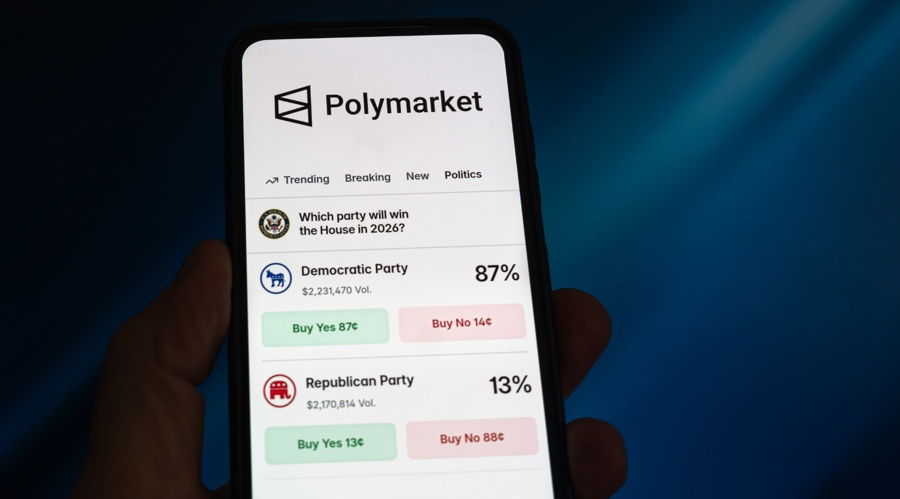
The Uncomfortable Side of Prediction Markets
The growth of trading platforms where participants buy and sell contracts based on the outcome of future events has been extensively covered here, particularly in relation to concerns that individuals with inside knowledge of specific events have used that knowledge to place bets on when such events will take place.
We have also reported on the regulatory wrangles taking place in the US, where there is significant support for regulating contracts that tread a fine line between a future and putting it all on red at a casino.
However, a recent investigation into the profile of people using prediction markets uncovered some interesting details about its customer base. The investigation suggested that these markets predominantly appeal to one demographic – young men.
Sports as a % of total trading volume on Kalshi has been consistently falling since the start of the 2025 NFL season.
— Nick Grous (@GrousARK) May 26, 2026
Sports is now roughly 58% of the total volume. A large part of this is the rise of crypto-related markets.
Over time, as new categories emerge, I would argue… pic.twitter.com/chQgEYBpUK
The BBC report noted that more than two-thirds of users are male, according to data from Morning Consult, and that more than a quarter of American men between 18 and 24 have used them in the last six months, almost twice the national average.
The head of sports betting policy at the American Institute for Boys and Men (AIBM) told the BBC that young men's attitudes towards prediction markets are down to ‘an underdeveloped pre-frontal cortex and a high appetite for risk’.
While these markets could be described as removing the middleman between those with strong opinions on an event or outcome, critics argue that their design and promotion downplay the associated risks and normalise gambling, and that they are promoted as being similar to apps that enable users to buy and sell stocks.
Lack of clarity around regulations has not prevented prediction markets from attracting users worldwide, with numerous forums offering guidance on how to circumvent access restrictions in specific jurisdictions.
Bloomberg News analysis suggests larger bets (over $1,000) are almost twice as likely to have lost money over the last 16 months, while The Wall Street Journal reckons that around two-thirds of all profits on Polymarket went to 0.1% of accounts, with fewer than 2,000 accounts gaining almost $500 million in profits.
There seems to be a direct link between successful trades and access to resources such as live data feeds and AI bots, which weakens the argument that this is really a peer-to-peer market.
- Europe Looks Weak, but Is the Market Saying Otherwise?
- Markets Swing on Politics as Study Flags Trump Era Extremes and Starmer Faces UK Pressure
- No Trading 212, No AJ Bell: The UK's Investment Campaign Aims at the Wrong Audience
Irish Remain Green When It Comes to Investing
Ireland’s GDP is among the highest in Europe – for context, the estimated figure for this year is more than twice that of the United Kingdom. But for such an apparently wealthy country, retail participation in investment markets is weak.
There are many reasons for this. As I have previously explained, the brokerage market is much less diverse than that of other European countries, with two bank-owned firms having dominated the market since the 1800s.
The Irish government has also not been especially proactive in encouraging retail investors, with the exception of initiatives such as the reduction in the tax levied on investment in ETFs.
Related: IG Wants to Capture the Irish Market, but Are Reputation and Low Fees Enough?
Then there is what some commentators have called the Irish IPO drought, whereby domestic companies have been reluctant to go public despite the presence of a domestic securities exchange.
One of the country’s leading business publications reported last week that Irish wealth managers are preparing for a likely stock market correction as fears grow over energy prices, inflation, and overheated tech valuations. It suggested that managers view a sharp drop in equity markets as nearly inevitable and that rising bond yields are reshaping investment strategies.
This does not explain the reluctance of retail investors to make a greater financial commitment to equities, though. For that, perhaps we need to refer to the damage caused by the collapse of the so-called ‘Celtic Tiger’ economy in 2007, which saw the property market collapse, a spike in unemployment, and a massive EU/IMF bailout.
Almost 20 years later, it seems that the psychological scars have not healed for those who had invested (or knew people who had invested) large proportions of their savings in banks and other previously trusted institutions whose shares plummeted.
Trump Causes Trade Concerns of a Different Kind
This week, US Senator Chris Coons released a video in which he explained that, in the space of just three months, President Trump made thousands of stock trades worth hundreds of millions of dollars – often in companies he would praise on the very same day.
The representative for Delaware referred to three examples where stocks were bought, and the president made specific, favourable public comments about the company in question. The financial disclosures showed significant activity surrounding Wall Street tech giants.
Bloomberg referred to the ‘astonishing scale’ of the trades, which were almost entirely in shares of American companies, and described them as constituting a major burst of stock market activity by a sitting president.
The video triggered the inevitable round of whataboutery, with one Trump supporter pointing out that the most active traders in Congress are Democrats. Another stated that ‘Trump didn't create the system, so it is not corruption, just a smart investor who speaks freely from the heart’.
One of the more measured responses noted that the president’s personal stock portfolio is managed by independent third-party financial institutions through fully discretionary accounts, with administrative trading carried out through automated processes, and that, according to the Trump Organisation, neither the President, his family, nor the company directs, selects, or approves specific investments or receives advance notice of trades.
In response to the report that more than 3,700 stock trades were made by the Trump Organisation in the first quarter of this year, a spokesperson said neither the president, his family, nor the company played any role in selecting or approving investments, that they received no advance notice of trading activity, and provide no input regarding investment decisions or portfolio management.
Bloomberg also acknowledged that the trading patterns bore the hallmarks of overlapping portfolio management strategies, often index-based, and much of it likely automated, and all of it difficult to separate clearly.


