Over a month after CFTC Commissioner Caroline Pham strongly criticized the regulator for its handling of misconduct allegations in the My Forex Funds case, she has once again attacked its regulatory practices.
Pham, appointed by President Biden, criticised the unclear roles and responsibilities of different CFTC divisions.
Caroline Pham, Acting Chair of the US CFTC , Source: X
Caroline D. Pham has done it again: The Commissioner at the Commodity Futures Trading Commission (CFTC) has once more issued a statement criticizing the working ethics of the top US regulatory agency. The fresh criticisms came little more than a month after she attacked the enforcement division of the regulator for its alleged misconduct in its actions against My Forex Funds.
“Unclear Roles and Responsibilities”
Recently, she publicly revealed her observation that “most of the CFTC’s improper changes in the interpretation of decades-old CFTC regulations, in violation of the Administrative Procedure Act, due to the lack of a rational basis, reasoned decision-making, and public notice-and-comment—namely, regulation by enforcement—is because of unclear roles and responsibilities among CFTC divisions.”
This is one of many criticisms Commissioner Pham has directed at the workings of the US agency that regulates the financial derivatives markets in the country.
Her criticisms were widely shared within the retail trading industry last September when she questioned the regulator's ethics in its lawsuit against Traders Global Group Inc., the prop trading firm My Forex Funds operator. She even expressed grave concerns over the allegations of false statements related to the case made by CFTC staff in court.
“This is a grave matter, and we, the Commission, will be subject to intense scrutiny over how we handle the alleged CFTC misconduct,” Pham stated. “This type of behavior cannot be tolerated at a law enforcement agency.”
Earlier, she even questioned the CFTC’s “administrative proceedings,” saying that “the agency is the prosecutor, judge, and jury, lacking the checks-and-balances imposed by separation of powers between the executive and judicial branches of government to ensure a fair hearing and due process.”
She also pointed out the jurisdictional war between the CFTC and the SEC over cryptocurrencies when the two agencies took action against Kraken.
“[The lawsuit] appears to assert that fund shares held by investors—namely, securities—can themselves constitute leveraged trading,” Pham stated. “This interpretation fails to distinguish between an investment in a fund, which would typically be a security under the jurisdiction of the SEC, and the trading activities of a fund, alleged here to be under the CFTC’s jurisdiction.”
According to the Commissioner, “The CFTC’s approach may infringe upon the SEC’s authority and undermine decades of robust investor protection laws by conflating a financial instrument with a financial activity, disrupting the foundations of securities markets. Owning shares is not the same thing as trading derivatives.”
Who Is Caroline D. Pham?
Pham assumed her role as one of the CFTC Commissioners in April 2022, having been appointed by the Biden administration. She was nominated by President Joe Biden for the CFTC Commissioner role in December 2021 and was confirmed in March 2022.
She was not a stranger to regulatory workings, having served as Special Counsel and Policy Advisor to the Office of Commissioner Scott O'Malia at the CFTC between June 2013 and October 2014. She even interned at the regulatory agency.
Before she was appointed CFTC Commissioner, she worked at Citi for about seven and a half years. She joined the Wall Street bank in October 2014 as the Director and Head of Markets Regulatory Implementation and left as the Managing Director and Head of Market Structure for Strategic Initiatives.
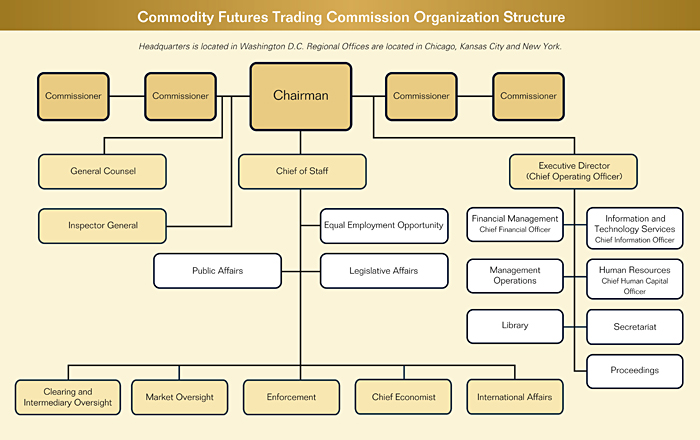
Pham is one of the five CFTC Commissioners, all of whom are political appointees serving five-year terms. They collectively govern the regulatory agency's operations.
Organisation structure of CFTC; Source: CFTC
CFTC Must Fix Its Act
Pham’s latest criticisms of the agency highlighted its approach towards “self-reporting and cooperation credit,” which was tied to a particular case. She even stressed that the regulator must provide more clarity on self-reporting standards.
“I have proposed that the CFTC enhance procedures for coordination among the primary divisions—MPD, DMO, and DCR—and DOE to improve regulatory clarity and consistency in the interpretation and application of CFTC regulations, improve governance, and minimise the CFTC’s internal conflicts of interest,” she noted.
“The Commodity Exchange Act establishes various categories of market participants that must be registered in order to engage in activity in the derivatives markets,” she added in another criticism. “These CFTC registrants must comply with extensive requirements, including character and fitness standards.”
Caroline D. Pham has done it again: The Commissioner at the Commodity Futures Trading Commission (CFTC) has once more issued a statement criticizing the working ethics of the top US regulatory agency. The fresh criticisms came little more than a month after she attacked the enforcement division of the regulator for its alleged misconduct in its actions against My Forex Funds.
“Unclear Roles and Responsibilities”
Recently, she publicly revealed her observation that “most of the CFTC’s improper changes in the interpretation of decades-old CFTC regulations, in violation of the Administrative Procedure Act, due to the lack of a rational basis, reasoned decision-making, and public notice-and-comment—namely, regulation by enforcement—is because of unclear roles and responsibilities among CFTC divisions.”
This is one of many criticisms Commissioner Pham has directed at the workings of the US agency that regulates the financial derivatives markets in the country.
Her criticisms were widely shared within the retail trading industry last September when she questioned the regulator's ethics in its lawsuit against Traders Global Group Inc., the prop trading firm My Forex Funds operator. She even expressed grave concerns over the allegations of false statements related to the case made by CFTC staff in court.
“This is a grave matter, and we, the Commission, will be subject to intense scrutiny over how we handle the alleged CFTC misconduct,” Pham stated. “This type of behavior cannot be tolerated at a law enforcement agency.”
Earlier, she even questioned the CFTC’s “administrative proceedings,” saying that “the agency is the prosecutor, judge, and jury, lacking the checks-and-balances imposed by separation of powers between the executive and judicial branches of government to ensure a fair hearing and due process.”
She also pointed out the jurisdictional war between the CFTC and the SEC over cryptocurrencies when the two agencies took action against Kraken.
“[The lawsuit] appears to assert that fund shares held by investors—namely, securities—can themselves constitute leveraged trading,” Pham stated. “This interpretation fails to distinguish between an investment in a fund, which would typically be a security under the jurisdiction of the SEC, and the trading activities of a fund, alleged here to be under the CFTC’s jurisdiction.”
According to the Commissioner, “The CFTC’s approach may infringe upon the SEC’s authority and undermine decades of robust investor protection laws by conflating a financial instrument with a financial activity, disrupting the foundations of securities markets. Owning shares is not the same thing as trading derivatives.”
Who Is Caroline D. Pham?
Pham assumed her role as one of the CFTC Commissioners in April 2022, having been appointed by the Biden administration. She was nominated by President Joe Biden for the CFTC Commissioner role in December 2021 and was confirmed in March 2022.
She was not a stranger to regulatory workings, having served as Special Counsel and Policy Advisor to the Office of Commissioner Scott O'Malia at the CFTC between June 2013 and October 2014. She even interned at the regulatory agency.
Before she was appointed CFTC Commissioner, she worked at Citi for about seven and a half years. She joined the Wall Street bank in October 2014 as the Director and Head of Markets Regulatory Implementation and left as the Managing Director and Head of Market Structure for Strategic Initiatives.
Pham is one of the five CFTC Commissioners, all of whom are political appointees serving five-year terms. They collectively govern the regulatory agency's operations.
Organisation structure of CFTC; Source: CFTC
CFTC Must Fix Its Act
Pham’s latest criticisms of the agency highlighted its approach towards “self-reporting and cooperation credit,” which was tied to a particular case. She even stressed that the regulator must provide more clarity on self-reporting standards.
“I have proposed that the CFTC enhance procedures for coordination among the primary divisions—MPD, DMO, and DCR—and DOE to improve regulatory clarity and consistency in the interpretation and application of CFTC regulations, improve governance, and minimise the CFTC’s internal conflicts of interest,” she noted.
“The Commodity Exchange Act establishes various categories of market participants that must be registered in order to engage in activity in the derivatives markets,” she added in another criticism. “These CFTC registrants must comply with extensive requirements, including character and fitness standards.”
Arnab Shome is an electronics engineer-turned-financial editor. He holds a Bachelor of Technology from the National Institute of Technology, Agartala. He entered the retail trading industry about a decade ago, covering the cryptocurrency market for Finance Magnates, and later expanded his coverage to include forex and CFDs as well.
His work at Finance Magnates includes C-level interviews, data-driven analysis, opinion pieces, and scoops of industry exclusives. He also contributes to Finance Magnates’ quarterly industry report.
Area of coverage:
1. CFD broker-related news
2. Industry-related Regulatory updates and developments
3. New retail trading trends
4. Prop trading industry updates
5. Executive interviews
Education:
Bachelor of Technology - National Institute of Technology, Agartala (India)
Most Axi Clients Now Trade on MetaTrader 5 as Broker Rolls Out MetaQuotes' Order Engine
Featured Videos
AvaTrade to Acquire Most of FXCM; NAGA Raises $8M
AvaTrade to Acquire Most of FXCM; NAGA Raises $8M
AvaTrade to Acquire Most of FXCM; NAGA Raises $8M
AvaTrade to Acquire Most of FXCM; NAGA Raises $8M
Today’s financial news recap covers AvaTrade agrees to acquire most of FXCM, NAGA secures eight million dollars in new financing, and Wise seeks a tax settlement in the UK.
Finance Magnates Daily Recap brings you the latest news from forex and CFD brokers, fintech, payments, cryptocurrency, digital assets, trading platforms, financial regulation and global markets.
Get the key company news, executive moves, deals, regulatory updates and market developments of the day, in just a few minutes. New episodes published every weekday.
Read more: https://www.financemagnates.com
#FinanceMagnates #ForexNews #FintechNews
Today’s financial news recap covers AvaTrade agrees to acquire most of FXCM, NAGA secures eight million dollars in new financing, and Wise seeks a tax settlement in the UK.
Finance Magnates Daily Recap brings you the latest news from forex and CFD brokers, fintech, payments, cryptocurrency, digital assets, trading platforms, financial regulation and global markets.
Get the key company news, executive moves, deals, regulatory updates and market developments of the day, in just a few minutes. New episodes published every weekday.
Read more: https://www.financemagnates.com
#FinanceMagnates #ForexNews #FintechNews
Today’s financial news recap covers AvaTrade agrees to acquire most of FXCM, NAGA secures eight million dollars in new financing, and Wise seeks a tax settlement in the UK.
Finance Magnates Daily Recap brings you the latest news from forex and CFD brokers, fintech, payments, cryptocurrency, digital assets, trading platforms, financial regulation and global markets.
Get the key company news, executive moves, deals, regulatory updates and market developments of the day, in just a few minutes. New episodes published every weekday.
Read more: https://www.financemagnates.com
#FinanceMagnates #ForexNews #FintechNews
Today’s financial news recap covers AvaTrade agrees to acquire most of FXCM, NAGA secures eight million dollars in new financing, and Wise seeks a tax settlement in the UK.
Finance Magnates Daily Recap brings you the latest news from forex and CFD brokers, fintech, payments, cryptocurrency, digital assets, trading platforms, financial regulation and global markets.
Get the key company news, executive moves, deals, regulatory updates and market developments of the day, in just a few minutes. New episodes published every weekday.
Read more: https://www.financemagnates.com
#FinanceMagnates #ForexNews #FintechNews
XTB Adds Overnight US Stock Trading; Nasdaq Ventures Invests in One Trading
XTB Adds Overnight US Stock Trading; Nasdaq Ventures Invests in One Trading
XTB Adds Overnight US Stock Trading; Nasdaq Ventures Invests in One Trading
XTB Adds Overnight US Stock Trading; Nasdaq Ventures Invests in One Trading
XTB Adds Overnight US Stock Trading; Nasdaq Ventures Invests in One Trading
XTB Adds Overnight US Stock Trading; Nasdaq Ventures Invests in One Trading
Today’s financial news recap covers XTB expands overnight US stock trading, Fortrade reports higher revenue, Nasdaq backs One Trading, and Vest Labs raises 13 million dollars.
Finance Magnates Daily Recap brings you the latest news from forex and CFD brokers, fintech, payments, cryptocurrency, digital assets, trading platforms, financial regulation and global markets.
Get the key company news, executive moves, deals, regulatory updates and market developments of the day, in just a few minutes. New episodes published every weekday.
Read more: https://www.financemagnates.com
#FinanceMagnates #ForexNews #FintechNews
Today’s financial news recap covers XTB expands overnight US stock trading, Fortrade reports higher revenue, Nasdaq backs One Trading, and Vest Labs raises 13 million dollars.
Finance Magnates Daily Recap brings you the latest news from forex and CFD brokers, fintech, payments, cryptocurrency, digital assets, trading platforms, financial regulation and global markets.
Get the key company news, executive moves, deals, regulatory updates and market developments of the day, in just a few minutes. New episodes published every weekday.
Read more: https://www.financemagnates.com
#FinanceMagnates #ForexNews #FintechNews
Today’s financial news recap covers XTB expands overnight US stock trading, Fortrade reports higher revenue, Nasdaq backs One Trading, and Vest Labs raises 13 million dollars.
Finance Magnates Daily Recap brings you the latest news from forex and CFD brokers, fintech, payments, cryptocurrency, digital assets, trading platforms, financial regulation and global markets.
Get the key company news, executive moves, deals, regulatory updates and market developments of the day, in just a few minutes. New episodes published every weekday.
Read more: https://www.financemagnates.com
#FinanceMagnates #ForexNews #FintechNews
Today’s financial news recap covers XTB expands overnight US stock trading, Fortrade reports higher revenue, Nasdaq backs One Trading, and Vest Labs raises 13 million dollars.
Finance Magnates Daily Recap brings you the latest news from forex and CFD brokers, fintech, payments, cryptocurrency, digital assets, trading platforms, financial regulation and global markets.
Get the key company news, executive moves, deals, regulatory updates and market developments of the day, in just a few minutes. New episodes published every weekday.
Read more: https://www.financemagnates.com
#FinanceMagnates #ForexNews #FintechNews
Today’s financial news recap covers XTB expands overnight US stock trading, Fortrade reports higher revenue, Nasdaq backs One Trading, and Vest Labs raises 13 million dollars.
Finance Magnates Daily Recap brings you the latest news from forex and CFD brokers, fintech, payments, cryptocurrency, digital assets, trading platforms, financial regulation and global markets.
Get the key company news, executive moves, deals, regulatory updates and market developments of the day, in just a few minutes. New episodes published every weekday.
Read more: https://www.financemagnates.com
#FinanceMagnates #ForexNews #FintechNews
Today’s financial news recap covers XTB expands overnight US stock trading, Fortrade reports higher revenue, Nasdaq backs One Trading, and Vest Labs raises 13 million dollars.
Finance Magnates Daily Recap brings you the latest news from forex and CFD brokers, fintech, payments, cryptocurrency, digital assets, trading platforms, financial regulation and global markets.
Get the key company news, executive moves, deals, regulatory updates and market developments of the day, in just a few minutes. New episodes published every weekday.
Read more: https://www.financemagnates.com
#FinanceMagnates #ForexNews #FintechNews
CMC Founder Downplays Volatility Hit; Devexperts Names CEO
CMC Founder Downplays Volatility Hit; Devexperts Names CEO
CMC Founder Downplays Volatility Hit; Devexperts Names CEO
CMC Founder Downplays Volatility Hit; Devexperts Names CEO
CMC Founder Downplays Volatility Hit; Devexperts Names CEO
CMC Founder Downplays Volatility Hit; Devexperts Names CEO
Today’s financial news recap covers low volatility pressures brokers, Devexperts names a new CEO, Saxo cuts onboarding time, and OKX reaches a 25 billion dollar valuation.
Finance Magnates Daily Recap brings you the latest news from forex and CFD brokers, fintech, payments, cryptocurrency, digital assets, trading platforms, financial regulation and global markets.
Get the key company news, executive moves, deals, regulatory updates and market developments of the day, in just a few minutes. New episodes published every weekday.
Read more: https://www.financemagnates.com
#FinanceMagnates #ForexNews #FintechNews
Today’s financial news recap covers low volatility pressures brokers, Devexperts names a new CEO, Saxo cuts onboarding time, and OKX reaches a 25 billion dollar valuation.
Finance Magnates Daily Recap brings you the latest news from forex and CFD brokers, fintech, payments, cryptocurrency, digital assets, trading platforms, financial regulation and global markets.
Get the key company news, executive moves, deals, regulatory updates and market developments of the day, in just a few minutes. New episodes published every weekday.
Read more: https://www.financemagnates.com
#FinanceMagnates #ForexNews #FintechNews
Today’s financial news recap covers low volatility pressures brokers, Devexperts names a new CEO, Saxo cuts onboarding time, and OKX reaches a 25 billion dollar valuation.
Finance Magnates Daily Recap brings you the latest news from forex and CFD brokers, fintech, payments, cryptocurrency, digital assets, trading platforms, financial regulation and global markets.
Get the key company news, executive moves, deals, regulatory updates and market developments of the day, in just a few minutes. New episodes published every weekday.
Read more: https://www.financemagnates.com
#FinanceMagnates #ForexNews #FintechNews
Today’s financial news recap covers low volatility pressures brokers, Devexperts names a new CEO, Saxo cuts onboarding time, and OKX reaches a 25 billion dollar valuation.
Finance Magnates Daily Recap brings you the latest news from forex and CFD brokers, fintech, payments, cryptocurrency, digital assets, trading platforms, financial regulation and global markets.
Get the key company news, executive moves, deals, regulatory updates and market developments of the day, in just a few minutes. New episodes published every weekday.
Read more: https://www.financemagnates.com
#FinanceMagnates #ForexNews #FintechNews
Today’s financial news recap covers low volatility pressures brokers, Devexperts names a new CEO, Saxo cuts onboarding time, and OKX reaches a 25 billion dollar valuation.
Finance Magnates Daily Recap brings you the latest news from forex and CFD brokers, fintech, payments, cryptocurrency, digital assets, trading platforms, financial regulation and global markets.
Get the key company news, executive moves, deals, regulatory updates and market developments of the day, in just a few minutes. New episodes published every weekday.
Read more: https://www.financemagnates.com
#FinanceMagnates #ForexNews #FintechNews
Today’s financial news recap covers low volatility pressures brokers, Devexperts names a new CEO, Saxo cuts onboarding time, and OKX reaches a 25 billion dollar valuation.
Finance Magnates Daily Recap brings you the latest news from forex and CFD brokers, fintech, payments, cryptocurrency, digital assets, trading platforms, financial regulation and global markets.
Get the key company news, executive moves, deals, regulatory updates and market developments of the day, in just a few minutes. New episodes published every weekday.
Read more: https://www.financemagnates.com
#FinanceMagnates #ForexNews #FintechNews
Today’s financial news recap covers Trade Nation buys FXCM's UK client book, Trading 212 reports higher revenue, the CFTC's move to allow perpetual index futures.
Finance Magnates Daily Recap brings you the latest news from forex and CFD brokers, fintech, payments, cryptocurrency, digital assets, trading platforms, financial regulation and global markets.
Get the key company news, executive moves, deals, regulatory updates and market developments of the day, in just a few minutes. New episodes published every weekday.
Read more: https://www.financemagnates.com
#FinanceMagnates #ForexNews #FintechNews
Today’s financial news recap covers Trade Nation buys FXCM's UK client book, Trading 212 reports higher revenue, the CFTC's move to allow perpetual index futures.
Finance Magnates Daily Recap brings you the latest news from forex and CFD brokers, fintech, payments, cryptocurrency, digital assets, trading platforms, financial regulation and global markets.
Get the key company news, executive moves, deals, regulatory updates and market developments of the day, in just a few minutes. New episodes published every weekday.
Read more: https://www.financemagnates.com
#FinanceMagnates #ForexNews #FintechNews
Today’s financial news recap covers Trade Nation buys FXCM's UK client book, Trading 212 reports higher revenue, the CFTC's move to allow perpetual index futures.
Finance Magnates Daily Recap brings you the latest news from forex and CFD brokers, fintech, payments, cryptocurrency, digital assets, trading platforms, financial regulation and global markets.
Get the key company news, executive moves, deals, regulatory updates and market developments of the day, in just a few minutes. New episodes published every weekday.
Read more: https://www.financemagnates.com
#FinanceMagnates #ForexNews #FintechNews
Today’s financial news recap covers Trade Nation buys FXCM's UK client book, Trading 212 reports higher revenue, the CFTC's move to allow perpetual index futures.
Finance Magnates Daily Recap brings you the latest news from forex and CFD brokers, fintech, payments, cryptocurrency, digital assets, trading platforms, financial regulation and global markets.
Get the key company news, executive moves, deals, regulatory updates and market developments of the day, in just a few minutes. New episodes published every weekday.
Read more: https://www.financemagnates.com
#FinanceMagnates #ForexNews #FintechNews
Today’s financial news recap covers Trade Nation buys FXCM's UK client book, Trading 212 reports higher revenue, the CFTC's move to allow perpetual index futures.
Finance Magnates Daily Recap brings you the latest news from forex and CFD brokers, fintech, payments, cryptocurrency, digital assets, trading platforms, financial regulation and global markets.
Get the key company news, executive moves, deals, regulatory updates and market developments of the day, in just a few minutes. New episodes published every weekday.
Read more: https://www.financemagnates.com
#FinanceMagnates #ForexNews #FintechNews
Today’s financial news recap covers Trade Nation buys FXCM's UK client book, Trading 212 reports higher revenue, the CFTC's move to allow perpetual index futures.
Finance Magnates Daily Recap brings you the latest news from forex and CFD brokers, fintech, payments, cryptocurrency, digital assets, trading platforms, financial regulation and global markets.
Get the key company news, executive moves, deals, regulatory updates and market developments of the day, in just a few minutes. New episodes published every weekday.
Read more: https://www.financemagnates.com
#FinanceMagnates #ForexNews #FintechNews
Your career isn’t a linear path.
Your career isn’t a linear path.
Your career isn’t a linear path.
Your career isn’t a linear path.
Your career isn’t a linear path.
Your career isn’t a linear path.
Roles change. Career goals change. Sometimes you want a completely new challenge.
But the skills and knowledge you build along the way can stay with you and give you something to build on.
For Jeff Patterson, that continued growth is key to long-term career development.
You bring the skills. FM Academy helps you build the knowledge.
#FMAcademy #FinanceMagnates #FinanceCareers #ProfessionalDevelopment #Fintech
Roles change. Career goals change. Sometimes you want a completely new challenge.
But the skills and knowledge you build along the way can stay with you and give you something to build on.
For Jeff Patterson, that continued growth is key to long-term career development.
You bring the skills. FM Academy helps you build the knowledge.
#FMAcademy #FinanceMagnates #FinanceCareers #ProfessionalDevelopment #Fintech
Roles change. Career goals change. Sometimes you want a completely new challenge.
But the skills and knowledge you build along the way can stay with you and give you something to build on.
For Jeff Patterson, that continued growth is key to long-term career development.
You bring the skills. FM Academy helps you build the knowledge.
#FMAcademy #FinanceMagnates #FinanceCareers #ProfessionalDevelopment #Fintech
Roles change. Career goals change. Sometimes you want a completely new challenge.
But the skills and knowledge you build along the way can stay with you and give you something to build on.
For Jeff Patterson, that continued growth is key to long-term career development.
You bring the skills. FM Academy helps you build the knowledge.
#FMAcademy #FinanceMagnates #FinanceCareers #ProfessionalDevelopment #Fintech
Roles change. Career goals change. Sometimes you want a completely new challenge.
But the skills and knowledge you build along the way can stay with you and give you something to build on.
For Jeff Patterson, that continued growth is key to long-term career development.
You bring the skills. FM Academy helps you build the knowledge.
#FMAcademy #FinanceMagnates #FinanceCareers #ProfessionalDevelopment #Fintech
Roles change. Career goals change. Sometimes you want a completely new challenge.
But the skills and knowledge you build along the way can stay with you and give you something to build on.
For Jeff Patterson, that continued growth is key to long-term career development.
You bring the skills. FM Academy helps you build the knowledge.
#FMAcademy #FinanceMagnates #FinanceCareers #ProfessionalDevelopment #Fintech