Crypto innovations built on unsafe or unregulated bases, like houses built on sand, are likely to collapse.
The market watchdog aims for “a crypto sector that's built on reliable, sturdy foundations” instead.
Sand castle in Armação dos Búzios, Brazil. Source: Unsplash
The UK's
Financial Conduct Authority (FCA) has defended its “too tough” approach to
registering cryptocurrency firms, arguing that robust standards are essential
for building a sustainable and trustworthy digital asset sector.
In a
statement released today (Monday), Val Smith, Head of Payments and Digital
Assets at the FCA's authorizations division, addressed criticism that the
regulator's stringent requirements could potentially stifle innovation in the
crypto industry and that the bar for registration is set “too high.”
Crypto Companies Want to
Build on Sand. FCA Wants to Build on “Sturdy Foundations”

Val Smith Head of payments and digital assets at FCA
“Innovations
built quickly on unsafe, unregulated and untrusted foundations become a house
built on sand—likely to collapse,” Smith warned. “Instead, we want
to closely collaborate with partners across government, industry and other jurisdictions
to develop a crypto sector that's built on reliable, sturdy foundations.”
The FCA has
faced scrutiny over the relatively low number of crypto firms it has registered
under the UK's Money Laundering Regulations (MLRs). Some industry observers
have suggested the regulator's standards may be too high, potentially
jeopardizing the UK's position as a global financial leader.
Smith
pushed back against these claims, emphasizing that the FCA never dismisses
applications outright and takes the risk of financial crime seriously.
“Allowing illicit money to flow freely can destroy lives,” she
stated, citing concerns about terrorism, organized crime, sanctions evasion,
and human trafficking.
It is
undeniable, however, that the FCA takes a strict approach to regulating the
industry. Since 2020, the watchdog has received around 360 registration
applications, approving barely 50 of them. The full list of registered
cryptoasset firms is available on the institution’s website. In 2024, only
three entities were added to the list.
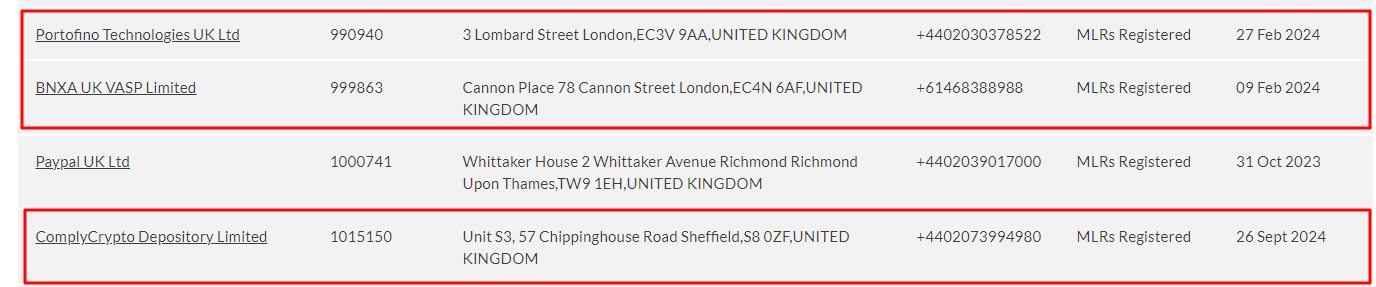
Source: FCA
In
September, Finance Magnates reported that nearly 9 out of 10 crypto
registration applications failed to meet AML standards. On the other hand, the
FCA has been effective in tracking dishonest firms in the sector. According to
an August report, the institution issued 1,000 warnings and removed 48
potentially suspicious applications since October of last year.
FCA “Actively Wants to
Work with You”
The
regulator stressed its commitment to working with crypto firms throughout the
application process, offering pre-application meetings and practical support.
Smith acknowledged that the crypto industry is still developing and that
adapting to new regulatory processes can be challenging.
“We
actively want to work with you,” Smith said, encouraging firms to engage
with the FCA early and utilize the available resources.
While the
number of registered crypto firms remains a topic of interest, Smith insisted
that the FCA's focus must remain on protecting consumers and maintaining the
integrity of the financial system. She argued that upholding high regulatory
standards is crucial for creating a “healthy, globally competitive and
vibrant crypto sector in the UK.”
Another
issue is the number of people employed by the FCA in the cryptocurrency sector.
According to Quant, the UK may face a “crypto catastrophe” due to
staff shortages. In an email sent to Finance Magnates, a spokesperson
for the regulator answered these allegations, stating, “Crypto is an
area of work that spans the entire FCA, and our increased staffing levels
reflect our investment in these priorities.”
The UK's
Financial Conduct Authority (FCA) has defended its “too tough” approach to
registering cryptocurrency firms, arguing that robust standards are essential
for building a sustainable and trustworthy digital asset sector.
In a
statement released today (Monday), Val Smith, Head of Payments and Digital
Assets at the FCA's authorizations division, addressed criticism that the
regulator's stringent requirements could potentially stifle innovation in the
crypto industry and that the bar for registration is set “too high.”
Crypto Companies Want to
Build on Sand. FCA Wants to Build on “Sturdy Foundations”
Val Smith Head of payments and digital assets at FCA
“Innovations
built quickly on unsafe, unregulated and untrusted foundations become a house
built on sand—likely to collapse,” Smith warned. “Instead, we want
to closely collaborate with partners across government, industry and other jurisdictions
to develop a crypto sector that's built on reliable, sturdy foundations.”
The FCA has
faced scrutiny over the relatively low number of crypto firms it has registered
under the UK's Money Laundering Regulations (MLRs). Some industry observers
have suggested the regulator's standards may be too high, potentially
jeopardizing the UK's position as a global financial leader.
Smith
pushed back against these claims, emphasizing that the FCA never dismisses
applications outright and takes the risk of financial crime seriously.
“Allowing illicit money to flow freely can destroy lives,” she
stated, citing concerns about terrorism, organized crime, sanctions evasion,
and human trafficking.
It is
undeniable, however, that the FCA takes a strict approach to regulating the
industry. Since 2020, the watchdog has received around 360 registration
applications, approving barely 50 of them. The full list of registered
cryptoasset firms is available on the institution’s website. In 2024, only
three entities were added to the list.
Source: FCA
In
September, Finance Magnates reported that nearly 9 out of 10 crypto
registration applications failed to meet AML standards. On the other hand, the
FCA has been effective in tracking dishonest firms in the sector. According to
an August report, the institution issued 1,000 warnings and removed 48
potentially suspicious applications since October of last year.
FCA “Actively Wants to
Work with You”
The
regulator stressed its commitment to working with crypto firms throughout the
application process, offering pre-application meetings and practical support.
Smith acknowledged that the crypto industry is still developing and that
adapting to new regulatory processes can be challenging.
“We
actively want to work with you,” Smith said, encouraging firms to engage
with the FCA early and utilize the available resources.
While the
number of registered crypto firms remains a topic of interest, Smith insisted
that the FCA's focus must remain on protecting consumers and maintaining the
integrity of the financial system. She argued that upholding high regulatory
standards is crucial for creating a “healthy, globally competitive and
vibrant crypto sector in the UK.”
Another
issue is the number of people employed by the FCA in the cryptocurrency sector.
According to Quant, the UK may face a “crypto catastrophe” due to
staff shortages. In an email sent to Finance Magnates, a spokesperson
for the regulator answered these allegations, stating, “Crypto is an
area of work that spans the entire FCA, and our increased staffing levels
reflect our investment in these priorities.”
Damian Chmiel is a Senior Analyst & Editor at Finance Magnates with more than 15 years of experience in the CFD and online trading industry. Active as both a trader and journalist since 2010, he focuses on broker coverage, fintech innovation, and regulatory developments across Europe, the Middle East, and Asia.
His work includes interviews with C-level leaders at major brokerages and fintech platforms, as well as co-authoring Finance Magnates’ quarterly industry benchmarking reports. Damian’s reporting is data-driven, market-aware, and grounded in direct industry engagement. His analysis and commentary have also been cited by external media outlets, including Investing.com, Binance, The Asset, Stockhead, and Dispatch.
Education:
MA in Finance and Accounting, Cracow University of Economics
Virtu Financial Ireland Gets MiCA Approval and CASP License for EU Crypto Services
Featured Videos
FM Daily Brief – 9 June 2026
Today’s Tuesday, the 9th of June 2026, and these are our main stories: eToro’s customer assets climbed back above $20 billion, Prop trading model in prediction markets, and Leverate launched a new AI assistant for brokers and traders.
War Stories: Lessons from 20 Years in Markets (the pain, the pitfalls and the profits)
The trades that taught me the most aren't the ones that worked. They're the ones that didn't — or the ones I almost caught and didn't have the nerve to ride. In this session, I'll tell you about the Brexit miss, the SNB shocker that nearly handed me a 5400% return, the BoJ surprise that punched me in the gut, and a few wins along the way. Each story carries a lesson, but the lessons aren't the point. Everyone who trades long enough collects a portfolio of moments like these; what separates the people who stay in the game is what they do with them.
The Engine and the Fuel: How AI & Data Drives African Future
If AI is the engine, data is the fuel. Without quality, accessible data, AI cannot work well; and without the right mindset, data remains just numbers instead of insight. In this session, leading experts will explore how AI and data are democratizing opportunities for businesses and personal growth. Discover practical ways to make AI accessible today, anticipate its transformative impact on African markets, and learn actionable steps to prepare for what's next. Let's talk about:
-How AI and data drive business efficiency and innovation in trading and fintech
-AI tools to elevate trading or business strategies
-How to access and maximise the power of data and AI
-Emerging AI and data trends in Africa and their economic ripple effects
If AI is the engine, data is the fuel. Without quality, accessible data, AI cannot work well; and without the right mindset, data remains just numbers instead of insight. In this session, leading experts will explore how AI and data are democratizing opportunities for businesses and personal growth. Discover practical ways to make AI accessible today, anticipate its transformative impact on African markets, and learn actionable steps to prepare for what's next. Let's talk about:
-How AI and data drive business efficiency and innovation in trading and fintech
-AI tools to elevate trading or business strategies
-How to access and maximise the power of data and AI
-Emerging AI and data trends in Africa and their economic ripple effects
If AI is the engine, data is the fuel. Without quality, accessible data, AI cannot work well; and without the right mindset, data remains just numbers instead of insight. In this session, leading experts will explore how AI and data are democratizing opportunities for businesses and personal growth. Discover practical ways to make AI accessible today, anticipate its transformative impact on African markets, and learn actionable steps to prepare for what's next. Let's talk about:
-How AI and data drive business efficiency and innovation in trading and fintech
-AI tools to elevate trading or business strategies
-How to access and maximise the power of data and AI
-Emerging AI and data trends in Africa and their economic ripple effects
If AI is the engine, data is the fuel. Without quality, accessible data, AI cannot work well; and without the right mindset, data remains just numbers instead of insight. In this session, leading experts will explore how AI and data are democratizing opportunities for businesses and personal growth. Discover practical ways to make AI accessible today, anticipate its transformative impact on African markets, and learn actionable steps to prepare for what's next. Let's talk about:
-How AI and data drive business efficiency and innovation in trading and fintech
-AI tools to elevate trading or business strategies
-How to access and maximise the power of data and AI
-Emerging AI and data trends in Africa and their economic ripple effects
If AI is the engine, data is the fuel. Without quality, accessible data, AI cannot work well; and without the right mindset, data remains just numbers instead of insight. In this session, leading experts will explore how AI and data are democratizing opportunities for businesses and personal growth. Discover practical ways to make AI accessible today, anticipate its transformative impact on African markets, and learn actionable steps to prepare for what's next. Let's talk about:
-How AI and data drive business efficiency and innovation in trading and fintech
-AI tools to elevate trading or business strategies
-How to access and maximise the power of data and AI
-Emerging AI and data trends in Africa and their economic ripple effects
If AI is the engine, data is the fuel. Without quality, accessible data, AI cannot work well; and without the right mindset, data remains just numbers instead of insight. In this session, leading experts will explore how AI and data are democratizing opportunities for businesses and personal growth. Discover practical ways to make AI accessible today, anticipate its transformative impact on African markets, and learn actionable steps to prepare for what's next. Let's talk about:
-How AI and data drive business efficiency and innovation in trading and fintech
-AI tools to elevate trading or business strategies
-How to access and maximise the power of data and AI
-Emerging AI and data trends in Africa and their economic ripple effects
Inside My Best Trade with Jimmy Moyaha
Most market post-mortems describe what happened to prices. Few describe what happened in the trading room while the position was open: the entry conviction, the moments that tested it, and the exit decision that closed the book.
This session brings one seasoned trader to the stage for an unfiltered account of the position that still defines how they think about markets.
Attendees will walk away with:
-A first-hand account of how a conviction trade is built, from thesis and entry through position management and exit
-Understanding of what turns a market observation into a live position, and what holds it when conditions shift
-Insight into how timing, execution quality, and market structure shaped the final result
-Perspective on what the trade revealed about edge, risk tolerance, and when to hold through a position moving against you
-Clarity on what separates a well-built trade from a well-timed one
Most market post-mortems describe what happened to prices. Few describe what happened in the trading room while the position was open: the entry conviction, the moments that tested it, and the exit decision that closed the book.
This session brings one seasoned trader to the stage for an unfiltered account of the position that still defines how they think about markets.
Attendees will walk away with:
-A first-hand account of how a conviction trade is built, from thesis and entry through position management and exit
-Understanding of what turns a market observation into a live position, and what holds it when conditions shift
-Insight into how timing, execution quality, and market structure shaped the final result
-Perspective on what the trade revealed about edge, risk tolerance, and when to hold through a position moving against you
-Clarity on what separates a well-built trade from a well-timed one
Most market post-mortems describe what happened to prices. Few describe what happened in the trading room while the position was open: the entry conviction, the moments that tested it, and the exit decision that closed the book.
This session brings one seasoned trader to the stage for an unfiltered account of the position that still defines how they think about markets.
Attendees will walk away with:
-A first-hand account of how a conviction trade is built, from thesis and entry through position management and exit
-Understanding of what turns a market observation into a live position, and what holds it when conditions shift
-Insight into how timing, execution quality, and market structure shaped the final result
-Perspective on what the trade revealed about edge, risk tolerance, and when to hold through a position moving against you
-Clarity on what separates a well-built trade from a well-timed one
Most market post-mortems describe what happened to prices. Few describe what happened in the trading room while the position was open: the entry conviction, the moments that tested it, and the exit decision that closed the book.
This session brings one seasoned trader to the stage for an unfiltered account of the position that still defines how they think about markets.
Attendees will walk away with:
-A first-hand account of how a conviction trade is built, from thesis and entry through position management and exit
-Understanding of what turns a market observation into a live position, and what holds it when conditions shift
-Insight into how timing, execution quality, and market structure shaped the final result
-Perspective on what the trade revealed about edge, risk tolerance, and when to hold through a position moving against you
-Clarity on what separates a well-built trade from a well-timed one
Most market post-mortems describe what happened to prices. Few describe what happened in the trading room while the position was open: the entry conviction, the moments that tested it, and the exit decision that closed the book.
This session brings one seasoned trader to the stage for an unfiltered account of the position that still defines how they think about markets.
Attendees will walk away with:
-A first-hand account of how a conviction trade is built, from thesis and entry through position management and exit
-Understanding of what turns a market observation into a live position, and what holds it when conditions shift
-Insight into how timing, execution quality, and market structure shaped the final result
-Perspective on what the trade revealed about edge, risk tolerance, and when to hold through a position moving against you
-Clarity on what separates a well-built trade from a well-timed one
Most market post-mortems describe what happened to prices. Few describe what happened in the trading room while the position was open: the entry conviction, the moments that tested it, and the exit decision that closed the book.
This session brings one seasoned trader to the stage for an unfiltered account of the position that still defines how they think about markets.
Attendees will walk away with:
-A first-hand account of how a conviction trade is built, from thesis and entry through position management and exit
-Understanding of what turns a market observation into a live position, and what holds it when conditions shift
-Insight into how timing, execution quality, and market structure shaped the final result
-Perspective on what the trade revealed about edge, risk tolerance, and when to hold through a position moving against you
-Clarity on what separates a well-built trade from a well-timed one
Agentic Inequality: Democratizing Financial Access Through AI & Blockchain
As crypto and CFD trading continue to expand across Africa, access to advanced tools and market insights remains uneven. This session explores how AI and blockchain can bridge that gap by empowering informal traders and underserved communities to participate more effectively in digital financial markets. The discussion will focus on practical applications of technology to improve accessibility, education, and investment outcomes in both formal and informal sectors.
In this discussion, we will explore:
-The role of AI in democratizing access to trading tools, insights, and strategy development
-How crypto and blockchain can enable broader participation beyond traditional financial systems
-Addressing access barriers: infrastructure, education, and affordability in underserved communities
-Opportunities for brokers and platforms to tap into the informal trading economy
As crypto and CFD trading continue to expand across Africa, access to advanced tools and market insights remains uneven. This session explores how AI and blockchain can bridge that gap by empowering informal traders and underserved communities to participate more effectively in digital financial markets. The discussion will focus on practical applications of technology to improve accessibility, education, and investment outcomes in both formal and informal sectors.
In this discussion, we will explore:
-The role of AI in democratizing access to trading tools, insights, and strategy development
-How crypto and blockchain can enable broader participation beyond traditional financial systems
-Addressing access barriers: infrastructure, education, and affordability in underserved communities
-Opportunities for brokers and platforms to tap into the informal trading economy
As crypto and CFD trading continue to expand across Africa, access to advanced tools and market insights remains uneven. This session explores how AI and blockchain can bridge that gap by empowering informal traders and underserved communities to participate more effectively in digital financial markets. The discussion will focus on practical applications of technology to improve accessibility, education, and investment outcomes in both formal and informal sectors.
In this discussion, we will explore:
-The role of AI in democratizing access to trading tools, insights, and strategy development
-How crypto and blockchain can enable broader participation beyond traditional financial systems
-Addressing access barriers: infrastructure, education, and affordability in underserved communities
-Opportunities for brokers and platforms to tap into the informal trading economy
As crypto and CFD trading continue to expand across Africa, access to advanced tools and market insights remains uneven. This session explores how AI and blockchain can bridge that gap by empowering informal traders and underserved communities to participate more effectively in digital financial markets. The discussion will focus on practical applications of technology to improve accessibility, education, and investment outcomes in both formal and informal sectors.
In this discussion, we will explore:
-The role of AI in democratizing access to trading tools, insights, and strategy development
-How crypto and blockchain can enable broader participation beyond traditional financial systems
-Addressing access barriers: infrastructure, education, and affordability in underserved communities
-Opportunities for brokers and platforms to tap into the informal trading economy
As crypto and CFD trading continue to expand across Africa, access to advanced tools and market insights remains uneven. This session explores how AI and blockchain can bridge that gap by empowering informal traders and underserved communities to participate more effectively in digital financial markets. The discussion will focus on practical applications of technology to improve accessibility, education, and investment outcomes in both formal and informal sectors.
In this discussion, we will explore:
-The role of AI in democratizing access to trading tools, insights, and strategy development
-How crypto and blockchain can enable broader participation beyond traditional financial systems
-Addressing access barriers: infrastructure, education, and affordability in underserved communities
-Opportunities for brokers and platforms to tap into the informal trading economy
As crypto and CFD trading continue to expand across Africa, access to advanced tools and market insights remains uneven. This session explores how AI and blockchain can bridge that gap by empowering informal traders and underserved communities to participate more effectively in digital financial markets. The discussion will focus on practical applications of technology to improve accessibility, education, and investment outcomes in both formal and informal sectors.
In this discussion, we will explore:
-The role of AI in democratizing access to trading tools, insights, and strategy development
-How crypto and blockchain can enable broader participation beyond traditional financial systems
-Addressing access barriers: infrastructure, education, and affordability in underserved communities
-Opportunities for brokers and platforms to tap into the informal trading economy