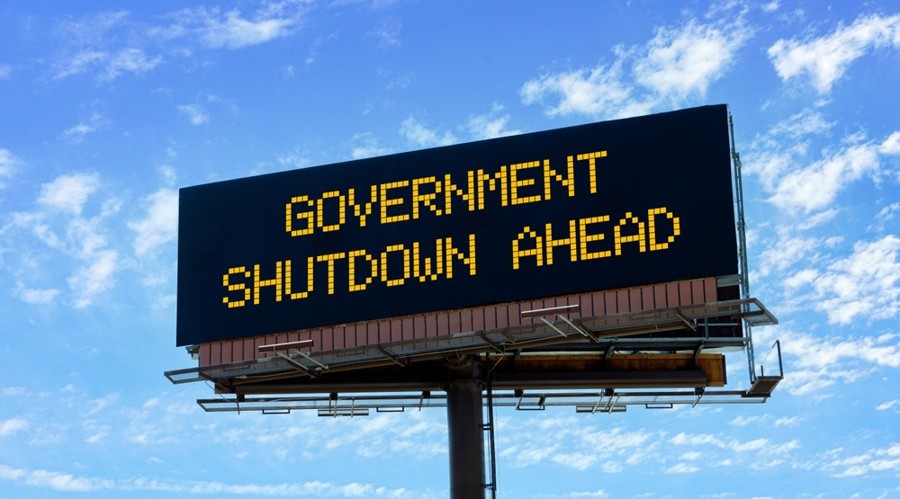
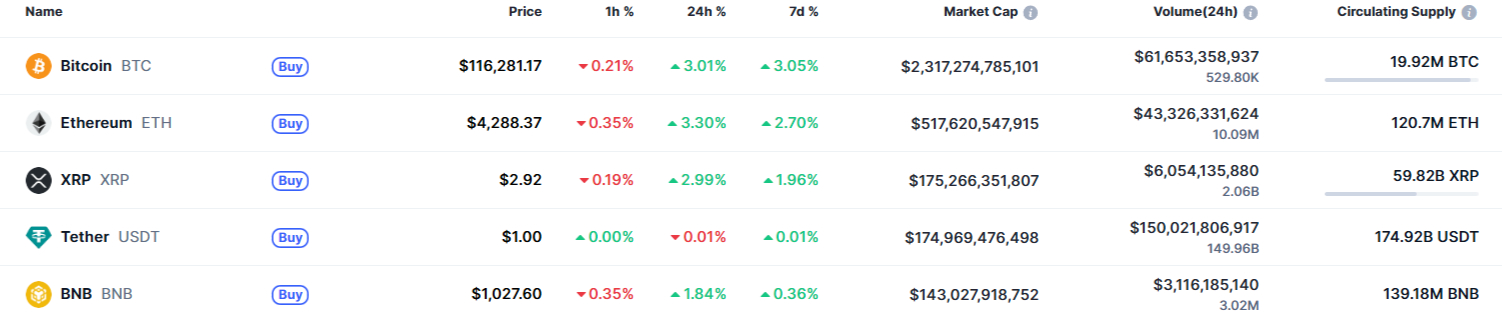
Bitcoin surges 3% to $116,314 today as dollar weakness from the U.S. government shutdown drives capital into cryptocurrency markets.
October historically delivers Bitcoin's strongest monthly performance with 73% probability of positive closes and average gains of 27%.
Expert predictions range from conservative $120,000 October targets to aggressive $140,000-$160,000 cycle top projections.
Why is Bitcoin going up? Let's check the current BTC price prediction and technical analysis
Bitcoin
(BTC) price tests $116,420 intraday highs today (Tuesday, 1 October 2025),
surging over 3% during the last 24 hours as the cryptocurrency capitalizes on
dollar weakness resulting from the temporary U.S. government shutdown. The
leading digital asset trades at $116,261 with a 1.92% gain, demonstrating
renewed momentum as investors position for October's historically bullish
performance.
In this article, I answer the question of why the Bitcoin price is going up, how the BTC/USDT chart looks from a technical analysis perspective, and what the latest BTC price predictions are for October 2025.
According
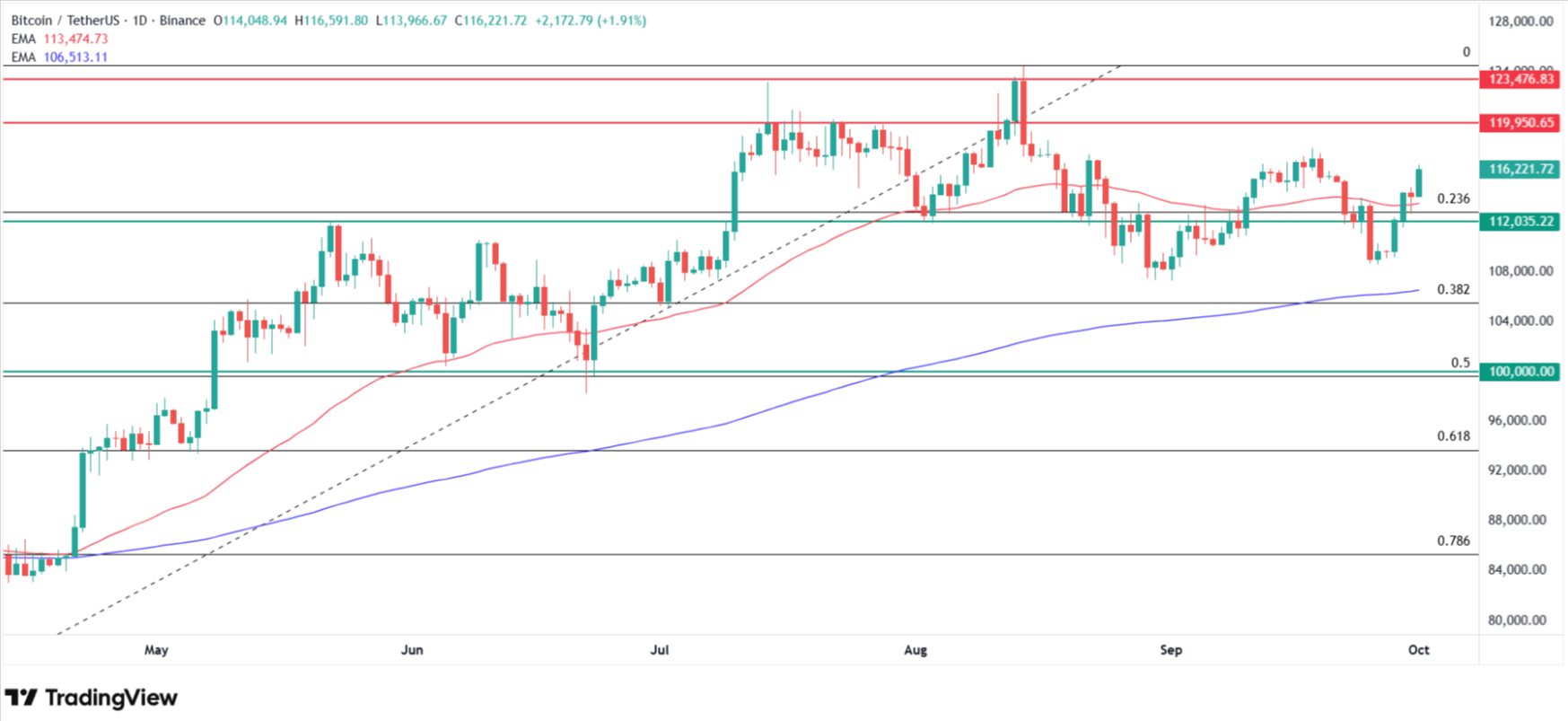
to my technical analysis, the observed strengthening since Sunday allowed
Bitcoin to recover from September lows and the lowest levels since late August,
which coincided with July lows.
This week,
we clearly returned above the local support zone of $112,000 and simultaneously
above the 50-period exponential moving average (EMA), positioning ourselves
again in a narrow consolidation range just below historical highs tested in
mid-July and mid-August near $124,000.
Bitcoin
moves within a broader sideways channel established since early May, with the
lower boundary at the psychological round level of $100,000, coinciding with
50% Fibonacci retracement. Only breaking below this level would be a clear
signal that bulls have lost control of Bitcoin, bears are gaining, and we
should expect increased downside pressure.
Why Bitcoin Price Is
Surging?
October
"Uptober" Seasonal Strength
Bitcoin
enters October with significant tailwinds as historical data reveals the month
as cryptocurrency's strongest performing period. Every year when Bitcoin
finishes September in the green, October has gained at least 10%, with previous
gains of 10.76%, 28.52%, 14.71%, and 33.49%.
Based on
Bitcoin's current 6.5% September return, it's on track for its second-best
September historically, creating a promising outlook for this month. As one
analyst notes: "BTC is going to finish September green. Every other time
that has happened October has also been green".
Analyst
Crypto Busy mentions that "BTC is testing a critical level as Buy/Sell
Pressure Delta hits the 'opportunity zone' and U.S. demand increases,"
suggesting institutional accumulation patterns support continued momentum.
🚨 Bitcoin Bulls Eye $120K Rebound!$BTC is testing a critical level as Buy/Sell Pressure Delta hits the “opportunity zone” and U.S. demand picks up.
Analysts say this could set the stage for a push toward $120,000.
LMAX
analyst Joel Kruger previously observed that "the U.S. dollar has shown
signs of recovery due to resilient economic data and the Federal Reserve's
cautious approach to further rate cuts, but its broader downward trend
persists, with technical indicators suggesting limited upward momentum".
Today's government shutdown accelerates dollar weakness, creating favorable
conditions for Bitcoin appreciation as investors seek alternative stores of
value.
The
temporary government shutdown increases uncertainty around fiscal policy and
dollar stability, historically driving capital flows into decentralized assets
like Bitcoin. This macro catalyst combines with technical breakout patterns to
support the current 3% surge.
AI-based
forecasting models predict Bitcoin reaching $118,167 by October 1, 2025,
representing a 2.7% gain from previous levels. The analysis incorporated
momentum indicators including MACD, RSI, stochastic oscillator, and 50-day and
200-day simple moving averages, with Grok 3 offering the most bullish view at
2.99% gain.
Changelly's
October 2025 forecast projects maximum levels reaching $126,599 with average
trading values near $122,848, representing 11.6% potential ROI. The technical
analysis suggests Bitcoin could test resistance near $116,405 before attempting
continued upside toward $120,000.
October 2025 Price Targets:
Conservative:
$120,000 (analyst consensus)
Moderate:
$128,000 (ATH breakout scenario)
Aggressive:
$140,000-$160,000 (cycle top projection)
Popular
trader BitBull targets a price range between $140,000 and $160,000 in 2025,
stating: "The cycle top will be somewhere $140K-$160K before BTC enters
the distribution phase". This aligns with broader analyst expectations
that Bitcoin could surpass current all-time highs and enter price discovery
phase.
Institutional Demand
Returns
According
to my technical analysis, before any downside scenario materializes, all
corrections downward should be treated as technical and opportunities to buy at
lower prices. Even the 200-day exponential moving average (200 EMA) will not be
a determinant of trend change to bearish for me - it currently stands around
$106,000, supporting the support zone together with the $108,000 level covering
lows from the turn of August and September where I would also expect
significant accumulation of pending buy orders.
Institutional
traders appear to be supporting BTC above $110,000, with recent price action
suggesting renewed accumulation phases. The combination of seasonal strength,
technical breakout confirmation, and dollar weakness creates ideal conditions
for sustained October rally.
Medium and Long-Term
Outlook
What
direction should Bitcoin take in the medium and long term? I personally predict
that this year we will see a test of the current ATH and entry into the price
discovery phase. Until that happens, all technical corrections provide
strategic accumulation opportunities rather than signs of trend reversal.
Before this
occurs, support levels remain robust at $108,000 (August-September lows),
$106,000 (200 EMA zone), and ultimately $100,000 (psychological support with
50% Fibonacci). These levels represent where significant buy order accumulation
likely exists, providing strong downside protection.
Bullish Catalysts for Q4:
Two additional Fed rate cuts
expected in 2025
Ongoing
corporate Bitcoin treasury adoption
Potential return of sustained
ETF inflows
Nation-state
adoption discussions accelerating
Q4 institutional capital
rotation into risk assets
The outlook
becomes even brighter considering upcoming catalysts including anticipation of
two more interest rate cuts this year, ongoing corporate demand for BTC, the
potential return of ETF inflows, and discussions about increased nation-state
adoption.
Bitcoin
surges today due to a confluence of factors including U.S. dollar weakness from
the temporary government shutdown, technical breakout above $112,000 support,
and seasonal "Uptober" momentum. The cryptocurrency trades at
$116,314 with 1.97% gains as institutional buying pressure returns and market
structure improves following September's 6.5% positive performance.
What if I invested $1,000
in Bitcoin 10 years ago?
If you
invested $1,000 in Bitcoin in October 2015 when prices ranged between
$230-$270, you would have purchased approximately 3.7-4.3 BTC. At today's
Bitcoin price of $116,314, that investment would now be worth approximately
$430,000-$500,000, representing a return of 43,000%-50,000% over the decade.
Who paid 10,000 Bitcoin
for pizza?
Laszlo
Hanyecz, a Florida-based programmer, made history on May 22, 2010, by paying
10,000 Bitcoin for two Papa John's pizzas in what became the first documented
real-world Bitcoin transaction. At the time, Bitcoin traded for fractions of a
cent, making the 10,000 BTC worth approximately $41 in 2010.
At today's
Bitcoin price of $116,314, those 10,000 Bitcoin would be worth approximately
$1.16 billion. This transaction is commemorated annually on May 22 as
"Bitcoin Pizza Day" by the cryptocurrency community, celebrating
Bitcoin's evolution from experimental digital money to a trillion-dollar asset
class.
How much will $1 Bitcoin
be worth in 2025?
Bitcoin
currently trades at $116,314 in October 2025, representing a 97.6% gain
year-to-date from its January 2025 opening price near $58,863. Expert
predictions for the remainder of 2025 suggest Bitcoin could reach between
$120,000 and $160,000 by year-end, depending on institutional adoption rates
and macroeconomic conditions.
Bitcoin
(BTC) price tests $116,420 intraday highs today (Tuesday, 1 October 2025),
surging over 3% during the last 24 hours as the cryptocurrency capitalizes on
dollar weakness resulting from the temporary U.S. government shutdown. The
leading digital asset trades at $116,261 with a 1.92% gain, demonstrating
renewed momentum as investors position for October's historically bullish
performance.
In this article, I answer the question of why the Bitcoin price is going up, how the BTC/USDT chart looks from a technical analysis perspective, and what the latest BTC price predictions are for October 2025.
According
to my technical analysis, the observed strengthening since Sunday allowed
Bitcoin to recover from September lows and the lowest levels since late August,
which coincided with July lows.
This week,
we clearly returned above the local support zone of $112,000 and simultaneously
above the 50-period exponential moving average (EMA), positioning ourselves
again in a narrow consolidation range just below historical highs tested in
mid-July and mid-August near $124,000.
Bitcoin
moves within a broader sideways channel established since early May, with the
lower boundary at the psychological round level of $100,000, coinciding with
50% Fibonacci retracement. Only breaking below this level would be a clear
signal that bulls have lost control of Bitcoin, bears are gaining, and we
should expect increased downside pressure.
Why Bitcoin Price Is
Surging?
October
"Uptober" Seasonal Strength
Bitcoin
enters October with significant tailwinds as historical data reveals the month
as cryptocurrency's strongest performing period. Every year when Bitcoin
finishes September in the green, October has gained at least 10%, with previous
gains of 10.76%, 28.52%, 14.71%, and 33.49%.
Based on
Bitcoin's current 6.5% September return, it's on track for its second-best
September historically, creating a promising outlook for this month. As one
analyst notes: "BTC is going to finish September green. Every other time
that has happened October has also been green".
Analyst
Crypto Busy mentions that "BTC is testing a critical level as Buy/Sell
Pressure Delta hits the 'opportunity zone' and U.S. demand increases,"
suggesting institutional accumulation patterns support continued momentum.
🚨 Bitcoin Bulls Eye $120K Rebound!$BTC is testing a critical level as Buy/Sell Pressure Delta hits the “opportunity zone” and U.S. demand picks up.
Analysts say this could set the stage for a push toward $120,000.
LMAX
analyst Joel Kruger previously observed that "the U.S. dollar has shown
signs of recovery due to resilient economic data and the Federal Reserve's
cautious approach to further rate cuts, but its broader downward trend
persists, with technical indicators suggesting limited upward momentum".
Today's government shutdown accelerates dollar weakness, creating favorable
conditions for Bitcoin appreciation as investors seek alternative stores of
value.
The
temporary government shutdown increases uncertainty around fiscal policy and
dollar stability, historically driving capital flows into decentralized assets
like Bitcoin. This macro catalyst combines with technical breakout patterns to
support the current 3% surge.
AI-based
forecasting models predict Bitcoin reaching $118,167 by October 1, 2025,
representing a 2.7% gain from previous levels. The analysis incorporated
momentum indicators including MACD, RSI, stochastic oscillator, and 50-day and
200-day simple moving averages, with Grok 3 offering the most bullish view at
2.99% gain.
Changelly's
October 2025 forecast projects maximum levels reaching $126,599 with average
trading values near $122,848, representing 11.6% potential ROI. The technical
analysis suggests Bitcoin could test resistance near $116,405 before attempting
continued upside toward $120,000.
October 2025 Price Targets:
Conservative:
$120,000 (analyst consensus)
Moderate:
$128,000 (ATH breakout scenario)
Aggressive:
$140,000-$160,000 (cycle top projection)
Popular
trader BitBull targets a price range between $140,000 and $160,000 in 2025,
stating: "The cycle top will be somewhere $140K-$160K before BTC enters
the distribution phase". This aligns with broader analyst expectations
that Bitcoin could surpass current all-time highs and enter price discovery
phase.
Institutional Demand
Returns
According
to my technical analysis, before any downside scenario materializes, all
corrections downward should be treated as technical and opportunities to buy at
lower prices. Even the 200-day exponential moving average (200 EMA) will not be
a determinant of trend change to bearish for me - it currently stands around
$106,000, supporting the support zone together with the $108,000 level covering
lows from the turn of August and September where I would also expect
significant accumulation of pending buy orders.
Institutional
traders appear to be supporting BTC above $110,000, with recent price action
suggesting renewed accumulation phases. The combination of seasonal strength,
technical breakout confirmation, and dollar weakness creates ideal conditions
for sustained October rally.
Medium and Long-Term
Outlook
What
direction should Bitcoin take in the medium and long term? I personally predict
that this year we will see a test of the current ATH and entry into the price
discovery phase. Until that happens, all technical corrections provide
strategic accumulation opportunities rather than signs of trend reversal.
Before this
occurs, support levels remain robust at $108,000 (August-September lows),
$106,000 (200 EMA zone), and ultimately $100,000 (psychological support with
50% Fibonacci). These levels represent where significant buy order accumulation
likely exists, providing strong downside protection.
Bullish Catalysts for Q4:
Two additional Fed rate cuts
expected in 2025
Ongoing
corporate Bitcoin treasury adoption
Potential return of sustained
ETF inflows
Nation-state
adoption discussions accelerating
Q4 institutional capital
rotation into risk assets
The outlook
becomes even brighter considering upcoming catalysts including anticipation of
two more interest rate cuts this year, ongoing corporate demand for BTC, the
potential return of ETF inflows, and discussions about increased nation-state
adoption.
Bitcoin
surges today due to a confluence of factors including U.S. dollar weakness from
the temporary government shutdown, technical breakout above $112,000 support,
and seasonal "Uptober" momentum. The cryptocurrency trades at
$116,314 with 1.97% gains as institutional buying pressure returns and market
structure improves following September's 6.5% positive performance.
What if I invested $1,000
in Bitcoin 10 years ago?
If you
invested $1,000 in Bitcoin in October 2015 when prices ranged between
$230-$270, you would have purchased approximately 3.7-4.3 BTC. At today's
Bitcoin price of $116,314, that investment would now be worth approximately
$430,000-$500,000, representing a return of 43,000%-50,000% over the decade.
Who paid 10,000 Bitcoin
for pizza?
Laszlo
Hanyecz, a Florida-based programmer, made history on May 22, 2010, by paying
10,000 Bitcoin for two Papa John's pizzas in what became the first documented
real-world Bitcoin transaction. At the time, Bitcoin traded for fractions of a
cent, making the 10,000 BTC worth approximately $41 in 2010.
At today's
Bitcoin price of $116,314, those 10,000 Bitcoin would be worth approximately
$1.16 billion. This transaction is commemorated annually on May 22 as
"Bitcoin Pizza Day" by the cryptocurrency community, celebrating
Bitcoin's evolution from experimental digital money to a trillion-dollar asset
class.
How much will $1 Bitcoin
be worth in 2025?
Bitcoin
currently trades at $116,314 in October 2025, representing a 97.6% gain
year-to-date from its January 2025 opening price near $58,863. Expert
predictions for the remainder of 2025 suggest Bitcoin could reach between
$120,000 and $160,000 by year-end, depending on institutional adoption rates
and macroeconomic conditions.
Damian Chmiel is a Senior Analyst & Editor at Finance Magnates with more than 15 years of experience in the CFD and online trading industry. Active as both a trader and journalist since 2010, he focuses on broker coverage, fintech innovation, and regulatory developments across Europe, the Middle East, and Asia.
His work includes interviews with C-level leaders at major brokerages and fintech platforms, as well as co-authoring Finance Magnates’ quarterly industry benchmarking reports. Damian’s reporting is data-driven, market-aware, and grounded in direct industry engagement. His analysis and commentary have also been cited by external media outlets, including Investing.com, Binance, The Asset, Stockhead, and Dispatch.
Education:
MA in Finance and Accounting, Cracow University of Economics
Inside the Prediction Markets: $1.6B Institutional Inflow Meets a Federal Crackdown
Featured Videos
FP Markets Winner Spotlight 🏆 | Global Broker of the Year 2025 #Trading #Broker #Innovation #Shorts
FP Markets Winner Spotlight 🏆 | Global Broker of the Year 2025 #Trading #Broker #Innovation #Shorts
FP Markets Winner Spotlight 🏆 | Global Broker of the Year 2025 #Trading #Broker #Innovation #Shorts
FP Markets Winner Spotlight 🏆 | Global Broker of the Year 2025 #Trading #Broker #Innovation #Shorts
FP Markets takes the spotlight as Global Broker of the Year 2025 at the Finance Magnates Awards.
Martin Stoilov, Head of Client Experience, shares that trust, innovation, and people played a key role in the company’s success, supported by a strong foundation of integrity and client-centricity.
Following this milestone, FP Markets continues to focus on growth, technology investment, and its core values of transparency and excellence.
👉 Be part of FM Awards 2026: https://awards.financemagnates.com/#nominate
FP Markets takes the spotlight as Global Broker of the Year 2025 at the Finance Magnates Awards.
Martin Stoilov, Head of Client Experience, shares that trust, innovation, and people played a key role in the company’s success, supported by a strong foundation of integrity and client-centricity.
Following this milestone, FP Markets continues to focus on growth, technology investment, and its core values of transparency and excellence.
👉 Be part of FM Awards 2026: https://awards.financemagnates.com/#nominate
FP Markets takes the spotlight as Global Broker of the Year 2025 at the Finance Magnates Awards.
Martin Stoilov, Head of Client Experience, shares that trust, innovation, and people played a key role in the company’s success, supported by a strong foundation of integrity and client-centricity.
Following this milestone, FP Markets continues to focus on growth, technology investment, and its core values of transparency and excellence.
👉 Be part of FM Awards 2026: https://awards.financemagnates.com/#nominate
FP Markets takes the spotlight as Global Broker of the Year 2025 at the Finance Magnates Awards.
Martin Stoilov, Head of Client Experience, shares that trust, innovation, and people played a key role in the company’s success, supported by a strong foundation of integrity and client-centricity.
Following this milestone, FP Markets continues to focus on growth, technology investment, and its core values of transparency and excellence.
👉 Be part of FM Awards 2026: https://awards.financemagnates.com/#nominate
In this video, we review @HolaPrimeMarketsOfficial, a multi-asset forex and CFDs broker offering different account types, trading platforms, and flexible trading conditions.
We cover the broker’s overall offering, including account options, trading environment, platforms like MT4 and MT5, and additional services such as managed accounts and fast withdrawals.
Watch the full video to see if Hola Prime Markets fits your trading needs.
📣 Stay up to date with the latest in finance and trading. Follow Finance Magnates for industry news, insights, and global event coverage.
Connect with us:
🔗 LinkedIn: /financemagnates
👍 Facebook: /financemagnates
📸 Instagram: https://www.instagram.com/financemagnates
🐦 X: https://x.com/financemagnates
🎥 TikTok: https://www.tiktok.com/tag/financemagnates
▶️ YouTube: /@financemagnates_official
#HolaPrime #ForexBroker #CFDTrading #FinanceMagnates #Trading #Forex #BrokerReview
In this video, we review @HolaPrimeMarketsOfficial, a multi-asset forex and CFDs broker offering different account types, trading platforms, and flexible trading conditions.
We cover the broker’s overall offering, including account options, trading environment, platforms like MT4 and MT5, and additional services such as managed accounts and fast withdrawals.
Watch the full video to see if Hola Prime Markets fits your trading needs.
📣 Stay up to date with the latest in finance and trading. Follow Finance Magnates for industry news, insights, and global event coverage.
Connect with us:
🔗 LinkedIn: /financemagnates
👍 Facebook: /financemagnates
📸 Instagram: https://www.instagram.com/financemagnates
🐦 X: https://x.com/financemagnates
🎥 TikTok: https://www.tiktok.com/tag/financemagnates
▶️ YouTube: /@financemagnates_official
#HolaPrime #ForexBroker #CFDTrading #FinanceMagnates #Trading #Forex #BrokerReview
In this video, we review @HolaPrimeMarketsOfficial, a multi-asset forex and CFDs broker offering different account types, trading platforms, and flexible trading conditions.
We cover the broker’s overall offering, including account options, trading environment, platforms like MT4 and MT5, and additional services such as managed accounts and fast withdrawals.
Watch the full video to see if Hola Prime Markets fits your trading needs.
📣 Stay up to date with the latest in finance and trading. Follow Finance Magnates for industry news, insights, and global event coverage.
Connect with us:
🔗 LinkedIn: /financemagnates
👍 Facebook: /financemagnates
📸 Instagram: https://www.instagram.com/financemagnates
🐦 X: https://x.com/financemagnates
🎥 TikTok: https://www.tiktok.com/tag/financemagnates
▶️ YouTube: /@financemagnates_official
#HolaPrime #ForexBroker #CFDTrading #FinanceMagnates #Trading #Forex #BrokerReview
In this video, we review @HolaPrimeMarketsOfficial, a multi-asset forex and CFDs broker offering different account types, trading platforms, and flexible trading conditions.
We cover the broker’s overall offering, including account options, trading environment, platforms like MT4 and MT5, and additional services such as managed accounts and fast withdrawals.
Watch the full video to see if Hola Prime Markets fits your trading needs.
📣 Stay up to date with the latest in finance and trading. Follow Finance Magnates for industry news, insights, and global event coverage.
Connect with us:
🔗 LinkedIn: /financemagnates
👍 Facebook: /financemagnates
📸 Instagram: https://www.instagram.com/financemagnates
🐦 X: https://x.com/financemagnates
🎥 TikTok: https://www.tiktok.com/tag/financemagnates
▶️ YouTube: /@financemagnates_official
#HolaPrime #ForexBroker #CFDTrading #FinanceMagnates #Trading #Forex #BrokerReview
In this video, we review @HolaPrimeMarketsOfficial, a multi-asset forex and CFDs broker offering different account types, trading platforms, and flexible trading conditions.
We cover the broker’s overall offering, including account options, trading environment, platforms like MT4 and MT5, and additional services such as managed accounts and fast withdrawals.
Watch the full video to see if Hola Prime Markets fits your trading needs.
📣 Stay up to date with the latest in finance and trading. Follow Finance Magnates for industry news, insights, and global event coverage.
Connect with us:
🔗 LinkedIn: /financemagnates
👍 Facebook: /financemagnates
📸 Instagram: https://www.instagram.com/financemagnates
🐦 X: https://x.com/financemagnates
🎥 TikTok: https://www.tiktok.com/tag/financemagnates
▶️ YouTube: /@financemagnates_official
#HolaPrime #ForexBroker #CFDTrading #FinanceMagnates #Trading #Forex #BrokerReview
In this video, we review @HolaPrimeMarketsOfficial, a multi-asset forex and CFDs broker offering different account types, trading platforms, and flexible trading conditions.
We cover the broker’s overall offering, including account options, trading environment, platforms like MT4 and MT5, and additional services such as managed accounts and fast withdrawals.
Watch the full video to see if Hola Prime Markets fits your trading needs.
📣 Stay up to date with the latest in finance and trading. Follow Finance Magnates for industry news, insights, and global event coverage.
Connect with us:
🔗 LinkedIn: /financemagnates
👍 Facebook: /financemagnates
📸 Instagram: https://www.instagram.com/financemagnates
🐦 X: https://x.com/financemagnates
🎥 TikTok: https://www.tiktok.com/tag/financemagnates
▶️ YouTube: /@financemagnates_official
#HolaPrime #ForexBroker #CFDTrading #FinanceMagnates #Trading #Forex #BrokerReview
Hola Prime Review: What You Need to Know | Full Breakdown by Finance Magnates
Hola Prime Review: What You Need to Know | Full Breakdown by Finance Magnates
Hola Prime Review: What You Need to Know | Full Breakdown by Finance Magnates
Hola Prime Review: What You Need to Know | Full Breakdown by Finance Magnates
Hola Prime Review: What You Need to Know | Full Breakdown by Finance Magnates
Hola Prime Review: What You Need to Know | Full Breakdown by Finance Magnates
In this video, we review @HolaPrime_Global, a proprietary trading firm offering evaluation programs and performance-based payouts in simulated market environments.
We cover how the challenge model works, including account types, profit splits (up to 95%), trading rules, and what it takes to reach a funded account. You’ll also learn about available platforms like MT4, MT5, cTrader, and more, along with insights into payouts, support, and trading conditions.
Watch the full video to see if Hola Prime fits your trading style.
📣 Stay up to date with the latest in finance and trading. Follow Finance Magnates for industry news, insights, and global event coverage.
Connect with us:
🔗 LinkedIn: /financemagnates
👍 Facebook: /financemagnates
📸 Instagram: https://www.instagram.com/financemagnates
🐦 X: https://x.com/financemagnates
🎥 TikTok: https://www.tiktok.com/tag/financemagnates
▶️ YouTube: /@financemagnates_official
#HolaPrime #PropFirm #Trading #FinanceMagnates #Forex #FuturesTrading #TradingReview #PropFirmReview
In this video, we review @HolaPrime_Global, a proprietary trading firm offering evaluation programs and performance-based payouts in simulated market environments.
We cover how the challenge model works, including account types, profit splits (up to 95%), trading rules, and what it takes to reach a funded account. You’ll also learn about available platforms like MT4, MT5, cTrader, and more, along with insights into payouts, support, and trading conditions.
Watch the full video to see if Hola Prime fits your trading style.
📣 Stay up to date with the latest in finance and trading. Follow Finance Magnates for industry news, insights, and global event coverage.
Connect with us:
🔗 LinkedIn: /financemagnates
👍 Facebook: /financemagnates
📸 Instagram: https://www.instagram.com/financemagnates
🐦 X: https://x.com/financemagnates
🎥 TikTok: https://www.tiktok.com/tag/financemagnates
▶️ YouTube: /@financemagnates_official
#HolaPrime #PropFirm #Trading #FinanceMagnates #Forex #FuturesTrading #TradingReview #PropFirmReview
In this video, we review @HolaPrime_Global, a proprietary trading firm offering evaluation programs and performance-based payouts in simulated market environments.
We cover how the challenge model works, including account types, profit splits (up to 95%), trading rules, and what it takes to reach a funded account. You’ll also learn about available platforms like MT4, MT5, cTrader, and more, along with insights into payouts, support, and trading conditions.
Watch the full video to see if Hola Prime fits your trading style.
📣 Stay up to date with the latest in finance and trading. Follow Finance Magnates for industry news, insights, and global event coverage.
Connect with us:
🔗 LinkedIn: /financemagnates
👍 Facebook: /financemagnates
📸 Instagram: https://www.instagram.com/financemagnates
🐦 X: https://x.com/financemagnates
🎥 TikTok: https://www.tiktok.com/tag/financemagnates
▶️ YouTube: /@financemagnates_official
#HolaPrime #PropFirm #Trading #FinanceMagnates #Forex #FuturesTrading #TradingReview #PropFirmReview
In this video, we review @HolaPrime_Global, a proprietary trading firm offering evaluation programs and performance-based payouts in simulated market environments.
We cover how the challenge model works, including account types, profit splits (up to 95%), trading rules, and what it takes to reach a funded account. You’ll also learn about available platforms like MT4, MT5, cTrader, and more, along with insights into payouts, support, and trading conditions.
Watch the full video to see if Hola Prime fits your trading style.
📣 Stay up to date with the latest in finance and trading. Follow Finance Magnates for industry news, insights, and global event coverage.
Connect with us:
🔗 LinkedIn: /financemagnates
👍 Facebook: /financemagnates
📸 Instagram: https://www.instagram.com/financemagnates
🐦 X: https://x.com/financemagnates
🎥 TikTok: https://www.tiktok.com/tag/financemagnates
▶️ YouTube: /@financemagnates_official
#HolaPrime #PropFirm #Trading #FinanceMagnates #Forex #FuturesTrading #TradingReview #PropFirmReview
In this video, we review @HolaPrime_Global, a proprietary trading firm offering evaluation programs and performance-based payouts in simulated market environments.
We cover how the challenge model works, including account types, profit splits (up to 95%), trading rules, and what it takes to reach a funded account. You’ll also learn about available platforms like MT4, MT5, cTrader, and more, along with insights into payouts, support, and trading conditions.
Watch the full video to see if Hola Prime fits your trading style.
📣 Stay up to date with the latest in finance and trading. Follow Finance Magnates for industry news, insights, and global event coverage.
Connect with us:
🔗 LinkedIn: /financemagnates
👍 Facebook: /financemagnates
📸 Instagram: https://www.instagram.com/financemagnates
🐦 X: https://x.com/financemagnates
🎥 TikTok: https://www.tiktok.com/tag/financemagnates
▶️ YouTube: /@financemagnates_official
#HolaPrime #PropFirm #Trading #FinanceMagnates #Forex #FuturesTrading #TradingReview #PropFirmReview
In this video, we review @HolaPrime_Global, a proprietary trading firm offering evaluation programs and performance-based payouts in simulated market environments.
We cover how the challenge model works, including account types, profit splits (up to 95%), trading rules, and what it takes to reach a funded account. You’ll also learn about available platforms like MT4, MT5, cTrader, and more, along with insights into payouts, support, and trading conditions.
Watch the full video to see if Hola Prime fits your trading style.
📣 Stay up to date with the latest in finance and trading. Follow Finance Magnates for industry news, insights, and global event coverage.
Connect with us:
🔗 LinkedIn: /financemagnates
👍 Facebook: /financemagnates
📸 Instagram: https://www.instagram.com/financemagnates
🐦 X: https://x.com/financemagnates
🎥 TikTok: https://www.tiktok.com/tag/financemagnates
▶️ YouTube: /@financemagnates_official
#HolaPrime #PropFirm #Trading #FinanceMagnates #Forex #FuturesTrading #TradingReview #PropFirmReview
Axi Winner Spotlight 🏆 | Global Most Innovative Broker 2025 #Innovation #Trading #Fintech #Broker
Axi Winner Spotlight 🏆 | Global Most Innovative Broker 2025 #Innovation #Trading #Fintech #Broker
Axi Winner Spotlight 🏆 | Global Most Innovative Broker 2025 #Innovation #Trading #Fintech #Broker
Axi Winner Spotlight 🏆 | Global Most Innovative Broker 2025 #Innovation #Trading #Fintech #Broker
Axi Winner Spotlight 🏆 | Global Most Innovative Broker 2025 #Innovation #Trading #Fintech #Broker
Axi Winner Spotlight 🏆 | Global Most Innovative Broker 2025 #Innovation #Trading #Fintech #Broker
Axi takes the spotlight at the Finance Magnates Awards, winning Global Most Innovative Broker 2025.
Olivia Xenofontos and Ivanna Openko share how the team will feel: proud, motivated, and ready to keep delivering.
They also describe the night as well-organized, focused, and enjoyable for all.
👉 Be part of FM Awards 2026.
Axi takes the spotlight at the Finance Magnates Awards, winning Global Most Innovative Broker 2025.
Olivia Xenofontos and Ivanna Openko share how the team will feel: proud, motivated, and ready to keep delivering.
They also describe the night as well-organized, focused, and enjoyable for all.
👉 Be part of FM Awards 2026.
Axi takes the spotlight at the Finance Magnates Awards, winning Global Most Innovative Broker 2025.
Olivia Xenofontos and Ivanna Openko share how the team will feel: proud, motivated, and ready to keep delivering.
They also describe the night as well-organized, focused, and enjoyable for all.
👉 Be part of FM Awards 2026.
Axi takes the spotlight at the Finance Magnates Awards, winning Global Most Innovative Broker 2025.
Olivia Xenofontos and Ivanna Openko share how the team will feel: proud, motivated, and ready to keep delivering.
They also describe the night as well-organized, focused, and enjoyable for all.
👉 Be part of FM Awards 2026.
Axi takes the spotlight at the Finance Magnates Awards, winning Global Most Innovative Broker 2025.
Olivia Xenofontos and Ivanna Openko share how the team will feel: proud, motivated, and ready to keep delivering.
They also describe the night as well-organized, focused, and enjoyable for all.
👉 Be part of FM Awards 2026.
Axi takes the spotlight at the Finance Magnates Awards, winning Global Most Innovative Broker 2025.
Olivia Xenofontos and Ivanna Openko share how the team will feel: proud, motivated, and ready to keep delivering.
They also describe the night as well-organized, focused, and enjoyable for all.
👉 Be part of FM Awards 2026.
Recognition that matters.
Built on transparency.
Driven by the industry.
The Finance Magnates Awards 2026.
Nominations are now open.
🔗 https://awards.financemagnates.com/?utm_source=SM&utm_medium=social&utm_campaign=recognition-matters
Recognition that matters.
Built on transparency.
Driven by the industry.
The Finance Magnates Awards 2026.
Nominations are now open.
🔗 https://awards.financemagnates.com/?utm_source=SM&utm_medium=social&utm_campaign=recognition-matters
Recognition that matters.
Built on transparency.
Driven by the industry.
The Finance Magnates Awards 2026.
Nominations are now open.
🔗 https://awards.financemagnates.com/?utm_source=SM&utm_medium=social&utm_campaign=recognition-matters
Recognition that matters.
Built on transparency.
Driven by the industry.
The Finance Magnates Awards 2026.
Nominations are now open.
🔗 https://awards.financemagnates.com/?utm_source=SM&utm_medium=social&utm_campaign=recognition-matters
Recognition that matters.
Built on transparency.
Driven by the industry.
The Finance Magnates Awards 2026.
Nominations are now open.
🔗 https://awards.financemagnates.com/?utm_source=SM&utm_medium=social&utm_campaign=recognition-matters
Recognition that matters.
Built on transparency.
Driven by the industry.
The Finance Magnates Awards 2026.
Nominations are now open.
🔗 https://awards.financemagnates.com/?utm_source=SM&utm_medium=social&utm_campaign=recognition-matters