The regulator's CEO, Nikhil Rathi, appeared before the House of Commons Treasury Select Committee today (Wednesday).
FCA receives approximately 650 letters yearly from Members of Parliament inquiring about ongoing investigations.
FCA says 90,000 retail investors lost £75m on CFDs at a single firm promoted by finfluencers
The Financial Conduct Authority (FCA) has cited heightened interest from Members of Parliament in specific cases as one of the main reasons for proposing disclosure of ongoing investigations. The regulator
mentioned that it receives approximately 650 letters of inquiry yearly. FCA's CEO, Nikhil Rathi, and Board Chair Ashley Alder appeared before the House of Commons Treasury Select Committee today (Wednesday) to defend the proposed policy.
A Blow to London's Financial Hub?
The regulator was responding to concerns regarding the
potential adverse impacts on both firms and individuals named in
investigations, especially those later cleared. Among other reasons, the FCA highlighted the impact on whistleblower confidence as
a reason to publish ongoing probes.
The FCA disclosed that as of March 31, 2024, there
were 500 ongoing investigations involving 336 individuals and 164 firms. While
the exact number of investigations launched annually remains unspecified, the authority highlighted insights into the outcomes of closed investigations.
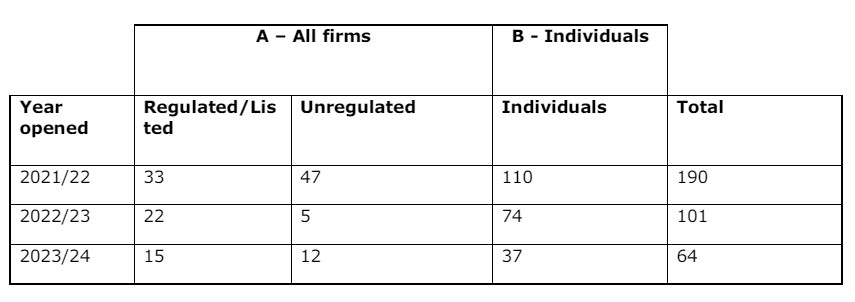
Data on FCA Investigations, Source: FCA
Acknowledging concerns over the duration and volume of
investigations, the FCA outlined plans to streamline its investigative
portfolio. This involves enhancing coordination between its authorization,
supervision, and enforcement teams to expedite processes aligning with
strategic priorities.
In response to queries about appeal mechanisms and
thematic disclosure, the FCA maintained its stance, opting against an appeal
mechanism and expressing reservations about the efficacy of thematic disclosure.
Besides that, the FCA downplayed the potential impact of the policy on firms, citing
their familiarity with enforcement actions and disclosure requirements. It
emphasized the limited number of investigations relative to regulated firms, mitigating significant market repercussions. Regarding a query as to
whether the FCA had compared the practice to that of counterparts globally, the agency underscored
the challenge of differing cultural norms and regulatory approaches across
jurisdictions.
Reputation and Market Ramifications
While the FCA contends that its disclosure proposals
align with public interest tests and do not undermine the principle of
"innocent until proven guilty," the debate underscores the delicate
balance between transparency, accountability, and the potential impact on firms and individuals involved.
In February, the FCA announced that it was planning to disclose more information about its ongoing investigations into companies much
earlier than before to enhance market transparency. This move, reminiscent of
practices by its counterpart, the US Securities and Exchange Commission (SEC),
marked a pivotal shift in the UK's regulatory landscape.
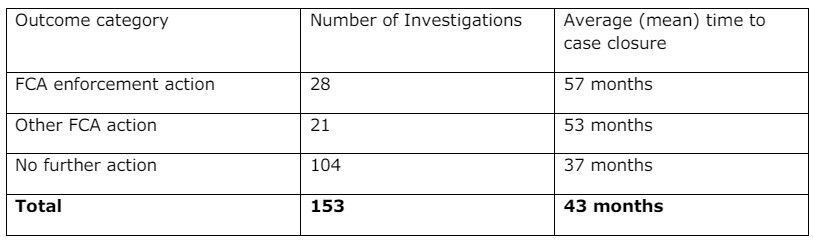
Length of Investigations, Source: FCA
Under the forthcoming strategy, the FCA intends to adopt a proactive stance by publicly
naming companies under formal investigation as soon as probes commence. This
approach aims to encourage witnesses and whistleblowers to step forward and deter misconduct within the financial industry.
However, while transparency is crucial, many stakeholders contend that the proposed approach is excessive. Instead, they advocate for
improving investigative processes and reducing decision-making timelines. With 65% of FCA investigations ending without action, there are
concerns about the needless reputational harm caused by public disclosures.
Calls for a more nuanced approach have emerged,
suggesting that the FCA should only name companies in exceptional
circumstances. In March, Kemi Badenoch, the Business
Secretary and Equalities Minister, accused the FCA of "regulatory
over-reach" in an official letter. In 2023, the FCA issued a record 2,286
scam alerts on its public Warning List, an improvement of 21% from the 1,882
alerts issued in 2022.
The Financial Conduct Authority (FCA) has cited heightened interest from Members of Parliament in specific cases as one of the main reasons for proposing disclosure of ongoing investigations. The regulator
mentioned that it receives approximately 650 letters of inquiry yearly. FCA's CEO, Nikhil Rathi, and Board Chair Ashley Alder appeared before the House of Commons Treasury Select Committee today (Wednesday) to defend the proposed policy.
A Blow to London's Financial Hub?
The regulator was responding to concerns regarding the
potential adverse impacts on both firms and individuals named in
investigations, especially those later cleared. Among other reasons, the FCA highlighted the impact on whistleblower confidence as
a reason to publish ongoing probes.
The FCA disclosed that as of March 31, 2024, there
were 500 ongoing investigations involving 336 individuals and 164 firms. While
the exact number of investigations launched annually remains unspecified, the authority highlighted insights into the outcomes of closed investigations.
Data on FCA Investigations, Source: FCA
Acknowledging concerns over the duration and volume of
investigations, the FCA outlined plans to streamline its investigative
portfolio. This involves enhancing coordination between its authorization,
supervision, and enforcement teams to expedite processes aligning with
strategic priorities.
In response to queries about appeal mechanisms and
thematic disclosure, the FCA maintained its stance, opting against an appeal
mechanism and expressing reservations about the efficacy of thematic disclosure.
Besides that, the FCA downplayed the potential impact of the policy on firms, citing
their familiarity with enforcement actions and disclosure requirements. It
emphasized the limited number of investigations relative to regulated firms, mitigating significant market repercussions. Regarding a query as to
whether the FCA had compared the practice to that of counterparts globally, the agency underscored
the challenge of differing cultural norms and regulatory approaches across
jurisdictions.
Reputation and Market Ramifications
While the FCA contends that its disclosure proposals
align with public interest tests and do not undermine the principle of
"innocent until proven guilty," the debate underscores the delicate
balance between transparency, accountability, and the potential impact on firms and individuals involved.
In February, the FCA announced that it was planning to disclose more information about its ongoing investigations into companies much
earlier than before to enhance market transparency. This move, reminiscent of
practices by its counterpart, the US Securities and Exchange Commission (SEC),
marked a pivotal shift in the UK's regulatory landscape.
Length of Investigations, Source: FCA
Under the forthcoming strategy, the FCA intends to adopt a proactive stance by publicly
naming companies under formal investigation as soon as probes commence. This
approach aims to encourage witnesses and whistleblowers to step forward and deter misconduct within the financial industry.
However, while transparency is crucial, many stakeholders contend that the proposed approach is excessive. Instead, they advocate for
improving investigative processes and reducing decision-making timelines. With 65% of FCA investigations ending without action, there are
concerns about the needless reputational harm caused by public disclosures.
Calls for a more nuanced approach have emerged,
suggesting that the FCA should only name companies in exceptional
circumstances. In March, Kemi Badenoch, the Business
Secretary and Equalities Minister, accused the FCA of "regulatory
over-reach" in an official letter. In 2023, the FCA issued a record 2,286
scam alerts on its public Warning List, an improvement of 21% from the 1,882
alerts issued in 2022.
Jared Kirui is an Editor at Finance Magnates with more than five years of experience in financial journalism. He covers online trading, fintech, payments, and crypto industries with a focus on companies, regulation and compliance, executive moves, trading technology, and market analysis.
His work has been featured in other media outlets, including Benzinga, ZyCrypto, The Distributed, and The Daily Hodl.
Education:
Bachelor of Commerce degree (Finance option), University of Nairobi
No More Weekend Gap: CME Crypto Derivatives Go Always-On
Featured Videos
FM Daily Brief – 9 June 2026
Today’s Tuesday, the 9th of June 2026, and these are our main stories: eToro’s customer assets climbed back above $20 billion, Prop trading model in prediction markets, and Leverate launched a new AI assistant for brokers and traders.
War Stories: Lessons from 20 Years in Markets (the pain, the pitfalls and the profits)
The trades that taught me the most aren't the ones that worked. They're the ones that didn't — or the ones I almost caught and didn't have the nerve to ride. In this session, I'll tell you about the Brexit miss, the SNB shocker that nearly handed me a 5400% return, the BoJ surprise that punched me in the gut, and a few wins along the way. Each story carries a lesson, but the lessons aren't the point. Everyone who trades long enough collects a portfolio of moments like these; what separates the people who stay in the game is what they do with them.
The Engine and the Fuel: How AI & Data Drives African Future
If AI is the engine, data is the fuel. Without quality, accessible data, AI cannot work well; and without the right mindset, data remains just numbers instead of insight. In this session, leading experts will explore how AI and data are democratizing opportunities for businesses and personal growth. Discover practical ways to make AI accessible today, anticipate its transformative impact on African markets, and learn actionable steps to prepare for what's next. Let's talk about:
-How AI and data drive business efficiency and innovation in trading and fintech
-AI tools to elevate trading or business strategies
-How to access and maximise the power of data and AI
-Emerging AI and data trends in Africa and their economic ripple effects
If AI is the engine, data is the fuel. Without quality, accessible data, AI cannot work well; and without the right mindset, data remains just numbers instead of insight. In this session, leading experts will explore how AI and data are democratizing opportunities for businesses and personal growth. Discover practical ways to make AI accessible today, anticipate its transformative impact on African markets, and learn actionable steps to prepare for what's next. Let's talk about:
-How AI and data drive business efficiency and innovation in trading and fintech
-AI tools to elevate trading or business strategies
-How to access and maximise the power of data and AI
-Emerging AI and data trends in Africa and their economic ripple effects
If AI is the engine, data is the fuel. Without quality, accessible data, AI cannot work well; and without the right mindset, data remains just numbers instead of insight. In this session, leading experts will explore how AI and data are democratizing opportunities for businesses and personal growth. Discover practical ways to make AI accessible today, anticipate its transformative impact on African markets, and learn actionable steps to prepare for what's next. Let's talk about:
-How AI and data drive business efficiency and innovation in trading and fintech
-AI tools to elevate trading or business strategies
-How to access and maximise the power of data and AI
-Emerging AI and data trends in Africa and their economic ripple effects
If AI is the engine, data is the fuel. Without quality, accessible data, AI cannot work well; and without the right mindset, data remains just numbers instead of insight. In this session, leading experts will explore how AI and data are democratizing opportunities for businesses and personal growth. Discover practical ways to make AI accessible today, anticipate its transformative impact on African markets, and learn actionable steps to prepare for what's next. Let's talk about:
-How AI and data drive business efficiency and innovation in trading and fintech
-AI tools to elevate trading or business strategies
-How to access and maximise the power of data and AI
-Emerging AI and data trends in Africa and their economic ripple effects
If AI is the engine, data is the fuel. Without quality, accessible data, AI cannot work well; and without the right mindset, data remains just numbers instead of insight. In this session, leading experts will explore how AI and data are democratizing opportunities for businesses and personal growth. Discover practical ways to make AI accessible today, anticipate its transformative impact on African markets, and learn actionable steps to prepare for what's next. Let's talk about:
-How AI and data drive business efficiency and innovation in trading and fintech
-AI tools to elevate trading or business strategies
-How to access and maximise the power of data and AI
-Emerging AI and data trends in Africa and their economic ripple effects
If AI is the engine, data is the fuel. Without quality, accessible data, AI cannot work well; and without the right mindset, data remains just numbers instead of insight. In this session, leading experts will explore how AI and data are democratizing opportunities for businesses and personal growth. Discover practical ways to make AI accessible today, anticipate its transformative impact on African markets, and learn actionable steps to prepare for what's next. Let's talk about:
-How AI and data drive business efficiency and innovation in trading and fintech
-AI tools to elevate trading or business strategies
-How to access and maximise the power of data and AI
-Emerging AI and data trends in Africa and their economic ripple effects
Inside My Best Trade with Jimmy Moyaha
Most market post-mortems describe what happened to prices. Few describe what happened in the trading room while the position was open: the entry conviction, the moments that tested it, and the exit decision that closed the book.
This session brings one seasoned trader to the stage for an unfiltered account of the position that still defines how they think about markets.
Attendees will walk away with:
-A first-hand account of how a conviction trade is built, from thesis and entry through position management and exit
-Understanding of what turns a market observation into a live position, and what holds it when conditions shift
-Insight into how timing, execution quality, and market structure shaped the final result
-Perspective on what the trade revealed about edge, risk tolerance, and when to hold through a position moving against you
-Clarity on what separates a well-built trade from a well-timed one
Most market post-mortems describe what happened to prices. Few describe what happened in the trading room while the position was open: the entry conviction, the moments that tested it, and the exit decision that closed the book.
This session brings one seasoned trader to the stage for an unfiltered account of the position that still defines how they think about markets.
Attendees will walk away with:
-A first-hand account of how a conviction trade is built, from thesis and entry through position management and exit
-Understanding of what turns a market observation into a live position, and what holds it when conditions shift
-Insight into how timing, execution quality, and market structure shaped the final result
-Perspective on what the trade revealed about edge, risk tolerance, and when to hold through a position moving against you
-Clarity on what separates a well-built trade from a well-timed one
Most market post-mortems describe what happened to prices. Few describe what happened in the trading room while the position was open: the entry conviction, the moments that tested it, and the exit decision that closed the book.
This session brings one seasoned trader to the stage for an unfiltered account of the position that still defines how they think about markets.
Attendees will walk away with:
-A first-hand account of how a conviction trade is built, from thesis and entry through position management and exit
-Understanding of what turns a market observation into a live position, and what holds it when conditions shift
-Insight into how timing, execution quality, and market structure shaped the final result
-Perspective on what the trade revealed about edge, risk tolerance, and when to hold through a position moving against you
-Clarity on what separates a well-built trade from a well-timed one
Most market post-mortems describe what happened to prices. Few describe what happened in the trading room while the position was open: the entry conviction, the moments that tested it, and the exit decision that closed the book.
This session brings one seasoned trader to the stage for an unfiltered account of the position that still defines how they think about markets.
Attendees will walk away with:
-A first-hand account of how a conviction trade is built, from thesis and entry through position management and exit
-Understanding of what turns a market observation into a live position, and what holds it when conditions shift
-Insight into how timing, execution quality, and market structure shaped the final result
-Perspective on what the trade revealed about edge, risk tolerance, and when to hold through a position moving against you
-Clarity on what separates a well-built trade from a well-timed one
Most market post-mortems describe what happened to prices. Few describe what happened in the trading room while the position was open: the entry conviction, the moments that tested it, and the exit decision that closed the book.
This session brings one seasoned trader to the stage for an unfiltered account of the position that still defines how they think about markets.
Attendees will walk away with:
-A first-hand account of how a conviction trade is built, from thesis and entry through position management and exit
-Understanding of what turns a market observation into a live position, and what holds it when conditions shift
-Insight into how timing, execution quality, and market structure shaped the final result
-Perspective on what the trade revealed about edge, risk tolerance, and when to hold through a position moving against you
-Clarity on what separates a well-built trade from a well-timed one
Most market post-mortems describe what happened to prices. Few describe what happened in the trading room while the position was open: the entry conviction, the moments that tested it, and the exit decision that closed the book.
This session brings one seasoned trader to the stage for an unfiltered account of the position that still defines how they think about markets.
Attendees will walk away with:
-A first-hand account of how a conviction trade is built, from thesis and entry through position management and exit
-Understanding of what turns a market observation into a live position, and what holds it when conditions shift
-Insight into how timing, execution quality, and market structure shaped the final result
-Perspective on what the trade revealed about edge, risk tolerance, and when to hold through a position moving against you
-Clarity on what separates a well-built trade from a well-timed one
Agentic Inequality: Democratizing Financial Access Through AI & Blockchain
As crypto and CFD trading continue to expand across Africa, access to advanced tools and market insights remains uneven. This session explores how AI and blockchain can bridge that gap by empowering informal traders and underserved communities to participate more effectively in digital financial markets. The discussion will focus on practical applications of technology to improve accessibility, education, and investment outcomes in both formal and informal sectors.
In this discussion, we will explore:
-The role of AI in democratizing access to trading tools, insights, and strategy development
-How crypto and blockchain can enable broader participation beyond traditional financial systems
-Addressing access barriers: infrastructure, education, and affordability in underserved communities
-Opportunities for brokers and platforms to tap into the informal trading economy
As crypto and CFD trading continue to expand across Africa, access to advanced tools and market insights remains uneven. This session explores how AI and blockchain can bridge that gap by empowering informal traders and underserved communities to participate more effectively in digital financial markets. The discussion will focus on practical applications of technology to improve accessibility, education, and investment outcomes in both formal and informal sectors.
In this discussion, we will explore:
-The role of AI in democratizing access to trading tools, insights, and strategy development
-How crypto and blockchain can enable broader participation beyond traditional financial systems
-Addressing access barriers: infrastructure, education, and affordability in underserved communities
-Opportunities for brokers and platforms to tap into the informal trading economy
As crypto and CFD trading continue to expand across Africa, access to advanced tools and market insights remains uneven. This session explores how AI and blockchain can bridge that gap by empowering informal traders and underserved communities to participate more effectively in digital financial markets. The discussion will focus on practical applications of technology to improve accessibility, education, and investment outcomes in both formal and informal sectors.
In this discussion, we will explore:
-The role of AI in democratizing access to trading tools, insights, and strategy development
-How crypto and blockchain can enable broader participation beyond traditional financial systems
-Addressing access barriers: infrastructure, education, and affordability in underserved communities
-Opportunities for brokers and platforms to tap into the informal trading economy
As crypto and CFD trading continue to expand across Africa, access to advanced tools and market insights remains uneven. This session explores how AI and blockchain can bridge that gap by empowering informal traders and underserved communities to participate more effectively in digital financial markets. The discussion will focus on practical applications of technology to improve accessibility, education, and investment outcomes in both formal and informal sectors.
In this discussion, we will explore:
-The role of AI in democratizing access to trading tools, insights, and strategy development
-How crypto and blockchain can enable broader participation beyond traditional financial systems
-Addressing access barriers: infrastructure, education, and affordability in underserved communities
-Opportunities for brokers and platforms to tap into the informal trading economy
As crypto and CFD trading continue to expand across Africa, access to advanced tools and market insights remains uneven. This session explores how AI and blockchain can bridge that gap by empowering informal traders and underserved communities to participate more effectively in digital financial markets. The discussion will focus on practical applications of technology to improve accessibility, education, and investment outcomes in both formal and informal sectors.
In this discussion, we will explore:
-The role of AI in democratizing access to trading tools, insights, and strategy development
-How crypto and blockchain can enable broader participation beyond traditional financial systems
-Addressing access barriers: infrastructure, education, and affordability in underserved communities
-Opportunities for brokers and platforms to tap into the informal trading economy
As crypto and CFD trading continue to expand across Africa, access to advanced tools and market insights remains uneven. This session explores how AI and blockchain can bridge that gap by empowering informal traders and underserved communities to participate more effectively in digital financial markets. The discussion will focus on practical applications of technology to improve accessibility, education, and investment outcomes in both formal and informal sectors.
In this discussion, we will explore:
-The role of AI in democratizing access to trading tools, insights, and strategy development
-How crypto and blockchain can enable broader participation beyond traditional financial systems
-Addressing access barriers: infrastructure, education, and affordability in underserved communities
-Opportunities for brokers and platforms to tap into the informal trading economy