

Prop trading remains unregulated globally, but a new wave has emerged among US-based firms to come under the purview of the Commodity Futures Trading Commission (CFTC). Although FTMO went all in with the OANDA acquisition, the recent moves by Topstep and Tradeify show the changing priorities of these companies.
Interestingly, the push by Topstep and Tradeify came ahead of the appointment of DJ Hennes as the Director of the regulator’s Market Participants Division (MPD), who will oversee all CFTC-regulated intermediaries.
Prop Firms’ Next Chapter: Becoming Brokers
The interest of prop firms in brokerage licences is not hidden: many have opted for one. However, most of them turned to offshore regulators as their primary motive was to secure access to popular trading platforms, particularly MetaTrader.
The interest in a US CFTC licence, on the other hand, appears to have originated from a different perspective.
The US has always been a lucrative market for retail trading. However, the regulators there, the CFTC and its securities counterpart, are very strict - they only allow US-regulated platforms to onboard traders in the country. It is also the only country where offshore brokers can be prosecuted for illegally onboarding clients and taking deposits.
Prop firms efficiently filled this gap as they are not brokers and offer trading only in “simulated environments.” However, a MetaQuotes crackdown on prop firms onboarding US traders in early 2024 almost put several platforms out of business overnight, until they relaunched in that market with alternatives.
The CFTC’s actions against My Forex Funds also alarmed prop firms onboarding clients from the country, as they overnight changed the language on their websites to clarify that activities are “simulated.” Although that concern is not gone, the CFTC has not officially made any statement on the legality of prop firms.
The new MPD Director is also vocal on crypto and prediction markets, but has not yet said a word about the prop trading industry.
Read more: “I Had to Beg, Borrow Funds from Family and Friends,” My Forex Funds Founder Murtuza Kazmi
The US Retail Trading Market Is Massive; Prop Firms Now Want a Piece of It
The US market is now dominated by futures prop platforms such as Topstep, Tradeify, MyFundedFutures, and a few others. Offshore giants like The5ers and FundedNext now also offer futures prop trading, primarily targeting US-based traders.
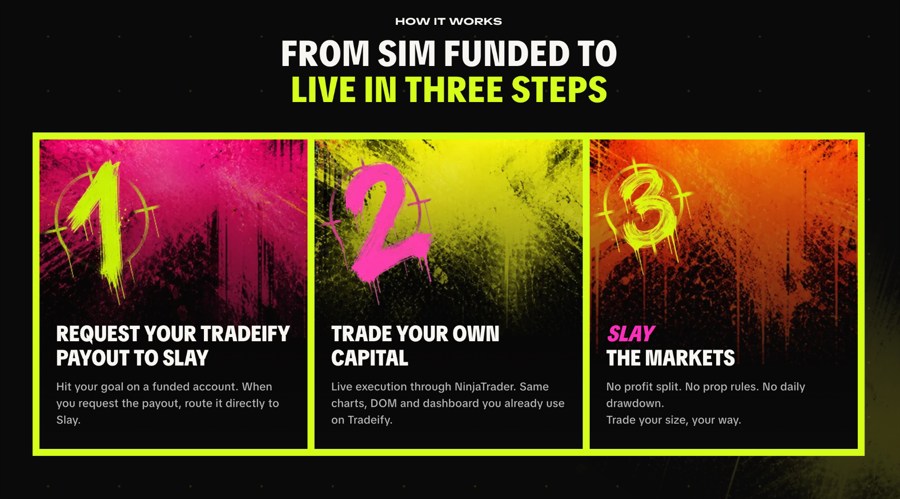
Interestingly, these US-based futures prop firms are becoming introducing brokers. One confirmed example is Tradeify, which recently launched its introducing brokerage unit, Slay Markets. The platform also signed a deal with NinjaTrader as the sole clearing firm.
Another recent move came from Topstep, which has registered with the National Futures Association (NFA) as a Swap Firm and has also been approved to operate as a Commodity Trading Advisor (CTA).
- AI Is Slowing Hiring at Prop Firms, Not Replacing Traders – Yet
- How This Platform Brings Smart Money Concepts to Mainstream Brokers and Prop Firms
- FundedHive Prop Firm CEO Calls Consistency Rule "a Payout Trap"
MyFundedFutures, another notable name in the US futures prop sector, also hinted at becoming a “fully licensed IB”.
An IB in the US can accept orders to buy or sell futures contracts, forex, commodity options, or swaps, but critically, it does not hold or accept customer funds to support those orders. It acts as a conduit, passing client orders to a Futures Commission Merchant (FCM) for execution and clearing.
A Swap Dealer, on the other hand, is an entity that presents itself as a dealer in swaps, makes markets in swaps, or regularly enters into swaps as principal for its own account in the ordinary course of business. Any entity crossing the $8 billion aggregate gross notional threshold in swap dealing activity must register with the CFTC.
FTMO Is an Outlier, but Others Have Potential, Too
FTMO, which is headquartered in the Czech Republic, is the only prop firm to go all in on the US. It completed its acquisition of OANDA, a major US forex brokerage, last December. Only four Retail Foreign Exchange Dealers (RFEDs) are currently registered with the NFA in the US, and OANDA is one of them.
An FCM sits at the centre of the US-regulated derivatives market, serving as both an order-taker and asset custodian. While an Introducing Broker simply connects clients to the market, an FCM goes further: it solicits and accepts orders to buy or sell futures contracts, options on futures, retail off-exchange forex, and swaps, and holds customer funds and assets to margin those positions.
When a trade is submitted, margin flows through the FCM to the exchange, meaning the FCM absorbs the financial risk if a client fails to meet a margin call. This direct exposure to counterparty risk is why FCMs are subject to significantly stricter capital adequacy standards and ongoing financial reporting obligations compared to IBs, and why the CFTC monitors their balance sheets on a routine basis.
The low-barrier IB model, which is attracting most US prop firms, is very popular. Currently, there are 885 registered IBs in the country.
When I was working in brokerages, I had big volumes of affiliates and introducing brokers. Some were refering 30+ depositing customers every day. Whilst I appreciate their business at that time of my career, I have never used an affiliate link to register a brokerage account and…
— Josh Dentrinos - Founder of Trader Fights (@PropJoshD) May 15, 2026
The US IB sector sits within the much larger US securities brokerage industry. According to Research and Markets, the US securities brokerage market was worth about $201 billion in 2024 and is projected to grow at a 4 per cent CAGR to $280.5 billion by 2033.
Although the specific IB-related revenue figure remains unknown, IBs earn through commission rebates from FCMs, typically through per-lot or volume-based fees, making their aggregate revenue highly dependent on trading volumes.
Although Tradeify’s goals are clear, Topstep’s plans as a Swap Dealer remain unknown. However, the registrations make two things clear: better protection under a regulatory regime and a chance to secure a piece of the US market.


