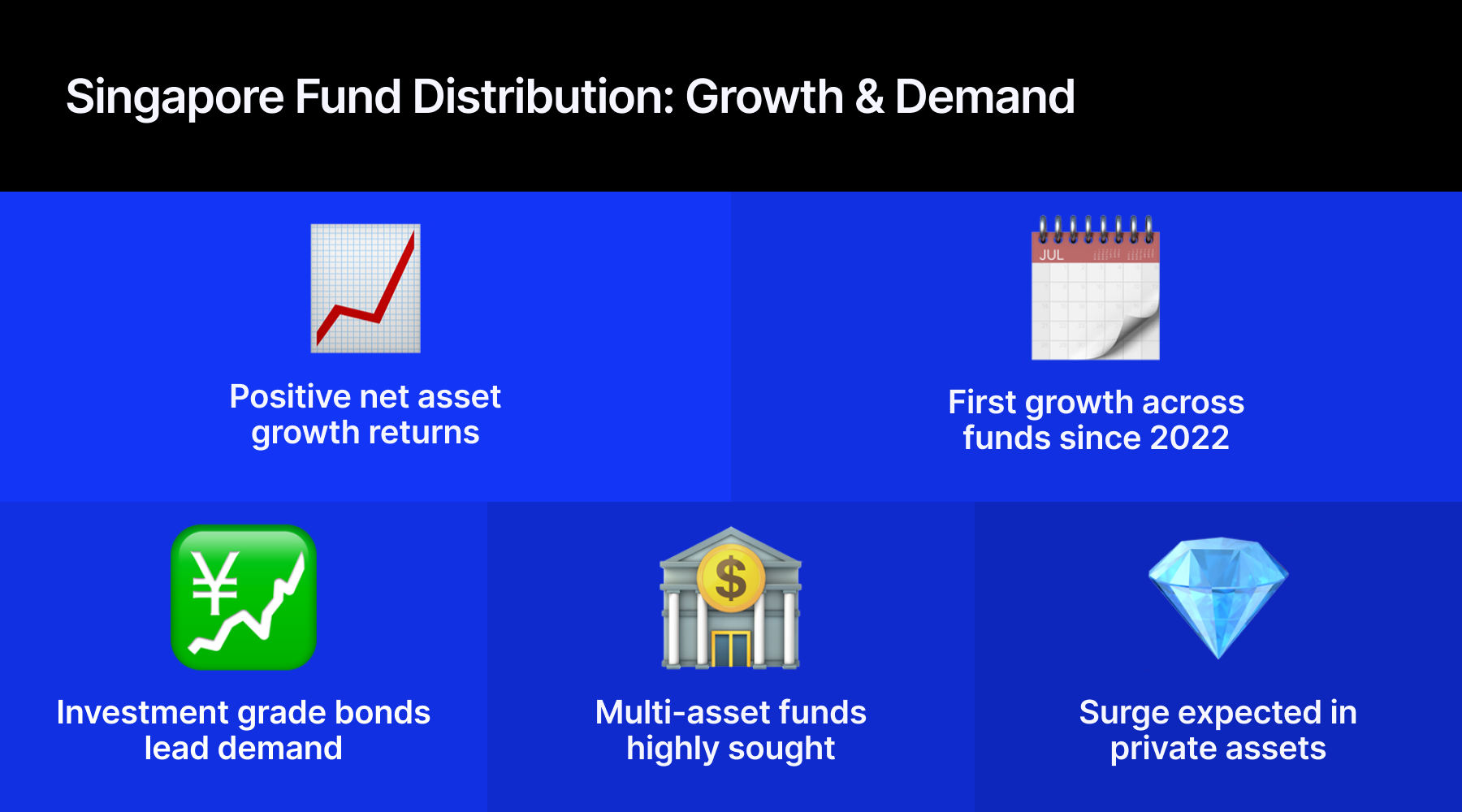
The country’s fund platforms report first positive net asset growth since 2022.
Hybrid “high tech, high touch” model emerges as preferred advisory approach.
While intermediaries continue to be the primary fund
distribution channel in Singapore, digital platforms are democratising access.
According to Crisil Coalition Greenwich research based on
interviews with some of the largest fund distributors in Singapore, fund distribution
platforms have reported positive net asset growth across equities, fixed
income and multi-asset
funds for the first time since 2022.
Fund distributors are optimistic that these favourable
conditions will continue – platforms expect to see positive net inflows across
the vast majority of fund types and strategies, and distributors are projecting
the strongest demand for investment grade bonds and multi-asset funds. They
also expect to see a surge in demand for private assets.
Gatekeepers and the Platform-Ready Ecosystem
Killian Lonergan, Head of Distribution Intelligence at BBH
According to Killian Lonergan, head of distribution
intelligence at BBH, private banks dominate flows in Singapore, particularly
for offshore funds.
“Retail
banks and platforms matter for scale but margins are thinner and access is
more selective,” he says. “Direct-to-consumer distribution is minimal for
foreign fund managers unless they have a strong brand, local onshore presence
or ETF-style simplicity.”
Lonergan adds that such a gatekeeper-driven ecosystem –
where commercial success is less about regulatory approval and more about being
‘platform-ready’ – is often underestimated by managers.
“Singapore
distributors increasingly behave like asset allocators, not just sales
platforms,” he says. “They actively curate product shelves and remove funds
that lack momentum, underperform peers or create operational complexity. As a
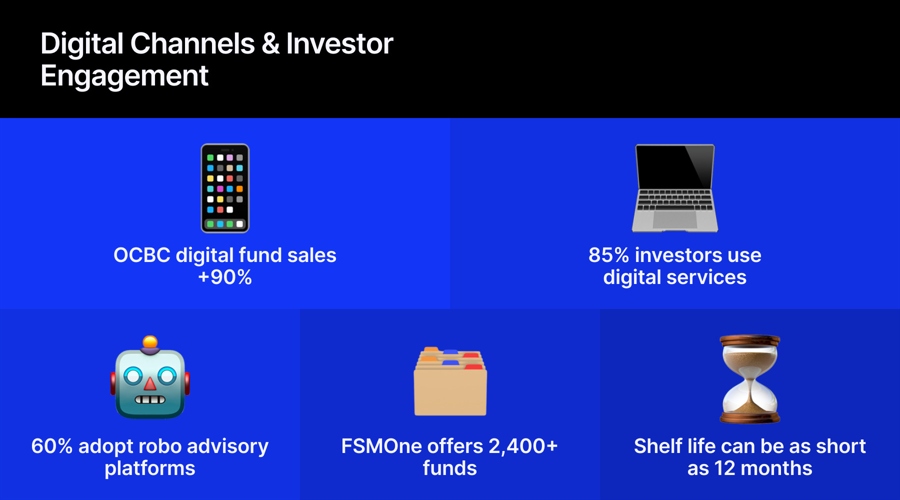
result, shelf life can be as short as 12 months.”
Timothy Liew, Head of investments at OCBC
An additional nuance to the market is that Singapore acts as
a regional booking centre, not just a domestic market. Investors may be
Southeast Asian, North Asian or Middle Eastern, but assets are often booked in
Singapore.
Banks Remain Core, Digital Channels Expand
Timothy Liew, head of investments at OCBC, agrees that banks
and independent financial advisory firms remain the primary avenue through
which retail investors access funds, mainly due to established client
relationships and advisory support.
“Online self-service channels have increased accessibility
for retail
investors by lowering entry barriers, both in terms of minimum investment
amounts and convenience, which has attracted a new cohort of younger, more
self-directed investors and expanded our investor base,” he says.
In 2025, OCBC saw a 90% year-on-year increase in sales
volume from funds invested through digital channels.
Elaine Tan, BNP Paribas
“That said, many customers still prefer advisory-led
channels when building more comprehensive or holistic portfolios,” adds Liew.
Online distributors encompass a broad spectrum of
intermediaries, including fund supermarkets, robo advisors, digital brokerages
and other technology-enabled platforms.
“These benefits have been amplified by a wave of financial
industry innovation and a supportive regulatory evolution focusing on investor
protection and transparency,” she says.
As online platforms, mobile apps and robo-advisors from both
new digital-first entrants and established intermediaries enhance their own
digital and mobile capabilities and continue to mature, Justin Christopher,
head of Asia at Calastone, also expects direct and digital channels to account
for a growing share of fund flows.
“We are seeing both the emergence of new mobile-first
platforms and a strong focus across the industry on delivering better investor
experiences and broader investment capabilities,” he adds. “As access to
products such as private market funds continues to expand, digital and mobile-based
models will be well positioned to respond quickly and provide investors
with greater choice and access.”
Direct-to-Consumer Models Gain Traction
Justin Christopher, Head of Asia at Calastone
One of the most interesting players in the
business-to-consumer space is FSMOne (formerly Fundsupermart.com), which
enables retail investors to directly select and purchase from more than 2,400
funds across various asset classes.
“Traditional channels such as banks and advisers often
provide personalised investment advice, but they may come with higher fees
including sales charges and wrap fees,” says Joshua Chim, general manager
FSMOne Singapore.
“There is a growing retail demand for cost-effective,
self-directed investing as a result of rising financial literacy among
investors.”
The Case for a Hybrid Advisory Model
Human-led channels provide tailored advice, long-term
relationships and curated portfolios, which are particularly valued by affluent
and mass affluent investors seeking confidence in their financial decisions.
That is the view of Luke Lim, managing director Phillip
Securities, who acknowledges that digital platforms have helped shift
expectations around access, cost and usability.
Luke Lim, Managing director, Phillip Securities
“However, we have also seen the continued need for trusted
advice when navigating life stage planning, risk management and broader
financial goals,” he says. “As investor needs evolve, a hybrid ‘high tech, high
touch’ approach is emerging as the most sustainable path forward.
This means
combining strong digital infrastructure with the trusted guidance of
technology-enabled financial advisers who understand an individual’s
priorities, life goals and emotional comfort with risk.”
Digital Pressure on Private Banking Models
Lonergan recognises that digital distribution options have
shifted Singapore’s retail investing landscape and that their influence on
shaping price transparency expectations, promoting clean share classes and
accelerating demand for lower-cost institutional-style products is increasing.
This has indirect implications for private banking
distribution, where there is a growing disconnect between traditional
distributor retrocession models and investor expectations. As a result,
managers are feeling the pressure to maintain parallel share class structures,
differentiated fee models and more sophisticated operational setups.
Singapore is an amazing city and it’s going to be plenty busy in future just serving as the regional finance center for SE Asia - the world’s fastest growing economic area with the worlds largest group of aspiring middle class citizens. So don’t worry about that.
However, Lonergan argues that their impact has been somewhat
overstated.
“While digital investment platforms and robo advisors have rapidly
gained traction among individual investors, they have not disintermediated
traditional advisory channels so much as expanded the front door for retail
engagement,” he says, referring to industry analysis suggesting that around 85%
of Singapore investors have used digital wealth services and nearly 60% use
robo advisory platforms as part of their investment journey.
“They have not displaced private banks for meaningful AUM
accumulation,” he adds. “Many investors begin on apps but still turn to human
advisers for broader planning, risk profiling and long-term allocation
decisions.”
While intermediaries continue to be the primary fund
distribution channel in Singapore, digital platforms are democratising access.
According to Crisil Coalition Greenwich research based on
interviews with some of the largest fund distributors in Singapore, fund distribution
platforms have reported positive net asset growth across equities, fixed
income and multi-asset
funds for the first time since 2022.
Fund distributors are optimistic that these favourable
conditions will continue – platforms expect to see positive net inflows across
the vast majority of fund types and strategies, and distributors are projecting
the strongest demand for investment grade bonds and multi-asset funds. They
also expect to see a surge in demand for private assets.
Gatekeepers and the Platform-Ready Ecosystem
Killian Lonergan, Head of Distribution Intelligence at BBH
According to Killian Lonergan, head of distribution
intelligence at BBH, private banks dominate flows in Singapore, particularly
for offshore funds.
“Retail
banks and platforms matter for scale but margins are thinner and access is
more selective,” he says. “Direct-to-consumer distribution is minimal for
foreign fund managers unless they have a strong brand, local onshore presence
or ETF-style simplicity.”
Lonergan adds that such a gatekeeper-driven ecosystem –
where commercial success is less about regulatory approval and more about being
‘platform-ready’ – is often underestimated by managers.
“Singapore
distributors increasingly behave like asset allocators, not just sales
platforms,” he says. “They actively curate product shelves and remove funds
that lack momentum, underperform peers or create operational complexity. As a
result, shelf life can be as short as 12 months.”
Timothy Liew, Head of investments at OCBC
An additional nuance to the market is that Singapore acts as
a regional booking centre, not just a domestic market. Investors may be
Southeast Asian, North Asian or Middle Eastern, but assets are often booked in
Singapore.
Banks Remain Core, Digital Channels Expand
Timothy Liew, head of investments at OCBC, agrees that banks
and independent financial advisory firms remain the primary avenue through
which retail investors access funds, mainly due to established client
relationships and advisory support.
“Online self-service channels have increased accessibility
for retail
investors by lowering entry barriers, both in terms of minimum investment
amounts and convenience, which has attracted a new cohort of younger, more
self-directed investors and expanded our investor base,” he says.
In 2025, OCBC saw a 90% year-on-year increase in sales
volume from funds invested through digital channels.
Elaine Tan, BNP Paribas
“That said, many customers still prefer advisory-led
channels when building more comprehensive or holistic portfolios,” adds Liew.
Online distributors encompass a broad spectrum of
intermediaries, including fund supermarkets, robo advisors, digital brokerages
and other technology-enabled platforms.
“These benefits have been amplified by a wave of financial
industry innovation and a supportive regulatory evolution focusing on investor
protection and transparency,” she says.
As online platforms, mobile apps and robo-advisors from both
new digital-first entrants and established intermediaries enhance their own
digital and mobile capabilities and continue to mature, Justin Christopher,
head of Asia at Calastone, also expects direct and digital channels to account
for a growing share of fund flows.
“We are seeing both the emergence of new mobile-first
platforms and a strong focus across the industry on delivering better investor
experiences and broader investment capabilities,” he adds. “As access to
products such as private market funds continues to expand, digital and mobile-based
models will be well positioned to respond quickly and provide investors
with greater choice and access.”
Direct-to-Consumer Models Gain Traction
Justin Christopher, Head of Asia at Calastone
One of the most interesting players in the
business-to-consumer space is FSMOne (formerly Fundsupermart.com), which
enables retail investors to directly select and purchase from more than 2,400
funds across various asset classes.
“Traditional channels such as banks and advisers often
provide personalised investment advice, but they may come with higher fees
including sales charges and wrap fees,” says Joshua Chim, general manager
FSMOne Singapore.
“There is a growing retail demand for cost-effective,
self-directed investing as a result of rising financial literacy among
investors.”
The Case for a Hybrid Advisory Model
Human-led channels provide tailored advice, long-term
relationships and curated portfolios, which are particularly valued by affluent
and mass affluent investors seeking confidence in their financial decisions.
That is the view of Luke Lim, managing director Phillip
Securities, who acknowledges that digital platforms have helped shift
expectations around access, cost and usability.
Luke Lim, Managing director, Phillip Securities
“However, we have also seen the continued need for trusted
advice when navigating life stage planning, risk management and broader
financial goals,” he says. “As investor needs evolve, a hybrid ‘high tech, high
touch’ approach is emerging as the most sustainable path forward.
This means
combining strong digital infrastructure with the trusted guidance of
technology-enabled financial advisers who understand an individual’s
priorities, life goals and emotional comfort with risk.”
Digital Pressure on Private Banking Models
Lonergan recognises that digital distribution options have
shifted Singapore’s retail investing landscape and that their influence on
shaping price transparency expectations, promoting clean share classes and
accelerating demand for lower-cost institutional-style products is increasing.
This has indirect implications for private banking
distribution, where there is a growing disconnect between traditional
distributor retrocession models and investor expectations. As a result,
managers are feeling the pressure to maintain parallel share class structures,
differentiated fee models and more sophisticated operational setups.
Singapore is an amazing city and it’s going to be plenty busy in future just serving as the regional finance center for SE Asia - the world’s fastest growing economic area with the worlds largest group of aspiring middle class citizens. So don’t worry about that.
However, Lonergan argues that their impact has been somewhat
overstated.
“While digital investment platforms and robo advisors have rapidly
gained traction among individual investors, they have not disintermediated
traditional advisory channels so much as expanded the front door for retail
engagement,” he says, referring to industry analysis suggesting that around 85%
of Singapore investors have used digital wealth services and nearly 60% use
robo advisory platforms as part of their investment journey.
“They have not displaced private banks for meaningful AUM
accumulation,” he adds. “Many investors begin on apps but still turn to human
advisers for broader planning, risk profiling and long-term allocation
decisions.”
Paul Golden is an experienced freelance financial journalist with a strong institutional background. Over the past two decades, he has written for globally recognised financial publications, covering topics such as market structure, regulation, trading behaviour, and economic policy.
Prop Firm Goat Funded Trader Says It Paid $26 Million to 22,279 of 1.2 Million Traders
Featured Videos
FMIQ: Get Verified Market Intelligence in Seconds | FM Intelligence
FMIQ: Get Verified Market Intelligence in Seconds | FM Intelligence
FMIQ: Get Verified Market Intelligence in Seconds | FM Intelligence
FMIQ: Get Verified Market Intelligence in Seconds | FM Intelligence
Meet FMIQ (FM Intelligence Quantitative), now available inside the FM Intelligence Portal.
Ask the market a question in plain language and get a sourced, verified answer in seconds. FMIQ gives you the figures, time periods, and sources you need to make informed decisions, without the need to work through dashboards, filters, or spreadsheet exports.
What makes FMIQ different?
✓ Ask questions in plain language, with no SQL or dashboard setup required.
✓ Get verified answers checked through an independent quality assurance step.
✓ Access sourced figures you can cite with confidence.
✓ Ask follow-up questions and build on the same conversation.
✓ Query seven datasets in one place, covering trading volumes, traffic, platforms, market movements, regulations, fines, and licences.
Built for professionals across the financial markets
- Editorial teams: Find reliable figures and support your reporting with clear sources.
- Commercial teams: Access the market data you need to prepare for client meetings and sales discussions.
- Research and analyst teams: Explore market trends and get answers to specific questions.
- Compliance teams: Access intelligence on regulations, fines, and licences.
Every query is run live, and answers go through an independent quality check. FMIQ is read-only, stays focused on your question, and does not alter the underlying data.
Built on Finance Magnates market intelligence, FMIQ helps professionals get the answers they need, when they need them.
Access FMIQ today: https://datalab.financemagnates.com/market?utm_source=youtube&utm_medium=video&utm_campaign=fmiq_phase1_mvp_launch
#FMIntelligence #FMIQ #MarketIntelligence #FinanceMagnates #FinancialMarkets #MarketResearch
Meet FMIQ (FM Intelligence Quantitative), now available inside the FM Intelligence Portal.
Ask the market a question in plain language and get a sourced, verified answer in seconds. FMIQ gives you the figures, time periods, and sources you need to make informed decisions, without the need to work through dashboards, filters, or spreadsheet exports.
What makes FMIQ different?
✓ Ask questions in plain language, with no SQL or dashboard setup required.
✓ Get verified answers checked through an independent quality assurance step.
✓ Access sourced figures you can cite with confidence.
✓ Ask follow-up questions and build on the same conversation.
✓ Query seven datasets in one place, covering trading volumes, traffic, platforms, market movements, regulations, fines, and licences.
Built for professionals across the financial markets
- Editorial teams: Find reliable figures and support your reporting with clear sources.
- Commercial teams: Access the market data you need to prepare for client meetings and sales discussions.
- Research and analyst teams: Explore market trends and get answers to specific questions.
- Compliance teams: Access intelligence on regulations, fines, and licences.
Every query is run live, and answers go through an independent quality check. FMIQ is read-only, stays focused on your question, and does not alter the underlying data.
Built on Finance Magnates market intelligence, FMIQ helps professionals get the answers they need, when they need them.
Access FMIQ today: https://datalab.financemagnates.com/market?utm_source=youtube&utm_medium=video&utm_campaign=fmiq_phase1_mvp_launch
#FMIntelligence #FMIQ #MarketIntelligence #FinanceMagnates #FinancialMarkets #MarketResearch
Meet FMIQ (FM Intelligence Quantitative), now available inside the FM Intelligence Portal.
Ask the market a question in plain language and get a sourced, verified answer in seconds. FMIQ gives you the figures, time periods, and sources you need to make informed decisions, without the need to work through dashboards, filters, or spreadsheet exports.
What makes FMIQ different?
✓ Ask questions in plain language, with no SQL or dashboard setup required.
✓ Get verified answers checked through an independent quality assurance step.
✓ Access sourced figures you can cite with confidence.
✓ Ask follow-up questions and build on the same conversation.
✓ Query seven datasets in one place, covering trading volumes, traffic, platforms, market movements, regulations, fines, and licences.
Built for professionals across the financial markets
- Editorial teams: Find reliable figures and support your reporting with clear sources.
- Commercial teams: Access the market data you need to prepare for client meetings and sales discussions.
- Research and analyst teams: Explore market trends and get answers to specific questions.
- Compliance teams: Access intelligence on regulations, fines, and licences.
Every query is run live, and answers go through an independent quality check. FMIQ is read-only, stays focused on your question, and does not alter the underlying data.
Built on Finance Magnates market intelligence, FMIQ helps professionals get the answers they need, when they need them.
Access FMIQ today: https://datalab.financemagnates.com/market?utm_source=youtube&utm_medium=video&utm_campaign=fmiq_phase1_mvp_launch
#FMIntelligence #FMIQ #MarketIntelligence #FinanceMagnates #FinancialMarkets #MarketResearch
Meet FMIQ (FM Intelligence Quantitative), now available inside the FM Intelligence Portal.
Ask the market a question in plain language and get a sourced, verified answer in seconds. FMIQ gives you the figures, time periods, and sources you need to make informed decisions, without the need to work through dashboards, filters, or spreadsheet exports.
What makes FMIQ different?
✓ Ask questions in plain language, with no SQL or dashboard setup required.
✓ Get verified answers checked through an independent quality assurance step.
✓ Access sourced figures you can cite with confidence.
✓ Ask follow-up questions and build on the same conversation.
✓ Query seven datasets in one place, covering trading volumes, traffic, platforms, market movements, regulations, fines, and licences.
Built for professionals across the financial markets
- Editorial teams: Find reliable figures and support your reporting with clear sources.
- Commercial teams: Access the market data you need to prepare for client meetings and sales discussions.
- Research and analyst teams: Explore market trends and get answers to specific questions.
- Compliance teams: Access intelligence on regulations, fines, and licences.
Every query is run live, and answers go through an independent quality check. FMIQ is read-only, stays focused on your question, and does not alter the underlying data.
Built on Finance Magnates market intelligence, FMIQ helps professionals get the answers they need, when they need them.
Access FMIQ today: https://datalab.financemagnates.com/market?utm_source=youtube&utm_medium=video&utm_campaign=fmiq_phase1_mvp_launch
#FMIntelligence #FMIQ #MarketIntelligence #FinanceMagnates #FinancialMarkets #MarketResearch
MyForexFunds Details No Conflict Model; UK Eyes iPhone Wallets
MyForexFunds Details No Conflict Model; UK Eyes iPhone Wallets
MyForexFunds Details No Conflict Model; UK Eyes iPhone Wallets
MyForexFunds Details No Conflict Model; UK Eyes iPhone Wallets
MyForexFunds Details No Conflict Model; UK Eyes iPhone Wallets
MyForexFunds Details No Conflict Model; UK Eyes iPhone Wallets
Today’s financial news recap covers MyForexFunds outlines its Evolution relaunch, UK brokers could get their own iPhone wallets, Goat Funded Trader reports $26 million in payouts, and Kalshi explains its pitch to brokers.
Finance Magnates Daily Recap brings you the latest news from forex and CFD brokers, fintech, payments, cryptocurrency, digital assets, trading platforms, financial regulation and global markets.
Get the key company news, executive moves, deals, regulatory updates and market developments of the day, in just a few minutes. New episodes published every weekday.
Read more: https://www.financemagnates.com
#FinanceMagnates #ForexNews #FintechNews
Today’s financial news recap covers MyForexFunds outlines its Evolution relaunch, UK brokers could get their own iPhone wallets, Goat Funded Trader reports $26 million in payouts, and Kalshi explains its pitch to brokers.
Finance Magnates Daily Recap brings you the latest news from forex and CFD brokers, fintech, payments, cryptocurrency, digital assets, trading platforms, financial regulation and global markets.
Get the key company news, executive moves, deals, regulatory updates and market developments of the day, in just a few minutes. New episodes published every weekday.
Read more: https://www.financemagnates.com
#FinanceMagnates #ForexNews #FintechNews
Today’s financial news recap covers MyForexFunds outlines its Evolution relaunch, UK brokers could get their own iPhone wallets, Goat Funded Trader reports $26 million in payouts, and Kalshi explains its pitch to brokers.
Finance Magnates Daily Recap brings you the latest news from forex and CFD brokers, fintech, payments, cryptocurrency, digital assets, trading platforms, financial regulation and global markets.
Get the key company news, executive moves, deals, regulatory updates and market developments of the day, in just a few minutes. New episodes published every weekday.
Read more: https://www.financemagnates.com
#FinanceMagnates #ForexNews #FintechNews
Today’s financial news recap covers MyForexFunds outlines its Evolution relaunch, UK brokers could get their own iPhone wallets, Goat Funded Trader reports $26 million in payouts, and Kalshi explains its pitch to brokers.
Finance Magnates Daily Recap brings you the latest news from forex and CFD brokers, fintech, payments, cryptocurrency, digital assets, trading platforms, financial regulation and global markets.
Get the key company news, executive moves, deals, regulatory updates and market developments of the day, in just a few minutes. New episodes published every weekday.
Read more: https://www.financemagnates.com
#FinanceMagnates #ForexNews #FintechNews
Today’s financial news recap covers MyForexFunds outlines its Evolution relaunch, UK brokers could get their own iPhone wallets, Goat Funded Trader reports $26 million in payouts, and Kalshi explains its pitch to brokers.
Finance Magnates Daily Recap brings you the latest news from forex and CFD brokers, fintech, payments, cryptocurrency, digital assets, trading platforms, financial regulation and global markets.
Get the key company news, executive moves, deals, regulatory updates and market developments of the day, in just a few minutes. New episodes published every weekday.
Read more: https://www.financemagnates.com
#FinanceMagnates #ForexNews #FintechNews
Today’s financial news recap covers MyForexFunds outlines its Evolution relaunch, UK brokers could get their own iPhone wallets, Goat Funded Trader reports $26 million in payouts, and Kalshi explains its pitch to brokers.
Finance Magnates Daily Recap brings you the latest news from forex and CFD brokers, fintech, payments, cryptocurrency, digital assets, trading platforms, financial regulation and global markets.
Get the key company news, executive moves, deals, regulatory updates and market developments of the day, in just a few minutes. New episodes published every weekday.
Read more: https://www.financemagnates.com
#FinanceMagnates #ForexNews #FintechNews
How Much Are CFD Industry Executives Making; Plus500 Buys Brazilian Broker
How Much Are CFD Industry Executives Making; Plus500 Buys Brazilian Broker
How Much Are CFD Industry Executives Making; Plus500 Buys Brazilian Broker
How Much Are CFD Industry Executives Making; Plus500 Buys Brazilian Broker
How Much Are CFD Industry Executives Making; Plus500 Buys Brazilian Broker
How Much Are CFD Industry Executives Making; Plus500 Buys Brazilian Broker
Today’s financial news recap covers FinTop Consulting shared its 2026 salary surveys for Dubai, London and Cyprus with Finance Magnates, Plus500 buys a Brazilian broker, and Google opens the door to CFD ads in Denmark and Chile.
Finance Magnates Daily Recap brings you the latest news from forex and CFD brokers, fintech, payments, cryptocurrency, digital assets, trading platforms, financial regulation and global markets.
Get the key company news, executive moves, deals, regulatory updates and market developments of the day, in just a few minutes. New episodes published every weekday.
Read more: https://www.financemagnates.com
#FinanceMagnates #ForexNews #FintechNews
Today’s financial news recap covers FinTop Consulting shared its 2026 salary surveys for Dubai, London and Cyprus with Finance Magnates, Plus500 buys a Brazilian broker, and Google opens the door to CFD ads in Denmark and Chile.
Finance Magnates Daily Recap brings you the latest news from forex and CFD brokers, fintech, payments, cryptocurrency, digital assets, trading platforms, financial regulation and global markets.
Get the key company news, executive moves, deals, regulatory updates and market developments of the day, in just a few minutes. New episodes published every weekday.
Read more: https://www.financemagnates.com
#FinanceMagnates #ForexNews #FintechNews
Today’s financial news recap covers FinTop Consulting shared its 2026 salary surveys for Dubai, London and Cyprus with Finance Magnates, Plus500 buys a Brazilian broker, and Google opens the door to CFD ads in Denmark and Chile.
Finance Magnates Daily Recap brings you the latest news from forex and CFD brokers, fintech, payments, cryptocurrency, digital assets, trading platforms, financial regulation and global markets.
Get the key company news, executive moves, deals, regulatory updates and market developments of the day, in just a few minutes. New episodes published every weekday.
Read more: https://www.financemagnates.com
#FinanceMagnates #ForexNews #FintechNews
Today’s financial news recap covers FinTop Consulting shared its 2026 salary surveys for Dubai, London and Cyprus with Finance Magnates, Plus500 buys a Brazilian broker, and Google opens the door to CFD ads in Denmark and Chile.
Finance Magnates Daily Recap brings you the latest news from forex and CFD brokers, fintech, payments, cryptocurrency, digital assets, trading platforms, financial regulation and global markets.
Get the key company news, executive moves, deals, regulatory updates and market developments of the day, in just a few minutes. New episodes published every weekday.
Read more: https://www.financemagnates.com
#FinanceMagnates #ForexNews #FintechNews
Today’s financial news recap covers FinTop Consulting shared its 2026 salary surveys for Dubai, London and Cyprus with Finance Magnates, Plus500 buys a Brazilian broker, and Google opens the door to CFD ads in Denmark and Chile.
Finance Magnates Daily Recap brings you the latest news from forex and CFD brokers, fintech, payments, cryptocurrency, digital assets, trading platforms, financial regulation and global markets.
Get the key company news, executive moves, deals, regulatory updates and market developments of the day, in just a few minutes. New episodes published every weekday.
Read more: https://www.financemagnates.com
#FinanceMagnates #ForexNews #FintechNews
Today’s financial news recap covers FinTop Consulting shared its 2026 salary surveys for Dubai, London and Cyprus with Finance Magnates, Plus500 buys a Brazilian broker, and Google opens the door to CFD ads in Denmark and Chile.
Finance Magnates Daily Recap brings you the latest news from forex and CFD brokers, fintech, payments, cryptocurrency, digital assets, trading platforms, financial regulation and global markets.
Get the key company news, executive moves, deals, regulatory updates and market developments of the day, in just a few minutes. New episodes published every weekday.
Read more: https://www.financemagnates.com
#FinanceMagnates #ForexNews #FintechNews
Capital.com UAE Clients Trade $1T in H1; Saxo Signs Nine Athletes
Capital.com UAE Clients Trade $1T in H1; Saxo Signs Nine Athletes
Capital.com UAE Clients Trade $1T in H1; Saxo Signs Nine Athletes
Capital.com UAE Clients Trade $1T in H1; Saxo Signs Nine Athletes
Capital.com UAE Clients Trade $1T in H1; Saxo Signs Nine Athletes
Capital.com UAE Clients Trade $1T in H1; Saxo Signs Nine Athletes
Today’s financial news recap covers Capital.com’s trading data, Saxo Bank’s athlete campaign, Revolut’s Gibraltar crypto licence, and eToro’s new desktop terminal.
Finance Magnates Daily Recap brings you the latest news from forex and CFD brokers, fintech, payments, cryptocurrency, digital assets, trading platforms, financial regulation and global markets.
Get the key company news, executive moves, deals, regulatory updates and market developments of the day, in just a few minutes. New episodes published every weekday.
Read more: https://www.financemagnates.com
#FinanceMagnates #ForexNews #FintechNews
Today’s financial news recap covers Capital.com’s trading data, Saxo Bank’s athlete campaign, Revolut’s Gibraltar crypto licence, and eToro’s new desktop terminal.
Finance Magnates Daily Recap brings you the latest news from forex and CFD brokers, fintech, payments, cryptocurrency, digital assets, trading platforms, financial regulation and global markets.
Get the key company news, executive moves, deals, regulatory updates and market developments of the day, in just a few minutes. New episodes published every weekday.
Read more: https://www.financemagnates.com
#FinanceMagnates #ForexNews #FintechNews
Today’s financial news recap covers Capital.com’s trading data, Saxo Bank’s athlete campaign, Revolut’s Gibraltar crypto licence, and eToro’s new desktop terminal.
Finance Magnates Daily Recap brings you the latest news from forex and CFD brokers, fintech, payments, cryptocurrency, digital assets, trading platforms, financial regulation and global markets.
Get the key company news, executive moves, deals, regulatory updates and market developments of the day, in just a few minutes. New episodes published every weekday.
Read more: https://www.financemagnates.com
#FinanceMagnates #ForexNews #FintechNews
Today’s financial news recap covers Capital.com’s trading data, Saxo Bank’s athlete campaign, Revolut’s Gibraltar crypto licence, and eToro’s new desktop terminal.
Finance Magnates Daily Recap brings you the latest news from forex and CFD brokers, fintech, payments, cryptocurrency, digital assets, trading platforms, financial regulation and global markets.
Get the key company news, executive moves, deals, regulatory updates and market developments of the day, in just a few minutes. New episodes published every weekday.
Read more: https://www.financemagnates.com
#FinanceMagnates #ForexNews #FintechNews
Today’s financial news recap covers Capital.com’s trading data, Saxo Bank’s athlete campaign, Revolut’s Gibraltar crypto licence, and eToro’s new desktop terminal.
Finance Magnates Daily Recap brings you the latest news from forex and CFD brokers, fintech, payments, cryptocurrency, digital assets, trading platforms, financial regulation and global markets.
Get the key company news, executive moves, deals, regulatory updates and market developments of the day, in just a few minutes. New episodes published every weekday.
Read more: https://www.financemagnates.com
#FinanceMagnates #ForexNews #FintechNews
Today’s financial news recap covers Capital.com’s trading data, Saxo Bank’s athlete campaign, Revolut’s Gibraltar crypto licence, and eToro’s new desktop terminal.
Finance Magnates Daily Recap brings you the latest news from forex and CFD brokers, fintech, payments, cryptocurrency, digital assets, trading platforms, financial regulation and global markets.
Get the key company news, executive moves, deals, regulatory updates and market developments of the day, in just a few minutes. New episodes published every weekday.
Read more: https://www.financemagnates.com
#FinanceMagnates #ForexNews #FintechNews
CXM Group to Buy TD Markets; Interactive Brokers Raises Dividend
CXM Group to Buy TD Markets; Interactive Brokers Raises Dividend
CXM Group to Buy TD Markets; Interactive Brokers Raises Dividend
CXM Group to Buy TD Markets; Interactive Brokers Raises Dividend
CXM Group to Buy TD Markets; Interactive Brokers Raises Dividend
CXM Group to Buy TD Markets; Interactive Brokers Raises Dividend
Today’s financial news recap covers CXM Group agrees to acquire TD Markets, Interactive Brokers raises its dividend, Your Bourse and 4XPORTAL formalise a technology partnership, and IC completes its rebranding from IC Markets.
Finance Magnates Daily Recap brings you the latest news from forex and CFD brokers, fintech, payments, cryptocurrency, digital assets, trading platforms, financial regulation and global markets.
Get the key company news, executive moves, deals, regulatory updates and market developments of the day, in just a few minutes. New episodes published every weekday.
Read more: https://www.financemagnates.com
#FinanceMagnates #ForexNews #FintechNews
Today’s financial news recap covers CXM Group agrees to acquire TD Markets, Interactive Brokers raises its dividend, Your Bourse and 4XPORTAL formalise a technology partnership, and IC completes its rebranding from IC Markets.
Finance Magnates Daily Recap brings you the latest news from forex and CFD brokers, fintech, payments, cryptocurrency, digital assets, trading platforms, financial regulation and global markets.
Get the key company news, executive moves, deals, regulatory updates and market developments of the day, in just a few minutes. New episodes published every weekday.
Read more: https://www.financemagnates.com
#FinanceMagnates #ForexNews #FintechNews
Today’s financial news recap covers CXM Group agrees to acquire TD Markets, Interactive Brokers raises its dividend, Your Bourse and 4XPORTAL formalise a technology partnership, and IC completes its rebranding from IC Markets.
Finance Magnates Daily Recap brings you the latest news from forex and CFD brokers, fintech, payments, cryptocurrency, digital assets, trading platforms, financial regulation and global markets.
Get the key company news, executive moves, deals, regulatory updates and market developments of the day, in just a few minutes. New episodes published every weekday.
Read more: https://www.financemagnates.com
#FinanceMagnates #ForexNews #FintechNews
Today’s financial news recap covers CXM Group agrees to acquire TD Markets, Interactive Brokers raises its dividend, Your Bourse and 4XPORTAL formalise a technology partnership, and IC completes its rebranding from IC Markets.
Finance Magnates Daily Recap brings you the latest news from forex and CFD brokers, fintech, payments, cryptocurrency, digital assets, trading platforms, financial regulation and global markets.
Get the key company news, executive moves, deals, regulatory updates and market developments of the day, in just a few minutes. New episodes published every weekday.
Read more: https://www.financemagnates.com
#FinanceMagnates #ForexNews #FintechNews
Today’s financial news recap covers CXM Group agrees to acquire TD Markets, Interactive Brokers raises its dividend, Your Bourse and 4XPORTAL formalise a technology partnership, and IC completes its rebranding from IC Markets.
Finance Magnates Daily Recap brings you the latest news from forex and CFD brokers, fintech, payments, cryptocurrency, digital assets, trading platforms, financial regulation and global markets.
Get the key company news, executive moves, deals, regulatory updates and market developments of the day, in just a few minutes. New episodes published every weekday.
Read more: https://www.financemagnates.com
#FinanceMagnates #ForexNews #FintechNews
Today’s financial news recap covers CXM Group agrees to acquire TD Markets, Interactive Brokers raises its dividend, Your Bourse and 4XPORTAL formalise a technology partnership, and IC completes its rebranding from IC Markets.
Finance Magnates Daily Recap brings you the latest news from forex and CFD brokers, fintech, payments, cryptocurrency, digital assets, trading platforms, financial regulation and global markets.
Get the key company news, executive moves, deals, regulatory updates and market developments of the day, in just a few minutes. New episodes published every weekday.
Read more: https://www.financemagnates.com
#FinanceMagnates #ForexNews #FintechNews