"Capital Market Cannot Function Like Gambling," KNF's Adamski Says as Regulator Widens CFD Review

Monday, 18/05/2026 | 12:01 GMT by Damian Chmiel
  • The watchdog wants to ease entry rules for stocks, bonds, and UCITS ETFs, while tightening expectations around complex high-risk instruments.
  • Deputy Chairman Adamski signals deeper scrutiny of CFD onboarding at Polish and passporting brokers after the record XTB fine.
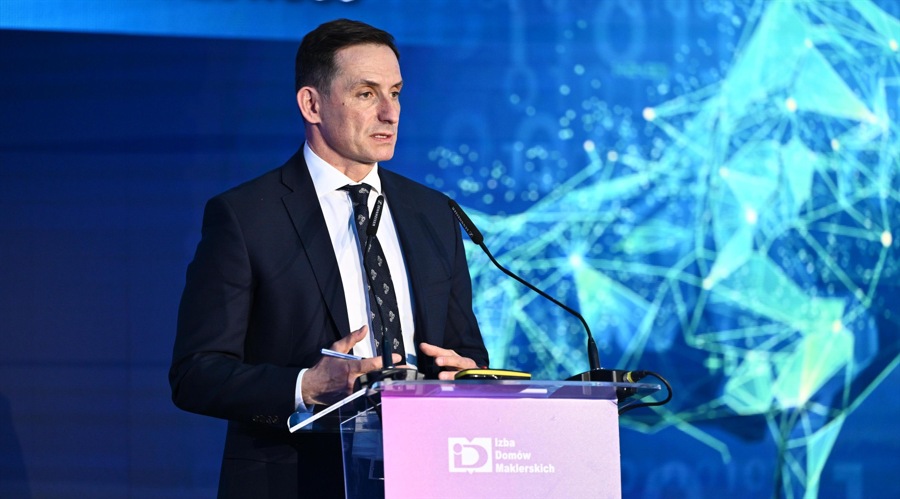
Dariusz Adamski, the Deputy Chairman of Poland's KNF

The Polish Financial Supervision Authority (PFSA or KNF) is reviewing how CFDs are sold to retail clients in Poland, including by brokers operating across borders, the regulator's deputy chairman Dariusz Adamski said in an interview with the daily Parkiet published last week.

The comments are the first detailed public elaboration by KNF leadership since the watchdog hit XTB with a record PLN 20 million ($5.5 million) penalty in March for breaches of MiFID II rules tied to CFD onboarding. Adamski did not name any firm currently under review, but the framing leaves little doubt about the direction of travel.

The Gambling Line

Asked whether KNF would soften the MiFID suitability test for retail entrants, Adamski drew a sharp line between simple products and complex ones.

For uncomplicated instruments, he said, the regulator wants a less intimidating onboarding journey. For complex, high-risk products, the bar moves the other way.

"The capital market cannot function like gambling," Adamski told Parkiet. "Investing should be based on informed decisions, understanding of risk, and building long-term value, both for investors and the entire economy."

Pressed on whether the line was aimed at CFDs in particular, Adamski stopped short of naming the asset class explicitly but gave the closest public confirmation yet of an active review.

"We are currently analyzing how CFD products are offered, both by domestic brokers and by entities operating cross-border," he said, adding that KNF's main interest was "how investor experience, knowledge and understanding of the risks associated with this asset class is assessed" and whether the process matches MiFID standards.

Onboarding Becomes the Battleground

The XTB case has become the template. In its March 30 decision, KNF found that XTB used client questionnaires between January 2022 and September 2023 that did not adequately measure customers' experience with complex financial products, and that the broker had failed to define target groups and disclose CFD risks properly.

The penalty is the largest the regulator has ever imposed on a Polish brokerage house.

XTB shareholders shrugged off the fine, with the stock climbing to a fresh all-time high the day after the decision was made public. Adamski's interview suggests KNF is more focused on changing industry practice than on stacking up additional headline penalties.

"Our goal is not to impose another round of record fines in a year or so," he said, "but to ensure that within a few months the market operates fully properly." Failing that, the regulator would, in his words, "roll out the heavy artillery."

Cross-Border Brokers Also in the Frame

The reference to passporting firms is the more novel signal. Poland is one of the largest retail CFD markets in Central Europe and has historically attracted brokers licensed in Cyprus, Malta, and other EU jurisdictions that distribute into the country under MiFID II rights.

Poland's CFD regime is already among the most restrictive in Europe, pairing ESMA-aligned leverage caps with a narrower "experienced trader" carve-out that allows up to 100:1 leverage for clients meeting strict volume and knowledge thresholds.

Layered on top, brokers must run MiFID II appropriateness checks, define target markets for complex products, and ensure marketing materials are not misleading.

Adamski's remarks indicate KNF intends to apply those rules with equal weight to firms that book Polish clients from outside Poland, an area where domestic regulators have historically had thinner visibility.

Easier Path for Stocks, Bonds, and ETFs

The other side of Adamski's message is a planned loosening for less complex products. He told Parkiet that current onboarding for shares, bonds, UCITS ETFs, and standard fund products had become a barrier in cases where it did not need to be one.

"At times one could get the impression that those responsible for compliance at some financial institutions interpreted MiFID requirements in an extremely conservative way," he said. The result, he added, was that procedures "started to live their own life and became an end in themselves."

The thrust echoes findings published in March by ESMA, which acknowledged that MiFID II disclosure requirements and suitability checks were pushing retail investors away from regulated channels.

The pan-European regulator said it would pursue "significant simplification" of parts of the framework.

What It Means for Brokers

For Polish-licensed brokers and the passporting firms that compete with them, the message is two-track: regulatory friction around simple products is set to fall, while the appropriateness, target-market, and risk-disclosure regime around CFDs will be enforced more aggressively.

KNF has not published a timeline for either workstream. Adamski said legislative changes will be needed to make the onboarding simplification permanent and that the regulator was working with the finance ministry on the framework.

He also acknowledged the limits of enforcement as a deterrent. Cases like the XTB penalty, originally tied to conduct between 2022 and 2023, can take years to conclude. The regulator's preference, he said, is for brokers to recalibrate now.

The Polish Financial Supervision Authority (PFSA or KNF) is reviewing how CFDs are sold to retail clients in Poland, including by brokers operating across borders, the regulator's deputy chairman Dariusz Adamski said in an interview with the daily Parkiet published last week.

The comments are the first detailed public elaboration by KNF leadership since the watchdog hit XTB with a record PLN 20 million ($5.5 million) penalty in March for breaches of MiFID II rules tied to CFD onboarding. Adamski did not name any firm currently under review, but the framing leaves little doubt about the direction of travel.

The Gambling Line

Asked whether KNF would soften the MiFID suitability test for retail entrants, Adamski drew a sharp line between simple products and complex ones.

For uncomplicated instruments, he said, the regulator wants a less intimidating onboarding journey. For complex, high-risk products, the bar moves the other way.

"The capital market cannot function like gambling," Adamski told Parkiet. "Investing should be based on informed decisions, understanding of risk, and building long-term value, both for investors and the entire economy."

Pressed on whether the line was aimed at CFDs in particular, Adamski stopped short of naming the asset class explicitly but gave the closest public confirmation yet of an active review.

"We are currently analyzing how CFD products are offered, both by domestic brokers and by entities operating cross-border," he said, adding that KNF's main interest was "how investor experience, knowledge and understanding of the risks associated with this asset class is assessed" and whether the process matches MiFID standards.

Onboarding Becomes the Battleground

The XTB case has become the template. In its March 30 decision, KNF found that XTB used client questionnaires between January 2022 and September 2023 that did not adequately measure customers' experience with complex financial products, and that the broker had failed to define target groups and disclose CFD risks properly.

The penalty is the largest the regulator has ever imposed on a Polish brokerage house.

XTB shareholders shrugged off the fine, with the stock climbing to a fresh all-time high the day after the decision was made public. Adamski's interview suggests KNF is more focused on changing industry practice than on stacking up additional headline penalties.

"Our goal is not to impose another round of record fines in a year or so," he said, "but to ensure that within a few months the market operates fully properly." Failing that, the regulator would, in his words, "roll out the heavy artillery."

Cross-Border Brokers Also in the Frame

The reference to passporting firms is the more novel signal. Poland is one of the largest retail CFD markets in Central Europe and has historically attracted brokers licensed in Cyprus, Malta, and other EU jurisdictions that distribute into the country under MiFID II rights.

Poland's CFD regime is already among the most restrictive in Europe, pairing ESMA-aligned leverage caps with a narrower "experienced trader" carve-out that allows up to 100:1 leverage for clients meeting strict volume and knowledge thresholds.

Layered on top, brokers must run MiFID II appropriateness checks, define target markets for complex products, and ensure marketing materials are not misleading.

Adamski's remarks indicate KNF intends to apply those rules with equal weight to firms that book Polish clients from outside Poland, an area where domestic regulators have historically had thinner visibility.

Easier Path for Stocks, Bonds, and ETFs

The other side of Adamski's message is a planned loosening for less complex products. He told Parkiet that current onboarding for shares, bonds, UCITS ETFs, and standard fund products had become a barrier in cases where it did not need to be one.

"At times one could get the impression that those responsible for compliance at some financial institutions interpreted MiFID requirements in an extremely conservative way," he said. The result, he added, was that procedures "started to live their own life and became an end in themselves."

The thrust echoes findings published in March by ESMA, which acknowledged that MiFID II disclosure requirements and suitability checks were pushing retail investors away from regulated channels.

The pan-European regulator said it would pursue "significant simplification" of parts of the framework.

What It Means for Brokers

For Polish-licensed brokers and the passporting firms that compete with them, the message is two-track: regulatory friction around simple products is set to fall, while the appropriateness, target-market, and risk-disclosure regime around CFDs will be enforced more aggressively.

KNF has not published a timeline for either workstream. Adamski said legislative changes will be needed to make the onboarding simplification permanent and that the regulator was working with the finance ministry on the framework.

He also acknowledged the limits of enforcement as a deterrent. Cases like the XTB penalty, originally tied to conduct between 2022 and 2023, can take years to conclude. The regulator's preference, he said, is for brokers to recalibrate now.

About the Author: Damian Chmiel
Damian Chmiel
  • 3555 Articles
  • 111 Followers
About the Author: Damian Chmiel
Damian Chmiel is a Senior Analyst & Editor at Finance Magnates with more than 15 years of experience in the CFD and online trading industry. Active as both a trader and journalist since 2010, he focuses on broker coverage, fintech innovation, and regulatory developments across Europe, the Middle East, and Asia. His work includes interviews with C-level leaders at major brokerages and fintech platforms, as well as co-authoring Finance Magnates’ quarterly industry benchmarking reports. Damian’s reporting is data-driven, market-aware, and grounded in direct industry engagement. His analysis and commentary have also been cited by external media outlets, including Investing.com, Binance, The Asset, Stockhead, and Dispatch. Education: MA in Finance and Accounting, Cracow University of Economics
  • 3555 Articles
  • 111 Followers

More from the Author

Retail FX

!"#$%&'()*+,-./0123456789:;<=>?@ABCDEFGHIJKLMNOPQRSTUVWXYZ[\]^_`abcdefghijklmnopqrstuvwxyz{|} !"#$%&'()*+,-./0123456789:;<=>?@ABCDEFGHIJKLMNOPQRSTUVWXYZ[\]^_`abcdefghijklmnopqrstuvwxyz{|}