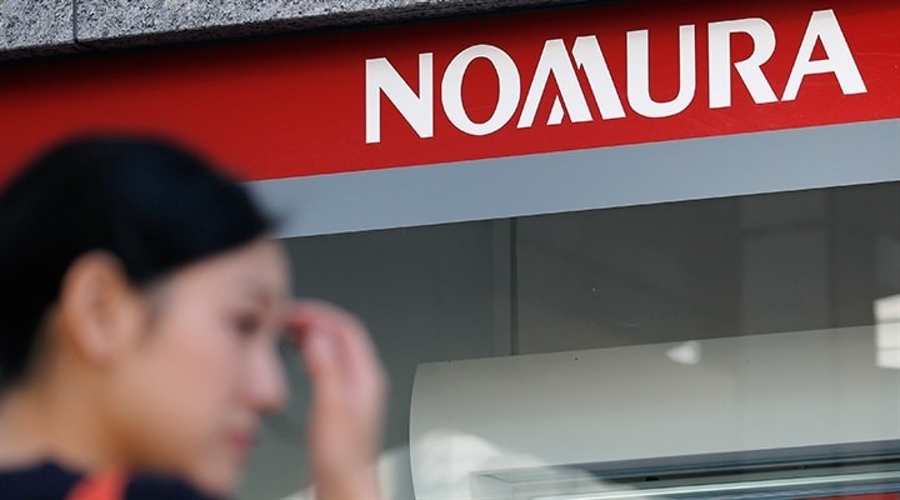
Wealth Management hit a nine-year high, while Investment Management saw record AUM.
According to the CEO, the company aims to maintain ROE of 8–10% or higher.
Nomura
Holdings, Inc., Japan's largest brokerage and investment bank, reported a
robust first quarter for the fiscal year 2025 (FY25), with net income more than
tripling year-on-year (YoY) to 68.9 billion yen ($428 million).
Nomura Reports Strong Q1
Results, Wealth Management Hits Nine-Year High
The
company's three core business segments posted a combined pretax income of 86.6
billion yen, up 12% from the previous quarter and three times higher than the
same period last year. This marks the fifth consecutive quarter of growth for
these segments.
Nomura's
Wealth Management division recorded its best quarterly performance in nine
years, with pretax income surging 84% YoY to 42.3 billion yen. The division's
success was attributed to record-high recurring revenue assets and recurring
revenue, driven by a segment-based approach to client services.
Kentaro Okuda, Nomura's President and Group CEO
“Our
Wealth Management business had its best quarter in nine years as our
segment-based approach drove recurring revenue assets and recurring revenue to
a record high,” said Kentaro Okuda, Nomura's President and Group CEO.
The
Investment Management division also saw significant growth, with assets under
management reaching an all-time high of 92.5 trillion yen. Pretax income for
this segment jumped to 23.2 billion yen, a 6.4-fold increase from the previous
year. Notably, alternative assets under management surpassed 2 trillion yen,
reflecting the company's expanding presence in private markets.
Nomura
reported earnings per share of 22.36 yen, up 24% from the previous quarter and
three times higher than the same period last year. The company's return on
equity (ROE) for the first quarter stood at 8.1%.
Looking
ahead, Okuda emphasized the company's commitment to its global strategy,
stating, “We will continue to intensify our global strategy leveraging our
Japan franchise to consistently achieve ROE of 8 to 10 percent or more.”
Several
months ago, Bloomberg reported that the company led by Okuda has set an
ambitious financial target for the coming years. The goal is to reach a pre-tax
income of over 500 billion yen (approximately $3.2 billion) by the end of March
2031.
Personnel Changes and
Strategic Investments
In recent
developments, Nomura has brought on board a new Chief Economist for Developed
Markets, David Seif. The appointee, who has a doctoral degree, brings more than 15 years of
experience in macroeconomic research from prominent hedge funds. According to
official statements, the new economist will be stationed in New York and will
report directly to the heads of Global Macro Research and US Fixed Income
Research.
Simultaneously,
the company has bolstered its rates trading capabilities in the Europe, Middle
East, and Africa (EMEA) region. A new Head of EMEA Flow Rates, Hemish Shah, has been
appointed, bringing over 15 years of expertise in the rates market. The new
hire previously held a senior position at a major German bank, overseeing
European government bonds, bond derivatives, and Euro inflation trading.
Earlier
this year, Nomura established a new subsidiary aimed at consolidating its
public and private credit offerings for institutional clients in the Americas.
The CEO of this new entity stated, “NCM was created to tap into growing
demand from US institutional and intermediary investors for credit market
expertise.”
Nomura
Holdings, Inc., Japan's largest brokerage and investment bank, reported a
robust first quarter for the fiscal year 2025 (FY25), with net income more than
tripling year-on-year (YoY) to 68.9 billion yen ($428 million).
Nomura Reports Strong Q1
Results, Wealth Management Hits Nine-Year High
The
company's three core business segments posted a combined pretax income of 86.6
billion yen, up 12% from the previous quarter and three times higher than the
same period last year. This marks the fifth consecutive quarter of growth for
these segments.
Nomura's
Wealth Management division recorded its best quarterly performance in nine
years, with pretax income surging 84% YoY to 42.3 billion yen. The division's
success was attributed to record-high recurring revenue assets and recurring
revenue, driven by a segment-based approach to client services.
Kentaro Okuda, Nomura's President and Group CEO
“Our
Wealth Management business had its best quarter in nine years as our
segment-based approach drove recurring revenue assets and recurring revenue to
a record high,” said Kentaro Okuda, Nomura's President and Group CEO.
The
Investment Management division also saw significant growth, with assets under
management reaching an all-time high of 92.5 trillion yen. Pretax income for
this segment jumped to 23.2 billion yen, a 6.4-fold increase from the previous
year. Notably, alternative assets under management surpassed 2 trillion yen,
reflecting the company's expanding presence in private markets.
Nomura
reported earnings per share of 22.36 yen, up 24% from the previous quarter and
three times higher than the same period last year. The company's return on
equity (ROE) for the first quarter stood at 8.1%.
Looking
ahead, Okuda emphasized the company's commitment to its global strategy,
stating, “We will continue to intensify our global strategy leveraging our
Japan franchise to consistently achieve ROE of 8 to 10 percent or more.”
Several
months ago, Bloomberg reported that the company led by Okuda has set an
ambitious financial target for the coming years. The goal is to reach a pre-tax
income of over 500 billion yen (approximately $3.2 billion) by the end of March
2031.
Personnel Changes and
Strategic Investments
In recent
developments, Nomura has brought on board a new Chief Economist for Developed
Markets, David Seif. The appointee, who has a doctoral degree, brings more than 15 years of
experience in macroeconomic research from prominent hedge funds. According to
official statements, the new economist will be stationed in New York and will
report directly to the heads of Global Macro Research and US Fixed Income
Research.
Simultaneously,
the company has bolstered its rates trading capabilities in the Europe, Middle
East, and Africa (EMEA) region. A new Head of EMEA Flow Rates, Hemish Shah, has been
appointed, bringing over 15 years of expertise in the rates market. The new
hire previously held a senior position at a major German bank, overseeing
European government bonds, bond derivatives, and Euro inflation trading.
Earlier
this year, Nomura established a new subsidiary aimed at consolidating its
public and private credit offerings for institutional clients in the Americas.
The CEO of this new entity stated, “NCM was created to tap into growing
demand from US institutional and intermediary investors for credit market
expertise.”
Damian Chmiel is a Senior Analyst & Editor at Finance Magnates with more than 15 years of experience in the CFD and online trading industry. Active as both a trader and journalist since 2010, he focuses on broker coverage, fintech innovation, and regulatory developments across Europe, the Middle East, and Asia.
His work includes interviews with C-level leaders at major brokerages and fintech platforms, as well as co-authoring Finance Magnates’ quarterly industry benchmarking reports. Damian’s reporting is data-driven, market-aware, and grounded in direct industry engagement. His analysis and commentary have also been cited by external media outlets, including Investing.com, Binance, The Asset, Stockhead, and Dispatch.
Education:
MA in Finance and Accounting, Cracow University of Economics
Rakuten Securities Extends US Stock Trading to 16 Hours With After-Market Session
Featured Videos
FM Daily Brief – 9 June 2026
Today’s Tuesday, the 9th of June 2026, and these are our main stories: eToro’s customer assets climbed back above $20 billion, Prop trading model in prediction markets, and Leverate launched a new AI assistant for brokers and traders.
War Stories: Lessons from 20 Years in Markets (the pain, the pitfalls and the profits)
The trades that taught me the most aren't the ones that worked. They're the ones that didn't — or the ones I almost caught and didn't have the nerve to ride. In this session, I'll tell you about the Brexit miss, the SNB shocker that nearly handed me a 5400% return, the BoJ surprise that punched me in the gut, and a few wins along the way. Each story carries a lesson, but the lessons aren't the point. Everyone who trades long enough collects a portfolio of moments like these; what separates the people who stay in the game is what they do with them.
The Engine and the Fuel: How AI & Data Drives African Future
If AI is the engine, data is the fuel. Without quality, accessible data, AI cannot work well; and without the right mindset, data remains just numbers instead of insight. In this session, leading experts will explore how AI and data are democratizing opportunities for businesses and personal growth. Discover practical ways to make AI accessible today, anticipate its transformative impact on African markets, and learn actionable steps to prepare for what's next. Let's talk about:
-How AI and data drive business efficiency and innovation in trading and fintech
-AI tools to elevate trading or business strategies
-How to access and maximise the power of data and AI
-Emerging AI and data trends in Africa and their economic ripple effects
If AI is the engine, data is the fuel. Without quality, accessible data, AI cannot work well; and without the right mindset, data remains just numbers instead of insight. In this session, leading experts will explore how AI and data are democratizing opportunities for businesses and personal growth. Discover practical ways to make AI accessible today, anticipate its transformative impact on African markets, and learn actionable steps to prepare for what's next. Let's talk about:
-How AI and data drive business efficiency and innovation in trading and fintech
-AI tools to elevate trading or business strategies
-How to access and maximise the power of data and AI
-Emerging AI and data trends in Africa and their economic ripple effects
If AI is the engine, data is the fuel. Without quality, accessible data, AI cannot work well; and without the right mindset, data remains just numbers instead of insight. In this session, leading experts will explore how AI and data are democratizing opportunities for businesses and personal growth. Discover practical ways to make AI accessible today, anticipate its transformative impact on African markets, and learn actionable steps to prepare for what's next. Let's talk about:
-How AI and data drive business efficiency and innovation in trading and fintech
-AI tools to elevate trading or business strategies
-How to access and maximise the power of data and AI
-Emerging AI and data trends in Africa and their economic ripple effects
If AI is the engine, data is the fuel. Without quality, accessible data, AI cannot work well; and without the right mindset, data remains just numbers instead of insight. In this session, leading experts will explore how AI and data are democratizing opportunities for businesses and personal growth. Discover practical ways to make AI accessible today, anticipate its transformative impact on African markets, and learn actionable steps to prepare for what's next. Let's talk about:
-How AI and data drive business efficiency and innovation in trading and fintech
-AI tools to elevate trading or business strategies
-How to access and maximise the power of data and AI
-Emerging AI and data trends in Africa and their economic ripple effects
If AI is the engine, data is the fuel. Without quality, accessible data, AI cannot work well; and without the right mindset, data remains just numbers instead of insight. In this session, leading experts will explore how AI and data are democratizing opportunities for businesses and personal growth. Discover practical ways to make AI accessible today, anticipate its transformative impact on African markets, and learn actionable steps to prepare for what's next. Let's talk about:
-How AI and data drive business efficiency and innovation in trading and fintech
-AI tools to elevate trading or business strategies
-How to access and maximise the power of data and AI
-Emerging AI and data trends in Africa and their economic ripple effects
If AI is the engine, data is the fuel. Without quality, accessible data, AI cannot work well; and without the right mindset, data remains just numbers instead of insight. In this session, leading experts will explore how AI and data are democratizing opportunities for businesses and personal growth. Discover practical ways to make AI accessible today, anticipate its transformative impact on African markets, and learn actionable steps to prepare for what's next. Let's talk about:
-How AI and data drive business efficiency and innovation in trading and fintech
-AI tools to elevate trading or business strategies
-How to access and maximise the power of data and AI
-Emerging AI and data trends in Africa and their economic ripple effects
Inside My Best Trade with Jimmy Moyaha
Most market post-mortems describe what happened to prices. Few describe what happened in the trading room while the position was open: the entry conviction, the moments that tested it, and the exit decision that closed the book.
This session brings one seasoned trader to the stage for an unfiltered account of the position that still defines how they think about markets.
Attendees will walk away with:
-A first-hand account of how a conviction trade is built, from thesis and entry through position management and exit
-Understanding of what turns a market observation into a live position, and what holds it when conditions shift
-Insight into how timing, execution quality, and market structure shaped the final result
-Perspective on what the trade revealed about edge, risk tolerance, and when to hold through a position moving against you
-Clarity on what separates a well-built trade from a well-timed one
Most market post-mortems describe what happened to prices. Few describe what happened in the trading room while the position was open: the entry conviction, the moments that tested it, and the exit decision that closed the book.
This session brings one seasoned trader to the stage for an unfiltered account of the position that still defines how they think about markets.
Attendees will walk away with:
-A first-hand account of how a conviction trade is built, from thesis and entry through position management and exit
-Understanding of what turns a market observation into a live position, and what holds it when conditions shift
-Insight into how timing, execution quality, and market structure shaped the final result
-Perspective on what the trade revealed about edge, risk tolerance, and when to hold through a position moving against you
-Clarity on what separates a well-built trade from a well-timed one
Most market post-mortems describe what happened to prices. Few describe what happened in the trading room while the position was open: the entry conviction, the moments that tested it, and the exit decision that closed the book.
This session brings one seasoned trader to the stage for an unfiltered account of the position that still defines how they think about markets.
Attendees will walk away with:
-A first-hand account of how a conviction trade is built, from thesis and entry through position management and exit
-Understanding of what turns a market observation into a live position, and what holds it when conditions shift
-Insight into how timing, execution quality, and market structure shaped the final result
-Perspective on what the trade revealed about edge, risk tolerance, and when to hold through a position moving against you
-Clarity on what separates a well-built trade from a well-timed one
Most market post-mortems describe what happened to prices. Few describe what happened in the trading room while the position was open: the entry conviction, the moments that tested it, and the exit decision that closed the book.
This session brings one seasoned trader to the stage for an unfiltered account of the position that still defines how they think about markets.
Attendees will walk away with:
-A first-hand account of how a conviction trade is built, from thesis and entry through position management and exit
-Understanding of what turns a market observation into a live position, and what holds it when conditions shift
-Insight into how timing, execution quality, and market structure shaped the final result
-Perspective on what the trade revealed about edge, risk tolerance, and when to hold through a position moving against you
-Clarity on what separates a well-built trade from a well-timed one
Most market post-mortems describe what happened to prices. Few describe what happened in the trading room while the position was open: the entry conviction, the moments that tested it, and the exit decision that closed the book.
This session brings one seasoned trader to the stage for an unfiltered account of the position that still defines how they think about markets.
Attendees will walk away with:
-A first-hand account of how a conviction trade is built, from thesis and entry through position management and exit
-Understanding of what turns a market observation into a live position, and what holds it when conditions shift
-Insight into how timing, execution quality, and market structure shaped the final result
-Perspective on what the trade revealed about edge, risk tolerance, and when to hold through a position moving against you
-Clarity on what separates a well-built trade from a well-timed one
Most market post-mortems describe what happened to prices. Few describe what happened in the trading room while the position was open: the entry conviction, the moments that tested it, and the exit decision that closed the book.
This session brings one seasoned trader to the stage for an unfiltered account of the position that still defines how they think about markets.
Attendees will walk away with:
-A first-hand account of how a conviction trade is built, from thesis and entry through position management and exit
-Understanding of what turns a market observation into a live position, and what holds it when conditions shift
-Insight into how timing, execution quality, and market structure shaped the final result
-Perspective on what the trade revealed about edge, risk tolerance, and when to hold through a position moving against you
-Clarity on what separates a well-built trade from a well-timed one
Agentic Inequality: Democratizing Financial Access Through AI & Blockchain
As crypto and CFD trading continue to expand across Africa, access to advanced tools and market insights remains uneven. This session explores how AI and blockchain can bridge that gap by empowering informal traders and underserved communities to participate more effectively in digital financial markets. The discussion will focus on practical applications of technology to improve accessibility, education, and investment outcomes in both formal and informal sectors.
In this discussion, we will explore:
-The role of AI in democratizing access to trading tools, insights, and strategy development
-How crypto and blockchain can enable broader participation beyond traditional financial systems
-Addressing access barriers: infrastructure, education, and affordability in underserved communities
-Opportunities for brokers and platforms to tap into the informal trading economy
As crypto and CFD trading continue to expand across Africa, access to advanced tools and market insights remains uneven. This session explores how AI and blockchain can bridge that gap by empowering informal traders and underserved communities to participate more effectively in digital financial markets. The discussion will focus on practical applications of technology to improve accessibility, education, and investment outcomes in both formal and informal sectors.
In this discussion, we will explore:
-The role of AI in democratizing access to trading tools, insights, and strategy development
-How crypto and blockchain can enable broader participation beyond traditional financial systems
-Addressing access barriers: infrastructure, education, and affordability in underserved communities
-Opportunities for brokers and platforms to tap into the informal trading economy
As crypto and CFD trading continue to expand across Africa, access to advanced tools and market insights remains uneven. This session explores how AI and blockchain can bridge that gap by empowering informal traders and underserved communities to participate more effectively in digital financial markets. The discussion will focus on practical applications of technology to improve accessibility, education, and investment outcomes in both formal and informal sectors.
In this discussion, we will explore:
-The role of AI in democratizing access to trading tools, insights, and strategy development
-How crypto and blockchain can enable broader participation beyond traditional financial systems
-Addressing access barriers: infrastructure, education, and affordability in underserved communities
-Opportunities for brokers and platforms to tap into the informal trading economy
As crypto and CFD trading continue to expand across Africa, access to advanced tools and market insights remains uneven. This session explores how AI and blockchain can bridge that gap by empowering informal traders and underserved communities to participate more effectively in digital financial markets. The discussion will focus on practical applications of technology to improve accessibility, education, and investment outcomes in both formal and informal sectors.
In this discussion, we will explore:
-The role of AI in democratizing access to trading tools, insights, and strategy development
-How crypto and blockchain can enable broader participation beyond traditional financial systems
-Addressing access barriers: infrastructure, education, and affordability in underserved communities
-Opportunities for brokers and platforms to tap into the informal trading economy
As crypto and CFD trading continue to expand across Africa, access to advanced tools and market insights remains uneven. This session explores how AI and blockchain can bridge that gap by empowering informal traders and underserved communities to participate more effectively in digital financial markets. The discussion will focus on practical applications of technology to improve accessibility, education, and investment outcomes in both formal and informal sectors.
In this discussion, we will explore:
-The role of AI in democratizing access to trading tools, insights, and strategy development
-How crypto and blockchain can enable broader participation beyond traditional financial systems
-Addressing access barriers: infrastructure, education, and affordability in underserved communities
-Opportunities for brokers and platforms to tap into the informal trading economy
As crypto and CFD trading continue to expand across Africa, access to advanced tools and market insights remains uneven. This session explores how AI and blockchain can bridge that gap by empowering informal traders and underserved communities to participate more effectively in digital financial markets. The discussion will focus on practical applications of technology to improve accessibility, education, and investment outcomes in both formal and informal sectors.
In this discussion, we will explore:
-The role of AI in democratizing access to trading tools, insights, and strategy development
-How crypto and blockchain can enable broader participation beyond traditional financial systems
-Addressing access barriers: infrastructure, education, and affordability in underserved communities
-Opportunities for brokers and platforms to tap into the informal trading economy