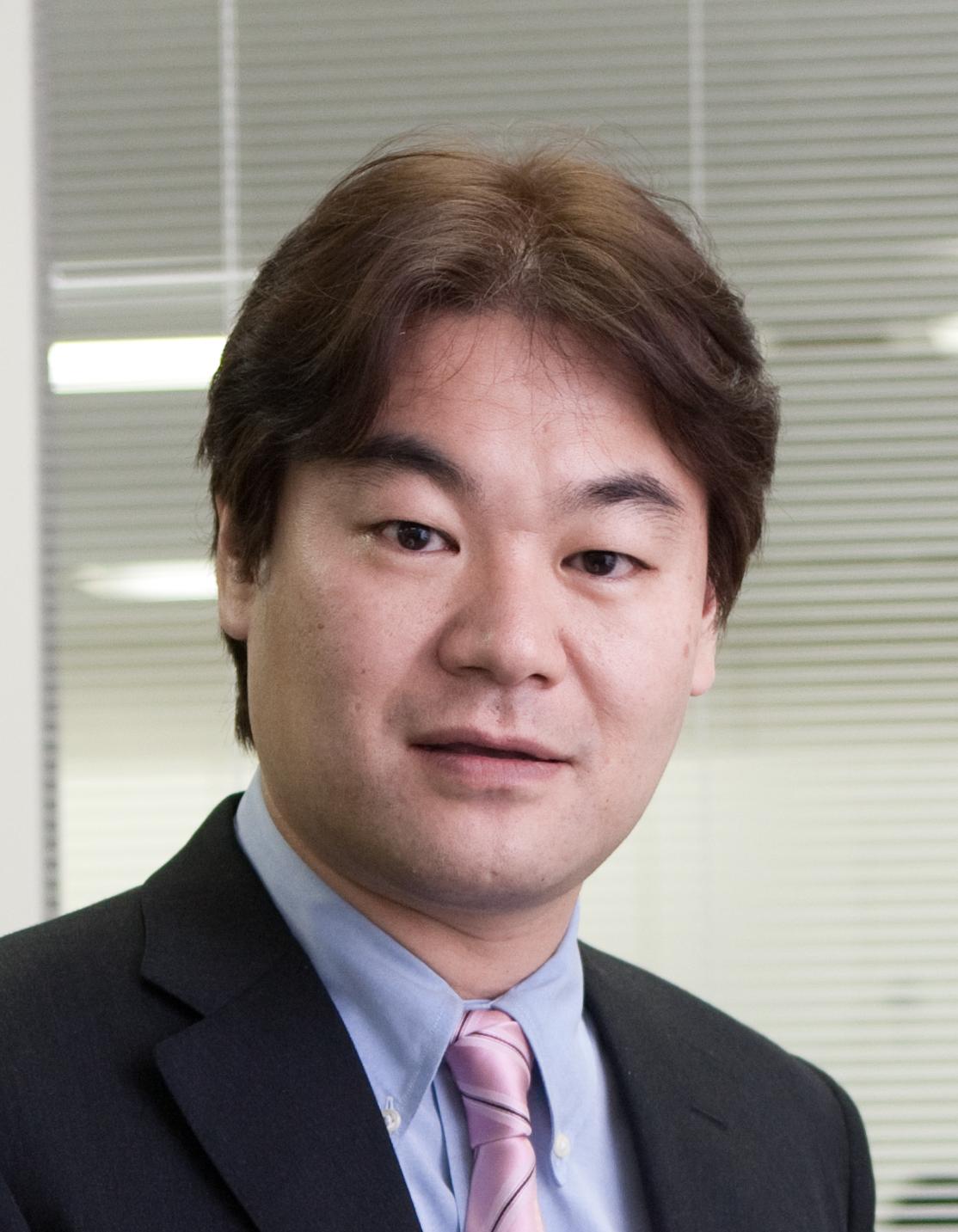
First of all, please describe GMO CLICK Securities.
GMO CLICK Securities has been established as a member of the GMO Internet Group* in October 2005. We are committed to continuously providing high-usability and cost-effective online financial services for all clients. We have consistently developed and provided simple and easy-to-use online trading tools with industry-low commission. As the result, we have been supported by many of our clients and achieved a surplus in monthly profit within a short period of 1 year after our business launch. Now, we are a leading financial services company in Japan, top online retail FX company and we are in third place in terms of market share for stocks.
Please tell us about your professional background.
I have always been interested in stock trading and I have traded securities since when I was a child, having been influenced by my parents, so I took up Social Systems Engineering when I was in university and started working out in sales in the financial sector. I achieved a wide range of knowledge about securities back then. After studying abroad in the U.S for a year and having worked at financial system company as an engineer and foreign consulting company regarding securities information system, I founded GMO CLICK Securities in 2005.
GMO CLICK Securities is probably a Japan's fastest growing broker in a market where most brokers lose clients and volume, what do you think are the reasons?
As half of our employees are system engineers, we have focused on our system development.
We actively innovate, develop and implement our own infrastructure and systems in-house, which allowed us to reduce the unnecessary system costs that most online financial institutions usually bear, shortening the usual system development time. In doing so, we have always been able to provide our services with very industry-competitive prices (for example, USDJPY:0.4pips). We have also provided a variety of trading tools that are fast and simple-to-use anytime and anywhere, such as for PC, iPhone, iPad, Android, etc. Developing our trading tools in-house enables us to continue to customize, improve and adapt to our client needs timely and speedily. Our efforts to achieve a more low-cost and easy-to-use concept has contributed to our success and rapid-growth as a Japanese online securities company in the financial services industry.
It’s fairly rare for financial institutions to develop their own systems. What made you decide to develop systems on your own?
When I worked for developing financial system before, I had so many ideas to create much more convenient and easy-to-use systems, and I concluded that to do that, we should originally develop them ourselves. So I started sharing my visions to my former co-workers who were involved in developing financial systems and many of them agreed to join me in realizing this vision. I was fortunate that I was able to gather a strong team of experts who are experienced in various fields of financial industry which allowed us to create the current in-house system.
What trading products do you offer?
We offer Securities, Futures Options, FX (OTC, Exchange), CFD (Stock Index, Commodity), Binary Options, E-Warrant and Foreign Bonds.
Are you looking to add additional products?
We are preparing to launch US and HK equities and CFDs now.
What are the latest trends in the Japanese forex market?
Although FX trading volume of Japan decreased sharply after the 2nd round of changes in regulation (max leverage dropped from 50 to 25 times) in August 2011, the market volatility in beginning of 2012 has been high and trading volume has recovered since then. At the market condition of the excessively strong yen of around 80 yen to the dollar, many Japanese FX companies that lacked funds have started being faced with very harsh situation, in which long position is extremely built up because a lot of Japanese retail clients tend to trade against the trend while the number of day-traders has declined because of the regulation. In addition, due to increasing spread competition, it has become difficult for some under-capitalized companies to survive. In fact, about 60 of the 120 of FX companies have closed their business since 2008 and this trend continues.
We however are confident that the Japanese FX market will keep growing as the stock market has been negative for a long time. It's worth to note that total amount of deposits and the number of accounts has actually increased.
Where do you see your company in 3 years?
Our competitive advantage is in being able to maintain low cost operation by developing in-house systems and this allowed us to expand our market share. Other than having achieved the largest market share in the world in FX market, we continue to expand by promoting M&A, joint business ventures and overseas business development. Moreover, we seek to enrich our service offerings and introduce a more aggressive approach towards our marketing promotions for our securities business, which is currently ranked 3rd, while target the number 1 position. Having launched our Binary Options service last March, we continue expanding its profitability in the long run.
You mention overseas development. Which countries are you considering? What about other Japanese forex brokers?
Although we expect the FX market to continue growing in Japan, it is no longer growing as rapidly as before. With that in mind we know that we have seek for new ways in order to expand our FX business and expanding overseas is the main direction. As the first step in this expansion we have established a subsidiary in Hong Kong last year, it will soon start FX operations. We haven’t decided about other subsequent developments, but we will continue expanding through researching other regions based on different factors ranging from market growth to local regulations. With our ability to provide competitive spreads and low trading costs, we are confident that we can keep our dominating position as long as we promote strategic plans as a leader in the cost performance, which is not so competitive yet in other countries.
We don’t know about other Japanese FX companies, but it’s fact that some of them have already went to abroad, so we think others will follow us.
*A group company of GMO Internet, Inc, which is listed on the Tokyo Stock Exchange (First Section) and its principal activities are to provide web business solutions such as Web Infrastructure & E-commerce, Internet Media, Internet Securities, and Social Media & Smartphone Platform.
First of all, please describe GMO CLICK Securities.
GMO CLICK Securities has been established as a member of the GMO Internet Group* in October 2005. We are committed to continuously providing high-usability and cost-effective online financial services for all clients. We have consistently developed and provided simple and easy-to-use online trading tools with industry-low commission. As the result, we have been supported by many of our clients and achieved a surplus in monthly profit within a short period of 1 year after our business launch. Now, we are a leading financial services company in Japan, top online retail FX company and we are in third place in terms of market share for stocks.
Please tell us about your professional background.
I have always been interested in stock trading and I have traded securities since when I was a child, having been influenced by my parents, so I took up Social Systems Engineering when I was in university and started working out in sales in the financial sector. I achieved a wide range of knowledge about securities back then. After studying abroad in the U.S for a year and having worked at financial system company as an engineer and foreign consulting company regarding securities information system, I founded GMO CLICK Securities in 2005.
GMO CLICK Securities is probably a Japan's fastest growing broker in a market where most brokers lose clients and volume, what do you think are the reasons?
As half of our employees are system engineers, we have focused on our system development.
We actively innovate, develop and implement our own infrastructure and systems in-house, which allowed us to reduce the unnecessary system costs that most online financial institutions usually bear, shortening the usual system development time. In doing so, we have always been able to provide our services with very industry-competitive prices (for example, USDJPY:0.4pips). We have also provided a variety of trading tools that are fast and simple-to-use anytime and anywhere, such as for PC, iPhone, iPad, Android, etc. Developing our trading tools in-house enables us to continue to customize, improve and adapt to our client needs timely and speedily. Our efforts to achieve a more low-cost and easy-to-use concept has contributed to our success and rapid-growth as a Japanese online securities company in the financial services industry.
It’s fairly rare for financial institutions to develop their own systems. What made you decide to develop systems on your own?
When I worked for developing financial system before, I had so many ideas to create much more convenient and easy-to-use systems, and I concluded that to do that, we should originally develop them ourselves. So I started sharing my visions to my former co-workers who were involved in developing financial systems and many of them agreed to join me in realizing this vision. I was fortunate that I was able to gather a strong team of experts who are experienced in various fields of financial industry which allowed us to create the current in-house system.
What trading products do you offer?
We offer Securities, Futures Options, FX (OTC, Exchange), CFD (Stock Index, Commodity), Binary Options, E-Warrant and Foreign Bonds.
Are you looking to add additional products?
We are preparing to launch US and HK equities and CFDs now.
What are the latest trends in the Japanese forex market?
Although FX trading volume of Japan decreased sharply after the 2nd round of changes in regulation (max leverage dropped from 50 to 25 times) in August 2011, the market volatility in beginning of 2012 has been high and trading volume has recovered since then. At the market condition of the excessively strong yen of around 80 yen to the dollar, many Japanese FX companies that lacked funds have started being faced with very harsh situation, in which long position is extremely built up because a lot of Japanese retail clients tend to trade against the trend while the number of day-traders has declined because of the regulation. In addition, due to increasing spread competition, it has become difficult for some under-capitalized companies to survive. In fact, about 60 of the 120 of FX companies have closed their business since 2008 and this trend continues.
We however are confident that the Japanese FX market will keep growing as the stock market has been negative for a long time. It's worth to note that total amount of deposits and the number of accounts has actually increased.
Where do you see your company in 3 years?
Our competitive advantage is in being able to maintain low cost operation by developing in-house systems and this allowed us to expand our market share. Other than having achieved the largest market share in the world in FX market, we continue to expand by promoting M&A, joint business ventures and overseas business development. Moreover, we seek to enrich our service offerings and introduce a more aggressive approach towards our marketing promotions for our securities business, which is currently ranked 3rd, while target the number 1 position. Having launched our Binary Options service last March, we continue expanding its profitability in the long run.
You mention overseas development. Which countries are you considering? What about other Japanese forex brokers?
Although we expect the FX market to continue growing in Japan, it is no longer growing as rapidly as before. With that in mind we know that we have seek for new ways in order to expand our FX business and expanding overseas is the main direction. As the first step in this expansion we have established a subsidiary in Hong Kong last year, it will soon start FX operations. We haven’t decided about other subsequent developments, but we will continue expanding through researching other regions based on different factors ranging from market growth to local regulations. With our ability to provide competitive spreads and low trading costs, we are confident that we can keep our dominating position as long as we promote strategic plans as a leader in the cost performance, which is not so competitive yet in other countries.
We don’t know about other Japanese FX companies, but it’s fact that some of them have already went to abroad, so we think others will follow us.
*A group company of GMO Internet, Inc, which is listed on the Tokyo Stock Exchange (First Section) and its principal activities are to provide web business solutions such as Web Infrastructure & E-commerce, Internet Media, Internet Securities, and Social Media & Smartphone Platform.
Most Axi Clients Now Trade on MetaTrader 5 as Broker Rolls Out MetaQuotes' Order Engine
Featured Videos
AvaTrade to Acquire Most of FXCM; NAGA Raises $8M
AvaTrade to Acquire Most of FXCM; NAGA Raises $8M
AvaTrade to Acquire Most of FXCM; NAGA Raises $8M
AvaTrade to Acquire Most of FXCM; NAGA Raises $8M
Today’s financial news recap covers AvaTrade agrees to acquire most of FXCM, NAGA secures eight million dollars in new financing, and Wise seeks a tax settlement in the UK.
Finance Magnates Daily Recap brings you the latest news from forex and CFD brokers, fintech, payments, cryptocurrency, digital assets, trading platforms, financial regulation and global markets.
Get the key company news, executive moves, deals, regulatory updates and market developments of the day, in just a few minutes. New episodes published every weekday.
Read more: https://www.financemagnates.com
#FinanceMagnates #ForexNews #FintechNews
Today’s financial news recap covers AvaTrade agrees to acquire most of FXCM, NAGA secures eight million dollars in new financing, and Wise seeks a tax settlement in the UK.
Finance Magnates Daily Recap brings you the latest news from forex and CFD brokers, fintech, payments, cryptocurrency, digital assets, trading platforms, financial regulation and global markets.
Get the key company news, executive moves, deals, regulatory updates and market developments of the day, in just a few minutes. New episodes published every weekday.
Read more: https://www.financemagnates.com
#FinanceMagnates #ForexNews #FintechNews
Today’s financial news recap covers AvaTrade agrees to acquire most of FXCM, NAGA secures eight million dollars in new financing, and Wise seeks a tax settlement in the UK.
Finance Magnates Daily Recap brings you the latest news from forex and CFD brokers, fintech, payments, cryptocurrency, digital assets, trading platforms, financial regulation and global markets.
Get the key company news, executive moves, deals, regulatory updates and market developments of the day, in just a few minutes. New episodes published every weekday.
Read more: https://www.financemagnates.com
#FinanceMagnates #ForexNews #FintechNews
Today’s financial news recap covers AvaTrade agrees to acquire most of FXCM, NAGA secures eight million dollars in new financing, and Wise seeks a tax settlement in the UK.
Finance Magnates Daily Recap brings you the latest news from forex and CFD brokers, fintech, payments, cryptocurrency, digital assets, trading platforms, financial regulation and global markets.
Get the key company news, executive moves, deals, regulatory updates and market developments of the day, in just a few minutes. New episodes published every weekday.
Read more: https://www.financemagnates.com
#FinanceMagnates #ForexNews #FintechNews
XTB Adds Overnight US Stock Trading; Nasdaq Ventures Invests in One Trading
XTB Adds Overnight US Stock Trading; Nasdaq Ventures Invests in One Trading
XTB Adds Overnight US Stock Trading; Nasdaq Ventures Invests in One Trading
XTB Adds Overnight US Stock Trading; Nasdaq Ventures Invests in One Trading
XTB Adds Overnight US Stock Trading; Nasdaq Ventures Invests in One Trading
XTB Adds Overnight US Stock Trading; Nasdaq Ventures Invests in One Trading
Today’s financial news recap covers XTB expands overnight US stock trading, Fortrade reports higher revenue, Nasdaq backs One Trading, and Vest Labs raises 13 million dollars.
Finance Magnates Daily Recap brings you the latest news from forex and CFD brokers, fintech, payments, cryptocurrency, digital assets, trading platforms, financial regulation and global markets.
Get the key company news, executive moves, deals, regulatory updates and market developments of the day, in just a few minutes. New episodes published every weekday.
Read more: https://www.financemagnates.com
#FinanceMagnates #ForexNews #FintechNews
Today’s financial news recap covers XTB expands overnight US stock trading, Fortrade reports higher revenue, Nasdaq backs One Trading, and Vest Labs raises 13 million dollars.
Finance Magnates Daily Recap brings you the latest news from forex and CFD brokers, fintech, payments, cryptocurrency, digital assets, trading platforms, financial regulation and global markets.
Get the key company news, executive moves, deals, regulatory updates and market developments of the day, in just a few minutes. New episodes published every weekday.
Read more: https://www.financemagnates.com
#FinanceMagnates #ForexNews #FintechNews
Today’s financial news recap covers XTB expands overnight US stock trading, Fortrade reports higher revenue, Nasdaq backs One Trading, and Vest Labs raises 13 million dollars.
Finance Magnates Daily Recap brings you the latest news from forex and CFD brokers, fintech, payments, cryptocurrency, digital assets, trading platforms, financial regulation and global markets.
Get the key company news, executive moves, deals, regulatory updates and market developments of the day, in just a few minutes. New episodes published every weekday.
Read more: https://www.financemagnates.com
#FinanceMagnates #ForexNews #FintechNews
Today’s financial news recap covers XTB expands overnight US stock trading, Fortrade reports higher revenue, Nasdaq backs One Trading, and Vest Labs raises 13 million dollars.
Finance Magnates Daily Recap brings you the latest news from forex and CFD brokers, fintech, payments, cryptocurrency, digital assets, trading platforms, financial regulation and global markets.
Get the key company news, executive moves, deals, regulatory updates and market developments of the day, in just a few minutes. New episodes published every weekday.
Read more: https://www.financemagnates.com
#FinanceMagnates #ForexNews #FintechNews
Today’s financial news recap covers XTB expands overnight US stock trading, Fortrade reports higher revenue, Nasdaq backs One Trading, and Vest Labs raises 13 million dollars.
Finance Magnates Daily Recap brings you the latest news from forex and CFD brokers, fintech, payments, cryptocurrency, digital assets, trading platforms, financial regulation and global markets.
Get the key company news, executive moves, deals, regulatory updates and market developments of the day, in just a few minutes. New episodes published every weekday.
Read more: https://www.financemagnates.com
#FinanceMagnates #ForexNews #FintechNews
Today’s financial news recap covers XTB expands overnight US stock trading, Fortrade reports higher revenue, Nasdaq backs One Trading, and Vest Labs raises 13 million dollars.
Finance Magnates Daily Recap brings you the latest news from forex and CFD brokers, fintech, payments, cryptocurrency, digital assets, trading platforms, financial regulation and global markets.
Get the key company news, executive moves, deals, regulatory updates and market developments of the day, in just a few minutes. New episodes published every weekday.
Read more: https://www.financemagnates.com
#FinanceMagnates #ForexNews #FintechNews
CMC Founder Downplays Volatility Hit; Devexperts Names CEO
CMC Founder Downplays Volatility Hit; Devexperts Names CEO
CMC Founder Downplays Volatility Hit; Devexperts Names CEO
CMC Founder Downplays Volatility Hit; Devexperts Names CEO
CMC Founder Downplays Volatility Hit; Devexperts Names CEO
CMC Founder Downplays Volatility Hit; Devexperts Names CEO
Today’s financial news recap covers low volatility pressures brokers, Devexperts names a new CEO, Saxo cuts onboarding time, and OKX reaches a 25 billion dollar valuation.
Finance Magnates Daily Recap brings you the latest news from forex and CFD brokers, fintech, payments, cryptocurrency, digital assets, trading platforms, financial regulation and global markets.
Get the key company news, executive moves, deals, regulatory updates and market developments of the day, in just a few minutes. New episodes published every weekday.
Read more: https://www.financemagnates.com
#FinanceMagnates #ForexNews #FintechNews
Today’s financial news recap covers low volatility pressures brokers, Devexperts names a new CEO, Saxo cuts onboarding time, and OKX reaches a 25 billion dollar valuation.
Finance Magnates Daily Recap brings you the latest news from forex and CFD brokers, fintech, payments, cryptocurrency, digital assets, trading platforms, financial regulation and global markets.
Get the key company news, executive moves, deals, regulatory updates and market developments of the day, in just a few minutes. New episodes published every weekday.
Read more: https://www.financemagnates.com
#FinanceMagnates #ForexNews #FintechNews
Today’s financial news recap covers low volatility pressures brokers, Devexperts names a new CEO, Saxo cuts onboarding time, and OKX reaches a 25 billion dollar valuation.
Finance Magnates Daily Recap brings you the latest news from forex and CFD brokers, fintech, payments, cryptocurrency, digital assets, trading platforms, financial regulation and global markets.
Get the key company news, executive moves, deals, regulatory updates and market developments of the day, in just a few minutes. New episodes published every weekday.
Read more: https://www.financemagnates.com
#FinanceMagnates #ForexNews #FintechNews
Today’s financial news recap covers low volatility pressures brokers, Devexperts names a new CEO, Saxo cuts onboarding time, and OKX reaches a 25 billion dollar valuation.
Finance Magnates Daily Recap brings you the latest news from forex and CFD brokers, fintech, payments, cryptocurrency, digital assets, trading platforms, financial regulation and global markets.
Get the key company news, executive moves, deals, regulatory updates and market developments of the day, in just a few minutes. New episodes published every weekday.
Read more: https://www.financemagnates.com
#FinanceMagnates #ForexNews #FintechNews
Today’s financial news recap covers low volatility pressures brokers, Devexperts names a new CEO, Saxo cuts onboarding time, and OKX reaches a 25 billion dollar valuation.
Finance Magnates Daily Recap brings you the latest news from forex and CFD brokers, fintech, payments, cryptocurrency, digital assets, trading platforms, financial regulation and global markets.
Get the key company news, executive moves, deals, regulatory updates and market developments of the day, in just a few minutes. New episodes published every weekday.
Read more: https://www.financemagnates.com
#FinanceMagnates #ForexNews #FintechNews
Today’s financial news recap covers low volatility pressures brokers, Devexperts names a new CEO, Saxo cuts onboarding time, and OKX reaches a 25 billion dollar valuation.
Finance Magnates Daily Recap brings you the latest news from forex and CFD brokers, fintech, payments, cryptocurrency, digital assets, trading platforms, financial regulation and global markets.
Get the key company news, executive moves, deals, regulatory updates and market developments of the day, in just a few minutes. New episodes published every weekday.
Read more: https://www.financemagnates.com
#FinanceMagnates #ForexNews #FintechNews
Today’s financial news recap covers Trade Nation buys FXCM's UK client book, Trading 212 reports higher revenue, the CFTC's move to allow perpetual index futures.
Finance Magnates Daily Recap brings you the latest news from forex and CFD brokers, fintech, payments, cryptocurrency, digital assets, trading platforms, financial regulation and global markets.
Get the key company news, executive moves, deals, regulatory updates and market developments of the day, in just a few minutes. New episodes published every weekday.
Read more: https://www.financemagnates.com
#FinanceMagnates #ForexNews #FintechNews
Today’s financial news recap covers Trade Nation buys FXCM's UK client book, Trading 212 reports higher revenue, the CFTC's move to allow perpetual index futures.
Finance Magnates Daily Recap brings you the latest news from forex and CFD brokers, fintech, payments, cryptocurrency, digital assets, trading platforms, financial regulation and global markets.
Get the key company news, executive moves, deals, regulatory updates and market developments of the day, in just a few minutes. New episodes published every weekday.
Read more: https://www.financemagnates.com
#FinanceMagnates #ForexNews #FintechNews
Today’s financial news recap covers Trade Nation buys FXCM's UK client book, Trading 212 reports higher revenue, the CFTC's move to allow perpetual index futures.
Finance Magnates Daily Recap brings you the latest news from forex and CFD brokers, fintech, payments, cryptocurrency, digital assets, trading platforms, financial regulation and global markets.
Get the key company news, executive moves, deals, regulatory updates and market developments of the day, in just a few minutes. New episodes published every weekday.
Read more: https://www.financemagnates.com
#FinanceMagnates #ForexNews #FintechNews
Today’s financial news recap covers Trade Nation buys FXCM's UK client book, Trading 212 reports higher revenue, the CFTC's move to allow perpetual index futures.
Finance Magnates Daily Recap brings you the latest news from forex and CFD brokers, fintech, payments, cryptocurrency, digital assets, trading platforms, financial regulation and global markets.
Get the key company news, executive moves, deals, regulatory updates and market developments of the day, in just a few minutes. New episodes published every weekday.
Read more: https://www.financemagnates.com
#FinanceMagnates #ForexNews #FintechNews
Today’s financial news recap covers Trade Nation buys FXCM's UK client book, Trading 212 reports higher revenue, the CFTC's move to allow perpetual index futures.
Finance Magnates Daily Recap brings you the latest news from forex and CFD brokers, fintech, payments, cryptocurrency, digital assets, trading platforms, financial regulation and global markets.
Get the key company news, executive moves, deals, regulatory updates and market developments of the day, in just a few minutes. New episodes published every weekday.
Read more: https://www.financemagnates.com
#FinanceMagnates #ForexNews #FintechNews
Today’s financial news recap covers Trade Nation buys FXCM's UK client book, Trading 212 reports higher revenue, the CFTC's move to allow perpetual index futures.
Finance Magnates Daily Recap brings you the latest news from forex and CFD brokers, fintech, payments, cryptocurrency, digital assets, trading platforms, financial regulation and global markets.
Get the key company news, executive moves, deals, regulatory updates and market developments of the day, in just a few minutes. New episodes published every weekday.
Read more: https://www.financemagnates.com
#FinanceMagnates #ForexNews #FintechNews
Your career isn’t a linear path.
Your career isn’t a linear path.
Your career isn’t a linear path.
Your career isn’t a linear path.
Your career isn’t a linear path.
Your career isn’t a linear path.
Roles change. Career goals change. Sometimes you want a completely new challenge.
But the skills and knowledge you build along the way can stay with you and give you something to build on.
For Jeff Patterson, that continued growth is key to long-term career development.
You bring the skills. FM Academy helps you build the knowledge.
#FMAcademy #FinanceMagnates #FinanceCareers #ProfessionalDevelopment #Fintech
Roles change. Career goals change. Sometimes you want a completely new challenge.
But the skills and knowledge you build along the way can stay with you and give you something to build on.
For Jeff Patterson, that continued growth is key to long-term career development.
You bring the skills. FM Academy helps you build the knowledge.
#FMAcademy #FinanceMagnates #FinanceCareers #ProfessionalDevelopment #Fintech
Roles change. Career goals change. Sometimes you want a completely new challenge.
But the skills and knowledge you build along the way can stay with you and give you something to build on.
For Jeff Patterson, that continued growth is key to long-term career development.
You bring the skills. FM Academy helps you build the knowledge.
#FMAcademy #FinanceMagnates #FinanceCareers #ProfessionalDevelopment #Fintech
Roles change. Career goals change. Sometimes you want a completely new challenge.
But the skills and knowledge you build along the way can stay with you and give you something to build on.
For Jeff Patterson, that continued growth is key to long-term career development.
You bring the skills. FM Academy helps you build the knowledge.
#FMAcademy #FinanceMagnates #FinanceCareers #ProfessionalDevelopment #Fintech
Roles change. Career goals change. Sometimes you want a completely new challenge.
But the skills and knowledge you build along the way can stay with you and give you something to build on.
For Jeff Patterson, that continued growth is key to long-term career development.
You bring the skills. FM Academy helps you build the knowledge.
#FMAcademy #FinanceMagnates #FinanceCareers #ProfessionalDevelopment #Fintech
Roles change. Career goals change. Sometimes you want a completely new challenge.
But the skills and knowledge you build along the way can stay with you and give you something to build on.
For Jeff Patterson, that continued growth is key to long-term career development.
You bring the skills. FM Academy helps you build the knowledge.
#FMAcademy #FinanceMagnates #FinanceCareers #ProfessionalDevelopment #Fintech