90% of 459 PipFarm's study participants take part in challenges of 2–5 different props, Finance Magnates has learned.
Despite potential high earnings, only one in three clients at trader-funded firms makes any money.
In the high-stakes world of financial markets, proprietary trading has been surging in popularity. However, this arena remains a challenging landscape where success eludes many. A recent PipFarm poll, exclusively obtained by Finance Magnates, sheds light on the current state of prop trading. The study, which gathered insights from 459 respondents, reveals a striking contrast: while the industry attracts many, only 40% manage to turn a nice dime.
The Journey Begins with FX
and Crypto, Not Evaluation Firms
Finance
Magnates gained
exclusive insight into a recent poll conducted among PipFarm clients, which
shed light on the trading experiences and profiles of those actively using prop
firm offerings.
“FX and
crypto have been prominent alternative investments for many years and are
heavily marketed to retail traders. Unsurprisingly, most traders were
introduced to trading through FX and crypto platforms,” James
Glyde, the Founder and CEO of PipFarm commented for Finance Magnates.
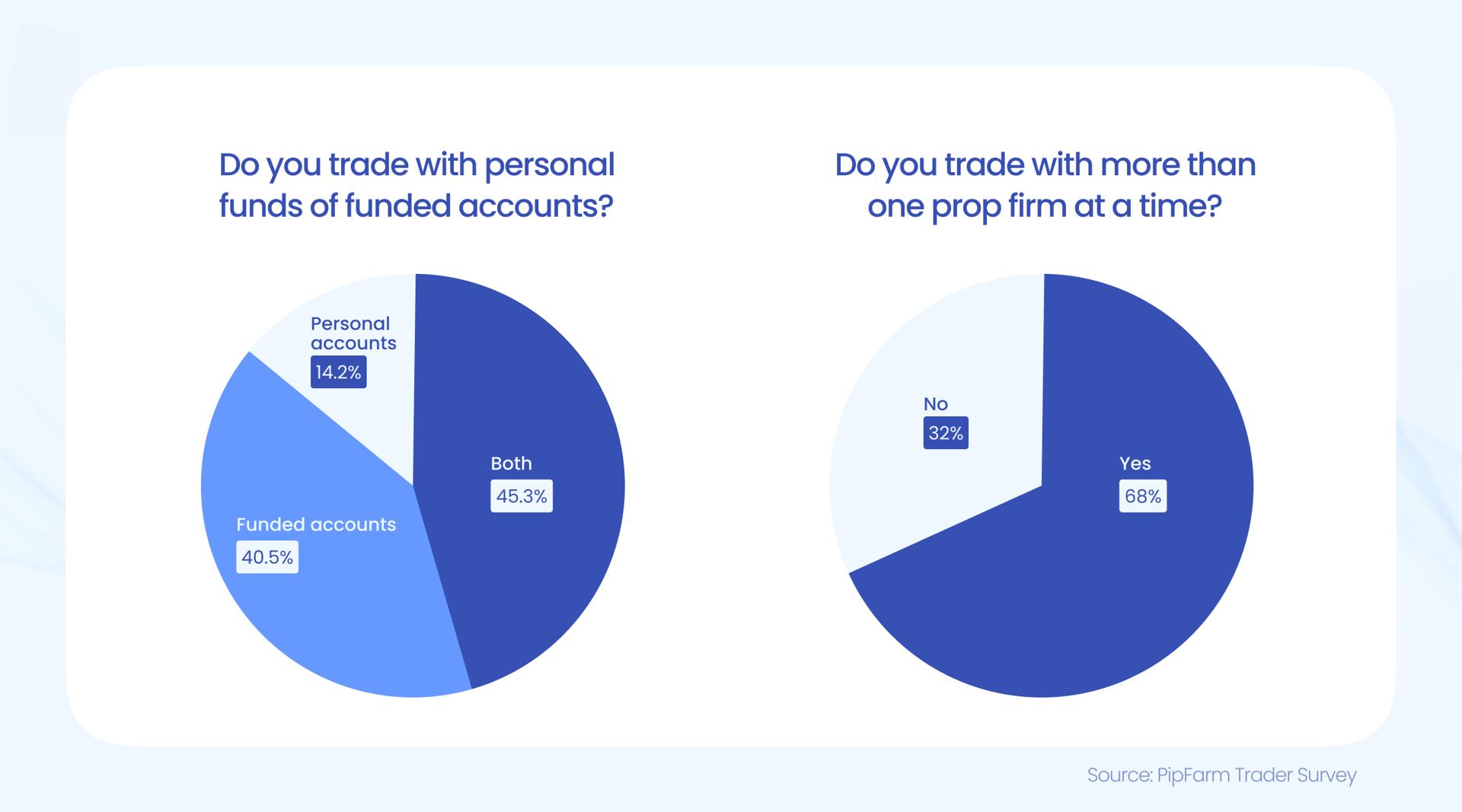
Nearly half
of the respondents (45%) use both their own funds and funded accounts for
trading. Only 14% indicated that they rely entirely on their own funds. But
this should not be surprising, as the poll was conducted among clients of a
company whose main goal is to fund traders.
In a recent
interview with Finance Magnates at the iFX EXPO International 2024, Glyde
also revealed that “the risk is incredibly hard to manage in the prop
trading industry.” The full conversation is available in the video below:
Meet the Profile of an
Average Prop Firm Trader
The data
collected by PipFarm clearly shows that the average prop firm client tries to
maximize their chances of success in challenges and evaluations by using the
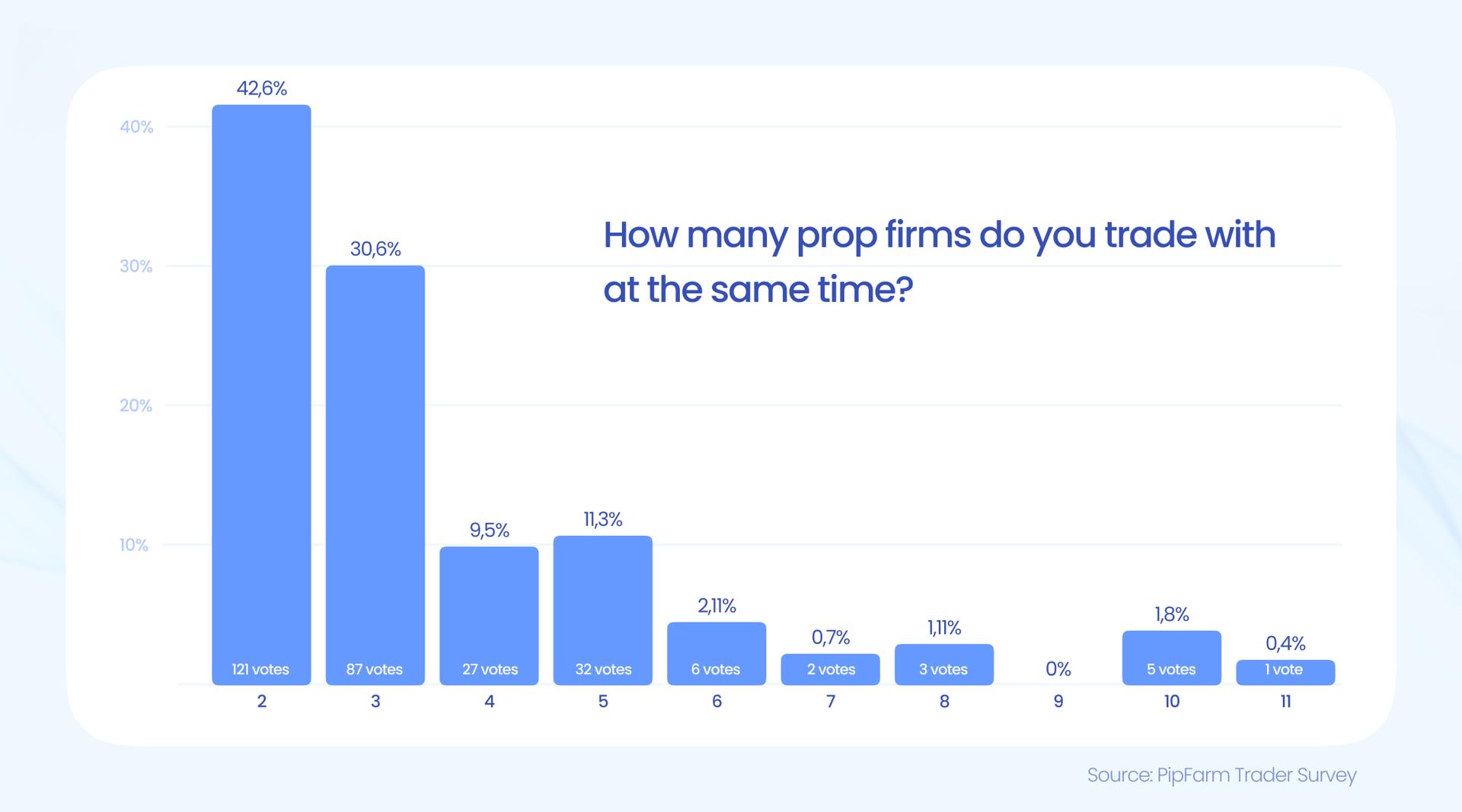
services of more than one firm (68%). However, it turns out that most limit
themselves to two (43%) or a maximum of three (31%). A few record holders
indicated cooperation with 6–11 props (6%).
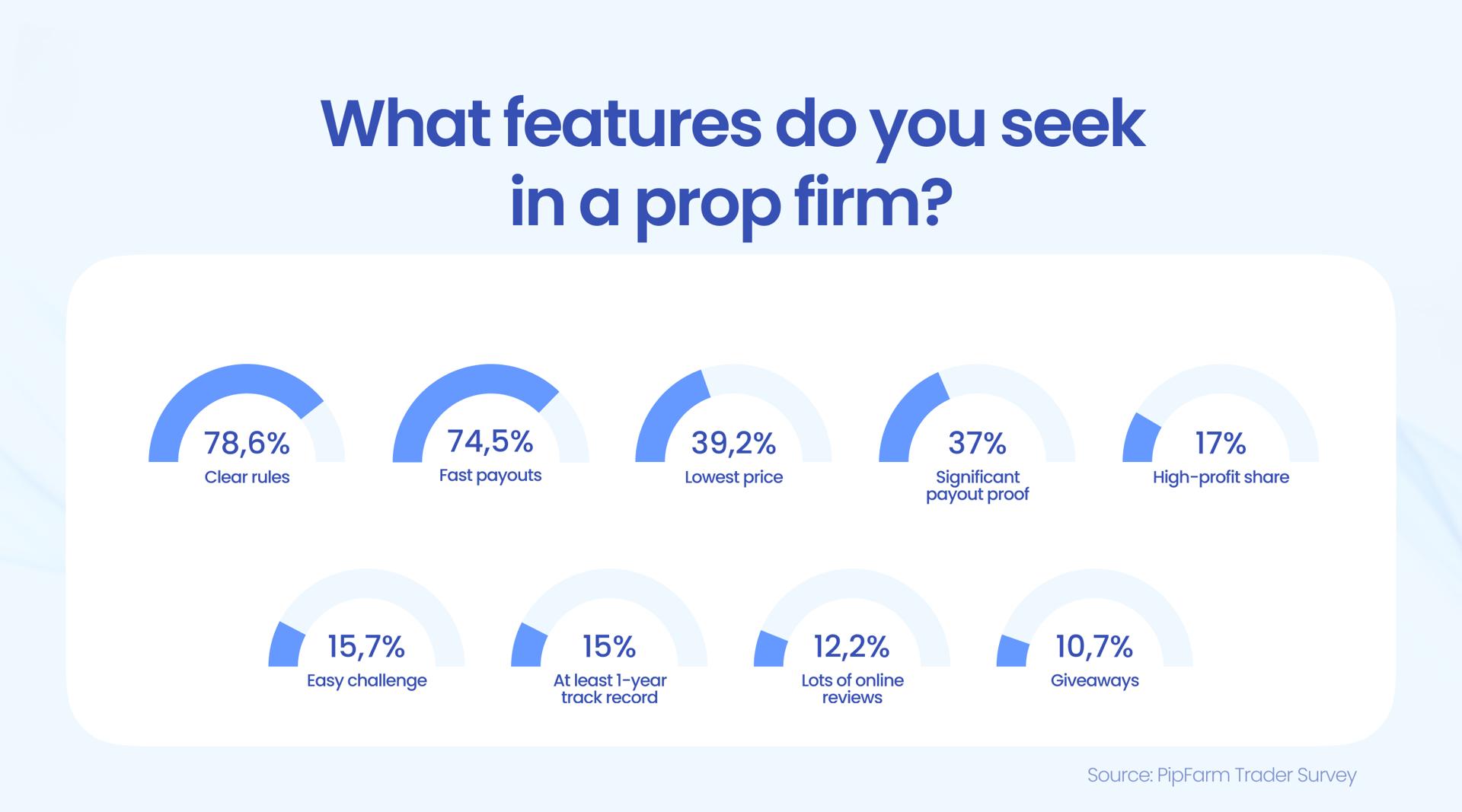
The most
important factors motivating retail traders to choose a particular proprietary
trading firm are clear operating rules (79%), meaning transparent regulations
and simple requirements for participating in challenges. Very important factors
are also fast fund withdrawals (75%).
“Contrary
to the recent prop firm price war, traders really want clear rules rather than
low prices and high-profit shares,” explained Glyde. “Many firms have started
rejecting payouts due to technicalities, such as IP address inconsistencies,
KYC discrepancies, vague definitions of gambling, news trading, and consistency
targets.”
39% of
respondents look for attractive prices (cheap challenges and low spreads) in
prop firms and evidence of past payouts to other clients (37%). Less important
were factors such as high-profit share, ease of challenges, or the length of
the firm's market presence.
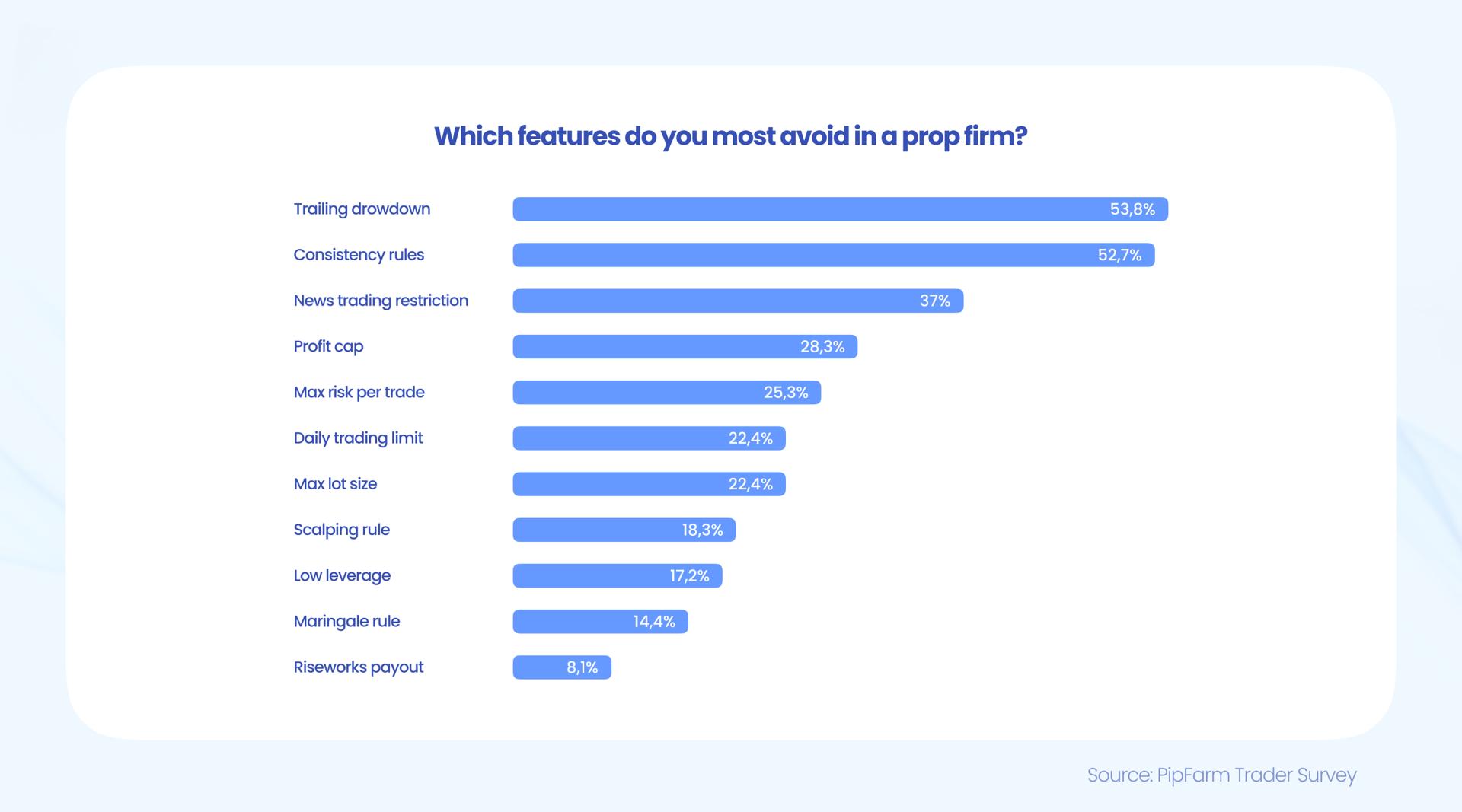
What do
investors want to avoid? Most are discouraged by trailing drawdown (54%),
consistency rules (53%), or the prohibition of trading based on the latest news
and macroeconomic data (37%) in prop firm offerings.
The poll also showed that prop traders easily adapt to changes. 57% stated that in case
of a platform change, they need less than a week to get used to it, and another
31% indicated that a maximum of a month is enough for them.
“This
survey highlights that most traders could adapt and switch platforms in less
than a week,” added Glyde. “While some traders remain passionate about
MetaTrader, its absence will not stop them from trading, and many are learning
that other better platforms were available all along.”
Over $4,000 Spent on
Challenges
From the
data seen by Finance Magnates, it also appears that the average trader
invests $4,270 in prop firm challenges, hoping for a high return on their
investment. However, nearly half of investors never realize any payout, and
almost 60% of all clients lose capital.
The number
of profitable prop traders reaches 41%, and among them, prop trading indeed
becomes a high-risk but high-reward game. PipFarm data shows that respondents
collectively invested $1.9 million in challenges, ultimately earning $7.6
million, which translates to a total return rate of 300%.
The poll was conducted on a group of about 500 active clients of PipFarm, a
trader-funded firm that offers proprietary trading on accounts ranging from
$5,000 to $200,000.
In the high-stakes world of financial markets, proprietary trading has been surging in popularity. However, this arena remains a challenging landscape where success eludes many. A recent PipFarm poll, exclusively obtained by Finance Magnates, sheds light on the current state of prop trading. The study, which gathered insights from 459 respondents, reveals a striking contrast: while the industry attracts many, only 40% manage to turn a nice dime.
The Journey Begins with FX
and Crypto, Not Evaluation Firms
Finance
Magnates gained
exclusive insight into a recent poll conducted among PipFarm clients, which
shed light on the trading experiences and profiles of those actively using prop
firm offerings.
“FX and
crypto have been prominent alternative investments for many years and are
heavily marketed to retail traders. Unsurprisingly, most traders were
introduced to trading through FX and crypto platforms,” James
Glyde, the Founder and CEO of PipFarm commented for Finance Magnates.
Nearly half
of the respondents (45%) use both their own funds and funded accounts for
trading. Only 14% indicated that they rely entirely on their own funds. But
this should not be surprising, as the poll was conducted among clients of a
company whose main goal is to fund traders.
In a recent
interview with Finance Magnates at the iFX EXPO International 2024, Glyde
also revealed that “the risk is incredibly hard to manage in the prop
trading industry.” The full conversation is available in the video below:
Meet the Profile of an
Average Prop Firm Trader
The data
collected by PipFarm clearly shows that the average prop firm client tries to
maximize their chances of success in challenges and evaluations by using the
services of more than one firm (68%). However, it turns out that most limit
themselves to two (43%) or a maximum of three (31%). A few record holders
indicated cooperation with 6–11 props (6%).
The most
important factors motivating retail traders to choose a particular proprietary
trading firm are clear operating rules (79%), meaning transparent regulations
and simple requirements for participating in challenges. Very important factors
are also fast fund withdrawals (75%).
“Contrary
to the recent prop firm price war, traders really want clear rules rather than
low prices and high-profit shares,” explained Glyde. “Many firms have started
rejecting payouts due to technicalities, such as IP address inconsistencies,
KYC discrepancies, vague definitions of gambling, news trading, and consistency
targets.”
39% of
respondents look for attractive prices (cheap challenges and low spreads) in
prop firms and evidence of past payouts to other clients (37%). Less important
were factors such as high-profit share, ease of challenges, or the length of
the firm's market presence.
What do
investors want to avoid? Most are discouraged by trailing drawdown (54%),
consistency rules (53%), or the prohibition of trading based on the latest news
and macroeconomic data (37%) in prop firm offerings.
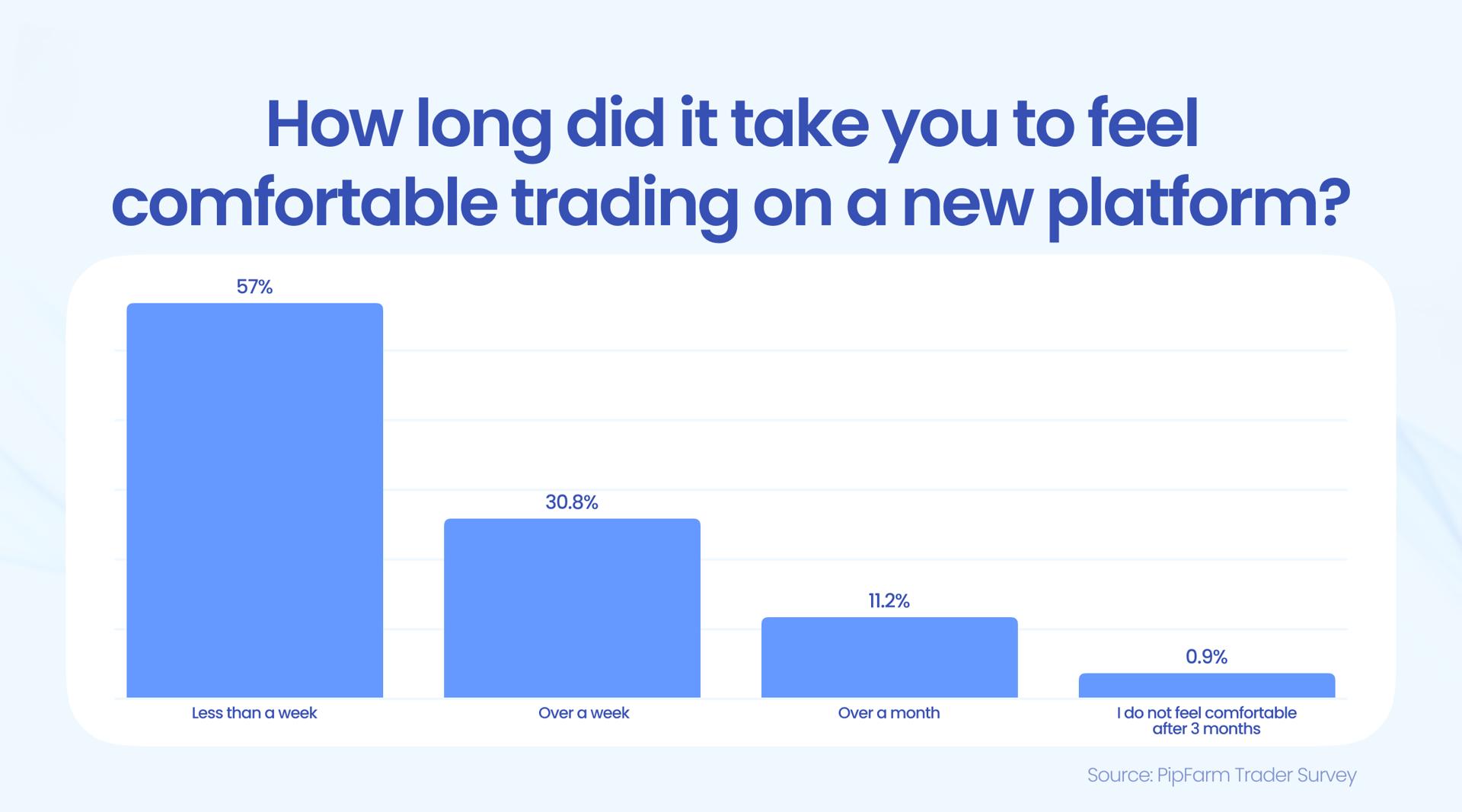
The poll also showed that prop traders easily adapt to changes. 57% stated that in case
of a platform change, they need less than a week to get used to it, and another
31% indicated that a maximum of a month is enough for them.
“This
survey highlights that most traders could adapt and switch platforms in less
than a week,” added Glyde. “While some traders remain passionate about
MetaTrader, its absence will not stop them from trading, and many are learning
that other better platforms were available all along.”
Over $4,000 Spent on
Challenges
From the
data seen by Finance Magnates, it also appears that the average trader
invests $4,270 in prop firm challenges, hoping for a high return on their
investment. However, nearly half of investors never realize any payout, and
almost 60% of all clients lose capital.
The number
of profitable prop traders reaches 41%, and among them, prop trading indeed
becomes a high-risk but high-reward game. PipFarm data shows that respondents
collectively invested $1.9 million in challenges, ultimately earning $7.6
million, which translates to a total return rate of 300%.
The poll was conducted on a group of about 500 active clients of PipFarm, a
trader-funded firm that offers proprietary trading on accounts ranging from
$5,000 to $200,000.
Damian Chmiel is a Senior Analyst & Editor at Finance Magnates with more than 15 years of experience in the CFD and online trading industry. Active as both a trader and journalist since 2010, he focuses on broker coverage, fintech innovation, and regulatory developments across Europe, the Middle East, and Asia.
His work includes interviews with C-level leaders at major brokerages and fintech platforms, as well as co-authoring Finance Magnates’ quarterly industry benchmarking reports. Damian’s reporting is data-driven, market-aware, and grounded in direct industry engagement. His analysis and commentary have also been cited by external media outlets, including Investing.com, Binance, The Asset, Stockhead, and Dispatch.
Education:
MA in Finance and Accounting, Cracow University of Economics
FTMO Says Monthly Rewards Near $15 Million in September
Featured Videos
AvaTrade to Acquire Most of FXCM; NAGA Raises $8M
AvaTrade to Acquire Most of FXCM; NAGA Raises $8M
AvaTrade to Acquire Most of FXCM; NAGA Raises $8M
AvaTrade to Acquire Most of FXCM; NAGA Raises $8M
Today’s financial news recap covers AvaTrade agrees to acquire most of FXCM, NAGA secures eight million dollars in new financing, and Wise seeks a tax settlement in the UK.
Finance Magnates Daily Recap brings you the latest news from forex and CFD brokers, fintech, payments, cryptocurrency, digital assets, trading platforms, financial regulation and global markets.
Get the key company news, executive moves, deals, regulatory updates and market developments of the day, in just a few minutes. New episodes published every weekday.
Read more: https://www.financemagnates.com
#FinanceMagnates #ForexNews #FintechNews
Today’s financial news recap covers AvaTrade agrees to acquire most of FXCM, NAGA secures eight million dollars in new financing, and Wise seeks a tax settlement in the UK.
Finance Magnates Daily Recap brings you the latest news from forex and CFD brokers, fintech, payments, cryptocurrency, digital assets, trading platforms, financial regulation and global markets.
Get the key company news, executive moves, deals, regulatory updates and market developments of the day, in just a few minutes. New episodes published every weekday.
Read more: https://www.financemagnates.com
#FinanceMagnates #ForexNews #FintechNews
Today’s financial news recap covers AvaTrade agrees to acquire most of FXCM, NAGA secures eight million dollars in new financing, and Wise seeks a tax settlement in the UK.
Finance Magnates Daily Recap brings you the latest news from forex and CFD brokers, fintech, payments, cryptocurrency, digital assets, trading platforms, financial regulation and global markets.
Get the key company news, executive moves, deals, regulatory updates and market developments of the day, in just a few minutes. New episodes published every weekday.
Read more: https://www.financemagnates.com
#FinanceMagnates #ForexNews #FintechNews
Today’s financial news recap covers AvaTrade agrees to acquire most of FXCM, NAGA secures eight million dollars in new financing, and Wise seeks a tax settlement in the UK.
Finance Magnates Daily Recap brings you the latest news from forex and CFD brokers, fintech, payments, cryptocurrency, digital assets, trading platforms, financial regulation and global markets.
Get the key company news, executive moves, deals, regulatory updates and market developments of the day, in just a few minutes. New episodes published every weekday.
Read more: https://www.financemagnates.com
#FinanceMagnates #ForexNews #FintechNews
XTB Adds Overnight US Stock Trading; Nasdaq Ventures Invests in One Trading
XTB Adds Overnight US Stock Trading; Nasdaq Ventures Invests in One Trading
XTB Adds Overnight US Stock Trading; Nasdaq Ventures Invests in One Trading
XTB Adds Overnight US Stock Trading; Nasdaq Ventures Invests in One Trading
XTB Adds Overnight US Stock Trading; Nasdaq Ventures Invests in One Trading
XTB Adds Overnight US Stock Trading; Nasdaq Ventures Invests in One Trading
Today’s financial news recap covers XTB expands overnight US stock trading, Fortrade reports higher revenue, Nasdaq backs One Trading, and Vest Labs raises 13 million dollars.
Finance Magnates Daily Recap brings you the latest news from forex and CFD brokers, fintech, payments, cryptocurrency, digital assets, trading platforms, financial regulation and global markets.
Get the key company news, executive moves, deals, regulatory updates and market developments of the day, in just a few minutes. New episodes published every weekday.
Read more: https://www.financemagnates.com
#FinanceMagnates #ForexNews #FintechNews
Today’s financial news recap covers XTB expands overnight US stock trading, Fortrade reports higher revenue, Nasdaq backs One Trading, and Vest Labs raises 13 million dollars.
Finance Magnates Daily Recap brings you the latest news from forex and CFD brokers, fintech, payments, cryptocurrency, digital assets, trading platforms, financial regulation and global markets.
Get the key company news, executive moves, deals, regulatory updates and market developments of the day, in just a few minutes. New episodes published every weekday.
Read more: https://www.financemagnates.com
#FinanceMagnates #ForexNews #FintechNews
Today’s financial news recap covers XTB expands overnight US stock trading, Fortrade reports higher revenue, Nasdaq backs One Trading, and Vest Labs raises 13 million dollars.
Finance Magnates Daily Recap brings you the latest news from forex and CFD brokers, fintech, payments, cryptocurrency, digital assets, trading platforms, financial regulation and global markets.
Get the key company news, executive moves, deals, regulatory updates and market developments of the day, in just a few minutes. New episodes published every weekday.
Read more: https://www.financemagnates.com
#FinanceMagnates #ForexNews #FintechNews
Today’s financial news recap covers XTB expands overnight US stock trading, Fortrade reports higher revenue, Nasdaq backs One Trading, and Vest Labs raises 13 million dollars.
Finance Magnates Daily Recap brings you the latest news from forex and CFD brokers, fintech, payments, cryptocurrency, digital assets, trading platforms, financial regulation and global markets.
Get the key company news, executive moves, deals, regulatory updates and market developments of the day, in just a few minutes. New episodes published every weekday.
Read more: https://www.financemagnates.com
#FinanceMagnates #ForexNews #FintechNews
Today’s financial news recap covers XTB expands overnight US stock trading, Fortrade reports higher revenue, Nasdaq backs One Trading, and Vest Labs raises 13 million dollars.
Finance Magnates Daily Recap brings you the latest news from forex and CFD brokers, fintech, payments, cryptocurrency, digital assets, trading platforms, financial regulation and global markets.
Get the key company news, executive moves, deals, regulatory updates and market developments of the day, in just a few minutes. New episodes published every weekday.
Read more: https://www.financemagnates.com
#FinanceMagnates #ForexNews #FintechNews
Today’s financial news recap covers XTB expands overnight US stock trading, Fortrade reports higher revenue, Nasdaq backs One Trading, and Vest Labs raises 13 million dollars.
Finance Magnates Daily Recap brings you the latest news from forex and CFD brokers, fintech, payments, cryptocurrency, digital assets, trading platforms, financial regulation and global markets.
Get the key company news, executive moves, deals, regulatory updates and market developments of the day, in just a few minutes. New episodes published every weekday.
Read more: https://www.financemagnates.com
#FinanceMagnates #ForexNews #FintechNews
CMC Founder Downplays Volatility Hit; Devexperts Names CEO
CMC Founder Downplays Volatility Hit; Devexperts Names CEO
CMC Founder Downplays Volatility Hit; Devexperts Names CEO
CMC Founder Downplays Volatility Hit; Devexperts Names CEO
CMC Founder Downplays Volatility Hit; Devexperts Names CEO
CMC Founder Downplays Volatility Hit; Devexperts Names CEO
Today’s financial news recap covers low volatility pressures brokers, Devexperts names a new CEO, Saxo cuts onboarding time, and OKX reaches a 25 billion dollar valuation.
Finance Magnates Daily Recap brings you the latest news from forex and CFD brokers, fintech, payments, cryptocurrency, digital assets, trading platforms, financial regulation and global markets.
Get the key company news, executive moves, deals, regulatory updates and market developments of the day, in just a few minutes. New episodes published every weekday.
Read more: https://www.financemagnates.com
#FinanceMagnates #ForexNews #FintechNews
Today’s financial news recap covers low volatility pressures brokers, Devexperts names a new CEO, Saxo cuts onboarding time, and OKX reaches a 25 billion dollar valuation.
Finance Magnates Daily Recap brings you the latest news from forex and CFD brokers, fintech, payments, cryptocurrency, digital assets, trading platforms, financial regulation and global markets.
Get the key company news, executive moves, deals, regulatory updates and market developments of the day, in just a few minutes. New episodes published every weekday.
Read more: https://www.financemagnates.com
#FinanceMagnates #ForexNews #FintechNews
Today’s financial news recap covers low volatility pressures brokers, Devexperts names a new CEO, Saxo cuts onboarding time, and OKX reaches a 25 billion dollar valuation.
Finance Magnates Daily Recap brings you the latest news from forex and CFD brokers, fintech, payments, cryptocurrency, digital assets, trading platforms, financial regulation and global markets.
Get the key company news, executive moves, deals, regulatory updates and market developments of the day, in just a few minutes. New episodes published every weekday.
Read more: https://www.financemagnates.com
#FinanceMagnates #ForexNews #FintechNews
Today’s financial news recap covers low volatility pressures brokers, Devexperts names a new CEO, Saxo cuts onboarding time, and OKX reaches a 25 billion dollar valuation.
Finance Magnates Daily Recap brings you the latest news from forex and CFD brokers, fintech, payments, cryptocurrency, digital assets, trading platforms, financial regulation and global markets.
Get the key company news, executive moves, deals, regulatory updates and market developments of the day, in just a few minutes. New episodes published every weekday.
Read more: https://www.financemagnates.com
#FinanceMagnates #ForexNews #FintechNews
Today’s financial news recap covers low volatility pressures brokers, Devexperts names a new CEO, Saxo cuts onboarding time, and OKX reaches a 25 billion dollar valuation.
Finance Magnates Daily Recap brings you the latest news from forex and CFD brokers, fintech, payments, cryptocurrency, digital assets, trading platforms, financial regulation and global markets.
Get the key company news, executive moves, deals, regulatory updates and market developments of the day, in just a few minutes. New episodes published every weekday.
Read more: https://www.financemagnates.com
#FinanceMagnates #ForexNews #FintechNews
Today’s financial news recap covers low volatility pressures brokers, Devexperts names a new CEO, Saxo cuts onboarding time, and OKX reaches a 25 billion dollar valuation.
Finance Magnates Daily Recap brings you the latest news from forex and CFD brokers, fintech, payments, cryptocurrency, digital assets, trading platforms, financial regulation and global markets.
Get the key company news, executive moves, deals, regulatory updates and market developments of the day, in just a few minutes. New episodes published every weekday.
Read more: https://www.financemagnates.com
#FinanceMagnates #ForexNews #FintechNews
Today’s financial news recap covers Trade Nation buys FXCM's UK client book, Trading 212 reports higher revenue, the CFTC's move to allow perpetual index futures.
Finance Magnates Daily Recap brings you the latest news from forex and CFD brokers, fintech, payments, cryptocurrency, digital assets, trading platforms, financial regulation and global markets.
Get the key company news, executive moves, deals, regulatory updates and market developments of the day, in just a few minutes. New episodes published every weekday.
Read more: https://www.financemagnates.com
#FinanceMagnates #ForexNews #FintechNews
Today’s financial news recap covers Trade Nation buys FXCM's UK client book, Trading 212 reports higher revenue, the CFTC's move to allow perpetual index futures.
Finance Magnates Daily Recap brings you the latest news from forex and CFD brokers, fintech, payments, cryptocurrency, digital assets, trading platforms, financial regulation and global markets.
Get the key company news, executive moves, deals, regulatory updates and market developments of the day, in just a few minutes. New episodes published every weekday.
Read more: https://www.financemagnates.com
#FinanceMagnates #ForexNews #FintechNews
Today’s financial news recap covers Trade Nation buys FXCM's UK client book, Trading 212 reports higher revenue, the CFTC's move to allow perpetual index futures.
Finance Magnates Daily Recap brings you the latest news from forex and CFD brokers, fintech, payments, cryptocurrency, digital assets, trading platforms, financial regulation and global markets.
Get the key company news, executive moves, deals, regulatory updates and market developments of the day, in just a few minutes. New episodes published every weekday.
Read more: https://www.financemagnates.com
#FinanceMagnates #ForexNews #FintechNews
Today’s financial news recap covers Trade Nation buys FXCM's UK client book, Trading 212 reports higher revenue, the CFTC's move to allow perpetual index futures.
Finance Magnates Daily Recap brings you the latest news from forex and CFD brokers, fintech, payments, cryptocurrency, digital assets, trading platforms, financial regulation and global markets.
Get the key company news, executive moves, deals, regulatory updates and market developments of the day, in just a few minutes. New episodes published every weekday.
Read more: https://www.financemagnates.com
#FinanceMagnates #ForexNews #FintechNews
Today’s financial news recap covers Trade Nation buys FXCM's UK client book, Trading 212 reports higher revenue, the CFTC's move to allow perpetual index futures.
Finance Magnates Daily Recap brings you the latest news from forex and CFD brokers, fintech, payments, cryptocurrency, digital assets, trading platforms, financial regulation and global markets.
Get the key company news, executive moves, deals, regulatory updates and market developments of the day, in just a few minutes. New episodes published every weekday.
Read more: https://www.financemagnates.com
#FinanceMagnates #ForexNews #FintechNews
Today’s financial news recap covers Trade Nation buys FXCM's UK client book, Trading 212 reports higher revenue, the CFTC's move to allow perpetual index futures.
Finance Magnates Daily Recap brings you the latest news from forex and CFD brokers, fintech, payments, cryptocurrency, digital assets, trading platforms, financial regulation and global markets.
Get the key company news, executive moves, deals, regulatory updates and market developments of the day, in just a few minutes. New episodes published every weekday.
Read more: https://www.financemagnates.com
#FinanceMagnates #ForexNews #FintechNews
Your career isn’t a linear path.
Your career isn’t a linear path.
Your career isn’t a linear path.
Your career isn’t a linear path.
Your career isn’t a linear path.
Your career isn’t a linear path.
Roles change. Career goals change. Sometimes you want a completely new challenge.
But the skills and knowledge you build along the way can stay with you and give you something to build on.
For Jeff Patterson, that continued growth is key to long-term career development.
You bring the skills. FM Academy helps you build the knowledge.
#FMAcademy #FinanceMagnates #FinanceCareers #ProfessionalDevelopment #Fintech
Roles change. Career goals change. Sometimes you want a completely new challenge.
But the skills and knowledge you build along the way can stay with you and give you something to build on.
For Jeff Patterson, that continued growth is key to long-term career development.
You bring the skills. FM Academy helps you build the knowledge.
#FMAcademy #FinanceMagnates #FinanceCareers #ProfessionalDevelopment #Fintech
Roles change. Career goals change. Sometimes you want a completely new challenge.
But the skills and knowledge you build along the way can stay with you and give you something to build on.
For Jeff Patterson, that continued growth is key to long-term career development.
You bring the skills. FM Academy helps you build the knowledge.
#FMAcademy #FinanceMagnates #FinanceCareers #ProfessionalDevelopment #Fintech
Roles change. Career goals change. Sometimes you want a completely new challenge.
But the skills and knowledge you build along the way can stay with you and give you something to build on.
For Jeff Patterson, that continued growth is key to long-term career development.
You bring the skills. FM Academy helps you build the knowledge.
#FMAcademy #FinanceMagnates #FinanceCareers #ProfessionalDevelopment #Fintech
Roles change. Career goals change. Sometimes you want a completely new challenge.
But the skills and knowledge you build along the way can stay with you and give you something to build on.
For Jeff Patterson, that continued growth is key to long-term career development.
You bring the skills. FM Academy helps you build the knowledge.
#FMAcademy #FinanceMagnates #FinanceCareers #ProfessionalDevelopment #Fintech
Roles change. Career goals change. Sometimes you want a completely new challenge.
But the skills and knowledge you build along the way can stay with you and give you something to build on.
For Jeff Patterson, that continued growth is key to long-term career development.
You bring the skills. FM Academy helps you build the knowledge.
#FMAcademy #FinanceMagnates #FinanceCareers #ProfessionalDevelopment #Fintech