Liquidity fragmentation between interbank and retail pricing persists, though it has slightly improved since late 2025.
Retail spreads have widened toward more realistic levels, but pressure to keep pricing tight remains.
Watch the full video below.
Surging volatility across metals and a renewed focus on risk
management are reshaping how liquidity is priced, accessed and managed across
FX and CFD markets, according to senior industry executives speaking at the
Finance Magnates Singapore Summit 2026.
The panel, which brought together liquidity providers,
brokers, exchange operators and market makers, highlighted a market
increasingly defined by fragmentation, shifting client behavior and a more
cautious approach to risk following sharp moves in gold and other commodities.
Alex Mackinnon, CEO for Asia at Finalto, noted that extreme
pricing disparities seen during gold’s rally in late 2025 have narrowed, but
not disappeared. “The fragmentation is still there. It’s probably narrowed a
bit,” he said, pointing to a period when retail brokers were quoting spreads
“sub-10 cents when the real market’s probably 30.”
That gap has since adjusted, with brokers now pricing “north
of 15 cents,” bringing them closer to institutional benchmarks. However,
Mackinnon added that brokers continue to face pressure to tighten spreads
despite underlying market constraints.
Stavros Economides, COO at Match-Prime Liquidity, reinforced
that structural differences in broker models continue to drive pricing
divergence. “We see sometimes retail brokers provide very tight, below-market
conditions… this you can do only if you have your own books,” he said, warning
that such strategies require significant balance sheet capacity to absorb
potential losses during volatile periods.
Metals Dominate, and Distort, the Landscape
A central theme throughout the discussion was the industry’s
heavy reliance on gold and, increasingly, silver—assets that have become focal
points for speculative activity and liquidity stress.
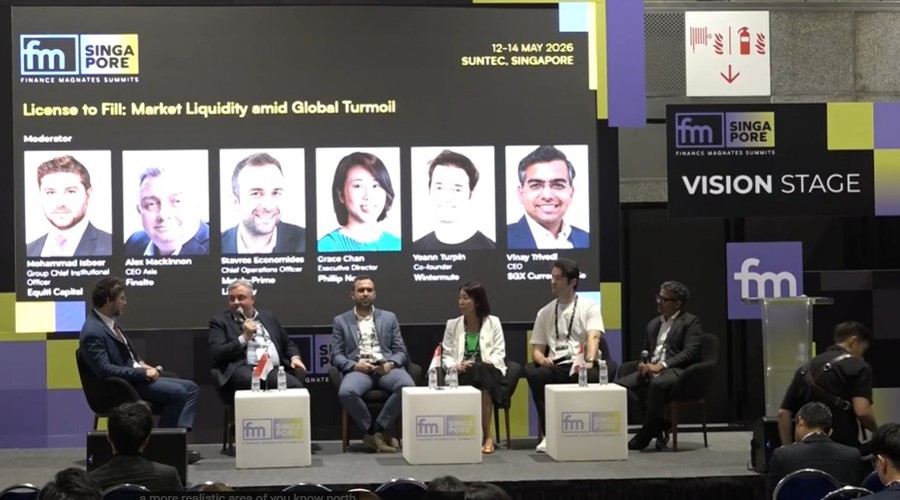
Mohammad Isbeer, Alex Mackinnon, Stravros Economides, Grace Chan, Yoann Turpin, Vinay Trivedi
Grace Chan, Executive Director at Phillip Nova, said the
issue extends beyond recent volatility, though recent market moves have
amplified its impact. “Volatility probably put it into the limelight,” she
said, noting that diversified client flows across asset classes can help
brokers manage liquidity imbalances.
Still, shifting client interest away from gold remains a
persistent challenge. “Gold has been the asset that investors and traders… have
been trading for a really long time,” Chan said, adding that the rise in
speculative activity over the past decade has only deepened that concentration.
Yoann Turpin, Co-founder of Wintermute, attributed this
concentration to leverage and accessibility. Gold, he argued, offers “the
cheapest way where [traders] can get the most leverage,” making it a natural
magnet for speculative capital.
If one area of consensus emerged, it was the industry’s
shift toward more conservative risk practices following sharp market
dislocations in early 2026.
Liquidity providers reported a clear increase in risk being
offloaded by brokers. “The volume we’re seeing from retail-facing brokers has
increased,” Mackinnon said, attributing this to tighter internal risk limits
and a reassessment of exposure following recent market shocks.
Economides echoed this trend, particularly among smaller
brokers. “They can’t afford big hits… so they reduce their levels,” he said,
adding that recent volatility has also led to more “toxic flow” and mispricing
opportunities in metals markets.
The consequences of poor risk management, panelists warned,
extend beyond individual firms. “The industry itself doesn’t want any
defaults,” Mackinnon said. “That will just put the industry back five to ten
years.”
For brokers, the challenge lies in balancing internalization
(B-booking) with external hedging (A-booking). As Vinay Trivedi, CEO of SGX
CurrencyNode, put it: “It’s not A or B—it’s somewhere in between. You find the
balance, you stay in the game. You lose the balance, you’re burnt out.”
Infrastructure and Trust Under Pressure
The discussion also highlighted the growing importance of
infrastructure resilience and liquidity access during periods of stress.
Trivedi argued that volatility exposes the underlying
structure of liquidity markets, prompting a “flight to safety” toward venues
and market makers with strong balance sheets and inventory. “People want to go
back to those market makers who are holding inventory… or to primary and
secondary markets where there’s a marketplace,” he said.
Access to diversified liquidity pools—including exchanges,
ECNs and bilateral relationships, has become critical to mitigating
fragmentation and execution risk.
Meanwhile, brokers are facing operational pressures beyond
pricing. Chan offered a glimpse into the day-to-day reality during volatile
periods, describing how teams monitor client exposure and funding levels into
the weekend. “Friday night becomes no longer happy hour,” she said, as firms
assess whether they have sufficient capital to withstand potential gaps.
Technology and the Next Fault Line
As markets become more automated, panelists warned that
technology risk is emerging as another critical vulnerability. Heavy reliance
on pricing engines, margin systems and cloud infrastructure leaves firms
exposed to outages at precisely the moments liquidity is most strained.
While not yet fully explored in the session, the reference
to past infrastructure disruptions, such as regional cloud outages, underscored
the fragility of increasingly digitized liquidity networks.
A More Cautious, Complex Market
Taken together, the discussion painted a picture of an
industry adapting to a more complex and risk-sensitive environment.
Fragmentation remains a structural feature, metals continue to dominate trading
flows, and brokers are recalibrating how much risk they are willing, or able to
hold.
At the same time, evolving client behavior, cross-asset
convergence and technological dependencies are adding new layers of complexity
to liquidity provision.
The result is a market where access to capital, technology
and diversified liquidity relationships is becoming as important as pricing
itself, and where, in periods of stress, the ability to manage risk may
ultimately define who remains standing.
Surging volatility across metals and a renewed focus on risk
management are reshaping how liquidity is priced, accessed and managed across
FX and CFD markets, according to senior industry executives speaking at the
Finance Magnates Singapore Summit 2026.
The panel, which brought together liquidity providers,
brokers, exchange operators and market makers, highlighted a market
increasingly defined by fragmentation, shifting client behavior and a more
cautious approach to risk following sharp moves in gold and other commodities.
Alex Mackinnon, CEO for Asia at Finalto, noted that extreme
pricing disparities seen during gold’s rally in late 2025 have narrowed, but
not disappeared. “The fragmentation is still there. It’s probably narrowed a
bit,” he said, pointing to a period when retail brokers were quoting spreads
“sub-10 cents when the real market’s probably 30.”
That gap has since adjusted, with brokers now pricing “north
of 15 cents,” bringing them closer to institutional benchmarks. However,
Mackinnon added that brokers continue to face pressure to tighten spreads
despite underlying market constraints.
Stavros Economides, COO at Match-Prime Liquidity, reinforced
that structural differences in broker models continue to drive pricing
divergence. “We see sometimes retail brokers provide very tight, below-market
conditions… this you can do only if you have your own books,” he said, warning
that such strategies require significant balance sheet capacity to absorb
potential losses during volatile periods.
Metals Dominate, and Distort, the Landscape
A central theme throughout the discussion was the industry’s
heavy reliance on gold and, increasingly, silver—assets that have become focal
points for speculative activity and liquidity stress.
Mohammad Isbeer, Alex Mackinnon, Stravros Economides, Grace Chan, Yoann Turpin, Vinay Trivedi
Grace Chan, Executive Director at Phillip Nova, said the
issue extends beyond recent volatility, though recent market moves have
amplified its impact. “Volatility probably put it into the limelight,” she
said, noting that diversified client flows across asset classes can help
brokers manage liquidity imbalances.
Still, shifting client interest away from gold remains a
persistent challenge. “Gold has been the asset that investors and traders… have
been trading for a really long time,” Chan said, adding that the rise in
speculative activity over the past decade has only deepened that concentration.
Yoann Turpin, Co-founder of Wintermute, attributed this
concentration to leverage and accessibility. Gold, he argued, offers “the
cheapest way where [traders] can get the most leverage,” making it a natural
magnet for speculative capital.
If one area of consensus emerged, it was the industry’s
shift toward more conservative risk practices following sharp market
dislocations in early 2026.
Liquidity providers reported a clear increase in risk being
offloaded by brokers. “The volume we’re seeing from retail-facing brokers has
increased,” Mackinnon said, attributing this to tighter internal risk limits
and a reassessment of exposure following recent market shocks.
Economides echoed this trend, particularly among smaller
brokers. “They can’t afford big hits… so they reduce their levels,” he said,
adding that recent volatility has also led to more “toxic flow” and mispricing
opportunities in metals markets.
The consequences of poor risk management, panelists warned,
extend beyond individual firms. “The industry itself doesn’t want any
defaults,” Mackinnon said. “That will just put the industry back five to ten
years.”
For brokers, the challenge lies in balancing internalization
(B-booking) with external hedging (A-booking). As Vinay Trivedi, CEO of SGX
CurrencyNode, put it: “It’s not A or B—it’s somewhere in between. You find the
balance, you stay in the game. You lose the balance, you’re burnt out.”
Infrastructure and Trust Under Pressure
The discussion also highlighted the growing importance of
infrastructure resilience and liquidity access during periods of stress.
Trivedi argued that volatility exposes the underlying
structure of liquidity markets, prompting a “flight to safety” toward venues
and market makers with strong balance sheets and inventory. “People want to go
back to those market makers who are holding inventory… or to primary and
secondary markets where there’s a marketplace,” he said.
Access to diversified liquidity pools—including exchanges,
ECNs and bilateral relationships, has become critical to mitigating
fragmentation and execution risk.
Meanwhile, brokers are facing operational pressures beyond
pricing. Chan offered a glimpse into the day-to-day reality during volatile
periods, describing how teams monitor client exposure and funding levels into
the weekend. “Friday night becomes no longer happy hour,” she said, as firms
assess whether they have sufficient capital to withstand potential gaps.
Technology and the Next Fault Line
As markets become more automated, panelists warned that
technology risk is emerging as another critical vulnerability. Heavy reliance
on pricing engines, margin systems and cloud infrastructure leaves firms
exposed to outages at precisely the moments liquidity is most strained.
While not yet fully explored in the session, the reference
to past infrastructure disruptions, such as regional cloud outages, underscored
the fragility of increasingly digitized liquidity networks.
A More Cautious, Complex Market
Taken together, the discussion painted a picture of an
industry adapting to a more complex and risk-sensitive environment.
Fragmentation remains a structural feature, metals continue to dominate trading
flows, and brokers are recalibrating how much risk they are willing, or able to
hold.
At the same time, evolving client behavior, cross-asset
convergence and technological dependencies are adding new layers of complexity
to liquidity provision.
The result is a market where access to capital, technology
and diversified liquidity relationships is becoming as important as pricing
itself, and where, in periods of stress, the ability to manage risk may
ultimately define who remains standing.
Jared Kirui is an Editor at Finance Magnates with more than five years of experience in financial journalism. He covers online trading, fintech, payments, and crypto industries with a focus on companies, regulation and compliance, executive moves, trading technology, and market analysis.
His work has been featured in other media outlets, including Benzinga, ZyCrypto, The Distributed, and The Daily Hodl.
Education:
Bachelor of Commerce degree (Finance option), University of Nairobi
Lord Peter Cruddas Announced as Headline Speaker at FM Summit London 2026
Featured Videos
FxPro Sells EU Clients to Capital.com; NAGA H1 Profit Revised
FxPro Sells EU Clients to Capital.com; NAGA H1 Profit Revised
FxPro Sells EU Clients to Capital.com; NAGA H1 Profit Revised
FxPro Sells EU Clients to Capital.com; NAGA H1 Profit Revised
Today’s financial news recap covers FxPro agrees to sell its European client book to Capital.com, NAGA raises its first-half profit estimate, Trade Republic prepares a fee-free pension account, and Interactive Brokers introduces Ether staking.
Finance Magnates Daily Recap brings you the latest news from forex and CFD brokers, fintech, payments, cryptocurrency, digital assets, trading platforms, financial regulation and global markets.
Get the key company news, executive moves, deals, regulatory updates and market developments of the day, in just a few minutes. New episodes published every weekday.
Read more: https://www.financemagnates.com
#FinanceMagnates #ForexNews #FintechNews
Today’s financial news recap covers FxPro agrees to sell its European client book to Capital.com, NAGA raises its first-half profit estimate, Trade Republic prepares a fee-free pension account, and Interactive Brokers introduces Ether staking.
Finance Magnates Daily Recap brings you the latest news from forex and CFD brokers, fintech, payments, cryptocurrency, digital assets, trading platforms, financial regulation and global markets.
Get the key company news, executive moves, deals, regulatory updates and market developments of the day, in just a few minutes. New episodes published every weekday.
Read more: https://www.financemagnates.com
#FinanceMagnates #ForexNews #FintechNews
Today’s financial news recap covers FxPro agrees to sell its European client book to Capital.com, NAGA raises its first-half profit estimate, Trade Republic prepares a fee-free pension account, and Interactive Brokers introduces Ether staking.
Finance Magnates Daily Recap brings you the latest news from forex and CFD brokers, fintech, payments, cryptocurrency, digital assets, trading platforms, financial regulation and global markets.
Get the key company news, executive moves, deals, regulatory updates and market developments of the day, in just a few minutes. New episodes published every weekday.
Read more: https://www.financemagnates.com
#FinanceMagnates #ForexNews #FintechNews
Today’s financial news recap covers FxPro agrees to sell its European client book to Capital.com, NAGA raises its first-half profit estimate, Trade Republic prepares a fee-free pension account, and Interactive Brokers introduces Ether staking.
Finance Magnates Daily Recap brings you the latest news from forex and CFD brokers, fintech, payments, cryptocurrency, digital assets, trading platforms, financial regulation and global markets.
Get the key company news, executive moves, deals, regulatory updates and market developments of the day, in just a few minutes. New episodes published every weekday.
Read more: https://www.financemagnates.com
#FinanceMagnates #ForexNews #FintechNews
Plus500 Plans US Super-App; Investec to Offer IG Platform
Plus500 Plans US Super-App; Investec to Offer IG Platform
Plus500 Plans US Super-App; Investec to Offer IG Platform
Plus500 Plans US Super-App; Investec to Offer IG Platform
Plus500 Plans US Super-App; Investec to Offer IG Platform
Plus500 Plans US Super-App; Investec to Offer IG Platform
Today’s financial news recap covers Plus500 plans a US trading super-app, Investec partners with IG, Trade Republic reports a sevenfold profit jump, and BingX adds thousands of US stocks.
Finance Magnates Daily Recap brings you the latest news from forex and CFD brokers, fintech, payments, cryptocurrency, digital assets, trading platforms, financial regulation and global markets.
Get the key company news, executive moves, deals, regulatory updates and market developments of the day, in just a few minutes. New episodes published every weekday.
Read more: https://www.financemagnates.com
#FinanceMagnates #ForexNews #FintechNews
Today’s financial news recap covers Plus500 plans a US trading super-app, Investec partners with IG, Trade Republic reports a sevenfold profit jump, and BingX adds thousands of US stocks.
Finance Magnates Daily Recap brings you the latest news from forex and CFD brokers, fintech, payments, cryptocurrency, digital assets, trading platforms, financial regulation and global markets.
Get the key company news, executive moves, deals, regulatory updates and market developments of the day, in just a few minutes. New episodes published every weekday.
Read more: https://www.financemagnates.com
#FinanceMagnates #ForexNews #FintechNews
Today’s financial news recap covers Plus500 plans a US trading super-app, Investec partners with IG, Trade Republic reports a sevenfold profit jump, and BingX adds thousands of US stocks.
Finance Magnates Daily Recap brings you the latest news from forex and CFD brokers, fintech, payments, cryptocurrency, digital assets, trading platforms, financial regulation and global markets.
Get the key company news, executive moves, deals, regulatory updates and market developments of the day, in just a few minutes. New episodes published every weekday.
Read more: https://www.financemagnates.com
#FinanceMagnates #ForexNews #FintechNews
Today’s financial news recap covers Plus500 plans a US trading super-app, Investec partners with IG, Trade Republic reports a sevenfold profit jump, and BingX adds thousands of US stocks.
Finance Magnates Daily Recap brings you the latest news from forex and CFD brokers, fintech, payments, cryptocurrency, digital assets, trading platforms, financial regulation and global markets.
Get the key company news, executive moves, deals, regulatory updates and market developments of the day, in just a few minutes. New episodes published every weekday.
Read more: https://www.financemagnates.com
#FinanceMagnates #ForexNews #FintechNews
Today’s financial news recap covers Plus500 plans a US trading super-app, Investec partners with IG, Trade Republic reports a sevenfold profit jump, and BingX adds thousands of US stocks.
Finance Magnates Daily Recap brings you the latest news from forex and CFD brokers, fintech, payments, cryptocurrency, digital assets, trading platforms, financial regulation and global markets.
Get the key company news, executive moves, deals, regulatory updates and market developments of the day, in just a few minutes. New episodes published every weekday.
Read more: https://www.financemagnates.com
#FinanceMagnates #ForexNews #FintechNews
Today’s financial news recap covers Plus500 plans a US trading super-app, Investec partners with IG, Trade Republic reports a sevenfold profit jump, and BingX adds thousands of US stocks.
Finance Magnates Daily Recap brings you the latest news from forex and CFD brokers, fintech, payments, cryptocurrency, digital assets, trading platforms, financial regulation and global markets.
Get the key company news, executive moves, deals, regulatory updates and market developments of the day, in just a few minutes. New episodes published every weekday.
Read more: https://www.financemagnates.com
#FinanceMagnates #ForexNews #FintechNews
FXCM UK Holds $110m in Client Money; IG CEO Questions Prediction Market Volumes
FXCM UK Holds $110m in Client Money; IG CEO Questions Prediction Market Volumes
FXCM UK Holds $110m in Client Money; IG CEO Questions Prediction Market Volumes
FXCM UK Holds $110m in Client Money; IG CEO Questions Prediction Market Volumes
FXCM UK Holds $110m in Client Money; IG CEO Questions Prediction Market Volumes
FXCM UK Holds $110m in Client Money; IG CEO Questions Prediction Market Volumes
Today’s financial news recap covers FXCM's UK arm holds $110 million in client money ahead of its sale to Trade Nation, Citadel Securities' UK profit falls 38 per cent, and Kraken secures its final Dubai crypto licence.
Finance Magnates Daily Recap brings you the latest news from forex and CFD brokers, fintech, payments, cryptocurrency, digital assets, trading platforms, financial regulation and global markets.
Get the key company news, executive moves, deals, regulatory updates and market developments of the day, in just a few minutes. New episodes published every weekday.
Read more: https://www.financemagnates.com
#FinanceMagnates #ForexNews #FintechNews
Today’s financial news recap covers FXCM's UK arm holds $110 million in client money ahead of its sale to Trade Nation, Citadel Securities' UK profit falls 38 per cent, and Kraken secures its final Dubai crypto licence.
Finance Magnates Daily Recap brings you the latest news from forex and CFD brokers, fintech, payments, cryptocurrency, digital assets, trading platforms, financial regulation and global markets.
Get the key company news, executive moves, deals, regulatory updates and market developments of the day, in just a few minutes. New episodes published every weekday.
Read more: https://www.financemagnates.com
#FinanceMagnates #ForexNews #FintechNews
Today’s financial news recap covers FXCM's UK arm holds $110 million in client money ahead of its sale to Trade Nation, Citadel Securities' UK profit falls 38 per cent, and Kraken secures its final Dubai crypto licence.
Finance Magnates Daily Recap brings you the latest news from forex and CFD brokers, fintech, payments, cryptocurrency, digital assets, trading platforms, financial regulation and global markets.
Get the key company news, executive moves, deals, regulatory updates and market developments of the day, in just a few minutes. New episodes published every weekday.
Read more: https://www.financemagnates.com
#FinanceMagnates #ForexNews #FintechNews
Today’s financial news recap covers FXCM's UK arm holds $110 million in client money ahead of its sale to Trade Nation, Citadel Securities' UK profit falls 38 per cent, and Kraken secures its final Dubai crypto licence.
Finance Magnates Daily Recap brings you the latest news from forex and CFD brokers, fintech, payments, cryptocurrency, digital assets, trading platforms, financial regulation and global markets.
Get the key company news, executive moves, deals, regulatory updates and market developments of the day, in just a few minutes. New episodes published every weekday.
Read more: https://www.financemagnates.com
#FinanceMagnates #ForexNews #FintechNews
Today’s financial news recap covers FXCM's UK arm holds $110 million in client money ahead of its sale to Trade Nation, Citadel Securities' UK profit falls 38 per cent, and Kraken secures its final Dubai crypto licence.
Finance Magnates Daily Recap brings you the latest news from forex and CFD brokers, fintech, payments, cryptocurrency, digital assets, trading platforms, financial regulation and global markets.
Get the key company news, executive moves, deals, regulatory updates and market developments of the day, in just a few minutes. New episodes published every weekday.
Read more: https://www.financemagnates.com
#FinanceMagnates #ForexNews #FintechNews
Today’s financial news recap covers FXCM's UK arm holds $110 million in client money ahead of its sale to Trade Nation, Citadel Securities' UK profit falls 38 per cent, and Kraken secures its final Dubai crypto licence.
Finance Magnates Daily Recap brings you the latest news from forex and CFD brokers, fintech, payments, cryptocurrency, digital assets, trading platforms, financial regulation and global markets.
Get the key company news, executive moves, deals, regulatory updates and market developments of the day, in just a few minutes. New episodes published every weekday.
Read more: https://www.financemagnates.com
#FinanceMagnates #ForexNews #FintechNews
AvaTrade to Acquire Most of FXCM; NAGA Raises $8M
AvaTrade to Acquire Most of FXCM; NAGA Raises $8M
AvaTrade to Acquire Most of FXCM; NAGA Raises $8M
AvaTrade to Acquire Most of FXCM; NAGA Raises $8M
AvaTrade to Acquire Most of FXCM; NAGA Raises $8M
AvaTrade to Acquire Most of FXCM; NAGA Raises $8M
Today’s financial news recap covers AvaTrade agrees to acquire most of FXCM, NAGA secures eight million dollars in new financing, and Wise seeks a tax settlement in the UK.
Finance Magnates Daily Recap brings you the latest news from forex and CFD brokers, fintech, payments, cryptocurrency, digital assets, trading platforms, financial regulation and global markets.
Get the key company news, executive moves, deals, regulatory updates and market developments of the day, in just a few minutes. New episodes published every weekday.
Read more: https://www.financemagnates.com
#FinanceMagnates #ForexNews #FintechNews
Today’s financial news recap covers AvaTrade agrees to acquire most of FXCM, NAGA secures eight million dollars in new financing, and Wise seeks a tax settlement in the UK.
Finance Magnates Daily Recap brings you the latest news from forex and CFD brokers, fintech, payments, cryptocurrency, digital assets, trading platforms, financial regulation and global markets.
Get the key company news, executive moves, deals, regulatory updates and market developments of the day, in just a few minutes. New episodes published every weekday.
Read more: https://www.financemagnates.com
#FinanceMagnates #ForexNews #FintechNews
Today’s financial news recap covers AvaTrade agrees to acquire most of FXCM, NAGA secures eight million dollars in new financing, and Wise seeks a tax settlement in the UK.
Finance Magnates Daily Recap brings you the latest news from forex and CFD brokers, fintech, payments, cryptocurrency, digital assets, trading platforms, financial regulation and global markets.
Get the key company news, executive moves, deals, regulatory updates and market developments of the day, in just a few minutes. New episodes published every weekday.
Read more: https://www.financemagnates.com
#FinanceMagnates #ForexNews #FintechNews
Today’s financial news recap covers AvaTrade agrees to acquire most of FXCM, NAGA secures eight million dollars in new financing, and Wise seeks a tax settlement in the UK.
Finance Magnates Daily Recap brings you the latest news from forex and CFD brokers, fintech, payments, cryptocurrency, digital assets, trading platforms, financial regulation and global markets.
Get the key company news, executive moves, deals, regulatory updates and market developments of the day, in just a few minutes. New episodes published every weekday.
Read more: https://www.financemagnates.com
#FinanceMagnates #ForexNews #FintechNews
Today’s financial news recap covers AvaTrade agrees to acquire most of FXCM, NAGA secures eight million dollars in new financing, and Wise seeks a tax settlement in the UK.
Finance Magnates Daily Recap brings you the latest news from forex and CFD brokers, fintech, payments, cryptocurrency, digital assets, trading platforms, financial regulation and global markets.
Get the key company news, executive moves, deals, regulatory updates and market developments of the day, in just a few minutes. New episodes published every weekday.
Read more: https://www.financemagnates.com
#FinanceMagnates #ForexNews #FintechNews
Today’s financial news recap covers AvaTrade agrees to acquire most of FXCM, NAGA secures eight million dollars in new financing, and Wise seeks a tax settlement in the UK.
Finance Magnates Daily Recap brings you the latest news from forex and CFD brokers, fintech, payments, cryptocurrency, digital assets, trading platforms, financial regulation and global markets.
Get the key company news, executive moves, deals, regulatory updates and market developments of the day, in just a few minutes. New episodes published every weekday.
Read more: https://www.financemagnates.com
#FinanceMagnates #ForexNews #FintechNews
XTB Adds Overnight US Stock Trading; Nasdaq Ventures Invests in One Trading
XTB Adds Overnight US Stock Trading; Nasdaq Ventures Invests in One Trading
XTB Adds Overnight US Stock Trading; Nasdaq Ventures Invests in One Trading
XTB Adds Overnight US Stock Trading; Nasdaq Ventures Invests in One Trading
XTB Adds Overnight US Stock Trading; Nasdaq Ventures Invests in One Trading
XTB Adds Overnight US Stock Trading; Nasdaq Ventures Invests in One Trading
Today’s financial news recap covers XTB expands overnight US stock trading, Fortrade reports higher revenue, Nasdaq backs One Trading, and Vest Labs raises 13 million dollars.
Finance Magnates Daily Recap brings you the latest news from forex and CFD brokers, fintech, payments, cryptocurrency, digital assets, trading platforms, financial regulation and global markets.
Get the key company news, executive moves, deals, regulatory updates and market developments of the day, in just a few minutes. New episodes published every weekday.
Read more: https://www.financemagnates.com
#FinanceMagnates #ForexNews #FintechNews
Today’s financial news recap covers XTB expands overnight US stock trading, Fortrade reports higher revenue, Nasdaq backs One Trading, and Vest Labs raises 13 million dollars.
Finance Magnates Daily Recap brings you the latest news from forex and CFD brokers, fintech, payments, cryptocurrency, digital assets, trading platforms, financial regulation and global markets.
Get the key company news, executive moves, deals, regulatory updates and market developments of the day, in just a few minutes. New episodes published every weekday.
Read more: https://www.financemagnates.com
#FinanceMagnates #ForexNews #FintechNews
Today’s financial news recap covers XTB expands overnight US stock trading, Fortrade reports higher revenue, Nasdaq backs One Trading, and Vest Labs raises 13 million dollars.
Finance Magnates Daily Recap brings you the latest news from forex and CFD brokers, fintech, payments, cryptocurrency, digital assets, trading platforms, financial regulation and global markets.
Get the key company news, executive moves, deals, regulatory updates and market developments of the day, in just a few minutes. New episodes published every weekday.
Read more: https://www.financemagnates.com
#FinanceMagnates #ForexNews #FintechNews
Today’s financial news recap covers XTB expands overnight US stock trading, Fortrade reports higher revenue, Nasdaq backs One Trading, and Vest Labs raises 13 million dollars.
Finance Magnates Daily Recap brings you the latest news from forex and CFD brokers, fintech, payments, cryptocurrency, digital assets, trading platforms, financial regulation and global markets.
Get the key company news, executive moves, deals, regulatory updates and market developments of the day, in just a few minutes. New episodes published every weekday.
Read more: https://www.financemagnates.com
#FinanceMagnates #ForexNews #FintechNews
Today’s financial news recap covers XTB expands overnight US stock trading, Fortrade reports higher revenue, Nasdaq backs One Trading, and Vest Labs raises 13 million dollars.
Finance Magnates Daily Recap brings you the latest news from forex and CFD brokers, fintech, payments, cryptocurrency, digital assets, trading platforms, financial regulation and global markets.
Get the key company news, executive moves, deals, regulatory updates and market developments of the day, in just a few minutes. New episodes published every weekday.
Read more: https://www.financemagnates.com
#FinanceMagnates #ForexNews #FintechNews
Today’s financial news recap covers XTB expands overnight US stock trading, Fortrade reports higher revenue, Nasdaq backs One Trading, and Vest Labs raises 13 million dollars.
Finance Magnates Daily Recap brings you the latest news from forex and CFD brokers, fintech, payments, cryptocurrency, digital assets, trading platforms, financial regulation and global markets.
Get the key company news, executive moves, deals, regulatory updates and market developments of the day, in just a few minutes. New episodes published every weekday.
Read more: https://www.financemagnates.com
#FinanceMagnates #ForexNews #FintechNews