At the CRAFT Stage, panelists noted that Singapore’s funding depth is modest versus San Francisco.
The region’s strengths include regulatory clarity, specialist talent, and early‑stage capital.
Watch the full video below.
Singapore is quietly building one of Asia’s most complete
capital stacks. But founders and investors are being reminded that discipline,
not hype, will determine who makes it from pre‑seed to exit.
That was the core message from a Craft Stage panel at the FM
Singapore Summit 2026. Venture capital, public markets and secondary‑liquidity
specialists mapped out how the city‑state competes with London, New
York and San Francisco across the full lifecycle of funding.
The discussion brought together Vidushan Premathiratne, the Founder of 8 Circle /
Techt Labs, Zongxi Sia, the Partner at
Cocoon Capital, Luca Zorzino, the General Partner and Head of Singapore Illuminate
Financial, and Thom Abbott, the Head of SE Asia Primary Markets, London Stock
Exchange.
Singapore’s Appeal, and Its Limits
Moderator Premathiratne set the tone by contrasting Singapore’s reputation as a safe hub
with the “sophisticated ecosystem” behind it, spanning sovereign capital from
Temasek and GIC, a growing family office base, specialist VC funds and the
Singapore Exchange.
Yet the panel was clear that the market’s depth must be seen
in context: “If you look at venture dollars raised in Q1 this year in SF,
you’re talking about $170 to $180 billion; here in Singapore, two to three
billion,” said Zorzino.
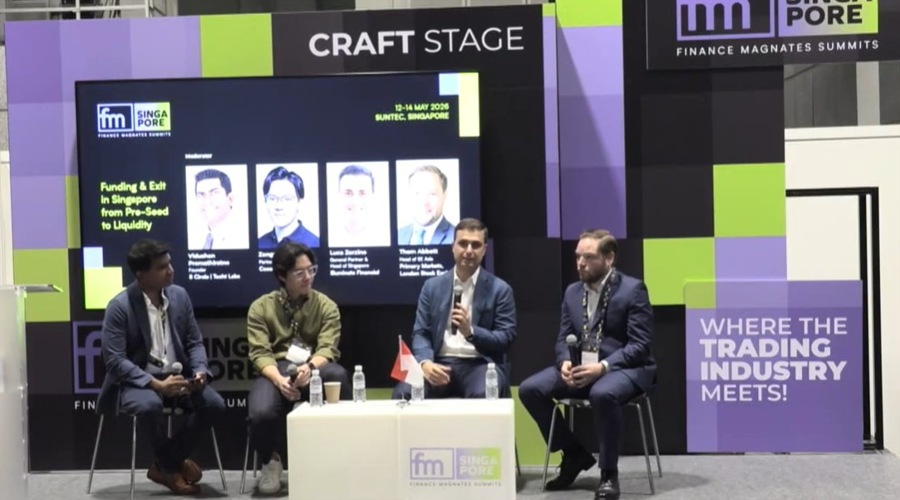
From left: Vidushan Premathiratne, Zongxi Sia, Luca Zorzino, and Thom Abbott
For Zorzino, Singapore works best when founders use its
advantages: regulatory clarity, specialist talent and early‑stage
capital, while accepting a different risk‑capital
flavor
than Silicon Valley.
Pre‑seed investor Sia focused on how governance and structure can de‑risk failure for LPs and future
investors. Cocoon insists that IP, founder employment and corporate value be
housed in a Singapore entity: “There has
to be as much value as possible housed in a safer region or more predictable
region,” he said, arguing that this makes later
US or European investors more comfortable with due diligence and corporate
governance standards.
Sia noted that most founders he backs are first‑timers,
often “techies”
who are strong on product and sales but “have
no idea what a balance sheet is.” He
described venture funding as a “double‑edged
sword”. “I
give you money, but you have to give me an exit as well”, and
stressed the need to professionalize management over time, sometimes bringing
in a CEO or CFO to handle conversations with Series A, pre‑IPO
and eventual exit counterparties.
Abbott highlighted LSEG’s new private secondaries platform,
designed for companies that are staying private longer but need to meet
institutional investors or offer liquidity to early staff and backers. “We are
trying to be… agnostic as to whether a company is public or private,” he said,
positioning the platform as a way to extend the funding continuum between
early rounds, secondary sales and a possible IPO.
On dual listings, he warned that they only work when there
is a clear strategic rationale and a willingness to absorb the additional
costs, rather than as a flagging we’re there branding exercise.
Investment ‘Winter’ and the AI Arms Race
The panel pushed back on headlines about a prolonged
investment winter in Asia, while acknowledging a stark K‑shaped
recovery in global venture markets.
Zorzino said that while San Francisco’s
downturn “has been very much over for a while now” and capital is “essentially
unlimited” for firms such as Anthropic and OpenAI,
smaller players in Singapore still face a tougher fundraising environment and
widening disparity between “the haves
and the have‑nots.”
On AI, both investors agreed the wave is not about to end,
but will evolve. Zorzino predicted more scrutiny of unit economics as model
providers shift from “all‑you‑can‑eat” to
usage‑based
pricing: “People are going to start recognizing
that actually this workflow… automated
with Claude… actually cost me $4,500 just for
this specific workflow,” he said, arguing that some tasks
may be cheaper in low‑cost human locations than through an LLM.
Sia added that Cocoon saw roughly 2,100 deals last year and “about every quarter was about 300 or so AI companies,” rising
to roughly 450 AI decks in the first quarter alone, evidence, he said, of a
bubble that “is just going to keep being around,” even as investors shift their
focus from wrappers and app layers to more defensible innovation and data‑level
moats.
Geopolitics, safety and the case for discipline
Geopolitical risk surfaced mostly as a constraint on deep‑tech
and cross‑border exits rather than a brake on early‑stage
enterprise software. Sia said early enterprise tech companies in Southeast Asia
are still largely insulated as they chase regional product‑market
fit, while deep‑tech founders must now confront whether they can serve
both US and China or must pick a side.
Zorzino pointed to banks’
desire to host open‑source models in‑house, many originating from
Chinese research labs, while weighing security and capital‑controls
risks, especially after enforcement actions like the crackdown on Manis.
Abbott argued that IPOs still rely on “a bit of stability
and less volatility” and cited a delayed flotation by Love Holidays, which had
heavy exposure to Dubai, as an example of how specific geopolitical flashpoints
can upset listing timetables.
But he said secondary‑market activity remains robust and
that both London and Singapore can benefit from being seen as relatively
neutral venues that investors use to express their own geopolitical preferences
in sectors such as resources and AI‑critical supply chains.
Singapore is quietly building one of Asia’s most complete
capital stacks. But founders and investors are being reminded that discipline,
not hype, will determine who makes it from pre‑seed to exit.
That was the core message from a Craft Stage panel at the FM
Singapore Summit 2026. Venture capital, public markets and secondary‑liquidity
specialists mapped out how the city‑state competes with London, New
York and San Francisco across the full lifecycle of funding.
The discussion brought together Vidushan Premathiratne, the Founder of 8 Circle /
Techt Labs, Zongxi Sia, the Partner at
Cocoon Capital, Luca Zorzino, the General Partner and Head of Singapore Illuminate
Financial, and Thom Abbott, the Head of SE Asia Primary Markets, London Stock
Exchange.
Singapore’s Appeal, and Its Limits
Moderator Premathiratne set the tone by contrasting Singapore’s reputation as a safe hub
with the “sophisticated ecosystem” behind it, spanning sovereign capital from
Temasek and GIC, a growing family office base, specialist VC funds and the
Singapore Exchange.
Yet the panel was clear that the market’s depth must be seen
in context: “If you look at venture dollars raised in Q1 this year in SF,
you’re talking about $170 to $180 billion; here in Singapore, two to three
billion,” said Zorzino.
From left: Vidushan Premathiratne, Zongxi Sia, Luca Zorzino, and Thom Abbott
For Zorzino, Singapore works best when founders use its
advantages: regulatory clarity, specialist talent and early‑stage
capital, while accepting a different risk‑capital
flavor
than Silicon Valley.
Pre‑seed investor Sia focused on how governance and structure can de‑risk failure for LPs and future
investors. Cocoon insists that IP, founder employment and corporate value be
housed in a Singapore entity: “There has
to be as much value as possible housed in a safer region or more predictable
region,” he said, arguing that this makes later
US or European investors more comfortable with due diligence and corporate
governance standards.
Sia noted that most founders he backs are first‑timers,
often “techies”
who are strong on product and sales but “have
no idea what a balance sheet is.” He
described venture funding as a “double‑edged
sword”. “I
give you money, but you have to give me an exit as well”, and
stressed the need to professionalize management over time, sometimes bringing
in a CEO or CFO to handle conversations with Series A, pre‑IPO
and eventual exit counterparties.
Abbott highlighted LSEG’s new private secondaries platform,
designed for companies that are staying private longer but need to meet
institutional investors or offer liquidity to early staff and backers. “We are
trying to be… agnostic as to whether a company is public or private,” he said,
positioning the platform as a way to extend the funding continuum between
early rounds, secondary sales and a possible IPO.
On dual listings, he warned that they only work when there
is a clear strategic rationale and a willingness to absorb the additional
costs, rather than as a flagging we’re there branding exercise.
Investment ‘Winter’ and the AI Arms Race
The panel pushed back on headlines about a prolonged
investment winter in Asia, while acknowledging a stark K‑shaped
recovery in global venture markets.
Zorzino said that while San Francisco’s
downturn “has been very much over for a while now” and capital is “essentially
unlimited” for firms such as Anthropic and OpenAI,
smaller players in Singapore still face a tougher fundraising environment and
widening disparity between “the haves
and the have‑nots.”
On AI, both investors agreed the wave is not about to end,
but will evolve. Zorzino predicted more scrutiny of unit economics as model
providers shift from “all‑you‑can‑eat” to
usage‑based
pricing: “People are going to start recognizing
that actually this workflow… automated
with Claude… actually cost me $4,500 just for
this specific workflow,” he said, arguing that some tasks
may be cheaper in low‑cost human locations than through an LLM.
Sia added that Cocoon saw roughly 2,100 deals last year and “about every quarter was about 300 or so AI companies,” rising
to roughly 450 AI decks in the first quarter alone, evidence, he said, of a
bubble that “is just going to keep being around,” even as investors shift their
focus from wrappers and app layers to more defensible innovation and data‑level
moats.
Geopolitics, safety and the case for discipline
Geopolitical risk surfaced mostly as a constraint on deep‑tech
and cross‑border exits rather than a brake on early‑stage
enterprise software. Sia said early enterprise tech companies in Southeast Asia
are still largely insulated as they chase regional product‑market
fit, while deep‑tech founders must now confront whether they can serve
both US and China or must pick a side.
Zorzino pointed to banks’
desire to host open‑source models in‑house, many originating from
Chinese research labs, while weighing security and capital‑controls
risks, especially after enforcement actions like the crackdown on Manis.
Abbott argued that IPOs still rely on “a bit of stability
and less volatility” and cited a delayed flotation by Love Holidays, which had
heavy exposure to Dubai, as an example of how specific geopolitical flashpoints
can upset listing timetables.
But he said secondary‑market activity remains robust and
that both London and Singapore can benefit from being seen as relatively
neutral venues that investors use to express their own geopolitical preferences
in sectors such as resources and AI‑critical supply chains.
Jared Kirui is an Editor at Finance Magnates with more than five years of experience in financial journalism. He covers online trading, fintech, payments, and crypto industries with a focus on companies, regulation and compliance, executive moves, trading technology, and market analysis.
His work has been featured in other media outlets, including Benzinga, ZyCrypto, The Distributed, and The Daily Hodl.
Education:
Bachelor of Commerce degree (Finance option), University of Nairobi
Cyprus Digital Marketing Summit 2026: Global Brands, CMOs and Innovators Meet in Larnaca
Featured Videos
FM Daily Brief – 23 June 2026
Today’s Tuesday, the 23rd of June 2026, and these are our main stories: Capital.com enters South Africa with dual local licences, CMC Markets launches a native AI engine for investors, and Plus500 joins the race for 24/5 trading.
Today’s Monday, the 22nd of June 2026, and these are our main stories: The operator of FXCM is likely facing a bidding war, Dukascopy’s new all-in-one mobile banking and trading app, and Bitget’s launch of real US stock ownership through its Stock plus feature.
FM Daily Brief – 19 June 2026
Today’s Friday, the 19th of June 2026, and these are our main stories: Australia’s ASIC scam losses and whitelist push, Singapore adding Bybit to its alert list, and Cyprus broker executives arrested in Moscow.
FM Daily Brief – 18 June 2026
Today is Thursday, the eighteenth of June 2026, and these are our main stories: CME Group is taking the CFTC to court over crypto perpetual futures, the Polish retail trading market is cooling, and Coinbase doubles down on global asset expansion.
FM Daily Brief – 17 June 2026
Today’s Wednesday, the 17th of June 2026 and these are our main stories: Robinhood cuts around two hundred ninety jobs while still hiring, Binance against the clock in Europe, and Australia's whitelist against scam clones.