SEC Lets Self‑Hosted Crypto Wallets Stay Outside Broker Regime, for Now

Monday, 13/04/2026 | 21:13 GMT by Jared Kirui
  • According to the regulator, software letting users trade crypto securities directly through their own wallets doesn’t count as a broker.
  • CFTC and the SEC recently aligned their views, confirming that most crypto assets are not securities.
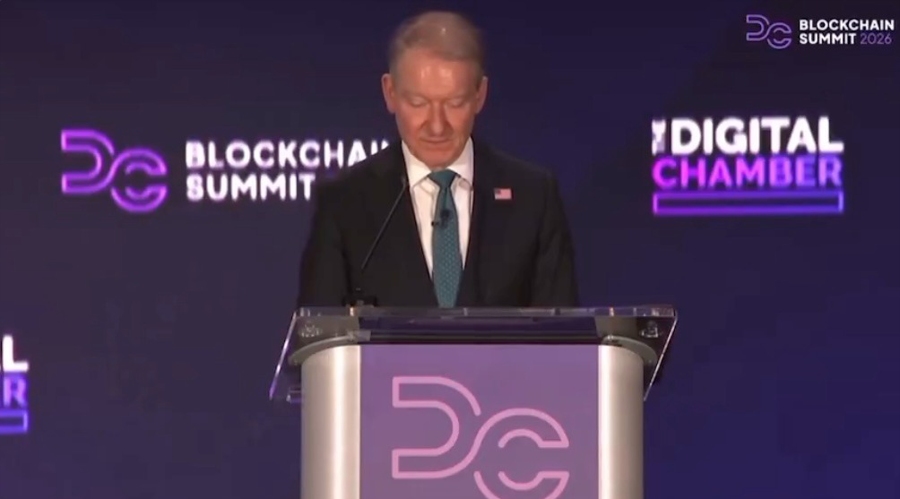
SEC Chair Paul Atkins speaking at Blockchain Summit 2026

The U.S. Securities and Exchange Commission (SEC) has said that software allowing users to trade crypto securities through their own wallets will not be regulated as a broker.

Singapore Summit: Meet the largest APAC brokers you know (and those you still don't!)

The staff view, published on Monday, clarified that websites or software providing access to self-hosted wallets do not need to register as broker-dealers if they act only as interfaces for transactions.

SEC Clarifies Treatment of Wallet Interfaces

According to the SEC, the guidance aims to help developers operate without breaching securities laws while the agency continues to define permanent rules for the crypto industry. Developers must, however, ensure their tools stay neutral and avoid direct involvement in trading or asset handling.

The staff outlined boundaries to remain outside regulation , stating that the software must not solicit investors, provide investment recommendations, handle assets, take orders, or execute trades. If these functions are included, the interface may fall under existing broker regulations.

Keep reading: SEC and CFTC Finally Align on Crypto: “Most Assets Aren’t Securities”

“The staff is providing its views as an interim step while the commission continues to consider various regulatory issues relating to crypto asset securities activities and the feedback it has received,” the statement said.

Temporary Guidance Amid Ongoing Policy Work

Under President Donald Trump’s administration, the SEC has been moving toward a more permissive stance on crypto activities. Chairman Paul Atkins has previously said the agency is working on a broader rule proposal to define how securities laws apply to digital assets.

The latest statement adds to a series of nonbinding staff interpretations meant to guide the industry until formal rules are introduced or until Congress passes legislation such as the proposed “Clarity Act.”

Recently, the SEC and CFTC issued a joint interpretation confirming that most crypto assets are not securities, aligning their approaches by defining when tokens are treated as securities versus commodities. This created a clearer taxonomy for assets like commodities, collectibles, utility tokens, stablecoins, and securities. It also reduced regulation-by-enforcement by giving firms a more predictable rulebook on when and how federal securities and commodities laws apply.

For brokers, that clarity shifted the hard work in-house: firms now have to classify tokens up front, monitor how they’re marketed and used over time, and be ready to defend those judgments if the SEC later questions why an asset wasn’t treated as a security.

The U.S. Securities and Exchange Commission (SEC) has said that software allowing users to trade crypto securities through their own wallets will not be regulated as a broker.

Singapore Summit: Meet the largest APAC brokers you know (and those you still don't!)

The staff view, published on Monday, clarified that websites or software providing access to self-hosted wallets do not need to register as broker-dealers if they act only as interfaces for transactions.

SEC Clarifies Treatment of Wallet Interfaces

According to the SEC, the guidance aims to help developers operate without breaching securities laws while the agency continues to define permanent rules for the crypto industry. Developers must, however, ensure their tools stay neutral and avoid direct involvement in trading or asset handling.

The staff outlined boundaries to remain outside regulation , stating that the software must not solicit investors, provide investment recommendations, handle assets, take orders, or execute trades. If these functions are included, the interface may fall under existing broker regulations.

Keep reading: SEC and CFTC Finally Align on Crypto: “Most Assets Aren’t Securities”

“The staff is providing its views as an interim step while the commission continues to consider various regulatory issues relating to crypto asset securities activities and the feedback it has received,” the statement said.

Temporary Guidance Amid Ongoing Policy Work

Under President Donald Trump’s administration, the SEC has been moving toward a more permissive stance on crypto activities. Chairman Paul Atkins has previously said the agency is working on a broader rule proposal to define how securities laws apply to digital assets.

The latest statement adds to a series of nonbinding staff interpretations meant to guide the industry until formal rules are introduced or until Congress passes legislation such as the proposed “Clarity Act.”

Recently, the SEC and CFTC issued a joint interpretation confirming that most crypto assets are not securities, aligning their approaches by defining when tokens are treated as securities versus commodities. This created a clearer taxonomy for assets like commodities, collectibles, utility tokens, stablecoins, and securities. It also reduced regulation-by-enforcement by giving firms a more predictable rulebook on when and how federal securities and commodities laws apply.

For brokers, that clarity shifted the hard work in-house: firms now have to classify tokens up front, monitor how they’re marketed and used over time, and be ready to defend those judgments if the SEC later questions why an asset wasn’t treated as a security.

About the Author: Jared Kirui
Jared Kirui
  • 2739 Articles
  • 53 Followers
About the Author: Jared Kirui
Jared Kirui is an Editor at Finance Magnates with more than five years of experience in financial journalism. He covers online trading, fintech, payments, and crypto industries with a focus on companies, regulation and compliance, executive moves, trading technology, and market analysis. His work has been featured in other media outlets, including Benzinga, ZyCrypto, The Distributed, and The Daily Hodl. Education: Bachelor of Commerce degree (Finance option), University of Nairobi
  • 2739 Articles
  • 53 Followers

More from the Author

CryptoCurrency

!"#$%&'()*+,-./0123456789:;<=>?@ABCDEFGHIJKLMNOPQRSTUVWXYZ[\]^_`abcdefghijklmnopqrstuvwxyz{|} !"#$%&'()*+,-./0123456789:;<=>?@ABCDEFGHIJKLMNOPQRSTUVWXYZ[\]^_`abcdefghijklmnopqrstuvwxyz{|}