Bitcoin faces critical resistance at $110K with experts divided between David Bailey's $150K "whale theory" and Tom Lee's aggressive $250K year-end target.
Two massive whale sellers keep Bitcoin capped according to Nakamoto CEO Bailey, who predicts 36% surge to $150K once liquidations complete.
Wall Street analysts maintain bullish 2025 outlook with Arthur Hayes, and Galaxy Digital forecasting $200K-$250K price targets.
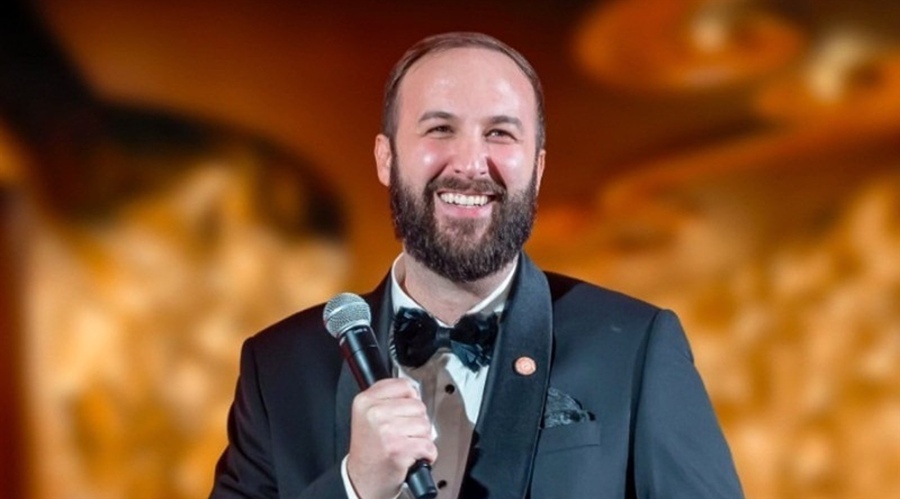
David Bailey's Bitcoin price predictions suggest BTC can reach $150K soon. Source: LinkedIn
Bitcoin
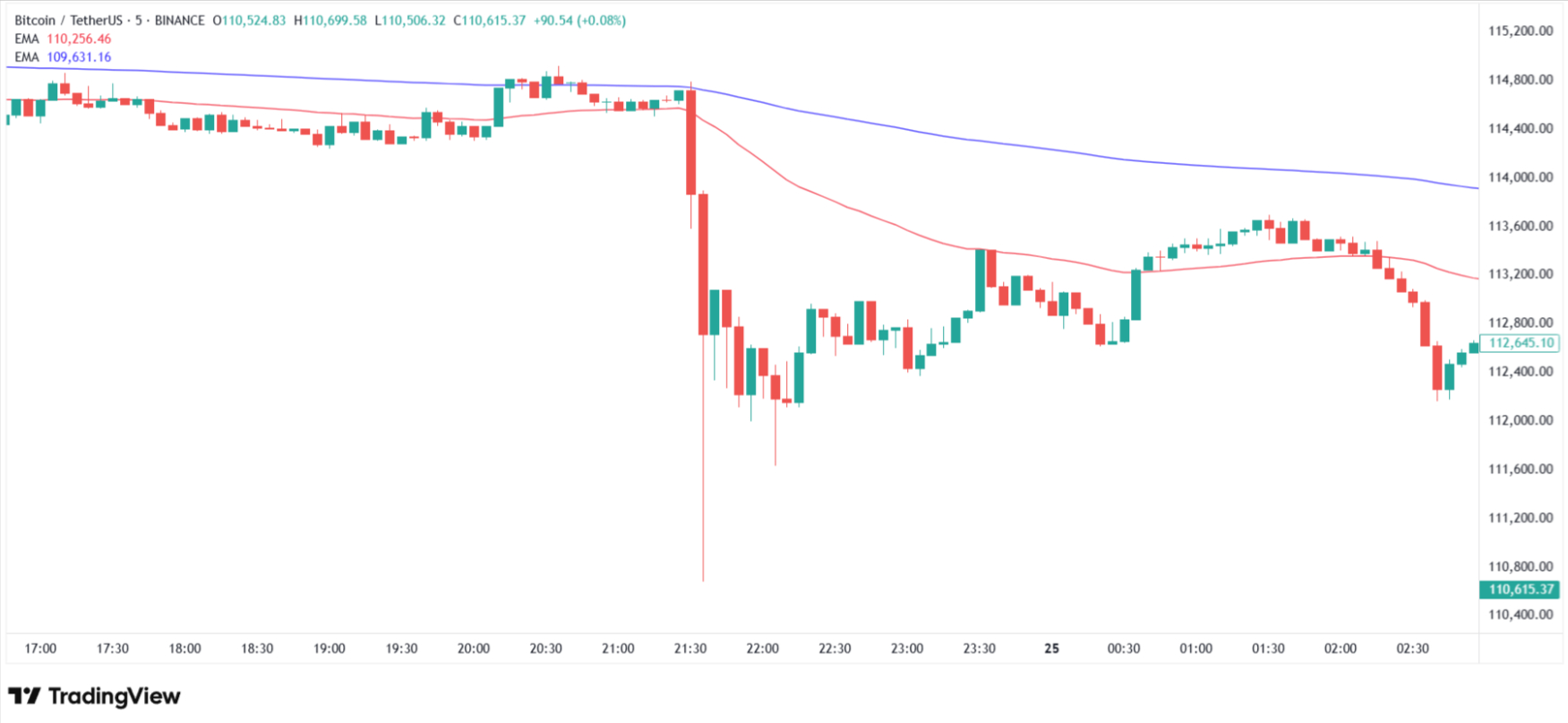
(BTC) price is currently hovering around $110,000, down more than 10% from its
all-time highs. According to some industry experts, this decline is driven by
whale-induced resistance.
If pressure
from major market players eases, BTC could climb to at least $150,000. Other Bitcoin
price predictions point even higher, projecting gains of up to 130% from
current levels.
How High Can Bitcoin Go? David
Bailey's $150K Whale Theory
Bitcoin
Nakamoto CEO David Bailey dropped a bombshell prediction on September 2,
2025, claiming "The only reason we're not at $150k right now is two
massive whales". Bailey's analysis suggests that once these whale
liquidations complete, with "1 down, 1 halfway there,” Bitcoin could
experience an "up only" trajectory toward $150,000.
The only reason we’re not at $150k right now is two massive whales- once they’re slain (1 down, 1 halfway there)… up only.
— David Bailey🇵🇷 $1.0mm/btc is the floor (@DavidFBailey) September 2, 2025
This 36%
surge from current levels would represent a significant breakout if
Bailey's whale theory proves correct. The selling pressure from these large
holders has created what appears to be an artificial ceiling, preventing
Bitcoin from reaching its natural price discovery levels.
Fundstrat
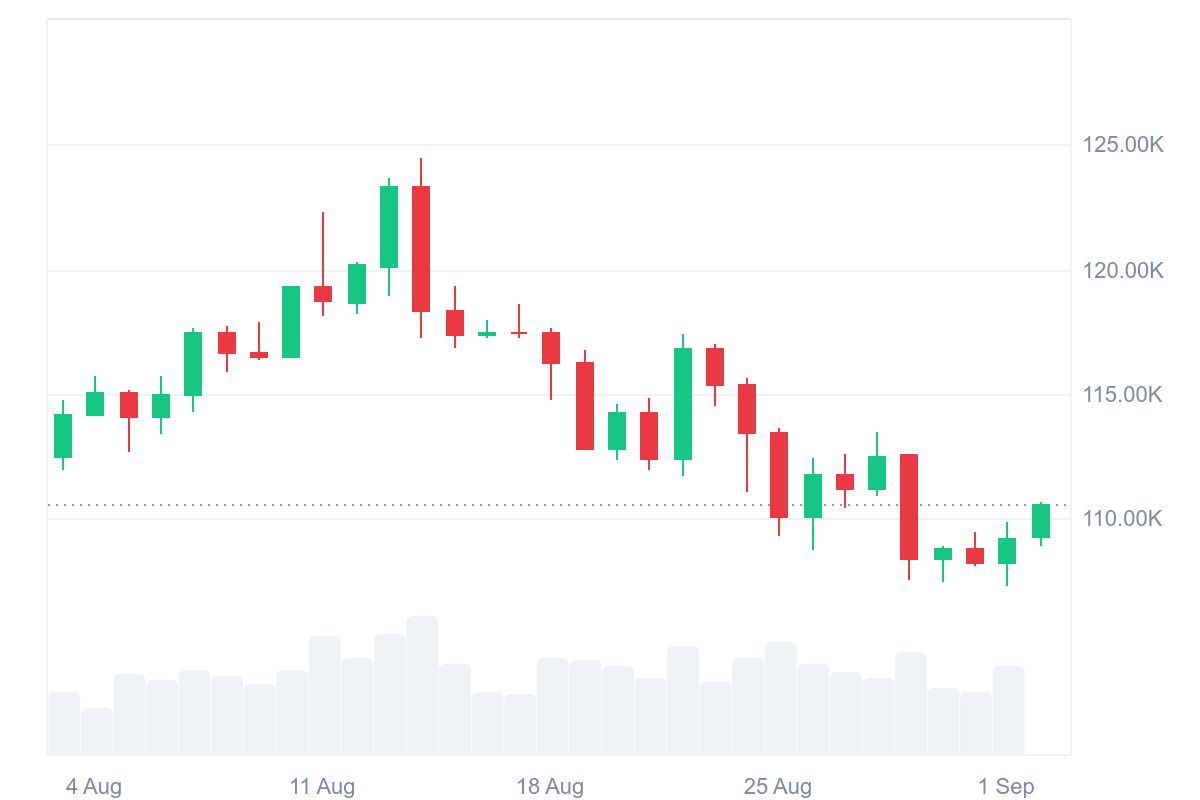
co-founder Tom Lee maintains his aggressive forecast, stating "I
think Bitcoin should really build upon this 120 before the end of the year;
200,000, maybe, 250". Lee's optimism stems from a fundamental
supply-demand imbalance: "95% of all Bitcoin have been mined, but 95%
of the world doesn't own Bitcoin".
Lee's
long-term vision extends even further, projecting Bitcoin could "hit
$1 million over time" as it approaches gold's $23 trillion market
capitalization. This would place Bitcoin at approximately $1.2 million per
coin if it matched gold's network value.
Arthur Hayes Echoes $250K
Forecast
BitMEX
co-founder Arthur Hayes supports the aggressive $250K target, citing "institutional
demand and global fiscal expansion" as primary drivers. Hayes
emphasizes Bitcoin's evolution as a "macroeconomic asset" with
price potential tied to liquidity conditions and regulatory developments.
*ROI
calculated from current Bitcoin price of ~$110,000
Market Headwinds: Analyst
Cautions
September Warning
Paul Howard, Wincent
Paul Howard
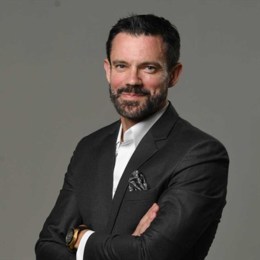
from Wincent provides a more cautious perspective: "BTC prices have
dipped below my forecast summer channel of $110,000-$120,000, coinciding with
the end of summer and a lack of liquidity". Howard notes that "September
looks a lot more fragile" with historical data showing "8
out of 12 of the last years trading" as down months.
Bitfinex Analysts See
Bottom Formation
Bitfinex
analysts acknowledge the current weakness but remain optimistic about
timing: "We believe the market is nearing the bottom of this downturn
as we move into September". They expect "ETF flows across major
asset classes pick up" as the summer concludes.
Technical Analysis: Bitcoin
Bull Flag Targets $130K-$150K
Current
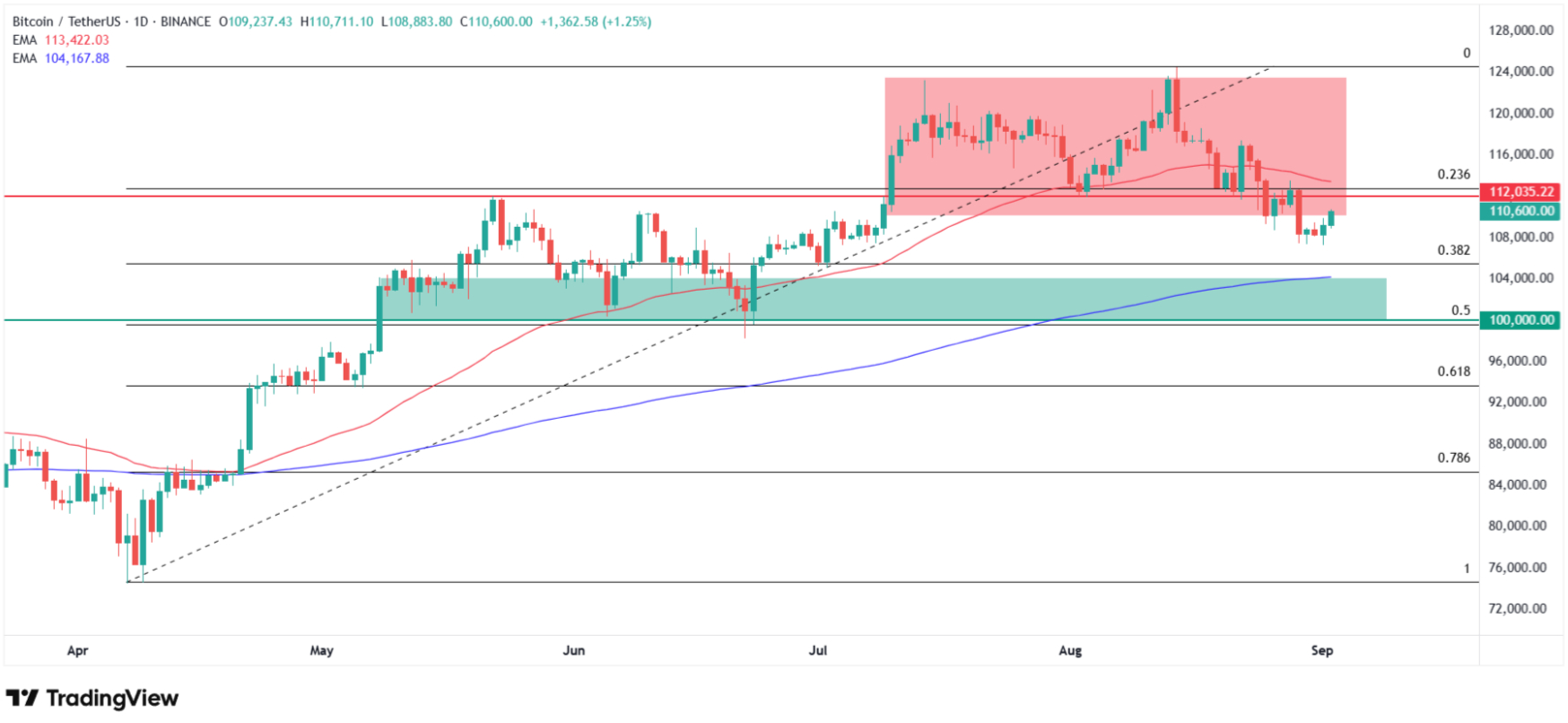
technical patterns reveal a bull flag formation on Bitcoin's daily
chart with measured targets in the $130,000-$150,000 range. Key resistance
sits at $113,000, with a decisive break potentially triggering momentum
toward Bailey's $150K whale theory target.
Expert
consensus ranges from $150K-$250K, with whale liquidation completion
potentially triggering 36% surge to Bailey's $150K target.
What's preventing Bitcoin
from reaching $150K now?
According
to David Bailey, two massive whale sellers are creating artificial resistance, once
cleared, "up only" trajectory expected.
Which expert has the
highest Bitcoin prediction?
Tom Lee's
$250K year-end target represents the most aggressive mainstream forecast from
major Wall Street analysts.
Could Bitcoin hit $1
million eventually?
Long-term
projections from Lee and others suggest $1M+ possible if Bitcoin approaches
gold's $23 trillion market cap.
Bitcoin
(BTC) price is currently hovering around $110,000, down more than 10% from its
all-time highs. According to some industry experts, this decline is driven by
whale-induced resistance.
If pressure
from major market players eases, BTC could climb to at least $150,000. Other Bitcoin
price predictions point even higher, projecting gains of up to 130% from
current levels.
How High Can Bitcoin Go? David
Bailey's $150K Whale Theory
Bitcoin
Nakamoto CEO David Bailey dropped a bombshell prediction on September 2,
2025, claiming "The only reason we're not at $150k right now is two
massive whales". Bailey's analysis suggests that once these whale
liquidations complete, with "1 down, 1 halfway there,” Bitcoin could
experience an "up only" trajectory toward $150,000.
The only reason we’re not at $150k right now is two massive whales- once they’re slain (1 down, 1 halfway there)… up only.
— David Bailey🇵🇷 $1.0mm/btc is the floor (@DavidFBailey) September 2, 2025
This 36%
surge from current levels would represent a significant breakout if
Bailey's whale theory proves correct. The selling pressure from these large
holders has created what appears to be an artificial ceiling, preventing
Bitcoin from reaching its natural price discovery levels.
Fundstrat
co-founder Tom Lee maintains his aggressive forecast, stating "I
think Bitcoin should really build upon this 120 before the end of the year;
200,000, maybe, 250". Lee's optimism stems from a fundamental
supply-demand imbalance: "95% of all Bitcoin have been mined, but 95%
of the world doesn't own Bitcoin".
Lee's
long-term vision extends even further, projecting Bitcoin could "hit
$1 million over time" as it approaches gold's $23 trillion market
capitalization. This would place Bitcoin at approximately $1.2 million per
coin if it matched gold's network value.
Arthur Hayes Echoes $250K
Forecast
BitMEX
co-founder Arthur Hayes supports the aggressive $250K target, citing "institutional
demand and global fiscal expansion" as primary drivers. Hayes
emphasizes Bitcoin's evolution as a "macroeconomic asset" with
price potential tied to liquidity conditions and regulatory developments.
*ROI
calculated from current Bitcoin price of ~$110,000
Market Headwinds: Analyst
Cautions
September Warning
Paul Howard, Wincent
Paul Howard
from Wincent provides a more cautious perspective: "BTC prices have
dipped below my forecast summer channel of $110,000-$120,000, coinciding with
the end of summer and a lack of liquidity". Howard notes that "September
looks a lot more fragile" with historical data showing "8
out of 12 of the last years trading" as down months.
Bitfinex Analysts See
Bottom Formation
Bitfinex
analysts acknowledge the current weakness but remain optimistic about
timing: "We believe the market is nearing the bottom of this downturn
as we move into September". They expect "ETF flows across major
asset classes pick up" as the summer concludes.
Technical Analysis: Bitcoin
Bull Flag Targets $130K-$150K
Current
technical patterns reveal a bull flag formation on Bitcoin's daily
chart with measured targets in the $130,000-$150,000 range. Key resistance
sits at $113,000, with a decisive break potentially triggering momentum
toward Bailey's $150K whale theory target.
Damian's adventure with financial markets began at the Cracow University of Economics, where he obtained his MA in finance and accounting. Starting from the retail trader perspective, he collaborated with brokerage houses and financial portals in Poland as an independent editor and content manager. His adventure with Finance Magnates began in 2016, where he is working as a business intelligence analyst.
Gold Price Prediction 2026: WGC Warns of 20% Crash Risk
Featured Videos
Executive Interview | Charlotte Bullock | Chief Product Officer, Bank of London | FMLS:25
In this interview, we sat down with Charlotte Bullock, Head of Product at The Bank of London, previously at SAP and now shaping product at one of the sector’s most ambitious new banking players.
Charlotte reflects on the Summit so far and talks about the culture inside fintech banks today. We look at the pressures that come with scaling, and how firms can hold onto the nimble approach that made them stand out early on.
We also cover the state of payments ahead of her appearance on the payments roundtable: the blockages financial firms face, the areas that still need fixing, and what a realistic solution looks like in 2026.
In this interview, we sat down with Charlotte Bullock, Head of Product at The Bank of London, previously at SAP and now shaping product at one of the sector’s most ambitious new banking players.
Charlotte reflects on the Summit so far and talks about the culture inside fintech banks today. We look at the pressures that come with scaling, and how firms can hold onto the nimble approach that made them stand out early on.
We also cover the state of payments ahead of her appearance on the payments roundtable: the blockages financial firms face, the areas that still need fixing, and what a realistic solution looks like in 2026.
In this interview, we sat down with Charlotte Bullock, Head of Product at The Bank of London, previously at SAP and now shaping product at one of the sector’s most ambitious new banking players.
Charlotte reflects on the Summit so far and talks about the culture inside fintech banks today. We look at the pressures that come with scaling, and how firms can hold onto the nimble approach that made them stand out early on.
We also cover the state of payments ahead of her appearance on the payments roundtable: the blockages financial firms face, the areas that still need fixing, and what a realistic solution looks like in 2026.
In this interview, we sat down with Charlotte Bullock, Head of Product at The Bank of London, previously at SAP and now shaping product at one of the sector’s most ambitious new banking players.
Charlotte reflects on the Summit so far and talks about the culture inside fintech banks today. We look at the pressures that come with scaling, and how firms can hold onto the nimble approach that made them stand out early on.
We also cover the state of payments ahead of her appearance on the payments roundtable: the blockages financial firms face, the areas that still need fixing, and what a realistic solution looks like in 2026.
In this conversation, we sit down with Drew Niv, CSO at ATFX Connect and one of the most influential figures in modern FX.
We speak about market structure, the institutional view on liquidity, and the sharp rise of prop trading, a sector Drew has been commenting on in recent months. Drew explains why he once dismissed prop trading, why his view changed, and what he now thinks the model means for brokers, clients and risk managers.
We explore subscription-fee dependency, the high reneging rate, and the long-term challenge: how brokers can build a more stable and honest version of the model. Drew also talks about the traffic advantage standalone prop firms have built and why brokers may still win in the long run if they take the right approach.
In this conversation, we sit down with Drew Niv, CSO at ATFX Connect and one of the most influential figures in modern FX.
We speak about market structure, the institutional view on liquidity, and the sharp rise of prop trading, a sector Drew has been commenting on in recent months. Drew explains why he once dismissed prop trading, why his view changed, and what he now thinks the model means for brokers, clients and risk managers.
We explore subscription-fee dependency, the high reneging rate, and the long-term challenge: how brokers can build a more stable and honest version of the model. Drew also talks about the traffic advantage standalone prop firms have built and why brokers may still win in the long run if they take the right approach.
In this conversation, we sit down with Drew Niv, CSO at ATFX Connect and one of the most influential figures in modern FX.
We speak about market structure, the institutional view on liquidity, and the sharp rise of prop trading, a sector Drew has been commenting on in recent months. Drew explains why he once dismissed prop trading, why his view changed, and what he now thinks the model means for brokers, clients and risk managers.
We explore subscription-fee dependency, the high reneging rate, and the long-term challenge: how brokers can build a more stable and honest version of the model. Drew also talks about the traffic advantage standalone prop firms have built and why brokers may still win in the long run if they take the right approach.
In this conversation, we sit down with Drew Niv, CSO at ATFX Connect and one of the most influential figures in modern FX.
We speak about market structure, the institutional view on liquidity, and the sharp rise of prop trading, a sector Drew has been commenting on in recent months. Drew explains why he once dismissed prop trading, why his view changed, and what he now thinks the model means for brokers, clients and risk managers.
We explore subscription-fee dependency, the high reneging rate, and the long-term challenge: how brokers can build a more stable and honest version of the model. Drew also talks about the traffic advantage standalone prop firms have built and why brokers may still win in the long run if they take the right approach.
In this conversation, we sit down with Drew Niv, CSO at ATFX Connect and one of the most influential figures in modern FX.
We speak about market structure, the institutional view on liquidity, and the sharp rise of prop trading, a sector Drew has been commenting on in recent months. Drew explains why he once dismissed prop trading, why his view changed, and what he now thinks the model means for brokers, clients and risk managers.
We explore subscription-fee dependency, the high reneging rate, and the long-term challenge: how brokers can build a more stable and honest version of the model. Drew also talks about the traffic advantage standalone prop firms have built and why brokers may still win in the long run if they take the right approach.
In this conversation, we sit down with Drew Niv, CSO at ATFX Connect and one of the most influential figures in modern FX.
We speak about market structure, the institutional view on liquidity, and the sharp rise of prop trading, a sector Drew has been commenting on in recent months. Drew explains why he once dismissed prop trading, why his view changed, and what he now thinks the model means for brokers, clients and risk managers.
We explore subscription-fee dependency, the high reneging rate, and the long-term challenge: how brokers can build a more stable and honest version of the model. Drew also talks about the traffic advantage standalone prop firms have built and why brokers may still win in the long run if they take the right approach.
Executive Interview | Remonda Z. Kirketerp Møller| CEO & Founder Muinmos | FMLS:25
In this interview, Remonda Z. Kirketerp Møller, founder of Muinmos, breaks down the state of AI in regtech and what responsible adoption really looks like for brokers. We talk about rising fragmentation, the pressures around compliance accuracy, and why most firms are still in the early stages of AI maturity.
Ramanda also shares insights on regulator sandboxes, shifting expectations around accountability, and the current reality of MiCA licensing and passporting in Europe.
A concise look at where compliance, onboarding, and AI-driven processes are heading next.
In this interview, Remonda Z. Kirketerp Møller, founder of Muinmos, breaks down the state of AI in regtech and what responsible adoption really looks like for brokers. We talk about rising fragmentation, the pressures around compliance accuracy, and why most firms are still in the early stages of AI maturity.
Ramanda also shares insights on regulator sandboxes, shifting expectations around accountability, and the current reality of MiCA licensing and passporting in Europe.
A concise look at where compliance, onboarding, and AI-driven processes are heading next.
In this interview, Remonda Z. Kirketerp Møller, founder of Muinmos, breaks down the state of AI in regtech and what responsible adoption really looks like for brokers. We talk about rising fragmentation, the pressures around compliance accuracy, and why most firms are still in the early stages of AI maturity.
Ramanda also shares insights on regulator sandboxes, shifting expectations around accountability, and the current reality of MiCA licensing and passporting in Europe.
A concise look at where compliance, onboarding, and AI-driven processes are heading next.
In this interview, Remonda Z. Kirketerp Møller, founder of Muinmos, breaks down the state of AI in regtech and what responsible adoption really looks like for brokers. We talk about rising fragmentation, the pressures around compliance accuracy, and why most firms are still in the early stages of AI maturity.
Ramanda also shares insights on regulator sandboxes, shifting expectations around accountability, and the current reality of MiCA licensing and passporting in Europe.
A concise look at where compliance, onboarding, and AI-driven processes are heading next.
In this interview, Remonda Z. Kirketerp Møller, founder of Muinmos, breaks down the state of AI in regtech and what responsible adoption really looks like for brokers. We talk about rising fragmentation, the pressures around compliance accuracy, and why most firms are still in the early stages of AI maturity.
Ramanda also shares insights on regulator sandboxes, shifting expectations around accountability, and the current reality of MiCA licensing and passporting in Europe.
A concise look at where compliance, onboarding, and AI-driven processes are heading next.
In this interview, Remonda Z. Kirketerp Møller, founder of Muinmos, breaks down the state of AI in regtech and what responsible adoption really looks like for brokers. We talk about rising fragmentation, the pressures around compliance accuracy, and why most firms are still in the early stages of AI maturity.
Ramanda also shares insights on regulator sandboxes, shifting expectations around accountability, and the current reality of MiCA licensing and passporting in Europe.
A concise look at where compliance, onboarding, and AI-driven processes are heading next.
In this conversation, we speak with Aydin Bonabi, CEO and co-founder of Surveill, a firm focused on fraud detection and AI-driven compliance tools for financial institutions.
We start with Aydin’s view of the Summit and the challenges brokers face as fraud tactics grow more complex. He explains how firms can stay ahead through real-time signals, data patterns, and early-stage detection.
We also talk about AI training and why compliance teams often struggle to keep models accurate, fair, and aligned with regulatory expectations. Aydin breaks down what “good” AI training looks like inside a financial environment, including the importance of clean data, domain expertise, and human oversight.
He closes with a clear message: fraud is scaling, and so must the tools that stop it.
In this conversation, we speak with Aydin Bonabi, CEO and co-founder of Surveill, a firm focused on fraud detection and AI-driven compliance tools for financial institutions.
We start with Aydin’s view of the Summit and the challenges brokers face as fraud tactics grow more complex. He explains how firms can stay ahead through real-time signals, data patterns, and early-stage detection.
We also talk about AI training and why compliance teams often struggle to keep models accurate, fair, and aligned with regulatory expectations. Aydin breaks down what “good” AI training looks like inside a financial environment, including the importance of clean data, domain expertise, and human oversight.
He closes with a clear message: fraud is scaling, and so must the tools that stop it.
In this conversation, we speak with Aydin Bonabi, CEO and co-founder of Surveill, a firm focused on fraud detection and AI-driven compliance tools for financial institutions.
We start with Aydin’s view of the Summit and the challenges brokers face as fraud tactics grow more complex. He explains how firms can stay ahead through real-time signals, data patterns, and early-stage detection.
We also talk about AI training and why compliance teams often struggle to keep models accurate, fair, and aligned with regulatory expectations. Aydin breaks down what “good” AI training looks like inside a financial environment, including the importance of clean data, domain expertise, and human oversight.
He closes with a clear message: fraud is scaling, and so must the tools that stop it.
In this conversation, we speak with Aydin Bonabi, CEO and co-founder of Surveill, a firm focused on fraud detection and AI-driven compliance tools for financial institutions.
We start with Aydin’s view of the Summit and the challenges brokers face as fraud tactics grow more complex. He explains how firms can stay ahead through real-time signals, data patterns, and early-stage detection.
We also talk about AI training and why compliance teams often struggle to keep models accurate, fair, and aligned with regulatory expectations. Aydin breaks down what “good” AI training looks like inside a financial environment, including the importance of clean data, domain expertise, and human oversight.
He closes with a clear message: fraud is scaling, and so must the tools that stop it.
In this conversation, we speak with Aydin Bonabi, CEO and co-founder of Surveill, a firm focused on fraud detection and AI-driven compliance tools for financial institutions.
We start with Aydin’s view of the Summit and the challenges brokers face as fraud tactics grow more complex. He explains how firms can stay ahead through real-time signals, data patterns, and early-stage detection.
We also talk about AI training and why compliance teams often struggle to keep models accurate, fair, and aligned with regulatory expectations. Aydin breaks down what “good” AI training looks like inside a financial environment, including the importance of clean data, domain expertise, and human oversight.
He closes with a clear message: fraud is scaling, and so must the tools that stop it.
In this conversation, we speak with Aydin Bonabi, CEO and co-founder of Surveill, a firm focused on fraud detection and AI-driven compliance tools for financial institutions.
We start with Aydin’s view of the Summit and the challenges brokers face as fraud tactics grow more complex. He explains how firms can stay ahead through real-time signals, data patterns, and early-stage detection.
We also talk about AI training and why compliance teams often struggle to keep models accurate, fair, and aligned with regulatory expectations. Aydin breaks down what “good” AI training looks like inside a financial environment, including the importance of clean data, domain expertise, and human oversight.
He closes with a clear message: fraud is scaling, and so must the tools that stop it.
Exness expands its presence in Africa: Inside our interview with Paul Margarites in Cape Town
Finance Magnates met with Paul Margarites, Exness regional commercial director for Sub-Saharan Africa, during a visit to the firm’s office opening in Cape Town. In this talk, led by Andrea Badiola Mateos, Co-CEO at Finance Magnates, Paul shares views on the South African trading space, local user behavior, mobile trends, regulation, team growth, and how Exness plans to grow in more markets across the region. @Exness
Read the article at: https://www.financemagnates.com/thought-leadership/exness-expands-its-presence-in-africa-inside-our-interview-with-paul-margarites/
#exness #financemagnates #exnesstrading #CFDtrading #tradeonline #africanews #capetown
Finance Magnates met with Paul Margarites, Exness regional commercial director for Sub-Saharan Africa, during a visit to the firm’s office opening in Cape Town. In this talk, led by Andrea Badiola Mateos, Co-CEO at Finance Magnates, Paul shares views on the South African trading space, local user behavior, mobile trends, regulation, team growth, and how Exness plans to grow in more markets across the region. @Exness
Read the article at: https://www.financemagnates.com/thought-leadership/exness-expands-its-presence-in-africa-inside-our-interview-with-paul-margarites/
#exness #financemagnates #exnesstrading #CFDtrading #tradeonline #africanews #capetown
Finance Magnates met with Paul Margarites, Exness regional commercial director for Sub-Saharan Africa, during a visit to the firm’s office opening in Cape Town. In this talk, led by Andrea Badiola Mateos, Co-CEO at Finance Magnates, Paul shares views on the South African trading space, local user behavior, mobile trends, regulation, team growth, and how Exness plans to grow in more markets across the region. @Exness
Read the article at: https://www.financemagnates.com/thought-leadership/exness-expands-its-presence-in-africa-inside-our-interview-with-paul-margarites/
#exness #financemagnates #exnesstrading #CFDtrading #tradeonline #africanews #capetown
Finance Magnates met with Paul Margarites, Exness regional commercial director for Sub-Saharan Africa, during a visit to the firm’s office opening in Cape Town. In this talk, led by Andrea Badiola Mateos, Co-CEO at Finance Magnates, Paul shares views on the South African trading space, local user behavior, mobile trends, regulation, team growth, and how Exness plans to grow in more markets across the region. @Exness
Read the article at: https://www.financemagnates.com/thought-leadership/exness-expands-its-presence-in-africa-inside-our-interview-with-paul-margarites/
#exness #financemagnates #exnesstrading #CFDtrading #tradeonline #africanews #capetown
Finance Magnates met with Paul Margarites, Exness regional commercial director for Sub-Saharan Africa, during a visit to the firm’s office opening in Cape Town. In this talk, led by Andrea Badiola Mateos, Co-CEO at Finance Magnates, Paul shares views on the South African trading space, local user behavior, mobile trends, regulation, team growth, and how Exness plans to grow in more markets across the region. @Exness
Read the article at: https://www.financemagnates.com/thought-leadership/exness-expands-its-presence-in-africa-inside-our-interview-with-paul-margarites/
#exness #financemagnates #exnesstrading #CFDtrading #tradeonline #africanews #capetown
Finance Magnates met with Paul Margarites, Exness regional commercial director for Sub-Saharan Africa, during a visit to the firm’s office opening in Cape Town. In this talk, led by Andrea Badiola Mateos, Co-CEO at Finance Magnates, Paul shares views on the South African trading space, local user behavior, mobile trends, regulation, team growth, and how Exness plans to grow in more markets across the region. @Exness
Read the article at: https://www.financemagnates.com/thought-leadership/exness-expands-its-presence-in-africa-inside-our-interview-with-paul-margarites/
#exness #financemagnates #exnesstrading #CFDtrading #tradeonline #africanews #capetown