Financial and Business News

Inside the Prediction Markets: $1.6B Institutional Inflow Meets a Federal Crackdown

Friday, 03/04/2026 | 12:36 GMT by Tanya Chepkova
  • The CFTC names insider trading a priority as ICE closes its Polymarket investment and Kalshi wins margin approval.
  • Enforcement tightens while capital and activity continue to grow across prediction markets.
Weekly number of trades on the prediction markets

The CFTC's enforcement chief stood at a podium this week and told the room that insider trading on prediction markets is illegal, prosecutable, and a top-five agency priority. He said he is hiring more staff to bring cases.

The same week, Intercontinental Exchange completed its $1.6 billion investment in Polymarket, Kalshi won approval to offer margin trading to institutional clients, and Gibraltar became the first jurisdiction outside the US to license a prediction market operator.

The industry got a regulatory warning and a wave of institutional capital in the same seven days. Here's what mattered this week.

What Moved the Prediction Markets This Week

The CFTC Names Its Target

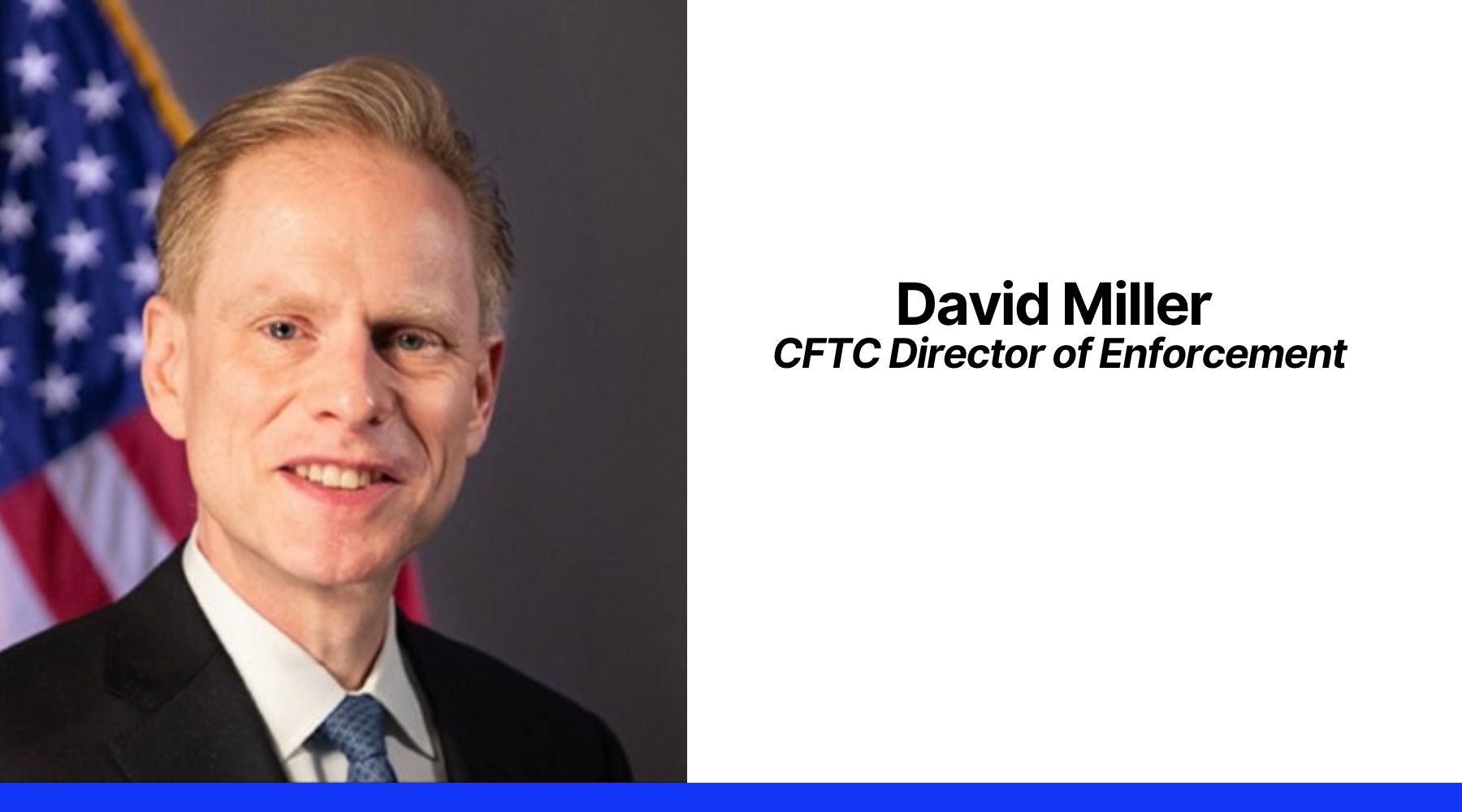
On March 31, David Miller, the CFTC's newly appointed enforcement chief, gave a public speech at New York University's School of Law. He said insider trading on platforms like Kalshi and Polymarket is illegal — a direct rebuttal to a view circulating in finance and social media circles that prediction markets operate in a regulatory gray zone.

He listed insider trading as the first of the CFTC's top five enforcement priorities and said the agency is actively hiring to expand its capacity to bring cases. He also announced a simplified cooperation policy — one that would allow platforms and traders to avoid penalties through full cooperation — to supersede the previous version issued 13 months ago.

The speech came after Kalshi disclosed two enforcement actions earlier this year: a California gubernatorial candidate fined $2,246 and suspended for five years, and a MrBeast editor fined $20,397 and suspended for two years.

ICE Closes the Polymarket Deal, Kalshi Unlocks Margin

On March 27, Intercontinental Exchange completed its investment in Polymarket, finalizing a deal first announced in October 2025. The agreement positions ICE as the distributor of Polymarket’s event-driven data to institutional clients.

A day later, Kalshi said it had received approval to offer margin trading to institutional clients through an affiliated, registered futures commission merchant.

The product will initially target hedge funds and proprietary trading firms, with margin on event contracts not planned at launch. Together, the moves point in the same direction: institutional access is expanding, but through controlled channels rather than open rollout.

Outside the U.S., No Single Rulebook

Beyond the U.S., there is no consistent approach to prediction markets. Gibraltar has issued its first license for a prediction market operator, positioning itself to attract regulated activity — but treating these platforms within its existing gambling framework.

Malta has signaled interest, saying it is exploring the sector and considering how it could fit within a formal legislative framework. Across much of Europe, the response has been very different.

Countries including France, the Netherlands, and Germany have treated prediction markets as illegal gambling or unlicensed financial products, with platforms like Polymarket facing bans, fines, or geoblocking.

The result is a fragmented landscape. In some jurisdictions, prediction markets are being formalized. In others, they are being shut out entirely.

Quote of the Week

CFTC enforcement chief David Miller has not previously spoken on record about prediction markets since his appointment. His remarks on March 31 were direct and consequential for the industry.

"A myth has spread that insider trading is permissible, or even encouraged, in the prediction markets. Prominent individuals in finance, media, and particularly on social media, have contended that insider trading law does not apply to these markets. These comments all suggest that insider trading is an important and acceptable part of the prediction market ecosystem. Not so." — David Miller, CFTC Division of Enforcement Director, March 31, 2026

Number of the Week

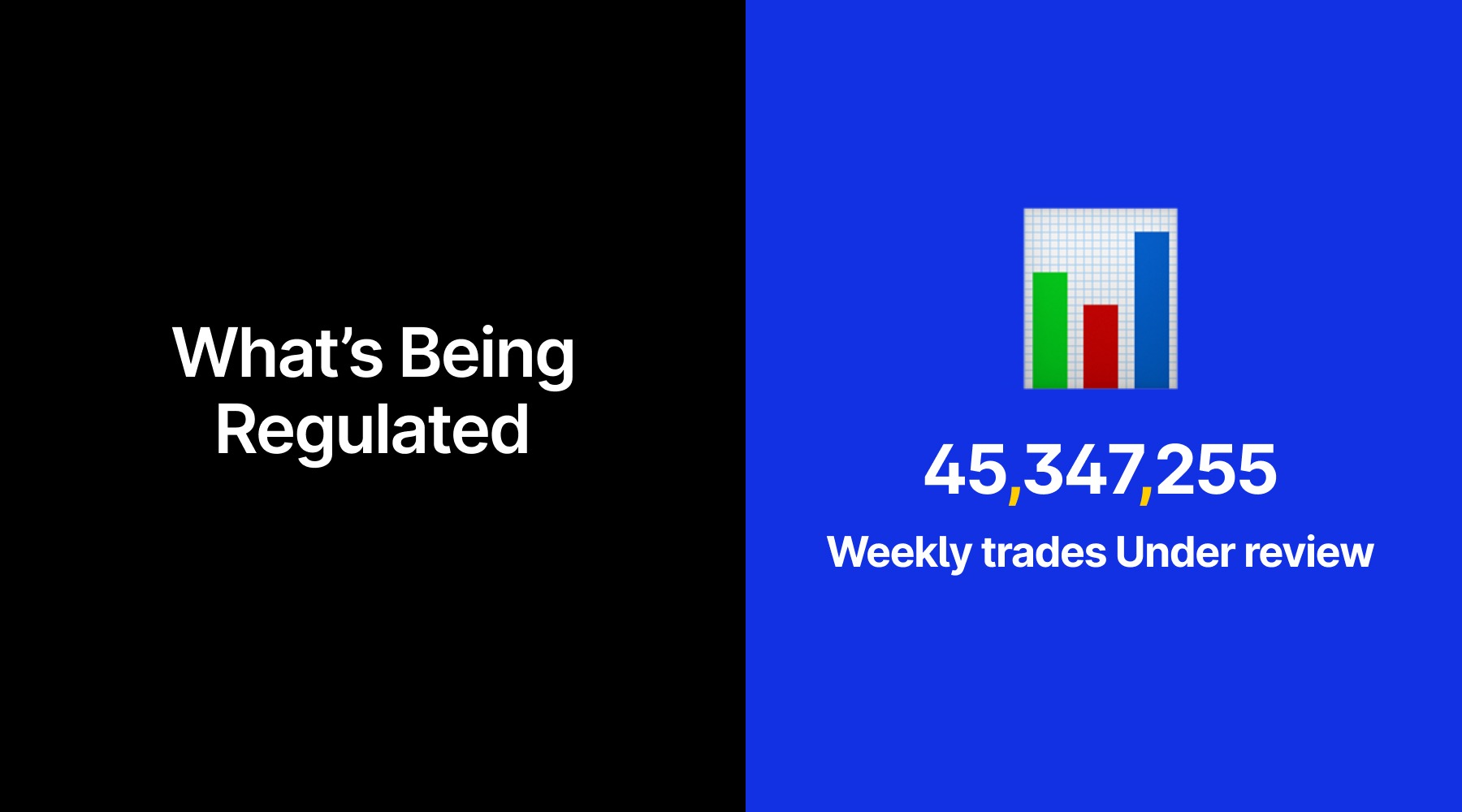
45,347,255 – that’s the number of transactions processed across major prediction market platforms in a single week. The activity continues at scale — even as regulators, lawmakers, and courts move to define the rules around it.

The Friction of the Week

The same week that Kalshi ran billboards across Washington, D.C. declaring "Rule #1: We ban insider trading. And we enforce it," the CFTC's enforcement chief said the agency would be hiring more staff to prosecute insider trading on platforms including Kalshi.

There is no contradiction in these two statements, but there is a structural problem they both point to. Kalshi has demonstrated that it can investigate and punish traders who violate its rules — two cases this year produced fines and suspensions.

The CFTC acknowledged Kalshi's enforcement record. But Miller was careful to separate platform-level enforcement from federal jurisdiction: the agency, he made clear, retains full authority to investigate and prosecute violations on any designated contract market, regardless of what the platform has already done.

The friction is between a self-regulatory model built for speed and a federal enforcement apparatus built for scale. Kalshi can act quickly on individual cases. The CFTC can build cases with prosecutors, including, as of March 30, in coordination with the Manhattan US Attorney's office.

The question is not who has the authority — both do. It is whether platform-level rules are sufficient infrastructure for a market that is handling over $20 billion per month.

Bottom Line

This week moved in two directions simultaneously. On one side: an institutional investment in Polymarket, margin trading approval for Kalshi, and Gibraltar issuing its first prediction market license — all signals of capital and regulatory legitimacy converging around the sector.

On the other side: the CFTC's enforcement chief named insider trading on prediction markets a top agency priority, said he is hiring, and federal prosecutors in Manhattan disclosed they are already in conversations with platform operators about potential criminal exposure.

The platforms are not waiting. Kalshi's DC ad campaign — billboards, metro placements, a full-page Washington Post ad — was timed to coincide with the wave of Congressional legislation. Polymarket updated its market integrity rules. Both companies are arguing, publicly and loudly, that they already police their own markets.

The week's evidence suggests that argument is being heard, and also that it is not considered sufficient by the people who would decide whether to prosecute.

The CFTC's enforcement chief stood at a podium this week and told the room that insider trading on prediction markets is illegal, prosecutable, and a top-five agency priority. He said he is hiring more staff to bring cases.

The same week, Intercontinental Exchange completed its $1.6 billion investment in Polymarket, Kalshi won approval to offer margin trading to institutional clients, and Gibraltar became the first jurisdiction outside the US to license a prediction market operator.

The industry got a regulatory warning and a wave of institutional capital in the same seven days. Here's what mattered this week.

What Moved the Prediction Markets This Week

The CFTC Names Its Target

On March 31, David Miller, the CFTC's newly appointed enforcement chief, gave a public speech at New York University's School of Law. He said insider trading on platforms like Kalshi and Polymarket is illegal — a direct rebuttal to a view circulating in finance and social media circles that prediction markets operate in a regulatory gray zone.

He listed insider trading as the first of the CFTC's top five enforcement priorities and said the agency is actively hiring to expand its capacity to bring cases. He also announced a simplified cooperation policy — one that would allow platforms and traders to avoid penalties through full cooperation — to supersede the previous version issued 13 months ago.

The speech came after Kalshi disclosed two enforcement actions earlier this year: a California gubernatorial candidate fined $2,246 and suspended for five years, and a MrBeast editor fined $20,397 and suspended for two years.

ICE Closes the Polymarket Deal, Kalshi Unlocks Margin

On March 27, Intercontinental Exchange completed its investment in Polymarket, finalizing a deal first announced in October 2025. The agreement positions ICE as the distributor of Polymarket’s event-driven data to institutional clients.

A day later, Kalshi said it had received approval to offer margin trading to institutional clients through an affiliated, registered futures commission merchant.

The product will initially target hedge funds and proprietary trading firms, with margin on event contracts not planned at launch. Together, the moves point in the same direction: institutional access is expanding, but through controlled channels rather than open rollout.

Outside the U.S., No Single Rulebook

Beyond the U.S., there is no consistent approach to prediction markets. Gibraltar has issued its first license for a prediction market operator, positioning itself to attract regulated activity — but treating these platforms within its existing gambling framework.

Malta has signaled interest, saying it is exploring the sector and considering how it could fit within a formal legislative framework. Across much of Europe, the response has been very different.

Countries including France, the Netherlands, and Germany have treated prediction markets as illegal gambling or unlicensed financial products, with platforms like Polymarket facing bans, fines, or geoblocking.

The result is a fragmented landscape. In some jurisdictions, prediction markets are being formalized. In others, they are being shut out entirely.

Quote of the Week

CFTC enforcement chief David Miller has not previously spoken on record about prediction markets since his appointment. His remarks on March 31 were direct and consequential for the industry.

"A myth has spread that insider trading is permissible, or even encouraged, in the prediction markets. Prominent individuals in finance, media, and particularly on social media, have contended that insider trading law does not apply to these markets. These comments all suggest that insider trading is an important and acceptable part of the prediction market ecosystem. Not so." — David Miller, CFTC Division of Enforcement Director, March 31, 2026

Number of the Week

45,347,255 – that’s the number of transactions processed across major prediction market platforms in a single week. The activity continues at scale — even as regulators, lawmakers, and courts move to define the rules around it.

The Friction of the Week

The same week that Kalshi ran billboards across Washington, D.C. declaring "Rule #1: We ban insider trading. And we enforce it," the CFTC's enforcement chief said the agency would be hiring more staff to prosecute insider trading on platforms including Kalshi.

There is no contradiction in these two statements, but there is a structural problem they both point to. Kalshi has demonstrated that it can investigate and punish traders who violate its rules — two cases this year produced fines and suspensions.

The CFTC acknowledged Kalshi's enforcement record. But Miller was careful to separate platform-level enforcement from federal jurisdiction: the agency, he made clear, retains full authority to investigate and prosecute violations on any designated contract market, regardless of what the platform has already done.

The friction is between a self-regulatory model built for speed and a federal enforcement apparatus built for scale. Kalshi can act quickly on individual cases. The CFTC can build cases with prosecutors, including, as of March 30, in coordination with the Manhattan US Attorney's office.

The question is not who has the authority — both do. It is whether platform-level rules are sufficient infrastructure for a market that is handling over $20 billion per month.

Bottom Line

This week moved in two directions simultaneously. On one side: an institutional investment in Polymarket, margin trading approval for Kalshi, and Gibraltar issuing its first prediction market license — all signals of capital and regulatory legitimacy converging around the sector.

On the other side: the CFTC's enforcement chief named insider trading on prediction markets a top agency priority, said he is hiring, and federal prosecutors in Manhattan disclosed they are already in conversations with platform operators about potential criminal exposure.

The platforms are not waiting. Kalshi's DC ad campaign — billboards, metro placements, a full-page Washington Post ad — was timed to coincide with the wave of Congressional legislation. Polymarket updated its market integrity rules. Both companies are arguing, publicly and loudly, that they already police their own markets.

The week's evidence suggests that argument is being heard, and also that it is not considered sufficient by the people who would decide whether to prosecute.

About the Author: Tanya Chepkova
Tanya Chepkova
  • 150 Articles
Tanya Chepkova is a News Editor at Finance Magnates with more than 16 years of experience in financial journalism, covering forex, crypto, and digital asset markets. Her work spans daily industry reporting and data-driven, long-form explainers focused on market structure, trading models, and regulatory shifts. Before joining Finance Magnates, she led the editorial team of a cryptocurrency-focused media outlet for six years. Her reporting combines analytical depth with clear storytelling, with particular attention to how structural changes in trading, stablecoin infrastructure, and emerging products such as prediction markets reshape the broader financial ecosystem. She covers global developments and provides additional insight into CIS markets. Areas of Coverage: Crypto and digital asset markets Prediction markets Stablecoins and cross-border payments Industry analysis and long-form explainers

More from the Author

Trending