
>
FX Concepts Folds Entire Operations After 32 Years Following Loss Of Final Client
Thursday,10/10/2013|13:52GMTby
Andrew Saks McLeod
Following Forex Magnates' exclusive report over a week and a half ago that 30 year old hedge fund FX Concepts had lost its last client, the company has now closed its doors for the last time.
The train has indeed hit the buffers. FX Concepts has now taken the decision to close its North American, British and Singapore operations, representing the wrapping up of the entirety of the firm’s business, after thirty two years in existence, during which it spent a large proportion of its operational time enjoying the prestigious position as America’s largest FX hedge fund.
Delayed Media Reaction
On September 30, Forex Magnates exclusively reported breaking news that the company’s final client, the San Francisco Employees’ Retirement System (SFERS), had issued the firm with its intent to withdraw its funds, and that FX Concepts had begun winding back positions that same day, marking the end of an era within the FX industry as a whole.
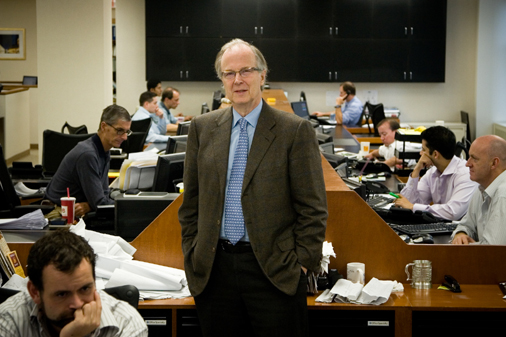
John R. Taylor, Chairman, FX Concepts
It wasn't until a week and a half later that that this became the subject of mainstream news across the United States, as the company announced yesterday via various financial news channels that its investment management division will be wound down.
During the conversation between Forex Magnates and FX Concepts on September 30 regarding the outflow of the company’s last institutional mandate in September, FX Concepts Chief Strategist Bob Savage explained that due to client confidentiality, he was not at liberty to discuss the actual client itself, but when asked in the same conversation if it was SFERS, as confirmed at the time to Forex Magnates by industry sources, Mr. Savage explained that Forex Magnates was “on the right lines, but I will be able to speak more freely in a few weeks’ time”. Consequently, further sources substantiated the same day that it was indeed SFERS and that this was the final client on the company's books.
Attempts by Forex Magnates to contact key personnel at the company today were met with unanswered emails and evasive responses to telephone calls.
From $14 Billion To Closure Within Six Years
The company entered difficult times during February this year, the same month as aggregation provider MarketFactory signed up the company for its FX aggregation feed, as two of the firm’s largest clients, the Pennsylvania Public School Employees’ Retirement System and Bayerische Versorgungskammer pension fund, both terminated their relationship with FX Concepts according to media reports at the time.
Mr. Savage said the firm’s assets under management had recently dropped to $621 million from a high of $14 billion in 2007, and with the termination of relationship between FX Concepts and SFERS, a source explained to Forex Magnates that he was “not sure how much of its own money the company has left to manage. I don’t think there is much money left” during a conversation with Forex Magnates last week.
One of the more unfortunate upshots of this is the necessity to lay of further employees. The company had already experienced an exodus of staff, with the number of employees standing at 44 in February, compared to 60 just two years earlier, and is now expected to reduce to just skeleton staff consisting of key personnel.
Mr. Savage explained to Reuters that sustained performance decreases in key funds had been the main contributor to the firm’s current situation, and that asset liquidation in order to stay afloat had been investigated including the possibility of closing its flagship GCP fund, which has lost 10 percent so far this year. A further example of decline include the company’s Multi-Strategy Fund which has lost 8.9 percent.
As far as the $25 million New York real estate purchased by John Taylor, the company’s Chairman with funding in the form of a loan from the company is concerned, the property, which was purchased for $4.5 million above its asking price, remains on the market. Proof indeed, that even giants can sometimes be humbled.
The train has indeed hit the buffers. FX Concepts has now taken the decision to close its North American, British and Singapore operations, representing the wrapping up of the entirety of the firm’s business, after thirty two years in existence, during which it spent a large proportion of its operational time enjoying the prestigious position as America’s largest FX hedge fund.
Delayed Media Reaction
On September 30, Forex Magnates exclusively reported breaking news that the company’s final client, the San Francisco Employees’ Retirement System (SFERS), had issued the firm with its intent to withdraw its funds, and that FX Concepts had begun winding back positions that same day, marking the end of an era within the FX industry as a whole.
John R. Taylor, Chairman, FX Concepts
It wasn't until a week and a half later that that this became the subject of mainstream news across the United States, as the company announced yesterday via various financial news channels that its investment management division will be wound down.
During the conversation between Forex Magnates and FX Concepts on September 30 regarding the outflow of the company’s last institutional mandate in September, FX Concepts Chief Strategist Bob Savage explained that due to client confidentiality, he was not at liberty to discuss the actual client itself, but when asked in the same conversation if it was SFERS, as confirmed at the time to Forex Magnates by industry sources, Mr. Savage explained that Forex Magnates was “on the right lines, but I will be able to speak more freely in a few weeks’ time”. Consequently, further sources substantiated the same day that it was indeed SFERS and that this was the final client on the company's books.
Attempts by Forex Magnates to contact key personnel at the company today were met with unanswered emails and evasive responses to telephone calls.
From $14 Billion To Closure Within Six Years
The company entered difficult times during February this year, the same month as aggregation provider MarketFactory signed up the company for its FX aggregation feed, as two of the firm’s largest clients, the Pennsylvania Public School Employees’ Retirement System and Bayerische Versorgungskammer pension fund, both terminated their relationship with FX Concepts according to media reports at the time.
Mr. Savage said the firm’s assets under management had recently dropped to $621 million from a high of $14 billion in 2007, and with the termination of relationship between FX Concepts and SFERS, a source explained to Forex Magnates that he was “not sure how much of its own money the company has left to manage. I don’t think there is much money left” during a conversation with Forex Magnates last week.
One of the more unfortunate upshots of this is the necessity to lay of further employees. The company had already experienced an exodus of staff, with the number of employees standing at 44 in February, compared to 60 just two years earlier, and is now expected to reduce to just skeleton staff consisting of key personnel.
Mr. Savage explained to Reuters that sustained performance decreases in key funds had been the main contributor to the firm’s current situation, and that asset liquidation in order to stay afloat had been investigated including the possibility of closing its flagship GCP fund, which has lost 10 percent so far this year. A further example of decline include the company’s Multi-Strategy Fund which has lost 8.9 percent.
As far as the $25 million New York real estate purchased by John Taylor, the company’s Chairman with funding in the form of a loan from the company is concerned, the property, which was purchased for $4.5 million above its asking price, remains on the market. Proof indeed, that even giants can sometimes be humbled.
GCEX Adds Tokenized Oil as Crude Volatility Pulls Traders Back to Energy
Featured Videos
Buying The Deep: Digital Asset Adoption in APAC and Beyond
The persisting price drops test the industry's commitment to crypto adoption. While on-chain innovation is making headway across market mechanics, from stablecoins to tokenization, investors remains cautious.
This session brings together market structure experts and institutional investors to explore how a prolonged bear market affects their long-term strategy, and where the opportunities lie ahead of the next cycle.
Attendees will walk away with:
First-hand account of the bear market's impact on various industry players
Understanding of what custody, connectivity, and settlement gaps still hamper growth in APAC
Insight into how client mandates and operational readiness are shaping who moves and who waits
Perspective on what institutional investors need to move toward actual digital asset capital deployment
The persisting price drops test the industry's commitment to crypto adoption. While on-chain innovation is making headway across market mechanics, from stablecoins to tokenization, investors remains cautious.
This session brings together market structure experts and institutional investors to explore how a prolonged bear market affects their long-term strategy, and where the opportunities lie ahead of the next cycle.
Attendees will walk away with:
First-hand account of the bear market's impact on various industry players
Understanding of what custody, connectivity, and settlement gaps still hamper growth in APAC
Insight into how client mandates and operational readiness are shaping who moves and who waits
Perspective on what institutional investors need to move toward actual digital asset capital deployment
The persisting price drops test the industry's commitment to crypto adoption. While on-chain innovation is making headway across market mechanics, from stablecoins to tokenization, investors remains cautious.
This session brings together market structure experts and institutional investors to explore how a prolonged bear market affects their long-term strategy, and where the opportunities lie ahead of the next cycle.
Attendees will walk away with:
First-hand account of the bear market's impact on various industry players
Understanding of what custody, connectivity, and settlement gaps still hamper growth in APAC
Insight into how client mandates and operational readiness are shaping who moves and who waits
Perspective on what institutional investors need to move toward actual digital asset capital deployment
The persisting price drops test the industry's commitment to crypto adoption. While on-chain innovation is making headway across market mechanics, from stablecoins to tokenization, investors remains cautious.
This session brings together market structure experts and institutional investors to explore how a prolonged bear market affects their long-term strategy, and where the opportunities lie ahead of the next cycle.
Attendees will walk away with:
First-hand account of the bear market's impact on various industry players
Understanding of what custody, connectivity, and settlement gaps still hamper growth in APAC
Insight into how client mandates and operational readiness are shaping who moves and who waits
Perspective on what institutional investors need to move toward actual digital asset capital deployment
This panel explores the key insights and emerging trends shaping modern trading behavior, examining how user expectations are evolving across global markets and what these shifts mean for industry participants.
Funding & Exit in Singapore from Pre-Seed to Liquidity
Singapore's capital infrastructure is wider than its reputation for stability suggests.
Sovereign backing from Temasek and GIC, a growing family office network, sector-specialized venture funds, and a public market pathway through the Singapore Exchange, the city-state supports capital formation at every stage of the lifecycle.
Held in partnership with 8Circle, this session gathers practitioners across the capital stack to examine how Singapore functions as both an investment and an exit destination.
Attendees will walk away with:
Understanding of what makes SGX a credible listing pathway for high-growth companies in 2026
Insight into alternative exit channels: private secondary markets, digital marketplace exits, and strategic acquisitions
Perspective on what founders and capital allocators should be doing at each stage to preserve exit optionality
Singapore's capital infrastructure is wider than its reputation for stability suggests.
Sovereign backing from Temasek and GIC, a growing family office network, sector-specialized venture funds, and a public market pathway through the Singapore Exchange, the city-state supports capital formation at every stage of the lifecycle.
Held in partnership with 8Circle, this session gathers practitioners across the capital stack to examine how Singapore functions as both an investment and an exit destination.
Attendees will walk away with:
Understanding of what makes SGX a credible listing pathway for high-growth companies in 2026
Insight into alternative exit channels: private secondary markets, digital marketplace exits, and strategic acquisitions
Perspective on what founders and capital allocators should be doing at each stage to preserve exit optionality
Singapore's capital infrastructure is wider than its reputation for stability suggests.
Sovereign backing from Temasek and GIC, a growing family office network, sector-specialized venture funds, and a public market pathway through the Singapore Exchange, the city-state supports capital formation at every stage of the lifecycle.
Held in partnership with 8Circle, this session gathers practitioners across the capital stack to examine how Singapore functions as both an investment and an exit destination.
Attendees will walk away with:
Understanding of what makes SGX a credible listing pathway for high-growth companies in 2026
Insight into alternative exit channels: private secondary markets, digital marketplace exits, and strategic acquisitions
Perspective on what founders and capital allocators should be doing at each stage to preserve exit optionality
Singapore's capital infrastructure is wider than its reputation for stability suggests.
Sovereign backing from Temasek and GIC, a growing family office network, sector-specialized venture funds, and a public market pathway through the Singapore Exchange, the city-state supports capital formation at every stage of the lifecycle.
Held in partnership with 8Circle, this session gathers practitioners across the capital stack to examine how Singapore functions as both an investment and an exit destination.
Attendees will walk away with:
Understanding of what makes SGX a credible listing pathway for high-growth companies in 2026
Insight into alternative exit channels: private secondary markets, digital marketplace exits, and strategic acquisitions
Perspective on what founders and capital allocators should be doing at each stage to preserve exit optionality
Singapore's capital infrastructure is wider than its reputation for stability suggests.
Sovereign backing from Temasek and GIC, a growing family office network, sector-specialized venture funds, and a public market pathway through the Singapore Exchange, the city-state supports capital formation at every stage of the lifecycle.
Held in partnership with 8Circle, this session gathers practitioners across the capital stack to examine how Singapore functions as both an investment and an exit destination.
Attendees will walk away with:
Understanding of what makes SGX a credible listing pathway for high-growth companies in 2026
Insight into alternative exit channels: private secondary markets, digital marketplace exits, and strategic acquisitions
Perspective on what founders and capital allocators should be doing at each stage to preserve exit optionality
Singapore's capital infrastructure is wider than its reputation for stability suggests.
Sovereign backing from Temasek and GIC, a growing family office network, sector-specialized venture funds, and a public market pathway through the Singapore Exchange, the city-state supports capital formation at every stage of the lifecycle.
Held in partnership with 8Circle, this session gathers practitioners across the capital stack to examine how Singapore functions as both an investment and an exit destination.
Attendees will walk away with:
Understanding of what makes SGX a credible listing pathway for high-growth companies in 2026
Insight into alternative exit channels: private secondary markets, digital marketplace exits, and strategic acquisitions
Perspective on what founders and capital allocators should be doing at each stage to preserve exit optionality
FM Daily Brief – 10 June 2026
Today’s Wednesday, the 10th of June 2026, and these are our main stories: Bybit’s zero-fee stock CFD push, prop trading access to SpaceX shares, and TradeStation’s European expansion into US markets.
AI Getting Real for Brokers
Brokers and providers moved from the noise phase to treating AI tools as a core product question, with implications on anything from hiring priorities to acquisition strategy.
This session gathers retail brokers, platform builders, and AI tool providers to examine how LLMs change affect client trust, results, and risk.
Attendees will walk away with:
A first-hand account of where AI-driven trading tools generate real client value
Insight into how institutional adoption is raising client expectations and what brokers need to do to keep pace
Clarity on the liability question: when an AI-driven recommendation leads to a bad trade, where does responsibility
Brokers and providers moved from the noise phase to treating AI tools as a core product question, with implications on anything from hiring priorities to acquisition strategy.
This session gathers retail brokers, platform builders, and AI tool providers to examine how LLMs change affect client trust, results, and risk.
Attendees will walk away with:
A first-hand account of where AI-driven trading tools generate real client value
Insight into how institutional adoption is raising client expectations and what brokers need to do to keep pace
Clarity on the liability question: when an AI-driven recommendation leads to a bad trade, where does responsibility
Brokers and providers moved from the noise phase to treating AI tools as a core product question, with implications on anything from hiring priorities to acquisition strategy.
This session gathers retail brokers, platform builders, and AI tool providers to examine how LLMs change affect client trust, results, and risk.
Attendees will walk away with:
A first-hand account of where AI-driven trading tools generate real client value
Insight into how institutional adoption is raising client expectations and what brokers need to do to keep pace
Clarity on the liability question: when an AI-driven recommendation leads to a bad trade, where does responsibility
Brokers and providers moved from the noise phase to treating AI tools as a core product question, with implications on anything from hiring priorities to acquisition strategy.
This session gathers retail brokers, platform builders, and AI tool providers to examine how LLMs change affect client trust, results, and risk.
Attendees will walk away with:
A first-hand account of where AI-driven trading tools generate real client value
Insight into how institutional adoption is raising client expectations and what brokers need to do to keep pace
Clarity on the liability question: when an AI-driven recommendation leads to a bad trade, where does responsibility
Brokers and providers moved from the noise phase to treating AI tools as a core product question, with implications on anything from hiring priorities to acquisition strategy.
This session gathers retail brokers, platform builders, and AI tool providers to examine how LLMs change affect client trust, results, and risk.
Attendees will walk away with:
A first-hand account of where AI-driven trading tools generate real client value
Insight into how institutional adoption is raising client expectations and what brokers need to do to keep pace
Clarity on the liability question: when an AI-driven recommendation leads to a bad trade, where does responsibility
Brokers and providers moved from the noise phase to treating AI tools as a core product question, with implications on anything from hiring priorities to acquisition strategy.
This session gathers retail brokers, platform builders, and AI tool providers to examine how LLMs change affect client trust, results, and risk.
Attendees will walk away with:
A first-hand account of where AI-driven trading tools generate real client value
Insight into how institutional adoption is raising client expectations and what brokers need to do to keep pace
Clarity on the liability question: when an AI-driven recommendation leads to a bad trade, where does responsibility