


IronFX cuts 150 roles
Job cuts at IronFX have emerged as the latest sign of pressure across the online trading industry. The broker laid off around 150 employees, or about 10% of its roughly 1,500‑strong workforce, with sources citing “efficiency” amid the AI wave as the main driver.
The layoffs follow earlier reductions at other brokers, including Tradu/FXCM and eToro, and come as IronFX continues to operate with a Cyprus Investment Firm license, a British Virgin Islands offshore license and authorization from the UK Financial Conduct Authority.
eToro's crypto expansion plan
Meanwhile, eToro CEO Yoni Assia said the fintech giant is in a strong position to expand its crypto offering and has introduced prediction markets within its new non-custodial crypto wallet.
- Week in Focus: Kraken Steps Inside Fed Payment System; FundedNext Breaks Down Its Payouts
- Weekly Wrap: ESMA Reins In Crypto Perps; 74% of Capital.com Gold Trades Closed in One Hour
- Weekly Digest: Kraken Posts 50 Cyprus Jobs, Adding MiFID Role; Netherlands Bans Polymarket
Speaking to Finance Magnates in Limassol, Assia noted that the feature was designed to stay separate from users’ main investments. He added that eToro is currently working with Polymarket and holding discussions with Kalshi as the company explores opportunities in the fast-emerging prediction markets sector.
The CEO of eToro just revealed how they profited $50 million by integrating Bitcoin into their treasury strategy.
— Kashif Raza (@simplykashif) May 16, 2025
Crypto is here to stay, it’s a new kind of global capital market. pic.twitter.com/eGEwTbltTe
Assia emphasized that prediction markets remain in the early stages of development and it is still unclear how much interest eToro users will show in them.
War exposes insider risks in prediction markets
In the wild west of prediction markets, the Iran war has drawn sharp attention to the growing risk of insider trading.
Following the US strike on Iran in late February, users reportedly wagered hundreds of millions of dollars on outcomes ranging from the timing of attacks to a potential nuclear detonation.
Data analytics firm Bubblemaps identified several suspected insiders who allegedly bet over a million dollars on the timing of the strike, while other analysts noted trading patterns that mirrored insider behavior around events involving Iran’s leadership.
CFTC rules for prediction market
Prediction markets are indeed gaining mainstream attention, but new regulatory signals suggest the rules are tightening. CFTC issued new guidance for platforms interested in launching prediction markets, outlining standards that resemble a compliance test.
The advisory requires platforms to demonstrate that their event contracts can resist market manipulation and insider trading before being approved for trading in the United States.
At the same time, CFTC Chairman Michael Selig said the agency does not intend to decide which products people are allowed to trade and will avoid making policy through enforcement actions.
Instead, he told an audience at the FIA Global Cleared Markets Conference in Florida that the CFTC plans to move away from “regulating through enforcement” and step back from enforcement-driven policymaking.
Are prediction markets the next prop trading?
Prediction markets are also emerging as a potential alternative for retail traders as regulators tighten oversight of simulated proprietary trading. Authorities in the U.S., Canada, and Europe have begun scrutinizing prop trading firms that rely more on challenge fees than real trading activity.
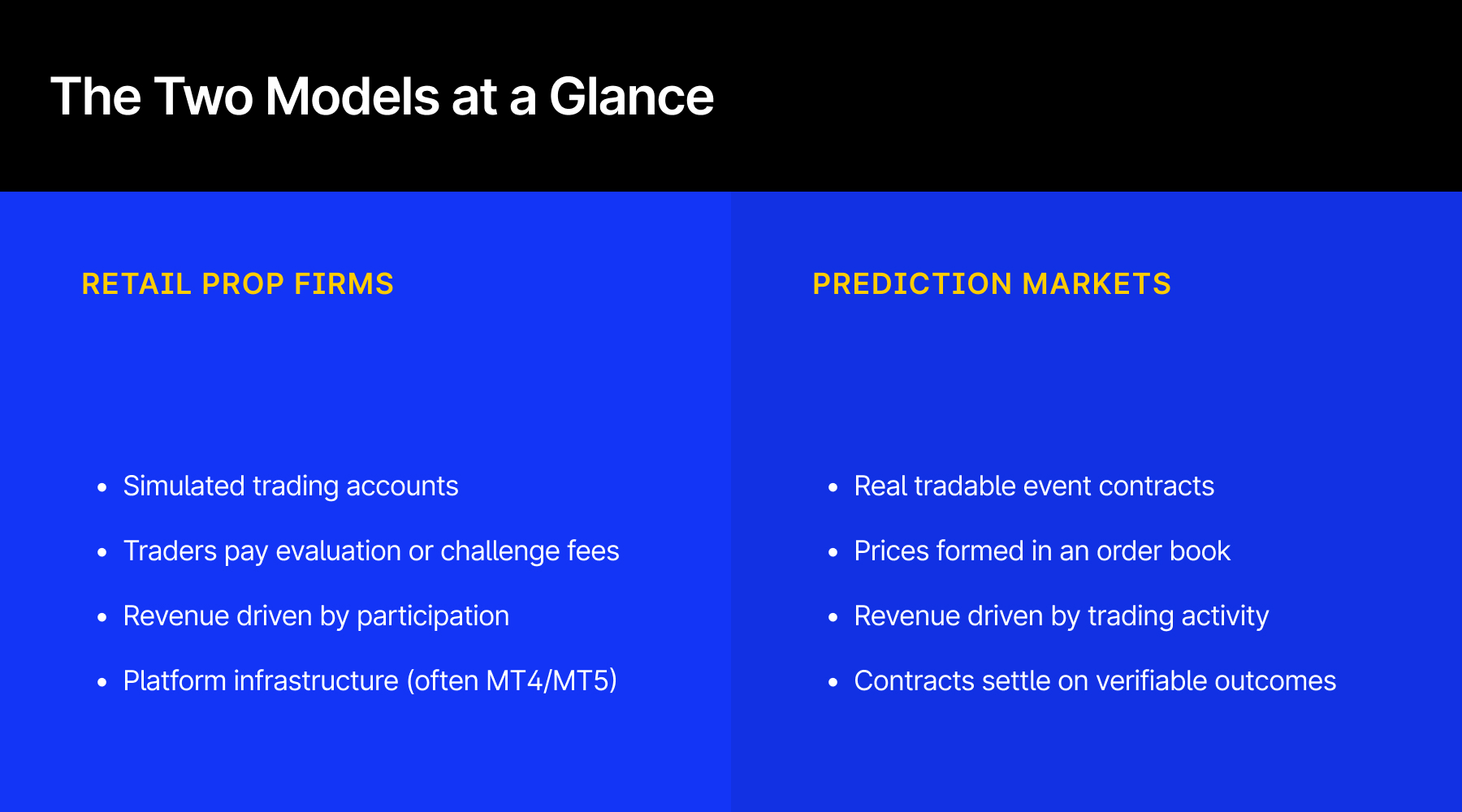
Many of these firms operate in regulatory gray areas, often using simulated accounts rather than executing live trades. Recent enforcement cases and platform shutdowns have accelerated the industry’s search for new models.
XTB adds kill switch to block hackers
Away from prediction markets, XTB introduced an emergency lock feature that allows clients to freeze all activity on their account with a single tap if they suspect unauthorized access. When activated, the lock halts trading in all instruments, blocks withdrawals from all currency accounts, and disables all eWallet transactions, the company said.
To restore access, users must first change their password and then pass a facial recognition check to confirm they are the legitimate account holder.
XTB CEO Omar Arnaout said the feature is designed to give clients a fast way to regain control of their accounts amid rising digital and cybersecurity threats.
Over half of Singapore CFD traders use one platform
As Singapore’s CFD market returns to growth, providers are under pressure to ensure their customer service meets the expectations of both new and existing clients. Firms need to handle inquiries, onboarding, and support efficiently to retain traders in a more competitive environment.

According to Investment Trends associate research director Lorenzo Vignati, the focus in Singapore has shifted from expansion to engagement, with brokers now concentrating on reactivating traders who previously stopped trading.
He noted that brokers cannot afford missteps with returning clients because first impressions are critical when these traders come back to the market.
Global forex brokers target Japan
Japan remains one of the world’s key retail foreign exchange markets, combining high trading volumes with a large and active base of retail traders. The country has more than 1.5 million retail FX traders and over 3 million active trading accounts, generating around $400 billion in daily FX turnover, putting it alongside London, New York, and Singapore as a major FX hub.
A notable feature of Japan’s market is the dominance of domestic brokers in retail trading. Major local firms such as GMO Click Securities, SBI FX Trade, Rakuten Securities, DMM FX, and Monex Group have built extensive retail trading ecosystems, supported by established platforms and sizable customer bases.
Revolut wins full UK bank licence
Revolut has received approval from the Prudential Regulation Authority to launch its UK bank, concluding a lengthy regulatory process. The license will allow the company to expand its services for around 13 million customers in its home market through its new entity, Revolut Bank UK Ltd.
We’re now officially a fully licensed bank in the UK.
— Revolut (@Revolut) March 11, 2026
As a bank, we’ll soon offer accounts protected by the Financial Services Compensation Scheme (FSCS) up to £120,000 per person on eligible deposits.
It also means we’ll be able to launch more banking features in the future… pic.twitter.com/fH7K2TQLDd
With this authorization, Revolut can operate as a fully licensed bank in the UK and offer deposit accounts covered by the Financial Services Compensation Scheme. It now joins other major fintechs that have obtained full banking licenses, including UK-based Monzo and Starling and Germany’s N26.
Executive Moves of the week: Traze, Tarurex
Lastly, in the executive moves, Naeem Afzal has joined Traze, the sister CFDs broker brand of ZFX under Zeal Group, as Regional Sales Director, based in the United Arab Emirates.
He brings nearly 20 years of experience in institutional and retail sales, most recently serving as Regional Sales Director at GO Markets.
Also this week, CFD broker Taurex reappointed Matthew Wright as a Non-Executive Director, almost three years after he left for Exinity, bringing back an executive who previously led the firm during its Zenfinex phase.


