

The week saw brokers pursue acquisitions, regulatory approvals and expansion into new markets while adapting to evolving regulations. Authorities in Europe and Australia stepped up oversight, as firms also accelerated AI adoption and platform upgrades to strengthen their competitive positions.
IG Group Seeks Jersey Holding Company as Strategic Review Continues
IG Group asked shareholders to approve a new Jersey-incorporated holding company while reporting an 18% rise in first-half revenue to about £643 million.

The proposal forms part of the strategic review launched in March and is intended to provide greater financial flexibility for a business that now generates around two-thirds of its revenue outside the UK.
- Financial Marketing: One Organic Reel Could Be Worth More Than Paid Press
- Bitpanda Brings Leveraged Stock and ETF Trading to European Retail Traders
- eToro Adds AI, Refreshes Brand with a New Logo; IC Markets Plans Website Migration
The company said its London Stock Exchange listing, UK tax residency and London operations would remain unchanged. IG also confirmed an organisational overhaul, merging its regional consumer businesses into a single division led by Michael Healy.
Meanwhile, the group reaffirmed its upgraded full-year guidance despite much of its reported customer growth reflecting recent acquisitions rather than organic expansion.
J. Safra Sarasin Completes Takeover of Saxo Bank
Bank J. Safra Sarasin agreed to acquire founder Kim Fournais' remaining indirect 28.69% stake in Saxo Holding AG, completing its move to full ownership of Saxo Bank. The transaction follows the Swiss banking group's acquisition of more than 70% of the business in 2025 and remains subject to regulatory approval.
J. Safra Sarasin Increases Its Stake in Saxo: Just months after completing its majority acquisition of Saxo Holding, Bank J. Safra Sarasin has moved to acquire the remaining stake held by founder Kim Fournais, making it the sole sharehol... https://t.co/OKxTgl42Mi
— finews.ch (@finews_ch) July 6, 2026
Saxo Bank said it will continue operating as an independent entity while benefiting from the financial backing of its new parent. Fournais will remain Chairman of the Board, providing continuity for clients and employees. The company also said it expects to report its strongest first-half financial performance on record, driven by continued growth in client numbers and assets under management.
Trade Nation Launches European Business Through Portugal

Trade Nation formally entered the European Union by launching regulated services through a new Portuguese entity authorised by the Comissão do Mercado de Valores Mobiliários.
The licence enables the broker to passport CFD products across the EU, covering forex, indices, commodities, shares and bonds through its proprietary platforms, TradingView and MetaTrader 4.
The move follows the opening of its Lisbon office last year and supports the company's broader international expansion strategy. Trade Nation has also been consolidating its business following the integration of TD365 into its main brand and rebuilding its senior management team, while its UK business has returned to profitability after several years of losses.
Coinbase Expands UK Business Beyond Cryptocurrency
Coinbase received UK authorisation allowing it to offer traditional investment services alongside its existing cryptocurrency business. The approval enables institutional clients to access derivatives, including crypto, equity and commodity perpetual futures, while retail customers will be able to trade equities on the platform for the first time.
The expansion follows the company's earlier launch of regulated derivatives across Europe under its Cyprus MiFID II licence. Coinbase said the new authorisation supports its strategy of building a unified financial platform combining crypto trading with equities, derivatives, payments, savings and borrowing products ahead of the UK's planned crypto regulatory regime in 2027.
Today marks our biggest ever expansion of Coinbase UK's product suite.
— Coinbase 🛡️ (@coinbase) July 7, 2026
We've now secured an investment services authorisation in the UK, enabling us to soon offer both equities and derivatives.
Another step to bringing the everything exchange worldwide. pic.twitter.com/sns3IGRHHM
ASIC Cancels Trive Australia's Financial Services Licence
Australia's corporate regulator cancelled the financial services licence of Trive's local subsidiary after determining it was no longer conducting financial services business. The broker stopped onboarding new Australian clients in April 2025 before operations ceased entirely, leading to the licence cancellation on 1 July after 14 years.
The decision follows ASIC's broader review of the country's CFD industry, which identified widespread compliance deficiencies among brokers. The regulator previously said more than 38,000 retail traders received around AU$40 million in refunds following the review.
ASIC also reported that Australian retail CFD traders collectively lost more than AU$458 million during 2024, reinforcing its continued focus on the sector.
eToro Adds AI Investing Tools as IC Markets Prepares Website Migration

Elsewhere, platform development remained a priority as eToro and IC Markets announced separate technology updates. eToro introduced a redesigned mobile application centred on its AI assistant, Tori, alongside new active trading tools, AI-powered portfolios, desktop trading capabilities and expanded crypto self-custody services.
The company also unveiled refreshed branding featuring a new logo and tagline. Separately, IC Markets confirmed it will migrate its website from icmarkets.com to ic.com as part of a wider branding initiative. The broker said temporary service interruptions may occur during the migration but advised that client accounts and partner referral links would remain unaffected.
Governance, Rather Than New Rules, Seen as Key to AI Trading
Artificial intelligence continued to feature prominently across the brokerage industry, prompting renewed debate over regulation. In an opinion piece for Finance Magnates, it was argued that AI-powered trading products should generally be governed under existing financial services rules rather than through a new AI-specific regulatory framework.
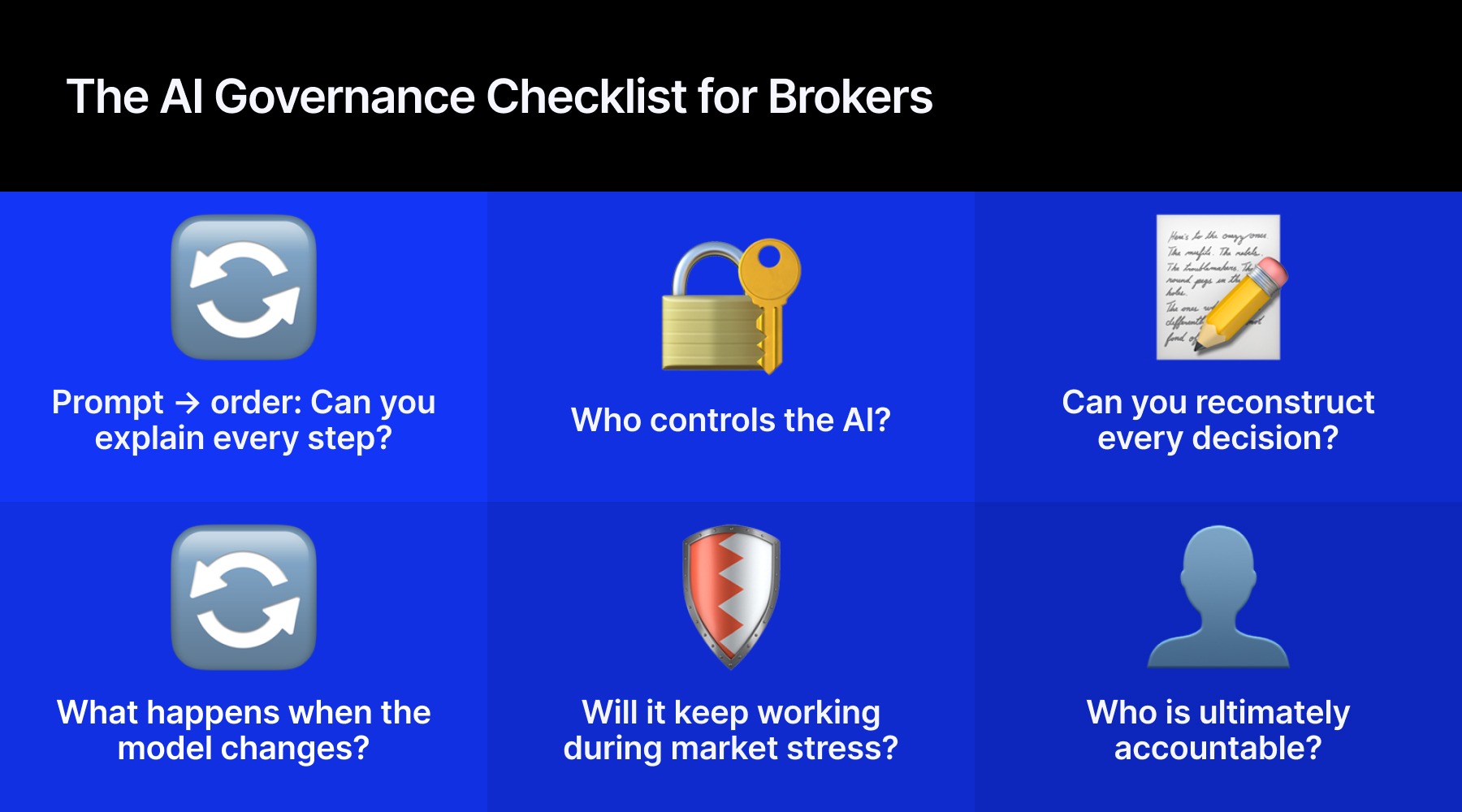
The focus, the article suggested, should remain on governance, operational resilience and accountability instead of the underlying technology. As brokers introduce conversational trading interfaces and AI-assisted execution tools, firms were urged to ensure robust audit trails, clear client permissions and effective risk controls.
The distinction between execution tools and products providing investment advice was identified as a key regulatory consideration.
Tradeify Outlines Growth Strategy as Futures Prop Trading Expands
Tradeify's founders said the futures prop trading firm has grown sevenfold over the past year to more than 100,000 active traders, positioning it among the sector's fastest-growing firms. During an interview with Finance Magnates, the company outlined plans to expand through a newly launched introducing broker business, broader multi-asset offerings and prediction markets.
The founders also explained why Tradeify abandoned subscription-based evaluation accounts in favour of one-time payments after internal data showed little impact on revenue.
Alongside growth initiatives, the firm highlighted fraud prevention as its biggest operational challenge and said artificial intelligence now plays an increasing role in detecting suspicious trading activity and improving customer support.
Organic Short-Form Video Gains Ground in Financial Marketing
Another opinion piece examined how organic short-form video is reshaping marketing strategies across financial services. The article argued that platforms such as Instagram Reels and TikTok can deliver significantly greater reach than traditional paid press or advertising at a lower cost, particularly for business-to-consumer brands.
While paid media remains valuable for credibility and search visibility, organic content was presented as an increasingly important channel for customer acquisition and long-term audience engagement.
The piece suggested many financial firms continue to underinvest in creator-led and founder-driven content despite growing evidence that organic social media generates stronger engagement and better returns than conventional digital advertising.
Industry Faces Pressure on Fees, Financial Education and Workforce Skills
Separately, this week's Market Watch column highlighted several broader industry trends. New research from investment consultancy bfinance pointed to continued pressure on active asset management fees, although pricing benefits remain uneven across different markets and investor groups.
The column also revisited concerns surrounding financial influencers, arguing that improving financial education and stronger platform oversight may prove more effective than regulating content creators directly. Meanwhile, a survey by the CFA Institute found communication, collaboration and other soft skills are increasingly valued by finance employers.
Management respondents ranked these attributes ahead of artificial intelligence capabilities when assessing career progression and leadership potential.
LATEST: ⚡ MiCA-compliant euro stablecoins grew 128% in market cap to $673.9M in the year before Europe’s MiCA transition period ended, according to Decta. pic.twitter.com/DHPQwoFNxS
— CoinMarketCap (@CoinMarketCap) July 7, 2026
EU Lawmakers Turn Attention to DeFi, Staking and Tokenised Assets
Rounding out the week's developments, European lawmakers signalled that further crypto regulation could follow shortly after the Markets in Crypto-Assets Regulation (MiCA) became fully applicable.
The European Parliament called on the European Commission to examine whether decentralised finance, staking, lending, NFTs and tokenised assets require additional oversight under existing financial market rules. The report also expressed stronger support for regulated euro-denominated stablecoins as part of Europe's broader competitiveness strategy.
For brokers, fintechs and institutional firms, the review indicates that areas currently outside MiCA's scope may become the next focus of EU regulatory policy as digital asset markets continue to evolve.


