Financial Marketing: One Organic Reel Could Be Worth More Than Paid Press

Thursday, 09/07/2026 | 10:00 GMT by Ivan Patriki
  • Ivan Patriki, a Fintech marketing strategist, points out that one organic Reel can reach 1M people, while matching that reach with paid Instagram ads can cost $4,300–$12,000, making organic content a major missed opportunity.
  • Influencer marketing delivers about 11x ROI, while organic creator content often outperforms paid campaigns. Brands that shift more budget into short-form video can gain reach before competition drives costs higher.
Organic Content

Most brands spend tens of thousands of dollars on paid press placements that generate tens of thousands of views. They consider it a marketing budget well spent.

For the right publications, that investment is completely justified because they reach a targeted B2B audience. But for B2C brands, a single organic short-form video can reach one million people at a fraction of the cost. Yet many of those same brands either are not producing this type of content or are not treating it as a serious marketing channel.

That is not simply a minor inefficiency. It is a structural mispricing that is actively redistributing market share to the companies that recognise the opportunity first.

A single organic Reel reaching one million views can often outperform a paid campaign. Achieving the same reach through paid Instagram Reels, where average CPMs range from $4.29 to $12, would cost between $4,300 and $12,000 before creative production costs are even considered.

A national press release distributed through a major wire service typically costs between $800 and more than $3,000 per release, while actual readership often remains in the tens of thousands. The cost-per-view comparison is not particularly close. Depending on the channel, organic short-form can deliver 50 to more than 100 times the reach for a similar investment, provided the content is executed properly.

Read more: The Finfluencer Illusion - Why Reach Doesn’t Equal Trust

However, cost is only half the story—and arguably the less important half. The bigger difference is not simply what organic reach costs compared with paid reach, but what each format does to the person consuming the content.

What Paid Press Actually Delivers

Local press release distribution through major networks may start below $1,000, while national campaigns through services such as PR Newswire can run into several thousand dollars or even low five figures.

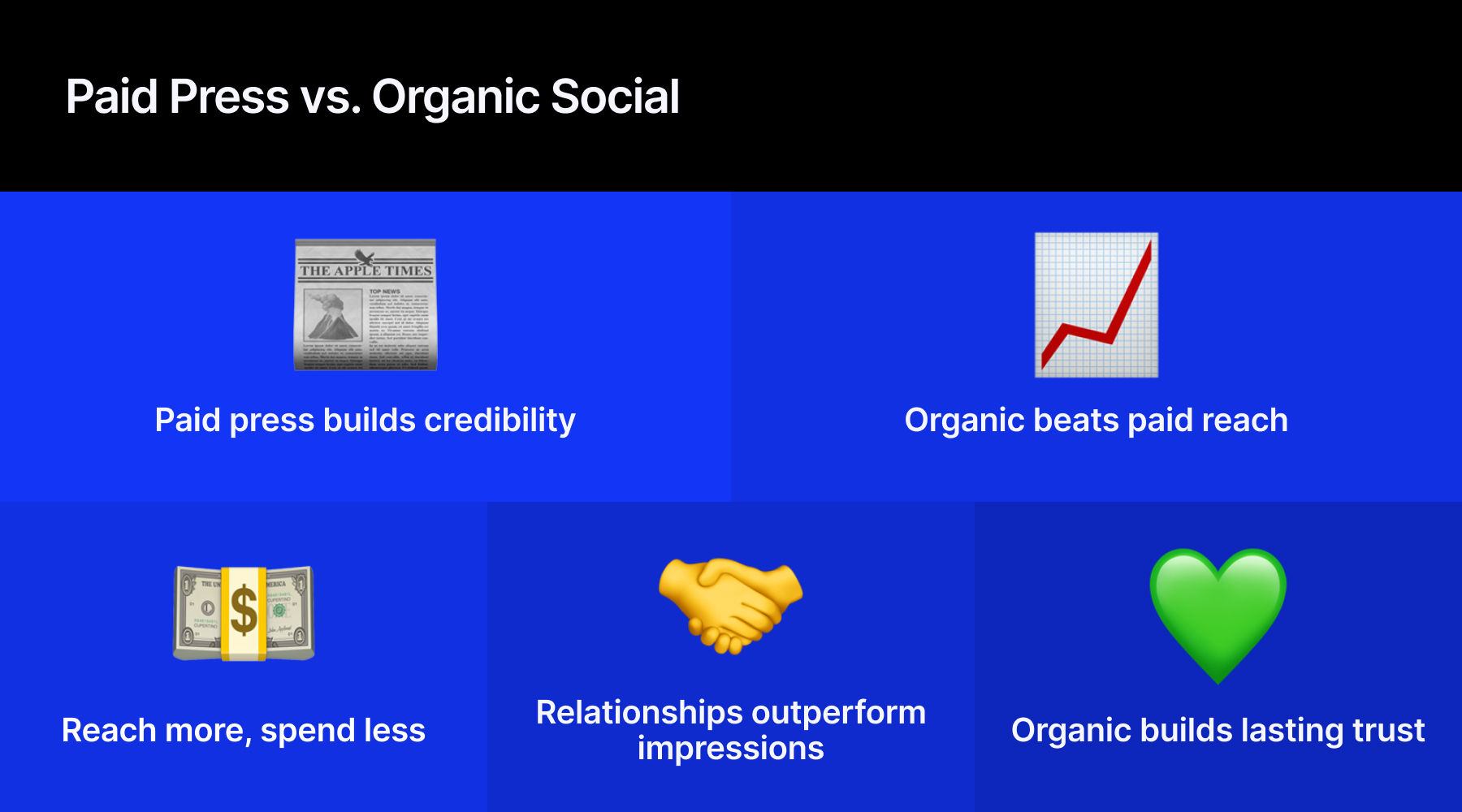
That said, paid press serves an important purpose. It builds credibility, strengthens brand trust through association with established media outlets, improves search visibility, and reaches a more selective audience of investors, institutions, and business decision-makers.

Organic social media serves a different purpose. It delivers scale, awareness, and consumer attention. Rather than replacing paid press, it complements it. The strongest brands use paid media to establish legitimacy and organic social to build reach and sustained attention.

Why Organic Beats Paid Social

The instinct is to compare organic and paid social on cost, but that is the wrong comparison. The bigger difference is how audiences engage with each format.

When people watch a paid ad, they know it is sponsored. With organic video, viewers choose to watch, comment, share, and save because they believe the content deserves their attention. That distinction matters. Around 69% of consumers trust creator recommendations over direct brand messaging, while 83% of marketers say organic and creator-led content converts better than comparable paid campaigns.

Paid reach delivers impressions, but organic reach builds relationships. People who discover a brand organically are more likely to follow it, search for it later, and recommend it to others. Instagram Reels reaches more than two billion monthly users, with around 55% of views coming from non-followers, making it one of the platform's strongest discovery tools. TikTok follows the same model, surfacing content to entirely new audiences without paid promotion.

Channel

Average CPM

Cost for 1 Million Views

Instagram Reels (paid)

$4.29–$12

$4,300–$12,000

TikTok (paid)

$8–$15

$8,000–$15,000

Instagram Stories (paid)

$7.25

$7,250

National press release

$1,000–$5,000 per release

20,000–80,000 actual reads

Paid sponsored article (trade media)

$5,000–$25,000

20,000–80,000 impressions

The Established Brand Problem

Around 86% of brands now use influencer or creator marketing in some form. Yet despite that widespread adoption, it still represents only about 4% to 5% of total advertising expenditure, even as the global digital advertising market is expected to surpass $850 billion by 2026.

The issue is not awareness. It is organisational inertia.

Large marketing organisations have long-standing vendor relationships, compliance requirements, and approval processes built around traditional media buying. Building an agile organic social programme requires faster approvals, stronger creator relationships, and greater confidence in newer content formats.

The performance gap continues to widen. Influencer marketing generates around 11 times the return on investment of traditional digital advertising, with brands earning an average of $5.78 for every dollar spent. At the same time, most organisations report that creator content delivers stronger returns than traditional digital campaigns, while influencer-generated leads are generally considered higher quality.
Organic Content

The Window Will Not Stay Open

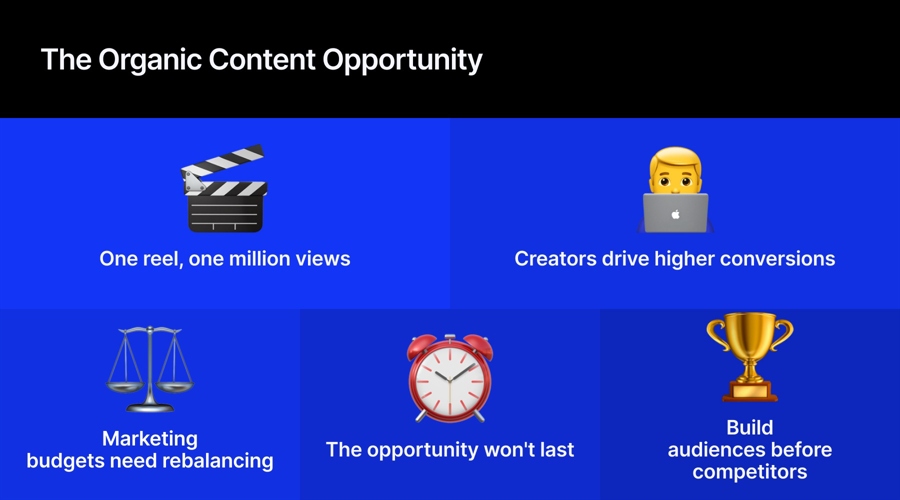
Organic social remains underpriced because many established brands have not fully committed to it. As more brands increase investment, the economics will inevitably change.

The same pattern has played out before. Early SEO, Facebook advertising, and Google AdWords all produced exceptional returns before competition increased and prices adjusted.

Organic short-form content appears to be at a similar stage today. The 35-to-54 age group is among Instagram's fastest-growing audiences, while LinkedIn's expansion into short-form video is reaching senior decision-makers who were largely absent from these platforms only a few years ago.

The audience is already there. As more brands compete for attention, the cost of reaching it will rise accordingly.

A Better Allocation of Marketing Spend

The argument is not to abandon paid press or editorial placements. Established publications still provide credibility that organic content cannot replicate, particularly in regulated industries.

The issue is that many marketing budgets remain overallocated to traditional channels while underinvesting in organic short-form content. A more balanced strategy uses paid press for credibility and SEO, and organic social, creator partnerships, and founder-led content for reach and community.

The goal is not one viral Reel, but a distribution engine that compounds over time. Brands that consistently produce quality short-form content build audience relationships that competitors cannot easily buy later.

Most brands spend tens of thousands of dollars on paid press placements that generate tens of thousands of views. They consider it a marketing budget well spent.

For the right publications, that investment is completely justified because they reach a targeted B2B audience. But for B2C brands, a single organic short-form video can reach one million people at a fraction of the cost. Yet many of those same brands either are not producing this type of content or are not treating it as a serious marketing channel.

That is not simply a minor inefficiency. It is a structural mispricing that is actively redistributing market share to the companies that recognise the opportunity first.

A single organic Reel reaching one million views can often outperform a paid campaign. Achieving the same reach through paid Instagram Reels, where average CPMs range from $4.29 to $12, would cost between $4,300 and $12,000 before creative production costs are even considered.

A national press release distributed through a major wire service typically costs between $800 and more than $3,000 per release, while actual readership often remains in the tens of thousands. The cost-per-view comparison is not particularly close. Depending on the channel, organic short-form can deliver 50 to more than 100 times the reach for a similar investment, provided the content is executed properly.

Read more: The Finfluencer Illusion - Why Reach Doesn’t Equal Trust

However, cost is only half the story—and arguably the less important half. The bigger difference is not simply what organic reach costs compared with paid reach, but what each format does to the person consuming the content.

What Paid Press Actually Delivers

Local press release distribution through major networks may start below $1,000, while national campaigns through services such as PR Newswire can run into several thousand dollars or even low five figures.

That said, paid press serves an important purpose. It builds credibility, strengthens brand trust through association with established media outlets, improves search visibility, and reaches a more selective audience of investors, institutions, and business decision-makers.

Organic social media serves a different purpose. It delivers scale, awareness, and consumer attention. Rather than replacing paid press, it complements it. The strongest brands use paid media to establish legitimacy and organic social to build reach and sustained attention.

Why Organic Beats Paid Social

The instinct is to compare organic and paid social on cost, but that is the wrong comparison. The bigger difference is how audiences engage with each format.

When people watch a paid ad, they know it is sponsored. With organic video, viewers choose to watch, comment, share, and save because they believe the content deserves their attention. That distinction matters. Around 69% of consumers trust creator recommendations over direct brand messaging, while 83% of marketers say organic and creator-led content converts better than comparable paid campaigns.

Paid reach delivers impressions, but organic reach builds relationships. People who discover a brand organically are more likely to follow it, search for it later, and recommend it to others. Instagram Reels reaches more than two billion monthly users, with around 55% of views coming from non-followers, making it one of the platform's strongest discovery tools. TikTok follows the same model, surfacing content to entirely new audiences without paid promotion.

Channel

Average CPM

Cost for 1 Million Views

Instagram Reels (paid)

$4.29–$12

$4,300–$12,000

TikTok (paid)

$8–$15

$8,000–$15,000

Instagram Stories (paid)

$7.25

$7,250

National press release

$1,000–$5,000 per release

20,000–80,000 actual reads

Paid sponsored article (trade media)

$5,000–$25,000

20,000–80,000 impressions

The Established Brand Problem

Around 86% of brands now use influencer or creator marketing in some form. Yet despite that widespread adoption, it still represents only about 4% to 5% of total advertising expenditure, even as the global digital advertising market is expected to surpass $850 billion by 2026.

The issue is not awareness. It is organisational inertia.

Large marketing organisations have long-standing vendor relationships, compliance requirements, and approval processes built around traditional media buying. Building an agile organic social programme requires faster approvals, stronger creator relationships, and greater confidence in newer content formats.

The performance gap continues to widen. Influencer marketing generates around 11 times the return on investment of traditional digital advertising, with brands earning an average of $5.78 for every dollar spent. At the same time, most organisations report that creator content delivers stronger returns than traditional digital campaigns, while influencer-generated leads are generally considered higher quality.

Organic Content

The Window Will Not Stay Open

Organic social remains underpriced because many established brands have not fully committed to it. As more brands increase investment, the economics will inevitably change.

The same pattern has played out before. Early SEO, Facebook advertising, and Google AdWords all produced exceptional returns before competition increased and prices adjusted.

Organic short-form content appears to be at a similar stage today. The 35-to-54 age group is among Instagram's fastest-growing audiences, while LinkedIn's expansion into short-form video is reaching senior decision-makers who were largely absent from these platforms only a few years ago.

The audience is already there. As more brands compete for attention, the cost of reaching it will rise accordingly.

A Better Allocation of Marketing Spend

The argument is not to abandon paid press or editorial placements. Established publications still provide credibility that organic content cannot replicate, particularly in regulated industries.

The issue is that many marketing budgets remain overallocated to traditional channels while underinvesting in organic short-form content. A more balanced strategy uses paid press for credibility and SEO, and organic social, creator partnerships, and founder-led content for reach and community.

The goal is not one viral Reel, but a distribution engine that compounds over time. Brands that consistently produce quality short-form content build audience relationships that competitors cannot easily buy later.

About the Author: Ivan Patriki
Ivan Patriki
  • 2 Articles
  • 1 Follower
About the Author: Ivan Patriki
Frequently known as "Artizt" across platforms, I'm a Fintech marketing strategist. I have >350k followers across platforms, and I day-trade live daily to my communities. My mission is to create a new elite, and help visualize data only hedge funds can see for my community
  • 2 Articles
  • 1 Follower

More from the Author

Retail FX

!"#$%&'()*+,-./0123456789:;<=>?@ABCDEFGHIJKLMNOPQRSTUVWXYZ[\]^_`abcdefghijklmnopqrstuvwxyz{|} !"#$%&'()*+,-./0123456789:;<=>?@ABCDEFGHIJKLMNOPQRSTUVWXYZ[\]^_`abcdefghijklmnopqrstuvwxyz{|}