Deriv has secured a banking licence in Saint Vincent and the Grenadines.
XTB co-founder has sold another 9.4 million shares for approximately $410 million.
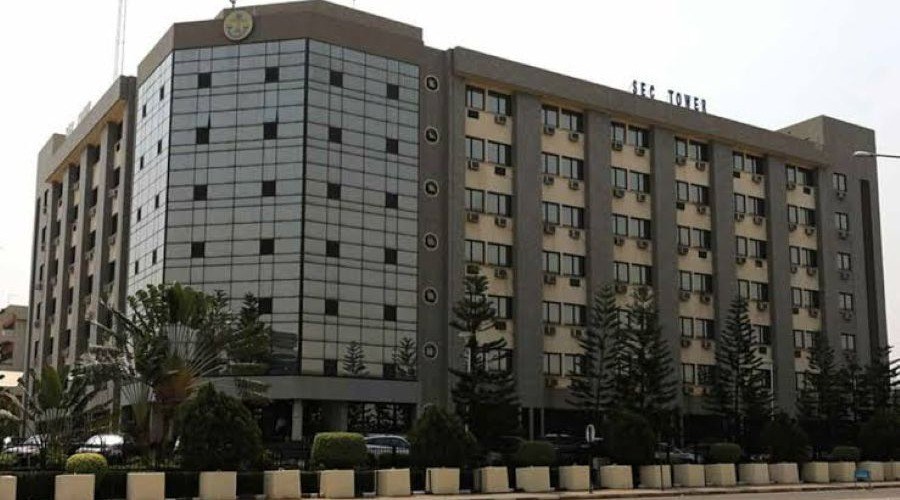
Nigeria's Securities and Exchange Commission Headquarters.
Regulatory changes, business expansion and product
diversification shaped a busy week across retail trading and fintech.
Regulators in Nigeria and Saint Vincent and the Grenadines introduced measures
affecting leveraged products and virtual asset businesses, while Deriv secured
a banking licence in SVG.
Elsewhere, brokers and prop firms continued adapting to
changing trader demand. AI automation, futures trading and broader product
offerings featured prominently, while prediction markets faced questions over
retail participation and profit concentration. XTB’s founder also reduced his
stake again, while Revolut moved closer to establishing a US banking operation.
Nigeria Proposes New FX and CFD Framework
Nigeria’s Securities and Exchange Commission has proposed
its first dedicated framework
for the foreign exchange and CFD industry, tightening rules for retail
trading. The framework bans binary options and places a 1:2 leverage cap on
crypto-related CFD products.
It also targets social media marketing,
prohibiting promoters and executives from using luxury lifestyles to suggest wealth
was generated through retail trading. The SEC’s measures form part of a broader
effort to strengthen oversight of leveraged products and retail promotion.
Saint Vincent Freezes New Virtual Asset Applications
The Financial Services Authority of Saint Vincent and the
Grenadines has
suspended new applications for virtual asset businesses until further
notice. The regulator said the move will allow it to strengthen internal
capacity while continuing to process and supervise the country’s growing
virtual asset sector.
Applications submitted before September 1, 2026, will
continue through the existing review process and are not affected by the
suspension. The FSA described the measure as precautionary and administrative,
without linking it to enforcement action against existing virtual asset
businesses. No date has been set for reopening applications.
The authority said
it will announce when submissions can resume, leaving prospective applicants
unable to file new virtual asset business applications in the meantime.
The licence
was granted to an entity separate from Deriv’s existing offshore business in
SVG. The banking status is expected to reduce the broker’s reliance on third
parties for deposits and withdrawals, giving it greater control over parts of
its payments infrastructure.
The development follows Deriv’s earlier
application for the licence and comes as the broker continues expanding its
international operations, including a new office in Mauritius earlier this
year.
Deriv Targets 75% AI Workflow Automation
Deriv CEO Rakshit Choudhary has outlined how the broker is using
artificial intelligence to automate large parts of its operations, with a
target of automating 75% of manual workflows by the end of 2026. Choudhary said
client-facing applications are now built using AI and that the company has
moved automation into areas including HR, finance, compliance, marketing,
product and engineering.
Deriv has brought in more than 100 AI engineers to
help non-engineering staff use the technology and runs weekly training
sessions. Choudhary also said the company is building an internal intelligence
system based on its business context and decision history. He described the
strategy as focused on improving efficiency while acknowledging AI’s impact on
jobs.
Mattus Urges CFD Brokers to Diversify
Tickmill co-founder Ingmar Mattus told Finance Magnates that
CFD
brokers face increasing pressure from futures, prediction markets, tighter
regulation and a reluctance to diversify. He argued that established firms risk
losing relevance if they focus too heavily on higher-margin CFD products while
traders move towards equities, ETFs, futures and other instruments.
Through Andromeda Capital Partners, Mattus
has backed diversification projects including TradersYard and MetroTrade,
reflecting his view that brokers need broader offerings to remain competitive.
XTB Founder Sells Another $410 Million Stake
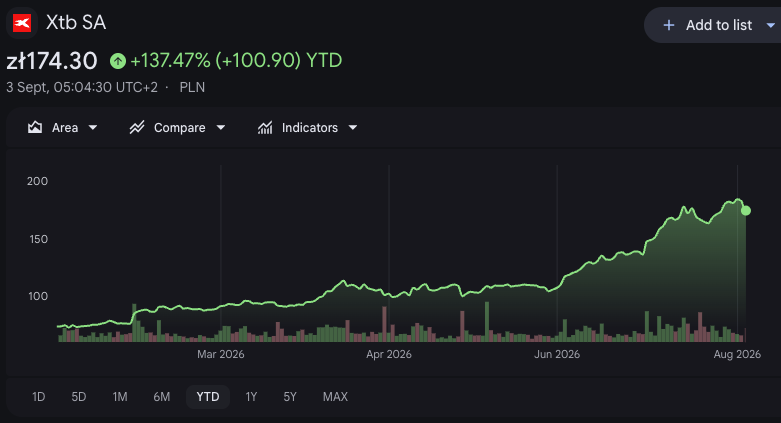
XTB co-founder Jakub Zabłocki has
sold another 9.4 million shares in the Warsaw-listed broker for
approximately $410 million, reducing his stake to 27.78% from 35.78%. The
shares were sold at 160 zlotys each through an accelerated bookbuilding
process, representing an 8% discount to XTB’s market price at the time.
Movement of XTV shares in 2026 (Google Finance)
The
transaction was carried out through XX ZW Investment Group, a
Luxembourg-registered vehicle majority owned by Zabłocki. It marks at least the
fifth reduction in his holding since 2023. Despite the latest sale, Zabłocki
remains XTB’s largest shareholder and continues to sit on the company’s
supervisory board. The transaction follows several earlier disposals by the
broker’s co-founder.
The retail prop firm playbook has a mathmatical advantage on the brokerage market:
In the traditional brokerage (e.g., XP Inc., @CharlesSchwab, Pepperstone), a broker spends anywhere between $300 and $1,500 (CAC) on marketing to acquire a retail trading clients. During volatile…
The shift reflects the high cost of
acquiring new customers, with firms looking for loyalty programmes that
encourage longer-term engagement rather than simply increasing trading
activity. Brokers are also using community-based benefits and exclusive
experiences to strengthen their relationship with clients.
The approach marks a
move away from the traditional assumption that higher trading frequency alone
is enough to build loyalty, as firms seek to compete on the wider client
experience.
FTMO Expands Into Futures With Beta Launch
FTMO
has launched a beta version of its futures prop trading offering, expanding
the Prague-based firm beyond its established CFD-focused model. FTMO Futures
requires traders to complete an evaluation before moving to a Sim-Funded
Account, with challenges offering up to $450,000 in simulated capital.
From left: FTMO CEO Otakar Suffner and CTO Marek Vasicek at Finance Magnates London Summit
The beta
includes Growth and Pro account structures with different withdrawal rules. The
launch comes as several prop firms broaden their product ranges and explore
futures as an alternative to CFDs. FTMO has also resumed services for US-based
traders, offering its US product through MetaTrader 5.
The firm previously
suspended US services in 2024. Its return follows changes across the prop
trading sector and the wider adoption of alternative operating models.
Prediction Markets Face Retail Profit Concentration
Questions
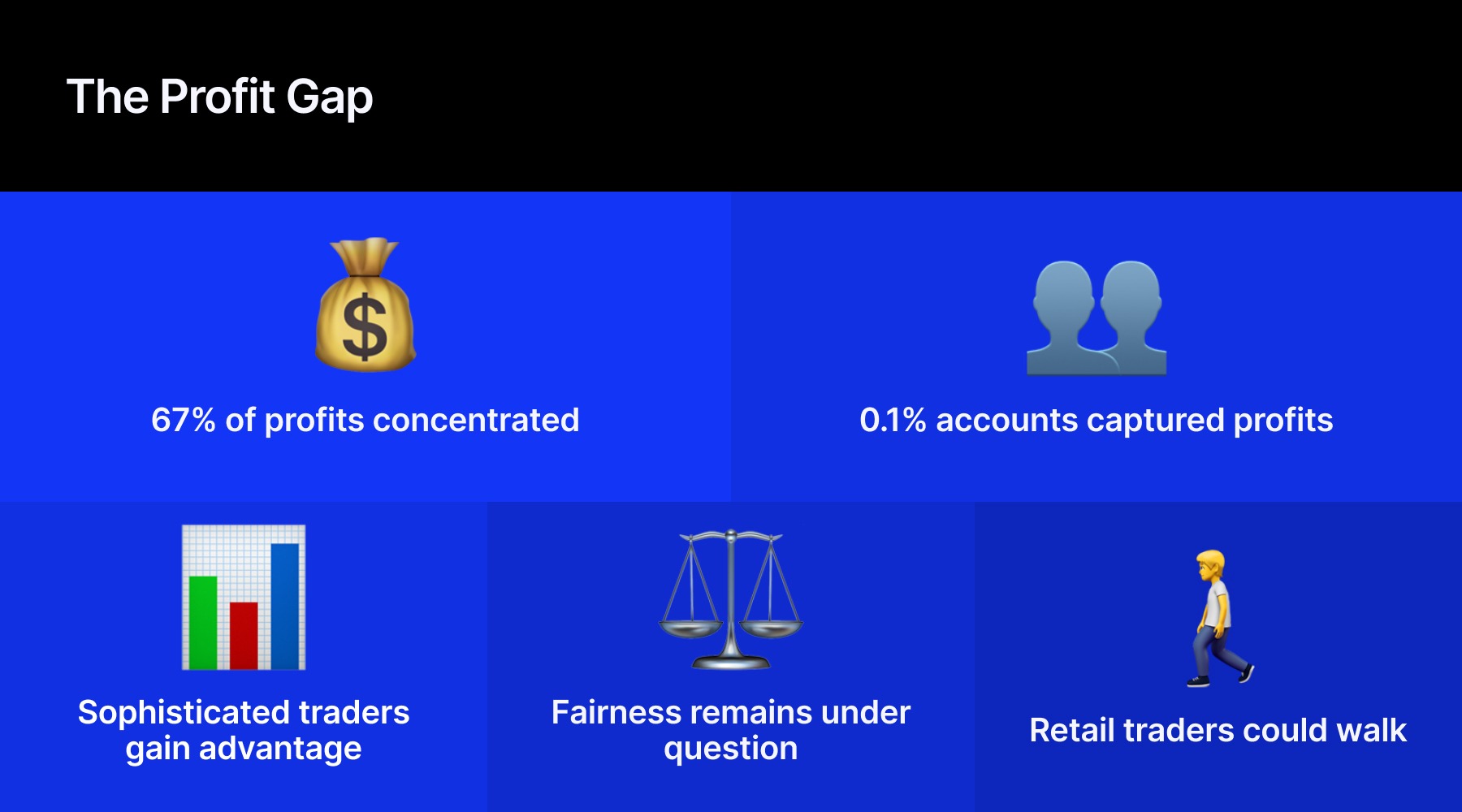
The concentration raises questions about whether
well-capitalised or better-informed traders could gain a persistent advantage
as more retail participants enter the market. The issue goes beyond whether
prediction markets should be treated as gambling or financial markets.
Their
appeal has grown rapidly among retail traders, while platforms compete with
brokers and other venues for trading activity. The experience of other markets
suggests excessive concentration of profits could eventually undermine
participation if smaller traders consistently lose.
Revolut Wins Conditional US Bank Charter Approval
Revolut
has received conditional approval from the US Office of the Comptroller of
the Currency for a national bank charter, marking a step towards establishing
its own banking operation in the country. The fintech had previously considered
entering US banking through an acquisition but changed course in January to
pursue a charter directly.
Founder and CEO Nik Storonsky said the company wants
to serve US customers fully and directly with its broader range of products and
services. The conditional approval does not yet allow Revolut to operate as a
full national bank.
The company must continue working with the OCC, FDIC and
Federal Reserve to complete the requirements associated with the charter before
it can operate under the new structure.
Regulatory changes, business expansion and product
diversification shaped a busy week across retail trading and fintech.
Regulators in Nigeria and Saint Vincent and the Grenadines introduced measures
affecting leveraged products and virtual asset businesses, while Deriv secured
a banking licence in SVG.
Elsewhere, brokers and prop firms continued adapting to
changing trader demand. AI automation, futures trading and broader product
offerings featured prominently, while prediction markets faced questions over
retail participation and profit concentration. XTB’s founder also reduced his
stake again, while Revolut moved closer to establishing a US banking operation.
Nigeria Proposes New FX and CFD Framework
Nigeria’s Securities and Exchange Commission has proposed
its first dedicated framework
for the foreign exchange and CFD industry, tightening rules for retail
trading. The framework bans binary options and places a 1:2 leverage cap on
crypto-related CFD products.
It also targets social media marketing,
prohibiting promoters and executives from using luxury lifestyles to suggest wealth
was generated through retail trading. The SEC’s measures form part of a broader
effort to strengthen oversight of leveraged products and retail promotion.
Saint Vincent Freezes New Virtual Asset Applications
The Financial Services Authority of Saint Vincent and the
Grenadines has
suspended new applications for virtual asset businesses until further
notice. The regulator said the move will allow it to strengthen internal
capacity while continuing to process and supervise the country’s growing
virtual asset sector.
Applications submitted before September 1, 2026, will
continue through the existing review process and are not affected by the
suspension. The FSA described the measure as precautionary and administrative,
without linking it to enforcement action against existing virtual asset
businesses. No date has been set for reopening applications.
The authority said
it will announce when submissions can resume, leaving prospective applicants
unable to file new virtual asset business applications in the meantime.
The licence
was granted to an entity separate from Deriv’s existing offshore business in
SVG. The banking status is expected to reduce the broker’s reliance on third
parties for deposits and withdrawals, giving it greater control over parts of
its payments infrastructure.
The development follows Deriv’s earlier
application for the licence and comes as the broker continues expanding its
international operations, including a new office in Mauritius earlier this
year.
Deriv Targets 75% AI Workflow Automation
Deriv CEO Rakshit Choudhary has outlined how the broker is using
artificial intelligence to automate large parts of its operations, with a
target of automating 75% of manual workflows by the end of 2026. Choudhary said
client-facing applications are now built using AI and that the company has
moved automation into areas including HR, finance, compliance, marketing,
product and engineering.
Deriv has brought in more than 100 AI engineers to
help non-engineering staff use the technology and runs weekly training
sessions. Choudhary also said the company is building an internal intelligence
system based on its business context and decision history. He described the
strategy as focused on improving efficiency while acknowledging AI’s impact on
jobs.
Mattus Urges CFD Brokers to Diversify
Tickmill co-founder Ingmar Mattus told Finance Magnates that
CFD
brokers face increasing pressure from futures, prediction markets, tighter
regulation and a reluctance to diversify. He argued that established firms risk
losing relevance if they focus too heavily on higher-margin CFD products while
traders move towards equities, ETFs, futures and other instruments.
Through Andromeda Capital Partners, Mattus
has backed diversification projects including TradersYard and MetroTrade,
reflecting his view that brokers need broader offerings to remain competitive.
XTB Founder Sells Another $410 Million Stake
XTB co-founder Jakub Zabłocki has
sold another 9.4 million shares in the Warsaw-listed broker for
approximately $410 million, reducing his stake to 27.78% from 35.78%. The
shares were sold at 160 zlotys each through an accelerated bookbuilding
process, representing an 8% discount to XTB’s market price at the time.
Movement of XTV shares in 2026 (Google Finance)
The
transaction was carried out through XX ZW Investment Group, a
Luxembourg-registered vehicle majority owned by Zabłocki. It marks at least the
fifth reduction in his holding since 2023. Despite the latest sale, Zabłocki
remains XTB’s largest shareholder and continues to sit on the company’s
supervisory board. The transaction follows several earlier disposals by the
broker’s co-founder.
The retail prop firm playbook has a mathmatical advantage on the brokerage market:
In the traditional brokerage (e.g., XP Inc., @CharlesSchwab, Pepperstone), a broker spends anywhere between $300 and $1,500 (CAC) on marketing to acquire a retail trading clients. During volatile…
The shift reflects the high cost of
acquiring new customers, with firms looking for loyalty programmes that
encourage longer-term engagement rather than simply increasing trading
activity. Brokers are also using community-based benefits and exclusive
experiences to strengthen their relationship with clients.
The approach marks a
move away from the traditional assumption that higher trading frequency alone
is enough to build loyalty, as firms seek to compete on the wider client
experience.
FTMO Expands Into Futures With Beta Launch
FTMO
has launched a beta version of its futures prop trading offering, expanding
the Prague-based firm beyond its established CFD-focused model. FTMO Futures
requires traders to complete an evaluation before moving to a Sim-Funded
Account, with challenges offering up to $450,000 in simulated capital.
From left: FTMO CEO Otakar Suffner and CTO Marek Vasicek at Finance Magnates London Summit
The beta
includes Growth and Pro account structures with different withdrawal rules. The
launch comes as several prop firms broaden their product ranges and explore
futures as an alternative to CFDs. FTMO has also resumed services for US-based
traders, offering its US product through MetaTrader 5.
The firm previously
suspended US services in 2024. Its return follows changes across the prop
trading sector and the wider adoption of alternative operating models.
Prediction Markets Face Retail Profit Concentration
Questions
The concentration raises questions about whether
well-capitalised or better-informed traders could gain a persistent advantage
as more retail participants enter the market. The issue goes beyond whether
prediction markets should be treated as gambling or financial markets.
Their
appeal has grown rapidly among retail traders, while platforms compete with
brokers and other venues for trading activity. The experience of other markets
suggests excessive concentration of profits could eventually undermine
participation if smaller traders consistently lose.
Revolut Wins Conditional US Bank Charter Approval
Revolut
has received conditional approval from the US Office of the Comptroller of
the Currency for a national bank charter, marking a step towards establishing
its own banking operation in the country. The fintech had previously considered
entering US banking through an acquisition but changed course in January to
pursue a charter directly.
Founder and CEO Nik Storonsky said the company wants
to serve US customers fully and directly with its broader range of products and
services. The conditional approval does not yet allow Revolut to operate as a
full national bank.
The company must continue working with the OCC, FDIC and
Federal Reserve to complete the requirements associated with the charter before
it can operate under the new structure.
Tareq is a financial writer with 15 years of experience covering global markets. His work spans technical analysis, forex broker reviews, and market sentiment, with a focus on topics relevant to retail traders. He joined Finance Magnates in 2023.
At Finance Magnates, he serves as News Editor, covering retail forex and CFD brokers, cryptocurrency exchanges, fintech firms, and regulatory developments shaping the trading industry. He holds an Honours degree in Information Technology from Anfell College, London.
Education:
Honours degree Information Technology, Anfell College, London
From Haas F1 Pilot to Multi-Entity Rollout: What It Took to Rename IC Markets
Featured Videos
CXM Group to Buy TD Markets; Interactive Brokers Raises Dividend
CXM Group to Buy TD Markets; Interactive Brokers Raises Dividend
CXM Group to Buy TD Markets; Interactive Brokers Raises Dividend
CXM Group to Buy TD Markets; Interactive Brokers Raises Dividend
Today’s financial news recap covers CXM Group agrees to acquire TD Markets, Interactive Brokers raises its dividend, Your Bourse and 4XPORTAL formalise a technology partnership, and IC completes its rebranding from IC Markets.
Finance Magnates Daily Recap brings you the latest news from forex and CFD brokers, fintech, payments, cryptocurrency, digital assets, trading platforms, financial regulation and global markets.
Get the key company news, executive moves, deals, regulatory updates and market developments of the day, in just a few minutes. New episodes published every weekday.
Read more: https://www.financemagnates.com
#FinanceMagnates #ForexNews #FintechNews
Today’s financial news recap covers CXM Group agrees to acquire TD Markets, Interactive Brokers raises its dividend, Your Bourse and 4XPORTAL formalise a technology partnership, and IC completes its rebranding from IC Markets.
Finance Magnates Daily Recap brings you the latest news from forex and CFD brokers, fintech, payments, cryptocurrency, digital assets, trading platforms, financial regulation and global markets.
Get the key company news, executive moves, deals, regulatory updates and market developments of the day, in just a few minutes. New episodes published every weekday.
Read more: https://www.financemagnates.com
#FinanceMagnates #ForexNews #FintechNews
Today’s financial news recap covers CXM Group agrees to acquire TD Markets, Interactive Brokers raises its dividend, Your Bourse and 4XPORTAL formalise a technology partnership, and IC completes its rebranding from IC Markets.
Finance Magnates Daily Recap brings you the latest news from forex and CFD brokers, fintech, payments, cryptocurrency, digital assets, trading platforms, financial regulation and global markets.
Get the key company news, executive moves, deals, regulatory updates and market developments of the day, in just a few minutes. New episodes published every weekday.
Read more: https://www.financemagnates.com
#FinanceMagnates #ForexNews #FintechNews
Today’s financial news recap covers CXM Group agrees to acquire TD Markets, Interactive Brokers raises its dividend, Your Bourse and 4XPORTAL formalise a technology partnership, and IC completes its rebranding from IC Markets.
Finance Magnates Daily Recap brings you the latest news from forex and CFD brokers, fintech, payments, cryptocurrency, digital assets, trading platforms, financial regulation and global markets.
Get the key company news, executive moves, deals, regulatory updates and market developments of the day, in just a few minutes. New episodes published every weekday.
Read more: https://www.financemagnates.com
#FinanceMagnates #ForexNews #FintechNews
Trade Nation Enters Poland; FCA Finds Gaps at Seven Brokers
Trade Nation Enters Poland; FCA Finds Gaps at Seven Brokers
Trade Nation Enters Poland; FCA Finds Gaps at Seven Brokers
Trade Nation Enters Poland; FCA Finds Gaps at Seven Brokers
Trade Nation Enters Poland; FCA Finds Gaps at Seven Brokers
Trade Nation Enters Poland; FCA Finds Gaps at Seven Brokers
Today’s financial news recap covers Trade Nation expands into Poland, the FCA finds surveillance gaps at seven UK retail brokers, perpetual futures on US stocks could launch within weeks, and Australia's crypto platforms face a new regulatory deadline.
Finance Magnates Daily Recap brings you the latest news from forex and CFD brokers, fintech, payments, cryptocurrency, digital assets, trading platforms, financial regulation and global markets.
Get the key company news, executive moves, deals, regulatory updates and market developments of the day, in just a few minutes. New episodes published every weekday.
Read more: https://www.financemagnates.com
#FinanceMagnates #ForexNews #FintechNews
Today’s financial news recap covers Trade Nation expands into Poland, the FCA finds surveillance gaps at seven UK retail brokers, perpetual futures on US stocks could launch within weeks, and Australia's crypto platforms face a new regulatory deadline.
Finance Magnates Daily Recap brings you the latest news from forex and CFD brokers, fintech, payments, cryptocurrency, digital assets, trading platforms, financial regulation and global markets.
Get the key company news, executive moves, deals, regulatory updates and market developments of the day, in just a few minutes. New episodes published every weekday.
Read more: https://www.financemagnates.com
#FinanceMagnates #ForexNews #FintechNews
Today’s financial news recap covers Trade Nation expands into Poland, the FCA finds surveillance gaps at seven UK retail brokers, perpetual futures on US stocks could launch within weeks, and Australia's crypto platforms face a new regulatory deadline.
Finance Magnates Daily Recap brings you the latest news from forex and CFD brokers, fintech, payments, cryptocurrency, digital assets, trading platforms, financial regulation and global markets.
Get the key company news, executive moves, deals, regulatory updates and market developments of the day, in just a few minutes. New episodes published every weekday.
Read more: https://www.financemagnates.com
#FinanceMagnates #ForexNews #FintechNews
Today’s financial news recap covers Trade Nation expands into Poland, the FCA finds surveillance gaps at seven UK retail brokers, perpetual futures on US stocks could launch within weeks, and Australia's crypto platforms face a new regulatory deadline.
Finance Magnates Daily Recap brings you the latest news from forex and CFD brokers, fintech, payments, cryptocurrency, digital assets, trading platforms, financial regulation and global markets.
Get the key company news, executive moves, deals, regulatory updates and market developments of the day, in just a few minutes. New episodes published every weekday.
Read more: https://www.financemagnates.com
#FinanceMagnates #ForexNews #FintechNews
Today’s financial news recap covers Trade Nation expands into Poland, the FCA finds surveillance gaps at seven UK retail brokers, perpetual futures on US stocks could launch within weeks, and Australia's crypto platforms face a new regulatory deadline.
Finance Magnates Daily Recap brings you the latest news from forex and CFD brokers, fintech, payments, cryptocurrency, digital assets, trading platforms, financial regulation and global markets.
Get the key company news, executive moves, deals, regulatory updates and market developments of the day, in just a few minutes. New episodes published every weekday.
Read more: https://www.financemagnates.com
#FinanceMagnates #ForexNews #FintechNews
Today’s financial news recap covers Trade Nation expands into Poland, the FCA finds surveillance gaps at seven UK retail brokers, perpetual futures on US stocks could launch within weeks, and Australia's crypto platforms face a new regulatory deadline.
Finance Magnates Daily Recap brings you the latest news from forex and CFD brokers, fintech, payments, cryptocurrency, digital assets, trading platforms, financial regulation and global markets.
Get the key company news, executive moves, deals, regulatory updates and market developments of the day, in just a few minutes. New episodes published every weekday.
Read more: https://www.financemagnates.com
#FinanceMagnates #ForexNews #FintechNews
FxPro Sells EU Clients to Capital.com; NAGA H1 Profit Revised
FxPro Sells EU Clients to Capital.com; NAGA H1 Profit Revised
FxPro Sells EU Clients to Capital.com; NAGA H1 Profit Revised
FxPro Sells EU Clients to Capital.com; NAGA H1 Profit Revised
FxPro Sells EU Clients to Capital.com; NAGA H1 Profit Revised
FxPro Sells EU Clients to Capital.com; NAGA H1 Profit Revised
Today’s financial news recap covers FxPro agrees to sell its European client book to Capital.com, NAGA raises its first-half profit estimate, Trade Republic prepares a fee-free pension account, and Interactive Brokers introduces Ether staking.
Finance Magnates Daily Recap brings you the latest news from forex and CFD brokers, fintech, payments, cryptocurrency, digital assets, trading platforms, financial regulation and global markets.
Get the key company news, executive moves, deals, regulatory updates and market developments of the day, in just a few minutes. New episodes published every weekday.
Read more: https://www.financemagnates.com
#FinanceMagnates #ForexNews #FintechNews
Today’s financial news recap covers FxPro agrees to sell its European client book to Capital.com, NAGA raises its first-half profit estimate, Trade Republic prepares a fee-free pension account, and Interactive Brokers introduces Ether staking.
Finance Magnates Daily Recap brings you the latest news from forex and CFD brokers, fintech, payments, cryptocurrency, digital assets, trading platforms, financial regulation and global markets.
Get the key company news, executive moves, deals, regulatory updates and market developments of the day, in just a few minutes. New episodes published every weekday.
Read more: https://www.financemagnates.com
#FinanceMagnates #ForexNews #FintechNews
Today’s financial news recap covers FxPro agrees to sell its European client book to Capital.com, NAGA raises its first-half profit estimate, Trade Republic prepares a fee-free pension account, and Interactive Brokers introduces Ether staking.
Finance Magnates Daily Recap brings you the latest news from forex and CFD brokers, fintech, payments, cryptocurrency, digital assets, trading platforms, financial regulation and global markets.
Get the key company news, executive moves, deals, regulatory updates and market developments of the day, in just a few minutes. New episodes published every weekday.
Read more: https://www.financemagnates.com
#FinanceMagnates #ForexNews #FintechNews
Today’s financial news recap covers FxPro agrees to sell its European client book to Capital.com, NAGA raises its first-half profit estimate, Trade Republic prepares a fee-free pension account, and Interactive Brokers introduces Ether staking.
Finance Magnates Daily Recap brings you the latest news from forex and CFD brokers, fintech, payments, cryptocurrency, digital assets, trading platforms, financial regulation and global markets.
Get the key company news, executive moves, deals, regulatory updates and market developments of the day, in just a few minutes. New episodes published every weekday.
Read more: https://www.financemagnates.com
#FinanceMagnates #ForexNews #FintechNews
Today’s financial news recap covers FxPro agrees to sell its European client book to Capital.com, NAGA raises its first-half profit estimate, Trade Republic prepares a fee-free pension account, and Interactive Brokers introduces Ether staking.
Finance Magnates Daily Recap brings you the latest news from forex and CFD brokers, fintech, payments, cryptocurrency, digital assets, trading platforms, financial regulation and global markets.
Get the key company news, executive moves, deals, regulatory updates and market developments of the day, in just a few minutes. New episodes published every weekday.
Read more: https://www.financemagnates.com
#FinanceMagnates #ForexNews #FintechNews
Today’s financial news recap covers FxPro agrees to sell its European client book to Capital.com, NAGA raises its first-half profit estimate, Trade Republic prepares a fee-free pension account, and Interactive Brokers introduces Ether staking.
Finance Magnates Daily Recap brings you the latest news from forex and CFD brokers, fintech, payments, cryptocurrency, digital assets, trading platforms, financial regulation and global markets.
Get the key company news, executive moves, deals, regulatory updates and market developments of the day, in just a few minutes. New episodes published every weekday.
Read more: https://www.financemagnates.com
#FinanceMagnates #ForexNews #FintechNews
Plus500 Plans US Super-App; Investec to Offer IG Platform
Plus500 Plans US Super-App; Investec to Offer IG Platform
Plus500 Plans US Super-App; Investec to Offer IG Platform
Plus500 Plans US Super-App; Investec to Offer IG Platform
Plus500 Plans US Super-App; Investec to Offer IG Platform
Plus500 Plans US Super-App; Investec to Offer IG Platform
Today’s financial news recap covers Plus500 plans a US trading super-app, Investec partners with IG, Trade Republic reports a sevenfold profit jump, and BingX adds thousands of US stocks.
Finance Magnates Daily Recap brings you the latest news from forex and CFD brokers, fintech, payments, cryptocurrency, digital assets, trading platforms, financial regulation and global markets.
Get the key company news, executive moves, deals, regulatory updates and market developments of the day, in just a few minutes. New episodes published every weekday.
Read more: https://www.financemagnates.com
#FinanceMagnates #ForexNews #FintechNews
Today’s financial news recap covers Plus500 plans a US trading super-app, Investec partners with IG, Trade Republic reports a sevenfold profit jump, and BingX adds thousands of US stocks.
Finance Magnates Daily Recap brings you the latest news from forex and CFD brokers, fintech, payments, cryptocurrency, digital assets, trading platforms, financial regulation and global markets.
Get the key company news, executive moves, deals, regulatory updates and market developments of the day, in just a few minutes. New episodes published every weekday.
Read more: https://www.financemagnates.com
#FinanceMagnates #ForexNews #FintechNews
Today’s financial news recap covers Plus500 plans a US trading super-app, Investec partners with IG, Trade Republic reports a sevenfold profit jump, and BingX adds thousands of US stocks.
Finance Magnates Daily Recap brings you the latest news from forex and CFD brokers, fintech, payments, cryptocurrency, digital assets, trading platforms, financial regulation and global markets.
Get the key company news, executive moves, deals, regulatory updates and market developments of the day, in just a few minutes. New episodes published every weekday.
Read more: https://www.financemagnates.com
#FinanceMagnates #ForexNews #FintechNews
Today’s financial news recap covers Plus500 plans a US trading super-app, Investec partners with IG, Trade Republic reports a sevenfold profit jump, and BingX adds thousands of US stocks.
Finance Magnates Daily Recap brings you the latest news from forex and CFD brokers, fintech, payments, cryptocurrency, digital assets, trading platforms, financial regulation and global markets.
Get the key company news, executive moves, deals, regulatory updates and market developments of the day, in just a few minutes. New episodes published every weekday.
Read more: https://www.financemagnates.com
#FinanceMagnates #ForexNews #FintechNews
Today’s financial news recap covers Plus500 plans a US trading super-app, Investec partners with IG, Trade Republic reports a sevenfold profit jump, and BingX adds thousands of US stocks.
Finance Magnates Daily Recap brings you the latest news from forex and CFD brokers, fintech, payments, cryptocurrency, digital assets, trading platforms, financial regulation and global markets.
Get the key company news, executive moves, deals, regulatory updates and market developments of the day, in just a few minutes. New episodes published every weekday.
Read more: https://www.financemagnates.com
#FinanceMagnates #ForexNews #FintechNews
Today’s financial news recap covers Plus500 plans a US trading super-app, Investec partners with IG, Trade Republic reports a sevenfold profit jump, and BingX adds thousands of US stocks.
Finance Magnates Daily Recap brings you the latest news from forex and CFD brokers, fintech, payments, cryptocurrency, digital assets, trading platforms, financial regulation and global markets.
Get the key company news, executive moves, deals, regulatory updates and market developments of the day, in just a few minutes. New episodes published every weekday.
Read more: https://www.financemagnates.com
#FinanceMagnates #ForexNews #FintechNews
FXCM UK Holds $110m in Client Money; IG CEO Questions Prediction Market Volumes
FXCM UK Holds $110m in Client Money; IG CEO Questions Prediction Market Volumes
FXCM UK Holds $110m in Client Money; IG CEO Questions Prediction Market Volumes
FXCM UK Holds $110m in Client Money; IG CEO Questions Prediction Market Volumes
FXCM UK Holds $110m in Client Money; IG CEO Questions Prediction Market Volumes
FXCM UK Holds $110m in Client Money; IG CEO Questions Prediction Market Volumes
Today’s financial news recap covers FXCM's UK arm holds $110 million in client money ahead of its sale to Trade Nation, Citadel Securities' UK profit falls 38 per cent, and Kraken secures its final Dubai crypto licence.
Finance Magnates Daily Recap brings you the latest news from forex and CFD brokers, fintech, payments, cryptocurrency, digital assets, trading platforms, financial regulation and global markets.
Get the key company news, executive moves, deals, regulatory updates and market developments of the day, in just a few minutes. New episodes published every weekday.
Read more: https://www.financemagnates.com
#FinanceMagnates #ForexNews #FintechNews
Today’s financial news recap covers FXCM's UK arm holds $110 million in client money ahead of its sale to Trade Nation, Citadel Securities' UK profit falls 38 per cent, and Kraken secures its final Dubai crypto licence.
Finance Magnates Daily Recap brings you the latest news from forex and CFD brokers, fintech, payments, cryptocurrency, digital assets, trading platforms, financial regulation and global markets.
Get the key company news, executive moves, deals, regulatory updates and market developments of the day, in just a few minutes. New episodes published every weekday.
Read more: https://www.financemagnates.com
#FinanceMagnates #ForexNews #FintechNews
Today’s financial news recap covers FXCM's UK arm holds $110 million in client money ahead of its sale to Trade Nation, Citadel Securities' UK profit falls 38 per cent, and Kraken secures its final Dubai crypto licence.
Finance Magnates Daily Recap brings you the latest news from forex and CFD brokers, fintech, payments, cryptocurrency, digital assets, trading platforms, financial regulation and global markets.
Get the key company news, executive moves, deals, regulatory updates and market developments of the day, in just a few minutes. New episodes published every weekday.
Read more: https://www.financemagnates.com
#FinanceMagnates #ForexNews #FintechNews
Today’s financial news recap covers FXCM's UK arm holds $110 million in client money ahead of its sale to Trade Nation, Citadel Securities' UK profit falls 38 per cent, and Kraken secures its final Dubai crypto licence.
Finance Magnates Daily Recap brings you the latest news from forex and CFD brokers, fintech, payments, cryptocurrency, digital assets, trading platforms, financial regulation and global markets.
Get the key company news, executive moves, deals, regulatory updates and market developments of the day, in just a few minutes. New episodes published every weekday.
Read more: https://www.financemagnates.com
#FinanceMagnates #ForexNews #FintechNews
Today’s financial news recap covers FXCM's UK arm holds $110 million in client money ahead of its sale to Trade Nation, Citadel Securities' UK profit falls 38 per cent, and Kraken secures its final Dubai crypto licence.
Finance Magnates Daily Recap brings you the latest news from forex and CFD brokers, fintech, payments, cryptocurrency, digital assets, trading platforms, financial regulation and global markets.
Get the key company news, executive moves, deals, regulatory updates and market developments of the day, in just a few minutes. New episodes published every weekday.
Read more: https://www.financemagnates.com
#FinanceMagnates #ForexNews #FintechNews
Today’s financial news recap covers FXCM's UK arm holds $110 million in client money ahead of its sale to Trade Nation, Citadel Securities' UK profit falls 38 per cent, and Kraken secures its final Dubai crypto licence.
Finance Magnates Daily Recap brings you the latest news from forex and CFD brokers, fintech, payments, cryptocurrency, digital assets, trading platforms, financial regulation and global markets.
Get the key company news, executive moves, deals, regulatory updates and market developments of the day, in just a few minutes. New episodes published every weekday.
Read more: https://www.financemagnates.com
#FinanceMagnates #ForexNews #FintechNews