The crypto exchange's co-CEO, Arjun Sethi, is not a fan of Robinhood's tokenization of private company shares, citing liquidity risks.
He also criticized UK crypto regulations for blocking British customers from 75% of products available in the US.
The comment comes at a time when Kraken’s publicly listed tokenized stocks offering has reached a trading volume of $10 billion.
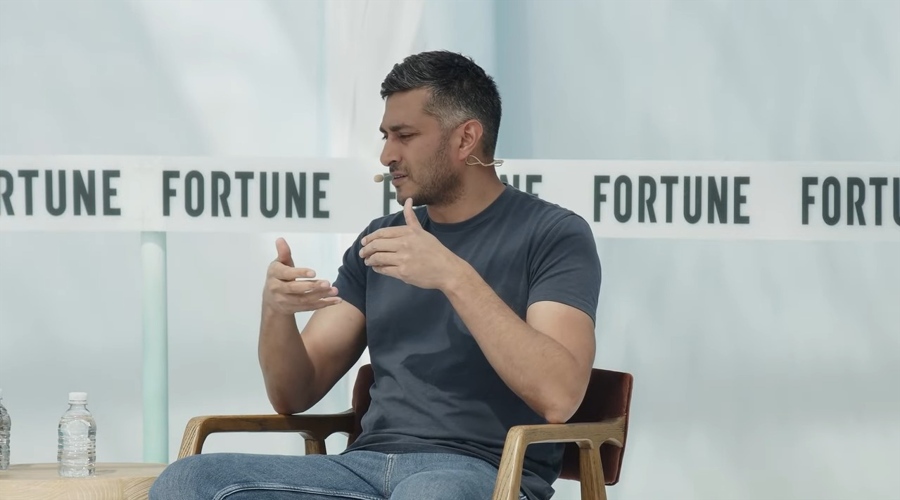
Arjun Sethi, Kraken's Co-CEO, sat down for a fireside chat at Fortune Brainstorm Tech 2025
Kraken's co-chief
executive has drawn a sharp line between his exchange's
tokenized stock business and competitors who offer
digital shares in private companies, calling Robinhood's
approach fundamentally flawed and risky for investors.
Arjun Sethi
rejected the growingly popular idea of tokenizing private company
equity outright, warning that investors face
serious problems when trying to exit such positions.
"The argument
Vlad is using is flawed," Sethi said during Financial Times’
interview, referring to Robinhood CEO Vlad Tenev. He called
tokenizing private company stocks a "terrible idea.”
OpenAI
Offering Sparks Backlash
Robinhood
faced criticism earlier this year when it launched tokenized
representations of OpenAI shares in Europe, despite the
AI company not authorizing the offering. OpenAI
publicly distanced itself from the product,
stating the tokens did not represent actual
company equity and warning that any transfer of
OpenAI ownership requires company approval.
Vlad Tenev, CEO at Robinhood; Photo: Wikimedia Commons
However, Tenev
holds a completely different view and said in a recent interview with
Bloomberg Wealth, “A big tragedy is that private markets are where the bulk of
the interesting appreciation and exposure is nowadays. It’s a shame that it’s
so difficult to get exposure in the U.S.”
Kraken has
taken a more cautious path, restricting its tokenized
equity offerings to established, publicly traded companies to avoid
regulatory pushback. The platform currently offers 60 assets
including Tesla, Apple and GameStop shares, with plans to expand to 1,000
popular stocks.
Public Equity Tokens
Gain Momentum
Sethi’s comments came as the platform's xStocks offering has now surpassed $10 billion in combined
centralized and decentralized transaction volume, including nearly $2 billion
in on-chain activity, just 135 days after its public launch. Moreover, the number doubled from $5 billion reported just 3 weeks ago.
Each
tokenized stock is backed one-to-one by the underlying equity, held
with a regulated custodian
in Europe through the exchange's partnership with
Swiss firm Backed Finance.
"With
xStocks, we're not launching a novelty. We're unlocking something
foundational," Sethi said. "For the first time, people all over
the world can own and use a share of a tokenized stock like they
would use money".
The service
has gained traction in markets like South Africa and Argentina, where
DeFi technology allows Kraken to offer shares without
the additional fees imposed by intermediaries; fees that can inflate stock
purchase prices by 10% to 15% over actual value.
UK Restrictions Block
Platform Access
But
British customers cannot access Kraken's tokenized
stock platform or roughly 75% of
the crypto products available to US users, according to
Sethi, who shares the chief executive role with David
Ripley. The restrictions stem from the Financial Conduct
Authority's financial promotion regime, introduced
in late 2023.
Speaking to
the Financial Times, Sethi compared the experience of visiting a
UK crypto website to encountering cigarette
package warnings. "In the UK today, if you go to any crypto
website, including Kraken's, you
see the equivalent to a cigarette box - 'use this
and you're going to die,'" he said.
The FCA
requirements force crypto platforms to display
prominent risk warnings,
ban incentives for investing, and
make customers complete multiple verification steps before
allowing trades. Sethi argued that the multi-step process hurts
consumers in a market where timing matters.
"Because of
the speed at which they have to do the transaction,
it's worse for consumers," he told the newspaper, adding
that having 14 steps makes disclosures counterproductive.
The remarks come just days after Sethi, representing Kraken, met with British policymakers to discuss the development of digital asset innovation in the UK.
Regulator Stands Firm
The FCA
defended its approach, saying the
rules ensure customers understand both benefits and
risks before investing. A spokesperson noted that while
customers must answer questions before receiving a financial promotion,
they don't face the same requirements for every trade.
"Some
consumers may make an informed decision that investing in crypto
is not right for them - that is our rules working as intended,"
the regulator said.
Britain's
watchdog has stepped
up enforcement of the promotion rules this year. In October,
the FCA
filed a lawsuit against HTX, a crypto exchange connected to
billionaire Justin Sun, accusing the platform of failing to
comply with the financial promotion requirements. Sun has
invested millions in digital asset ventures tied to the Trump
administration.
The global securities regulator, IOSCO, has criticized asset tokenization, citing uncertainty regarding ownership and counterparty risks posed by token issuers.
Kraken's co-chief
executive has drawn a sharp line between his exchange's
tokenized stock business and competitors who offer
digital shares in private companies, calling Robinhood's
approach fundamentally flawed and risky for investors.
Arjun Sethi
rejected the growingly popular idea of tokenizing private company
equity outright, warning that investors face
serious problems when trying to exit such positions.
"The argument
Vlad is using is flawed," Sethi said during Financial Times’
interview, referring to Robinhood CEO Vlad Tenev. He called
tokenizing private company stocks a "terrible idea.”
OpenAI
Offering Sparks Backlash
Robinhood
faced criticism earlier this year when it launched tokenized
representations of OpenAI shares in Europe, despite the
AI company not authorizing the offering. OpenAI
publicly distanced itself from the product,
stating the tokens did not represent actual
company equity and warning that any transfer of
OpenAI ownership requires company approval.
Vlad Tenev, CEO at Robinhood; Photo: Wikimedia Commons
However, Tenev
holds a completely different view and said in a recent interview with
Bloomberg Wealth, “A big tragedy is that private markets are where the bulk of
the interesting appreciation and exposure is nowadays. It’s a shame that it’s
so difficult to get exposure in the U.S.”
Kraken has
taken a more cautious path, restricting its tokenized
equity offerings to established, publicly traded companies to avoid
regulatory pushback. The platform currently offers 60 assets
including Tesla, Apple and GameStop shares, with plans to expand to 1,000
popular stocks.
Public Equity Tokens
Gain Momentum
Sethi’s comments came as the platform's xStocks offering has now surpassed $10 billion in combined
centralized and decentralized transaction volume, including nearly $2 billion
in on-chain activity, just 135 days after its public launch. Moreover, the number doubled from $5 billion reported just 3 weeks ago.
Each
tokenized stock is backed one-to-one by the underlying equity, held
with a regulated custodian
in Europe through the exchange's partnership with
Swiss firm Backed Finance.
"With
xStocks, we're not launching a novelty. We're unlocking something
foundational," Sethi said. "For the first time, people all over
the world can own and use a share of a tokenized stock like they
would use money".
The service
has gained traction in markets like South Africa and Argentina, where
DeFi technology allows Kraken to offer shares without
the additional fees imposed by intermediaries; fees that can inflate stock
purchase prices by 10% to 15% over actual value.
UK Restrictions Block
Platform Access
But
British customers cannot access Kraken's tokenized
stock platform or roughly 75% of
the crypto products available to US users, according to
Sethi, who shares the chief executive role with David
Ripley. The restrictions stem from the Financial Conduct
Authority's financial promotion regime, introduced
in late 2023.
Speaking to
the Financial Times, Sethi compared the experience of visiting a
UK crypto website to encountering cigarette
package warnings. "In the UK today, if you go to any crypto
website, including Kraken's, you
see the equivalent to a cigarette box - 'use this
and you're going to die,'" he said.
The FCA
requirements force crypto platforms to display
prominent risk warnings,
ban incentives for investing, and
make customers complete multiple verification steps before
allowing trades. Sethi argued that the multi-step process hurts
consumers in a market where timing matters.
"Because of
the speed at which they have to do the transaction,
it's worse for consumers," he told the newspaper, adding
that having 14 steps makes disclosures counterproductive.
The remarks come just days after Sethi, representing Kraken, met with British policymakers to discuss the development of digital asset innovation in the UK.
Regulator Stands Firm
The FCA
defended its approach, saying the
rules ensure customers understand both benefits and
risks before investing. A spokesperson noted that while
customers must answer questions before receiving a financial promotion,
they don't face the same requirements for every trade.
"Some
consumers may make an informed decision that investing in crypto
is not right for them - that is our rules working as intended,"
the regulator said.
Britain's
watchdog has stepped
up enforcement of the promotion rules this year. In October,
the FCA
filed a lawsuit against HTX, a crypto exchange connected to
billionaire Justin Sun, accusing the platform of failing to
comply with the financial promotion requirements. Sun has
invested millions in digital asset ventures tied to the Trump
administration.
The global securities regulator, IOSCO, has criticized asset tokenization, citing uncertainty regarding ownership and counterparty risks posed by token issuers.
Damian Chmiel is a Senior Analyst & Editor at Finance Magnates with more than 15 years of experience in the CFD and online trading industry. Active as both a trader and journalist since 2010, he focuses on broker coverage, fintech innovation, and regulatory developments across Europe, the Middle East, and Asia.
His work includes interviews with C-level leaders at major brokerages and fintech platforms, as well as co-authoring Finance Magnates’ quarterly industry benchmarking reports. Damian’s reporting is data-driven, market-aware, and grounded in direct industry engagement. His analysis and commentary have also been cited by external media outlets, including Investing.com, Binance, The Asset, Stockhead, and Dispatch.
Education:
MA in Finance and Accounting, Cracow University of Economics
Retail Traders Can Now Access Prediction Markets Through Binance Wallet
Featured Videos
FP Markets Winner Spotlight 🏆 | Global Broker of the Year 2025 #Trading #Broker #Innovation #Shorts
FP Markets Winner Spotlight 🏆 | Global Broker of the Year 2025 #Trading #Broker #Innovation #Shorts
FP Markets Winner Spotlight 🏆 | Global Broker of the Year 2025 #Trading #Broker #Innovation #Shorts
FP Markets Winner Spotlight 🏆 | Global Broker of the Year 2025 #Trading #Broker #Innovation #Shorts
FP Markets takes the spotlight as Global Broker of the Year 2025 at the Finance Magnates Awards.
Martin Stoilov, Head of Client Experience, shares that trust, innovation, and people played a key role in the company’s success, supported by a strong foundation of integrity and client-centricity.
Following this milestone, FP Markets continues to focus on growth, technology investment, and its core values of transparency and excellence.
👉 Be part of FM Awards 2026: https://awards.financemagnates.com/#nominate
FP Markets takes the spotlight as Global Broker of the Year 2025 at the Finance Magnates Awards.
Martin Stoilov, Head of Client Experience, shares that trust, innovation, and people played a key role in the company’s success, supported by a strong foundation of integrity and client-centricity.
Following this milestone, FP Markets continues to focus on growth, technology investment, and its core values of transparency and excellence.
👉 Be part of FM Awards 2026: https://awards.financemagnates.com/#nominate
FP Markets takes the spotlight as Global Broker of the Year 2025 at the Finance Magnates Awards.
Martin Stoilov, Head of Client Experience, shares that trust, innovation, and people played a key role in the company’s success, supported by a strong foundation of integrity and client-centricity.
Following this milestone, FP Markets continues to focus on growth, technology investment, and its core values of transparency and excellence.
👉 Be part of FM Awards 2026: https://awards.financemagnates.com/#nominate
FP Markets takes the spotlight as Global Broker of the Year 2025 at the Finance Magnates Awards.
Martin Stoilov, Head of Client Experience, shares that trust, innovation, and people played a key role in the company’s success, supported by a strong foundation of integrity and client-centricity.
Following this milestone, FP Markets continues to focus on growth, technology investment, and its core values of transparency and excellence.
👉 Be part of FM Awards 2026: https://awards.financemagnates.com/#nominate
In this video, we review @HolaPrimeMarketsOfficial, a multi-asset forex and CFDs broker offering different account types, trading platforms, and flexible trading conditions.
We cover the broker’s overall offering, including account options, trading environment, platforms like MT4 and MT5, and additional services such as managed accounts and fast withdrawals.
Watch the full video to see if Hola Prime Markets fits your trading needs.
📣 Stay up to date with the latest in finance and trading. Follow Finance Magnates for industry news, insights, and global event coverage.
Connect with us:
🔗 LinkedIn: /financemagnates
👍 Facebook: /financemagnates
📸 Instagram: https://www.instagram.com/financemagnates
🐦 X: https://x.com/financemagnates
🎥 TikTok: https://www.tiktok.com/tag/financemagnates
▶️ YouTube: /@financemagnates_official
#HolaPrime #ForexBroker #CFDTrading #FinanceMagnates #Trading #Forex #BrokerReview
In this video, we review @HolaPrimeMarketsOfficial, a multi-asset forex and CFDs broker offering different account types, trading platforms, and flexible trading conditions.
We cover the broker’s overall offering, including account options, trading environment, platforms like MT4 and MT5, and additional services such as managed accounts and fast withdrawals.
Watch the full video to see if Hola Prime Markets fits your trading needs.
📣 Stay up to date with the latest in finance and trading. Follow Finance Magnates for industry news, insights, and global event coverage.
Connect with us:
🔗 LinkedIn: /financemagnates
👍 Facebook: /financemagnates
📸 Instagram: https://www.instagram.com/financemagnates
🐦 X: https://x.com/financemagnates
🎥 TikTok: https://www.tiktok.com/tag/financemagnates
▶️ YouTube: /@financemagnates_official
#HolaPrime #ForexBroker #CFDTrading #FinanceMagnates #Trading #Forex #BrokerReview
In this video, we review @HolaPrimeMarketsOfficial, a multi-asset forex and CFDs broker offering different account types, trading platforms, and flexible trading conditions.
We cover the broker’s overall offering, including account options, trading environment, platforms like MT4 and MT5, and additional services such as managed accounts and fast withdrawals.
Watch the full video to see if Hola Prime Markets fits your trading needs.
📣 Stay up to date with the latest in finance and trading. Follow Finance Magnates for industry news, insights, and global event coverage.
Connect with us:
🔗 LinkedIn: /financemagnates
👍 Facebook: /financemagnates
📸 Instagram: https://www.instagram.com/financemagnates
🐦 X: https://x.com/financemagnates
🎥 TikTok: https://www.tiktok.com/tag/financemagnates
▶️ YouTube: /@financemagnates_official
#HolaPrime #ForexBroker #CFDTrading #FinanceMagnates #Trading #Forex #BrokerReview
In this video, we review @HolaPrimeMarketsOfficial, a multi-asset forex and CFDs broker offering different account types, trading platforms, and flexible trading conditions.
We cover the broker’s overall offering, including account options, trading environment, platforms like MT4 and MT5, and additional services such as managed accounts and fast withdrawals.
Watch the full video to see if Hola Prime Markets fits your trading needs.
📣 Stay up to date with the latest in finance and trading. Follow Finance Magnates for industry news, insights, and global event coverage.
Connect with us:
🔗 LinkedIn: /financemagnates
👍 Facebook: /financemagnates
📸 Instagram: https://www.instagram.com/financemagnates
🐦 X: https://x.com/financemagnates
🎥 TikTok: https://www.tiktok.com/tag/financemagnates
▶️ YouTube: /@financemagnates_official
#HolaPrime #ForexBroker #CFDTrading #FinanceMagnates #Trading #Forex #BrokerReview
In this video, we review @HolaPrimeMarketsOfficial, a multi-asset forex and CFDs broker offering different account types, trading platforms, and flexible trading conditions.
We cover the broker’s overall offering, including account options, trading environment, platforms like MT4 and MT5, and additional services such as managed accounts and fast withdrawals.
Watch the full video to see if Hola Prime Markets fits your trading needs.
📣 Stay up to date with the latest in finance and trading. Follow Finance Magnates for industry news, insights, and global event coverage.
Connect with us:
🔗 LinkedIn: /financemagnates
👍 Facebook: /financemagnates
📸 Instagram: https://www.instagram.com/financemagnates
🐦 X: https://x.com/financemagnates
🎥 TikTok: https://www.tiktok.com/tag/financemagnates
▶️ YouTube: /@financemagnates_official
#HolaPrime #ForexBroker #CFDTrading #FinanceMagnates #Trading #Forex #BrokerReview
In this video, we review @HolaPrimeMarketsOfficial, a multi-asset forex and CFDs broker offering different account types, trading platforms, and flexible trading conditions.
We cover the broker’s overall offering, including account options, trading environment, platforms like MT4 and MT5, and additional services such as managed accounts and fast withdrawals.
Watch the full video to see if Hola Prime Markets fits your trading needs.
📣 Stay up to date with the latest in finance and trading. Follow Finance Magnates for industry news, insights, and global event coverage.
Connect with us:
🔗 LinkedIn: /financemagnates
👍 Facebook: /financemagnates
📸 Instagram: https://www.instagram.com/financemagnates
🐦 X: https://x.com/financemagnates
🎥 TikTok: https://www.tiktok.com/tag/financemagnates
▶️ YouTube: /@financemagnates_official
#HolaPrime #ForexBroker #CFDTrading #FinanceMagnates #Trading #Forex #BrokerReview
Hola Prime Review: What You Need to Know | Full Breakdown by Finance Magnates
Hola Prime Review: What You Need to Know | Full Breakdown by Finance Magnates
Hola Prime Review: What You Need to Know | Full Breakdown by Finance Magnates
Hola Prime Review: What You Need to Know | Full Breakdown by Finance Magnates
Hola Prime Review: What You Need to Know | Full Breakdown by Finance Magnates
Hola Prime Review: What You Need to Know | Full Breakdown by Finance Magnates
In this video, we review @HolaPrime_Global, a proprietary trading firm offering evaluation programs and performance-based payouts in simulated market environments.
We cover how the challenge model works, including account types, profit splits (up to 95%), trading rules, and what it takes to reach a funded account. You’ll also learn about available platforms like MT4, MT5, cTrader, and more, along with insights into payouts, support, and trading conditions.
Watch the full video to see if Hola Prime fits your trading style.
📣 Stay up to date with the latest in finance and trading. Follow Finance Magnates for industry news, insights, and global event coverage.
Connect with us:
🔗 LinkedIn: /financemagnates
👍 Facebook: /financemagnates
📸 Instagram: https://www.instagram.com/financemagnates
🐦 X: https://x.com/financemagnates
🎥 TikTok: https://www.tiktok.com/tag/financemagnates
▶️ YouTube: /@financemagnates_official
#HolaPrime #PropFirm #Trading #FinanceMagnates #Forex #FuturesTrading #TradingReview #PropFirmReview
In this video, we review @HolaPrime_Global, a proprietary trading firm offering evaluation programs and performance-based payouts in simulated market environments.
We cover how the challenge model works, including account types, profit splits (up to 95%), trading rules, and what it takes to reach a funded account. You’ll also learn about available platforms like MT4, MT5, cTrader, and more, along with insights into payouts, support, and trading conditions.
Watch the full video to see if Hola Prime fits your trading style.
📣 Stay up to date with the latest in finance and trading. Follow Finance Magnates for industry news, insights, and global event coverage.
Connect with us:
🔗 LinkedIn: /financemagnates
👍 Facebook: /financemagnates
📸 Instagram: https://www.instagram.com/financemagnates
🐦 X: https://x.com/financemagnates
🎥 TikTok: https://www.tiktok.com/tag/financemagnates
▶️ YouTube: /@financemagnates_official
#HolaPrime #PropFirm #Trading #FinanceMagnates #Forex #FuturesTrading #TradingReview #PropFirmReview
In this video, we review @HolaPrime_Global, a proprietary trading firm offering evaluation programs and performance-based payouts in simulated market environments.
We cover how the challenge model works, including account types, profit splits (up to 95%), trading rules, and what it takes to reach a funded account. You’ll also learn about available platforms like MT4, MT5, cTrader, and more, along with insights into payouts, support, and trading conditions.
Watch the full video to see if Hola Prime fits your trading style.
📣 Stay up to date with the latest in finance and trading. Follow Finance Magnates for industry news, insights, and global event coverage.
Connect with us:
🔗 LinkedIn: /financemagnates
👍 Facebook: /financemagnates
📸 Instagram: https://www.instagram.com/financemagnates
🐦 X: https://x.com/financemagnates
🎥 TikTok: https://www.tiktok.com/tag/financemagnates
▶️ YouTube: /@financemagnates_official
#HolaPrime #PropFirm #Trading #FinanceMagnates #Forex #FuturesTrading #TradingReview #PropFirmReview
In this video, we review @HolaPrime_Global, a proprietary trading firm offering evaluation programs and performance-based payouts in simulated market environments.
We cover how the challenge model works, including account types, profit splits (up to 95%), trading rules, and what it takes to reach a funded account. You’ll also learn about available platforms like MT4, MT5, cTrader, and more, along with insights into payouts, support, and trading conditions.
Watch the full video to see if Hola Prime fits your trading style.
📣 Stay up to date with the latest in finance and trading. Follow Finance Magnates for industry news, insights, and global event coverage.
Connect with us:
🔗 LinkedIn: /financemagnates
👍 Facebook: /financemagnates
📸 Instagram: https://www.instagram.com/financemagnates
🐦 X: https://x.com/financemagnates
🎥 TikTok: https://www.tiktok.com/tag/financemagnates
▶️ YouTube: /@financemagnates_official
#HolaPrime #PropFirm #Trading #FinanceMagnates #Forex #FuturesTrading #TradingReview #PropFirmReview
In this video, we review @HolaPrime_Global, a proprietary trading firm offering evaluation programs and performance-based payouts in simulated market environments.
We cover how the challenge model works, including account types, profit splits (up to 95%), trading rules, and what it takes to reach a funded account. You’ll also learn about available platforms like MT4, MT5, cTrader, and more, along with insights into payouts, support, and trading conditions.
Watch the full video to see if Hola Prime fits your trading style.
📣 Stay up to date with the latest in finance and trading. Follow Finance Magnates for industry news, insights, and global event coverage.
Connect with us:
🔗 LinkedIn: /financemagnates
👍 Facebook: /financemagnates
📸 Instagram: https://www.instagram.com/financemagnates
🐦 X: https://x.com/financemagnates
🎥 TikTok: https://www.tiktok.com/tag/financemagnates
▶️ YouTube: /@financemagnates_official
#HolaPrime #PropFirm #Trading #FinanceMagnates #Forex #FuturesTrading #TradingReview #PropFirmReview
In this video, we review @HolaPrime_Global, a proprietary trading firm offering evaluation programs and performance-based payouts in simulated market environments.
We cover how the challenge model works, including account types, profit splits (up to 95%), trading rules, and what it takes to reach a funded account. You’ll also learn about available platforms like MT4, MT5, cTrader, and more, along with insights into payouts, support, and trading conditions.
Watch the full video to see if Hola Prime fits your trading style.
📣 Stay up to date with the latest in finance and trading. Follow Finance Magnates for industry news, insights, and global event coverage.
Connect with us:
🔗 LinkedIn: /financemagnates
👍 Facebook: /financemagnates
📸 Instagram: https://www.instagram.com/financemagnates
🐦 X: https://x.com/financemagnates
🎥 TikTok: https://www.tiktok.com/tag/financemagnates
▶️ YouTube: /@financemagnates_official
#HolaPrime #PropFirm #Trading #FinanceMagnates #Forex #FuturesTrading #TradingReview #PropFirmReview
Axi Winner Spotlight 🏆 | Global Most Innovative Broker 2025 #Innovation #Trading #Fintech #Broker
Axi Winner Spotlight 🏆 | Global Most Innovative Broker 2025 #Innovation #Trading #Fintech #Broker
Axi Winner Spotlight 🏆 | Global Most Innovative Broker 2025 #Innovation #Trading #Fintech #Broker
Axi Winner Spotlight 🏆 | Global Most Innovative Broker 2025 #Innovation #Trading #Fintech #Broker
Axi Winner Spotlight 🏆 | Global Most Innovative Broker 2025 #Innovation #Trading #Fintech #Broker
Axi Winner Spotlight 🏆 | Global Most Innovative Broker 2025 #Innovation #Trading #Fintech #Broker
Axi takes the spotlight at the Finance Magnates Awards, winning Global Most Innovative Broker 2025.
Olivia Xenofontos and Ivanna Openko share how the team will feel: proud, motivated, and ready to keep delivering.
They also describe the night as well-organized, focused, and enjoyable for all.
👉 Be part of FM Awards 2026.
Axi takes the spotlight at the Finance Magnates Awards, winning Global Most Innovative Broker 2025.
Olivia Xenofontos and Ivanna Openko share how the team will feel: proud, motivated, and ready to keep delivering.
They also describe the night as well-organized, focused, and enjoyable for all.
👉 Be part of FM Awards 2026.
Axi takes the spotlight at the Finance Magnates Awards, winning Global Most Innovative Broker 2025.
Olivia Xenofontos and Ivanna Openko share how the team will feel: proud, motivated, and ready to keep delivering.
They also describe the night as well-organized, focused, and enjoyable for all.
👉 Be part of FM Awards 2026.
Axi takes the spotlight at the Finance Magnates Awards, winning Global Most Innovative Broker 2025.
Olivia Xenofontos and Ivanna Openko share how the team will feel: proud, motivated, and ready to keep delivering.
They also describe the night as well-organized, focused, and enjoyable for all.
👉 Be part of FM Awards 2026.
Axi takes the spotlight at the Finance Magnates Awards, winning Global Most Innovative Broker 2025.
Olivia Xenofontos and Ivanna Openko share how the team will feel: proud, motivated, and ready to keep delivering.
They also describe the night as well-organized, focused, and enjoyable for all.
👉 Be part of FM Awards 2026.
Axi takes the spotlight at the Finance Magnates Awards, winning Global Most Innovative Broker 2025.
Olivia Xenofontos and Ivanna Openko share how the team will feel: proud, motivated, and ready to keep delivering.
They also describe the night as well-organized, focused, and enjoyable for all.
👉 Be part of FM Awards 2026.
Recognition that matters.
Built on transparency.
Driven by the industry.
The Finance Magnates Awards 2026.
Nominations are now open.
🔗 https://awards.financemagnates.com/?utm_source=SM&utm_medium=social&utm_campaign=recognition-matters
Recognition that matters.
Built on transparency.
Driven by the industry.
The Finance Magnates Awards 2026.
Nominations are now open.
🔗 https://awards.financemagnates.com/?utm_source=SM&utm_medium=social&utm_campaign=recognition-matters
Recognition that matters.
Built on transparency.
Driven by the industry.
The Finance Magnates Awards 2026.
Nominations are now open.
🔗 https://awards.financemagnates.com/?utm_source=SM&utm_medium=social&utm_campaign=recognition-matters
Recognition that matters.
Built on transparency.
Driven by the industry.
The Finance Magnates Awards 2026.
Nominations are now open.
🔗 https://awards.financemagnates.com/?utm_source=SM&utm_medium=social&utm_campaign=recognition-matters
Recognition that matters.
Built on transparency.
Driven by the industry.
The Finance Magnates Awards 2026.
Nominations are now open.
🔗 https://awards.financemagnates.com/?utm_source=SM&utm_medium=social&utm_campaign=recognition-matters
Recognition that matters.
Built on transparency.
Driven by the industry.
The Finance Magnates Awards 2026.
Nominations are now open.
🔗 https://awards.financemagnates.com/?utm_source=SM&utm_medium=social&utm_campaign=recognition-matters