>
Japanese FSA Releases Letter to US Secretary of Treasury on Cross Border OTC Derivatives Reform
Japanese FSA Releases Letter to US Secretary of Treasury on Cross Border OTC Derivatives Reform
Sunday,21/04/2013|07:08GMTby
Andrew Saks McLeod
Japanese regulator the Financial Services Agency has issued a ministerial-level letter to the US Secretary of Treasury Jacob J. Lew, signed by nine senior government officials from other countries in agreement with the proposals being discussed internationally regarding principles and methods relating to reformation of cross-border OTC derivatives.
Along with the Japanese FSA, the letter included the signatures of:
Guido Mantega, Minister of Finance for Brazil
Pierre Moscovici, Minister of Finance for France
Taro Aso, Deputy Prime Minister and Minister of Finance, Minister of State for Financial Services for Japan
Michel Barnier, Commissioner for Internal Market and Services for the European Commission
Wolfgang Schauble, Minister of Finance for Germany
Anton Siluanov, Minister of Finance for Russia
Pravin Gordhan, Minister of Finance for South Africa
Eveline Widmer-Schlumpf, Minister of Finance for Switzerland
George Osborne, Chancellor of the Exchequer for the United Kingdom
The letter was copied to:
Chairman of the FSB
The Chairman of the CFTC
The Chairman of the SEC
The Chairman of the US Senate Committee on Agriculture, Nutrition and Forestry
The Chairman of the US House of Representatives Committee on Agriculture
International Co-operation
Although issued by the Japanese FSA, the letter was written collectively and represents the proposals of these nine government officials.
It was highlighted to the US Secretary of Treasury that such officials are already starting to see evidence of fragmentation in this vitally important financial market, as a result of lack of regulatory coordination. The letter expressed concern that without clear direction from global policymakers and regulators, derivatives markets will recede into localized and less efficient structures, impairing the ability of business across the globe to manage risk.
There is common agreement on the basic principles on which cross-border rules should be based are clear and widely shared.
An approach in which jurisdictions require that their own domestic regulatory rules be applied to their firms’ derivatives transactions taking place in broadly equivalent regulatory regimes abroad is considered by these government officials as being unsustainable. Market places where firms from all our respective jurisdictions can come together and do business will not be able to function under such burdensome regulatory conditions.
Recent experience shows that these discussions can only proceed if they are based on a shared understanding of the overall outcome being sought. For this reason, we are writing to urge that jurisdictions consider carefully the attached principles to avoid cross-border conflicts and support the Pittsburgh G20 reforms. We hope that these principles might provide a useful foundation for regulatory discussions to make progress.
The intended result of this dialog is that authorities work together to achieve an outcome that meets the principles outlined in the letter.
The principles for consideration are:
Core Principles
1. Cross border rules should be adopted that, if they were replicated by all other jurisdictions, would not result in duplicative or conflicting requirements, or regulatory gaps.
2. This should be achieved through substituted compliance or equivalence arrangements. These will provide regulatory recognition of our mutual efforts to put in place measures to deliver the 2009 Pittsburgh commitments on OTC derivatives. The arrangements will be without prejudice to the right to withhold equivalence or substituted compliance arrangements where regulatory reforms are materially different in outcome.
Substituted compliance is a critical component of these principles and the basis for applying substituted compliance is outlined further below.
Substituted Compliance
Properly regulated cross-jurisdictional derivatives trading is an essential part of an efficient global financial market. The simultaneous application of multiple rules to cross-border activity will result in conflicting, inconsistent or duplicative requirements on market participants, which could be a real barrier to such trading. Where two jurisdictions each have rules which ensure equivalent regulatory outcomes are achieved, requiring a cross-border trade to comply simultaneously with both sets of rules is disruptive, costly and unnecessary.
It also runs the risk of encouraging market fragmentation, as participants are deterred from transacting cross-border. We therefore cannot see a workable regime functioning without a comprehensive global commitment to the principle of substituted compliance, including:
Full scope: Substituted compliance should be available to all market participants for all transaction-level rules and for all entity-level rules where these are applied to legal entities established outside the jurisdiction.
Jurisdiction-level assessment: Access to substituted compliance should be determined on the basis of an objective assessment of equivalence at the jurisdictional level. Where the rules in a foreign jurisdiction have been assessed as equivalent by the home authority, substituted compliance must be available in all circumstances for transactions with, and entities established in, that foreign jurisdiction. There should be no requirement for individual firms to apply for substituted compliance relief.
Outcomes-based approach to equivalence assessment: Differences in national legal regimes and market customs make it unfeasible to achieve identical regulatory frameworks. As such, when assessing equivalence, it will be vital to assess whether the outcome delivered by the rules is equivalent in terms of the protections provided, and not to seek a precise rule-by-rule match up. International standards are key to facilitating the establishment of equivalence between different jurisdictions; international standards should be used as an essential element in assessing equivalence wherever possible.
Regulators should remain vigilant to risks of regulatory arbitrage and be willing to agree more granular international standards where necessary to achieve a consistent implementation.
Registration Requirements
It is regarded by the issuers of the letter that imposition of registration requirements on foreign firms as an unnecessary additional burden. They accept that this approach has already been adopted in some jurisdictions, and do not believe that it will prevent the regulatory outcome envisaged by the G20 in 2009, provided it is accompanied by a full substituted compliance regime applied to those firms. However, a view is held that as a principle, local regulations should not be extended beyond national borders. The issuers expect any deviations from this principle to be narrow, and to exist only where there is a clear and specific justification (for example, this may notably be the case for clearing-houses (CCPs) offering their services in another jurisdiction).
Timing
Alongside an effective framework for substituted compliance, there should also be appropriate transitional measures and a reasonable transition period for foreign entities. Particularly in areas where international negotiations are ongoing, these will help address firms’ difficulties in complying with cross-border rules, and ensure a smooth transition to the new framework of global standards.
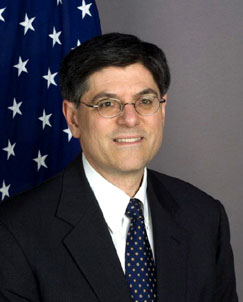
US Secretary of Treasury Jacob J Lew
Regulatory cooperation and access to data Access of regulators to trade repository data should be governed by the draft CPSS-IOSCO principles on this issue, to ensure that mutual access to data can be assured as soon as possible. Regulators should be able to access such information from the trade repository directly, in accordance with agreements among regulators, rather than requesting data indirectly via another regulator.
The issuance of this letter demonstrates an international requirement by the countries involved to standardize the means by which OTC derivatives are regulated, to ensure a global unification.
Japanese regulator the Financial Services Agency has issued a ministerial-level letter to the US Secretary of Treasury Jacob J. Lew, signed by nine senior government officials from other countries in agreement with the proposals being discussed internationally regarding principles and methods relating to reformation of cross-border OTC derivatives.
Along with the Japanese FSA, the letter included the signatures of:
Guido Mantega, Minister of Finance for Brazil
Pierre Moscovici, Minister of Finance for France
Taro Aso, Deputy Prime Minister and Minister of Finance, Minister of State for Financial Services for Japan
Michel Barnier, Commissioner for Internal Market and Services for the European Commission
Wolfgang Schauble, Minister of Finance for Germany
Anton Siluanov, Minister of Finance for Russia
Pravin Gordhan, Minister of Finance for South Africa
Eveline Widmer-Schlumpf, Minister of Finance for Switzerland
George Osborne, Chancellor of the Exchequer for the United Kingdom
The letter was copied to:
Chairman of the FSB
The Chairman of the CFTC
The Chairman of the SEC
The Chairman of the US Senate Committee on Agriculture, Nutrition and Forestry
The Chairman of the US House of Representatives Committee on Agriculture
International Co-operation
Although issued by the Japanese FSA, the letter was written collectively and represents the proposals of these nine government officials.
It was highlighted to the US Secretary of Treasury that such officials are already starting to see evidence of fragmentation in this vitally important financial market, as a result of lack of regulatory coordination. The letter expressed concern that without clear direction from global policymakers and regulators, derivatives markets will recede into localized and less efficient structures, impairing the ability of business across the globe to manage risk.
There is common agreement on the basic principles on which cross-border rules should be based are clear and widely shared.
An approach in which jurisdictions require that their own domestic regulatory rules be applied to their firms’ derivatives transactions taking place in broadly equivalent regulatory regimes abroad is considered by these government officials as being unsustainable. Market places where firms from all our respective jurisdictions can come together and do business will not be able to function under such burdensome regulatory conditions.
Recent experience shows that these discussions can only proceed if they are based on a shared understanding of the overall outcome being sought. For this reason, we are writing to urge that jurisdictions consider carefully the attached principles to avoid cross-border conflicts and support the Pittsburgh G20 reforms. We hope that these principles might provide a useful foundation for regulatory discussions to make progress.
The intended result of this dialog is that authorities work together to achieve an outcome that meets the principles outlined in the letter.
The principles for consideration are:
Core Principles
1. Cross border rules should be adopted that, if they were replicated by all other jurisdictions, would not result in duplicative or conflicting requirements, or regulatory gaps.
2. This should be achieved through substituted compliance or equivalence arrangements. These will provide regulatory recognition of our mutual efforts to put in place measures to deliver the 2009 Pittsburgh commitments on OTC derivatives. The arrangements will be without prejudice to the right to withhold equivalence or substituted compliance arrangements where regulatory reforms are materially different in outcome.
Substituted compliance is a critical component of these principles and the basis for applying substituted compliance is outlined further below.
Substituted Compliance
Properly regulated cross-jurisdictional derivatives trading is an essential part of an efficient global financial market. The simultaneous application of multiple rules to cross-border activity will result in conflicting, inconsistent or duplicative requirements on market participants, which could be a real barrier to such trading. Where two jurisdictions each have rules which ensure equivalent regulatory outcomes are achieved, requiring a cross-border trade to comply simultaneously with both sets of rules is disruptive, costly and unnecessary.
It also runs the risk of encouraging market fragmentation, as participants are deterred from transacting cross-border. We therefore cannot see a workable regime functioning without a comprehensive global commitment to the principle of substituted compliance, including:
Full scope: Substituted compliance should be available to all market participants for all transaction-level rules and for all entity-level rules where these are applied to legal entities established outside the jurisdiction.
Jurisdiction-level assessment: Access to substituted compliance should be determined on the basis of an objective assessment of equivalence at the jurisdictional level. Where the rules in a foreign jurisdiction have been assessed as equivalent by the home authority, substituted compliance must be available in all circumstances for transactions with, and entities established in, that foreign jurisdiction. There should be no requirement for individual firms to apply for substituted compliance relief.
Outcomes-based approach to equivalence assessment: Differences in national legal regimes and market customs make it unfeasible to achieve identical regulatory frameworks. As such, when assessing equivalence, it will be vital to assess whether the outcome delivered by the rules is equivalent in terms of the protections provided, and not to seek a precise rule-by-rule match up. International standards are key to facilitating the establishment of equivalence between different jurisdictions; international standards should be used as an essential element in assessing equivalence wherever possible.
Regulators should remain vigilant to risks of regulatory arbitrage and be willing to agree more granular international standards where necessary to achieve a consistent implementation.
Registration Requirements
It is regarded by the issuers of the letter that imposition of registration requirements on foreign firms as an unnecessary additional burden. They accept that this approach has already been adopted in some jurisdictions, and do not believe that it will prevent the regulatory outcome envisaged by the G20 in 2009, provided it is accompanied by a full substituted compliance regime applied to those firms. However, a view is held that as a principle, local regulations should not be extended beyond national borders. The issuers expect any deviations from this principle to be narrow, and to exist only where there is a clear and specific justification (for example, this may notably be the case for clearing-houses (CCPs) offering their services in another jurisdiction).
Timing
Alongside an effective framework for substituted compliance, there should also be appropriate transitional measures and a reasonable transition period for foreign entities. Particularly in areas where international negotiations are ongoing, these will help address firms’ difficulties in complying with cross-border rules, and ensure a smooth transition to the new framework of global standards.
US Secretary of Treasury Jacob J Lew
Regulatory cooperation and access to data Access of regulators to trade repository data should be governed by the draft CPSS-IOSCO principles on this issue, to ensure that mutual access to data can be assured as soon as possible. Regulators should be able to access such information from the trade repository directly, in accordance with agreements among regulators, rather than requesting data indirectly via another regulator.
The issuance of this letter demonstrates an international requirement by the countries involved to standardize the means by which OTC derivatives are regulated, to ensure a global unification.
Most Axi Clients Now Trade on MetaTrader 5 as Broker Rolls Out MetaQuotes' Order Engine
Featured Videos
AvaTrade to Acquire Most of FXCM; NAGA Raises $8M
AvaTrade to Acquire Most of FXCM; NAGA Raises $8M
AvaTrade to Acquire Most of FXCM; NAGA Raises $8M
AvaTrade to Acquire Most of FXCM; NAGA Raises $8M
Today’s financial news recap covers AvaTrade agrees to acquire most of FXCM, NAGA secures eight million dollars in new financing, and Wise seeks a tax settlement in the UK.
Finance Magnates Daily Recap brings you the latest news from forex and CFD brokers, fintech, payments, cryptocurrency, digital assets, trading platforms, financial regulation and global markets.
Get the key company news, executive moves, deals, regulatory updates and market developments of the day, in just a few minutes. New episodes published every weekday.
Read more: https://www.financemagnates.com
#FinanceMagnates #ForexNews #FintechNews
Today’s financial news recap covers AvaTrade agrees to acquire most of FXCM, NAGA secures eight million dollars in new financing, and Wise seeks a tax settlement in the UK.
Finance Magnates Daily Recap brings you the latest news from forex and CFD brokers, fintech, payments, cryptocurrency, digital assets, trading platforms, financial regulation and global markets.
Get the key company news, executive moves, deals, regulatory updates and market developments of the day, in just a few minutes. New episodes published every weekday.
Read more: https://www.financemagnates.com
#FinanceMagnates #ForexNews #FintechNews
Today’s financial news recap covers AvaTrade agrees to acquire most of FXCM, NAGA secures eight million dollars in new financing, and Wise seeks a tax settlement in the UK.
Finance Magnates Daily Recap brings you the latest news from forex and CFD brokers, fintech, payments, cryptocurrency, digital assets, trading platforms, financial regulation and global markets.
Get the key company news, executive moves, deals, regulatory updates and market developments of the day, in just a few minutes. New episodes published every weekday.
Read more: https://www.financemagnates.com
#FinanceMagnates #ForexNews #FintechNews
Today’s financial news recap covers AvaTrade agrees to acquire most of FXCM, NAGA secures eight million dollars in new financing, and Wise seeks a tax settlement in the UK.
Finance Magnates Daily Recap brings you the latest news from forex and CFD brokers, fintech, payments, cryptocurrency, digital assets, trading platforms, financial regulation and global markets.
Get the key company news, executive moves, deals, regulatory updates and market developments of the day, in just a few minutes. New episodes published every weekday.
Read more: https://www.financemagnates.com
#FinanceMagnates #ForexNews #FintechNews
XTB Adds Overnight US Stock Trading; Nasdaq Ventures Invests in One Trading
XTB Adds Overnight US Stock Trading; Nasdaq Ventures Invests in One Trading
XTB Adds Overnight US Stock Trading; Nasdaq Ventures Invests in One Trading
XTB Adds Overnight US Stock Trading; Nasdaq Ventures Invests in One Trading
XTB Adds Overnight US Stock Trading; Nasdaq Ventures Invests in One Trading
XTB Adds Overnight US Stock Trading; Nasdaq Ventures Invests in One Trading
Today’s financial news recap covers XTB expands overnight US stock trading, Fortrade reports higher revenue, Nasdaq backs One Trading, and Vest Labs raises 13 million dollars.
Finance Magnates Daily Recap brings you the latest news from forex and CFD brokers, fintech, payments, cryptocurrency, digital assets, trading platforms, financial regulation and global markets.
Get the key company news, executive moves, deals, regulatory updates and market developments of the day, in just a few minutes. New episodes published every weekday.
Read more: https://www.financemagnates.com
#FinanceMagnates #ForexNews #FintechNews
Today’s financial news recap covers XTB expands overnight US stock trading, Fortrade reports higher revenue, Nasdaq backs One Trading, and Vest Labs raises 13 million dollars.
Finance Magnates Daily Recap brings you the latest news from forex and CFD brokers, fintech, payments, cryptocurrency, digital assets, trading platforms, financial regulation and global markets.
Get the key company news, executive moves, deals, regulatory updates and market developments of the day, in just a few minutes. New episodes published every weekday.
Read more: https://www.financemagnates.com
#FinanceMagnates #ForexNews #FintechNews
Today’s financial news recap covers XTB expands overnight US stock trading, Fortrade reports higher revenue, Nasdaq backs One Trading, and Vest Labs raises 13 million dollars.
Finance Magnates Daily Recap brings you the latest news from forex and CFD brokers, fintech, payments, cryptocurrency, digital assets, trading platforms, financial regulation and global markets.
Get the key company news, executive moves, deals, regulatory updates and market developments of the day, in just a few minutes. New episodes published every weekday.
Read more: https://www.financemagnates.com
#FinanceMagnates #ForexNews #FintechNews
Today’s financial news recap covers XTB expands overnight US stock trading, Fortrade reports higher revenue, Nasdaq backs One Trading, and Vest Labs raises 13 million dollars.
Finance Magnates Daily Recap brings you the latest news from forex and CFD brokers, fintech, payments, cryptocurrency, digital assets, trading platforms, financial regulation and global markets.
Get the key company news, executive moves, deals, regulatory updates and market developments of the day, in just a few minutes. New episodes published every weekday.
Read more: https://www.financemagnates.com
#FinanceMagnates #ForexNews #FintechNews
Today’s financial news recap covers XTB expands overnight US stock trading, Fortrade reports higher revenue, Nasdaq backs One Trading, and Vest Labs raises 13 million dollars.
Finance Magnates Daily Recap brings you the latest news from forex and CFD brokers, fintech, payments, cryptocurrency, digital assets, trading platforms, financial regulation and global markets.
Get the key company news, executive moves, deals, regulatory updates and market developments of the day, in just a few minutes. New episodes published every weekday.
Read more: https://www.financemagnates.com
#FinanceMagnates #ForexNews #FintechNews
Today’s financial news recap covers XTB expands overnight US stock trading, Fortrade reports higher revenue, Nasdaq backs One Trading, and Vest Labs raises 13 million dollars.
Finance Magnates Daily Recap brings you the latest news from forex and CFD brokers, fintech, payments, cryptocurrency, digital assets, trading platforms, financial regulation and global markets.
Get the key company news, executive moves, deals, regulatory updates and market developments of the day, in just a few minutes. New episodes published every weekday.
Read more: https://www.financemagnates.com
#FinanceMagnates #ForexNews #FintechNews
CMC Founder Downplays Volatility Hit; Devexperts Names CEO
CMC Founder Downplays Volatility Hit; Devexperts Names CEO
CMC Founder Downplays Volatility Hit; Devexperts Names CEO
CMC Founder Downplays Volatility Hit; Devexperts Names CEO
CMC Founder Downplays Volatility Hit; Devexperts Names CEO
CMC Founder Downplays Volatility Hit; Devexperts Names CEO
Today’s financial news recap covers low volatility pressures brokers, Devexperts names a new CEO, Saxo cuts onboarding time, and OKX reaches a 25 billion dollar valuation.
Finance Magnates Daily Recap brings you the latest news from forex and CFD brokers, fintech, payments, cryptocurrency, digital assets, trading platforms, financial regulation and global markets.
Get the key company news, executive moves, deals, regulatory updates and market developments of the day, in just a few minutes. New episodes published every weekday.
Read more: https://www.financemagnates.com
#FinanceMagnates #ForexNews #FintechNews
Today’s financial news recap covers low volatility pressures brokers, Devexperts names a new CEO, Saxo cuts onboarding time, and OKX reaches a 25 billion dollar valuation.
Finance Magnates Daily Recap brings you the latest news from forex and CFD brokers, fintech, payments, cryptocurrency, digital assets, trading platforms, financial regulation and global markets.
Get the key company news, executive moves, deals, regulatory updates and market developments of the day, in just a few minutes. New episodes published every weekday.
Read more: https://www.financemagnates.com
#FinanceMagnates #ForexNews #FintechNews
Today’s financial news recap covers low volatility pressures brokers, Devexperts names a new CEO, Saxo cuts onboarding time, and OKX reaches a 25 billion dollar valuation.
Finance Magnates Daily Recap brings you the latest news from forex and CFD brokers, fintech, payments, cryptocurrency, digital assets, trading platforms, financial regulation and global markets.
Get the key company news, executive moves, deals, regulatory updates and market developments of the day, in just a few minutes. New episodes published every weekday.
Read more: https://www.financemagnates.com
#FinanceMagnates #ForexNews #FintechNews
Today’s financial news recap covers low volatility pressures brokers, Devexperts names a new CEO, Saxo cuts onboarding time, and OKX reaches a 25 billion dollar valuation.
Finance Magnates Daily Recap brings you the latest news from forex and CFD brokers, fintech, payments, cryptocurrency, digital assets, trading platforms, financial regulation and global markets.
Get the key company news, executive moves, deals, regulatory updates and market developments of the day, in just a few minutes. New episodes published every weekday.
Read more: https://www.financemagnates.com
#FinanceMagnates #ForexNews #FintechNews
Today’s financial news recap covers low volatility pressures brokers, Devexperts names a new CEO, Saxo cuts onboarding time, and OKX reaches a 25 billion dollar valuation.
Finance Magnates Daily Recap brings you the latest news from forex and CFD brokers, fintech, payments, cryptocurrency, digital assets, trading platforms, financial regulation and global markets.
Get the key company news, executive moves, deals, regulatory updates and market developments of the day, in just a few minutes. New episodes published every weekday.
Read more: https://www.financemagnates.com
#FinanceMagnates #ForexNews #FintechNews
Today’s financial news recap covers low volatility pressures brokers, Devexperts names a new CEO, Saxo cuts onboarding time, and OKX reaches a 25 billion dollar valuation.
Finance Magnates Daily Recap brings you the latest news from forex and CFD brokers, fintech, payments, cryptocurrency, digital assets, trading platforms, financial regulation and global markets.
Get the key company news, executive moves, deals, regulatory updates and market developments of the day, in just a few minutes. New episodes published every weekday.
Read more: https://www.financemagnates.com
#FinanceMagnates #ForexNews #FintechNews
Today’s financial news recap covers Trade Nation buys FXCM's UK client book, Trading 212 reports higher revenue, the CFTC's move to allow perpetual index futures.
Finance Magnates Daily Recap brings you the latest news from forex and CFD brokers, fintech, payments, cryptocurrency, digital assets, trading platforms, financial regulation and global markets.
Get the key company news, executive moves, deals, regulatory updates and market developments of the day, in just a few minutes. New episodes published every weekday.
Read more: https://www.financemagnates.com
#FinanceMagnates #ForexNews #FintechNews
Today’s financial news recap covers Trade Nation buys FXCM's UK client book, Trading 212 reports higher revenue, the CFTC's move to allow perpetual index futures.
Finance Magnates Daily Recap brings you the latest news from forex and CFD brokers, fintech, payments, cryptocurrency, digital assets, trading platforms, financial regulation and global markets.
Get the key company news, executive moves, deals, regulatory updates and market developments of the day, in just a few minutes. New episodes published every weekday.
Read more: https://www.financemagnates.com
#FinanceMagnates #ForexNews #FintechNews
Today’s financial news recap covers Trade Nation buys FXCM's UK client book, Trading 212 reports higher revenue, the CFTC's move to allow perpetual index futures.
Finance Magnates Daily Recap brings you the latest news from forex and CFD brokers, fintech, payments, cryptocurrency, digital assets, trading platforms, financial regulation and global markets.
Get the key company news, executive moves, deals, regulatory updates and market developments of the day, in just a few minutes. New episodes published every weekday.
Read more: https://www.financemagnates.com
#FinanceMagnates #ForexNews #FintechNews
Today’s financial news recap covers Trade Nation buys FXCM's UK client book, Trading 212 reports higher revenue, the CFTC's move to allow perpetual index futures.
Finance Magnates Daily Recap brings you the latest news from forex and CFD brokers, fintech, payments, cryptocurrency, digital assets, trading platforms, financial regulation and global markets.
Get the key company news, executive moves, deals, regulatory updates and market developments of the day, in just a few minutes. New episodes published every weekday.
Read more: https://www.financemagnates.com
#FinanceMagnates #ForexNews #FintechNews
Today’s financial news recap covers Trade Nation buys FXCM's UK client book, Trading 212 reports higher revenue, the CFTC's move to allow perpetual index futures.
Finance Magnates Daily Recap brings you the latest news from forex and CFD brokers, fintech, payments, cryptocurrency, digital assets, trading platforms, financial regulation and global markets.
Get the key company news, executive moves, deals, regulatory updates and market developments of the day, in just a few minutes. New episodes published every weekday.
Read more: https://www.financemagnates.com
#FinanceMagnates #ForexNews #FintechNews
Today’s financial news recap covers Trade Nation buys FXCM's UK client book, Trading 212 reports higher revenue, the CFTC's move to allow perpetual index futures.
Finance Magnates Daily Recap brings you the latest news from forex and CFD brokers, fintech, payments, cryptocurrency, digital assets, trading platforms, financial regulation and global markets.
Get the key company news, executive moves, deals, regulatory updates and market developments of the day, in just a few minutes. New episodes published every weekday.
Read more: https://www.financemagnates.com
#FinanceMagnates #ForexNews #FintechNews
Your career isn’t a linear path.
Your career isn’t a linear path.
Your career isn’t a linear path.
Your career isn’t a linear path.
Your career isn’t a linear path.
Your career isn’t a linear path.
Roles change. Career goals change. Sometimes you want a completely new challenge.
But the skills and knowledge you build along the way can stay with you and give you something to build on.
For Jeff Patterson, that continued growth is key to long-term career development.
You bring the skills. FM Academy helps you build the knowledge.
#FMAcademy #FinanceMagnates #FinanceCareers #ProfessionalDevelopment #Fintech
Roles change. Career goals change. Sometimes you want a completely new challenge.
But the skills and knowledge you build along the way can stay with you and give you something to build on.
For Jeff Patterson, that continued growth is key to long-term career development.
You bring the skills. FM Academy helps you build the knowledge.
#FMAcademy #FinanceMagnates #FinanceCareers #ProfessionalDevelopment #Fintech
Roles change. Career goals change. Sometimes you want a completely new challenge.
But the skills and knowledge you build along the way can stay with you and give you something to build on.
For Jeff Patterson, that continued growth is key to long-term career development.
You bring the skills. FM Academy helps you build the knowledge.
#FMAcademy #FinanceMagnates #FinanceCareers #ProfessionalDevelopment #Fintech
Roles change. Career goals change. Sometimes you want a completely new challenge.
But the skills and knowledge you build along the way can stay with you and give you something to build on.
For Jeff Patterson, that continued growth is key to long-term career development.
You bring the skills. FM Academy helps you build the knowledge.
#FMAcademy #FinanceMagnates #FinanceCareers #ProfessionalDevelopment #Fintech
Roles change. Career goals change. Sometimes you want a completely new challenge.
But the skills and knowledge you build along the way can stay with you and give you something to build on.
For Jeff Patterson, that continued growth is key to long-term career development.
You bring the skills. FM Academy helps you build the knowledge.
#FMAcademy #FinanceMagnates #FinanceCareers #ProfessionalDevelopment #Fintech
Roles change. Career goals change. Sometimes you want a completely new challenge.
But the skills and knowledge you build along the way can stay with you and give you something to build on.
For Jeff Patterson, that continued growth is key to long-term career development.
You bring the skills. FM Academy helps you build the knowledge.
#FMAcademy #FinanceMagnates #FinanceCareers #ProfessionalDevelopment #Fintech