Inside the Prediction Markets: Regulators Write the Rules for a Market They Don’t Fully Control

Friday, 12/06/2026 | 17:00 GMT by Tanya Chepkova
  • The CFTC opened formal rulemaking for prediction markets, even as an estimated $34 billion in annual U.S. trading volume remains offshore.
  • Prediction markets expanded into the prop trading industry through Match-Trader, while Kalshi introduced new screening measures designed to identify potential insiders.
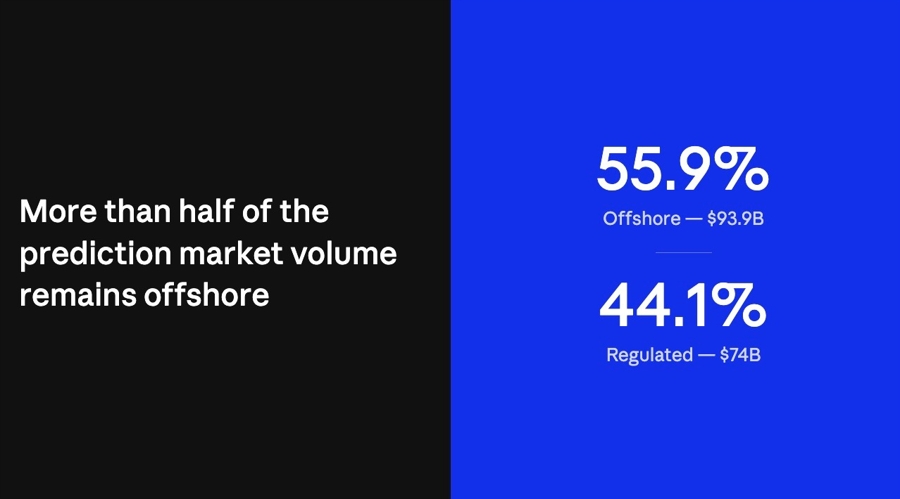
Estimated trading volumes across regulated and offshore venues. Source: Crane Zeng research

The CFTC gave prediction market participants something to read over the weekend: a 267-page proposed framework for how event contracts should be regulated.

The document covers a lot of ground. So does the market itself — more than half of global prediction market volume currently runs through offshore platforms operating outside any formal regulatory framework.

Here's what happened this week

The CFTC Publishes Its Rulebook

On June 10, the CFTC released its long-awaited proposal for regulating prediction markets, publishing a 267-page framework that would formally define how federally regulated event contract platforms should operate.

The proposal would amend Regulation 40.11 and introduce new criteria for evaluating contracts tied to terrorism, war, assassination, gambling, and illegal activity. Exchanges, brokers, trading firms, and industry groups have 90 days to comment on the framework.

Rather than imposing a blanket ban, the framework establishes a process for reviewing markets on a case-by-case basis under a public-interest standard.

The framework shifts the debate from enforcement and litigation to formal rulemaking. At the same time, its scope remains largely focused on federally regulated platforms such as Kalshi. Offshore venues and decentralized prediction markets, where a substantial share of activity takes place, would remain largely outside its reach.

Prediction Markets Move Into Prop Trading

Prediction markets are expanding beyond brokers and exchanges into the proprietary trading industry. Trade Tech Solutions integrated event contracts into the Match-Trader platform, allowing prop firms to offer prediction markets directly inside their existing trading infrastructure.

The contracts are structured as binary YES/NO markets and settle automatically once an outcome is confirmed. Rather than operating as a standalone product, they sit alongside the evaluation programs, challenge accounts, and payout systems already used by prop firms.

The launch follows a broader trend of technology providers adding prediction markets to their product stacks. Event contracts are now reaching traders through prop firms, not just through brokers and dedicated prediction market platforms.

Kalshi Wants to Catch Insiders Before They Trade

Kalshi is introducing a new screening process designed to identify potential insiders before they are allowed to trade certain contracts. Under the policy, users seeking access to markets considered vulnerable to insider information may be required to disclose their employer and other background information.

The exchange says it will use a risk-scoring system to determine which contracts require additional checks. The company cited markets tied to corporate events as an example, where employees or other insiders could have access to information unavailable to the broader market.

The move reflects a broader shift in how prediction market operators approach market integrity. Rather than focusing only on suspicious trades after they occur, Kalshi is attempting to identify potential conflicts before orders ever reach the market.

Number of the Week

$34 billion is an estimated annual prediction market volume generated by U.S. users on offshore platforms that are not supposed to serve the country, according to a new report by consulting firm Crane Zeng.

The report estimates that Polymarket alone accounts for between $11 billion and $27 billion of that activity. The findings highlight the scale of demand that continues to exist outside regulated U.S. prediction market venues.

Quote of the Week

The CFTC’s newly released framework immediately drew criticism from lawmakers who argue the agency has become too accommodating toward prediction market operators.

Bottom Line

The CFTC wants to regulate prediction markets. Kalshi wants to be regulated, and is already using that status to screen out the wrong kind of participants. U.S. traders, meanwhile, keep routing $34 billion a year through platforms that aren't supposed to serve them at all. Everyone says they want clarity. Not everyone is in a hurry to get it.

The CFTC gave prediction market participants something to read over the weekend: a 267-page proposed framework for how event contracts should be regulated.

The document covers a lot of ground. So does the market itself — more than half of global prediction market volume currently runs through offshore platforms operating outside any formal regulatory framework.

Here's what happened this week

The CFTC Publishes Its Rulebook

On June 10, the CFTC released its long-awaited proposal for regulating prediction markets, publishing a 267-page framework that would formally define how federally regulated event contract platforms should operate.

The proposal would amend Regulation 40.11 and introduce new criteria for evaluating contracts tied to terrorism, war, assassination, gambling, and illegal activity. Exchanges, brokers, trading firms, and industry groups have 90 days to comment on the framework.

Rather than imposing a blanket ban, the framework establishes a process for reviewing markets on a case-by-case basis under a public-interest standard.

The framework shifts the debate from enforcement and litigation to formal rulemaking. At the same time, its scope remains largely focused on federally regulated platforms such as Kalshi. Offshore venues and decentralized prediction markets, where a substantial share of activity takes place, would remain largely outside its reach.

Prediction Markets Move Into Prop Trading

Prediction markets are expanding beyond brokers and exchanges into the proprietary trading industry. Trade Tech Solutions integrated event contracts into the Match-Trader platform, allowing prop firms to offer prediction markets directly inside their existing trading infrastructure.

The contracts are structured as binary YES/NO markets and settle automatically once an outcome is confirmed. Rather than operating as a standalone product, they sit alongside the evaluation programs, challenge accounts, and payout systems already used by prop firms.

The launch follows a broader trend of technology providers adding prediction markets to their product stacks. Event contracts are now reaching traders through prop firms, not just through brokers and dedicated prediction market platforms.

Kalshi Wants to Catch Insiders Before They Trade

Kalshi is introducing a new screening process designed to identify potential insiders before they are allowed to trade certain contracts. Under the policy, users seeking access to markets considered vulnerable to insider information may be required to disclose their employer and other background information.

The exchange says it will use a risk-scoring system to determine which contracts require additional checks. The company cited markets tied to corporate events as an example, where employees or other insiders could have access to information unavailable to the broader market.

The move reflects a broader shift in how prediction market operators approach market integrity. Rather than focusing only on suspicious trades after they occur, Kalshi is attempting to identify potential conflicts before orders ever reach the market.

Number of the Week

$34 billion is an estimated annual prediction market volume generated by U.S. users on offshore platforms that are not supposed to serve the country, according to a new report by consulting firm Crane Zeng.

The report estimates that Polymarket alone accounts for between $11 billion and $27 billion of that activity. The findings highlight the scale of demand that continues to exist outside regulated U.S. prediction market venues.

Quote of the Week

The CFTC’s newly released framework immediately drew criticism from lawmakers who argue the agency has become too accommodating toward prediction market operators.

Bottom Line

The CFTC wants to regulate prediction markets. Kalshi wants to be regulated, and is already using that status to screen out the wrong kind of participants. U.S. traders, meanwhile, keep routing $34 billion a year through platforms that aren't supposed to serve them at all. Everyone says they want clarity. Not everyone is in a hurry to get it.

About the Author: Tanya Chepkova
Tanya Chepkova
  • 237 Articles
About the Author: Tanya Chepkova
Tanya Chepkova is a News Editor at Finance Magnates with more than 16 years of experience in financial journalism, covering forex, crypto, and digital asset markets. Her work spans daily industry reporting and data-driven, long-form explainers focused on market structure, trading models, and regulatory shifts. Before joining Finance Magnates, she led the editorial team of a cryptocurrency-focused media outlet for six years. Her reporting combines analytical depth with clear storytelling, with particular attention to how structural changes in trading, stablecoin infrastructure, and emerging products such as prediction markets reshape the broader financial ecosystem. She covers global developments and provides additional insight into CIS markets. Areas of Coverage: Crypto and digital asset markets Prediction markets Stablecoins and cross-border payments Industry analysis and long-form explainers
  • 237 Articles

More from the Author

FinTech

!"#$%&'()*+,-./0123456789:;<=>?@ABCDEFGHIJKLMNOPQRSTUVWXYZ[\]^_`abcdefghijklmnopqrstuvwxyz{|} !"#$%&'()*+,-./0123456789:;<=>?@ABCDEFGHIJKLMNOPQRSTUVWXYZ[\]^_`abcdefghijklmnopqrstuvwxyz{|}