SEC says Ryan Cole used fake orders to manipulate thin options markets while working at a financial firm.
He will now have five years to reflect on his actions, which have been illegal in the United States since 2010.
A retail
trader from United States agreed to pay more than $357,000 to settle charges
that he manipulated options prices through a scheme involving fake orders,
federal regulators announced this week.
California Trader Pays
$357K to Settle Options Spoofing Case
Ryan Cole,
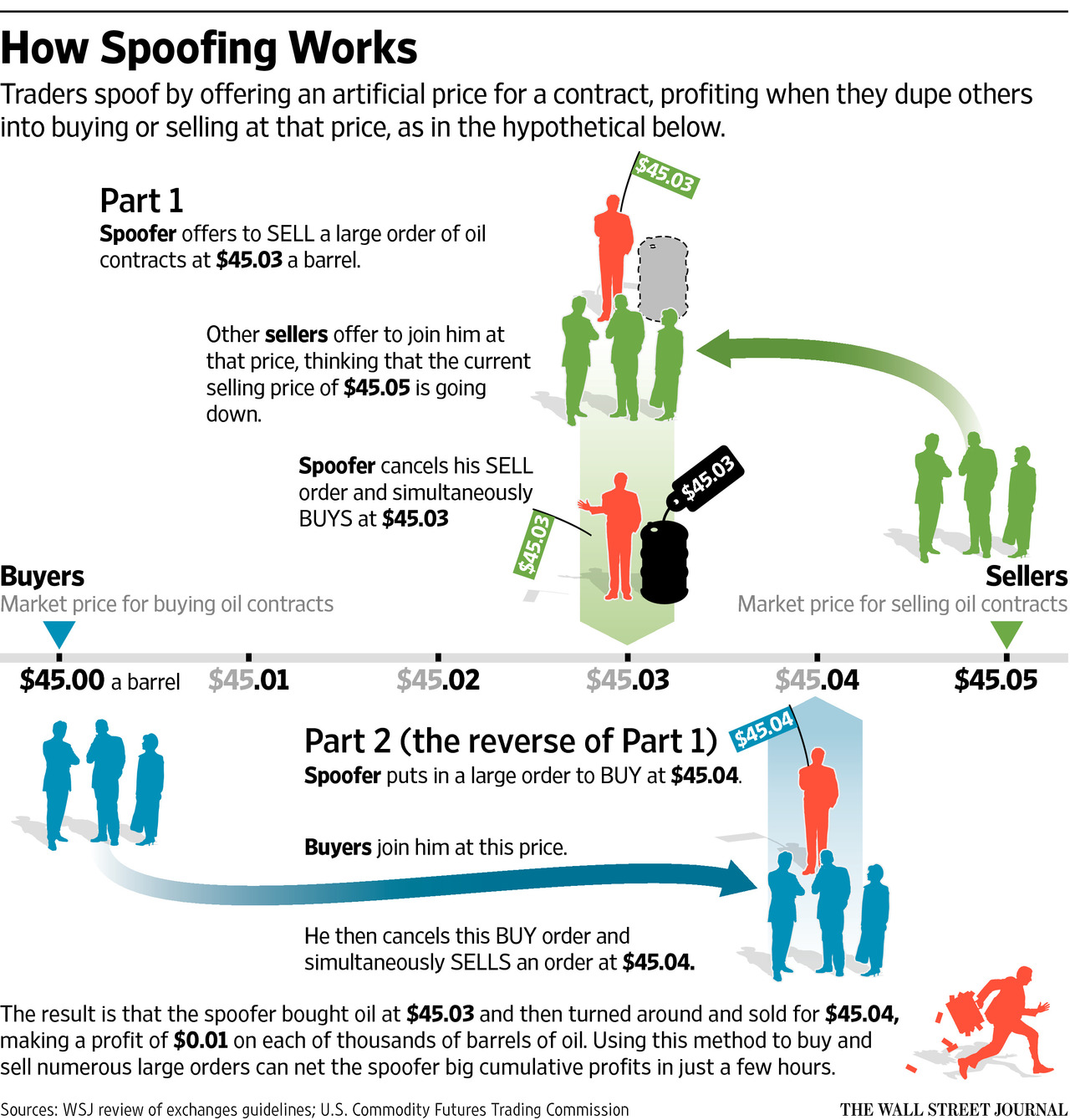
who lives in Florida, used a technique called “spoofing” to
artificially move prices on thinly traded options while working at an unnamed
financial firm, the Securities and Exchange Commission (SEC) said. The practice
netted him roughly $234,000 in profits before he was caught and fired.
The scheme
worked by placing fake orders that he never intended to execute, creating the
appearance of demand or supply that would push prices in his favor. Cole would
then quickly place real trades at the manipulated prices before canceling the
fake orders, according to the SEC complaint filed in federal court in
California's Eastern District.
Cole made
his spoofing more sophisticated by spreading fake orders across multiple
related options series rather than focusing on just one contract. He used
complex multi-leg orders that would execute immediately or be canceled, timing
them carefully with his spoof orders to maximize the manipulation's impact.
When his
employer started asking questions about unusual trading patterns, Cole
allegedly lied to cover his tracks. The firm eventually terminated him, though
the SEC didn't identify which company employed him during the scheme.
“Cole
took steps to conceal his spoofing scheme from the firm by providing false and
misleading responses to questions posed about his trading,” the SEC said
in its complaint.
The
settlement requires Cole to pay back his $234,803 in profits plus $52,656 in
interest, along with a $70,441 civil penalty. He also faces a five-year trading
ban that prevents him from opening or maintaining brokerage accounts in his
name, his family members' names, or through companies he controls without
notifying brokers about his violations.
Cole agreed
to the settlement without admitting or denying wrongdoing, which is standard
practice in SEC enforcement cases. The deal still requires approval from a
federal judge.
Spoofing Fines Also Hit
Major Players
Spoofing
became illegal under the 2010 Dodd-Frank Act, though regulators have struggled
to catch sophisticated practitioners who can carry out the scheme in
milliseconds using algorithmic trading. The practice undermines market
integrity by creating a false impression of supply and demand.
The largest
spoofing fine to date was issued in 2019 to Tower Research, which was ordered
to pay $67 million. According to the CFTC, another U.S. regulator, the firm had
earned nearly $33 million from the practice.
A retail
trader from United States agreed to pay more than $357,000 to settle charges
that he manipulated options prices through a scheme involving fake orders,
federal regulators announced this week.
California Trader Pays
$357K to Settle Options Spoofing Case
Ryan Cole,
who lives in Florida, used a technique called “spoofing” to
artificially move prices on thinly traded options while working at an unnamed
financial firm, the Securities and Exchange Commission (SEC) said. The practice
netted him roughly $234,000 in profits before he was caught and fired.
The scheme
worked by placing fake orders that he never intended to execute, creating the
appearance of demand or supply that would push prices in his favor. Cole would
then quickly place real trades at the manipulated prices before canceling the
fake orders, according to the SEC complaint filed in federal court in
California's Eastern District.
Cole made
his spoofing more sophisticated by spreading fake orders across multiple
related options series rather than focusing on just one contract. He used
complex multi-leg orders that would execute immediately or be canceled, timing
them carefully with his spoof orders to maximize the manipulation's impact.
When his
employer started asking questions about unusual trading patterns, Cole
allegedly lied to cover his tracks. The firm eventually terminated him, though
the SEC didn't identify which company employed him during the scheme.
“Cole
took steps to conceal his spoofing scheme from the firm by providing false and
misleading responses to questions posed about his trading,” the SEC said
in its complaint.
The
settlement requires Cole to pay back his $234,803 in profits plus $52,656 in
interest, along with a $70,441 civil penalty. He also faces a five-year trading
ban that prevents him from opening or maintaining brokerage accounts in his
name, his family members' names, or through companies he controls without
notifying brokers about his violations.
Cole agreed
to the settlement without admitting or denying wrongdoing, which is standard
practice in SEC enforcement cases. The deal still requires approval from a
federal judge.
Spoofing Fines Also Hit
Major Players
Spoofing
became illegal under the 2010 Dodd-Frank Act, though regulators have struggled
to catch sophisticated practitioners who can carry out the scheme in
milliseconds using algorithmic trading. The practice undermines market
integrity by creating a false impression of supply and demand.
The largest
spoofing fine to date was issued in 2019 to Tower Research, which was ordered
to pay $67 million. According to the CFTC, another U.S. regulator, the firm had
earned nearly $33 million from the practice.
Damian Chmiel is a Senior Analyst & Editor at Finance Magnates with more than 15 years of experience in the CFD and online trading industry. Active as both a trader and journalist since 2010, he focuses on broker coverage, fintech innovation, and regulatory developments across Europe, the Middle East, and Asia.
His work includes interviews with C-level leaders at major brokerages and fintech platforms, as well as co-authoring Finance Magnates’ quarterly industry benchmarking reports. Damian’s reporting is data-driven, market-aware, and grounded in direct industry engagement. His analysis and commentary have also been cited by external media outlets, including Investing.com, Binance, The Asset, Stockhead, and Dispatch.
Education:
MA in Finance and Accounting, Cracow University of Economics
Retail Traders Can Now Access Prediction Markets Through Binance Wallet
FP Markets Winner Spotlight 🏆 | Global Broker of the Year 2025 #Trading #Broker #Innovation #Shorts
FP Markets Winner Spotlight 🏆 | Global Broker of the Year 2025 #Trading #Broker #Innovation #Shorts
FP Markets takes the spotlight as Global Broker of the Year 2025 at the Finance Magnates Awards.
Martin Stoilov, Head of Client Experience, shares that trust, innovation, and people played a key role in the company’s success, supported by a strong foundation of integrity and client-centricity.
Following this milestone, FP Markets continues to focus on growth, technology investment, and its core values of transparency and excellence.
👉 Be part of FM Awards 2026: https://awards.financemagnates.com/#nominate
FP Markets takes the spotlight as Global Broker of the Year 2025 at the Finance Magnates Awards.
Martin Stoilov, Head of Client Experience, shares that trust, innovation, and people played a key role in the company’s success, supported by a strong foundation of integrity and client-centricity.
Following this milestone, FP Markets continues to focus on growth, technology investment, and its core values of transparency and excellence.
👉 Be part of FM Awards 2026: https://awards.financemagnates.com/#nominate
In this video, we review @HolaPrimeMarketsOfficial, a multi-asset forex and CFDs broker offering different account types, trading platforms, and flexible trading conditions.
We cover the broker’s overall offering, including account options, trading environment, platforms like MT4 and MT5, and additional services such as managed accounts and fast withdrawals.
Watch the full video to see if Hola Prime Markets fits your trading needs.
📣 Stay up to date with the latest in finance and trading. Follow Finance Magnates for industry news, insights, and global event coverage.
Connect with us:
🔗 LinkedIn: /financemagnates
👍 Facebook: /financemagnates
📸 Instagram: https://www.instagram.com/financemagnates
🐦 X: https://x.com/financemagnates
🎥 TikTok: https://www.tiktok.com/tag/financemagnates
▶️ YouTube: /@financemagnates_official
#HolaPrime #ForexBroker #CFDTrading #FinanceMagnates #Trading #Forex #BrokerReview
In this video, we review @HolaPrimeMarketsOfficial, a multi-asset forex and CFDs broker offering different account types, trading platforms, and flexible trading conditions.
We cover the broker’s overall offering, including account options, trading environment, platforms like MT4 and MT5, and additional services such as managed accounts and fast withdrawals.
Watch the full video to see if Hola Prime Markets fits your trading needs.
📣 Stay up to date with the latest in finance and trading. Follow Finance Magnates for industry news, insights, and global event coverage.
Connect with us:
🔗 LinkedIn: /financemagnates
👍 Facebook: /financemagnates
📸 Instagram: https://www.instagram.com/financemagnates
🐦 X: https://x.com/financemagnates
🎥 TikTok: https://www.tiktok.com/tag/financemagnates
▶️ YouTube: /@financemagnates_official
#HolaPrime #ForexBroker #CFDTrading #FinanceMagnates #Trading #Forex #BrokerReview
Hola Prime Review: What You Need to Know | Full Breakdown by Finance Magnates
Hola Prime Review: What You Need to Know | Full Breakdown by Finance Magnates
In this video, we review @HolaPrime_Global, a proprietary trading firm offering evaluation programs and performance-based payouts in simulated market environments.
We cover how the challenge model works, including account types, profit splits (up to 95%), trading rules, and what it takes to reach a funded account. You’ll also learn about available platforms like MT4, MT5, cTrader, and more, along with insights into payouts, support, and trading conditions.
Watch the full video to see if Hola Prime fits your trading style.
📣 Stay up to date with the latest in finance and trading. Follow Finance Magnates for industry news, insights, and global event coverage.
Connect with us:
🔗 LinkedIn: /financemagnates
👍 Facebook: /financemagnates
📸 Instagram: https://www.instagram.com/financemagnates
🐦 X: https://x.com/financemagnates
🎥 TikTok: https://www.tiktok.com/tag/financemagnates
▶️ YouTube: /@financemagnates_official
#HolaPrime #PropFirm #Trading #FinanceMagnates #Forex #FuturesTrading #TradingReview #PropFirmReview
In this video, we review @HolaPrime_Global, a proprietary trading firm offering evaluation programs and performance-based payouts in simulated market environments.
We cover how the challenge model works, including account types, profit splits (up to 95%), trading rules, and what it takes to reach a funded account. You’ll also learn about available platforms like MT4, MT5, cTrader, and more, along with insights into payouts, support, and trading conditions.
Watch the full video to see if Hola Prime fits your trading style.
📣 Stay up to date with the latest in finance and trading. Follow Finance Magnates for industry news, insights, and global event coverage.
Connect with us:
🔗 LinkedIn: /financemagnates
👍 Facebook: /financemagnates
📸 Instagram: https://www.instagram.com/financemagnates
🐦 X: https://x.com/financemagnates
🎥 TikTok: https://www.tiktok.com/tag/financemagnates
▶️ YouTube: /@financemagnates_official
#HolaPrime #PropFirm #Trading #FinanceMagnates #Forex #FuturesTrading #TradingReview #PropFirmReview
Axi Winner Spotlight 🏆 | Global Most Innovative Broker 2025 #Innovation #Trading #Fintech #Broker
Axi Winner Spotlight 🏆 | Global Most Innovative Broker 2025 #Innovation #Trading #Fintech #Broker
Axi takes the spotlight at the Finance Magnates Awards, winning Global Most Innovative Broker 2025.
Olivia Xenofontos and Ivanna Openko share how the team will feel: proud, motivated, and ready to keep delivering.
They also describe the night as well-organized, focused, and enjoyable for all.
👉 Be part of FM Awards 2026.
Axi takes the spotlight at the Finance Magnates Awards, winning Global Most Innovative Broker 2025.
Olivia Xenofontos and Ivanna Openko share how the team will feel: proud, motivated, and ready to keep delivering.
They also describe the night as well-organized, focused, and enjoyable for all.
👉 Be part of FM Awards 2026.
Recognition that matters.
Built on transparency.
Driven by the industry.
The Finance Magnates Awards 2026.
Nominations are now open.
🔗 https://awards.financemagnates.com/?utm_source=SM&utm_medium=social&utm_campaign=recognition-matters
Recognition that matters.
Built on transparency.
Driven by the industry.
The Finance Magnates Awards 2026.
Nominations are now open.
🔗 https://awards.financemagnates.com/?utm_source=SM&utm_medium=social&utm_campaign=recognition-matters