The Cyprus fintech says the new fixed-price liquidity bridge works across MT4, MT5, and cTrader.
The product marks the company's first significant step beyond its cTrader-centric identity, targeting a broader base of forex brokers.
Spotware
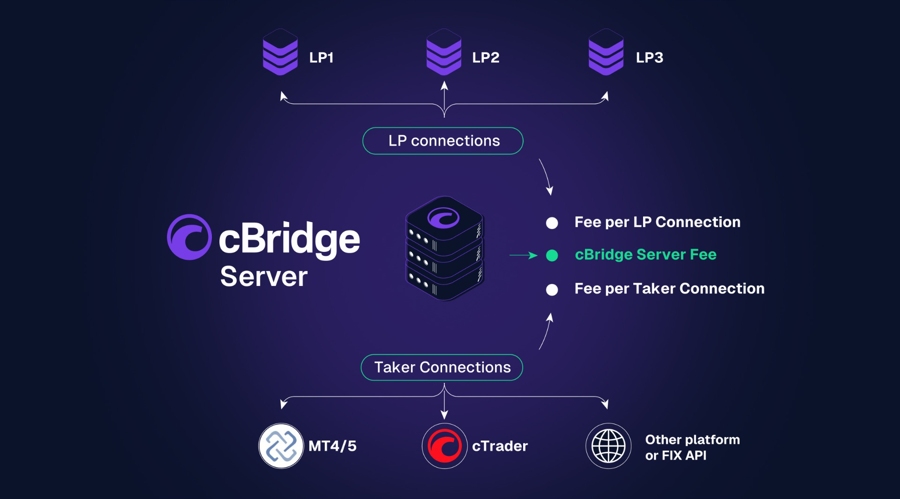
Systems said today (Tuesday) it recently launched cBridge, a standalone liquidity
bridge designed to connect brokers to multiple liquidity providers across
different trading platforms. The company claims the product can reduce bridge
costs by up to 80% for high-volume brokers by replacing per-trade billing with
a flat infrastructure pricing model.
Under the
existing industry norm, brokers typically pay bridge fees that scale with
trading volume, meaning costs climb as client activity grows. Spotware says
cBridge upends that model by charging based on the number of servers and
connections involved, keeping expenses consistent regardless of how much
business flows through the system.
The company
argues the benefit compounds as broker volumes rise, since margins expand
rather than being absorbed by rising vendor fees.
Platform-Agnostic Design
Targets MT4 and MT5 Users
One of the
product's central claims is platform neutrality. cBridge is built to connect
cTrader alongside MetaTrader 4, MetaTrader 5 and FIX API environments to
multiple liquidity providers through a single interface, according to the
company. Unified quote pricing and routing rules apply across all connected
servers, Spotware said, with ready integrations and protocol coverage across
trading, pricing and reporting functions.
This
cross-platform approach matters in a broker landscape that remains heavily
fragmented. The MetaTrader ecosystem still commands a large share of retail and
institutional broker infrastructure, while cTrader has been gaining ground,
particularly among prop trading
firms and tech-focused brokers.
By
positioning cBridge as compatible with all major platforms, Spotware appears to
be pitching the product to a wider addressable market than its own client base,
and competing more directly with dedicated bridge providers such as
TakeProfitTech, whose MT5
bridge technology has seen growing adoption among offshore broker clients.
"cBridge
brings fixed infrastructure-based pricing and an operations-first interface,
because as a broker grows, its margins should improve - not its vendor's
revenue."
Spotware
frames the design philosophy under what it calls a "Be Open"
principle, aimed at giving brokers more flexibility in how they build their
technology stack. Whether that translates into broader adoption beyond existing
cTrader clients remains to be seen.
Routing Logic Gets a
Visual Overhaul
Managing
order routing is one of the more labor-intensive tasks in broker operations,
and Spotware says cBridge includes several interface features aimed at reducing
that burden. Color-coded validation lets dealing teams scan complex rule sets
more quickly, the company said, while inactive rules are flagged within the
routing grid.
Hovering
over any rule is claimed to surface the underlying issue directly, whether a
deleted symbol, a conflicting parameter, or an entry overridden by a
higher-priority rule.
The system
also runs cross-setting validation checks across symbols, streams and routing
rules, including what Spotware describes as the bridge-to-platform boundary,
where configuration conflicts can go undetected during initial setup.
Spotware's
broader infrastructure push has been telegraphed for some time. CEO Iarovitcyn discussed the
cBridge launch in a February interview with FinanceMagnates.com, alongside the
company's record 2025 growth figures and AI integration plans, signaling that
the product had been in development as part of a wider expansion of Spotware's
broker services.
With
cBridge, Spotware is making an explicit move beyond its identity as a
single-platform vendor. The product is marketed to any broker running MT4 or
MT5 infrastructure, not just existing cTrader clients, which represents a
meaningful shift in the company's go-to-market positioning.
Spotware
was founded in 2010 and employs more than 200 people. The company said brokers
can request a demo through the cbridge.com website.
Spotware
Systems said today (Tuesday) it recently launched cBridge, a standalone liquidity
bridge designed to connect brokers to multiple liquidity providers across
different trading platforms. The company claims the product can reduce bridge
costs by up to 80% for high-volume brokers by replacing per-trade billing with
a flat infrastructure pricing model.
Under the
existing industry norm, brokers typically pay bridge fees that scale with
trading volume, meaning costs climb as client activity grows. Spotware says
cBridge upends that model by charging based on the number of servers and
connections involved, keeping expenses consistent regardless of how much
business flows through the system.
The company
argues the benefit compounds as broker volumes rise, since margins expand
rather than being absorbed by rising vendor fees.
Platform-Agnostic Design
Targets MT4 and MT5 Users
One of the
product's central claims is platform neutrality. cBridge is built to connect
cTrader alongside MetaTrader 4, MetaTrader 5 and FIX API environments to
multiple liquidity providers through a single interface, according to the
company. Unified quote pricing and routing rules apply across all connected
servers, Spotware said, with ready integrations and protocol coverage across
trading, pricing and reporting functions.
This
cross-platform approach matters in a broker landscape that remains heavily
fragmented. The MetaTrader ecosystem still commands a large share of retail and
institutional broker infrastructure, while cTrader has been gaining ground,
particularly among prop trading
firms and tech-focused brokers.
By
positioning cBridge as compatible with all major platforms, Spotware appears to
be pitching the product to a wider addressable market than its own client base,
and competing more directly with dedicated bridge providers such as
TakeProfitTech, whose MT5
bridge technology has seen growing adoption among offshore broker clients.
"cBridge
brings fixed infrastructure-based pricing and an operations-first interface,
because as a broker grows, its margins should improve - not its vendor's
revenue."
Spotware
frames the design philosophy under what it calls a "Be Open"
principle, aimed at giving brokers more flexibility in how they build their
technology stack. Whether that translates into broader adoption beyond existing
cTrader clients remains to be seen.
Routing Logic Gets a
Visual Overhaul
Managing
order routing is one of the more labor-intensive tasks in broker operations,
and Spotware says cBridge includes several interface features aimed at reducing
that burden. Color-coded validation lets dealing teams scan complex rule sets
more quickly, the company said, while inactive rules are flagged within the
routing grid.
Hovering
over any rule is claimed to surface the underlying issue directly, whether a
deleted symbol, a conflicting parameter, or an entry overridden by a
higher-priority rule.
The system
also runs cross-setting validation checks across symbols, streams and routing
rules, including what Spotware describes as the bridge-to-platform boundary,
where configuration conflicts can go undetected during initial setup.
Spotware's
broader infrastructure push has been telegraphed for some time. CEO Iarovitcyn discussed the
cBridge launch in a February interview with FinanceMagnates.com, alongside the
company's record 2025 growth figures and AI integration plans, signaling that
the product had been in development as part of a wider expansion of Spotware's
broker services.
With
cBridge, Spotware is making an explicit move beyond its identity as a
single-platform vendor. The product is marketed to any broker running MT4 or
MT5 infrastructure, not just existing cTrader clients, which represents a
meaningful shift in the company's go-to-market positioning.
Spotware
was founded in 2010 and employs more than 200 people. The company said brokers
can request a demo through the cbridge.com website.
Damian Chmiel is a Senior Analyst & Editor at Finance Magnates with more than 15 years of experience in the CFD and online trading industry. Active as both a trader and journalist since 2010, he focuses on broker coverage, fintech innovation, and regulatory developments across Europe, the Middle East, and Asia.
His work includes interviews with C-level leaders at major brokerages and fintech platforms, as well as co-authoring Finance Magnates’ quarterly industry benchmarking reports. Damian’s reporting is data-driven, market-aware, and grounded in direct industry engagement. His analysis and commentary have also been cited by external media outlets, including Investing.com, Binance, The Asset, Stockhead, and Dispatch.
Education:
MA in Finance and Accounting, Cracow University of Economics
The Engine and the Fuel: How AI & Data Drives African Future
If AI is the engine, data is the fuel. Without quality, accessible data, AI cannot work well; and without the right mindset, data remains just numbers instead of insight. In this session, leading experts will explore how AI and data are democratizing opportunities for businesses and personal growth. Discover practical ways to make AI accessible today, anticipate its transformative impact on African markets, and learn actionable steps to prepare for what's next. Let's talk about:
-How AI and data drive business efficiency and innovation in trading and fintech
-AI tools to elevate trading or business strategies
-How to access and maximise the power of data and AI
-Emerging AI and data trends in Africa and their economic ripple effects
If AI is the engine, data is the fuel. Without quality, accessible data, AI cannot work well; and without the right mindset, data remains just numbers instead of insight. In this session, leading experts will explore how AI and data are democratizing opportunities for businesses and personal growth. Discover practical ways to make AI accessible today, anticipate its transformative impact on African markets, and learn actionable steps to prepare for what's next. Let's talk about:
-How AI and data drive business efficiency and innovation in trading and fintech
-AI tools to elevate trading or business strategies
-How to access and maximise the power of data and AI
-Emerging AI and data trends in Africa and their economic ripple effects
If AI is the engine, data is the fuel. Without quality, accessible data, AI cannot work well; and without the right mindset, data remains just numbers instead of insight. In this session, leading experts will explore how AI and data are democratizing opportunities for businesses and personal growth. Discover practical ways to make AI accessible today, anticipate its transformative impact on African markets, and learn actionable steps to prepare for what's next. Let's talk about:
-How AI and data drive business efficiency and innovation in trading and fintech
-AI tools to elevate trading or business strategies
-How to access and maximise the power of data and AI
-Emerging AI and data trends in Africa and their economic ripple effects
If AI is the engine, data is the fuel. Without quality, accessible data, AI cannot work well; and without the right mindset, data remains just numbers instead of insight. In this session, leading experts will explore how AI and data are democratizing opportunities for businesses and personal growth. Discover practical ways to make AI accessible today, anticipate its transformative impact on African markets, and learn actionable steps to prepare for what's next. Let's talk about:
-How AI and data drive business efficiency and innovation in trading and fintech
-AI tools to elevate trading or business strategies
-How to access and maximise the power of data and AI
-Emerging AI and data trends in Africa and their economic ripple effects
Most market post-mortems describe what happened to prices. Few describe what happened in the trading room while the position was open: the entry conviction, the moments that tested it, and the exit decision that closed the book.
This session brings one seasoned trader to the stage for an unfiltered account of the position that still defines how they think about markets.
Attendees will walk away with:
-A first-hand account of how a conviction trade is built, from thesis and entry through position management and exit
-Understanding of what turns a market observation into a live position, and what holds it when conditions shift
-Insight into how timing, execution quality, and market structure shaped the final result
-Perspective on what the trade revealed about edge, risk tolerance, and when to hold through a position moving against you
-Clarity on what separates a well-built trade from a well-timed one
Most market post-mortems describe what happened to prices. Few describe what happened in the trading room while the position was open: the entry conviction, the moments that tested it, and the exit decision that closed the book.
This session brings one seasoned trader to the stage for an unfiltered account of the position that still defines how they think about markets.
Attendees will walk away with:
-A first-hand account of how a conviction trade is built, from thesis and entry through position management and exit
-Understanding of what turns a market observation into a live position, and what holds it when conditions shift
-Insight into how timing, execution quality, and market structure shaped the final result
-Perspective on what the trade revealed about edge, risk tolerance, and when to hold through a position moving against you
-Clarity on what separates a well-built trade from a well-timed one
Most market post-mortems describe what happened to prices. Few describe what happened in the trading room while the position was open: the entry conviction, the moments that tested it, and the exit decision that closed the book.
This session brings one seasoned trader to the stage for an unfiltered account of the position that still defines how they think about markets.
Attendees will walk away with:
-A first-hand account of how a conviction trade is built, from thesis and entry through position management and exit
-Understanding of what turns a market observation into a live position, and what holds it when conditions shift
-Insight into how timing, execution quality, and market structure shaped the final result
-Perspective on what the trade revealed about edge, risk tolerance, and when to hold through a position moving against you
-Clarity on what separates a well-built trade from a well-timed one
Most market post-mortems describe what happened to prices. Few describe what happened in the trading room while the position was open: the entry conviction, the moments that tested it, and the exit decision that closed the book.
This session brings one seasoned trader to the stage for an unfiltered account of the position that still defines how they think about markets.
Attendees will walk away with:
-A first-hand account of how a conviction trade is built, from thesis and entry through position management and exit
-Understanding of what turns a market observation into a live position, and what holds it when conditions shift
-Insight into how timing, execution quality, and market structure shaped the final result
-Perspective on what the trade revealed about edge, risk tolerance, and when to hold through a position moving against you
-Clarity on what separates a well-built trade from a well-timed one
Most market post-mortems describe what happened to prices. Few describe what happened in the trading room while the position was open: the entry conviction, the moments that tested it, and the exit decision that closed the book.
This session brings one seasoned trader to the stage for an unfiltered account of the position that still defines how they think about markets.
Attendees will walk away with:
-A first-hand account of how a conviction trade is built, from thesis and entry through position management and exit
-Understanding of what turns a market observation into a live position, and what holds it when conditions shift
-Insight into how timing, execution quality, and market structure shaped the final result
-Perspective on what the trade revealed about edge, risk tolerance, and when to hold through a position moving against you
-Clarity on what separates a well-built trade from a well-timed one
Most market post-mortems describe what happened to prices. Few describe what happened in the trading room while the position was open: the entry conviction, the moments that tested it, and the exit decision that closed the book.
This session brings one seasoned trader to the stage for an unfiltered account of the position that still defines how they think about markets.
Attendees will walk away with:
-A first-hand account of how a conviction trade is built, from thesis and entry through position management and exit
-Understanding of what turns a market observation into a live position, and what holds it when conditions shift
-Insight into how timing, execution quality, and market structure shaped the final result
-Perspective on what the trade revealed about edge, risk tolerance, and when to hold through a position moving against you
-Clarity on what separates a well-built trade from a well-timed one
Agentic Inequality: Democratizing Financial Access Through AI & Blockchain
As crypto and CFD trading continue to expand across Africa, access to advanced tools and market insights remains uneven. This session explores how AI and blockchain can bridge that gap by empowering informal traders and underserved communities to participate more effectively in digital financial markets. The discussion will focus on practical applications of technology to improve accessibility, education, and investment outcomes in both formal and informal sectors.
In this discussion, we will explore:
-The role of AI in democratizing access to trading tools, insights, and strategy development
-How crypto and blockchain can enable broader participation beyond traditional financial systems
-Addressing access barriers: infrastructure, education, and affordability in underserved communities
-Opportunities for brokers and platforms to tap into the informal trading economy
As crypto and CFD trading continue to expand across Africa, access to advanced tools and market insights remains uneven. This session explores how AI and blockchain can bridge that gap by empowering informal traders and underserved communities to participate more effectively in digital financial markets. The discussion will focus on practical applications of technology to improve accessibility, education, and investment outcomes in both formal and informal sectors.
In this discussion, we will explore:
-The role of AI in democratizing access to trading tools, insights, and strategy development
-How crypto and blockchain can enable broader participation beyond traditional financial systems
-Addressing access barriers: infrastructure, education, and affordability in underserved communities
-Opportunities for brokers and platforms to tap into the informal trading economy
As crypto and CFD trading continue to expand across Africa, access to advanced tools and market insights remains uneven. This session explores how AI and blockchain can bridge that gap by empowering informal traders and underserved communities to participate more effectively in digital financial markets. The discussion will focus on practical applications of technology to improve accessibility, education, and investment outcomes in both formal and informal sectors.
In this discussion, we will explore:
-The role of AI in democratizing access to trading tools, insights, and strategy development
-How crypto and blockchain can enable broader participation beyond traditional financial systems
-Addressing access barriers: infrastructure, education, and affordability in underserved communities
-Opportunities for brokers and platforms to tap into the informal trading economy
As crypto and CFD trading continue to expand across Africa, access to advanced tools and market insights remains uneven. This session explores how AI and blockchain can bridge that gap by empowering informal traders and underserved communities to participate more effectively in digital financial markets. The discussion will focus on practical applications of technology to improve accessibility, education, and investment outcomes in both formal and informal sectors.
In this discussion, we will explore:
-The role of AI in democratizing access to trading tools, insights, and strategy development
-How crypto and blockchain can enable broader participation beyond traditional financial systems
-Addressing access barriers: infrastructure, education, and affordability in underserved communities
-Opportunities for brokers and platforms to tap into the informal trading economy
As crypto and CFD trading continue to expand across Africa, access to advanced tools and market insights remains uneven. This session explores how AI and blockchain can bridge that gap by empowering informal traders and underserved communities to participate more effectively in digital financial markets. The discussion will focus on practical applications of technology to improve accessibility, education, and investment outcomes in both formal and informal sectors.
In this discussion, we will explore:
-The role of AI in democratizing access to trading tools, insights, and strategy development
-How crypto and blockchain can enable broader participation beyond traditional financial systems
-Addressing access barriers: infrastructure, education, and affordability in underserved communities
-Opportunities for brokers and platforms to tap into the informal trading economy
As crypto and CFD trading continue to expand across Africa, access to advanced tools and market insights remains uneven. This session explores how AI and blockchain can bridge that gap by empowering informal traders and underserved communities to participate more effectively in digital financial markets. The discussion will focus on practical applications of technology to improve accessibility, education, and investment outcomes in both formal and informal sectors.
In this discussion, we will explore:
-The role of AI in democratizing access to trading tools, insights, and strategy development
-How crypto and blockchain can enable broader participation beyond traditional financial systems
-Addressing access barriers: infrastructure, education, and affordability in underserved communities
-Opportunities for brokers and platforms to tap into the informal trading economy
Track Record? IBs & Brokers Between Automation and Trust
A WhatsApp group, a YouTube channel, a referral link: Most retail traders in Africa found their broker through an IB, and the relationship with brokers can become complex. This session pulls back the curtain on how IBs are tracked, paid, and incentivised, and what that means for the trader on the other side of the referral link.
You will learn:
-How IB compensation works (CPA vs. revenue share) and why it shapes the advice they give
-What brokers actually track: cookies, partner tags, MT4 manager accounts, and sub-IB networks
-Which platform perks are genuine trader value and which are IB marketing dressed up as benefits
-How to evaluate an IB before you deposit and what questions to ask when something feels off
A WhatsApp group, a YouTube channel, a referral link: Most retail traders in Africa found their broker through an IB, and the relationship with brokers can become complex. This session pulls back the curtain on how IBs are tracked, paid, and incentivised, and what that means for the trader on the other side of the referral link.
You will learn:
-How IB compensation works (CPA vs. revenue share) and why it shapes the advice they give
-What brokers actually track: cookies, partner tags, MT4 manager accounts, and sub-IB networks
-Which platform perks are genuine trader value and which are IB marketing dressed up as benefits
-How to evaluate an IB before you deposit and what questions to ask when something feels off
A WhatsApp group, a YouTube channel, a referral link: Most retail traders in Africa found their broker through an IB, and the relationship with brokers can become complex. This session pulls back the curtain on how IBs are tracked, paid, and incentivised, and what that means for the trader on the other side of the referral link.
You will learn:
-How IB compensation works (CPA vs. revenue share) and why it shapes the advice they give
-What brokers actually track: cookies, partner tags, MT4 manager accounts, and sub-IB networks
-Which platform perks are genuine trader value and which are IB marketing dressed up as benefits
-How to evaluate an IB before you deposit and what questions to ask when something feels off
A WhatsApp group, a YouTube channel, a referral link: Most retail traders in Africa found their broker through an IB, and the relationship with brokers can become complex. This session pulls back the curtain on how IBs are tracked, paid, and incentivised, and what that means for the trader on the other side of the referral link.
You will learn:
-How IB compensation works (CPA vs. revenue share) and why it shapes the advice they give
-What brokers actually track: cookies, partner tags, MT4 manager accounts, and sub-IB networks
-Which platform perks are genuine trader value and which are IB marketing dressed up as benefits
-How to evaluate an IB before you deposit and what questions to ask when something feels off
A WhatsApp group, a YouTube channel, a referral link: Most retail traders in Africa found their broker through an IB, and the relationship with brokers can become complex. This session pulls back the curtain on how IBs are tracked, paid, and incentivised, and what that means for the trader on the other side of the referral link.
You will learn:
-How IB compensation works (CPA vs. revenue share) and why it shapes the advice they give
-What brokers actually track: cookies, partner tags, MT4 manager accounts, and sub-IB networks
-Which platform perks are genuine trader value and which are IB marketing dressed up as benefits
-How to evaluate an IB before you deposit and what questions to ask when something feels off
A WhatsApp group, a YouTube channel, a referral link: Most retail traders in Africa found their broker through an IB, and the relationship with brokers can become complex. This session pulls back the curtain on how IBs are tracked, paid, and incentivised, and what that means for the trader on the other side of the referral link.
You will learn:
-How IB compensation works (CPA vs. revenue share) and why it shapes the advice they give
-What brokers actually track: cookies, partner tags, MT4 manager accounts, and sub-IB networks
-Which platform perks are genuine trader value and which are IB marketing dressed up as benefits
-How to evaluate an IB before you deposit and what questions to ask when something feels off
gRAND Plans: Trading South Africa's Most Volatile Asset
The Rand is one of the world's most politically sensitive currencies. Budget speeches, credit rating reviews, MPC decisions, election results — each one moves it. For South African traders, the ZAR is home ground; it is not safe ground. This panel asks the practical question: how do you trade a currency you live in?
Attendees will walk away with:
-A clear view of which domestic events have the most consistent impact on ZAR across recent cycles
-Understanding of how global risk appetite and dollar strength amplify or dampen local triggers
-Insight into how institutional positioning around SA credit events differs from retail assumptions
-Perspective on the risk management challenge of trading your own currency with leverage
The Rand is one of the world's most politically sensitive currencies. Budget speeches, credit rating reviews, MPC decisions, election results — each one moves it. For South African traders, the ZAR is home ground; it is not safe ground. This panel asks the practical question: how do you trade a currency you live in?
Attendees will walk away with:
-A clear view of which domestic events have the most consistent impact on ZAR across recent cycles
-Understanding of how global risk appetite and dollar strength amplify or dampen local triggers
-Insight into how institutional positioning around SA credit events differs from retail assumptions
-Perspective on the risk management challenge of trading your own currency with leverage
The Rand is one of the world's most politically sensitive currencies. Budget speeches, credit rating reviews, MPC decisions, election results — each one moves it. For South African traders, the ZAR is home ground; it is not safe ground. This panel asks the practical question: how do you trade a currency you live in?
Attendees will walk away with:
-A clear view of which domestic events have the most consistent impact on ZAR across recent cycles
-Understanding of how global risk appetite and dollar strength amplify or dampen local triggers
-Insight into how institutional positioning around SA credit events differs from retail assumptions
-Perspective on the risk management challenge of trading your own currency with leverage
The Rand is one of the world's most politically sensitive currencies. Budget speeches, credit rating reviews, MPC decisions, election results — each one moves it. For South African traders, the ZAR is home ground; it is not safe ground. This panel asks the practical question: how do you trade a currency you live in?
Attendees will walk away with:
-A clear view of which domestic events have the most consistent impact on ZAR across recent cycles
-Understanding of how global risk appetite and dollar strength amplify or dampen local triggers
-Insight into how institutional positioning around SA credit events differs from retail assumptions
-Perspective on the risk management challenge of trading your own currency with leverage
The Rand is one of the world's most politically sensitive currencies. Budget speeches, credit rating reviews, MPC decisions, election results — each one moves it. For South African traders, the ZAR is home ground; it is not safe ground. This panel asks the practical question: how do you trade a currency you live in?
Attendees will walk away with:
-A clear view of which domestic events have the most consistent impact on ZAR across recent cycles
-Understanding of how global risk appetite and dollar strength amplify or dampen local triggers
-Insight into how institutional positioning around SA credit events differs from retail assumptions
-Perspective on the risk management challenge of trading your own currency with leverage
The Rand is one of the world's most politically sensitive currencies. Budget speeches, credit rating reviews, MPC decisions, election results — each one moves it. For South African traders, the ZAR is home ground; it is not safe ground. This panel asks the practical question: how do you trade a currency you live in?
Attendees will walk away with:
-A clear view of which domestic events have the most consistent impact on ZAR across recent cycles
-Understanding of how global risk appetite and dollar strength amplify or dampen local triggers
-Insight into how institutional positioning around SA credit events differs from retail assumptions
-Perspective on the risk management challenge of trading your own currency with leverage