
Financial startup SolidX is carving out a niche on Wall Street with its total-return bitcoin swap offering. Beyond bitcoin swaps, also in its plans is introducing Wall Street to blockchain technology.
During the fintech panel of last November’s Forex Magnates London Summit, Tom Robinson of Elliptic was asked about interest in bitcoins from banks and brokers. Robinson explained that they were receiving a lot of questions from firms that were investigating the blockchain. He conceded though that banks weren’t yet ready to publicize their interest due to the headline risk associated with bitcoins. The real interest though is slowly becoming public and hit a new level in January when the New York Stock Exchange as well as Citibank’s former CEO were among investors in Coinbase’s record $75 million funding round.

Daniel Gallancy, CEO of SolidX
Similarly expressing Wall Street’s interest in both the moves of bitcoin prices and the underlying blockchain technology is SolidX. Learning more about their bitcoin derivatives business Digital Currency Magnates spoke to CEO Daniel H. Gallancy, and President David S. Lehmann.
Based in New York, SolidX raised $3 million in funding last October. The firm’s core business is to provide hedge funds and asset managers access to the bitcoin markets. They do this by marketing bitcoin swaps that act and behave like swaps of other asset classes. But, beyond their swaps business, Gallancy and Lehmann explained that their institutional customers are also seeing potential in the underlying blockchain technology. Lehmann referred to the dual nature as the little "b"--bitcoins--and big "B"--the blockchain.
Bitcoin swaps
SolidX’s main existing business is the issuance of total-return bitcoin swaps to their clients. Buyers of the swap are able to gain exposure to bitcoin’s price moves during the duration of the swap, without actually needing to hold bitcoins. Gallancy explained that the benefit to hedge funds and other financial customers is that with swaps, bitcoins are made available to them in a way they are familiar with, and the product “looks and feels like any other traditional security.”
Like other swap dealers, SolidX acts as a counterparty to their clients, but hedge their sold swap positions by acquiring actual bitcoins. The firm also works with a large insurance firm to insure the swaps they provide to customers have an added layer of caution to mitigate counterparty risk. Gallancy and Lehmann explained that the firm has been able to gain interest from funds that are using their swaps to gain both long and short exposure to bitcoins.
In terms of asset sizes, Gallancy noted that bitcoin positions are a bit different than your usual position sizes opened by a hedge fund. So while a firm regularly take a position in a stock or asset that is 5% of their total assets, when it comes to bitcoins they are typically looking at the digital currency like they would an option. As a result of the boom or bust binary expectation, many bitcoin swap positions are in the 0.2% to 0.3% range, with swaps valued in the single millions to low double digit millions of dollars.
Big ‘B’
Speaking about the underlying bitcoin technology, Gallancy said that the “institutional sector was far more interested in blockchain than we expected.” He explained that many financial firms are using older technology, with the blockchain being investigated as one of several possible new solutions to help companies like banks modernize their technical infrastructure.
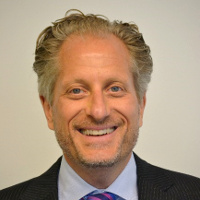
David Lehnmann, President of SolidX
In relation to whether firms may ultimately shy away from the blockchain because of the headline risk involved with bitcoins, Gallancy and Lehmann didn’t believe so. In their eyes, the fact that the NYSE was an investor in Coinbase and the federal government viewed the currency as an asset means the “battle of legitimizing bitcoins is over.” What Gallancy did mention is that regardless of an emerging positive impression of the blockchain, banks will remain quiet about their interest in the technology for the simple reason that “people like to keep their cards close to them” and want to retain their internal trade secrets.
Overall, as SolidX positions itself as a swaps provider to meet Wall Street’s demands of trading little "b," they aim to be part of what could be an equal or larger trend with the further implementation of big "B" to the financial world.
During the fintech panel of last November’s Forex Magnates London Summit, Tom Robinson of Elliptic was asked about interest in bitcoins from banks and brokers. Robinson explained that they were receiving a lot of questions from firms that were investigating the blockchain. He conceded though that banks weren’t yet ready to publicize their interest due to the headline risk associated with bitcoins. The real interest though is slowly becoming public and hit a new level in January when the New York Stock Exchange as well as Citibank’s former CEO were among investors in Coinbase’s record $75 million funding round.
Daniel Gallancy, CEO of SolidX
Similarly expressing Wall Street’s interest in both the moves of bitcoin prices and the underlying blockchain technology is SolidX. Learning more about their bitcoin derivatives business Digital Currency Magnates spoke to CEO Daniel H. Gallancy, and President David S. Lehmann.
Based in New York, SolidX raised $3 million in funding last October. The firm’s core business is to provide hedge funds and asset managers access to the bitcoin markets. They do this by marketing bitcoin swaps that act and behave like swaps of other asset classes. But, beyond their swaps business, Gallancy and Lehmann explained that their institutional customers are also seeing potential in the underlying blockchain technology. Lehmann referred to the dual nature as the little "b"--bitcoins--and big "B"--the blockchain.
Bitcoin swaps
SolidX’s main existing business is the issuance of total-return bitcoin swaps to their clients. Buyers of the swap are able to gain exposure to bitcoin’s price moves during the duration of the swap, without actually needing to hold bitcoins. Gallancy explained that the benefit to hedge funds and other financial customers is that with swaps, bitcoins are made available to them in a way they are familiar with, and the product “looks and feels like any other traditional security.”
Like other swap dealers, SolidX acts as a counterparty to their clients, but hedge their sold swap positions by acquiring actual bitcoins. The firm also works with a large insurance firm to insure the swaps they provide to customers have an added layer of caution to mitigate counterparty risk. Gallancy and Lehmann explained that the firm has been able to gain interest from funds that are using their swaps to gain both long and short exposure to bitcoins.
In terms of asset sizes, Gallancy noted that bitcoin positions are a bit different than your usual position sizes opened by a hedge fund. So while a firm regularly take a position in a stock or asset that is 5% of their total assets, when it comes to bitcoins they are typically looking at the digital currency like they would an option. As a result of the boom or bust binary expectation, many bitcoin swap positions are in the 0.2% to 0.3% range, with swaps valued in the single millions to low double digit millions of dollars.
Big ‘B’
Speaking about the underlying bitcoin technology, Gallancy said that the “institutional sector was far more interested in blockchain than we expected.” He explained that many financial firms are using older technology, with the blockchain being investigated as one of several possible new solutions to help companies like banks modernize their technical infrastructure.
David Lehnmann, President of SolidX
In relation to whether firms may ultimately shy away from the blockchain because of the headline risk involved with bitcoins, Gallancy and Lehmann didn’t believe so. In their eyes, the fact that the NYSE was an investor in Coinbase and the federal government viewed the currency as an asset means the “battle of legitimizing bitcoins is over.” What Gallancy did mention is that regardless of an emerging positive impression of the blockchain, banks will remain quiet about their interest in the technology for the simple reason that “people like to keep their cards close to them” and want to retain their internal trade secrets.
Overall, as SolidX positions itself as a swaps provider to meet Wall Street’s demands of trading little "b," they aim to be part of what could be an equal or larger trend with the further implementation of big "B" to the financial world.
SpaceX IPO Reaches Prop Trading as The Trading Pit Markets SPCX Debut Access
Featured Videos
Buying The Deep: Digital Asset Adoption in APAC and Beyond
The persisting price drops test the industry's commitment to crypto adoption. While on-chain innovation is making headway across market mechanics, from stablecoins to tokenization, investors remains cautious.
This session brings together market structure experts and institutional investors to explore how a prolonged bear market affects their long-term strategy, and where the opportunities lie ahead of the next cycle.
Attendees will walk away with:
First-hand account of the bear market's impact on various industry players
Understanding of what custody, connectivity, and settlement gaps still hamper growth in APAC
Insight into how client mandates and operational readiness are shaping who moves and who waits
Perspective on what institutional investors need to move toward actual digital asset capital deployment
The persisting price drops test the industry's commitment to crypto adoption. While on-chain innovation is making headway across market mechanics, from stablecoins to tokenization, investors remains cautious.
This session brings together market structure experts and institutional investors to explore how a prolonged bear market affects their long-term strategy, and where the opportunities lie ahead of the next cycle.
Attendees will walk away with:
First-hand account of the bear market's impact on various industry players
Understanding of what custody, connectivity, and settlement gaps still hamper growth in APAC
Insight into how client mandates and operational readiness are shaping who moves and who waits
Perspective on what institutional investors need to move toward actual digital asset capital deployment
The persisting price drops test the industry's commitment to crypto adoption. While on-chain innovation is making headway across market mechanics, from stablecoins to tokenization, investors remains cautious.
This session brings together market structure experts and institutional investors to explore how a prolonged bear market affects their long-term strategy, and where the opportunities lie ahead of the next cycle.
Attendees will walk away with:
First-hand account of the bear market's impact on various industry players
Understanding of what custody, connectivity, and settlement gaps still hamper growth in APAC
Insight into how client mandates and operational readiness are shaping who moves and who waits
Perspective on what institutional investors need to move toward actual digital asset capital deployment
The persisting price drops test the industry's commitment to crypto adoption. While on-chain innovation is making headway across market mechanics, from stablecoins to tokenization, investors remains cautious.
This session brings together market structure experts and institutional investors to explore how a prolonged bear market affects their long-term strategy, and where the opportunities lie ahead of the next cycle.
Attendees will walk away with:
First-hand account of the bear market's impact on various industry players
Understanding of what custody, connectivity, and settlement gaps still hamper growth in APAC
Insight into how client mandates and operational readiness are shaping who moves and who waits
Perspective on what institutional investors need to move toward actual digital asset capital deployment
This panel explores the key insights and emerging trends shaping modern trading behavior, examining how user expectations are evolving across global markets and what these shifts mean for industry participants.
Funding & Exit in Singapore from Pre-Seed to Liquidity
Singapore's capital infrastructure is wider than its reputation for stability suggests.
Sovereign backing from Temasek and GIC, a growing family office network, sector-specialized venture funds, and a public market pathway through the Singapore Exchange, the city-state supports capital formation at every stage of the lifecycle.
Held in partnership with 8Circle, this session gathers practitioners across the capital stack to examine how Singapore functions as both an investment and an exit destination.
Attendees will walk away with:
Understanding of what makes SGX a credible listing pathway for high-growth companies in 2026
Insight into alternative exit channels: private secondary markets, digital marketplace exits, and strategic acquisitions
Perspective on what founders and capital allocators should be doing at each stage to preserve exit optionality
Singapore's capital infrastructure is wider than its reputation for stability suggests.
Sovereign backing from Temasek and GIC, a growing family office network, sector-specialized venture funds, and a public market pathway through the Singapore Exchange, the city-state supports capital formation at every stage of the lifecycle.
Held in partnership with 8Circle, this session gathers practitioners across the capital stack to examine how Singapore functions as both an investment and an exit destination.
Attendees will walk away with:
Understanding of what makes SGX a credible listing pathway for high-growth companies in 2026
Insight into alternative exit channels: private secondary markets, digital marketplace exits, and strategic acquisitions
Perspective on what founders and capital allocators should be doing at each stage to preserve exit optionality
Singapore's capital infrastructure is wider than its reputation for stability suggests.
Sovereign backing from Temasek and GIC, a growing family office network, sector-specialized venture funds, and a public market pathway through the Singapore Exchange, the city-state supports capital formation at every stage of the lifecycle.
Held in partnership with 8Circle, this session gathers practitioners across the capital stack to examine how Singapore functions as both an investment and an exit destination.
Attendees will walk away with:
Understanding of what makes SGX a credible listing pathway for high-growth companies in 2026
Insight into alternative exit channels: private secondary markets, digital marketplace exits, and strategic acquisitions
Perspective on what founders and capital allocators should be doing at each stage to preserve exit optionality
Singapore's capital infrastructure is wider than its reputation for stability suggests.
Sovereign backing from Temasek and GIC, a growing family office network, sector-specialized venture funds, and a public market pathway through the Singapore Exchange, the city-state supports capital formation at every stage of the lifecycle.
Held in partnership with 8Circle, this session gathers practitioners across the capital stack to examine how Singapore functions as both an investment and an exit destination.
Attendees will walk away with:
Understanding of what makes SGX a credible listing pathway for high-growth companies in 2026
Insight into alternative exit channels: private secondary markets, digital marketplace exits, and strategic acquisitions
Perspective on what founders and capital allocators should be doing at each stage to preserve exit optionality
Singapore's capital infrastructure is wider than its reputation for stability suggests.
Sovereign backing from Temasek and GIC, a growing family office network, sector-specialized venture funds, and a public market pathway through the Singapore Exchange, the city-state supports capital formation at every stage of the lifecycle.
Held in partnership with 8Circle, this session gathers practitioners across the capital stack to examine how Singapore functions as both an investment and an exit destination.
Attendees will walk away with:
Understanding of what makes SGX a credible listing pathway for high-growth companies in 2026
Insight into alternative exit channels: private secondary markets, digital marketplace exits, and strategic acquisitions
Perspective on what founders and capital allocators should be doing at each stage to preserve exit optionality
Singapore's capital infrastructure is wider than its reputation for stability suggests.
Sovereign backing from Temasek and GIC, a growing family office network, sector-specialized venture funds, and a public market pathway through the Singapore Exchange, the city-state supports capital formation at every stage of the lifecycle.
Held in partnership with 8Circle, this session gathers practitioners across the capital stack to examine how Singapore functions as both an investment and an exit destination.
Attendees will walk away with:
Understanding of what makes SGX a credible listing pathway for high-growth companies in 2026
Insight into alternative exit channels: private secondary markets, digital marketplace exits, and strategic acquisitions
Perspective on what founders and capital allocators should be doing at each stage to preserve exit optionality
FM Daily Brief – 10 June 2026
Today’s Wednesday, the 10th of June 2026, and these are our main stories: Bybit’s zero-fee stock CFD push, prop trading access to SpaceX shares, and TradeStation’s European expansion into US markets.
AI Getting Real for Brokers
Brokers and providers moved from the noise phase to treating AI tools as a core product question, with implications on anything from hiring priorities to acquisition strategy.
This session gathers retail brokers, platform builders, and AI tool providers to examine how LLMs change affect client trust, results, and risk.
Attendees will walk away with:
A first-hand account of where AI-driven trading tools generate real client value
Insight into how institutional adoption is raising client expectations and what brokers need to do to keep pace
Clarity on the liability question: when an AI-driven recommendation leads to a bad trade, where does responsibility
Brokers and providers moved from the noise phase to treating AI tools as a core product question, with implications on anything from hiring priorities to acquisition strategy.
This session gathers retail brokers, platform builders, and AI tool providers to examine how LLMs change affect client trust, results, and risk.
Attendees will walk away with:
A first-hand account of where AI-driven trading tools generate real client value
Insight into how institutional adoption is raising client expectations and what brokers need to do to keep pace
Clarity on the liability question: when an AI-driven recommendation leads to a bad trade, where does responsibility
Brokers and providers moved from the noise phase to treating AI tools as a core product question, with implications on anything from hiring priorities to acquisition strategy.
This session gathers retail brokers, platform builders, and AI tool providers to examine how LLMs change affect client trust, results, and risk.
Attendees will walk away with:
A first-hand account of where AI-driven trading tools generate real client value
Insight into how institutional adoption is raising client expectations and what brokers need to do to keep pace
Clarity on the liability question: when an AI-driven recommendation leads to a bad trade, where does responsibility
Brokers and providers moved from the noise phase to treating AI tools as a core product question, with implications on anything from hiring priorities to acquisition strategy.
This session gathers retail brokers, platform builders, and AI tool providers to examine how LLMs change affect client trust, results, and risk.
Attendees will walk away with:
A first-hand account of where AI-driven trading tools generate real client value
Insight into how institutional adoption is raising client expectations and what brokers need to do to keep pace
Clarity on the liability question: when an AI-driven recommendation leads to a bad trade, where does responsibility
Brokers and providers moved from the noise phase to treating AI tools as a core product question, with implications on anything from hiring priorities to acquisition strategy.
This session gathers retail brokers, platform builders, and AI tool providers to examine how LLMs change affect client trust, results, and risk.
Attendees will walk away with:
A first-hand account of where AI-driven trading tools generate real client value
Insight into how institutional adoption is raising client expectations and what brokers need to do to keep pace
Clarity on the liability question: when an AI-driven recommendation leads to a bad trade, where does responsibility
Brokers and providers moved from the noise phase to treating AI tools as a core product question, with implications on anything from hiring priorities to acquisition strategy.
This session gathers retail brokers, platform builders, and AI tool providers to examine how LLMs change affect client trust, results, and risk.
Attendees will walk away with:
A first-hand account of where AI-driven trading tools generate real client value
Insight into how institutional adoption is raising client expectations and what brokers need to do to keep pace
Clarity on the liability question: when an AI-driven recommendation leads to a bad trade, where does responsibility